Under Ferdinand Marcos, personal loyalty fused with political mythology, revealing how self-crafted narratives sustained authoritarian rule in the Philippines.

By Matthew A. McIntosh
Public Historian
Brewminate
Introduction: Biography as Regime Architecture
Ferdinand Marcos did not merely govern the Philippines. He authored himself into it. From the outset of his national prominence, Marcos cultivated a biography that presented him as uniquely destined for leadership: brilliant lawyer, decorated war hero, disciplined technocrat, and relentless nationalist reformer. These claims were not casual self-promotion. They were carefully curated elements of a public identity designed to project inevitability. Marcos understood the symbolic power of narrative in a postcolonial democracy still negotiating its institutional confidence. In a political culture shaped by colonial transition, oligarchic rivalry, and Cold War anxiety, biography could function as authority. The story of the leader became a substitute for structural trust. Marcos positioned his life not simply as personal history but as national allegory. The promise of his rule was embedded in the legend of his rise.
Central to this construction was the mythologizing of his wartime record. Marcos publicly claimed extraordinary guerrilla exploits and a remarkable number of military decorations during World War II. Later investigations cast substantial doubt on many of these claims, revealing exaggerations and contested citations. Yet the narrative endured for years, reinforced through speeches, state publications, and controlled media repetition. The heroic image was not merely personal vanity. It established moral capital. A leader portrayed as having sacrificed for national liberation could more plausibly demand national obedience.
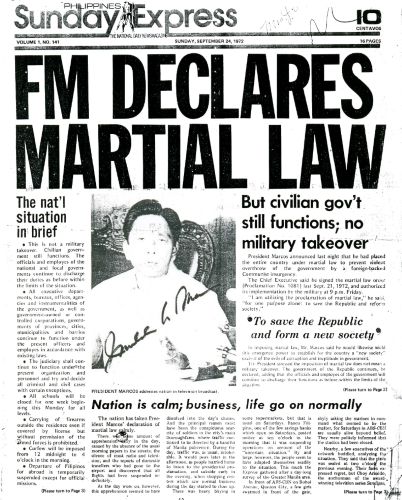
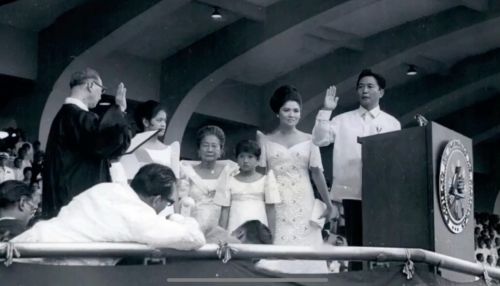
This self-authored myth intensified after Marcos’ election to the presidency in 1965 and especially following his controversial reelection in 1969. Economic instability, student unrest, and communist insurgency provided the rhetorical backdrop for a shift in tone. Marcos increasingly framed himself as the indispensable guardian of national order. When he declared Martial Law in September 1972 under Proclamation No. 1081, the move was presented not as power consolidation but as patriotic necessity. Biography and policy fused. The leader’s narrative of discipline, brilliance, and wartime heroism became justification for constitutional transformation.
Marcos’ regime cannot be understood solely through the lens of authoritarian mechanics or economic corruption. It must also be examined as a sustained exercise in narrative construction. Personal mythology became a governing instrument. Patronage networks, constitutional revision, and repression operated within a framework that positioned the leader as embodiment of the nation itself. The durability of his rule, despite mounting evidence of abuse and corruption, reveals the political power of biography when institutional legitimacy weakens. In Marcos’ Philippines, the state was reshaped in the image of the story he told about himself.
The Construction of the Marcos Myth
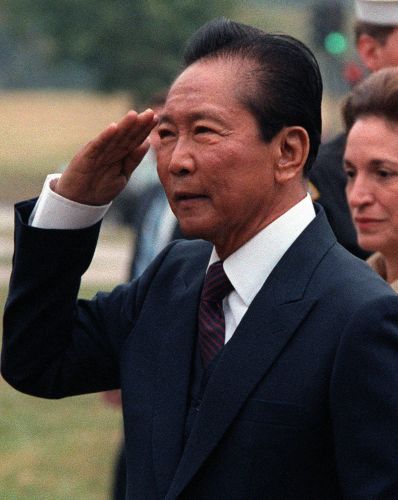
The myth of Marcos did not emerge spontaneously from electoral success. It was constructed deliberately, layered through public speech, printed narrative, visual imagery, and institutional reinforcement. Long before the declaration of Martial Law, Marcos cultivated an image of intellectual superiority and historical inevitability. His legal career, including his controversial acquittal in the 1939 murder case of Julio Nalundasan, was reframed as evidence of brilliance rather than scandal. Academic distinction at the University of the Philippines was emphasized repeatedly in campaign literature and state communication. Biography was curated to communicate exceptionalism. Marcos was not portrayed as merely capable. He was portrayed as singular.
The most potent component of this myth was his wartime narrative. Marcos claimed leadership of a guerrilla force known as “Ang Maharlika” and asserted the receipt of numerous military decorations for bravery during the Japanese occupation. Subsequent archival investigations, including documentation from the United States Army and later journalistic inquiries, challenged the veracity of many of these claims. Several of the medals he cited were either unsupported by official records, exaggerated in scope, or later called into question by military authorities. Historians have noted that wartime claims became central to campaign messaging during his early political career, functioning as proof of patriotic sacrifice and martial competence. Yet during his ascent to power and consolidation of authority, these heroic assertions were rarely subjected to sustained public scrutiny within the Philippines. The wartime myth became foundational. In a nation deeply marked by occupation and liberation, martial valor carried profound symbolic resonance. By positioning himself as both victim and victor of wartime struggle, Marcos embedded his personal biography within the broader narrative of national survival and sovereignty.
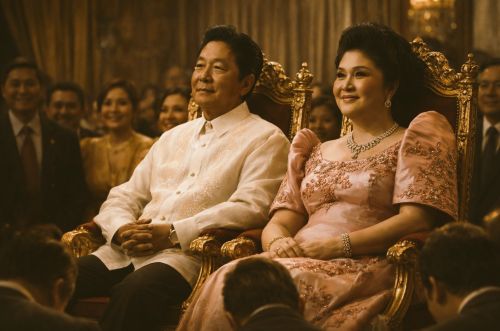
The cultivation of myth extended beyond Marcos himself to encompass a broader aesthetic of leadership. Imelda Marcos played a central role in this symbolic architecture. Cultural projects, architectural spectacles, and carefully staged public appearances reinforced a narrative of refinement, destiny, and national grandeur. The regime’s investment in monumental infrastructure and cultural institutions was not solely developmental. It was theatrical. The Marcos presidency positioned itself as civilizational renewal, embedding personal narrative within national aspiration. Image management became governance strategy.
Media control further amplified this mythology. Even prior to Martial Law, Marcos demonstrated acute awareness of information power. After 1972, state control or closure of major newspapers, radio stations, and television networks ensured narrative coherence. Independent outlets were shuttered, critical journalists detained, and publishing licenses placed under executive discretion. Official biographies, commemorative materials, and curated documentaries circulated widely, presenting a seamless portrait of heroic leadership. The repetition of curated narrative through institutional channels normalized the legend and limited avenues for contradiction. When biography becomes state doctrine, contradiction becomes subversion. Citizens encountered a political environment in which praise was amplified and critique suppressed, creating informational asymmetry that reinforced mythic framing. Myth, sustained through controlled repetition and institutional enforcement, hardens into political reality.
The durability of this constructed persona reveals its structural function. It provided moral justification for executive expansion, psychological reassurance during instability, and emotional identification among supporters. The curated self-image substituted for institutional credibility at moments of crisis. By embedding himself within a narrative of sacrifice, brilliance, and indispensability, Marcos transformed biography into regime architecture. The myth did not merely embellish power. It stabilized it.
Democratic Mandate to Martial Law: Constitutional Reengineering
Marcos’ second presidential term marked a decisive transition from competitive electoral politics to executive consolidation. Reelected in 1969 in what was widely regarded as one of the most expensive campaigns in Philippine history, Marcos entered his second term amid rising inflation, student unrest, labor strikes, and intensified communist insurgency. The heavy public spending associated with his reelection campaign contributed to fiscal imbalance and currency pressure, deepening economic strain in the years that followed. The legitimacy conferred by democratic reelection provided initial cover for expanded executive assertiveness. Yet the economic and social instability that followed weakened public confidence and heightened elite anxiety. Marcos increasingly framed crisis not as policy failure but as national emergency rooted in systemic decay. This rhetorical shift prepared the political ground for constitutional transformation. By presenting instability as existential threat, he recast extraordinary measures as rational necessity rather than political ambition.
The declaration of Martial Law on September 21, 1972, under Proclamation No. 1081, represented the culmination of this transition. Marcos justified the move as necessary to suppress communist rebellion and restore order. Publicly, he described Martial Law as a corrective mechanism to cleanse the political system of corruption and oligarchic paralysis. In practice, it centralized authority in the executive branch, suspended habeas corpus, curtailed press freedom, and authorized widespread arrests. Opposition figures, journalists, student leaders, and critics were detained. Constitutional liberties were reframed as obstacles to national survival.
The legal restructuring that followed extended beyond emergency decree. The 1973 Constitution, ratified under controversial circumstances, replaced the presidential system with a parliamentary framework while effectively consolidating power in Marcos’ hands. Though nominally establishing a Prime Minister and legislative assembly, the revised constitutional structure preserved executive dominance through transitional provisions and decree powers. Marcos assumed both presidential and prime ministerial roles at various points, blending institutional categories to maintain authority. Constitutional language of reform masked functional centralization.
This reengineering relied heavily on procedural continuity to legitimize substantive change. Referenda and plebiscites were organized to signal popular endorsement, and public messaging emphasized that the Filipino people themselves had approved the transformation of governance. Official narratives highlighted participatory ratification, portraying constitutional revision as democratic renewal rather than authoritarian entrenchment. Yet scholars have documented irregularities in the ratification process, including questions regarding the secrecy, voluntariness, and verification of votes. Reports of public assemblies rather than secret ballots raised concerns about coercion and performative consent. The appearance of legal process functioned as political theater. Institutional transformation was framed as collective decision, even as dissent was constrained and scrutiny limited. The framework of legality reinforced the narrative that executive expansion flowed from popular will rather than executive design.
Martial Law also reshaped the relationship between civilian governance and military authority. The armed forces were expanded and granted significant administrative roles. Military loyalty became integral to regime stability, intertwining security apparatus with political leadership. Promotions and appointments reinforced personal allegiance to Marcos, embedding patronage within coercive institutions. This fusion of executive authority and military support strengthened short-term control while narrowing institutional independence.
The constitutional transformation under Marcos did not abolish democratic language. It appropriated it and redefined its meaning. Reform, discipline, and national unity became the lexicon of authoritarian consolidation. By presenting Martial Law as necessary modernization and moral regeneration, Marcos framed executive expansion as patriotic obligation. Democratic mandate was reinterpreted as authorization for structural overhaul rather than constraint upon power. Constitutional reengineering illustrates how personal leadership narrative and legal restructuring operated in tandem. The democratic legitimacy that brought Marcos to power became the rhetorical foundation for suspending democratic practice. What began as electoral mandate evolved into centralized rule justified through the language of constitutional correction.
Patronage Networks and Crony Capitalism
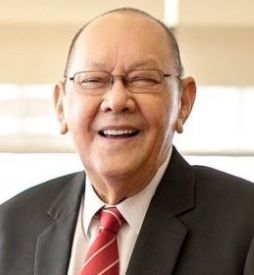
Martial Law did not simply centralize political authority. It reorganized economic power. Under Marcos, patronage networks became the connective tissue between regime stability and private wealth accumulation. The suspension of legislative oversight and the weakening of independent institutions created conditions in which executive discretion could shape markets. Licenses, monopolies, and state contracts increasingly flowed through channels defined by personal loyalty. Economic governance became inseparable from political allegiance.
Central to this system was the elevation of trusted associates who controlled key sectors of the national economy. Figures such as Roberto Benedicto in the sugar industry and Eduardo “Danding” Cojuangco in the coconut sector rose to prominence through presidential favor. Through presidential decrees and regulatory restructuring, entire commodity chains were reorganized to concentrate authority in regime-aligned entities. State-backed monopolies, marketing boards, and preferential financing arrangements enabled these allies to consolidate influence over production, export, and pricing. Financial institutions were leveraged to extend credit selectively, reinforcing dependency upon regime networks and marginalizing independent competitors. The concentration of economic opportunity within a narrow circle deepened the interdependence between business elites and executive power. Economic privilege was not incidental to political loyalty. It was its reward and reinforcement.
This configuration was not merely corruption in episodic form. It constituted structural crony capitalism. Access to capital, import licenses, and export quotas often depended upon alignment with the regime. Industries from logging to telecommunications reflected patterns of selective favoritism. By aligning economic advantage with personal loyalty, Marcos transformed patronage into policy instrument. Wealth accumulation among regime allies was intertwined with the survival of the political order itself.
The economic implications extended beyond elite enrichment. State resources were diverted toward projects that reinforced symbolic prestige or consolidated influence rather than addressing structural inequality. High-profile infrastructure and cultural projects enhanced regime visibility, while sectors requiring sustained reform often lagged. Foreign borrowing increased dramatically during the 1970s, fueled in part by confidence among international lenders in the regime’s apparent durability and technocratic presentation. Yet substantial portions of these funds flowed into ventures linked to patronage networks, including corporations and banks controlled by regime allies. As debt mounted and global economic conditions tightened in the early 1980s, the vulnerabilities of this model became increasingly apparent. Capital flight accelerated, and fiscal pressure intensified. The structure of loyalty carried macroeconomic consequences that outlived the immediate political benefits of centralized control.
Patronage networks also reshaped the military and bureaucracy. Promotions, administrative appointments, and access to discretionary funds reinforced allegiance at multiple levels of governance. Civil servants operated within an environment in which advancement depended upon perceived loyalty. Economic and administrative incentives blurred. The state apparatus became both distributor of resources and enforcer of political hierarchy. Institutional autonomy narrowed as personal alignment gained primacy.
The durability of Marcos’ regime cannot be separated from this economic architecture. Patronage sustained constituencies that had material incentives to defend the status quo. Even as evidence of corruption surfaced domestically and internationally, beneficiaries of the system possessed reasons to preserve it. Regime attachment was not purely ideological. It was transactional. Crony capitalism functioned as both reward mechanism and stabilizing force, binding economic elites and segments of the bureaucracy to the survival of personalized rule.
Loyalty as Devotion: Suppression of Dissent
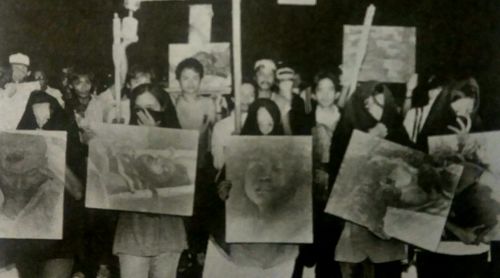
The consolidation of Martial Law required more than constitutional restructuring and economic patronage. It required the reshaping of political loyalty into personal devotion centered on the figure of Marcos. The regime’s rhetoric presented obedience not merely as civic duty but as moral alignment with national destiny. Marcos framed opposition not as legitimate democratic disagreement but as existential threat to national survival. Communist insurgency, separatist movements, and urban unrest were invoked as justification for extraordinary measures, yet the category of subversion expanded far beyond armed rebellion. Journalists, student activists, labor organizers, clergy, academics, and opposition politicians were swept into a broad architecture of suspicion. In this environment, dissent became synonymous with disloyalty. The political vocabulary narrowed. Debate was reframed as destabilization, criticism as betrayal. Loyalty ceased to function as institutional allegiance and was recast as personal fidelity to the leader who claimed to embody the state.
The early months of Martial Law were marked by mass arrests under detention orders authorized by executive decree. Prominent figures such as Senator Benigno Aquino Jr. were detained alongside hundreds of activists and critics. Independent newspapers and broadcast stations were closed. The regime’s control over information ensured that state narratives dominated public discourse. Legal mechanisms, including military tribunals for civilians, blurred distinctions between civil and military authority. The message was clear: political disagreement would not be tolerated as legitimate expression. It would be processed as threat.
Human rights abuses deepened the climate of fear and reinforced the regime’s demand for submission. Reports from domestic advocacy groups, church networks, and international organizations documented instances of torture, forced disappearance, arbitrary detention, and extrajudicial killing. While the scale and documentation of abuses varied across regions and periods, the cumulative effect was psychological discipline. Coercion did not require universal application to be effective. Highly visible cases served as cautionary examples, signaling the potential cost of resistance. Families of detainees confronted prolonged uncertainty, amplifying the deterrent effect beyond individual victims. Fear operated as both policy instrument and social message. Devotion to the regime was incentivized not only through reward but through the deterrent power of coercion. Silence became survival strategy, and conformity became shield.
The suppression of dissent also operated rhetorically. Marcos described critics as agents of chaos or foreign ideology, framing himself as defender of national integrity. This narrative reframed obedience as patriotic virtue. Loyalty was elevated to moral category. Public rituals, speeches, and media programming reinforced the image of a disciplined society unified under strong leadership. Those who challenged this image were depicted as undermining collective progress. The conflation of leader and nation intensified. To criticize Marcos was, in official framing, to weaken the Philippines.
Yet suppression alone does not explain the endurance of support during much of the Martial Law period. The fusion of patronage, controlled media, and moralized loyalty created a system in which many citizens encountered limited alternative narratives. For beneficiaries of economic networks or those persuaded by appeals to order and stability, devotion appeared rational. The regime’s capacity to suppress dissent while cultivating constituencies illustrates how authoritarian consolidation operates at both coercive and symbolic levels. Allegiance was demanded, dramatized, and enforced as personal commitment to the leader who claimed to embody the nation.
The Psychology of Enduring Support
The longevity of Marcos’ rule cannot be explained solely through repression or patronage. It also depended upon the psychological architecture of support. Authoritarian regimes endure most effectively when coercion is supplemented by belief. Marcos’ narrative of discipline, national renewal, and decisive leadership resonated with constituencies fatigued by instability and oligarchic rivalry. For many citizens, particularly in regions distant from the political center, Martial Law initially appeared to deliver order. The perception of safety, even if unevenly distributed, reinforced the appeal of strong executive authority.
Identity played a central role in sustaining allegiance. Marcos framed himself as champion of the Filipino nation against internal subversion and external interference, drawing upon nationalist themes deeply embedded in postcolonial political culture. This rhetoric appealed to memories of occupation, aspirations for sovereignty, and anxieties about ideological infiltration during the Cold War. Support for the regime often intertwined with regional loyalty, familial networks, and patronage ties that predated Martial Law. In provinces where political brokerage shaped everyday life, alignment with the president could signify access to opportunity and protection. To defend Marcos became, for some, to defend national dignity, social mobility, or communal stability. Political allegiance was not reducible to ideological indoctrination. It was embedded in identity, locality, and personal relationships that reinforced a sense of belonging within the regime’s narrative framework.
Information asymmetry further strengthened the regime’s hold. State-controlled media shaped the narrative environment, limiting exposure to critical reporting and alternative interpretations of economic decline or human rights abuses. When corruption allegations surfaced, they were reframed as exaggerations or foreign conspiracies. The repetition of official messaging cultivated cognitive consistency. For supporters who benefited materially from patronage or symbolically from nationalist rhetoric, contradictory evidence could be discounted as politically motivated. Loyalty, once anchored in identity, resists disconfirmation.
The endurance of Marcos’ support reveals how personal myth, patronage, and controlled information interacted to stabilize rule. Devotion did not require universal approval. It required sufficient constituencies convinced that the regime’s survival aligned with their interests, identity, or perception of order. Even as economic strain intensified in the early 1980s and reports of corruption and repression became more visible internationally, segments of society continued to defend the president. For some, fear of instability outweighed dissatisfaction. For others, networks of patronage or longstanding regional loyalties reinforced attachment. The resilience of support illustrates how political belief can persist amid contradiction when institutional mechanisms and psychological incentives converge. Authoritarian durability, in this sense, operates as much through narrative cohesion and identity reinforcement as through force alone.
Economic Decline and Elite Fatigue
By the early 1980s, the economic foundations of Marcos’ regime began to erode in ways that patronage and narrative could no longer fully mask. The borrowing-driven growth of the 1970s, facilitated by favorable international credit markets and the appearance of political stability, gave way to mounting external debt, inflation, and fiscal imbalance. As global interest rates rose and commodity prices fluctuated, the Philippine economy became increasingly vulnerable. Capital flight accelerated, and investor confidence weakened. The structural weaknesses of crony capitalism, including inefficiencies and overleveraged enterprises tied to regime allies, intensified the downturn. Economic strain narrowed the regime’s capacity to sustain loyalty through material reward.
The assassination of Benigno Aquino Jr. in August 1983 marked a decisive inflection point. Aquino’s return from exile and subsequent killing at Manila International Airport generated domestic outrage and international scrutiny. The event exposed fractures within the regime’s security apparatus and catalyzed opposition mobilization across social sectors. Business elites, previously cautious in their criticism, began reassessing the costs of alignment with a government increasingly associated with instability. The symbolic impact of the assassination amplified preexisting economic anxiety. Confidence, once eroded, proved difficult to restore.
Elite fatigue manifested not only in public dissent but in recalculated distance. Segments of the business community and elements within the military reconsidered their long-term interests. International creditors and foreign governments expressed growing concern regarding governance and human rights conditions. As economic indicators deteriorated, the regime’s promise of order and prosperity lost persuasive power. Patronage networks that had once delivered opportunity now faced fiscal constraint. The transactional basis of regime alignment weakened when resources diminished.
The convergence of economic crisis and elite withdrawal narrowed Marcos’ margin for maneuver. Personal mythology could not compensate indefinitely for declining material performance. As inflation rose and debt obligations mounted, the regime’s coalition thinned. Economic decline functioned as accelerant rather than sole cause of political unraveling. When elite fatigue intersects with structural weakness, authoritarian resilience falters. By the mid-1980s, the pillars sustaining Marcos’ rule were visibly strained.
The People Power Revolution and Regime Collapse

The final phase of Marcos’ rule unfolded with accelerating momentum after the crisis of 1983. Mounting economic instability, widening opposition coalitions, and sustained public protest converged to weaken the regime’s aura of inevitability. In an effort to reassert legitimacy, Marcos announced a snap presidential election in February 1986. The decision was intended to demonstrate continued popular support and silence critics at home and abroad. Instead, it provided a structured arena in which opposition forces could consolidate. Corazon Aquino, widow of Benigno Aquino Jr., emerged as the principal challenger, transforming personal tragedy into political mobilization.
The campaign period exposed the fragility of regime credibility. Reports of intimidation, vote-buying, and electoral manipulation circulated widely. Independent election monitors, including domestic civic organizations, documented discrepancies between official tallies and parallel vote counts. The divergence between state-announced results and independent verification intensified public distrust. When official declarations proclaimed Marcos the victor, large segments of the population rejected the outcome as fraudulent. Electoral ritual, once used to legitimize authority, became catalyst for dissent.
Mass demonstrations gathered along Epifanio de los Santos Avenue in Manila, symbolizing a rare convergence of religious leaders, civil society activists, middle-class professionals, labor groups, and ordinary citizens. The Catholic Church, through figures such as Cardinal Jaime Sin, played a visible role in encouraging nonviolent resistance and providing moral framing for protest. Radio broadcasts amplified calls for peaceful assembly, transforming what might have remained isolated demonstrations into sustained civic occupation of public space. The protests were characterized by disciplined public presence rather than insurrectionary violence. Families brought food, religious icons, and banners, turning the highway into a symbolic site of national reclamation. This collective display challenged the regime’s narrative that stability depended exclusively upon strong executive control. Popular mobilization reframed political legitimacy as civic expression, asserting that sovereignty derived not from decree but from the visible consent of the governed.
Critical shifts within the military proved decisive. Defense Minister Juan Ponce Enrile and General Fidel Ramos withdrew support from Marcos, signaling fracture within the coercive apparatus that had undergirded Martial Law. Military defection altered the balance of power. The regime’s reliance on security forces for enforcement could not withstand erosion of loyalty at senior levels. As segments of the armed forces aligned with protestors, the personalized architecture of authority lost structural reinforcement.
International pressure compounded domestic upheaval. The United States, long a strategic ally, recalibrated its position as instability deepened. Diplomatic signals indicated declining confidence in Marcos’ ability to govern effectively. The convergence of internal dissent, military fracture, and external pressure narrowed available options. Marcos ultimately departed the Philippines on February 25, 1986, marking the end of two decades of rule.
The People Power Revolution illustrates the limits of personalized authority when narrative cohesion and patronage networks collapse simultaneously. The regime did not fall through armed overthrow but through cumulative withdrawal of consent and support. Public mobilization, elite recalculation, and institutional fracture converged to dissolve the political foundation that had sustained Marcos. Biography, once deployed as regime architecture, could not withstand the combined weight of economic decline, electoral crisis, and collective repudiation. The collapse reaffirmed a central lesson of authoritarian governance: when loyalty networks fracture and legitimacy erodes, even carefully constructed myths cannot preserve power indefinitely.
Conclusion: Myth, Loyalty, and the Limits of Personal Rule
Ferdinand Marcos’ rule demonstrates how personal mythology can be transformed into governing structure. His carefully curated biography, amplified through media control and ceremonial politics, functioned as substitute for institutional trust. Heroic wartime narratives, intellectual exceptionalism, and nationalist rhetoric were not ornamental features of leadership. They were instruments of consolidation. By embedding himself within a story of destiny and discipline, Marcos positioned personal authority as synonymous with national stability. Myth became method.
Yet mythology alone does not sustain rule. It requires reinforcement through material distribution and coercive assurance. Patronage networks converted loyalty into economic dependency, linking private gain to regime survival. Constitutional reengineering expanded executive power while preserving the appearance of legality, allowing centralized authority to operate under procedural cover. Suppression of dissent narrowed public discourse and redefined criticism as betrayal, shrinking the boundaries of acceptable opposition. These mechanisms did not function in isolation. They reinforced one another. Narrative justified expansion. Expansion enabled patronage. Patronage secured constituencies. Coercion deterred defection. For a time, this system generated the impression of stability rooted in discipline and national renewal. Devotion appeared rational to many constituencies because it was tied to tangible benefit or perceived order. Personal rule endured not simply because it was imposed, but because it was structured through intertwined symbolic and material incentives.
The unraveling of that structure reveals its inherent fragility. Economic decline strained patronage capacity. Elite recalculation weakened internal cohesion. Electoral crisis exposed the limits of controlled narrative. Once military loyalty fractured and mass mobilization asserted alternative legitimacy, the architecture of personalized authority collapsed with surprising speed. The regime’s fall underscores the conditional nature of political loyalty when it rests primarily upon myth and transactional allegiance. Devotion tied to performance falters when performance declines.
Marcos’ presidency illustrates a broader lesson regarding the limits of personal rule. When leadership becomes inseparable from identity and institutional constraint is reframed as obstacle, the system narrows its own resilience. Myth can stabilize governance temporarily, particularly when reinforced by patronage and repression. It cannot indefinitely substitute for reciprocal accountability and institutional trust. The People Power Revolution did not simply remove a president. It exposed the structural limits of authority built upon self-authored legend.
Bibliography
Affiliate disclosure: Amazon links on this site are paid links. As an Amazon Associate I earn from qualifying purchases.
- Abinales, Patricio N., and Donna J. Amoroso. State and Society in the Philippines. Lanham, MD: Rowman & Littlefield, 2005.
- Amnesty International. Report on the Philippines. London: Amnesty International Publications, various years, 1970s–1980s.
- Bonner, Raymond. Waltzing with a Dictator: The Marcoses and the Making of American Policy. New York: Times Books, 1987.
- Hedman, Eva-Lotta E., and John T. Sidel. Philippine Politics and Society in the Twentieth Century: Colonial Legacies, Post-Colonial Trajectories. London: Routledge, 2000.
- Heydarian, Richard Javad. “The Return of the Marcos Dynasty.” Journal of Democracy 33:3 (2022), 62-76.
- Karnow, Stanley. In Our Image: America’s Empire in the Philippines. New York: Random House, 1989.
- McCoy, Alfred W., ed. Closer Than Brothers: Manhood at the Philippine Military Academy. New Haven: Yale University Press, 1999.
- —-. Policing America’s Empire: The United States, the Philippines, and the Rise of the Surveillance State. Madison: University of Wisconsin Press, 2009.
- Official Gazette of the Republic of the Philippines. “Proclamation No. 1081, Proclaiming a State of Martial Law in the Philippines,” September 21, 1972.
- Thompson, Mark R. The Anti-Marcos Struggle: Personalistic Rule and Democratic Transition in the Philippines. New Haven: Yale University Press, 1995.
- Tigno, Jorge V., Geoffrey M. Ducanes, and Vladymir Joseph A. Licudine. “They Never Left: Drivers of Memory of Dictatorship and Impressions of Ferdinand E. Marcos as President After February 1986.” Journal of Current Southeast Asian Affairs 43:3 (2024), 430-451.
Originally published by Brewminate, 02.26.2026, under the terms of a Creative Commons Attribution-NonCommercial-NoDerivatives 4.0 International license.
About the Author