Over the past decade, we’ve seen a rapid global shift in cannabis legislation. Where once there was strict prohibition, there are now regulated markets – both medicinal and recreational. Ongoing research in the healthcare industry is providing more information and evidence year on year of the medicinal properties of cannabis for a growing variety of health conditions, ranging from migraines to managing chemotherapy-induced nausea, and even in reducing muscle spasticity for patients with multiple sclerosis.
But cannabis legalization isn’t a global issue by any means, despite it being a global industry. We’re seeing different nations embark on cannabis legislation changes independently, with some countries trialling full legalization of recreational cannabis use, and others establishing highly regulated medical cannabis markets strictly for medical and therapeutic purposes.
Below, we’ll be exploring unique cases of cannabis legalization worldwide, and how these cases may influence one another and perhaps even other nations in due time.
Australia: a unique agricultural market
With Australia’s expansive agricultural industry, abundance of land, and temperate climate, cannabis cultivation has become a natural fit. There are also seed banks developing autoflowering cannabis seeds for Australian conditions, establishing Australia as a potential high producer of environmentally and genetically resilient cannabis products in the very near future.
Despite this extraordinary infrastructure, cannabis legalization is still limited to just medical use across Australia, with individual states managing their own legislation. The only state or territory where cannabis is fully legalized is the ACT (Australian Capital Territory), which is home to the Australian Federal Parliament in Canberra. As of January 31st 2020, adults in the ACT can legally possess up to 50 grams of dried cannabis (or up to 150 grams of fresh cannabis) and grow up to two plants per person, with a maximum of 4 plants in one household. Selling, sharing or buying cannabis still remains illegal, however.
Surrounding ACT in NSW, VIC, QLD, WA, and TAS, personal possession and cannabis cultivation for recreational purposes still remains illegal. Possession of medicinal cannabis prescribed to the individual by an authorized doctor is, however, legal across all Australian states and territories.
Uruguay: the first to legalize the entire supply chain
All the way back on December 23rd 2013, Uruguay passed a motion to legalize cannabis for both medical and recreational use, solidifying itself as the first country in the modern era to fully legalize cannabis. In August 2014, Uruguay legalized household cultivation of up to 6 plants per household, as well as the formation of cannabis social clubs, which are essentially weed dispensaries licensed and regulated under the Instituto de Regulación y Control del Cannabis or IRCCA cannabis regulatory body. These clubs are licensed to grow a maximum of 99 cannabis plants annually across anywhere between 15-45 members, allowing for sustainable, independently-managed cannabis cultivation across local communities.
Whilst Uruguay’s legislation is more generous than some of the other countries on this list, there are still some strict regulations that need to be followed. For instance, Uruguay’s cannabis legislation only allows national citizens to buy cannabis products. Foreigners (i.e. tourists) are prohibited from purchasing cannabis products from retailers or pharmacists.
Canada: strong federal regulations for the future
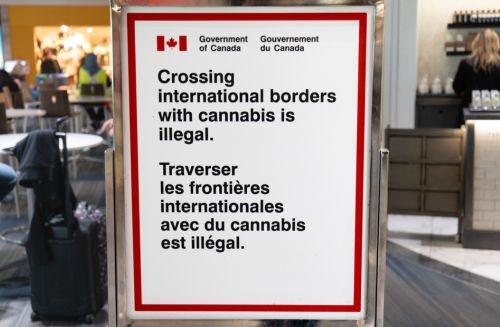
Canada legalized cannabis for recreational purposes on October 17th 2018, 17 years after the legalization of medicinal cannabis back in 2001. This made Canada the second country in the world after Uruguay to formally legalize the cultivation, possession, and consumption of cannabis products.
Unlike the ACT in Australia where the buying and selling of cannabis is still criminalized, Canada’s Cannabis Act allows brick and mortar and online sales of recreational cannabis products with strict regulations (i.e. age restrictions, limiting home production, and cannabis consumption in public or while driving a motor vehicle). Commercial cannabis producers also need to be licensed by the government to ensure quality standards across cannabis production.
Whilst being strict, Canada’s cannabis regulations are proving effective so far, allowing cannabis producers to maintain solid trade operations, and even fostering space for craft cannabis producers who are innovating with new strains and genetic experiments that have the potential to revolutionize cannabis products across both recreational and medicinal markets.
Germany: legalization of adult use and cultivation
Germany maintains one of the most recent changes in cannabis cultivation, having passed their bill back on April 1st 2024 which allows for the possession and cultivation of cannabis by adults over the age of 18. Under their legislation, adults can legally carry up to 25g of cannabis products in public for personal use, and keep up to 50g at home. Households in Germany are also permitted to cultivate up to 3 plants at any given time.
From July 1st 2024, adults were also permitted to join cannabis social clubs in a similar regime to what can be observed in Uruguay. However, whilst Uruguay social clubs are smaller, German cannabis social clubs can consist of up to 500 members, all of whom are permitted to purchase up to 50g per month.
Being a central part of the European Union, Germany’s cannabis legalization exists in an ocean of other nations that have only legalized medicinal cannabis as of yet. Whether or not Germany acts as a case study for further recreational legalization across the EU is yet to be seen.
Thailand: backpedals on legalization following public backlash
We’ve had a few positive stories in today’s exploration of cannabis trends from around the world, but this next one is a bit of a special case and testament to the changing nature of cannabis legislation in response to public sentiments.
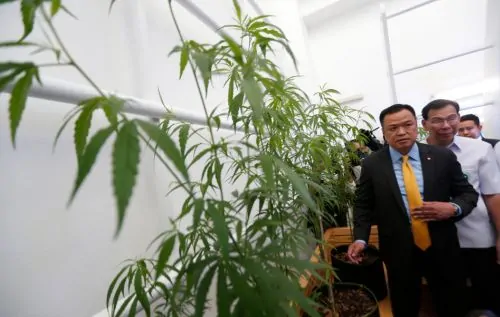
Despite decriminalizing cannabis in 2022 and simultaneously legalizing medicinal cannabis that same year, Thailand has since reclassified cannabis as a controlled herb in June 2025 in response to widespread allegations of under-regulation resulting in cannabis products being made available to children (minors under 20 years of age). Under-regulation in Thailand also saw a spike in addiction rates nationwide, with many calling Thailand’s cannabis market a health crisis.
This all prompted Thailand’s Health Minister Somsak Thepsutin to sign an order banning shops from selling cannabis for recreational use, returning to strict legislations permitting only medicinal cannabis products in pharmacies. Whilst recreational use is technically still decriminalized, there are government officials still calling for a recriminalization, with some angling for a reclassification of cannabis as a narcotic.
USA: Federal reclassification and state by state legalization
So where does all of this leave us here in the States? As of today, possession of small amounts of cannabis for recreational use has been legalized in 24 states, two territories and the District of Columbia. Across these states and territories, households are also permitted to cultivate plants, however the number of permitted plants varies from region to region.
Simultaneous to this, only a handful of states have decriminalized cannabis, these being Hawaii, Louisiana, Mississippi, Nebraska, New Hampshire, North Carolina, and North Dakota. In these states, possession of a specific small amount of marijuana for recreational purposes equates to a civil or local infraction and may result in a fine.
The decriminalization of cannabis is also saddling state and federal government entities with the intensive administrative and judicial task of clearing historic cannabis offences for citizens convicted of possession prior to decriminalization.
Want to learn more? Check out our full write-up on the history of marijuana illegalization in the States here.
Will cannabis be legalized worldwide in our lifetime?
Ultimately, the future is looking bright for cannabis legislation worldwide, but ongoing public research and tousles in parliamentary proceedings are naturally tying legalization debates into knots. And whilst medicinal cannabis is being readily accepted across big chunks of the world, it still seems like the need for strict regulations is delaying lawmakers in enacting full legalization initiatives – from Australia in the southern hemisphere to many US States in the north, and even across the EU.
Whether or not we’ll see cannabis fully legalized worldwide in our lifetime is yet to be seen, but as researchers and seed banks continue in their tireless efforts to produce sustainable and safe cannabis products, we remain hopeful.
About the Author