Inaugurations have always served as transition points.

By Dr. Claire Jerry
Political History Curator
Smithsonian Institution
Introduction
The only constitutionally mandated event on Inauguration Day is for the president-elect to take the oath of office. But on the first Inauguration Day, in 1789, George Washington did something else.
Every president since has followed his example and delivered an inaugural address as part of the national celebration.
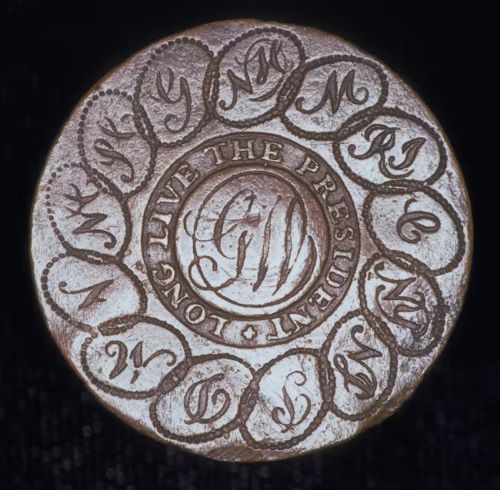
These addresses are more than just a series of individual speeches. Rhetoric scholars Karlyn Kohrs Campbell and Kathleen Hall Jamieson argue that each inaugural address is not simply marking one stage in the ritual of political transition. Each is also part of a genre that has characteristics which, at some level, are expected and understood by speakers and audiences. There have been 59 inaugural addresses, starting with Washington, and while they may have differed in style and even specific subjects, virtually all feature these characteristics, which range from calls to unify the country to setting forth political principles.
The political history collections at the National Museum of American History, where I am a curator specializing in the history of presidential campaigns and campaign rhetoric, include several objects that illustrate these characteristics.
Exploring the genre of inaugural addresses through quotations and objects from the past can help listeners better understand the opening speech of a new administration, the first act in a job that began with the taking of the oath.
Re(Unification) of the Audience
Inaugurations serve as the transition point between the competition of a campaign and the needs of an administration beginning to govern. For the audience to properly fulfill their role as witnesses to this investiture of power, they must be unified and reconstituted as “we the people.”
In the words of political scientist Lee Sigelman, these speeches are “literally brimming with verbal tokens of unity.”
There are references to our founders, our nation and the future we face. In 1957, Dwight Eisenhower spoke of the purposes “to which we, as a people, are pledged,” and Benjamin Harrison called his 1889 inaugural moment a “mutual covenant” between himself and the people. George W. Bush in 2001 united his listeners, saying, “Americans are generous and strong and decent, not because we believe in ourselves but because we hold beliefs beyond ourselves.”
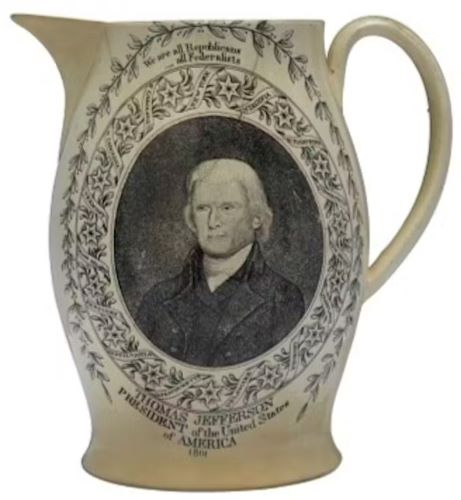
Thomas Jefferson’s first inaugural in 1801 may have been the most explicit: “We have called by different names brethren of the same principle. We are all Republicans, we are all Federalists.”
Reaffirmation of National Values
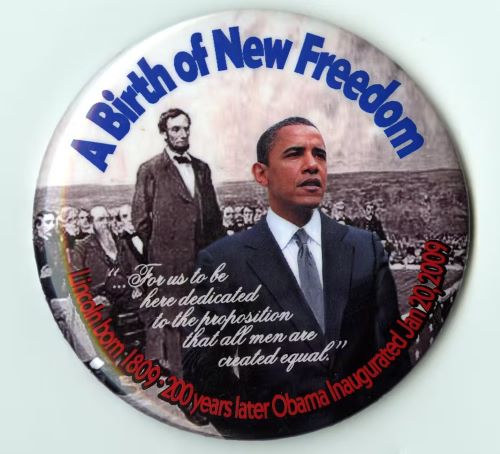
These traditional values are expressed in words such as freedom, liberty, democracy and courage. In 1981, Ronald Reagan reminded the audience, “Freedom and the dignity of the individual have been more available and assured here than in any other place on Earth. Jimmy Carter in 1977 summarized these values into “our belief in an undiminished, ever-expanding American dream.”
Setting forth Political Principles

Unlike many other presidential addresses, most notably the State of the Union, the inaugural does not advocate specific legislation but rather articulates more general philosophies that will guide a new administration. When policies are offered, they are less a call for action than a demonstration of a president’s commitment to the democratic system.
In 1845, James Polk promoted his “plain and frugal” economic plans because he said a national debt “is incompatible with the ends for which our republican Government was instituted.” Herbert Hoover said that the policies he listed in his 1929 address would be tested against the “ideals and aspirations of America.”
Even William Howard Taft, whose 1909 inaugural was among the most policy specific, framed his ideas with respect to the “proper” role of the federal government “in what it can and ought to accomplish for its people.”
Enacting the Presidential Role
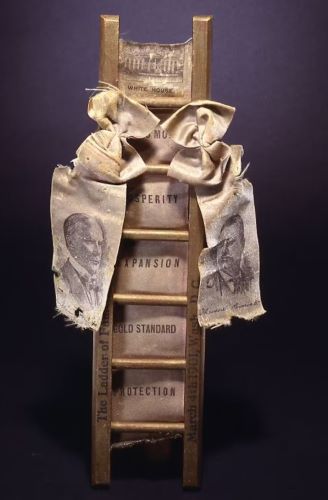
Candidates give speeches that are, for obvious reasons, partisan and self-promoting. But when the campaign ends and governing begins, presidents must demonstrate an understanding of their role within the broader system.
In his first inaugural in 1933, Franklin Roosevelt moved out of campaign mode and acknowledged the constraints on his “leadership of frankness and vigor.” He pledged to rely on his “constitutional duty” to work with Congress.
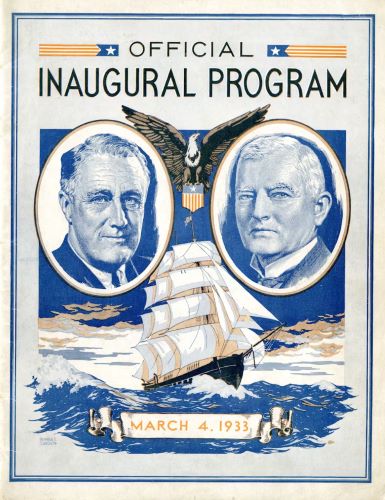
Rhetoric scholars Campbell and Jamieson add that these speeches must also enact the “public, symbolic role of president of all the people” by revealing traits such as humility and reliance on a higher power. A typical example is found in the conclusion of Warren Harding’s 1921 address: “I accept my part with single-mindedness of purpose and humility of spirit, and implore the favor and guidance of God in His Heaven. With these I am unafraid, and confidently face the future.”
Fulfilling Ceremonial Expectations
Because of the celebration that surrounds them, inaugural addresses are expected to reflect stylized, ceremonial speaking. Such speeches strive to reach beyond the immediate situation to evoke timeless themes using memorable phrases.
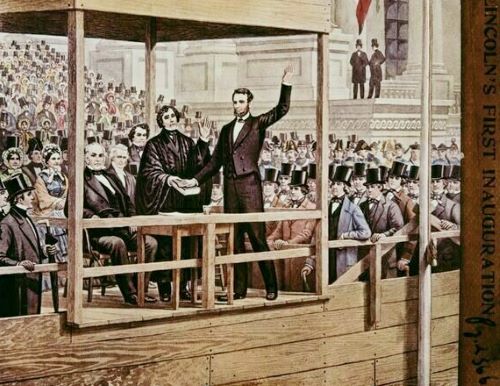
In 1961, John Kennedy challenged Americans across the decades to “Ask not what your country can do for you – ask what you can do for your country.” The phrases “mystic chords of memory” and “better angels of our nature,” among the most memorable words in presidential rhetoric, have been applied to countless situations since Abraham Lincoln first uttered them in 1861.
Not all inaugural addresses achieve greatness. Some have been quite forgettable. But each of them has tried to fulfill these expectations, helping to sustain what Franklin Roosevelt in his second inaugural called “our covenant with ourselves.”
Originally published by The Conversation, 01.14.2025, under the terms of a Creative Commons Attribution/No derivatives license.
About the Author