There is no doubt that concentration camps are in operation on U.S. soil once again.

By Brett Wilkins
Introduction
Concentration camp (noun): a place in which large numbers of people, especially political prisoners or members of persecuted minorities, are deliberately imprisoned in a relatively small area with inadequate facilities, sometimes to provide forced labor or to await mass execution. -Oxford English Dictionary
Rep. Alexandria Ocasio-Cortez (D-NY) has ignited a firestorm of criticism, from both the left and the right as well as the mainstream media, for calling US immigrant detention centers “concentration camps.” To her credit, Ocasio-Cortez has refused to back down, citing academic experts and blasting the Trump administration for forcibly holding undocumented migrants “where they are brutalized with dehumanizing conditions and dying.” She also cited history. “The US ran concentration camps before, when we rounded up Japanese people during World War II,” she tweeted. “It is such a shameful history that we largely ignore it. These camps occur throughout history.” Indeed they do. What follows is an overview of US civilian concentration camps through the centuries. Prisoner-of-war camps, as horrific as they have been, have been excluded due to their legal status under the Geneva Conventions, and for brevity’s sake.
Trail of Tears
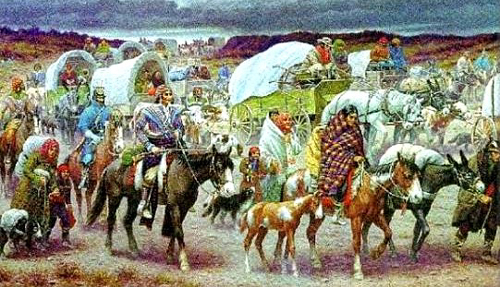
Half a century before President Andrew Jackson signed the Indian Removal Act into law in 1830, a young Virginia governor named Thomas Jefferson embraced genocide and ethnic cleansing as solutions to what would later be called the “Indian problem.” In 1780 Jefferson wrote that “if we are to wage a campaign against these Indians, the end proposed should be their extermination, or their removal beyond the lakes of the Illinois River.” However, it wasn’t until Jackson that “emigration depots” were introduced as an integral part of official US Indian removal policy. Tens of thousands of Cherokee, Muscogee, Seminole, Chickasaw, Choctaw, Ponca, Winnebago and other indigenous peoples were forced from their homes at gunpoint and marched to prison camps in Alabama and Tennessee. Overcrowding and a lack of sanitation led to outbreaks of measles, cholera, whooping cough, dysentery and typhus, while insufficient food and water, along with exposure to the elements, caused tremendous death and suffering.
Thousands of men, women and children died of cold, hunger and illness in camps and during death marches, including the infamous Trail of Tears, of hundreds and sometimes even a thousand miles (1,600 km). This genocidal relocation was pursued, Jackson explained, as the “benevolent policy” of the US government, and because Native Americans “have neither the intelligence, the industry, the moral habits nor the desire of improvement” required to live in peace and freedom. “Established in the midst of a… superior race, and without appreciating the causes of their inferiority… they must necessarily yield to the force of circumstances and long disappear,” the man who Donald Trump has called his favorite president said in his 1833 State of the Union address.
The Long Walk
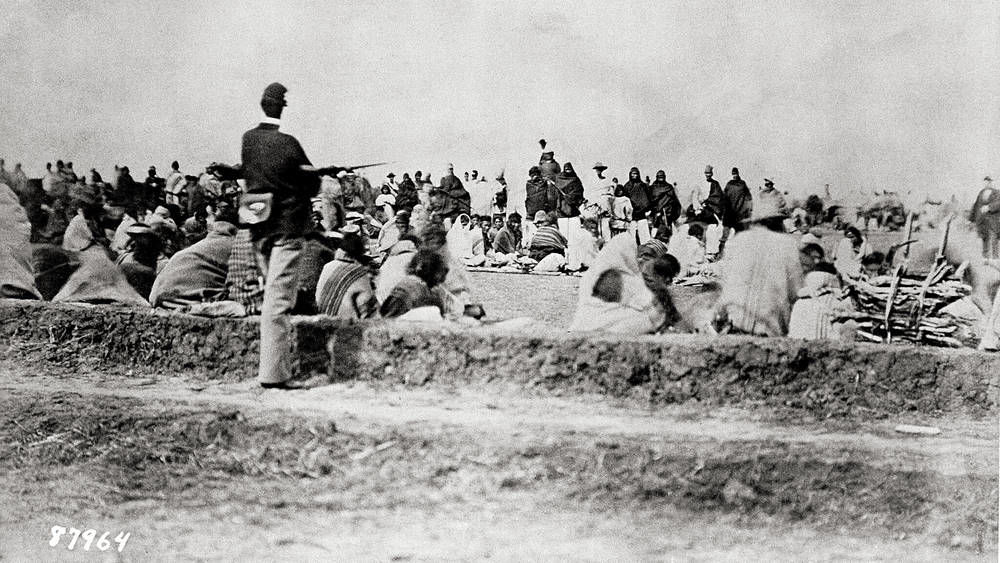
Decades later, when the Sioux and other indigenous people resisted white invasion and theft of their lands, Minnesota governor Alexander Ramsey responded with yet another call for genocide and ethnic cleansing. “The Sioux Indians of Minnesota must be exterminated or driven forever beyond the borders of the state,” he declared in 1862, offering a bounty of $200 — over $5,000 in today’s money — for the scalp of each fleeing or resisting Indian. Around 1,700 Dakota women, children and elderly were force-marched into a concentration camp built on a sacred spiritual site. Many didn’t make it there. According to Mendota Dakota Tribal Chair Jim Anderson, “during that march a lot of our relatives died. They were killed by settlers; when they went through the small towns, babies were taken out of mothers arms and killed and women… were shot or bayoneted.” Those who survived faced winter storms, diseases and hunger. Many did not make it through the winter.
Two years later, Civil War general and notorious Indian killer James Henry Carleton forced 10,000 Navajo people to march 300 miles (480 km) in the dead of winter from their homeland in the Four Corners region to a concentration camp at Fort Sumner, New Mexico. This followed a scorched earth campaign in which famed frontiersman Kit Carson tried to starve the life out of the Navajo, hundreds of whom died or were enslaved by white settlers and rival tribes during what became known as The Long Walk. Those who survived the death march to Fort Sumner faced starvation, lack of wood for heating and cooking during the bitterly cold winters and ravaging diseases. Daily depredations included a ban on prayers, spiritual ceremonies and songs. It is estimated that some 1,500 people died while interned at Fort Sumner, many of them infants and children.
Contraband
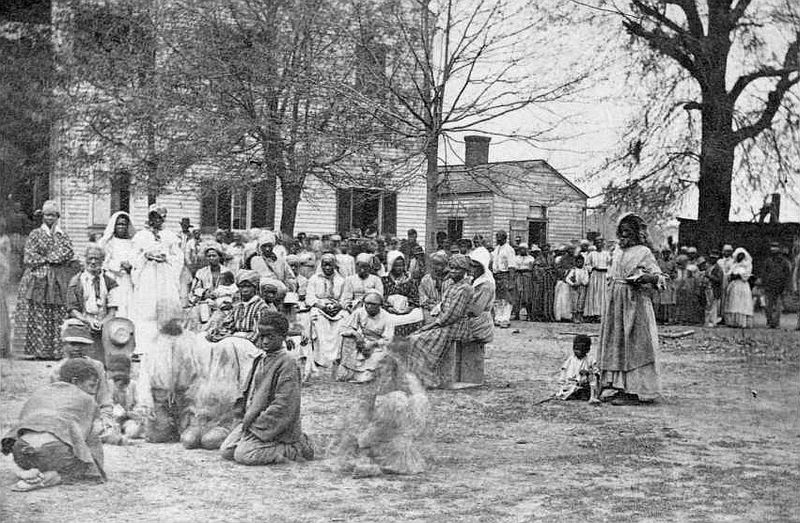
At about the same time, the Union Army was re-capturing freed slaves throughout the South and pressing them into hard labor in disease-ridden “contraband camps,” as escaped and freed slaves were considered captured enemy property. “There is much sickness, suffering and destitution,” wrote James E. Yeatman of the Western Sanitary Commission after visiting one such camp near Natchez, Mississippi in 1863. “There was not one house that I visited where death had not entered… Seventy-five had died in a single day… some had returned to their masters on account of their suffering.” At one camp in Young’s Point, Louisiana, Yeatman reported “frightful sickness and death,” with 30-50 people dying each day from disease and starvation. One camp near Natchez, Mississippi held as many as 4,000 black refugees in the summer of 1863; by fall 2,000 had already perished, most of them children infected with smallpox and measles.
‘Benevolent Assimilation’ in the ‘Suburbs of Hell’
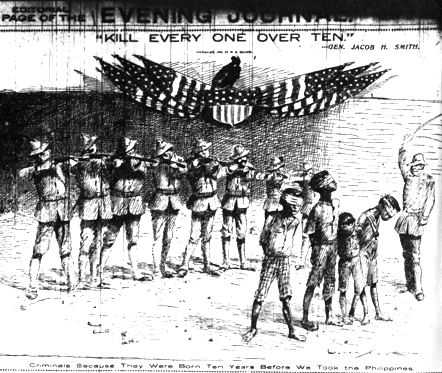
With indigenous peoples no longer standing in the way of its “manifest destiny,” the US set its sights on becoming a first-rate imperial power through overseas conquest and expansion. After overthrowing Hawaii’s monarchy and annexing its islands, war was waged against Spain, resulting in the capture of the first US colonies in Cuba, Puerto Rico, Guam and the Philippines. When Filipinos resisted, US commanders responded with tremendous cruelty. Echoing Andrew Jackson, President William McKinley called this the “benevolent assimilation” of the Philippines into the burgeoning US empire.
As General “Hell-Roaring” Jake Smith ordered his troops to “kill everyone over 10” in Samar, future president William Howard Taft, the US colonial administrator of the archipelago, instituted a “pacification” campaign that combined the counterinsurgency tactics of torture and summary execution with deportation and imprisonment in concentration camps, or reconcentrados, that one commandant referred to as the “suburbs of hell.” General J. Franklin Bell, looking forward to his new post as warden of the notorious Batangas reconcentrado, declared that “all consideration and regard for the inhabitants of this place cease from the day I become commander.”
He meant it. In December 1901 Bell gave the people of Batangas two weeks to leave their homes and report to the camp; everything they left behind — their homes, farms, livestock, food stores and tools — was stolen or destroyed by US troops. People who refused to report to the camp were shot, as were random prisoners whenever insurgents killed an American. Conditions were beyond horrific in many reconcentrados. Hunger, disease and torture, which included waterboarding, were rampant. In some camps, as many as 20 percent of internees died. In order to save food, 1,300 Batangas prisoners were forced to dig mass graves before being gunned down 20 at a time and buried in them. “To keep them prisoners would necessitate the placing of [US] soldiers on short rations,” one soldier explained. “There was nothing to do but kill them.”
Concentration Camps for US Citizens
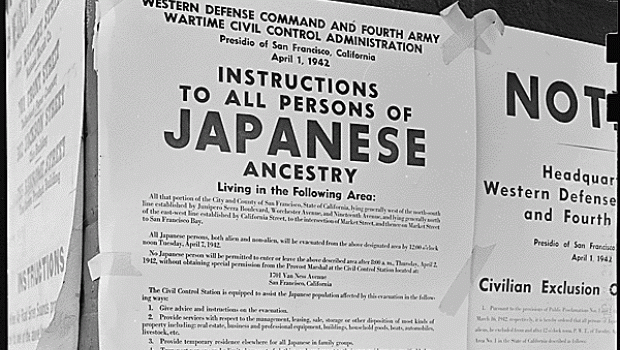
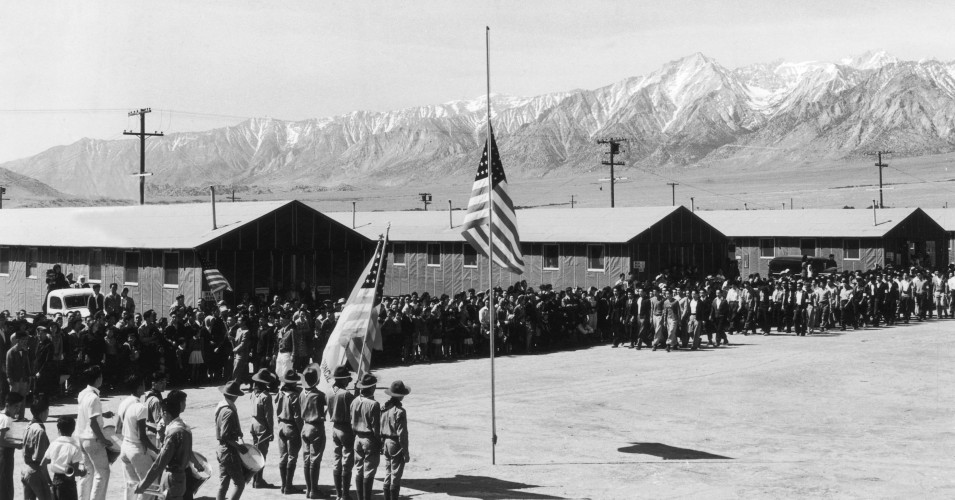
During both world wars, thousands of German nationals, German-Americans and Germans from Latin American nations were imprisoned in concentration camps across the United States. However, their race and relatively high level of assimilation saved most German-Americans from internment, and conditions were much better than they had been in previous US camps. Japanese-Americans weren’t so lucky. After the attack on Pearl Harbor, President Franklin D. Roosevelt issued Executive Order 9066, under which all people of Japanese ancestry living on the West Coast were rounded up and imprisoned in dozens of civilian assembly centers (where they were often forced to sleep in crowded, manure-covered horse stables), relocation centers, military bases, and “citizen isolation centers” — harsh desert prison camps where “problem inmates,” including those who refused to pledge allegiance to the United States, were jailed. Conditions varied by camp, but overcrowding, lack of indoor plumbing, fuel shortages and food rationing were common. Many of the camps were located in remote, scorpion- and snake-infested deserts.
Incredibly, thousands of Japanese-Americans volunteered to fight for the country that was imprisoning them for nothing more than their ethnicity. These were some of the most highly-decorated US troops in the war. Meanwhile, the Supreme Court sided with the government in three cases brought by Japanese-Americans challenging the constitutionality of their detention, and an American public caught in the grip of racist “yellow peril” hysteria acquiesced to the blatantly unconstitutional mass imprisonment. Internment would last the duration of the war, sometimes longer, with many detainees discovering their homes, businesses and property were stolen or destroyed when they were finally released. President Ronald Reagan would formally apologize and sign off on $20,000 reparation payments to former internees in 1988.
In addition to Japanese and some Germans, a smaller number of Italians and Italian-Americans were also imprisoned during World War II. So were the indigenous Aleuts of Alaska, who were forcibly evacuated before their villages were burned to the ground to prevent any invading Japanese forces from using them. Nearly 900 Aleuts were imprisoned in abandoned factories and other derelict facilities without plumbing, electricity or toilets; decent food, potable water and warm winter clothing were in short supply. Nearly 10 percent of the detainees died in the camps. Others were enslaved and forced to hunt fur seals.
During the early years of the Cold War, Congress passed the Subversive Activities Control Act of 1950 over President Harry Truman’s veto, which led to the construction of six concentration camps that were meant to hold communists, peace activists, civil rights leaders and others deemed a threat in the event the government declared a state of emergency. The act was upheld by the Supreme Court during the McCarthy/Red Scare years but in the 1960s the high court ruled that provisions requiring communists to register with the government and banning them from obtaining passports or government employment were unconstitutional. The camps, which were never used, were closed by the end of the decade.
From Japan to Vietnam
In a little-known atrocity, at least 3,000 Okinawans died from malaria and other diseases in camps set up by US troops after they conquered the Japanese islands during fierce fighting in 1945. During and after the war, Okinawans’ land and homes were seized at gunpoint and their houses and farms were bulldozed or burned to the ground to make way for dozens of US military bases. Some 300,000 civilians were forced into these camps; survivor Kenichiro Miyazato later recalled how “too many people died, so the bodies had to be buried in a single mass grave.”
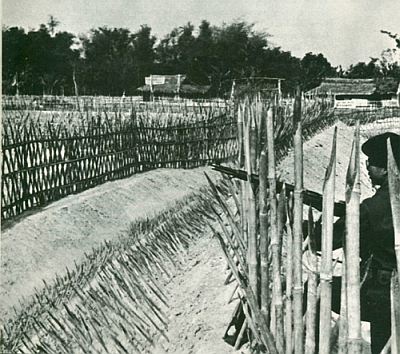
For sheer scale, no US concentration camp regime could match the Strategic Hamlet Program. In 1961 President John F. Kennedy approved the forcible relocation, often at gunpoint, of 8.5 million South Vietnamese peasants into over 7,000 fortified camps surrounded by barbed wire, minefields and armed guards. This was done to starve the growing Viet Cong insurgency of food, shelter and new recruits. However, few hearts and minds were won and many were indeed lost as US and South Vietnamese troops burned people’s homes before their very eyes before marching them away from their land, and with it their deepest spiritual bonds with their revered ancestors.
War on Terrorists and Migrants
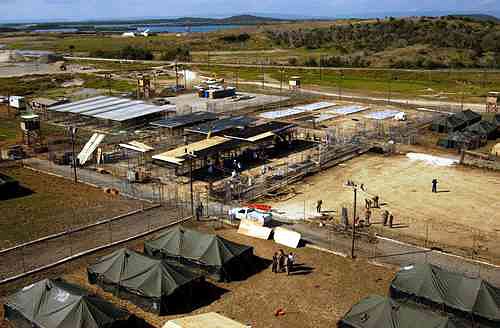
Although prisoner of war camps are not included in this survey of US concentration camps, the open-ended global war against terrorism started by the George W. Bush administration after the September 11, 2001 attacks on the United States has seen a blurring of lines between combatant and civilian detention. According to Col. Lawrence Wilkerson, the former chief of staff for Bush-era secretary of state Colin Powell, most of the men and boys held at the Guantánamo Bay military prison were innocent but held for political reasons or in an attempt to glean a “mosaic” of intelligence. Innocent civilians were also held in military prisons, some of them secret, in Iraq, Afghanistan and elsewhere. Many detainees were tortured and died in US custody. Some of these men have been held without charge or trial for as many as 17 years, while some deemed too innocent to charge remain imprisoned at GITMO despite being cleared for release for many years.
Now it’s the migrants’ turn. And despite the howling protestations of those who commit or justify the crime of tearing infants and children from their parents’ arms and imprisoning them in freezing cages that Trump officials have euphemistically compared to “summer camp,” there is no doubt that concentration camps are in operation on US soil once again. The Trump administration’s attempt to portray child imprisonment as something much happier instantly recalls World War II propaganda films showing content Japanese-Americans benefiting from life behind barbed wire. Actor George Takei, who was interned with his family for the duration of the war, was anything but content. “I know what concentration camps are,” he tweeted amid the current controversy. “I was inside two of them. In America. And yes, we are operating such camps again.”
Takei noted one big difference between then and now: “At least during the internment of Japanese-Americans, I and other children were not stripped from our parents,” he wrote, adding that “‘at least during the internment’ are words I thought I’d never utter.”
Published by Common Dreams, 06.21.2019, under the terms of a Creative Commons Attribution-Share Alike 3.0 license.
About the Author