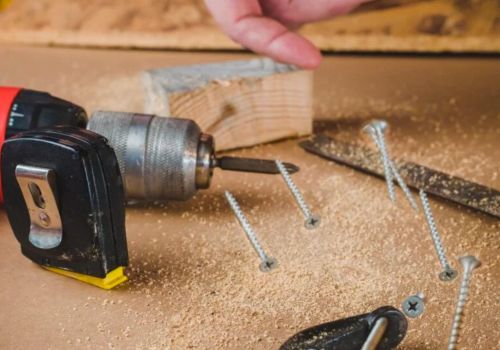
Modern infrastructure is often celebrated for its grand scale. Bridges stretch across rivers, railways connect cities, and towering buildings define skylines. Yet behind these impressive structures lies a quieter story about the hardware that made them possible. Bolts, screws, brackets, and anchors may appear small in comparison to the structures they support, but throughout history these components have played a critical role in shaping the built environment.
Looking back at the development of construction hardware reveals how improvements in fastening technology helped engineers build stronger, safer, and more ambitious projects.
Early Foundations of Structural Hardware
Long before modern manufacturing, builders relied on simple fastening methods such as wooden pegs, rope bindings, and hand-forged metal nails. Ancient civilizations used these materials to construct ships, homes, and large architectural structures.
In early timber construction, wooden dowels were commonly used to connect beams and joints. Blacksmiths later introduced iron nails and spikes, which provided stronger connections than wooden fasteners and allowed builders to construct larger frameworks.
Although these early fasteners were basic by today’s standards, they represented a major advancement. Stronger connections meant buildings could withstand heavier loads and environmental stress.
The Industrial Revolution and the Rise of Mass-Produced Hardware
The true transformation of construction hardware began during the Industrial Revolution in the late eighteenth and nineteenth centuries. Advances in metalworking and manufacturing made it possible to produce nails, bolts, and screws in large quantities with consistent quality.
Mass-produced fasteners allowed builders to construct railways, factories, and bridges on an unprecedented scale. Steel bolts and rivets became particularly important during this period, as they were widely used in the construction of large iron bridges and industrial buildings.
Iconic infrastructure projects from the nineteenth century relied heavily on these developments. Riveted steel frameworks, for example, were used extensively in bridges, railway stations, and early skyscrapers.
This period marked the beginning of a shift toward precision-engineered fixings that could reliably support the heavy loads required in modern infrastructure.
Rivets, Bolts, and the Age of Steel Construction
As steel became the dominant structural material in the twentieth century, fastening systems evolved alongside it. Rivets were widely used in early steel structures because they provided strong, permanent connections between metal components.
Large bridges, ships, and industrial buildings often contained thousands of rivets holding steel plates together. The technique required skilled workers who heated rivets until they were red hot before hammering them into place.
Eventually, high-strength bolts began to replace rivets in many structural applications. Bolted connections allowed faster installation and easier maintenance while still providing the strength needed for heavy structural loads.
This shift represented another step forward in the development of infrastructure hardware, improving both efficiency and reliability.
The Growth of Specialized Fixings
As construction techniques advanced, so did the variety of hardware used in projects. Builders began to rely on specialized fixings designed for specific materials and applications.
For example, threaded rods made it easier to suspend mechanical systems such as pipework and ventilation from structural frames. Expansion anchors allowed engineers to secure fixtures directly into concrete, opening new possibilities for modern building design.
At the same time, advances in materials science introduced corrosion-resistant coatings and stainless-steel fasteners. These innovations helped hardware perform reliably in challenging environments such as coastal areas, industrial facilities, and high-moisture environments.
Today, construction professionals have access to a wide range of fastening solutions supplied by specialist distributors such as Tradefix Direct, making it easier than ever to find hardware suited to specific building requirements.
Hardware in Modern Infrastructure
Modern infrastructure depends on a vast network of fastening systems that connect structural materials and support complex installations. From high-rise buildings to transport networks, hardware plays a vital role in maintaining stability and safety.
Structural bolts secure steel frameworks, anchors fasten components to concrete foundations, and brackets reinforce connections between structural elements. Even modern mechanical systems such as electrical conduits, HVAC equipment, and cable management rely on specialized fasteners to remain securely mounted.
These components may be hidden behind walls or beneath floors, but they’re essential to the performance of modern buildings and infrastructure.
The Engineering Behind Small Components
One of the most remarkable aspects of construction hardware is the amount of engineering involved in designing such small components. Fasteners must withstand significant forces, including tension, shear, vibration, and environmental exposure.
Engineers carefully calculate the strength of these components to ensure they perform reliably under demanding conditions. Factors such as thread design, material composition, and protective coatings all contribute to the performance of modern fixings.
Because of this attention to detail, hardware that appears simple at first glance often represents decades of engineering development.
A Legacy That Supports the Future
The history of construction hardware reflects the broader story of engineering progress. As builders developed new materials and structural techniques, fastening systems evolved to support them.
From hand-forged nails to precision-engineered bolts and anchors, these small components have played a crucial role in shaping modern infrastructure. They allow buildings to rise higher, bridges to span greater distances, and systems to function safely within complex structures. Although they rarely attract the spotlight, the hardware used in construction remains one of the most important foundations of the built world. The structures that define modern cities depend not only on large-scale engineering but also on the strength and reliability of the smallest components holding everything together.
About the Author