The French found an interest in local food resources as soon as they arrived in North America.

By Dr. Yvon Desloges
Retired Research Historian
Parcs Canada
Introduction
What did the inhabitants of New France eat? This is a significant question, considering the importance of the culinary arts in French culture today, particularly since UNESCO recently classed French cuisine as a world heritage resource. Were the French of the New World just as adventurous about discovering Amerindian culinary culture as they were about exploring the continent’s geography? We are well aware of the importance of many indigenous American vegetables in our daily fare, vegetables first cultivated by Aboriginal peoples: potatoes, corn, squash… But did the first colonists immediately embrace foods that were entirely new to them?
The French, in fact, found an interest in local food resources as soon as they arrived in North America. They incorporated into their diet wild game, birds, and fish, as well as native edible plants, yet they returned to growing vegetables and cereal crops and raising European livestock as soon as they could. They could not do without bread, lard, beef, fare that even today occupies an important place in the menus of their descendants. Of the various social classes, the colonial elite appeared to be the most attached to French culinary traditions. Unlike most of the population, they had the means to buy imported products. That said, the exchange in culinary traditions did go both ways: while certain products were imported from the mother country, others were shipped in the opposite direction. We might wonder whether, thanks to the mix of Aboriginal and French foods, the inhabitants of New France didn’t wind up with a better diet than the French in Europe.
Adapting to Native Flora and Fauna
Edible Plants

Despite the abundant resources that the new continent had to offer, native foods provided the basis of subsistence only until European cereal crops and livestock could be established. Among the plants that Aboriginal people grew, corn, beans, squash and Iroquois pumpkin were the most important. Corn, unless roasted, did not excite much enthusiasm among the colonists. It was food for the coureurs de bois,missionaries or for lean times. Sunflowers were not particularly appealing either; people recognized the quality of the oil, but it did not succeed in replacing olive oil imported from France. Only beans and squash were adopted for a while. On the other hand, the Iroquois pumpkin, with its green shell marbled with various colours, gained widespread popularity.
Most wild fruits, such as strawberries, raspberries, gooseberries and currants were already known in Europe. Cherries, apples and plums did not tickle the taste buds as much as blueberries, cranberries or butternuts. Wild grapes, after a brief period of optimism, proved immensely disappointing. Wild herbs such as parsley, chervil, garlic and chives piqued curiosity, but most people preferred domestic varieties from France. Artichokes were all the rage both in the colony and in France in the 17th century but vanished from menus in the following century. Maple sap would not be used until the end of the 17th century, but for sugar, not for syrup.
Was Champlain a Botanist?

On a voyage during the years 1599–1602 that took him to the Caribbean and New Spain, Champlain produced detailed descriptions of landscapes, fauna and flora as well as the ways of life of Aboriginal peoples. In his ‘Brief discours des choses plus remarquables que Samuel Champlain de Brouage a reconneues aux indes occidentales,’ Champlain provides us with a description of the corn, melons and squash he discovered there:
“The Indians use a kind of corn which they call ‘Mamaix’ (maize), which is of the size of a pea, yellow and red: and when they wish to eat it, they take a stone, hollowed like a mortar, and another, round, in the shape of a pestle: and after the said corn has been steeped for an hour, they grind and reduce it in the said stone; then they knead and bake it in this manner: they take a plate of iron, or of stone, which they heat on the fire: and when quite hot they take their paste and spread it upon the plate rather thin, like tart paste; and having thus cooked it, they eat it while hot, for it is good for nothing, cold, or kept […]. In the said country, there are numbers of melons of strange size, which are very good; the flesh is quite orange-colour; and there is another sort, of which the flesh is white, but they are not of such good flavour as the others. There are also quantities of cucumbers, very good; artichokes, good lettuces, like those called with us ‘romaines,’ cabbages, and numerous other kitchen herbs, also pumpkins, which have red flesh, like the melons.”
1859 English translation by Alice Wilmer

Of course, Champlain also identified the cultigens (cultivated plants) of European origin that he recognized in the gardens of Spanish immigrants!
Ground Game and Wildfowl

During the era of the exploration and colonization of Canada, in France, meat was uncommon fare for peasants, whose meals usually consisted of a cereal and vegetable stew. It was not surprising that colonists were astonished by the abundance of large game in the colony and relished it from time to time. Moose was compared to beef, and bear to pork. According to the superior of the Sulpicians, Dollier de Casson, the flavour of Virginia deer surpassed that of all other venison. However, hunting was not an ordinary activity for the first Europeans on the continent. In fact, the French had consumed increasingly smaller quantities of meat since the mid-16th century, because the nobility had monopolized the forests and made them their private hunting grounds. Analyses of wildlife remains on archaeological sites confirm that the first colonists were not very accustomed to eating wild game. They suggest that the settlers depended very little on local wildlife and imported most of their food from France. This practice, which would become more pronounced over time, can be partly explained by the scarcity of firearms among the colonists and by the fur trade, which drove large game away from inhabited areas. At most, game merely supplemented a diet based on domestic plants and animals.

Small wildfowl were less affected by the impacts of land clearing and deforestation than animals like moose or deer. Early observers were astonished at their abundance and variety, including Canada geese, other species of geese, partridges, teals, ducks and pigeons. The arrival of passenger pigeons in May was considered a godsend. Almost everyone ate these birds during the period called the “dove season” (temps des tourterelles), to the point where, in 1710, the butchers of the city of Québec complained about selling far less meat during this time. The passenger pigeon was the most highly prized game, as zooarchaeological data attest. Easily killed with a gun or captured in a net, it could be prepared for use in many different sauces.
Fish
Rivers and lakes teemed with an incredible variety of fish. In a Catholic colony with strict liturgical dictates, fish was an undeniable asset. The liturgical calendar required colonists to abstain from eating meat, but not fish, on nearly 150 days of the year: Friday and Saturday of every week, the forty days of Lent between Shrove Tuesday and Easter and the day before certain religious ceremonies. Favourite fish included a basic triad of eel, cod and salmon, and to a lesser degree, shad, and tilefish. Eel, rich in fat and proteins, was particularly appreciated in the 17thcentury. People also ate bass, walleye, muskellunge, sturgeon, pike, trout and turbot.
Beaver

Fish or game? That was the question the religious administration wondered about during the 17th century and that it submitted to the theologians of the Sorbonne. The theologians decided in favour of fish! Beaver did not, however, wind up on everyone’s table on fasting days; in fact, the fur trade and deforestation drove this mammal out of the St. Lawrence Valley.
The Introduction of European Species
Plants

From the first attempt at colonization by Cartier and Roberval, in 1541–1543, domestic plants brought from France were cultivated. In his garden at Cap-Rouge, Cartier grew cabbages, beets and lettuce, which adapted well to the climate, according to Roberval’s account.

Archaeobotanical research has added wheat, barley, peas and mustard to this list. Some 65 years later, Samuel de Champlain, encouraged by his experience in Acadia, had cereal crops and numerous varieties of vegetables and herbs planted in his gardens surrounding the Habitation de Québec.

In addition to what Cartier had planted, Amerindian cultigens were planted: corn, beans, squash and pumpkins. Louis Hébert, the first colonist of the St. Lawrence Valley, continued along the same lines by also using plants from the mother country. Later, the list of vegetables and herbs expanded as gardens multiplied.
Fruits and Vegetables

Champlain and Hébert both planted apple trees in the Quebec area, imported from Normandy. By 1636, the Jesuits had an orchard containing apple, pear and other fruit trees in the city of Québec. Later, all of the religious institutions of Québec and Montréal, as well as administrators and high-level public servants had gardens.

The Swedish botanist Pehr Kalm, visiting the Récollets at Québec in 1749, mentions their “vast, beautiful gardens and the large kitchen garden.” The “vast, beautiful gardens” were ornamental, used for contemplation and meditation. They included flowers, fruit trees, deciduous trees and ponds.

The kitchen gardens provided vegetables and herbs for food, and sometimes, medicinal herbs. Among the residents of the city of Québec, one resident in five in Upper Town and the quartier du Palaisgrew a garden in their back yard. In Montréal, 50% of residents did so. In the rural area surrounding Québec, one household in seven kept an orchard of apple or plum trees or currant bushes.
Domestic Animals
Animals were shipped from France very early in the history of the region. In 1541, Jacques Cartier brought with him cattle, goats and pigs to raise in the colony of Cap-Rouge. In the early 17th century, pigs and cattle were raised on Champlain’s farm at Cap-Tourmente, which was used as a food reserve for the Habitationand Fort Saint-Louis. By the end of the French regime, the farm had over 130 head of cattle, about ten horses, nearly twenty sheep and lambs, about forty hens and a few turkeys and ducks. At the time, it was one of the largest farms in the colony. Throughout the French regime, cattle were the most important farm animal. Next came pigs, while sheep gained steadily in importance over the period. Colonists apparently preferred raising sheep in areas when fodder was in short supply, or where they encountered poor soil.
The first horse in the St. Lawrence valley belonged to governor Montmagny, in 1647. Shortly after King Louis xiv decided to directly administer the colony, in 1663, he shipped twelve mares and two stallions. The horses proliferated to such an extent that Intendant Raudot had to prohibit, by ordinance, the inhabitants of the Montréal area from owning more than two plus a colt. Horses were used for farm work where the soil permitted, which freed up some of the cattle livestock. That is why horses were not slaughtered. The Canadiens did not eat horse meat; they couldn’t bear the thought. The colonial authorities would attempt to convince them to do so during the great hardships of the Seven Years’ War, but without much success.
Staple Foods
Bread

In the colony as in France, bread was a dietary staple. Indications of its significance appeared as early as 1636, in employment contracts between the Jesuits and their servants. They received a kilo of bread per day, a ration that would later become the norm. In New France, bread represented from 60 to 85% of the total daily food intake.

In towns and in rural areas alike, bread was known to be of good quality: of pure wheat, it was just as beautiful and white as in France and it took the form of an oblong cob-shaped loaf. The less bran the flour contained, the more nourishing and flavourful the bread was considered to be. Bread that was not purged of bran, or “brown bread,” was considered unfit for human consumption according to 18thcentury concepts of nutrition. Wheat bread had such an important place in diet that corn was rejected as a cereal suitable for bread making, contrary to both Aboriginal custom and that of the English colonies in New England.
Meat

Cattle were usually slaughtered young, as frequent shortages of fodder forced the colonists to keep their livestock for as short a time as possible. Bone analyses confirm that they were often slaughtered before the age of four years. Beef was more easily available than was pork, and it was sold for 10 to 15% less. The State monitored abuse by regulating prices.
Just as cattle were the most common stock animal, beef was the favourite meat, followed by pork; mutton was somewhat less appreciated. However, during the wars of the mid-18th century, sheep livestock became more important, and in the Québec City area, annual family consumption rose from 5 to 14 kilos, from 1690 to 1759.

The farmyard typically contained hens, roosters, capons and turkeys. There were a few geese, but ducks were not kept as domestic birds. The poultry population declined during winter, as the cold interrupted nesting and the hatching of eggs. A portion of the poultry thus wound up in the cauldron before the winter cold set in. By the mid-18thcentury, technical innovations fostering nesting and egg hatching became popular; in particular, Réaumur’s thermometer and incubator.
Lard or Pigs
Low milk production resulted in a limited production of butter. Since fat is essential in cooking, people had to turn to other sources. Lard or animal fat was much more available and much less costly than imported olive oil. In households from Québec through the Richelieu Valley to Montréal, the consumption rate for lard was five times that of butter. It was so much in demand for enhancing the flavour of meals that a family consumed about forty kilos per year. The colonists raised pigs more for the fat than the meat, but this did not prevent them from savouring cutlets and other fresh cuts during the main butchering season.
Milk and Dairy Products

Less important than lard, butter was nevertheless appreciated in cooking. It was usually eaten salted, during winter and on fasting days, when it could substitute for lard. The usual Catholic ban on butter during fasting days was suspended in Canada after 1660, and remained so until the early 19thcentury. Cheese was not a common food in New France. Small quantities were made at Île d’Orléans, another variety came from the Repentigny region and there was also some “country cheese,” of unspecified origin and composition. Some documents also refer to cream cheese. Throughout the entire French regime, cheese production remained of little importance, and most of the information on this topic concerns imported varieties.
The Menu of the Majority

The oblong cob-shaped loaf was eaten morning, noon and evening. Dipped in brandy at breakfast, it could also be eaten with slices of onion. Bread was also appreciated with soup that was prepared without meat, as the Swiss botanist Pehr Kalm noted. The settlers had a soft spot for cucumbers, which they prepared with sweet or sour cream or in a fricassee. Vegetable accompaniments were limited in variety; the most common were onions and cabbage. People could always rely on soup, made from all of the most common vegetables, such as peas, cabbage or onions. Apparently, onion soup delighted everyone’s palate.

Settlers were fond of beef stew as a main dish. In fall, they might serve goose roasted with apples or roasted barded poultry. Fat was used but in moderation. Fish was eaten at noon or in the evening. Although documents explain the preparation, they are silent about the ingredients used in fish dishes. Turbot was seasoned with salt and herbs of “strong flavour.” Sturgeon was eaten in a sauce. Tom-cod was fried, while eel was consumed smoked, roasted or boiled. Charlevoix even indicated that eel was hung with its skin to be smoked in the chimney, the oil allowed to drip into the fire below.
Dessert, although it is not clear how often it was enjoyed, consisted of plums, apples, fruit preserves, and in season, wild or garden berries. Overall, diet was rather varied, with bread as the central staple.
According to Madame Bégon, notables gathered at the home of Nicolas Morand in Monteal to hold “grand parties.” The governor of Longueuil and his staff officers sometimes took up residence there, alternating between administrative tasks and more frivilous pleasures. On occasion, the “parties” degenerated into drunken binges with guests struggling to dance the minuet. At other times, the feasting would begin at noon and wind up late in the evening. Montréal had no reason to envy the capital!
Beverages
Non-Alcoholic Beverages
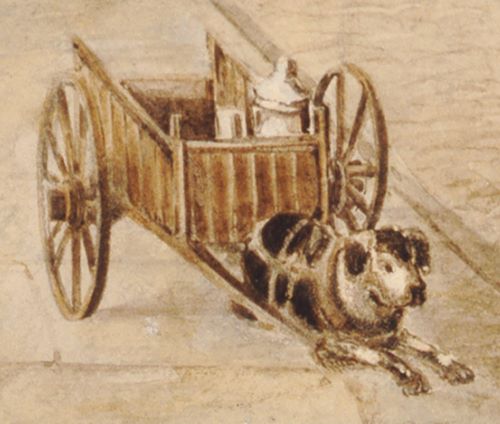
Everyone drank their fill of water. The settlers had access to wells and the residents of Québec and Montréal used public fountains located in every neighbourhood. These fountains also beautified the city and were used to fight fires.
In summer, city dwellers and rural folk alike drank milk. Milk was considered an ideal summer food, and replaced a significant portion of the meat ration. According to Pehr Kalm, who visited rural areas and cities, milk was plentiful everywhere; it was usually consumed cold or curdled, with sugar and wheat bread.

By the mid-17th century, Pierre Boucher noted that the settlers drank beer made from spruce needles, a drink that helped prevent scurvy or vitamin C deficiency.
The consumption of coffee, reserved for the elite, became more widespread starting in the 18th century. The most familiar varieties were coffee from the French Antilles (Martinique and Guadeloupe) and mocha coffee. In 1748, coffee was also imported from Île Bourbon (Réunion Island in the Indian Ocean). It was taken black or with milk at lunch.

The first mention of chocolate dates from 1702, in the city of Québec, in the inventory of the store of the wealthy merchant Charles-Aubert de La Chesnaye. A luxury commodity, chocolate came from the coast of Caracas, Venezuela, the French Antilles (Martinique) or Cuba. It came in the form of logs or beans dried in the sun which were grated into a powder. The more affluent would serve it in magnificent copper or ceramic chocolate pots.
Alcoholic Beverages
Settlers drank what they called the “bouillon.” Easily made, it was accessible to everyone since it was a water-based beverage in which a ball of sourdough was fermented for a few days. However, the extent of consumption is not known. A number of religious institutions and some proprietors of orchards in Québec and Montréal made cider which they sold at prices at times unaffordable for most citizens.

Little is known about the consumption of beer. We do know that Intendant Talon briefly ran a brewery in Québec, from 1668 until around 1675. The annual production of some 800,000 litres was mostly shipped to the Antilles. Cottage-type brewers would later continue the practice in both Québec and Montréal.
Two types of spirits circulated in the colony: spirits imported from France, such as cognac, armagnac and calvados, and rum from the West Indies (also called tafia or guildive). Imported beginning in the 1730s, rum did not become popular right away. French spirits were preferred by far, especially among the settlers: they consumed approximately 20 litres per year, or 55 mL daily, the equivalent of a shot of liquor every morning. This practice, which moreover was part of the breakfast ritual from the beginnings of the colony, is in accord with the nutritional concepts of the day, which held that it fortified the body. People also drank spirits on other occasions, particularly at celebrations and feasts.

After several unsuccessful attempts to cultivate the colony’s wild grapes, officials and merchants turned to imports. Until the 1670s, wines mainly came form the regions of Aunis, Saintonge and Angoumois. Since they arrived in barrels from the port of La Rochelle, they were called La Rochelle wines. Light wines were also imported from Île-de-France and Bordelais. Lastly, certain more expensive wines, savoured on the occasion of festivities, were imported from Spain and Navarre.
The 18th century brought about changes: most wines came from the Bordelais region, and the quality greatly improved. Among the superior quality wines and vintages were white and red Graves and Gaillac. Cahors wines are worthy of mention. Excellent fortified wines were also imported from Spain, France and Portugal. These had a special place in the ritual of the meal: they were served after the meal, before dessert or the cheese.

Wine was more accessible in urban centres than in rural areas. In the city it was mainly found in the dwellings of the wealthiest and those who sold it, such as merchants, innkeepers and tavern keepers. Ordinary people could get wines and other alcoholic beverages in public places, but wine was not part of their daily diet. In the country, we know from the accounts of contemporary inhabitants of the era that wine was mainly used for medicinal purposes. This was most likely also true for most city dwellers. Moreover, wine was used on occasion in the hospitals of Québec and Montréal.
Sugars
Imported Sugar

In the colony, most types of sugar were imported, even though maple sugar was produced in the 17th century. Honey was also produced but it was not very popular. Its presence in the offices of surgeons suggests that it was used for its medicinal properties.

Sugar came from the French Antilles and was shipped via France before arriving in the St. Lawrence Valley. It appeared in the city of Québec in the form of sugar loafs, highly refined granulated sugar (white or grey), and the coarser types, known as cassonade, which came in a range of hues, from brown to white. Sugar continued to be a secondary import commodity throughout the French regime. Annual consumption of molasses, which only became somewhat popular after 1720, barely exceeded one litre per person. Imports of other kinds of sugar, although they increased somewhat between the 17th and 18thcenturies, were hardly more significant. For instance, in 1733, they amounted to little more than one kilo per person.
Maple Sugar

The data on maple sugar consumption varies considerably. According to some sources, annual production in the St. Lawrence valley varied between 6,800 and 13,600 kilos. In the 1750s, the physician Gaultier instead referred to an annual production of under 10,000 pounds (4,500 kilos) or, less than 100 grams per person. Finally, Pehr Kalm observed during the same period that the consumption of maple sugar was widespread among the Canadiens.

A detailed analysis of food rations in the city of Québec and the surrounding area reveals that imported sugar and maple sugar did not play an important role in diet: only 1.5% of people requested sugar, which hardly represents 1.5 kilos per person per year. This level of consumption slightly exceeded that of the French of the period, at 1.2 kilo per person. However, it was significantly different from that of the English which in 1792, attained 6.7 kilos per person. This situation was all the more paradoxical since at the time, France dominated the sugar trade in Europe. Sugar consumption was thus much more a matter of taste than a question of access to the product. For the purposes of comparison, today, annual consumption is 26 kilos per person.
Was maple sugar a Native American contribution to the Canadien diet? It is clear that Aboriginal people harvested maple sap and made a kind of syrup. The Récollet Chrestien Leclerq provides us with the first description, in 1691, of transforming maple sap into syrup on the North American continent. The Aboriginal group involved (Mi’kmaqs) reduced the sap by one-third, by boiling it in wood tubs or troughs, to get a reddish coloured syrup.

The other means of obtaining maple syrup was by cold reduction. This consisted of collecting sap in bark receptacles and exposing it to freezing temperatures overnight. The water rose to the surface and froze. A syrup could be obtained after repeating this operation over several days. However, this method did not produce dry sugar. Could the pottery used by Native people withstand the heat required to make sugar? It is difficult to say.
What is clear is that this pottery was quickly abandoned in favour of European iron and copper kettles. Should we accept what the Jesuit Charlevoix had to say about the Amerindians, who, he claimed “did not know how to make sugar as we taught them to do. They were content with boiling it two or three times to thicken it a bit”?
Food Preservation
Food preservation took different forms depending on the time of year, the place, or the social or occupational situation. The winter cold was an excellent way of preserving meat and fish. Both in town and in the country, the attic could be used to freeze winter food provisions; everyone hoped that mild spells would be short. Country folk could improvise cold storage near their homes by burying pieces of ice in the ground or by building something resembling an ice cellar beneath their home. According to several other observers, food frozen in this way kept its flavour throughout the winter. A real ice cellar was the privilege of a few, such as the governor, religious communities or the butcher. Vegetables were preserved in underground root cellars. They kept well, although their flavour would begin to change by the end of winter.
As for fruits, only apples seemed to keep well, except of course, fruits preserved in sugar. Salt was one of the most effective preservatives, and salting was frequently used for meat and fish. Smoking, the method widely used by most Aboriginal groups, was also a familiar technique in certain areas where the custom was to hang hams in the chimney. Finally, drying food did not appear to be a common practice in the colony, although some foods imported from France were shipped in dried form, such as artichokes and mushrooms.
British Influence after 1760
By the end of the 17th century, as European crops and livestock became well established, the Canadian colonists abandoned the native food stuffs they had borrowed from their Aboriginal neighbours. From that time on, their diet became decidedly French: it was centred on bread, soup and beef. Of the local resources, only fish, small quantities of game, native berries and herbs continued to be consumed. The British Conquest gradually changed these customs. The first item of change, the potato, was introduced in 1764, and spread to such an extent that half a century later the daily bread ration had diminished by half.
A few decades later, tea became essential with its corollary, sugar, as the hot beverage was consumed very sweet, with a hint of milk, This clashed with earlier dietary customs, and explains the comparatively slow acceptance of tea by the Francophone community, since tea was abundantly available by 1760. By the mid-1780s, dietary patterns began to reflect the mixing of English and French customs.
Suggested Reading
- Bouchard-Perron, Julie-Anne, and Allison Bain, “From Myth to Reality: Archaeobotany at the Cartier-Roberval Upper Fort Site,” Post-Medieval Archaeology, vol. 43, no 1, 2009, pp. 87–105.
- Champlain, Samuel de, A narrative of a voyage to the West Indies and Mexico in the Years 1599-1602. With Maps and Illustrations. Translated from the original and unpublished manuscript, with biographical notice and notes by Alice Wilmer. N. Shaw (ed.). London, printed for the Hakluyt Society. 1859.
- Dépatie, Sylvie, “Jardins et vergers à Montréal au xviiie siècle,” in Sylvie Dépatie et al., Vingt ans après Habitants et marchands. Lectures de l’histoire des xviie et xviiie siècles canadiens. Montréal and Kingston: McGill-Queen’s University Press, 1998, pp. 226–253.
- Desloges, Yvon, À table en Nouvelle France. Alimentation populaire, gastronomie et traditions alimentaires dans la vallée laurentienne avant l’avènement des restaurants. Québec: Septentrion, 2009.
- Desloges, Yvon, and Marc Lafrance, “La consommation du gibier en Nouvelle-France,” Mémoires vives. Revue québécoise d’archéologie historique, nos 6–7, spring-summer 1994, pp. 37–61. For the original English version, see “Game as Food in New France,” Peter Benes (ed.), New England’s Creatures: 1400–1900, The Dublin Seminar for New England Folklife, vol. 18, 1993, Boston: Boston University, pp. 24–44.
- Ferland, Catherine, Bacchus en Canada. Boissons, buveurs et ivresses en Nouvelle France, Québec, Septentrion, 2010.
- Flandrin, Jean-Louis, Philip and Mary Hyman, Le cuisinier françois. Paris: Montalba, 1983, pp. 12–100.
- Flandrin, Jean-Louis, “La distinction par le goût,” in Philippe Ariès and Georges Duby, Histoire de la vie privée, tome 3. Paris: Seuil, 1986, pp. 266–308.
- Guimont, Jacques, La petite ferme du Cap Tourmente. De la ferme de Champlain aux grandes volées d’oies. Sillery: Septentrion, 1996.
- Huetz de Lemps, Alain, “Boissons coloniales et essor du sucre,” in Jean-Louis Flandrin and Massimo Montanari, Histoire de l’alimentation. Paris: Librairie Arthème Fayard, 1996, pp. 629–641.
- Hyman, Philip and Mary, “Imprimer la cuisine: les livres de cuisine en France entre le xve et le xixe siècle,” in Jean-Louis Flandrin and Massimo Montanari, Histoire de l’alimentation, Paris: Fayard, 1996, pp. 643–655.
- Lafrance, Marc, “De la qualité des vins en Nouvelle-France,” Cap-aux-Diamants. La revue d’histoire du Québec, no 28, winter 1992, pp. 14–17.
- Lafrance, Marc and Yvon Desloges, Goûter à l’histoire. Les origines de la gastronomie québécoise, Montréal: Les Éditions de la Chenelière, 1989. Also published in English as A Taste of History. The Origins of Québec’s Gastronomy. Montréal: Les Éditions de la Chenelière, 1989.
- Martin, Paul-Louis, Les fruits du Québec. Histoire et traditions des douceurs de la table. Québec: Septentrion, 2002.
- Saunders, R. M. “The First Introduction of European Plants and Animals into Canada,” Canadian Historical Review, vol. xvi, no 4 (1935), pp. 388–406.
- Toussaint-Samat, Maguelonne, Histoire de la cuisine bourgeoise du Moyen Âge à nos jours. Paris: Albin Michel, 2001.
Originally published by the Virtual Museum of New France, Canadian Museum of History, republished with permission for educational, non-commercial purposes.
About the Author