Ancient Greece and Rome lacked copyright law, yet fiercely defended authorship, exposing plagiarism and forgery through reputation, rivalry, and public judgment rather than legal enforcement.

By Matthew A. McIntosh
Public Historian
Brewminate
Introduction: The Problem of Authorship in Antiquity
The concept of authorship in antiquity occupied an ambiguous and often unstable position, shaped less by formal legal structures than by cultural expectations and social recognition. Unlike the modern world, where copyright law defines ownership and enforces boundaries around intellectual production, ancient Greek and Roman societies operated without a comprehensive legal framework governing literary or artistic property. Yet this absence of codified protection did not imply indifference. On the contrary, evidence from literary, philosophical, and artistic sources reveals that ancient audiences were acutely aware of questions of originality, attribution, and intellectual honesty, even if they articulated these concerns in terms different from those used today.
At the heart of this issue lies a fundamental tension between imitation and originality. Classical education in both Greece and Rome was built upon imitation as a central method of learning, not simply as a mechanical exercise but as a disciplined intellectual process through which students internalized language, style, and argument. Young writers were expected to study exemplary texts, reproduce their structures, and develop their own voice through engagement with established models. This process, known broadly as mimesis, was not merely tolerated but celebrated as a pathway to excellence, linking creative production to a lineage of authoritative voices. Philosophers such as Plato and Aristotle treated imitation as a natural and even necessary aspect of human cognition, though they differed in their evaluation of its value and limits. Originality did not mean creating something wholly new from nothing but rather transforming inherited material in a way that demonstrated skill, judgment, and intellectual distinction. There existed a clear cultural boundary separating legitimate imitation from deceptive appropriation. To imitate was to engage in a recognized intellectual practice grounded in respect for tradition; to claim another’s work as one’s own was to disrupt that tradition by severing the link between creation and attribution. Such acts were not only dishonest but also destabilizing, as they undermined the systems of recognition upon which literary culture depended. The distinction, though often subtle and context-dependent, was nonetheless meaningful and widely understood, enforced not through legal penalties but through the powerful mechanisms of reputation, criticism, and public exposure.
This distinction becomes particularly visible in cases where ancient writers explicitly accused others of intellectual theft. The Roman poet Martial, writing in the first century CE, famously denounced a fellow poet, Fidentinus, for publicly reciting Martial’s epigrams under his own name. Martial’s response was not framed in legal terms but in moral and social ones, emphasizing the dishonor inherent in such behavior and appealing to the judgment of an informed audience. Similarly, the biographical tradition preserved by Diogenes Laertius includes accusations against the philosopher Heraclides Ponticus, who was alleged to have appropriated a treatise on Hesiod and Homer. These examples demonstrate that, even in the absence of formal enforcement mechanisms, the idea of intellectual ownership carried real weight within literary communities.
The problem of authorship was further complicated by the material and institutional conditions of textual transmission. In a world where works circulated through oral performance, manuscript copying, and library collections, the boundaries of authorship were inherently porous. Texts could be altered, excerpted, or misattributed as they moved across regions and generations. The rise of major centers of learning, such as the Library of Alexandria, introduced new forms of scholarly oversight, including efforts to authenticate texts and identify authoritative versions. Yet these developments did not eliminate disputes over attribution. Instead, they often intensified them, as scholars gained new tools for detecting inconsistencies and exposing fraudulent claims. Artistic production presents a parallel set of challenges. In the visual arts, workshops frequently produced objects in established styles, blurring the line between original creation and replication. Some artists signed works they did not produce, while others created deliberate forgeries designed to imitate prestigious forms, such as Athenian ceramics or Egyptian-inspired artifacts. As in literature, the issue was not imitation itself, which was ubiquitous and often necessary, but the intention to deceive. The existence of such forgeries suggests both a market demand for authenticity and a corresponding anxiety about its falsification.
These literary and artistic examples reveal a cultural landscape in which authorship was neither fixed nor irrelevant but contested and negotiated. Ancient societies lacked the legal mechanisms that define intellectual property today, yet they developed their own systems of recognition, critique, and enforcement rooted in reputation and communal judgment. The resulting tension between imitation and originality, between shared tradition and individual claim, forms the foundation for understanding ancient attitudes toward plagiarism and forgery. Far from being a modern concern projected backward, the problem of authorship in antiquity was a lived and debated issue, one that exposes enduring questions about creativity, ownership, and the ethics of intellectual production.
Authorship and Originality in the Greek Intellectual Tradition
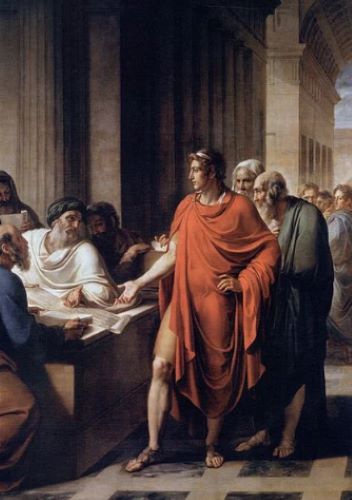
Greek intellectual culture developed within a framework that privileged continuity with the past over the pursuit of radical originality. The authority of earlier poets, philosophers, and historians shaped the expectations placed upon later writers, who were understood to operate within a shared tradition rather than outside it. Works attributed to figures such as Homer and Hesiod functioned not only as literary compositions but as foundational cultural texts, establishing linguistic, ethical, and cosmological frameworks that subsequent authors engaged with, reinterpreted, and sometimes contested. Authorship did not imply absolute ownership of ideas but participation in an ongoing intellectual conversation, one that valued familiarity with canonical works as a prerequisite for meaningful contribution.
Central to this tradition was the concept of mimesis, often translated as imitation but more accurately understood as representation or re-creation. For Plato, imitation could be philosophically suspect, as it distanced audiences from truth by presenting copies of appearances rather than reality itself. Aristotle, by contrast, viewed mimesis as a natural human activity and a fundamental component of artistic production, emphasizing its capacity to generate insight and emotional engagement. Despite these differing evaluations, both thinkers recognized imitation as intrinsic to human expression. This shared recognition reflects a broader cultural assumption that creative work emerges through engagement with prior models, rather than through isolated invention. Originality was measured not by novelty alone but by the skill with which an author transformed inherited material into something distinctive.
The educational system of the Greek world reinforced these assumptions through its emphasis on rhetorical and literary training. Students were taught to analyze exemplary texts, memorize passages, and reproduce stylistic features as part of their intellectual development. Exercises often involved rewriting well-known works in new forms, composing speeches in the style of established authors, or adapting familiar narratives to different contexts. Such practices cultivated a deep familiarity with tradition while also encouraging innovation within its boundaries. The process was cumulative and iterative, with each generation refining and reshaping the material it inherited. Authorship was less an act of solitary creation than a disciplined engagement with a collective cultural archive.
Greek intellectual life was not indifferent to questions of attribution and recognition. Even within a culture that embraced imitation, the identity of the author retained significance, particularly in contexts where authority and credibility were at stake. Philosophical schools, for example, often relied on the teachings of a founder whose ideas were preserved, interpreted, and sometimes contested by later adherents, creating lineages of thought that depended heavily on accurate attribution. The authority of figures such as Plato or Aristotle extended beyond their original works, shaping entire traditions that claimed continuity with their teachings, and disputes over what constituted authentic doctrine could hinge on questions of authorship. The attribution of doctrines to specific individuals could influence not only intellectual reputation but also the institutional coherence of philosophical communities. Similarly, historians and poets sought to establish reputations that distinguished their work from that of their predecessors, even as they drew upon shared themes and conventions. Public performance, circulation of manuscripts, and the competitive nature of intellectual life meant that recognition by audiences and peers was essential, and misattribution could undermine both credibility and status. Authorship functioned as a marker of intellectual identity, linking works to individuals in ways that allowed audiences to evaluate authority, trustworthiness, and originality within a framework that still accepted imitation as a central creative practice.
The tension between communal tradition and individual distinction becomes especially evident in the transmission of texts. Without standardized publication systems, works circulated in multiple versions, copied by scribes and performed by readers who might introduce variations, whether intentional or accidental. This fluidity created opportunities for both creative adaptation and misattribution. Scholars gradually began to develop methods for evaluating authenticity, comparing different versions of texts and assessing stylistic consistency. These efforts, particularly associated with centers such as Alexandria, reflect an increasing concern with establishing reliable authorship, even as the underlying culture continued to value imitation as a creative principle.
The Greek intellectual tradition reveals a complex and nuanced understanding of authorship, one that resists simple categorization in modern terms. Originality was neither dismissed nor fetishized but integrated into a broader system that balanced reverence for the past with the need for ongoing innovation. Imitation functioned as both a method of learning and a mode of creation, while the boundaries between acceptable borrowing and unethical appropriation remained context-dependent and often contested. This dynamic framework provides essential context for understanding later accusations of plagiarism and forgery, which emerged not in opposition to imitation itself, but in defense of the integrity of attribution within a shared cultural tradition.
Literary Plagiarism in Greece: Accusation and Exposure
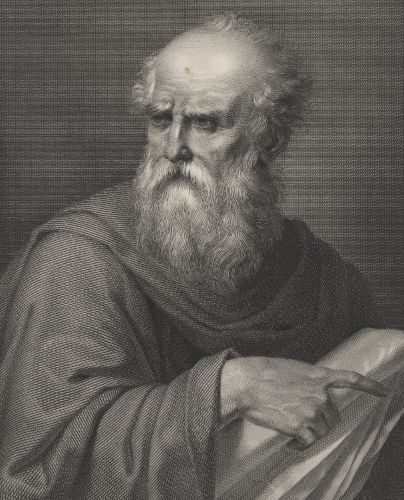
Greek literary culture, while grounded in imitation and adaptation, nevertheless developed mechanisms for identifying and condemning intellectual dishonesty. These mechanisms were not legal in nature but relied instead on scholarly authority, public performance, and the evaluative power of educated audiences. The absence of formal copyright did not prevent the emergence of standards governing attribution. Rather, it shifted the burden of enforcement onto communities of readers, critics, and scholars who were capable of recognizing when a work had been improperly appropriated. Accusations of plagiarism functioned as acts of exposure, revealing not only the offender but also reinforcing the cultural norms that distinguished acceptable imitation from fraudulent representation.
One of the most striking accounts of such exposure appears in the writings of Vitruvius, who describes an incident involving Aristophanes of Byzantium, the renowned scholar and librarian of Alexandria. According to Vitruvius, Aristophanes presided over a literary competition in which several contestants presented works that were initially praised for their quality. Upon closer examination, Aristophanes determined that many of these compositions had been copied from texts housed in the library. By comparing the submitted works with existing manuscripts, he was able to identify passages that had been taken without acknowledgment. The offending contestants were subsequently denounced, not through judicial punishment, but through public disgrace. This episode illustrates the role of scholarly expertise in policing authorship and underscores the importance of institutional settings, such as the Library of Alexandria, in enabling such scrutiny.
The Alexandrian scholarly environment provided unique conditions for the detection of literary theft. The accumulation of vast textual collections allowed scholars to engage in comparative analysis on an unprecedented scale, making it possible to identify similarities and repetitions that might otherwise have gone unnoticed. Philologists developed techniques for evaluating style, vocabulary, and structure, contributing to a more systematic approach to questions of authenticity. These methods were not designed solely to uncover plagiarism, but they inevitably exposed instances of appropriation when they occurred. The authority of figures like Aristophanes derived not only from their intellectual reputation but also from their access to these resources, which positioned them as arbiters of textual legitimacy within the broader Greek world.
Beyond institutional settings, the performative nature of Greek literature also played a significant role in exposing plagiarism. Poetry and prose were often presented in public contexts, where audiences familiar with canonical works could detect echoes or direct repetitions. In such environments, the act of passing off another’s work as one’s own carried substantial risk, as recognition by listeners could lead to immediate embarrassment or long-term damage to one’s reputation. The communal aspect of literary consumption functioned as an informal but effective system of accountability. Authors were aware that their audiences were not passive recipients but active participants in the evaluation of originality and authenticity.
Accusations of plagiarism must be understood within the competitive dynamics of Greek intellectual life. Rivalries among scholars, poets, and philosophers could motivate claims of appropriation, sometimes blurring the line between genuine exposure and strategic denunciation. The charge of having “stolen” a work could serve as a powerful rhetorical weapon, undermining an opponent’s credibility and elevating one’s own standing. This complicates the interpretation of such accusations, as it raises questions about their reliability and the extent to which they reflect actual instances of intellectual theft versus polemical exaggeration. Nevertheless, even when shaped by rivalry, these accusations indicate that the concept of wrongful appropriation was meaningful and carried significant social consequences.
These examples demonstrate that Greek literary culture possessed both the awareness and the means to confront plagiarism, despite lacking formal legal definitions. The combination of scholarly institutions, performative contexts, and competitive intellectual environments created a system in which authorship was continuously evaluated and contested. Exposure operated as the primary mechanism of enforcement, relying on the authority of experts and the discernment of audiences rather than codified rules. The Greek experience reveals an early form of intellectual accountability, one rooted in cultural norms and communal judgment rather than legal sanction.
Heraclides Ponticus and the Charge of Intellectual Theft
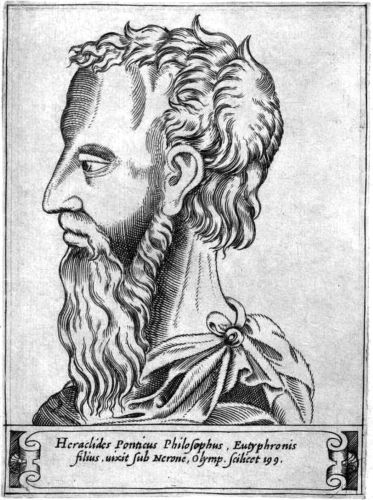
Heraclides Ponticus, a fourth-century BCE philosopher associated with the Platonic Academy, occupies an ambiguous position within the intellectual history of antiquity, not only for his diverse contributions to philosophy and science but also for the accusations of intellectual appropriation that later sources attach to his name. Known for his wide-ranging interests, including cosmology, ethics, and literary interpretation, Heraclides was regarded in antiquity as a prolific and inventive thinker. Yet the very breadth of his work, combined with the fragmentary nature of its survival, made him particularly vulnerable to claims that some of his writings were not entirely his own. These accusations, preserved primarily in later biographical traditions, reflect both the competitive nature of ancient philosophical discourse and the enduring concern with proper attribution.
The most notable charge against Heraclides appears in the account of Diogenes Laertius, who reports that Heraclides had “stolen” a treatise concerning Homer and Hesiod. The use of the Greek term κλέψαντα, meaning “having stolen,” is striking in its moral clarity, framing the act not merely as borrowing or adaptation but as deliberate theft. This language suggests that, at least in the eyes of later commentators, the distinction between acceptable engagement with earlier texts and unethical appropriation was sufficiently well defined to warrant explicit condemnation. The brevity and lack of detail in the accusation complicate its interpretation, leaving open questions about the nature of the alleged borrowing and the evidence upon which the claim was based.
Assessing the reliability of such accusations requires careful consideration of the sources in which they are preserved. Diogenes Laertius, writing in the third century CE, compiled biographical sketches that often blend historical information with anecdote, rumor, and moral judgment. His work reflects a broader tradition of doxography in which the lives of philosophers were used to illustrate intellectual and ethical principles, sometimes at the expense of strict historical accuracy. The charge against Heraclides cannot be accepted uncritically as factual evidence of plagiarism. Instead, it must be understood within the context of a literary genre that frequently emphasized personal character and rivalry as much as philosophical content. The accusation may reveal as much about later perceptions of Heraclides as it does about his actual practices.
The possibility of intellectual rivalry further complicates the picture. Philosophical communities in antiquity were often characterized by intense competition for authority, disciples, patronage, and lasting reputation, creating an environment in which accusations of appropriation could serve strategic and rhetorical purposes. To label a rival as a plagiarist was not merely to criticize a specific act but to call into question the integrity of an entire body of work, thereby weakening that individual’s standing within the intellectual hierarchy. In a culture where philosophical legitimacy depended heavily on lineage, originality of interpretation, and perceived mastery of tradition, such accusations could have far-reaching consequences. Rival schools frequently positioned themselves in opposition to one another, and disputes over doctrine were often accompanied by personal attacks that blurred the line between legitimate critique and character assassination. In the case of Heraclides, whose work appears to have drawn on a wide range of earlier sources and traditions, the interpretive flexibility inherent in such engagement may have made him particularly vulnerable to charges of overreaching or misappropriation. What one audience might interpret as creative synthesis could be recast by opponents as intellectual theft, especially in the absence of clear standards for citation or acknowledgment. Moreover, the fragmentary survival of his writings further complicates modern assessment, as it deprives scholars of the ability to evaluate directly the extent and nature of his borrowings. Accusations against Heraclides must be understood not only as claims about authorship but also as reflections of the competitive, and sometimes adversarial, conditions under which ancient philosophical discourse unfolded.
The case of Heraclides Ponticus illustrates both the persistence and the ambiguity of concerns about intellectual ownership in antiquity. Even in the absence of formal mechanisms for regulating authorship, the language of theft and the practice of public accusation indicate that ancient audiences recognized and responded to perceived violations of intellectual integrity. The reliance on later and potentially unreliable sources reminds us that these accusations must be approached with caution, as products of their own historiographical and rhetorical contexts. The tension between innovation, imitation, and attribution that defines this episode reflects the broader complexities of authorship in the ancient world, where the boundaries of intellectual ownership were continually negotiated rather than definitively established.
Roman Perspectives on Plagiarism: Martial and Fidentinus
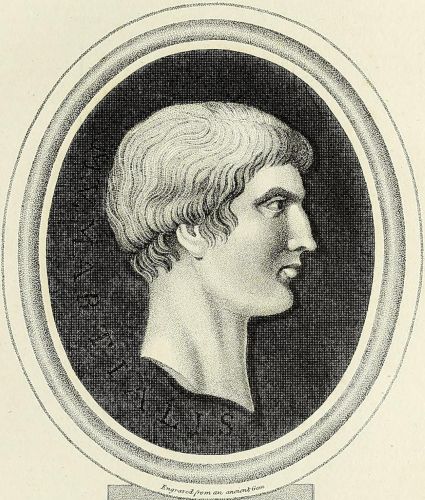
Roman literary culture provides some of the clearest surviving evidence for how acts resembling plagiarism were understood, condemned, and publicly exposed in antiquity. Unlike the more diffuse and often indirect accusations found in Greek sources, Roman writers at times addressed intellectual theft with striking directness, framing it in terms that closely resemble modern conceptions of authorship and ownership. This clarity emerges most vividly in the works of the epigrammatist Martial, whose sharp wit and social awareness allowed him to confront such behavior not only as a personal grievance but as a broader cultural issue. In his hands, the problem of plagiarism becomes both a literary theme and a tool of satire.
The figure of Fidentinus, a contemporary of Martial, serves as the central example of this phenomenon. Martial accuses Fidentinus of reciting his epigrams in public as though they were his own compositions, thereby appropriating both the content and the recognition associated with them. These accusations appear repeatedly across Martial’s Epigrams, suggesting that the issue was not an isolated incident but an ongoing source of frustration that unfolded across multiple social settings. The persistence of the complaint indicates that Fidentinus either continued the practice despite being exposed or that similar behavior was common enough to warrant repeated attention. Martial’s response is notable for its rhetorical strategy: rather than appealing to any formal authority, he exposes Fidentinus through ridicule, irony, and pointed commentary, using humor as both a weapon and a means of persuasion. His epigrams do not simply accuse; they stage the accusation, inviting the audience to participate in the recognition of the offense. By addressing the audience directly, Martial creates a shared space of judgment in which listeners are positioned as witnesses to the deception and arbiters of its consequences. This approach reflects a broader reliance on public opinion as the primary mechanism for enforcing norms of authorship, transforming literary performance into a site where authenticity could be contested and affirmed in real time.
Central to Martial’s critique is the language he employs to describe this behavior. He famously uses the term plagiarius, a word that originally referred to someone who kidnapped or enslaved another person, to characterize the act of literary theft. This metaphor is both vivid and revealing, equating the appropriation of a text with the unlawful seizure of a human being. Martial elevates the offense from a minor breach of etiquette to a serious violation of personal and creative integrity. The choice of terminology underscores the extent to which authorship, while not legally codified, was nonetheless understood as a form of possession tied to the identity of the creator. Through this linguistic innovation, Martial contributes to the conceptual development of plagiarism as a recognizable and condemnable act.
The social context of Roman literary performance further amplifies the significance of these accusations. Public recitations were a central feature of literary life, providing authors with opportunities to present their work, gain recognition, and secure patronage. In such settings, the ability to claim authorship was directly linked to social capital and professional advancement. For an individual like Fidentinus to present another’s work as his own was not merely an act of imitation but an attempt to appropriate the social benefits attached to authorship. Martial’s public denunciations can be understood as efforts to reclaim not only his texts but also his reputation within a competitive cultural environment.
The case of Martial and Fidentinus illustrates a more explicit articulation of intellectual ownership than is typically found in earlier Greek contexts. While Roman society still lacked formal legal protections for literary works, the moral and social dimensions of authorship were clearly defined and actively defended. Martial’s epigrams reveal a world in which audiences were expected to recognize and value authentic authorship, and in which deception could be countered through wit, exposure, and communal judgment. Roman responses to plagiarism represent both a continuation of earlier concerns and a significant development in the expression of those concerns, bringing the issue of intellectual theft into sharper and more public focus.
Artistic Forgery in the Ancient World
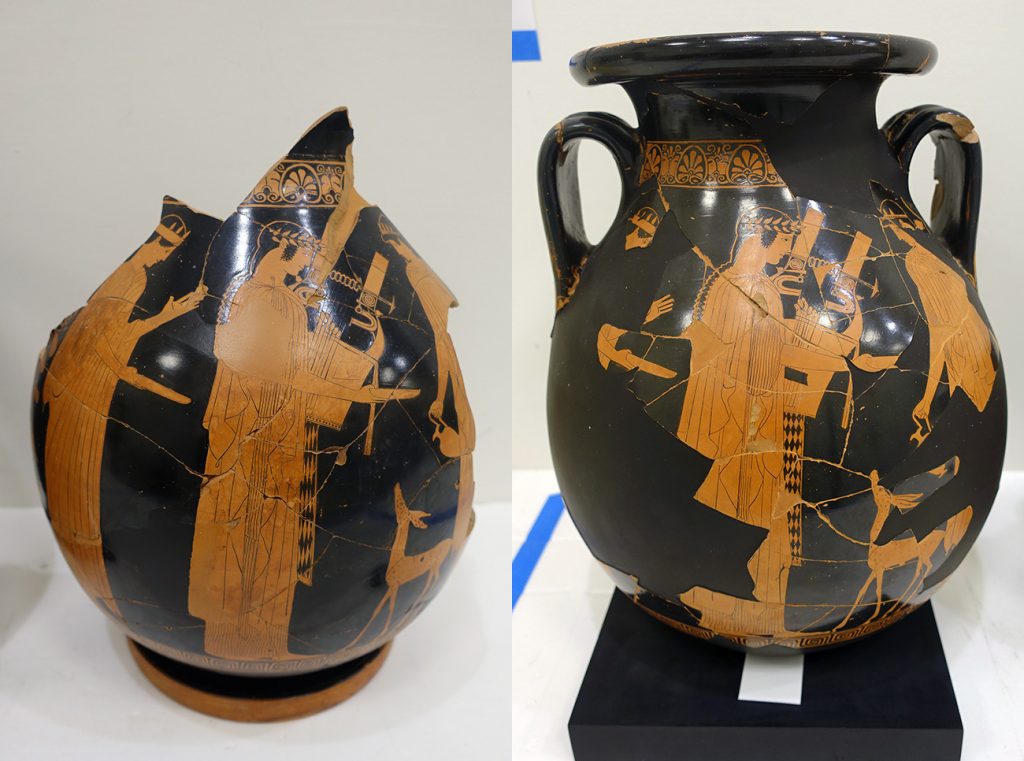
Forgery in the visual arts presents a parallel but distinct dimension of intellectual and creative appropriation in antiquity, one shaped as much by material production and market demand as by questions of authorship. Unlike literary works, which circulated through performance and manuscript copying, artistic objects existed as tangible commodities that could be bought, sold, displayed, and collected across regions and generations. This materiality introduced additional incentives for imitation and deception, particularly in contexts where certain styles, regions, or periods carried elevated cultural or economic value. The physical durability of objects such as pottery, sculpture, and engraved seals meant that they could outlast their creators, allowing questions of authorship and authenticity to persist long after their production. The replication of artistic forms was common and often embedded within broader systems of workshop production, apprenticeship, and stylistic transmission. Within these systems, the boundaries between original creation, authorized reproduction, and deliberate forgery were often blurred, making it difficult to distinguish clearly between legitimate imitation and intentional deception. The problem of artistic authenticity in antiquity emerges not as an anomaly but as a structural feature of a culture in which artistic value was closely tied to recognizable forms, regional prestige, and the reputational authority associated with particular styles.
Greek ceramic production provides illustrative examples of this phenomenon. Workshops specializing in Athenian pottery, particularly lekythoi and other decorated vessels, developed recognizable styles that were widely admired and imitated beyond their place of origin. As demand for these objects spread, artisans in other regions began producing vessels that closely resembled Athenian forms, sometimes with the intention of appealing to buyers who associated such styles with prestige and authenticity. In some cases, these imitations were openly acknowledged as stylistic reproductions; in others, they appear to have been designed to pass as genuine Athenian products. The distinction depended not on the object itself but on the intention behind its creation and the expectations of its audience.
A similar dynamic can be observed in the production of small-scale objects such as scarab seals, those inspired by Egyptian motifs. These items circulated widely across the Mediterranean, and their association with Egyptian culture endowed them with symbolic and commercial value. Artisans outside Egypt produced seals that mimicked these forms, incorporating recognizable iconography such as sphinxes and hieroglyphic patterns. While some of these objects may have been created as adaptations or local reinterpretations, others were likely intended to evoke the authority and antiquity of Egyptian craftsmanship and to benefit from the cultural prestige attached to that association. The portability of such objects made them susceptible to reinterpretation and misattribution, as they could move easily across regions without clear documentation of origin. In such cases, the line between cultural exchange and deceptive imitation becomes difficult to define, as stylistic borrowing intersects with economic motivation, consumer expectation, and the symbolic power of foreign artistic traditions.
The role of artistic signatures complicates the issue of authenticity. In certain contexts, artists or workshops marked their creations with inscriptions that identified the maker, thereby establishing a connection between object and creator. These signatures could function as indicators of quality and origin, enhancing the value of the work and providing assurance to buyers and collectors. They also created opportunities for misrepresentation, particularly in environments where the name of a recognized artist carried significant prestige. Instances are known in which signatures were added to works not produced by the named artist, either during or after the process of creation, raising questions about the reliability of such markers as guarantees of authenticity. In some cases, signatures may have been applied within workshop contexts where multiple hands contributed to production, complicating the very notion of individual authorship. In others, they appear to have been deliberately falsified to increase the desirability and market value of an object. Such practices suggest that the authority associated with a recognized name could be appropriated independently of the actual act of production, highlighting the gap between artistic creation and attribution in the ancient world.
Economic factors played a significant role in shaping these practices. The desirability of certain styles and the prestige attached to particular cultural centers created markets in which imitation could be financially advantageous. Artisans responding to these conditions were not necessarily operating outside accepted norms, especially in cases where replication was understood as part of standard workshop practice. The existence of objects intended to deceive buyers indicates that authenticity was valued and that its falsification carried meaning within the marketplace. The production of forgeries reflects both the demand for culturally significant objects and the willingness of some producers to exploit that demand through imitation that crossed into deception.
Artistic forgery in the ancient world reveals a complex interplay between creativity, commerce, and authenticity. As in the literary sphere, imitation was a fundamental aspect of artistic practice, enabling the transmission and adaptation of styles across regions and generations. Yet when imitation was employed to mislead audiences or buyers, it provoked concerns analogous to those expressed in cases of literary plagiarism. The absence of formal regulatory systems did not eliminate these concerns but instead placed greater emphasis on the discernment of viewers, the reputation of workshops, and the interpretive skills of later scholars. The study of artistic forgery complements the examination of literary appropriation, together illuminating the broader cultural negotiation of originality and ownership in antiquity.
Imitation vs. Deception: Cultural Boundaries
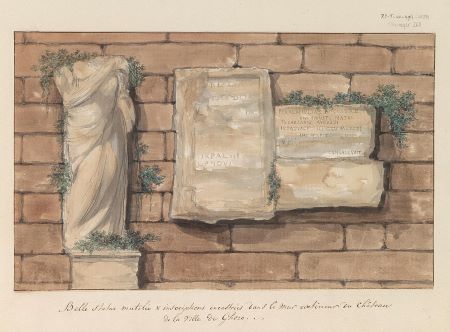
The distinction between imitation and deception in the ancient world was neither rigidly defined nor universally applied, yet it remained a meaningful and widely recognized boundary within both literary and artistic culture. Imitation, as a foundational element of education and creative practice, was not only accepted but expected. Authors and artists worked within established traditions, drawing upon earlier models to demonstrate skill, continuity, and cultural literacy. When imitation crossed into misrepresentation, when the origin of a work was deliberately obscured or falsely claimed, it entered a different moral category. This shift did not require formal legal definitions to be understood; it was grounded instead in shared expectations about honesty, recognition, and the relationship between creator and audience.
In literary contexts, this boundary was often enforced through public exposure and reputational consequence. As seen in the case of Martial and Fidentinus, the act of passing off another’s work as one’s own was treated not simply as a breach of etiquette but as a violation of personal integrity and intellectual trust. The audience played a central role in this process, as recognition of familiar lines, stylistic patterns, or well-known phrases could immediately undermine the credibility of the offender and transform a performance into a moment of public embarrassment. This dynamic created a form of communal oversight in which listeners functioned as active participants in maintaining standards of authenticity. The communal nature of literary performance produced an environment in which deception was both risky and potentially self-defeating, as exposure could occur in real time and spread quickly through social networks. Acceptable forms of imitation, such as stylistic borrowing, allusion, or thematic adaptation, were rarely challenged, provided that they did not involve false claims of authorship or deliberate concealment of sources. Writers were expected to engage with tradition, but not to erase it. The distinction depended less on the act of borrowing itself and more on the intent to deceive and the attempt to claim unearned recognition within a competitive literary culture.
A similar pattern can be observed in artistic production, where imitation was integral to the transmission of styles across workshops and regions. The replication of established forms, whether in pottery, sculpture, or decorative objects, was a normal and often necessary aspect of artistic practice. Apprentices learned by copying their masters, and workshops produced objects in recognizable styles that met the expectations of patrons and markets. Yet when such replication was accompanied by efforts to mislead buyers about the origin or authenticity of an object, it took on a different character. The addition of false signatures or the deliberate imitation of prestigious styles for deceptive purposes suggests that authenticity carried value and that its falsification was understood as problematic, even if not formally regulated.
The cultural boundary between imitation and deception was also shaped by the intentions and perceptions of those involved. A work might be interpreted differently depending on whether it was seen as an homage, a reinterpretation, or a fraudulent copy, and these interpretations could shift depending on context, audience, and purpose. In some cases, the same object or text could occupy multiple positions along this spectrum, reflecting the fluidity of ancient attitudes toward originality and ownership. The absence of standardized criteria for attribution meant that judgments were often context-dependent, influenced by factors such as audience familiarity, scholarly authority, and the reputations of those involved. What one observer might praise as skillful adaptation, another might condemn as dishonest appropriation, particularly in competitive intellectual environments where reputation carried significant weight. This ambiguity did not eliminate the distinction between acceptable and unacceptable practices, but it did make that distinction subject to negotiation, reinterpretation, and debate. The boundary between imitation and deception was not fixed but dynamically constructed through ongoing cultural discourse.
The interplay between imitation and deception reveals a cultural framework in which creativity and integrity were closely intertwined. Ancient societies recognized the value of building upon existing traditions, but they also placed importance on the truthful representation of authorship and origin. The mechanisms for enforcing this balance were informal, relying on reputation, expertise, and communal judgment rather than legal structures. Yet these mechanisms were effective enough to sustain a meaningful distinction between legitimate creative practice and unethical appropriation. The ancient discourse on imitation and deception anticipates later concerns about intellectual property, even as it remains rooted in a fundamentally different set of cultural assumptions.
Historiography: Interpreting Ancient Plagiarism
The following video is a discussion of art in Ancient Egypt:
Modern scholarship has long grappled with the question of whether “plagiarism” is an appropriate term to apply to the ancient world. Some historians argue that the concept, as it is understood today, is inseparable from legal frameworks of intellectual property that did not exist in antiquity. From this perspective, applying the term risks imposing modern expectations onto a fundamentally different cultural landscape, one in which imitation, adaptation, and reuse were not only common but central to creative practice. The absence of formalized authors’ rights, standardized publication systems, and enforceable ownership structures suggests that ancient societies operated according to a different set of assumptions about the relationship between creator, text, and audience.
Other scholars contend that the evidence from antiquity demonstrates a clear awareness of intellectual appropriation as a distinct and condemnable act. The language used by figures such as Martial, along with the accusations preserved in biographical and scholarly traditions, indicates that ancient writers could and did distinguish between acceptable imitation and dishonest misrepresentation. These distinctions were not codified in law, but they were nonetheless meaningful within the cultural and social contexts in which literary and artistic production took place. From this perspective, the term “plagiarism” may be anachronistic in its legal implications, but it remains useful as an analytical tool for describing behaviors that were recognized and criticized in antiquity.
A central point of debate within this historiography concerns the role of intention and perception in defining intellectual theft. Without explicit systems of citation or attribution, determining whether a given act constituted acceptable borrowing or unethical appropriation often depends on contextual interpretation. Scholars must rely on fragmentary evidence, later testimonies, and the rhetorical framing of accusations, all of which introduce layers of uncertainty. Modern interpretations frequently emphasize the importance of distinguishing between practices that were normative within ancient educational and artistic systems and those that were perceived as deceptive by contemporaries. This approach allows for a more nuanced understanding that avoids both the imposition of modern legal categories and the dismissal of ancient concerns about authorship.
The historiography of ancient plagiarism reflects broader methodological challenges in the study of intellectual history. It requires balancing sensitivity to historical context with the need for analytical clarity, recognizing both the differences and the continuities between ancient and modern conceptions of authorship. While the term “plagiarism” cannot be applied uncritically, neither can the evidence of ancient accusations and condemnations be ignored. Instead, these sources invite a careful reconstruction of how questions of originality, ownership, and integrity were understood within their own cultural frameworks. They reveal that the tension between imitation and appropriation is not a modern invention but a persistent feature of human creative activity.
Conclusion: Ownership Without Copyright
The examination of plagiarism and forgery in the ancient world reveals a cultural landscape in which authorship was neither legally codified nor conceptually absent, but instead defined through social practice, intellectual tradition, and communal judgment. Greek and Roman societies lacked the institutional mechanisms that today regulate intellectual property, yet they developed their own systems for recognizing and contesting claims of ownership. These systems were rooted in reputation, performance, and scholarly authority, creating an environment in which originality and authenticity were negotiated rather than formally enforced. The absence of copyright law did not eliminate the importance of authorship; it simply shifted its regulation into the realm of cultural norms and collective evaluation.
Across both literary and artistic domains, a consistent distinction emerges between imitation as a legitimate creative practice and deception as an unethical act. From the educational use of mimesis to the replication of artistic styles within workshops, imitation functioned as a foundational element of cultural production. The deliberate misrepresentation of authorship, whether in the recitations of Fidentinus or the alleged appropriation attributed to Heraclides Ponticus, provoked criticism and exposure. These responses demonstrate that ancient audiences valued not only the content of a work but also its origin, recognizing that the attribution of creation carried social, intellectual, and sometimes economic significance.
The mechanisms by which these values were upheld were informal but effective. Public performance allowed audiences to identify and challenge misattribution, while scholarly institutions such as the Library of Alexandria provided tools for textual comparison and authentication. In the visual arts, the recognition of stylistic features and the scrutiny of signatures enabled viewers and collectors to assess authenticity, even in the absence of standardized criteria. These processes operated unevenly and depended heavily on levels of education, access to texts or objects, and the authority of those making judgments, yet they nonetheless created a functioning system of accountability. Exposure, rather than punishment, served as the primary corrective mechanism, relying on embarrassment, loss of credibility, and reputational damage to deter deceptive practices. This form of enforcement was inherently social, embedded in networks of communication that extended through performances, scholarly discourse, and marketplaces. While such mechanisms could not guarantee fairness or consistency, they demonstrate that ancient societies possessed practical means of regulating authorship, grounded in collective knowledge and shared expectations rather than formal legal codes.
The study of ancient plagiarism and forgery underscores the enduring tension between creativity and ownership. While the specific forms of regulation have changed, the underlying concerns remain familiar: the desire to build upon existing traditions, the need to acknowledge sources, and the consequences of misrepresentation. By examining how these issues were understood in antiquity, we gain insight into the historical foundations of authorship as both a cultural construct and a social practice. Ownership without copyright was not an absence of order but a different mode of organizing intellectual life, one that reveals the deep and persistent human investment in the recognition of creative labor.
Bibliography
- Aristotle, The Poetics of Aristotle. S. H. Butcher, trans. London: MacMillan and Co., 1922.
- Boardman, John. Greek Art. London: Thames & Hudson, 1964.
- Brenk, Beat. “Spolia from Constantine to Charlemagne: Aesthetics versus Ideology.” Dumbarton Oaks Papers 41 (1987), 103-109.
- Casson, Lionel. Libraries in the Ancient World. New Haven: Yale University Press, 2001.
- Diogenes Laertius, Lives of Eminent Philosophers. Translated by R.D. Hicks. London: William Heinemann, 1925.
- Gottschalk, H. B. Heraclides of Pontus. Oxford: Clarendon Press, 1980.
- Hanson, Richard Simon. “Ancient Scribes and Scripts and the Clues They Leave.” The Biblical Archaeologist 48:2 (1985), 83-88.
- Martial, Epigrams. E. Capps, T. E. Page, and W. H. D. Rouse, eds. London: William Heinemann, 1919.
- McDonnell, Myles. “Writing, Copying, and Autograph Manuscripts in Ancient Rome.” The Classical Quarterly 46:2 (1996), 469-491.
- Nagy, Gregory. Homeric Questions. Austin: University of Texas Press, 1996.
- Nicholson, Paul T., and Ian Shaw, eds. Ancient Egyptian Materials and Technology. Cambridge: Cambridge University Press, 2000.
- Olcott, Marianina. “Ancient and Modern Notions of Plagiarism: A Study of Concepts of Intellectual Property in Classical Greece.” Journal of the Copyright Society of the U.S.A. 49:4 (2002), 1047-1052.
- Pfeiffer, Rudolf. History of Classical Scholarship: From the Beginnings to the End of the Hellenistic Age. Oxford: Clarendon Press, 1968.
- Plato, The Republic of Plato. Benjamin Jowett, trans. Oxford: Clarendon Press, 1888.
- Pollitt, J. J. Art in the Hellenistic Age. Cambridge: Cambridge University Press, 1986.
- Quintilian. Institutio Oratoria. H. E. Butler, trans. Cambridge: Harvard University Press, 1920.
- Seneca. Epistulae Morales ad Lucilium. Richard M. Gummere, trans. London: William Heinemann, 1917.
- Thomas, Rosalind, Literacy and Orality in Ancient Greece. Cambridge: Cambridge University Press, 1992.
- Vitruvius. De Architectura. W. Newton, trans. London: James Newton, 1791.
Originally published by Brewminate, 04.08.2026, under the terms of a Creative Commons Attribution-NonCommercial-NoDerivatives 4.0 International license.
About the Author