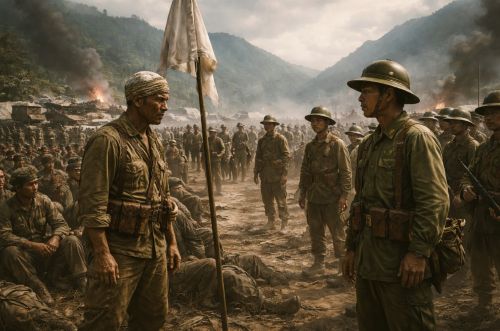
At Dien Bien Phu in 1954, French confidence in engineered battlefields collapsed when Viet Minh logistics, artillery, and strategy transformed a fortress into a trap.

By Matthew A. McIntosh
Public Historian
Brewminate
Introduction: Colonial Confidence and the Search for Decisive Battle
By the early 1950s, the First Indochina War had evolved into one of the most consequential conflicts of the post–Second World War era. What had begun as a struggle between French colonial authorities and Vietnamese nationalists following the collapse of Japanese occupation in 1945 gradually transformed into a prolonged and complex war for political control of Vietnam. The Viet Minh movement, led by Ho Chi Minh and militarily directed by General Vo Nguyen Giap, combined nationalist ideology with an increasingly disciplined military structure. French forces, meanwhile, attempted to reassert colonial authority while confronting a political landscape that had shifted dramatically in the wake of global decolonization. As the struggle intensified, both sides searched for strategies that could produce a clear military resolution in a war that had otherwise settled into an exhausting cycle of insurgency and counterinsurgency.
French military leadership believed that the key to victory lay in forcing the Viet Minh to abandon guerrilla warfare and fight a conventional battle under conditions favorable to French arms. This strategic thinking culminated in the plan developed by General Henri Navarre in 1953. French commanders sought to establish a fortified base deep within northwestern Vietnam that would threaten Viet Minh supply lines into Laos while simultaneously drawing Giap’s forces into a direct confrontation. French planners assumed that superior artillery, air power, and fortified defensive positions would allow them to destroy large Viet Minh formations if the Vietnamese attempted to assault the base. In this conception, the battlefield itself could be engineered to restore the advantages traditionally enjoyed by a modern European army.
The remote valley of Dien Bien Phu appeared to offer an ideal location for such a strategy. Surrounded by steep hills and accessible primarily by air, the site seemed defensible while also providing a staging point for offensive operations across the region. French forces rapidly transformed the valley into a network of fortified positions supported by artillery and supplied by aircraft flying from bases in the Red River Delta. Within the French command structure, confidence grew that the fortified camp would function as both a strategic barrier and a lure, compelling Giap to commit his army to a costly frontal assault. The central premise of this strategy was that the Viet Minh lacked both the logistical capacity and the heavy weaponry necessary to mount a sustained siege against a modern fortified base.
Yet the French plan rested on a set of assumptions that underestimated the adaptability of their adversary. Giap and the Viet Minh leadership had spent years developing a strategy that blended guerrilla warfare with increasingly sophisticated conventional operations. Their approach emphasized patience, political mobilization, and the gradual accumulation of military capacity rather than rapid decisive battles. Rather than accepting the terms of engagement envisioned by French planners, Giap sought to reshape the battlefield itself, transforming the surrounding terrain into an operational advantage. The dense forests and steep hills around Dien Bien Phu offered opportunities for concealment and logistical innovation that French planners had not fully anticipated. As Viet Minh forces began to move artillery and supplies into the region through an enormous network of laborers and soldiers, the balance of power in the valley began to shift. Dien Bien Phu would soon become the stage upon which these competing strategic visions collided. The French command expected a decisive engagement that would break the Viet Minh army and reaffirm the authority of the colonial state. Instead, the confrontation revealed how colonial confidence and technological superiority could falter when confronted with an opponent capable of transforming terrain, logistics, and broad political organization into instruments of asymmetric warfare.
The First Indochina War and the Evolution of Viet Minh Strategy
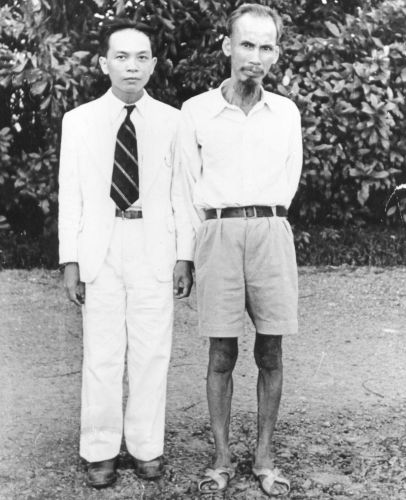
The conflict that culminated at Dien Bien Phu emerged from the turbulent political transformations that followed the end of the Second World War. During the war, Japanese occupation had weakened French colonial authority across Indochina, creating opportunities for nationalist movements to expand their influence. Among these movements, the Viet Minh coalition led by Ho Chi Minh gained prominence by combining anti-colonial nationalism with effective political organization. When Japan surrendered in 1945, the Viet Minh quickly moved to assert control in parts of northern Vietnam and declared the independence of the Democratic Republic of Vietnam. French authorities, determined to restore their colonial position, rejected this declaration and gradually reintroduced military forces into the region, setting the stage for a prolonged confrontation between colonial power and revolutionary nationalism.
In the early years of the conflict, the Viet Minh relied primarily on guerrilla tactics. Lacking the heavy weapons and logistical infrastructure required for large-scale conventional warfare, Vietnamese forces focused on mobility, ambushes, and political mobilization in rural areas. Villages became critical nodes in a broader network of resistance, providing intelligence, food, and recruits for the movement. The war unfolded not only on the battlefield but also through efforts to build political legitimacy among the Vietnamese population. The Viet Minh leadership understood that sustained resistance required the integration of military operations with social and political organization.
General Giap played a central role in shaping this evolving strategy. A former history teacher who had studied revolutionary warfare, Giap emphasized the gradual transformation of the Viet Minh military from guerrilla units into a more structured army capable of confronting French forces directly. His approach drew upon theories of protracted warfare that stressed patience, adaptability, and the careful accumulation of strength over time. Rather than seeking rapid victories, Giap envisioned a long struggle in which political mobilization and military organization would slowly erode the strategic advantages enjoyed by the French.
By the early 1950s, this strategy began to produce visible results. Viet Minh forces expanded their territorial influence in northern Vietnam while improving their command structure and logistical capacity. Training programs developed more disciplined units, and new supply networks allowed the movement to sustain operations across increasingly wide areas. The Chinese communist victory in 1949 transformed the regional strategic environment. With the establishment of the People’s Republic of China, the Viet Minh gained access to training, equipment, and sanctuary along the northern border, enabling Giap to begin developing larger formations capable of conventional engagements.
Despite these improvements, Viet Minh leaders remained cautious about committing their forces to large-scale battles under unfavorable conditions. Giap understood that the French still possessed significant advantages in artillery, aviation, and mechanized support. As a result, the Viet Minh continued to combine guerrilla operations with carefully selected conventional engagements designed to exploit weaknesses in French deployment. This flexible approach allowed the movement to avoid catastrophic defeats while steadily increasing its military capacity.
By the time French planners conceived the fortified base at Dien Bien Phu, the Viet Minh had already developed a hybrid strategy that blended insurgency with conventional warfare. Years of organizational development, political mobilization, and logistical expansion had created a force capable of undertaking far more ambitious operations than earlier in the conflict. The confrontation that would eventually unfold in the remote valley of Dien Bien Phu was not the beginning of Viet Minh military capability but the culmination of a long process of strategic evolution.
The Navarre Plan: Seeking a Decisive Engagement
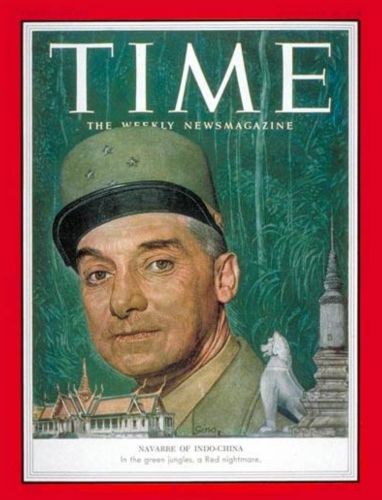
By 1953, the French military position in Indochina had deteriorated into a costly stalemate. Despite maintaining control over major cities and key transportation corridors, French forces struggled to suppress the expanding influence of the Viet Minh across rural northern Vietnam. The conflict had become increasingly expensive in both manpower and resources, placing political pressure on the French government to produce tangible military results. Casualties continued to mount while large portions of the countryside slipped beyond effective colonial administration. French commanders found themselves defending isolated outposts while attempting to maintain supply lines across difficult terrain. In Paris, the war had grown deeply unpopular, and policymakers feared that the prolonged conflict might drain resources needed elsewhere in the fragile postwar European recovery. Into this uncertain environment stepped General Navarre, who was appointed commander of French forces in Indochina with the expectation that he would stabilize the situation and restore strategic initiative. Navarre arrived with the task of transforming a defensive struggle into a campaign capable of demonstrating renewed French strength.
Navarre’s solution was to pursue a strategy designed to force a decisive confrontation with the Viet Minh army. French planners believed that the war had dragged on largely because the Viet Minh relied on guerrilla tactics that avoided direct engagement with superior French firepower. If the French could compel Giap’s forces to attack a fortified position under unfavorable conditions, they believed the resulting battle could inflict catastrophic losses on the Vietnamese army. Such a victory might not end the war immediately, but it could weaken the Viet Minh sufficiently to improve France’s bargaining position in any future negotiations.
The valley of Dien Bien Phu appeared to provide an opportunity to implement this strategy. Located in a remote region of northwestern Vietnam near the border with Laos, the site was selected as a forward base that could disrupt Viet Minh operations in the region while simultaneously acting as a defensive stronghold. French commanders believed that the surrounding hills could be controlled through artillery and aerial reconnaissance, allowing the garrison to dominate the battlefield below. Supplies, reinforcements, and heavy equipment would be delivered by air, ensuring that the base remained well provisioned even in an isolated location. The plan also reflected French concerns about protecting neighboring Laos, which remained formally within the French Union. By establishing a strong military presence in the region, French planners hoped to block Viet Minh infiltration routes and demonstrate their continued ability to project power across Indochina. From the perspective of the French command, the valley’s geography seemed to offer a defensible basin where artillery, air power, and fortified positions could combine to repel any assault.
French confidence in the plan rested heavily on assumptions about technological superiority. The garrison at Dien Bien Phu included artillery batteries, armored support, and elite airborne units that French commanders believed could withstand any direct assault. Air power was expected to play a decisive role, allowing the French to bombard Viet Minh positions and maintain logistical support through a steady stream of transport aircraft. Within this framework, the fortified camp was envisioned not merely as a defensive installation but as a strategic trap that would lure Giap into a battle he could not win.
Yet these assumptions masked a number of critical vulnerabilities. The French position depended entirely on air supply, leaving the garrison exposed if the airstrip or surrounding airspace came under sustained attack. Furthermore, French commanders underestimated the Viet Minh’s ability to transport heavy artillery through difficult terrain and establish firing positions in the hills overlooking the valley. What appeared on French maps as a secure and defensible base would soon prove dangerously exposed. The Navarre Plan, conceived as a means of restoring French strategic control, ultimately created the conditions that allowed the Viet Minh to surround and isolate the garrison at Dien Bien Phu.
Giap’s Response: Artillery, Logistics, and Encirclement
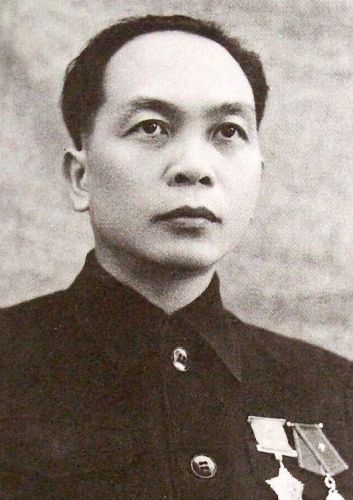
While French planners believed they had created a battlefield that would compel the Viet Minh into an unfavorable confrontation, General Giap interpreted the situation very differently. Rather than rushing into a direct assault against the newly established French base, Giap approached the problem with characteristic caution and strategic patience. His experience during the earlier phases of the war had reinforced the importance of avoiding battles in which French firepower and mobility could dominate. Instead of attacking immediately, Giap sought to transform the geography of Dien Bien Phu into an advantage for the Viet Minh, gradually turning the French stronghold into an isolated and vulnerable target.
Important in this approach was the movement of artillery into the hills surrounding the valley. French commanders had assumed that the steep terrain and dense forests would prevent the Viet Minh from deploying heavy weapons in positions overlooking the base. Giap’s forces proved these assumptions wrong through an extraordinary logistical effort. Thousands of soldiers and civilian laborers transported artillery pieces through the jungle using improvised sledges, bicycles reinforced with wooden frames, and sheer manual labor. These bicycles, often modified to carry several hundred kilograms of supplies, became a crucial element of the Viet Minh logistical system. The transport of artillery required even greater ingenuity, as crews dismantled heavy guns and hauled them piece by piece along narrow mountain trails carved into the landscape by engineers and laborers. Once near the valley, the weapons were reassembled and dragged into carefully prepared firing positions on the surrounding slopes. These operations were carried out with remarkable discipline and secrecy, allowing Viet Minh forces to position their guns in concealed emplacements along the ridges surrounding the valley while French aerial reconnaissance struggled to detect the scale of the preparations underway.
Once installed, the artillery dramatically altered the military situation at Dien Bien Phu. From their elevated positions, Viet Minh gunners could bombard the French base with relative protection from counterfire. The artillery was carefully camouflaged and fortified within dugouts carved into the hillsides, making it difficult for French aircraft to locate and destroy the guns. This arrangement allowed Giap to establish a form of fire dominance that French planners had believed impossible. The very terrain that had seemed to secure the French position now provided the Viet Minh with commanding vantage points from which to attack.
Giap complemented this artillery strategy with an extensive system of trenches and supply routes that steadily tightened the encirclement of the French garrison. Viet Minh soldiers dug miles of trenches that crept steadily closer to French positions, allowing infantry units to approach the base while minimizing exposure to artillery and machine-gun fire. An elaborate logistical network moved ammunition, food, and reinforcements through the surrounding mountains. These supply lines relied on thousands of porters and laborers who transported materials across rugged terrain, demonstrating the scale of popular mobilization behind the Viet Minh war effort.
Through these methods, Giap effectively transformed Dien Bien Phu from a fortified trap into a besieged outpost. The French base, which had been intended to dominate the surrounding countryside, became increasingly isolated as Viet Minh forces consolidated control of the hills and supply routes. French commanders had expected that their artillery and air support would prevent large-scale enemy deployments in the surrounding terrain, yet the Viet Minh logistical effort steadily eroded those advantages. As artillery bombardment intensified and trench networks closed in around the French strongpoints, the garrison’s defensive perimeter shrank and its ability to maneuver declined. By the time French commanders fully grasped the scale of the encirclement, the strategic initiative had already shifted decisively to the Vietnamese side. Giap’s response to the French plan illustrates how careful logistical preparation, patient operational planning, and the mobilization of vast human resources could overturn the assumptions of a technologically superior opponent.
The Siege of Dien Bien Phu
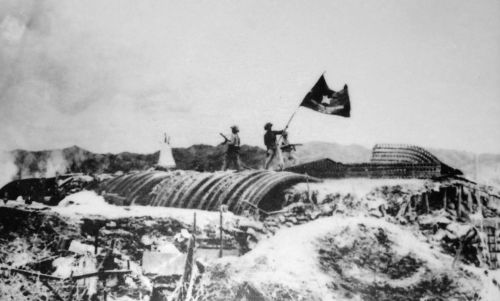
The battle that French planners had hoped to provoke began in earnest on March 13, 1954, when Viet Minh artillery opened fire on the French positions in the Dien Bien Phu valley. The initial bombardment surprised many within the French command, both for its intensity and for the accuracy with which Vietnamese gunners struck key targets. Within hours, Viet Minh artillery destroyed several French gun emplacements and severely damaged the airstrip that served as the garrison’s primary lifeline. This opening barrage signaled that Giap had successfully deployed heavy weapons in positions capable of dominating the valley, fundamentally altering the assumptions upon which the French defensive strategy had been built.
The first major assault targeted the French strongpoint known as Beatrice, one of several fortified positions that formed the outer defensive ring of the base. Viet Minh infantry units attacked under the cover of heavy artillery fire, advancing through trench networks that allowed them to approach the French defenses with reduced exposure. The defenders fought fiercely, but the coordinated combination of bombardment and infantry assault quickly overwhelmed the position. French officers attempted to organize counterattacks to stabilize the line, yet communication within the defensive network quickly deteriorated under the intensity of the bombardment. The fall of Beatrice also carried symbolic significance, demonstrating that the supposedly impregnable French perimeter could be breached through sustained pressure and coordinated assault. By the following day, the position had been captured, marking the beginning of a systematic campaign in which Viet Minh forces sought to dismantle the French defensive perimeter one strongpoint at a time.
Additional French positions soon came under sustained pressure. The strongpoint Gabrielle fell after another intense assault, further weakening the defensive line protecting the central command area. Each loss forced the French garrison to contract its perimeter while absorbing mounting casualties. The destruction of the airstrip proved especially damaging, as it limited the ability of transport aircraft to land safely within the valley. Supplies and reinforcements could still be delivered by parachute, but the accuracy of these drops declined as Viet Minh anti-aircraft fire increased and the shrinking French perimeter made recovery of supplies more difficult.
As the siege progressed, the battle increasingly resembled a form of trench warfare reminiscent of earlier twentieth-century conflicts. Viet Minh soldiers extended their trench systems closer to the French positions each night, reducing the distance that assault troops needed to cross during attacks. These trenches allowed Vietnamese forces to move under cover while gradually tightening the encirclement of the garrison. Engineers and laborers worked continuously to deepen and extend the trench network, often advancing their lines under cover of darkness while artillery suppressed French observation posts. French artillery and air strikes attempted to disrupt these advances, but the Viet Minh’s dispersed formations and fortified positions in the surrounding hills limited the effectiveness of such efforts. The steady approach of these trenches had a profound psychological impact on the defenders, who could observe the enemy gradually closing in on their positions day by day.
Conditions inside the French camp deteriorated steadily as the siege continued. The garrison endured constant artillery bombardment, shortages of medical supplies, and the psychological strain of prolonged isolation. Field hospitals became overcrowded with wounded soldiers, while mud and rain transformed the valley floor into a difficult environment for both defense and resupply. Parachute drops often landed outside French lines or fell into areas already controlled by Viet Minh troops, depriving the garrison of desperately needed supplies. Many units fought under conditions of exhaustion as the defenders struggled to maintain their positions against repeated attacks. Morale gradually eroded as soldiers recognized that relief forces were unlikely to break through the encirclement, leaving the garrison increasingly dependent on dwindling supplies and improvised defensive measures.
By early May 1954, the French defensive network had largely collapsed under the cumulative pressure of weeks of bombardment and assault. Viet Minh forces launched a final series of attacks that overran the remaining strongpoints and penetrated the central command area. On May 7, the French garrison formally surrendered, bringing the battle to an end. The fall of Dien Bien Phu represented one of the most dramatic defeats suffered by a European colonial army in the twentieth century and marked a turning point in the struggle for control of Vietnam.
Strategic Miscalculation and Asymmetric Warfare
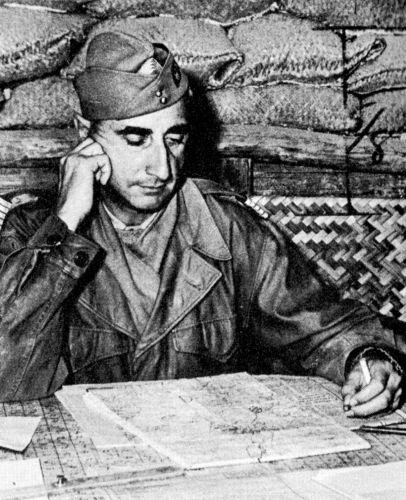
The defeat at Dien Bien Phu revealed a profound gap between French strategic expectations and the realities of the conflict they were fighting. French commanders believed they had constructed a battlefield that would compel the Viet Minh to fight according to the conventions of modern warfare, where superior artillery, air power, and fortified positions would determine the outcome. In practice, however, the battle demonstrated how assumptions about technological superiority could be undermined when an opponent adapted its strategy to the environment and the limitations of its adversary. The Viet Minh did not simply accept the conditions envisioned by French planners; instead, they reshaped those conditions in ways that neutralized the advantages on which the French strategy depended.
A central miscalculation in the French plan lay in the assumption that logistical limitations would prevent the Viet Minh from deploying heavy artillery in the surrounding hills. French planners believed the terrain was too difficult for large guns to be transported and positioned in effective firing locations. This belief proved incorrect. Through an enormous mobilization of labor and engineering effort, Giap’s forces succeeded in moving artillery pieces through dense forests and mountainous terrain, establishing concealed firing positions that dominated the valley. These operations required not only physical endurance but also careful planning and coordination across a extensive supply system. Thousands of soldiers, engineers, and civilian laborers worked together to construct pathways, reinforce trails, and transport dismantled artillery components through terrain that French commanders had assumed to be impassable. Once the guns reached the surrounding ridges, they were reassembled and placed in fortified positions dug into hillsides and protected by camouflage and earthworks. From these elevated positions, Viet Minh artillery could bombard the French base while remaining difficult to detect and destroy. The success of this logistical effort overturned the central assumption underlying the French strategy, revealing that the enemy possessed both the determination and the organizational capacity to transform the battlefield in ways French planners had not anticipated.
Another strategic weakness involved the French reliance on air supply as the foundation of their defensive plan. The garrison at Dien Bien Phu depended almost entirely on aircraft to deliver ammunition, food, and reinforcements. When Viet Minh artillery damaged the airstrip and anti-aircraft weapons began targeting transport aircraft, this logistical system became increasingly unreliable. Supplies dropped by parachute often fell into contested areas or directly into Viet Minh hands. The dependence on air supply transformed from a strategic advantage into a vulnerability once the surrounding terrain fell under Vietnamese control.
The battle also illustrated the effectiveness of asymmetric warfare when a weaker force can alter the conditions of engagement. Rather than confronting the French directly in open terrain where French mobility and firepower would be decisive, Giap gradually imposed a siege that eroded the defenders’ advantages. The combination of artillery bombardment, trench warfare, and logistical encirclement forced the French garrison into a defensive struggle that played to the strengths of the Viet Minh. By dictating the pace and structure of the battle, Giap was able to transform a fortified base into an isolated target.
Dien Bien Phu stands as one of the most striking examples of how strategic miscalculation can lead to catastrophic defeat. French commanders had attempted to engineer a decisive engagement that would restore their military initiative in Indochina. Instead, the battle exposed the limits of colonial warfare in an environment where political mobilization, local knowledge, and logistical innovation could outweigh technological advantages. The defeat demonstrated that dominance in war does not depend solely on superior weapons solely on superior weapons but also on the ability to understand and adapt to the strategic realities of the conflict.
Global Consequences and the End of French Indochina

The fall of Dien Bien Phu in May 1954 reverberated far beyond the battlefield itself. For France, the surrender of the garrison represented not only a strategic collapse but also a profound political shock that exposed the limits of colonial power in the postwar world. The loss occurred at a moment when the French public had already grown weary of a costly and seemingly endless conflict. News of the defeat intensified debates within France about the viability of maintaining colonial authority in Southeast Asia. The battle accelerated political pressure for a negotiated settlement that could bring the war to an end.
Diplomatic negotiations were already underway when the siege concluded. Representatives from multiple nations had gathered at the Geneva Conference in 1954 to address the future of Indochina. The dramatic defeat at Dien Bien Phu fundamentally altered the balance of these negotiations. French negotiators now approached the discussions from a position of clear military weakness, while the Viet Minh delegation gained greater leverage as the force that had achieved a decisive battlefield victory. The resulting agreements divided Vietnam along the seventeenth parallel, creating separate political administrations in the north and south while calling for nationwide elections that were intended to reunify the country.
The Geneva Accords formally ended the First Indochina War and marked the collapse of French colonial authority in Vietnam. Although France retained influence in parts of the region for a time, its role as the dominant colonial power in Indochina had effectively come to an end. The defeat at Dien Bien Phu became a symbol of the broader decline of European colonial empires during the mid-twentieth century. Across Asia and Africa, nationalist movements were challenging imperial rule, and the French experience in Vietnam demonstrated how colonial powers could struggle to suppress such movements even with significant military resources. The battle also carried symbolic weight among anti-colonial leaders throughout the developing world, many of whom interpreted the Viet Minh victory as evidence that disciplined revolutionary movements could overcome European armies that had once seemed invincible. For France itself, the psychological impact of the defeat extended into domestic politics, contributing to broader debates about the future of French imperial commitments not only in Indochina but also in North Africa. Dien Bien Phu did not merely end a war in Southeast Asia; it exposed the growing fragility of the colonial system that European powers had constructed over the previous century.
The consequences of the battle also extended into the emerging geopolitical tensions of the Cold War. The division of Vietnam created a fragile political situation in which competing ideological systems faced each other across a contested boundary. In the north, the Democratic Republic of Vietnam consolidated its authority under the leadership of Ho Chi Minh. In the south, a separate government emerged with increasing support from the United States, which viewed the region through the lens of global containment strategies aimed at limiting the spread of communism. The conflict that had once been framed primarily as a colonial war began to evolve into a central front in Cold War politics.
Dien Bien Phu stands as both a military and geopolitical turning point. The defeat of French forces demonstrated that colonial armies could be overcome by determined nationalist movements employing adaptive strategies and large-scale mobilization. The end of French rule did not bring lasting stability to Vietnam. Instead, the political arrangements created in the aftermath of the battle set the stage for a new and even larger conflict that would draw in global powers during the decades that followed.
Conclusion: The Illusion of Controlled Warfare
The Battle of Dien Bien Phu remains one of the most consequential military defeats of the twentieth century, not simply because of the surrender of a French garrison but because of what the battle revealed about the changing nature of warfare in the modern era. French commanders entered the campaign convinced that they could design a battlefield that would compel their opponent to fight under conditions favorable to French power. Through fortified positions, superior artillery, and air mobility, they believed they could control the terms of engagement and impose a decisive defeat upon the Viet Minh. Yet the course of the siege demonstrated that such confidence rested on assumptions that failed to account for the adaptability of an opponent fighting for political independence.
The French plan depended on the belief that material advantages and engineered defensive positions could compensate for the broader political and logistical dynamics of the war. In reality, the Viet Minh strategy under General Giap exploited precisely those vulnerabilities that French planners had overlooked. By mobilizing vast numbers of laborers, constructing supply routes across difficult terrain, and deploying artillery in concealed positions around the valley, Giap transformed the supposed strength of the French base into a strategic liability. The fortified camp became not a trap for the Viet Minh but an isolated pocket surrounded by a determined enemy capable of dictating the tempo of the battle.
Dien Bien Phu illustrates the limits of attempts to impose rigid strategic frameworks on conflicts shaped by asymmetric conditions. French commanders had hoped to force a conventional confrontation in which the superiority of modern military technology would determine the outcome. Instead, the Viet Minh imposed a prolonged siege that eroded those advantages through patience, logistical ingenuity, and disciplined coordination. The battle revealed how an opponent that understands the political and geographical realities of a conflict can reshape the battlefield in ways that negate conventional expectations about power and control.
The legacy of Dien Bien Phu extends beyond the immediate end of French colonial rule in Indochina. The battle demonstrated to observers around the world that imperial armies could be defeated by determined nationalist movements employing adaptive strategies. It foreshadowed the broader challenges that powerful states would face in conflicts defined by insurgency, political mobilization, and asymmetric warfare. More importantly, Dien Bien Phu exposed the illusion that modern warfare could be neatly controlled through technology and planning alone. The outcome instead underscored a deeper lesson: military power, however formidable, remains constrained by the strategic realities of the conflict in which it is employed.
Bibliography
- Arreguín-Toft, Ivan. How the Weak Win Wars: A Theory of Asymmetric Conflict. Cambridge: Cambridge University Press, 2005.
- Clairmont, Frederic F. “Dien Bien Phu: A Personal Memoir.” Economic and Political Weekly 39:35 (2004), 3889-3892.
- Fall, Bernard B. Hell in a Very Small Place: The Siege of Dien Bien Phu. Philadelphia: J. B. Lippincott, 1966.
- Giap, Vo Nguyen. People’s War, People’s Army. New York: Praeger, 1962.
- Herring, George C. America’s Longest War: The United States and Vietnam, 1950–1975. New York: McGraw-Hill, 1979.
- Karnow, Stanley. Vietnam: A History. New York: Viking Press, 1983.
- Lawrence, Mark Atwood. Assuming the Burden: Europe and the American Commitment to War in Vietnam. Berkeley: University of California Press, 2005.
- Logevall, Fredrik. Embers of War: The Fall of an Empire and the Making of America’s Vietnam. New York: Random House, 2012.
- Morgan, Ted. Valley of Death: The Tragedy at Dien Bien Phu That Led America into the Vietnam War. New York: Random House, 2010.
- Murphy, William T. “The French Defeat at Dien Bien Phu and the Limitation of Military Intelligence.” International Journal of Intelligence and Counterintelligence 39:2 (2026), 486-518.
- Qiang, Zhai. “China and the Geneva Conference of 1954.” The China Quarterly 129 (1992), 103-122.
- Short, Philip. Ho Chi Minh: A Life. New York: Hyperion, 1999.
- Simpson, Howard R. Dien Bien Phu: The Epic Battle America Forgot. Washington, DC: Brassey’s, 1994.
- Stanley, George F. G. “Dien Bien Phu in Retrospect.” International Journal 10:1 1954/1955, 38-50.
- Thompson, W. Scott. “Lessons from the French in Vietnam.” Naval War College Review 27:5 (1975), 43-52.
- Windrow, Martin. The Last Valley: Dien Bien Phu and the French Defeat in Vietnam. London: Weidenfeld & Nicolson, 2004.
Originally published by Brewminate, 03.09.2026, under the terms of a Creative Commons Attribution-NonCommercial-NoDerivatives 4.0 International license.
About the Author