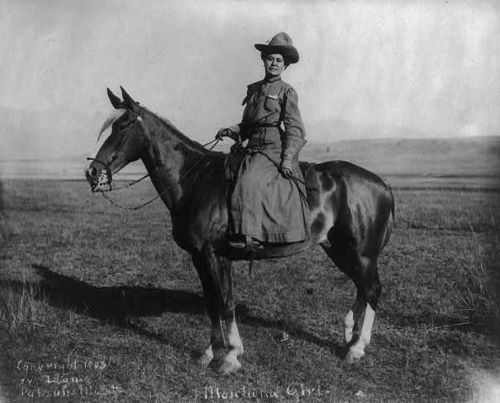
There were opportunities for land ownership and artistic inspiration, but life there wasn’t without struggle.
Introduction
In the American imagination, the rugged, vast landscapes of the West are dotted with solitary men on horseback—cowboys, outlaws, sheriffs. But the frontier was also home to women whose stories don’t match the standard Hollywood Western script. What brought women to places like California and Wyoming, and what lives could they lead there? Did Western women experience the same freedoms and adventures as their male counterparts?
A Land of Contradictions as well as Opportunity

By Dr. Virginia Scharff
Distinguished Professor Emeritus of History
University of New Mexico
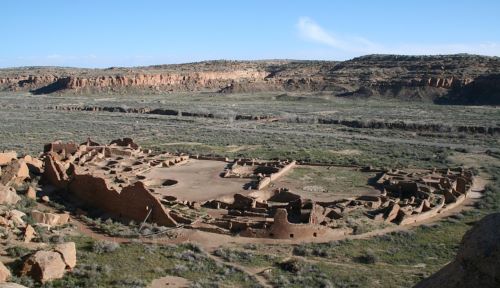
Let’s begin with one of those invisible, obvious facts of history: Women had been living in what became “the West” centuries before anyone arrived from “back East.” We have plenty of evidence of the ways they claimed homes and made communities, from the remnants of the Cahokia Mounds to the majestic ruins of Pueblo Bonito at Chaco Canyon, where archaeologist Patricia Crown has found evidence of chocolate and macaws from the 12th century. With the advent of European contact, Spanish and Mexican and indigenous women lived in—and came from—all directions.
So we’re really talking about those recent immigrants who came from the eastern U.S. and from across the globe, particularly in the 19th century. In the years after the Civil War, those women found plenty of opportunities in the West that were not available in the East: everything from the right to vote to equal pay for women teachers to more liberal divorce laws. Wyoming Territory passed a series of such laws in 1869, partly in an effort to attract more white settlement, which, of course, was also intended to unsettle indigenous people. The West was the first home of women’s suffrage in the U.S., with nearly every western state or territory enfranchising women long before women won the right to vote in eastern states.
Is the West still a land of opportunity for women? I’d say it’s more a land of contradictions. We’ve got women in public offices and CEO suites throughout the region. But here in the West, women continue to lag behind men in too many areas to declare the “Woman Problem” solved.
The Chance to Be a Landowner
By Dr. Vicki L. Ruiz
Distinguished Professor Emerita of History and Chicano/Latino Studies
University of California, Irvine
Under colonial Spain and newly independent Mexico, married women living in the borderlands of what is now the American Southwest had certain legal advantages not afforded their European-American peers. Under English common law, women, when they married, became feme covert (effectively dead in the eyes of the legal system) and thus unable to own property separately from their husbands. Conversely, Spanish-Mexican women retained control of their land after marriage and held one-half interest in the community property they shared with their spouses.
As I tell my students, imagine you are a woman on the Illinois prairie, the only child of a prosperous farmer. Your parents die, and you inherit the family homestead. You marry, raise crops, and rear several children. But if your husband has a mind to sell the farm and travel west, you cannot stop the sale, and up on the buckboard you go. However, if you grew up near Albuquerque, your husband could not sell the property you had brought to the marriage, thus giving you significant leverage in household decisions. So you might not end up on that buckboard after all.
There were numerous landed women of note in the West. For example, María Rita Valdez operated Rancho Rodeo de las Aguas, now better known as a center of affluence and glamour: Beverly Hills. (Rodeo Drive takes its name from Rancho Rodeo.) After the U.S.-Mexican War, the del Valle family of Southern California held on to Rancho Camulos, and when Ygnacio, the patriarch, died, his widow Isabel and daughter Josefa successfully took over the ranch’s operations. Other successful entrepreneurs and property holders, who defended their interests in court when necessary, included San Francisco’s Juana Briones, Santa Fe’s Gertrudis Barceló, San Antonio-born María del Carmen Calvillo, and Phoenix’s Trinidad Escalante Swilling. In a frontier environment, they utilized the legal system to their advantage as women unafraid to exert their own authority.
Writerly Inspiration

By Dr. Cathryn Halverson
Associate Professor of American Studies
University of Copenhagen
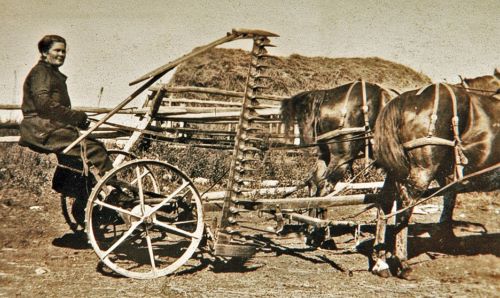
The West gave women special opportunities as authors. Aspiring writers saw literary “material” in the stuff of their daily lives in frontier, rural, and urban western spaces. They shaped that material into letters, journals, sketches, essays, and stories for eastern magazines and presses—and received popular acclaim.
For readers outside the West, the settings these women described were exotic: California gold camps and desert outposts, northwestern logging and mining communities, Rocky Mountain and Great Plains homesteads. Elinore Pruitt Stewart, writing from Wyoming in 1913, placed a series of letters about her homesteading experience in the prestigious Atlantic Monthly. She reported on the letters of thanks she received from appreciative readers, like the elderly woman who told her “the Letters satisfied her every wish. She said she had only to shut her eyes to see it all, to smell the pines and the sage.” Through its association with romantic national mythologies of sublime landscape and heroic endeavor, an ordinary woman’s life on a ranch in Wyoming seemed to mean more—and to reveal more—than one on a farm in Wisconsin or Connecticut.
Yet women writers were just as likely to revise as support these mythologies, which centered on male endeavor, and they frequently portrayed western sites as not wild and liberating, but provincial and claustrophobic. The Story of Mary MacLane, for example, one of the most notorious books of 1902, depicted the 19-year-old author’s desperation to escape her middle-class home in the copper boomtown of Butte: “Can I be possessed of a peculiar rare genius,” she demands, “and yet drag my life out in obscurity in this uncouth, warped, Montana town!” Nevertheless, the city MacLane denounced was key to her literary success: Readers would have been far less intrigued by the thoughts and experience of a girl hailing from a more familiar place.
It Depends on Which Women, and Where

By Dr. Laura Woodworth-Ney
Former Executive Vice President and Provost
Professor of American History
Idaho State University
The answer depends on which women, and the geography of their circumstances. During the post-Civil War period in the American West (1865-1910), middle-class and upper-class white women often did enjoy more flexibility and more freedom—to travel, to own land in their name, to exercise control over their children.
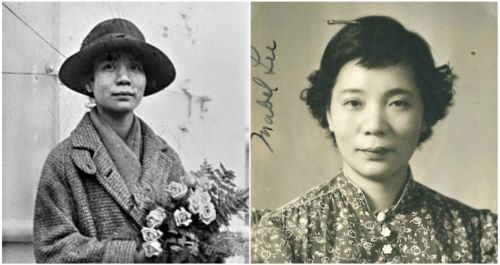
Minority women—particularly Chinese and Native American—did not experience greater freedoms. For these groups, the idea of an American “West” was meaningless. For Chinese women who immigrated during the late-19th century to work in the laundries, saloons, and grimy inns of mining camps scattered throughout California and the Rocky Mountain interior, the West was not west at all but rather east, and it was often not a voyage of choice. Impoverished families in China were encouraged to sell their daughters, who were shipped to San Francisco, held in “pens,” and taken to mining camps. Even though slavery had been outlawed after the Civil War, the isolation of these camps—in places like Warrens, Idaho—meant that slavery existed in fact if not in law.
For the West’s native women of the late-19th and early-20th centuries, the American West represented a battleground of culture, conquest, and hunger. Non-Indian settlement destroyed the food sources and lifeways for the tribes of the western United States, while U.S. government policy forced them onto federally managed reservations. With their peoples ravaged by disease and forced assimilation, many tribal women faced crippling poverty and cultural genocide as the 20th century dawned. The survival and success of tribes in 21st-century America is due to the ability of these native women to hold their families together during the era of the “American West.”
Mobility – but Not Necessarily Upward

By Dr. Judy Tzu-Chun Wu
Associate Dean, School of Humanities
Professor of Asian American Studies
University of California, Irvine
When we talk about “the American West” and the women who made it their home, what do we really mean? Often, the term conjures images of those who migrated east to west, specifically from the East Coast of the United States. However, the region understood as the “West” was home to indigenous and Mexican women who lived here before Anglo-American and African-American settlers. Some of these women who already resided in the West experienced forced physical, cultural, economic, and political dislocation to make space for “pioneers.” Women also migrated from the “East,” meaning Asia and other parts of the Eastern hemisphere. They also came “North” and “South” within the western hemisphere.
Asking about distinct opportunities for women in the West also assumes that these opportunities didn’t exist elsewhere. This is a long-standing belief in U.S. society that the West epitomizes the American dream and the basis of American identity. This region of presumably “free land” provided opportunities for economic mobility and self-reinvention.
But not all women could participate in these opportunities. State policies throughout much of the Western states denied Asians the right to own land as well as interracially marry. Furthermore, some women were forced to migrate to work in the sex industry, one of the few jobs allocated for women in the male-dominated western “frontier.”
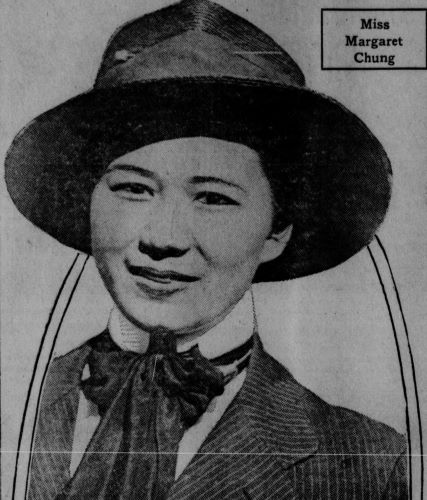
Certainly, many people, including women, relocated to the West based on the belief that opportunity awaited them. For example, Margaret Chung, the subject of a biography I wrote, became the first American-born Chinese female physician. Her mother had been sold into servitude and prostitution, and her father struggled to make ends meet through most of their family’s lives. However, Margaret found religious and educational allies to obtain a medical education. During World War II, she served as an adopted “mother” to over 1,000 “sons”—Anglo-American soldiers, entertainers, and politicians.
On the surface, this appears to be a success story. However, Chung’s economic and social rise also depended upon her manipulation of her identity, including strategically performing a projected role of foreign womanhood. At times, despite her status as a professional woman, Chung played the role of an Oriental mammy. Her story, like others of women in the West, was not a simple one of upward mobility.
The Opportunity to Learn from One Another
By Dr. Jane Simonsen
Professor of History
Augustana College
The American West presented opportunities for some 19th-century Anglo-American women to cultivate a stronger sense of authority by positioning their domestic work as part of nation-building. Middle-class white women reformers interested in promoting Native American assimilation, for example, worked to define the well-kept single-family home—and the woman at its center—as a key marker of civilization. Their widely recognized power as moral guardians of the home justified their action and work outside of the narrow domestic realm, and these reformers carved out a niche for themselves among the politicians, scientists, and field workers who sought to “civilize” the western tribes in the latter half of the 19th century.
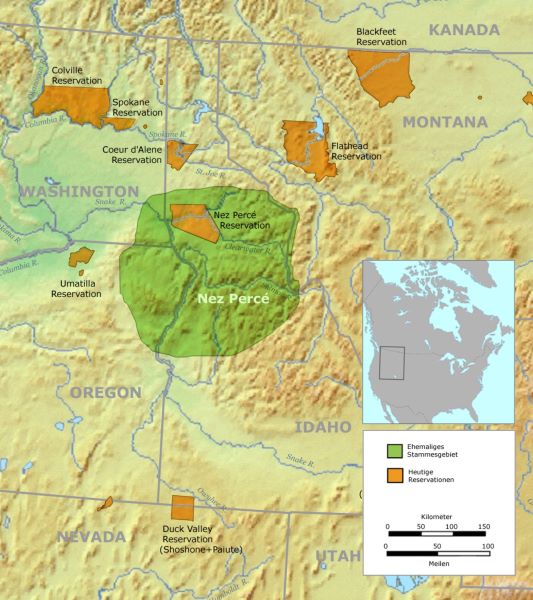
Yet working among Native Americans in western locations, from the Nez Perce in northern Idaho to the Cahuilla of Southern California, gave these women the opportunity to measure themselves against their indigenous counterparts—and at least some found their own civilization lacking. Close contact with indigenous women sometimes held up a harsh mirror to “civilized” society, which devalued the very work these women sought to promote. For their part, indigenous women took advantage of new resources on their reservations when they could, and were cannily selective in what they chose to adopt of the lessons and models of conduct offered by Anglo reformers.
The reservation system, land allotment, and reform movements disrupted many social ties and work patterns. Still, resourceful indigenous women sought opportunities to earn seasonal income, own property, and provide health care to their families. By maintaining some familiar forms of work, such as farming, foraging, and needlework, women helped to mitigate new economic realities on the reservation. Remaining at the margins of the new economy, indigenous women used new trade opportunities to maintain some of the very systems that reformers had hoped to destroy.
Room to Invent New Identities

By Dr. Maria Raquel Casas
Associate Professor of History
University of Nevada, Las Vegas
On December 23, 1868, a Native American woman died in Los Angeles, and Anglo-Americans paid no attention to her passage. Within the new racial and social order established by Americans after the Mexican American war, Victoria Bartolomea Comicrabit was an Indian, but what 19th-century Americans failed to recognize was that this woman had survived two colonization efforts and lived a uniquely Californian life.
Born in 1808, Victoria was a member of the San Gabriel people and fully hispanicized by the Spanish friars to the point that she and her “Indian” husband, Pablo Maria, were given mission lands once they married and became fully Catholic. As a property owner and hispanicized woman, Victoria interacted and was socially accepted by the other local elite Californio families. When her husband died, she inherited all the lands granted to the couple. If she had remained a widow, Victoria would have continued to work her lands, take care of her four children, and be a respected member of her community. She was an “Indian,” but in the Spanish colonial system race was more fluid. Victoria, however, did not remain a widow, and in September 1836 she married the Scottish trader Hugo Reid, who eventually squandered Victoria’s lands. After his death, Victoria was left destitute, treated as “just another Indian.”
As Victoria Reid’s story shows, women’s lives in the American West have to be understood through complicated categories of race, class, religion, marriage, and legal standing that did not remain static during the 19th century. If we see women’s contributions to settling the West as nothing more than dependent mates to men, we fail to see the complex woman that Victoria represents.
Originally published by Smithsonian Institution, 01.09.2015, reprinted with permission for educational, non-commercial purposes.
About the Author