Looking back on the media history of Nazi Germany, its most important ‘modernism’ can only be regarded as an ‘education in looking away’ as others were dehumanized.

By Dr. Rolf Sachsse
Former Professor of Design History and Design Theory
University of Fine Arts Saar, Sarrebruck
Introduction
The sequences are too well known to be displayed here in photographic reproductions: whenever athletes are shown in Leni Riefenstahl’s Olympia film from 1938, their bright costumes shine in the sun against a dark sky, adding to the potency of the scene — a potency already reinforced by the low camera angle and the dynamics of their movements. No type of image better illustrates the Janus-like state of modern photography under the National Socialist regime. The form and composition are utterly modern, the technique as advanced as possible, but the message is racial and traditionalist in its ideology. This combination makes these images, indeed the whole film, fascinating: the photographic quality is stunning and absolutely state of the art, yet it delivers a message that also suggests the racial hypothesis of National Socialism — an ideology of ethnic ascendancy, inserted by those making the film and those being shown in it, and a manifest celebration of victory not only for the athletes in the film but for those who commissioned the piece. Nevertheless, this film received a gold medal in 1948 for being the best film ever made of an Olympic Games, and its director received honours of all kinds throughout her century-long life.1
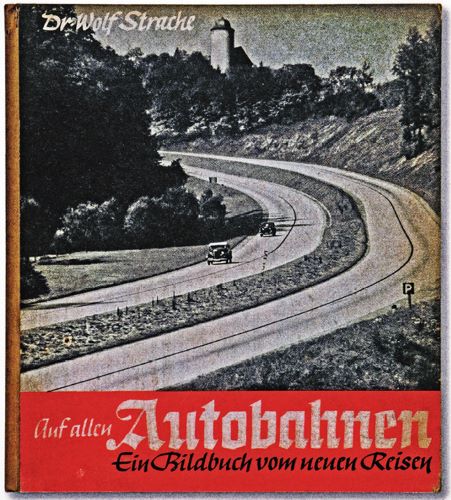
This chapter aims to broaden the view of National Socialist photography through an exploration of how media modernity was introduced into a totalitarian government structure; there is surely no bigger contrast than that between the pseudo-medieval milieu of National Socialist ideology and its industrial, even post-industrial processes of establishing, across the population, a firm belief in the regime’s policies and its direction.2 The most modern — in some respects even post-modern — aspect of the propaganda politics of the National Socialist regime is its intrinsic insistence on the production of a positive memory: it was desired that everybody should develop a positive memory of life during Hitler’s rule, and the biggest problem for post-war students of this history was that this part of National Socialist propaganda had functioned perfectly well.3 Among historians, there is a common stereotype that the National Socialist regime created a large facade of conservative beauty and administrative perfection that functioned like a ‘Potemkin village,’ without a proper connection to reality.4 This puzzle of National Socialism’s relationship with modernism and post-modernism persisted even after the war was lost. For example, echoes of National Socialist policies towards the environment endured in the work of Hitler’s landscape architect and autobahn designer, Alwin Seifert (see Fig. 1.1).
Seifert would go on to write important books on ecological agriculture during the 1960s, and he was among those who laid the foundations of the Green Party in the 1970s.5 However, this essay is not concerned with the continued effects of National Socialism or the Holocaust and its post-war reception; rather, it explores how aspects of the groundwork for this reception were present in the modernism of media production during the 1930s.6
This chapter seeks to follow the line of continuity of what was later called the ‘New Vision’ of the 1920s into the 1930s, and the political situation therein. This continuity was not only shaped by personal developments and biographical interactions, but also by a general ontogenesis of aesthetic strategies alongside technical inventions, and political actions. The general line of the argument — that 1920s modernism had, in the realm of photography (and film) at least, a continuity after 1933 — is augmented by two technical developments: the establishment of the 35mm camera as the foundation of photographic journalism, and the advent of colour photography, which played an important role not only in propaganda but also with regard to the collective memory of the Second World War. Thus, the last part of this chapter will touch upon the role photography played in modern warfare. However, all of these arguments centred on modernism have to be examined through the lens of the official approach of National Socialism towards a politicised culture, with its strict disregard for modern art in painting and sculpture. That is to say that the modernism of media, as well as building and engineering technologies, was grounded in a clear division from modernism as applied to the traditional genres of art.7 This division is a subtext to what follows.
The Continuity of the New Vision in Media, Design, and Photography
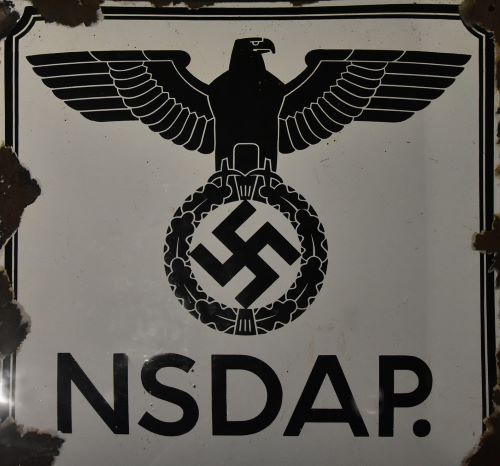
Despite the best efforts of historians, a popular myth persists in the history of German design: that after 1933 all modern trends disappeared altogether. It is true that many architects, designers, and artists emigrated from Germany at this time, as some were indeed persecuted and imprisoned in concentration camps. Nevertheless, in principle, modern methods of design were not officially confirmed as excluded, unwanted, or forbidden in the early period of the National Socialist state. At least until 1936, it was still an open question within the regime and its party whether or not a straight, strict, and elegant modern design — after the Italian model — might become the formal style of National Socialism.8 An examination of the architectural competitions and trade fairs, in particular Germany’s participation in international exhibitions, indicates that Germany, until at least the year of the Berlin Olympiad, conformed to the notion of the modern state stylistically. However, the final establishment of the official fine art policy of the NSDAP regime runs directly counter to this observation. The propagation and inclusion of modern forms in the everyday world of National Socialism was thwarted in two ways. On the one hand, a populist and traditionalist aesthetic approach towards fine art and cultural politics became dominant, and on the other hand, the party corralled all creativity within the administrative boundaries of National Socialist cultural organizations. As a result, no stronghold of any modern trend could be established or persist under these conditions. But the propaganda that was created to validate the work and efforts of the National Socialist state had to be absolutely modern, almost avant-garde in its connection to new technical media. The shift between models of a possible future and the present reality framed by picture propaganda in general, was, paradoxically, the result of the most modern media theories of the era — directly imported from American mass communications research.9
The acceptance of these continuities of modern trends in photography throughout the National Socialist era resulted in some crucial fundamental outcomes that were important in their direct influence on the perception of ordinary Germans — the so-called post-war collective guilt of the German people with regard to the history of the Holocaust was, it might be argued, shaped by an education in looking away.10 Germans were flooded with modern images of a good, even an idyllic life under National Socialism, effectively encouraging them to ‘look away’ from the daily injuries and crimes committed by party and police, whether visible in everyday life or not. The continuities of the New Vision in German photography of the 1930s have to be understood within four categories, which may form a pattern that enables us to understand both the fascination of these photographs and their effectiveness in terms of propaganda and memory production. Of course, this continuity has to be recognised under the equally important assumption that any continuity had to fit into the state and Party’s own symbolic tropes and adopted meanings — what could be considered as modern was a question either for the propaganda ministry or for Joseph Goebbels himself.
The first of these basic patterns is the principle of serialization. According to this principle, the picture consists of the frequent repetition of a small element framed at the margin to evoke infinite repeatability. In the pictorial form of modern advertising, this principle found its ultimate expression in the representation of consumer goods with a positive connotation of industrial production (e.g., cigarettes or screws). In the picture, as in real life, the individual element had no validity, but the repetition of everything — Kracauer’s concept of the ornamentation of the mass — became an image of reality.11 It is obvious that this basic pattern was re-used under National Socialism and visually transposed onto people, not directly, but in the preparation of mass displays of photography and film at Party Congresses or other big events. These were then disseminated by means of cinematic or photographic reproductions and with a mass-media standardization.
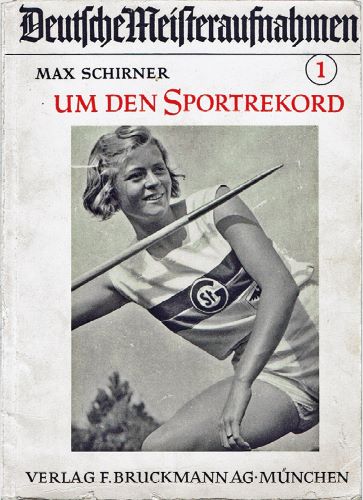
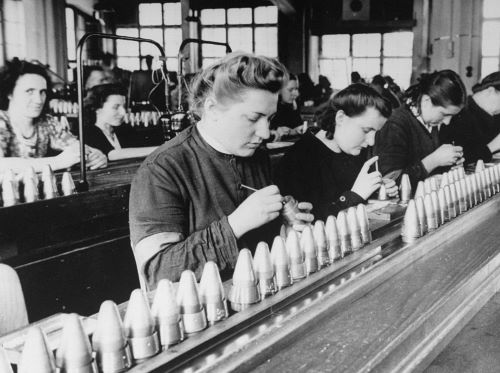
The second basic pattern is marked by what Constructivist painting named the counter composition; effectively, the dynamics of modernism are displayed by an inclined compositional cross with equivalent sides, the diagonal vertical guiding the spectator to look up towards new visions. The origin of this compositional form stems from the Soviet avant-garde, to a certain extent from the Dutch group De Stijl and from other Constructivist sources, and points to a close connection between art and technology. This form was replaced in Soviet painting from 1930 by Socialist Realism and propagandistic approaches to image making; a further application of the Constructivist approach was explored in Western fashion photography from 1933 onwards. National Socialist propaganda used this compositional form too, even after 1936, when the officially sanctioned aesthetic became much more reactionary. Although this modern compositional form was very much weakened in angle and dynamics, it continued to be employed in the representation of the most modern technology and particularly for weapons technology; specifically, it was concerned with representing the nation’s industrial pre-eminence over potential opponents.
The third element imported from the ‘New Vision’ was photomontage, both in the form of collaging already printed pieces of photographs and in the assemblage through exposure of negatives in the darkroom. In addition, various mixtures of intermediate forms and a special form assembled with graphic elements, namely Photoplastics or Typophoto, were also employed.12 Photomontage was considered an important part of National Socialist propaganda in the years between 1928 to 1932 but this effectively ceased after John Heartfield’s (Helmut Herzfeld, 1891–1968) Prague exhibition in 1934 of his Communist and Anti-Fascist photomontages, which ultimately caused a number of diplomatic problems for the German government.13 Throughout the war, however, photomontage saw a certain renaissance in its exploitation for foreign propaganda posters.
The fourth photographic form of the ‘New Vision’ was the picture series. Of course, it existed before modernity, and it is inherent to photography in principle. But the picture series correlates to the industrial introduction of roll film, especially the 35mm format, to Germany in around 1925, and the series was in frequent use by the end of the decade. Basically, the picture series was understood in the late 1920s as parallel to a line of film stills that possessed the visual dynamics of synchronous ‘seeing’, as seen in avant-garde art. It was enthusiastically received as both a key journalistic technology and as a form of comprehensive documentation for complex mediations, and it was used to document a variety of topics by many photographers. Within the National Socialist state, the picture series was flattened and trivialized to represent idyllic and often somewhat kitsch images, but it continued to facilitate, under the right circumstances, the adaptation of the ‘New Vision’. For example, Paul Wolff, one of the more ingenious practitioners of the ‘New Vision’, employed this form extensively for National Socialist propaganda. In addition, the picture series was a common vehicle for the personalization of political content, utilized as a medium of historical authentication, especially when persons of interest, such as state officials, were represented. As demonstrated by the picture series, most of these four elements of the ‘New Vision’ in photography had firm roots in nineteenth-century media practice; the assumption of a genuine 1920s modernism must be viewed as a myth.14 A similar myth is prevalent when considering the influences of art and design schools of the same period on both modernism and National Socialist propaganda.
The importance of the Bauhaus as a school of fine arts and design should not be overestimated in this history.15 The notion that one school, the Bauhaus, was the sole originator of an entire approach in style, even to the extent that a whole period of time is associated with that name, is a misrepresentation. The Bauhaus was not at the forefront of photographic developments in the late 1920s. Later historical revisions, such as Walter Gropius’ and Herbert Bayer’s 1938 exhibition at the Museum of Modern Art in New York, certainly associated the total conception of design with the name Bauhaus. However, retrospectively examining the history of the Bauhaus, it becomes apparent that the most modern photographs produced were made independently of the institute itself and remained in the private productions of teachers and students.16 Of course, specific members of the teaching staff of the Bauhaus, such as László Moholy-Nagy or Walter Peterhans, had gained recognition through exhibitions such as the 1929 ‘Film und Foto’ in Stuttgart, amongst others, but their work was — at least contemporaneously — not necessarily connected to the Bauhaus. Although László Moholy-Nagy’s writings on photography were published in a series of Bauhaus books, they only gained wider public recognition after 1945. For example, the photomontage, so often associated with the Bauhaus as an exercise or even as a stylistic approach, was only practiced there by Herbert Bayer and in the later class of Joost Schmidt, and then mainly in the form of the so-called Typophoto — the integration of typographic or abstract graphic elements into photographs and paper prints.17 On the other hand, modern press photography was only introduced in this school around 1929, under the guidance of Hannes Meyer and with students such as Irena Blühova or Moshe Raviv who took part in political movements of their time, mostly on the left wing of the spectrum. And, of course, they were the first to leave Germany when the right-wing parties began to gain the ascendancy.
One of the inventions of the Bauhaus that did make the transition into National Socialist propaganda was Typophoto — used for infographics with a few elements superimposed on a given photograph, or used in a direct way for poster graphics, which were needed for the hundreds of exhibitions planned and pursued as a means of propaganda.18 This same quality of text-image-line-combinations was applied to book covers, brochures, and booklets of all kinds printed in large quantities in order to be widely disseminated. In addition, Typophoto also made its way into the National Socialist era thanks to people from the Bauhaus, especially Herbert Bayer, Kurt Kranz, and Hein and Hannes Neuner, to name but a few. However, Typophoto was also skilfully executed in other schools as well; for example, under Max Burchartz in Essen with his students Anton Stankowsky and Klaus Wittkugel, or under Georg Trump in Stuttgart with a number of lesser-known students who practised on a mainly local level. Typophoto is specifically connected with printed materials and books were, at the time of the New Vision and the Bauhaus, the most important route to achieving artistic recognition. László Moholy-Nagy’s Malerie Fotografie Film from 1925 is often cited as the foundation of the Bauhaus’ fame; yet far more established at the time were the image collections published around the 1929 ‘Film und Foto’ exhibition such as Foto-Auge, edited by the typographer Jan Tschichold, and Es kommt der neue Fotograf, edited by Werner Graeff — a former Bauhaus student who had moved onto a successful career as a photographer, teacher, and designer following his role as the press officer of the Stuttgart Weissenhof exhibition of 1928.19 Even more important for spreading the quality of the New Photography was a small children’s book by Graeff, entitled Ottos Fotos and launched in 1932.20 The book was the perfect introduction to producing images in the style of the ‘New Vision’.
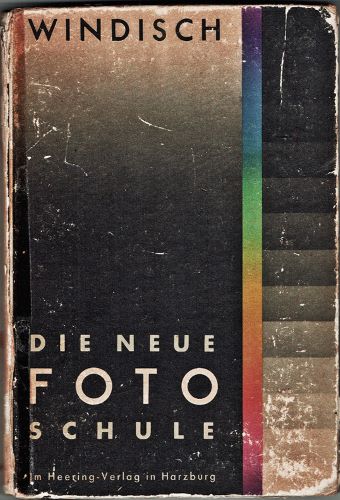
The first teacher at the Bauhaus to run a photography class, Walter Peterhans, started to write a series of technical advisory books in 1933. Up until 1936, Peterhans produced four different books dealing with topics such as film development and photographic printing. These books were extremely successful and sold more than 50,000 copies in approximately 40 editions. It was only in 1943, five years after Peterhans had left the country, that the publisher considered new editors for this successful production.21 More complicated is the history of Andreas Feininger, son of the painter Lyonel Feininger, who had never studied at the Bauhaus but, of course, had been living with his parents in Dessau. In the late 1920s, as a trained engineer and an accomplished photo amateur, he started to cooperate with the (at the time) somewhat left-wing author Hans Windisch on producing a handbook of modern photography according to the principles of both the basic Bauhaus training and the ‘New Vision’ approach. By the time Feininger emigrated to Sweden (and later to the US) Windisch had become a dedicated National Socialist and wrote, with the help of his publisher Walther Heering, his own version of the modern handbook of photography Die neue Foto-Schule, which was released in 1937 and became the most successful manual of photography in the German language. Until its final 13th edition in the 1970s, Heering’s Die neue Foto-Schule had sold more than 300,000 copies22 (see Fig. 1.3).
Another former Bauhaus student, Alfred Ehrhardt, published a number of smaller guides to landscape and water photography, all of them clearly in the style of the ‘New Vision’ and interpreted in a rather idyllic way of seeing the world that thus fitted the modern view as well as conforming to the ideology of National Socialism.23
One of the most significant figures who ensured the continuity of Bauhaus aesthetics into the National Socialist era was Herbert Bayer.24 During his time at the Bauhaus in both Weimar and Dessau he was regarded as a ‘King Midas’ to his contemporaries as everything he touched seemed to turn into gold. From 1928 well into the 1930s, he served as the art director of the very successful Dorland agency, one of the earliest American-style advertising agencies.25 He instigated, planned, and executed numerous important exhibitions for the new government, including the official brochure of the ‘Deutschland Ausstellung’, an exhibition for tourists in Germany that coincided with the Berlin Olympic Games of 1936. This brochure was of a strictly modernist design, containing Typophoto and photomontage effects; over a million copies were produced.26 Bayer, for whom the photography for his work was often made by his ex-wife Irene Bayer-Hecht,27 left Germany in early 1938 and, accompanying Walter Gropius, set up the 1938 MOMA exhibition on the Bauhaus and its legacy (Bauhaus: 1919–1928). Nor did Bayer’s design credentials remain unnoticed in the US. Following his decision to stay in the country, he was ultimately employed by the US government in designing war propaganda.28 Other former Bauhaus students and teachers such as Xanti Schawinsky, Hinnerk Scheper, Joost Schmidt, and the Neuner brothers tried to follow in Bayer’s footsteps but with far less success. There were numerous other modernists, for example, Fritz Brill or Edmund Kesting, who continued to apply modern ideas to advertising, including photomontage and other elements of the ‘New Vision’, right up until the end of the Second World War.
In many respects, the ‘New Vision’ was an educational program in training one’s personal imagination, and the 1929 Stuttgart exhibition ‘Film und Foto’ had large sections aimed at influencing the pedagogy of arts-and-craft schools.29 The Weimar institution that took over following the closure of the Bauhaus was a model National Socialist school — effectively more focussed on crafts than arts. As early as 1930, with conservative elements and National Socialists on the Landtag of Thuringia (the Thuringian State Assembly), the Bauhaus had been reformed by Paul Schultze-Naumburg, a strict anti-modernist in his attitudes towards architecture and design. In the same year, 1930, Walter Hege was installed as professor of photography — he had achieved fame with his dynamic interpretations of antique and medieval sculpture and architecture, and he pursued a mixture of modern technique and monumental vision as the credo of his teaching.30 An important role in this curriculum was played by Hege’s teaching assistant Heinrich Freytag. Freytag published large numbers of technical advice manuals for amateur photographers, thus establishing Hege’s post-modern re-coding of modernism and monumentality.
Other influential institutions included the School of Applied Arts Burg Giebichenstein in Halle. This school had established the only modern curriculum in photography to run throughout the 1920s. The course designer, the Swiss national Hans Finsler, left Germany to teach in Zurich in 1932, successfully anticipating the changes that would occur should the National Socialists come to power.31 His successor Heinrich Koch died too early to make an impact on the school, and the photography class ceased to exist. In addition, there were influential private schools such as the Berlin school of the former Bauhaus teacher Johannes Itten where Lucia Moholy also taught. Itten moved to Krefeld in 1932 as director of the newly established school of textile design, but was then forced to give up his professorship under pressure from colleagues. His Berlin school was also forced to close in 1934 and ultimately Itten, a Swiss national, returned to Switzerland. Itten’s successor at the Bauhaus was Georg Muche who had introduced photography to that institution as early as 1921.32 Private schools in photography and design existed in Berlin as well. The former Bauhaus student Werner Graeff ran his institute for modern photography until early 1934, when he had to emigrate due to his political beliefs. Albert Reimann had founded a large private school for arts and crafts in Berlin in 1902, which had more than 1,000 students by the 1920s and included a film class from 1927. It was sold in 1935 to the modernist architect Hugo Häring, who established a state-controlled institute for journalistic photography with the most modern curriculum in war photography at the time; Reimann emigrated to London in 1937 and re-founded his school there.33
The most modern aspect of photography as an integral part of National Socialist propaganda was its mediality in establishing positive memories on a collective and individual level. The groundwork had been prepared by theories of propaganda in the 1920s, written by authors such as Walter Lippmann and Edward Bernays whose works were translated and put into practice by German theoreticians like Hans Domizlaff.34 The good life that was to be memorialized had to be as lightweight as all the more accessible aspects of modernity, thus all manuals and magazines for amateur photography were full of examples with dynamic compositions, picture series, and white costumes under a dark sky.35 Many of these images had to provide the synthesis of the modern and traditional in the subject matter. The autobahn was a common motif for the modern, and the landscape as a whole was established as a traditional background for this very modern motif — a comparative visual practice that has been reused by contemporary right-wing and anti-European parties in Germany.36 And, of course, after the positive international reactions to the ‘very modern’ Olympic Games of 1936, the National Socialists started to prepare for a war footing with the most cutting-edge war technology available, which had to be depicted in the most modern way — photography served as a device for positive martial propaganda from 1937 onwards.37 The modernity in the representation of German industry, however, was often limited by a need to provide an incongruous reference to old craft traditions. When Albert Renger-Patzsch took photographs of the Schott glass industries,38 when Paul Wolff and Alfred Tritschler produced annual reports for the Opel motor works,39 when Ruth Hallensleben served as a photographer for the armaments industries between 1938 and 1944,40 all of them showed the most modern technologies applied to hand-crafted practice, focussing more on workshops than on the modern powerhouse of industrial production lines.41
Propaganda in 35mm
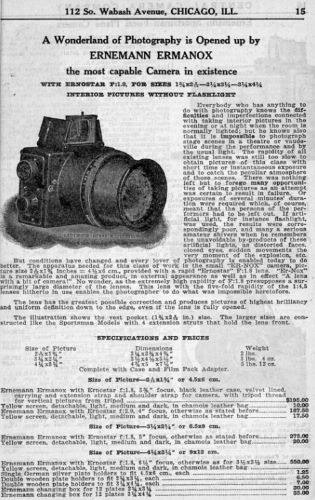
By the beginning of the 1920s, the standard size of press camera negatives was 13 x 18 cm, as glass plates from these cameras could be printed directly onto the standard sizes of the newspaper formats — each rectangular image fitted to three columns, the vertical ones into two.42 Due to better pre-print technologies from 1925 onwards, and equally due to the interest of photographers and their clients for more surreptitious pictures from restricted places such as law courts, the cameras shrank in size. In 1924, Ernemann Co. in Dresden introduced the Ermanox camera, which used glass plates sized 4.5 x 6 cm, and some of them with plates sized 6 x 9 cm. This camera became the standard camera for photojournalism until 1932 when production ceased due to the financial problems of Zeiss Ikon Co., who had taken over Ernemann in 1926.43 Even though it was made easier to change the film sheet cassettes by some mechanical tricks, the problems of sheet film remained: the photographer had one chance to take the photograph, and that was it. Thus, roll film cameras seemed a more appropriate alternative with a number of negatives that could be taken within a comparatively short period of time. But the development of the system took some time. Despite inventing it, Eastman Kodak did not develop their system further after 1910. In 1913, Oskar Barnack had produced a small 35mm camera for testing film, but it took until 1925 for a fully functioning camera to be presented at the Frankfurt Photo Fair. Even then, it took another five to eight years to actually be able to overcome problems with film and processing. The Leica did not take its place as a professional tool until the early 1930s.
On the other hand, this smaller roll film camera had advantages not foreseen by its inventors. The earliest users were artists who had served during the First World War, and they knew how to handle a rifle — absolutely similar to handling a Leica.44 Nor were these artists too concerned with perfect prints or in negatives with an excellent gamma. The Leica was ultimately professionalized by two men — with only one taking all of the credit. Emanuel Goldberg had discovered and described the ‘Goldberg Condition’ in 1922, which was the base for developing perfect negatives for photographic journalism; and around 1932 he was the man behind the new Contax camera that served as a replacement to the original Ermanox.45 But Leica were better at public relations. They urged the photographer Paul Wolff to produce a lengthy manual called ‘My Experiences with the Leica’ (Meine Erfahrungen mit der Leica) in 1934 in which he claimed to be the inventor of practising the so-called ‘Goldberg Condition’ in the development of 35mm film — and Goldberg remained uncredited and emigrated to Palestine in the same year.46 Wolff effortlessly cooperated with the Propaganda ministry — whilst personally maintaining an appropriate distance from politics — and managed to introduce the 35mm camera as the main instrument of all photographic journalists.47 His greatest success came in August 1937, when a decree was issued that all photographic journalists were urged to use 35mm film and when the newly installed ‘Propaganda Companies’ (PK of the Wehrmacht appeared in uniform with a Leica in their hand.48 Paul Wolff and his companion Alfred Tritschler started to give hundreds of workshops demonstrating how to use the 35mm, using — of course — the Leica. Conversely, Wolff’s contemporary, the Hungarian photojournalist Robert Capa, preferred to use the Contax, which was technically far more advanced and equipped with better lenses. When Capa received his model, he gave his Leica to Gerda Taro.49 Despite its important role in photographic propaganda before and during the Second World War, the manufacturers of the Leica, the Leitz Company, maintained a tolerant and respectful attitude to the Jewish population of Wetzlar. The owner, Ludwig Leitz, was credited with saving a considerable number of Jews from persecution.50
In comparison to their German competitors, the Leitz company that produced the Leica became the most successful developer and producer of advanced camera technology. There was a large export market for the Leica that generated both income and prestige, and when the Second World War began, the materials for equipping the PK troops was already there — including special cameras with large magazines, long telephoto lenses, etc. Other producers of 35mm cameras for e.g., Zeiss Ikon, were less successful in their efforts. The first 35mm single-lens reflex camera, Exacta by Ihagee, was also produced in Dresden, but ultimately did not have much impact on the market until the beginning of the war.51 Robot in Dusseldorf produced a 35mm camera, mostly for police use, with a square format and a spring movement for the film allowing 25 images in one row. The 35mm format was not the only roll film format being produced. By 1928, Francke & Heidecke had announced their Rolleiflex, a twin-lens reflex camera for roll film in the square format of 6 x 6cm, which was followed by the Baby Rollei in 1932 with a smaller square format of 4 x 4 cm. And there were smaller cameras, too, ending with the spy formats of Minox by Walter Zepp who had started his business in Riga (to avoid copyright claims by Leitz) but during the war years also moved his manufacturing base to Wetzlar.
The global success of the 35mm film format as a standard of photographic imagery ultimately came after 1945. However, for the German film industry, which was at the time closely associated with the Agfa company as part of IG Farben AG, the 35mm format was another important form of modernization. 35mm was the format for film production as well as journalistic photography — both quintessential elements of war propaganda. Technically, the format had the advantage that all production and chemistry had a common base. This included the promotion of colour photography.
Colour Photography
Colour in photography had its origin long before 1933. James Clerk Maxwell gave a lecture at the Royal Institution in 1861 on three-colour analysis and synthesis to demonstrate the viability of colour photography. By around 1890, a number of systems to integrate three layers of colour into film production came into being.52 After Adolf Miethe’s introduction of the panchromatic emulsion, the brothers Lumière revealed their Autochrome colour slide system to the public and monopolized the colour photographic market for the following three decades, despite the many disadvantages of this additive colour process. A crucial phase of development was reached in the 1930s, when Kodak, having begun extensive research in 1929, announced their Kodachrome film in 1935, a commercially available subtractive colour process.53
In Germany, the desire of the National Socialist polity to create an abiding experience of a positive memory of life under National Socialism, coincided with research on mass psychology that demonstrated that colour images were more readily received as being closer to ‘reality’ than black and white. Colour photography was recognised as a much more effective tool as a means of mass propaganda. Another important factor in the promotion and use of colour technology in Germany was the competition between Kodak and Agfa within the world market of film production. As a result of these combined factors, Agfa began its own research into colour photography.54 This politicisation of colour in Germany began shortly after 1933 and included the declaration that the official film of the Olympic Games was to be produced in colour (although this was never realised). Kodachrome was released to the worldwide market in 1936, with the first Agfacolor Neu films being offered in the spring of 1937.
From the beginning, Agfacolor Neu was a propaganda product. It was sold for roughly half the price of Kodachrome film, and Agfa’s profit margin must have been negligible or even negative, although there are no surviving documents of the state having made any compensatory payments. However, the price was one of the smaller initial problems for the medium. The difference between (remembered or actually envisioned) reality and the new colour photographic image was often difficult for viewers and photographers to reconcile, especially as successive and improved versions of the product appeared in the years that followed. As a result, Agfa started to fund workshops in both colour psychology and colour photography, creating a colour photography course at the renowned Hochschule fuer Graphik und Buchkunst (University for Graphics and Book Arts) in Leipzig in 1940.55 Workshops were carried out by photographers already engaged by the regime for creative and artistic propaganda photography, such as Paul Wolff, Walter Hege, Erich Retzlaff, Erna Lendvai-Dircksen, and others. Dozens of manuals on how to achieve good colour photography were written, again with the largest number being produced by prominent practitioners such as Paul Wolff, Hans Windisch, etc. Many competitions were launched for colour photography, mostly to find material for the manuals and for company promotion, although unusually enough, no career photographer emerged out of these competitions. In the main, the task of introducing colour to photographic propaganda was returned to education: Hanns Geissler began his professorship in Leipzig with a small class of students who provided their services to the war effort in Agfa’s Wolfen laboratories. However, this work only really bore fruit in the late 1940s when Geissler moved with his class from Leipzig to Cologne to establish a professional school for photographers there. Although the Leipzig institute developed several curricula for schooling professional colour photographers, the training of PK photographers was not linked to it. There were, however, a number of special training sessions, for example, the courses given to those photographers responsible for the documentation of immobile artworks in colour following a special order (Führerauftrag) from Adolf Hitler.56
As with Kodachrome, Agfacolor Neu was a slide film, preferably produced in 35mm for both the photographic and film industry. It was designed for use in daylight which meant that camera operators and photographers had to use it either in direct sunlight — which created huge problems of contrast — or with very expensive blue bulbs that caused their own problems for the photographers and filmmakers using them. The development of tungsten film,57 on the other hand, did not produce a positive result before 1942, and even then only a small fraction of the emulsions were reliable and ready for professional usage. Slide films could only be shown by projection, so the photographic industry was interested in developing both negative films and printing papers. However, none of these experiments were produced industrially until after the end of the war. Printing colour photographs was initially only possible in two ways, one being in reproduction in books, magazines, and other types of printed matter, and the other the expensive and hard-to-master process of dye transfer prints. As Kodak’s dye transfer materials were not available in Germany until the 1950s, and as other dye transfer processes did not prove to be reliable, propaganda had to continue to use the Herzog brothers’ Duxochrome process, which was only available at a dozen laboratories and the price of one print was twice the average monthly income of a German citizen. The resultant image however, was of a unique quality — and remains so even when viewed today. The photographer Walter Frentz used this process to photograph the National Socialist elite, including portraits of Adolf Hitler.58
Largely ignorant about the technical aspects of photography, László Moholy-Nagy had argued in 1925 that colour photography should follow the principles of autonomy as applied to abstract painting.59 He enthusiastically began experiments in this direction after the release of Kodachrome in the US.60 German colour photography, however, applied some of the modern principles of black-and-white photography to the new medium, whilst trying to solve the many problems in colour control and printing. Even true followers of modernism like Hermann Harz — who ran the most successful laboratory for Duxochrome printing — or Erich Retzlaff, struggled to integrate a truly modern vision into their colour practice.61 The real achievement of the material came when the modernist approach lost the last scraps of its innocence during the war itself.
The Worst of Modernism: World War II
In the 1990s, a peculiar phenomenon was identified by those working with photographic materials from the Second World War. In a short space of time, a plethora of colour images and colour films that had not be seen since 1945 appeared on the market. Books on the era were published in full colour, documentaries were shown of destroyed cities and of National Socialist officials posing in glossy costumes and uniforms, all in bright sunlight and, of course, under a deep blue sky. At the same time, war photographs from propaganda sources materialized; magazines like ‘Signal’, ‘Adler’, and the Japanese ‘Front’ were reprinted but unlike the poorly produced right-wing commemorative editions of the 1970s, these were in bright colour on the best paper. There were a number of reasons for this colourization of National Socialist history in film and photography. The fall of the Iron Curtain meant that archives from the former Soviet Bloc countries were more readily available, private TV stations started to launch endless documentaries from uncertain sources, and the death of the last generation of war photographers brought hidden archives to the surface for public consumption.62 Even as a retrospective, the war became a modern media event.
Compared to the First World War, photography in the Second World War served a totally different purpose. It had been replaced as the main weaponised carrier of information technology by audial media such as FM, stereo transmission and by machine cryptography.63 Even microfilming for documentary transport, and aerial photography, which had substantiated the first attempts at aerial bombing, had faded. Photography had become only one of the many means of modern propaganda, with all the attendant problems in assessing and recording its effects on the masses. The two genres of modernization described here had now to fulfil their obligations. Amateur photography — which was best viewed in colour — had to memorialize the positive aspects of the war; professionalized photographic journalism was obliged to convey the important images of German victories to the world. War preparations to this end had begun early. In 1936, Goebbels had installed a proto-PK for the fascist view on the Spanish civil war, and it seemed to have worked well; a number of its photographers launched their careers as a result of their involvement, both during the Hitler years and in 1950s West Germany.64 When the Second World War came, there were roughly 700 PK troops in service, with most of each unit consisting of a film crew (camera, sound, assistants), with two or three photographers, and one or two writers; the larger units also had an artist. All of them had access to technical services for developing black and white 35mm films in either a railroad wagon or in a large truck accompanied by motorcycle couriers for transporting film material from and to Berlin or Wolfen, where colour films had to be developed.65 During the war, one photographer served for several weeks on the front and had some of his material — black and white negatives, small prints — either processed in the PK cabin or at local photo dealers who had to work under military orders when a town was captured. After several weeks, the photographer had to return to Berlin where the central laboratories for the PK, for the SS (with the agency named after their owner, Friedrich Franz Bauer), and for other military services were to be found. The process of censorship followed directly after the material was developed; if the pictures were considered to be good enough, they were delivered to the headquarters of each branch of the armed forces. The best images of the day were collected for Goebbels and Hitler and usually delivered to them by 6 pm. From the headquarters, the photographs were presented to the daily press conference at noon, together with internal remarks on their use and meaning. However, most of the PK material never became public; much of the information available today with regards to National Socialist image production is, at the most, derived from post-war archives.66
Amateur photography during the Second World War was shaped and directed by journalistic services in association with the photographic industry.67 Both still photography and film had their own public relations magazines, printing numerous advertising brochures and filling the weekly papers with articles and images of their production in order to influence the amateur photography of those who went to war. These pictures were accompanied by prose filled with references to comradeship, a wanderlust, and a spirit of adventure when visiting foreign states. This mixture of industrial advertising and state propaganda was typical for most of the war, with a peak in the summer of 1941 — at which point most of the battles had, so far, been won — and with a clear decrease from late 1943 onwards. By the summer of 1944, paper had become so scarce that most of the printed magazines were closed — except for the important propaganda publications such as ‘Signal’. By this time, many of the important PK and war photographers had shifted their modernism on to the next level. They took photographs of what might be termed a form of ‘anti-propaganda’, or they simply worked on their own projects, such as documenting their personal situation. However, in the main, the propaganda produced was extremely successful, as contemporary archives demonstrate. Amateur photography was widespread; there were even photographs of executions and other atrocities perpetrated by both the German military, the SS, and other service arms, inside and outside of the concentration camps, the ghettos, and even the city centres where these incidents of violence were committed.68
Modern photography carried with it the basic assumption that photographs were of a unique objective documentary value. The foundation of this belief, which stemmed from the 1880s onwards whether the subject was architectural, object, or industrial photography, was that anything depicted with a fine technical quality must be closely linked to the real; that it held its own veracity — and this is exactly what National Socialist ideology wanted from modern photography. Of course, there were fields of artistic expression such as portraiture or sculpture whose ‘value’ as aesthetic objects was predicated on the aesthetic conventions defined by the annual state exhibitions in Munich curated by Hitler’s personal photographer, Heinrich Hoffmann.69 But fundamentally, the ideas behind National Socialist propaganda concerned the imagining of a good life and winning the war for a larger (and racially homogeneous) Germany. These works pictured a clear, clean, and modern country and, during the course of the war, a country striving for victory; photography, whether of bunker architecture or airfield buildings, had to show that the war could be won by advanced technology. Reading Paul Virilio three decades later (and looking at the edifices designed by him at the same time), one can reckon how fruitful this propaganda was.70
Yet modernism can turn its effectiveness against the state under certain conditions. After the first large bombardments on German cities in 1941, professional and amateur photographers started to document the destruction.71 Older craft photographers who did not have to serve in the army were commissioned to record the damage, in order to present documentary evidence of the enemy’s actions once the war was won (Der grosse Endsieg); younger people began taking photographs after the shock of surviving; and most of all, residents simply recorded the disasters around them in images. In the main, such activities were not seen as anything remotely connected with propaganda. Nor were they censored by the state, which did not regard these images as subversive. Thus, the modern idea of documentation responsible for the most important aspects of war propaganda — ‘We hold up to the enemy […] our photographic evidence in front of his nose to punch him in the mouth and show the world what reality is like’ (‘Dem Feind aber halten wir […] unser fotografisches Beweismaterial vor die Nase, um ihm damit aufs Maul zu schlagen und der Welt zu zeigen, wie es mit der Wirklichkeit beschaffen ist‘)72 — rebounded on those who had instigated it: the documentary reality had lost all of its idyllic connotations.
Modern Propaganda for a Feebleminded State
‘The challenge of convincing the German people to take part in World War II’, as described by the military historian Wolfram Wette, was the background to all propaganda, including that made using modern photography.73 As nearly all studies in mass communication research show, propaganda in general can be an arduous task: you cannot change people’s minds through media, only face-to-face and in small groups.74 This is what Goebbels and his associates knew only too well; it is implied in his diaries as well as in the comments he made at his daily press conference. The Propaganda Ministry attempted to cope with this situation using an extremely modern diversification between photography and film. The still image had to function in memory and as a document, thus the producers had to be craftsmen without too many independent aesthetic attitudes. On the other hand, a film could be regarded as an artwork — not necessarily, but certainly this was an option.75 In modern terms, photography was regarded as design that had to serve society using aesthetic means. Hence all continuities, from the groundbreaking strategies of the 1920s onwards, were developed as an evolving means of creating an impact on the viewer in their encounter with the image.
In his introduction to this book, Christopher Webster has described the Janus-headed character of photography in the National Socialist state, a perfect image for understanding some of the mysteries involved when writing a history of it. Despite the many attempts to regard the history of modern photography from a left-wing perspective, there were equally as many right-wing attitudes in all modern schools and agencies of advertising and design.76 But most of all, it must be stated that photographers, like nearly all craftsmen, architects, and designers (plus artists, musicians, etc.) in the late Weimar period were not really interested in day-to-day politics — daily life was struggle enough after the 1929 Wall Street Crash.77 However, reading letters and personal notes from those who had at least some interest in politics, one finds an often guileless misunderstanding of the events unfolding around them. Nearly everybody expected the brawling streetfighters that were the SA Brownshirts (Sturmabteilung) to disappear within a couple of years. There was a naïve acceptance of modern strategies in media and propaganda, and above all, of strategies that influenced everyday life with the help of, amongst other things, photography. Looking back on the media history of the National Socialist state, its most important ‘modernism’ can only be regarded as an ‘education in looking away’.78
Endnotes
- Markwart Herzog and Mario Leis, eds, Kunst und Ästhetik im Werk Leni Riefenstahls (Munich: edition, text + kritik, 2011), pp. 18–21.
- See Zygmunt Bauman, Modernity and the Holocaust (Ithaca NY: Cornell University Press, 1989).
- Alexander von Plato, ‘Geschichte ohne Zeitzeugen? Einige Fragen zur “Erfahrung”’ in, Übergang von Zeitgeschichte zur Geschichte, from: Fritz Bauer Institut, Zeugenschaft des Holocaust, Zwischen Trauma, Tradierung und Ermittlung, Jahrbuch 2007 zur Geschichte und Wirkung des Holocaust (Frankfurt am Main: Campus Verlag 11, 2007), pp. 141–56.
- See Peter Reichel, Der schöne Schein des Dritten Reiches: Faszination und Gewalt im deutschen Faschismus (Munich: Hanser, 1991).
- See Thomas Zeller, Driving Germany. The Landscape of the German Autobahn, 1930–1970 (Berghahn Books: New York, 2007).
- Aleida Assmann, ‘From Collective Violence to a Common Future: Four Models for Dealing with a Traumatic Past,’ in, Filomena Viana Guarda, Adriana Martins, Helena Gonçalves da Silva, eds, Conflict, Memory Transfers and the Reshaping of Europe (Newcastle upon Tyne: Cambridge Scholars Publishing, 2010), pp. 8–23.
- See Paul Ortwin Rave, Kunstdiktatur im Dritten Reich (Berlin: Argon, 1949).
- Winfried Nerdinger, ed., Bauhaus-Moderne im Nationalsozialismus. Zwischen Anbiederung und Verfolgung (Munich: Prestel, 1993), pp. 9–23.
- See Jörg Becker, Elisabeth Noelle-Neumann: Demoskopin zwischen NS-Ideologie und Konservatismus (Paderborn: Schöningh, 2013).
- Rolf Sachsse, Die Erziehung zum Wegsehen. Fotografie im NS-Staat (Dresden: Philo Fine Arts, 2003), pp. 14–18.
- Siegfried Kracauer, The Mass Ornament, translated, edited, and with a preface by Thomas Y. Levin (Cambridge MA and London: Harvard University Press, 1995), pp. 291–306.
- László Moholy-Nagy, ‘Typo-Photo,’ Typografische Mitteilungen 3:10 (1925), 202.
- See Andrés Zervigón, John Heartfield and the Agitated Image. Photography, Persuasion, and the Rise of Avant-Garde Photomontage (Chicago: Chicago University Press, 2012).
- See Clément Chéroux, Avant l’avant-garde, du jeu en photographie (Paris: Textuel, 2015).
- Rolf Sachsse, ‘Éloge de la reproduction. La photographie dans les écoles d’arts appliqués allemandes pendant les années 1920’, Études photographiques 5:8 (2000), 44–67.
- See Egidio Marzona, ed., Bauhaus fotografie (Dusseldorf: Edition Marzona, 1982).
- See Gerd Fleischmann, ed., Bauhaus drucksachen typografie reklame (Düsseldorf: Edition Marzona, 1984).
- See Michael Tymkiw, Nazi Exhibition Design and Modernism (Minneapolis: University of Minnesota Press, 2018).
- See Franz Roh and Jan Tschichold, Foto-Auge. Photo-Eye. 76 Fotos der Zeit (Stuttgart: Akademischer Verlag Wedekind, 1929) and Werner Gräff, Es kommt der neue Fotograf! (Berlin: Hermann Reckendorf, 1929).
- See Werner Gräff, Ottos Fotos (Stuttgart: Thienemann, 1932).
- Sachsse, Die Erziehung zum Wegsehen (2003), p. 272.
- See Hans Windisch, Die neue Foto-Schule (Harzburg: Heering, 1937).
- See Alfred Ehrhardt and Cyriel Verschaeve, Ewiges Flandern: ein Bildwerk in 180 Tafeln (Hamburg: Verlag Broschek & Co, 1943).
- See Patrik Rössler, Herbert Bayer: Die Berliner Jahre — Werbegrafik 1928–1938 (Berlin: Vergangenheits-Verlag, 2013).
- Rössler, Herbert Bayer (2013).
- Nerdinger, Bauhaus-Moderne im Nationalsozialismus (1993), p. 34.
- Rolf Sachsse, ‘Die Frau an seiner Seite, Irene Bayer und Lucia Moholy als Fotografinnen’, in Ute Eskildsen, ed., Fotografieren hieß teilnehmen, Fotografinnen der Weimarer Republik (Dusseldorf: Richter, 1994), pp. 67–75, exhibition catalogue.
- See Herbert Bayer, Herbert Bayer: Painter Designer Architect (New York: Reinhold Publishing, 1967).
- See Gustav Stotz, ed., Internationale Ausstellung Film und Foto (Stuttgart: Deutscher Werkbund, 1929).
- See Bodo von Dewitz, ed., Dom Tempel Skulptur, Architekturphotographien von Walter Hege (Cologne: Agfa Foto-Historama, 1993), exhibition catalogue.
- Thilo Koenig and Martin Gasser, eds, Hans Finsler und die Schweizer Fotokultur, Werk, Fotoklasse, moderne Gestaltung 1932–1960 (Zurich: gta Verlag, 2006), pp. 16–41, exhibition catalogue.
- Georg Muche, letter to Rolf Sachsse, 20 January 1984.
- Sachsse, Die Erziehung zum Wegsehen (2003), pp. 291–93.
- Gerhard Voigt, ‘Goebbels als Markentechniker’, in Wolfgang Fritz Haug, ed., Warenästhetik. Beiträge zur Diskussion, Weiterentwicklung und Vermittlung ihrer Kritik (Frankfurt am Main: Suhrkamp, 1975), pp. 231–60.
- Sachsse, Die Erziehung zum Wegsehen (2003), pp. 117–40.
- Rolf Sachsse, ‘Entfernung der Landschaft. Heimatfotografie als NS-Bildkonstruktion’, Fotogeschichte 31:120 (2011), 69–70.
- Rolf Sachsse, Ideologische Inszenierungen. Fotografische Propaganda-Bücher von Staat, Partei und Militär, in Manfred Heiting and Roland Jaeger, eds, Autopsie 1. Deutschsprachige Fotobücher 1918 bis 1945 Vol. 1 (Göttingen: Steidl, 2012), pp. 476–503.
- See Angelika Steinmetz-Oppelland, ed., Albert Renger-Patzsch. Industriefotografien für SCHOTT (Weimar: VDG Verlag, 2011), exhibition catalogue.
- See Heinrich Hauser, Im Kraftfeld von Ruesselsheim, mit 80 Farbphotos von Dr. Paul Wolff (Munich: Knorr & Hirth, 1942).
- See Ursula Peters, ed., Ruth Hallensleben, Frauenarbeit in der Industrie, Fotografien aus den Jahren 1938–1967 (Berlin: D. Nishen, 1985).
- Rolf Sachsse, Mit Bildern zum Image. Fotografisch illustrierte Firmenschriften, in Manfred Heiting and Roland Jaeger, eds, Autopsie 2. Deutschsprachige Fotobücher 1918 bis 1945 Vol.2 (Göttingen: Steidl, 2014), pp. 476–91.
- Rolf Sachsse, ‘Schlitzverschluss, Stativträger, Sportsucher, Scheinergrade — Zur Technik des Pressefotografen Willy Römer,’ in Diethart Kerbs, ed., Auf den Strassen von Berlin. Der Fotograf Willy Römer 1887–1979 (Boenen: Kettler, 2004), pp. 51–77, exhibition catalogue.
- See Herbert Blumtritt, Die Geschichte der Dresdner Fotoindustrie (Stuttgart: Lindemanns Verlag, 1999).
- Rolf Sachsse, ‘The Dysfunctional Leica, Instrument of the German Avantgarde’, History of Photography 17:3 (1993), 301–04.
- Michael Buckland, Emanuel Goldberg and His Knowledge Machine, Information, Invention, and Political Forces (Westport CT: Libraries Unlimited, 2006), pp. 99–129.
- See Paul Wolff, Meine Erfahrungen mit der Leica, Das völlig neue Standardwerk der Kleinbildphotographie (Frankfurt am Main: Breidenstein,1934).
- Sachsse, Die Erziehung zum Wegsehen (2003), p. 290.
- Ibid., pp. 177–78.
- Irme Schaber, Gerda Taro Fotoreporterin. Mit Robert Capa im Spanischen Bürgerkrieg. Die Biografie (Marburg: Jonas Verlag, 2013), pp. 103–20.
- Rabbi F.D. Smith, ‘Ernst Leitz of Wetzlar and the Jews’, Journal of Progressive Judaism 10:5 (1998), 5–14.
- See Richard Hummel, Spiegelreflexkameras aus Dresden. Geschichte Technik Fakten (Leipzig: Edition Reintzsch, 1994).
- See Siegfried Gohr, ed., Farbe im Photo (Köln: Josef-Haubrich-Kunsthalle, 1981), exhibition catalogue.
- Douglas Collins, The Story of Kodak (New York: Harry N. Abrams, 1990), pp. 205–15.
- Gert Koshofer, Farbfotografie [in 3 Vols] (Munich: Laterna Magica, 1981), Vol. 2, pp. 11–64.
- Sachsse, Die Erziehung zum Wegsehen (2003), p. 329.
- Christian Fuhrmeister, Stephan Klingen, Iris Lauterbach, and Ralf Peters, eds, ‘Führerauftrag Monumentalmalerei’ Eine Fotokampagne 1943–1945, Veröffentlichungen des Zentralinstituts für Kunstgeschichte, Band XVIII (Cologne-Weimar-Vienna: Böhlau Verlag, 2006).
- Tungsten films were produced to accurately reproduce colour under tungsten light, that is, artificial lighting as in a film studio.
- See Hans Georg Hiller von Gaertringen, ed., Das Auge des Dritten Reiches, Hitlers Kameramann und Fotograf Walter Frentz (Munich and Berlin: Deutscher Kunstverlag, 2006).
- LászlóMoholy-Nagy, Malerei Fotografie Film (Munich: Albert Langen, 1925), p. 33.
- See Viktor Margolin, The Struggle for Utopia: Rodchenko, Lissitzky, Moholy-Nagy, 1917–1946 (Chicago: University of Chicago Press, 1997).
- Christopher Webster van Tonder, ‘Colonising Visions: A Physiognomy of Face and Place in Erich Retzlaff’s Book “Länder und Völker an der Donau: Rumänien, Bulgarien, Ungarn, Kroatien,”’ Photoresearcher 26:23 (2015), 66–77.
- See Sachsse, Die Erziehung zum Wegsehen (2003).
- Friedrich Kittler, ‘Der Gott der Ohren’, in, Dietmar Kamper and Christoph Wulf, eds, Das Schwinden der Sinne (Frankfurt am Main: Suhrkamp, 1984), pp. 140–58.
- Diethart Kerbs, ‘Deutsche Fotografen im Spanischen Buergerkrieg’, in Jörn Merkert, ed., Musik, Literatur und Film zur Zeit des Dritten Reichs (Dusseldorf: Kulturamt, 1987), pp. 107–13, exhibition catalogue.
- Günther Heysing, ‘Propagandatruppen — eine deutsche Erfindung’, Die Wildente 26 (1963), 36–40 and 152–56.
- Ute Wrocklage, Das Bundesarchiv online. ‘Wissen bereitstellen, Quellen erschließen, Geschichtsverständnis fördern’, in, Rundbrief Fotografie. Analoge und digitale Bildmedien in Archiven und Sammlungen 15:3/NF59 (September 2008), pp. 18–23.
- Sachsse, Die Erziehung zum Wegsehen (2003), pp. 197–202.
- See Jacques Fredj, ed., Regards sur les ghettos. Scenes from the Ghetto (Paris: Mémorial de la Shoah, 2013), exhibition catalogue.
- Christopher Webster van Tonder, Erich Retzlaff Volksfotograf (Aberystwyth: School of Art Press, 2013), pp. 38–42. Also, Peter-Klaus Schuster, ed., Nationalsozialismus und ‘Entartete Kunst’: die ‘Kunststadt’ München (Munich: Prestel, 1988), exhibition catalogue.
- See Paul Virilio, Bunker Archéologie (Paris: Les Éditions du Demi-Cercle, 1975).
- Thomas Deres and Martin Rüther, eds, Fotografieren verboten! Heimliche Aufnahmen von der Zerstörung Kölns (Cologne: Emons, 1995), exhibition catalogue.
- Sachsse, Die Erziehung zum Wegsehen (2003), p. 354.
- Wolfram Wette, ‘Die schwierige Überredung zum Krieg: zur psychologischen Mobilmachung der deutschen Bevölkerung 1933–1939’, Aus Politik und Zeitgeschicht, ApuZ 32–33 (1989), pp. 3–15.
- Colin Cherry, On Human Communication (New York: Wiley & Sons, 1957), pp. 21–49.
- Sachsse, Die Erziehung zum Wegsehen (2003), p. 238.
- Jorge Ribalta, ed., The Worker Photography Movement [1929–1939]. Essays and Documents (Madrid: Museo Reina Sofia, 2011), pp. 314–45.
- Werner Möller, ed., Die Welt spielt Roulette. Zur Kultur der Moderne in der krise 1927 bis 1932, Edition Bauhaus Vol.9 (Frankfurt am Main: Campus, 2002), pp. 9–17.
- Sachsse, Die Erziehung zum Wegsehen (2003), pp. 14–18.
Chapter 1: Dark Sky, White Costumes: The Janus State of Modern Photography in Germany 1933–1945, from Photography in the Third Reich: Art, Physiognomy and Propaganda, edited by Christopher Webster, published by Open Book Publishers (01.08.2021) under the terms of a Creative Commons Attribution 4.0 International license.
About the Author