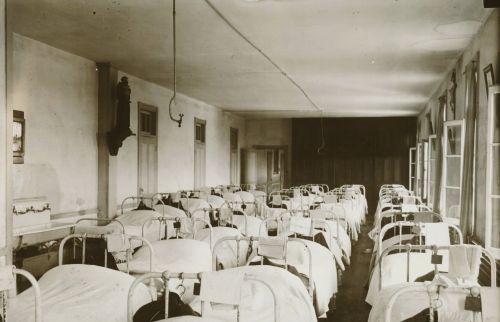
In mid-twentieth-century Quebec, thousands of children were reclassified as mentally ill, exposing a system that blurred charity, faith, and state power.

By Matthew A. McIntosh
Public Historian
Brewminate
Introduction: When Classification becomes Violence
In mid-twentieth-century Quebec, thousands of children classified as orphans were redefined on paper as psychiatric patients. Under the government of Premier Maurice Duplessis, administrative reclassification transformed institutions originally intended for child care into facilities eligible for higher federal subsidies tied to mental health funding. What appeared to be a matter of bureaucratic adjustment in fact reshaped the lives of vulnerable children, subjecting many to confinement, forced labor, neglect, and abuse. The Duplessis Orphans scandal reveals how classification, when embedded in political and religious authority, can function not as neutral description but as an instrument of systemic harm.
The regime of Duplessis governed Quebec during much of the 1940s and 1950s through a model often described as clerical nationalism, in which the Catholic Church exercised sweeping authority over education, healthcare, and social services. In practical terms, this meant that religious orders administered a vast network of orphanages, hospitals, and schools, operating with significant autonomy but within a political environment that reinforced ecclesiastical legitimacy. Provincial policy did not merely tolerate this arrangement; it depended upon it. The Church provided social infrastructure, and the state provided legal and financial reinforcement. When federal funding formulas allocated higher per capita subsidies to psychiatric institutions than to orphanages, a structural incentive emerged. Rather than expand social welfare expenditures directly, provincial authorities and religious administrators could reclassify facilities and, by extension, the children housed within them. Institutions were accordingly redesignated as psychiatric hospitals, and thousands of children were recorded as mentally ill, often without meaningful medical examination or due process. The bureaucratic act of labeling became a fiscal strategy embedded in governance itself. What appeared administratively rational within a funding framework translated into lifelong consequences for children who were transformed, in official records, from wards of care into patients of confinement.
The violence in this system was not solely physical, though physical abuse and deprivation were widely reported in later testimonies. It was also epistemic and administrative. To be named mentally ill within an institutional framework that denied recourse was to be placed outside the boundaries of credible speech. Classification determined confinement, labor assignments, educational access, and the plausibility of one’s own account of suffering. In this sense, paperwork functioned as both shield and weapon. The state could claim administrative legitimacy, the Church could invoke moral guardianship, and the children themselves were rendered suspect by the very labels imposed upon them.
The Duplessis Orphans scandal was not merely an episode of cruelty concealed in an otherwise functioning democracy. It was a failure of governance made possible by the convergence of bureaucratic incentives, clerical authority, political power, and public deference. The case demonstrates how democratic societies can sustain systemic abuse when institutional classifications are treated as self-validating truths. Recognition and compensation, which emerged decades later, reveal not only delayed justice but the difficulty of confronting harms that were embedded in the ordinary language of governance. When classification becomes violence, it does so quietly, through forms, funding formulas, and institutional silence.
Quebec under Duplessis: Clerical Nationalism and Political Authority
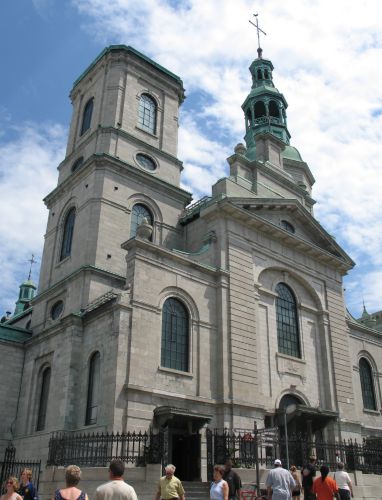
Duplessis served as Premier of Quebec from 1936 to 1939 and again from 1944 until his death in 1959, presiding over a political order that fused provincial nationalism with Catholic institutional authority. His party, the Union Nationale, cultivated a rhetoric of autonomy, tradition, and moral stability in opposition to federal centralization and perceived secular modernism. This political vision rested on the premise that Quebec’s distinct identity was inseparable from its Catholic heritage. The state, in this framework, did not displace ecclesiastical authority but reinforced it. Governance and guardianship were conceived as mutually supportive enterprises.
The structure of social services during this period reflected that ideological alignment. Education, hospitals, orphanages, reform schools, and charitable institutions were largely administered by religious orders rather than directly by secular bureaucracies. Clergy and members of religious congregations exercised managerial authority over institutions that in other provinces might have fallen more squarely within the purview of civil servants. This ecclesiastical administration extended beyond spiritual oversight into budgeting, staffing, discipline, and record-keeping. Religious superiors determined daily routines, educational curricula, and standards of moral evaluation. The provincial government, for its part, allocated funding, granted institutional charters, and conferred legal recognition while refraining from robust regulatory intrusion. Inspection regimes existed but were often deferential and episodic, reflecting an assumption that religious governance guaranteed ethical care. This arrangement was neither informal nor accidental. It was embedded in policy, statute, and public culture, reinforcing a model in which the Church functioned simultaneously as moral arbiter, social service provider, and quasi-public authority. In effect, a significant portion of Quebec’s welfare infrastructure operated through institutions that were publicly funded yet ecclesiastically controlled.
Duplessis’s political strategy depended in part on this partnership. By positioning himself as defender of provincial rights and traditional values, he secured support among rural constituencies and ecclesiastical leaders alike. His government emphasized agricultural development, anti-communism, and resistance to federal intervention, particularly in welfare and education. The result was a political culture that equated criticism of institutional authority with disloyalty to Quebec’s identity. Clerical endorsement strengthened the legitimacy of provincial leadership, while provincial leadership preserved the institutional dominance of the Church.
This fusion of power had concrete administrative consequences. When social services were delivered primarily through religious institutions, oversight mechanisms became diffuse and layered in ways that obscured accountability. Formal responsibility for vulnerable populations rested with the state, yet operational control lay with religious superiors whose authority derived from ecclesiastical hierarchy rather than civil service norms. Inspectors, where they existed, frequently shared the same cultural assumptions as the administrators they evaluated. Reports circulated within networks predisposed to trust clerical judgment. Accountability was mediated through shared convictions about moral competence rather than through systematic, transparent audit. In such an environment, institutional practices were shielded not only by secrecy but by presumption. Decisions made within convent walls or hospital corridors were presumed to align with communal virtue and divine mandate. The boundary between public policy and ecclesiastical discipline blurred, rendering it difficult to distinguish where state responsibility ended and religious autonomy began. This ambiguity functioned as protection, insulating administrative conduct from rigorous external scrutiny.
The cultural atmosphere of the period further reinforced this structure. Catholic doctrine shaped public education and family life, and clerical authority was rarely contested in mainstream discourse. Media institutions operated within a framework that discouraged direct confrontation with religious leadership. While dissent existed, it was fragmented and often marginalized. For many citizens, institutional stability appeared preferable to social upheaval. The cost of that stability, however, was a reduced capacity for critical scrutiny of the systems entrusted with the care of vulnerable populations.
The later transformation known as the Quiet Revolution would expose the fragility of this arrangement. Beginning in the 1960s, Quebec underwent rapid secularization and administrative reform, transferring authority over education and healthcare from religious orders to the provincial state. Retrospective assessments of the Duplessis era frequently characterize it as “la Grande Noirceur,” or the Great Darkness, though historians debate the adequacy of that label. What remains less contested is that the clerical-nationalist model created structural conditions in which institutional decisions could proceed with minimal external oversight. The Duplessis Orphans scandal must be situated within this broader architecture of governance, where political authority and religious administration were so deeply interwoven that systemic harm could unfold under the banner of moral order.
Bureaucratic Reclassification: From Orphan to “Mental Patient”

The transformation of orphanages into psychiatric institutions did not begin with overt declarations of cruelty but with fiscal policy. During the 1940s and 1950s, federal cost-sharing arrangements provided higher subsidies for psychiatric hospitals than for orphan care facilities. Within Quebec’s clerical-nationalist framework, where religious orders administered most child welfare institutions, this disparity created a powerful incentive structure. Reclassification offered a means to secure additional funding without constructing entirely new facilities. The shift was administrative in form but transformative in effect. Buildings changed designation, institutional ledgers were rewritten, and children who had entered as wards of charity were entered anew as psychiatric cases.
The process of relabeling did not necessarily involve systematic medical evaluation consistent with contemporary psychiatric standards. Later inquiries and survivor testimonies indicate that many children were assigned diagnoses in the absence of thorough examination, longitudinal observation, or independent review. In numerous cases, institutional records contained formulaic language, minimal clinical description, and generalized characterizations that blurred the distinction between behavioral nonconformity, poverty, illegitimacy, and pathology. The diagnostic threshold appeared elastic, expanding to accommodate fiscal categories rather than medical necessity. What counted as mental illness could be shaped by institutional need. Once recorded, the designation carried legal implications that were difficult to contest, particularly for children without family advocates. The psychiatric label functioned as both administrative key and social barrier, unlocking federal subsidies while simultaneously foreclosing avenues of appeal. It transformed children into institutional subjects whose status was defined by documentation rather than demonstrable condition.
This shift altered the daily reality of institutional life in tangible and enduring ways. Psychiatric designation justified stricter confinement protocols, more rigid surveillance, and diminished expectations regarding education or social integration. Within facilities newly categorized as hospitals, children were frequently assigned labor framed as therapeutic engagement or institutional contribution. Tasks that maintained the operation of the facility could be interpreted as part of treatment rather than as coerced work. The language of therapy provided moral cover for practices that limited autonomy and reinforced hierarchy. Moreover, the stigma associated with psychiatric classification extended beyond childhood. Official files and civil records preserved diagnoses that followed many individuals into adulthood, affecting employment prospects, social standing, and self-understanding. Even when later investigations questioned the legitimacy of these diagnoses, the documentary trace remained powerful. Classification did not simply regulate institutional space; it shaped life trajectories long after release.
Administrative rationality provided a vocabulary that muted the moral stakes. No dramatic decree announced the conversion of thousands of children into psychiatric patients. Instead, forms were revised, categories adjusted, and funding streams redirected. Bureaucratic rationality provided a vocabulary that obscured moral stakes. Officials could point to budgetary necessity and institutional sustainability, while religious administrators could invoke care and discipline. The harm was embedded in procedure. In this sense, the Duplessis Orphans scandal demonstrates how modern administrative systems can transform vulnerable populations through paperwork alone, converting fiscal advantage into durable human cost.
Institutionalized Harm: Conditions, Abuse, and Structural Incentives
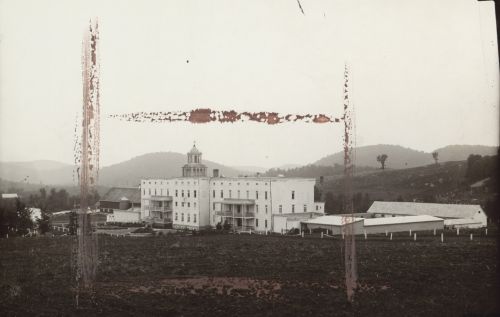
Reclassification altered more than funding categories. It reshaped the institutional environment in which children lived, learned, and labored. Facilities that had once been designated as orphanages increasingly operated under regimes associated with psychiatric confinement. Architectural features such as locked wards, segregated dormitories, and restricted movement became normalized. The designation of mental illness justified heightened control, including physical restraint and isolation. Institutional order was framed as therapeutic necessity rather than coercive discipline, and the vocabulary of care masked the consolidation of authority over daily life.
Survivor testimonies and later investigations describe conditions marked by overcrowding, inadequate nutrition, and insufficient medical oversight. Dormitories often housed large numbers of children with minimal privacy, sometimes arranged in regimented rows that emphasized surveillance over comfort. Sanitation standards varied widely, and in some facilities resources were stretched thin by expanding patient rolls made possible through reclassification. Staffing ratios were low, with limited numbers of trained psychiatric professionals overseeing populations officially designated as mentally ill. Religious personnel, many of whom lacked specialized clinical training, assumed responsibilities that blurred the line between spiritual guidance and psychiatric management. In some institutions, children reported corporal punishment, humiliation, and prolonged isolation as responses to perceived disobedience. Forced labor, including agricultural work, kitchen duties, and maintenance tasks, was frequently framed as character-building or therapeutic activity. Educational opportunities were curtailed, particularly for those labeled as severely impaired, reinforcing a cycle in which diminished expectations justified reduced instruction. The cumulative effect was not merely episodic mistreatment but a sustained environment in which deprivation, discipline, and diminished opportunity were woven into daily institutional practice.
Abuse in such settings did not necessarily require constant overt brutality to produce harm. The institutional framework itself generated vulnerability. Children labeled as mentally ill possessed diminished credibility in the eyes of external authorities. Complaints could be interpreted as symptoms of pathology rather than as evidence of mistreatment. The classificatory system reinforced a cycle of disbelief. When suffering was voiced, it was filtered through diagnostic assumptions that rendered it suspect. In this way, administrative categories insulated institutions from scrutiny, allowing harmful practices to persist without sustained external challenge.
Financial and administrative incentives further entrenched these dynamics. Financial models rewarded institutional capacity and occupancy, creating pressure to maintain or expand patient populations rather than to question their composition. Federal subsidies tied to psychiatric designation meant that each reclassified child represented not only an administrative entry but a revenue stream. Religious orders operating the facilities faced dual imperatives: spiritual guardianship and institutional solvency. Budgets had to be balanced, buildings maintained, and staff supported. Within this fiscal architecture, reducing the number of psychiatric patients could threaten financial stability. The continuation of funding streams depended upon the maintenance of psychiatric status, and reclassification back to orphan care offered no comparable financial incentive. Consequently, the system was oriented toward preservation rather than reassessment. Institutional survival and fiscal stability could outweigh individualized evaluation or reform, embedding economic logic within the moral language of care.
The broader political environment reinforced this insulation. Provincial authorities, aligned with clerical administration, exercised limited adversarial oversight. Public trust in religious governance discouraged investigative zeal. Media attention to internal institutional conditions remained sporadic and often muted. The absence of sustained scrutiny did not imply universal ignorance; rather, it reflected a culture in which challenging institutional authority carried social and political costs. Harm could persist not because it was entirely hidden, but because it was insufficiently confronted.
Harm in the Duplessis era illustrates how abuse can become normalized within administrative systems. When classification, funding incentives, moral authority, and political partnership converge, harmful practices may be reproduced without requiring explicit directives of cruelty. The suffering of the Duplessis Orphans was not solely the product of individual malice, though individual acts of abuse occurred. It emerged from a structure that aligned economic incentives with classificatory expansion and shielded institutional conduct through deference. This convergence created a self-reinforcing environment in which questioning diagnoses threatened financial flows, challenging authority risked social ostracism, and institutional discipline was recast as benevolent supervision. In such a configuration, reform required more than exposing isolated incidents; it demanded dismantling the administrative and cultural architecture that rendered those incidents intelligible and sustainable. Harm was not an anomaly within the system, but a predictable outcome of incentives the system was poorly equipped, and perhaps insufficiently motivated, to resist.
Public Knowledge, Silence, and Moral Evasion
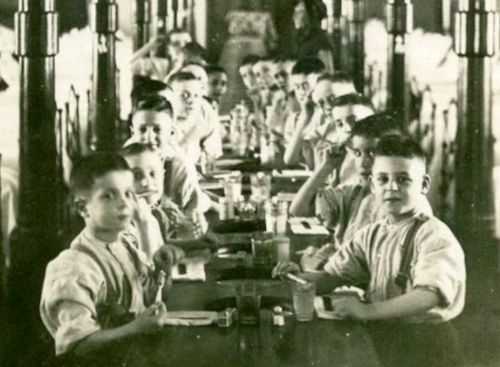
The endurance of the Duplessis Orphans system cannot be explained solely by administrative concealment. It also depended upon patterns of public perception shaped by deference, stigma, and selective attention. In mid-twentieth-century Quebec, Catholic institutions occupied a position of profound moral authority. Religious orders were not merely service providers; they were embodiments of spiritual discipline and communal continuity. Convents, parishes, and church-run schools structured daily life, and clerical leadership carried both spiritual and social prestige. For many citizens, religious caregivers symbolized sacrifice, humility, and charitable devotion. This moral capital generated a presumption of benevolence that insulated institutional practices from suspicion. Administrative changes within church-operated facilities were rarely interpreted through a lens of fiscal opportunism. When orphanages were redesignated as psychiatric institutions, the shift could be understood as an adaptation to evolving standards of care rather than as a financial strategy tied to subsidy formulas. Institutional authority framed the narrative, and the public largely received it within a framework already predisposed toward trust.
Stigma played a central role in sustaining silence. Children born outside marriage, those from impoverished families, and those deemed socially disruptive already occupied marginal positions within the social order. When such children were classified as mentally ill, the designation reinforced preexisting assumptions about deviance and deficiency. The psychiatric label did not disrupt dominant narratives; it confirmed them. Families, where they existed, often lacked the social capital to challenge institutional authority. In some cases, parents had relinquished children under economic or social pressure and were ill-equipped to contest subsequent decisions. The marginal status of the children themselves reduced the likelihood of widespread public mobilization on their behalf.
Information about institutional conditions did not circulate widely, yet neither was it entirely absent. Occasional reports, local rumors, and private doubts emerged, but they rarely coalesced into sustained public critique. Media institutions operated within cultural constraints that discouraged direct confrontation with clerical authority. Journalists and editors who relied on community relationships and ecclesiastical goodwill faced incentives to avoid antagonism. The absence of investigative reporting should not be mistaken for universal ignorance; rather, it reflected a media environment in which certain subjects were treated as sensitive or untouchable. Silence, in this sense, was not purely imposed from above but reproduced through professional caution and social convention.
Moral evasion also operated at the level of individual conscience. For citizens invested in a vision of Quebec as a devout, cohesive, and morally guided society, acknowledging systemic abuse within church-administered institutions posed a destabilizing threat. To question the integrity of religious caregivers risked undermining faith in institutions that structured education, healthcare, and family life. The prospect of institutional wrongdoing introduced cognitive dissonance into a culture that linked Catholic authority with communal well-being. It was easier to interpret institutional suffering as unfortunate exception than as structural design. Isolated incidents could be rationalized as the failings of particular individuals rather than as products of a system aligned with financial and political incentives. Deference to authority intersected with psychological incentives to preserve collective self-understanding. Silence became a form of self-protection, shielding not only institutions but the public’s image of itself and its moral order.
The Duplessis Orphans scandal therefore demonstrates how systemic wrongdoing can persist within democratic societies not solely through coercion but through habituated trust and selective disbelief. Public reluctance to confront institutional authority allowed administrative classifications and funding incentives to operate with minimal challenge. Recognition and redress would come decades later, when secularization and archival access made retrospective critique possible. In the interim, moral evasion functioned as a stabilizing force. The system endured because too many actors, for too many reasons, found it easier to accept institutional narratives than to interrogate them.
The Quiet Revolution and Retrospective Reckoning

The political and cultural transformation known as the Quiet Revolution altered the structural conditions that had enabled the Duplessis Orphans system to endure. Beginning in the early 1960s, Quebec underwent rapid secularization, administrative centralization, and educational reform. Authority over schools, hospitals, and social services gradually shifted from religious orders to provincial ministries staffed by civil servants. This transfer did not immediately expose past abuses, but it disrupted the institutional fusion that had shielded earlier practices from scrutiny. Secular governance introduced new oversight mechanisms, professional standards, and a vocabulary of rights that differed markedly from the clerical-nationalist framework of the preceding decades.
The Quiet Revolution also reshaped public discourse in ways that would eventually make retrospective accountability possible. Intellectuals, journalists, and policymakers increasingly questioned the cultural dominance of the Catholic Church and reevaluated the social order that had characterized the Duplessis era. Universities expanded, media environments diversified, and a new generation of civil servants approached governance with technocratic and secular assumptions. Retrospective critiques of “la Grande Noirceur” framed the period as one of authoritarian stagnation, though historians continue to debate the precision and fairness of that label. What matters for the Duplessis Orphans case is that the moral insulation surrounding clerical authority weakened. As educational and healthcare systems became integrated into provincial administration, bureaucratic transparency improved incrementally, and regulatory oversight acquired greater institutional independence. Archival materials, once dispersed across religious and provincial jurisdictions, became more accessible to researchers and journalists. The shift from ecclesiastical to bureaucratic governance did not guarantee transparency, but it altered the balance of power in ways that made systematic reexamination of past practices both politically conceivable and administratively feasible.
For decades, however, the experiences of the Duplessis Orphans remained fragmented and largely unacknowledged in official narratives. Many former institutionalized children carried the stigma of psychiatric diagnosis into adulthood, complicating efforts to organize collectively or to gain public sympathy. It was only in the late twentieth century, as survivor networks formed and investigative journalism revisited the period, that broader recognition began to emerge. Testimonies accumulated, challenging earlier administrative records and reframing institutional histories. What had once been isolated memories coalesced into a public claim.
Governmental response unfolded gradually and unevenly. In the 1990s, public pressure intensified, leading to inquiries and negotiations overcompensation. Survivors organized associations, retained legal counsel, and brought their experiences into courtrooms and legislative hearings. The Quebec government acknowledged that wrongful reclassification had occurred, though debates persisted regarding the scope of responsibility and the adequacy of redress. Officials distinguished between unlawful psychiatric designation and broader institutional mistreatment, a distinction that shaped eligibility criteria for compensation. Financial settlements were eventually established for recognized victims, but these programs were structured within legal frameworks that limited admission of direct liability. The language of regret and restitution operated alongside careful juridical phrasing designed to balance moral acknowledgment with institutional self-protection. Compensation represented a tangible response, yet it also illustrated the constraints of retrospective justice within a system seeking to reconcile past wrongdoing with contemporary political stability.
Retrospective reckoning raised deeper questions about historical responsibility. Apology and compensation addressed tangible harms, yet they could not fully reconstruct educational opportunities lost, reputations damaged, or psychological trauma endured. Nor could they entirely disentangle the roles of church and state in a system where authority had been so thoroughly interwoven. Public acknowledgment required confronting not only administrative error but the cultural and political conditions that had normalized classificatory expansion and institutional silence. The process of reckoning became both juridical and interpretive.
The legacy of the Duplessis Orphans within Quebec’s collective memory illustrates the limits and possibilities of democratic self-correction. Secularization and institutional reform created the conditions under which past practices could be reevaluated, yet recognition arrived only after many survivors had already lived the majority of their lives under the weight of imposed diagnoses. Delayed justice underscores the temporal fragility of accountability in democratic societies, where structural harm may persist beneath administrative routine long before it becomes publicly legible. Even when cultural transformation exposes prior wrongdoing, the passage of time complicates evidentiary reconstruction, legal remedy, and emotional repair. The Quiet Revolution did not undo the past, nor did compensation fully restore what had been taken. It did, however, alter the horizon against which the past could be judged, embedding the scandal within a broader narrative about institutional reform, secularization, and the ongoing negotiation between memory and governance.
Structural Abuse in Democratic Contexts: Comparative Reflections
The Duplessis Orphans scandal challenges the assumption that systemic abuse belongs primarily to authoritarian regimes. Quebec in the mid-twentieth century operated within a constitutional democracy, with electoral competition, legislative procedure, and formal civil liberties. Yet the presence of democratic institutions did not prevent the convergence of bureaucratic classification, fiscal incentives, and moral authority from producing durable harm. The case underscores a central tension within democratic governance: legality and legitimacy can coexist with administrative practices that inflict durable injury on marginalized populations. Abuse need not arise from overt dictatorship. It can emerge from administrative rationality operating within culturally sanctioned hierarchies.
Comparative scholarship on institutional abuse reinforces this insight. Investigations into church-run residential schools, psychiatric hospitals, reformatories, and state-funded care facilities in other Western democracies reveal recurring structural patterns. In Canada, Ireland, Australia, and parts of the United States, inquiries have documented how vulnerable populations were confined within institutions that operated at the intersection of public funding and moral authority. In many of these cases, diagnostic categories, moral judgments, or developmental labels were expanded to justify prolonged institutionalization. Economic incentives often reinforced these classificatory decisions, as per capita funding models rewarded occupancy and institutional growth. Social stigma surrounding poverty, illegitimacy, disability, or ethnic difference further insulated institutions from external challenge. The Duplessis Orphans case shares these features: classificatory elasticity, fiscal motivation, and the marginal status of those affected. While Quebec’s clerical-nationalist framework provided its own historical specificity, the broader structural dynamics were not unique. They reflect a pattern in which administrative systems in democratic societies can convert categories of care into mechanisms of control.
What distinguishes structural abuse in democratic contexts is not the absence of formal rights but the mediation of those rights through institutional credibility. When institutions are widely trusted, their classifications acquire presumption of accuracy. Legal recourse may exist in principle, yet it remains inaccessible in practice to those lacking resources, credibility, or social standing. Administrative categories shape who is heard and who is dismissed. In the Duplessis Orphans system, psychiatric designation curtailed not only freedom of movement but also epistemic standing. The democratic framework remained intact, yet those most affected by institutional decisions were positioned outside its effective protections.
The broader lesson is not that democracy is illusory, but that it is structurally vulnerable. Institutional design shapes how power is exercised long before individual decisions are scrutinized. Funding formulas that reward confinement, oversight regimes that rely on internal reporting, and cultural norms that equate moral authority with institutional virtue can combine to create durable blind spots. The Duplessis Orphans scandal reveals how classificatory regimes and fiscal incentives may interact within democratic governance to produce outcomes inconsistent with proclaimed values of dignity and equality. Comparative reflection reveals that such outcomes are not aberrations limited to a single province or historical moment. They emerge when administrative logic proceeds without sustained external critique and when marginalized populations lack the leverage to challenge imposed identities. Democratic accountability demands more than electoral turnover and formal rights declarations. It requires vigilance toward the categories through which institutions define deviance, dependency, and normalcy. When those categories harden into unquestioned truths, structural harm can become routine even within societies that regard themselves as free.
Conclusion: Delayed Justice and the Limits of Institutional Memory
The history of the Duplessis Orphans exposes a disquieting truth about modern governance: systemic harm can endure not because it is invisible, but because it is normalized through administrative language and authority. Classification transformed children into patients, fiscal policy reinforced confinement, and moral deference insulated administrators from scrutiny. The resulting system operated within a democratic framework yet produced outcomes inconsistent with democratic ideals. The scandal compels a reassessment of how administrative categories, when aligned with political and religious legitimacy, can convert vulnerability into institutional routine.
Delayed justice, when it arrived, carried both moral weight and practical limitation. Official acknowledgment and compensation recognized that wrongful reclassification had occurred, yet such measures unfolded decades after the original harm. By the time inquiries were conducted and settlements negotiated, many survivors had already borne the consequences of imposed diagnoses for the majority of their lives. Childhoods shaped by confinement had long since given way to adulthoods constrained by stigma, limited education, and damaged institutional records. Financial restitution, though symbolically significant and materially meaningful to some, could not restore lost schooling, interrupted development, or the formative years spent under coercive authority. Nor could formal apology fully address the erosion of trust in institutions that had claimed to provide care. The temporal gap between injury and recognition underscores a central tension in democratic accountability: systems capable of reform are not necessarily swift in confronting their own failures. Recognition often depends upon generational change, cultural transformation, and sustained advocacy by those who must relive trauma in order to secure acknowledgment.
Institutional memory presents a further constraint. Governments and religious bodies evolve, personnel change, and administrative frameworks are restructured. The diffusion of responsibility across time complicates efforts to assign culpability. Official reports and archival documents can reconstruct patterns, yet they cannot fully capture the lived experience of confinement or the psychological burden of stigmatization. As collective memory shifts, there is also a risk that structural lessons recede into symbolic acknowledgment rather than sustained vigilance. Commemoration without reform may satisfy moral expectation while leaving underlying vulnerabilities intact.
The Duplessis Orphans scandal ultimately invites reflection on the fragility of democratic safeguards. Elections, formal rights, and constitutional structures do not automatically prevent systemic abuse when administrative classifications harden into unquestioned truths. Democratic societies must continually interrogate the categories through which institutions define illness, deviance, and dependency. When bureaucratic incentives align with moral authority and public deference, harm can become embedded in routine procedure. Delayed justice may acknowledge wrongdoing, but it cannot substitute for proactive scrutiny. The limits of collective memory remind us that accountability requires not only retrospective recognition, but sustained attention to the frameworks that shape human classification in the present.
Bibliography
- Dickert, Matthias, et.al. The ‘Duplessis Orphans’: A Historical, Political And Literary Approach. Munich: Grin Verlag (2015).
- Dickinson, John A., and Brian Young. A Short History of Quebec, 4th ed. Montreal and Kingston: McGill-Queen’s University Press, 2008.
- Gagnon, Alain-G., and Michel Sarra-Bournet, eds. Duplessis: Between Great Darkness and Quiet Revolution. Montreal: Quebec America, 1997.
- Gauvreau, Michael. The Catholic Origins of Quebec’s Quiet Revolution, 1931–1970. Montreal and Kingston: McGill-Queen’s University Press, 2005.
- McRoberts, Kenneth. Quebec: Social Change and Political Crisis. Toronto: McClelland and Stewart, 1976.
- Perry, J. Christopher, et.al. “Seven Institutionalized Children and Their Adaptation in Late Adulthood: The Children of Duplessis (Les Enfants de Duplessis).” Psychiatry: Interpersonal and Biological Processes 69:4 (2007), 283-301.
- Seljak, David. “The Catholic Church in Quebec: Public Religion and the Quiet Revolution.” In Religion and Public Life in Canada, edited by Marguerite Van Die, 121–146. Toronto: University of Toronto Press, 2001.
Originally published by Brewminate, 02.23.2026, under the terms of a Creative Commons Attribution-NonCommercial-NoDerivatives 4.0 International license.
About the Author