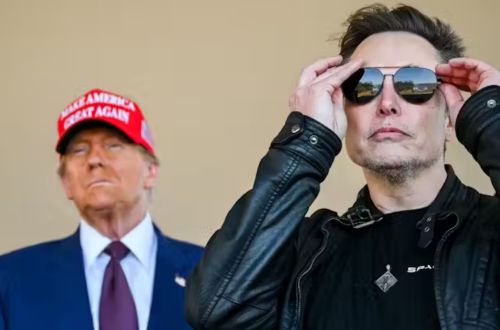
We are witnessing a private company taking over government operations.

By Dr. Allison Stanger
Distinguished Endowed Professor
Middlebury College
Introduction
Elon Musk’s role as the head of the Department of Government Efficiency, also known as DOGE, is on the surface a dramatic effort to overhaul the inefficiencies of federal bureaucracy. But beneath the rhetoric of cost-cutting and regulatory streamlining lies a troubling scenario.
Musk has been appointed what is called a “special government employee” in charge of the White House office formerly known as the U.S. Digital Service, which was renamed the U.S. DOGE Service on the first day of President Donald Trump’s second term. The Musk team’s purported goals are to maximize efficiency and to eliminate waste and redundancy.
That might sound like a bold move toward Silicon Valley-style innovation in governance. However, the deeper motivations driving Musk’s involvement are unlikely to be purely altruistic.
Musk has an enormous corporate empire, ambitions in artificial intelligence, desire for financial power and a long-standing disdain for government oversight. His access to sensitive government systems and ability to restructure agencies, with the opaque decision-making guiding DOGE to date, have positioned Musk to extract unprecedented financial and strategic benefits for both himself and his companies, which include the electric car company Tesla and space transport company SpaceX.
One historical parallel in particular is striking. In 1600, the British East India Company, a merchant shipping firm, began with exclusive rights to conduct trade in the Indian Ocean region before slowly acquiring quasi-governmental powers and ultimately ruling with an iron fist over British colonies in Asia, including most of what is now India. In 1677, the company gained the right to mint currency on behalf of the British crown.
As I explain in my upcoming book “Who Elected Big Tech?” the U.S. is witnessing a similar pattern of a private company taking over government operations.
Yet what took centuries in the colonial era is now unfolding at lightning speed in mere days through digital means. In the 21st century, data access and digital financial systems have replaced physical trading posts and private armies. Communications are the key to power now, rather than brute strength.
The Data Pipeline

Viewing Musk’s moves as a power grab becomes clearer when examining his corporate empire. He controls multiple companies that have federal contracts and are subject to government regulations. SpaceX and Tesla, as well as tunneling firm The Boring Company, the brain science company Neuralink, and artificial intelligence firm xAI all operate in markets where government oversight can make or break fortunes.
In his new role, Musk can oversee – and potentially dismantle – the government agencies that have traditionally constrained his businesses. The National Highway Traffic Safety Administration has repeatedly investigated Tesla’s Autopilot system; the Securities and Exchange Commission has penalized Musk for market-moving tweets; environmental regulations have constrained SpaceX.
Through DOGE, all these oversight mechanisms could be weakened or eliminated under the guise of efficiency.
But the most catastrophic aspect of Musk’s leadership at DOGE is its unprecedented access to government data. DOGE employees reportedly have digital permission to see data in the U.S. government’s payment system, which includes bank account information, Social Security numbers and income tax documents. Reportedly, they have also seized the ability to alter the system’s software, data, transactions and records.
Multiple media reports indicate that Musk’s staff have already made changes to the programs that process payments for Social Security beneficiaries and government contractors to make it easier to block payments and hide records of payments blocked, made or altered.
But DOGE employees only need to be able to read the data to make copies of Americans’ most sensitive personal information.
A federal court has ordered that not to happen – at least for now. Even so, funneling the data into Grok, Musk’s xAI-created artificial intelligence system, which is already connected with the Musk-owned X, formerly known as Twitter, would create an unparalleled capability for predicting economic shifts, identifying government vulnerabilities and modeling voter behavior.
That’s an enormous and alarming amount of information and power for any one person to have.
Cryptocurrency Coup?
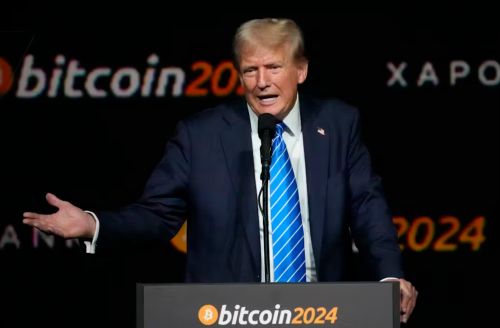
Like Trump himself and many of his closest advisers, Musk is also deeply involved in cryptocurrency. The parallel emergence of Trump’s own cryptocurrency and DOGE’s apparent alignment with the cryptocurrency known as Dogecoin suggests more than coincidence. I believe it points to a coordinated strategy for control of America’s money and economic policy, effectively placing the United States in entirely private hands.
The genius – and danger – of this strategy lies in the fact that each step might appear justified in isolation: modernizing government systems, improving efficiency, updating payment infrastructure. But together, they create the scaffolding for transferring even more financial power to the already wealthy.
Musk’s authoritarian tendencies, evident in his forceful management of X and his assertion that it was illegal to publish the names of people who work for him, suggest how he might wield his new powers. Companies critical of Musk could face unexpected audits; regulatory agencies scrutinizing his businesses could find their budgets slashed; allies could receive privileged access to government contracts.
This isn’t speculation – it’s the logical extension of DOGE’s authority combined with Musk’s demonstrated behavior.
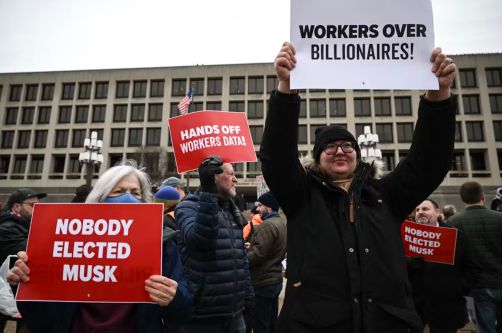
Critics are calling Musk’s actions at DOGE a massive corporate coup. Others are simply calling it a coup. The protest movement is gaining momentum in Washington, D.C., and around the country, but it’s unlikely that street protests alone can stop what Musk is doing.
Who can effectively investigate a group designed to dismantle oversight itself? The administration’s illegal firing of at least a dozen inspectors general before the Musk operation began suggests a deliberate strategy to eliminate government accountability. The Republican-led Congress, closely aligned with Trump, may not want to step in; but even if it did, Musk is moving far faster than Congress ever does.
Destroy the Republic, Build a Startup Nation?
Taken together, all of Musk’s and Trump’s moves lay the foundation for what cryptocurrency investor and entrepreneur Balaji Srinivasan calls “the network state.”
The idea is that a virtual nation may form online before establishing any physical presence. Think of the network state like a tech startup company with its own cryptocurrency – instead of declaring independence and fighting for sovereignty, it first builds community and digital systems. By the time a Musk-aligned cryptocurrency gained official status, the underlying structure and relationships would already be in place, making alternatives impractical.
Converting more of the world’s financial system into privately controlled cryptocurrencies would take power away from national governments, which must answer to their own people. Musk has already begun this effort, using his wealth and social media reach to engage in politics not only in the U.S. but also several European countries, including Germany.
A nation governed by a cryptocurrency-based system would no longer be run by the people living in its territory but by those who could could afford to buy the digital currency. In this scenario, I am concerned that Musk, or the Communist Party of China, Russian President Vladimir Putin or AI-surveillance conglomerate Palantir, could render irrelevant Congress’ power over government spending and action. And along the way, it could remove the power to hold presidents accountable from Congress, the judiciary and American citizens.
All of this obviously presents a thicket of conflict-of-interest problems that are wholly unprecedented in scope and scale.
The question facing Americans, therefore, isn’t whether government needs modernization – it’s whether they’re willing to sacrifice democracy in pursuit of Musk’s version of efficiency. When we grant tech leaders direct control over government functions, we’re not just streamlining bureaucracy – we’re fundamentally altering the relationship between private power and public governance. I believe we’re undermining American national security, as well as the power of We, the People.
The most dangerous inefficiency of all may be Americans’ delayed response to this crisis.
Originally published by The Conversation, 02.07.2025, under the terms of a Creative Commons Attribution/No derivatives license.
About the Author