A history of the transformations of judicial and societal views of money-related crime and counterfeiting.

By Olivier Caporossi
Lecturer in Modern History
Université de Pau et des Pays de l’Adour (UPPA)
Introduction
In this present article, the term “counterfeiter” (faux-monnayeur) is key; here, it refers to all individuals who “abuse” currency: those who produce counterfeit money, distribute it, trim it, or traffic it,1 such as the prince contrefacteur. In fact, any time that the possession of jus monetae is considered unlawful, or that its use is stigmatized as illegal and/or against societal interests, counterfeiting is at hand. Counterfeit money, by merit of the very term, cannot be reduced to the mere value of the precious metal it contains. From the Middle Ages to the present day, counterfeit money results as much from the activity of counterfeiters as it does from its reception by groups of people, and it leads to contradictory appreciations of value and political conflicts. It is above all the courts which produce the first representation of the counterfeiter and which allow this image to change over time. The articles grouped together here allow us to understand such representations of the counterfeiter – mainly in France and in Spain – and its evolution from the Middle Ages through the 20th century. These case studies – which address different manifestations of the counterfeiter – allow us to catch a glimpse of the transformations of judicial and societal views of money-related crime and counterfeiting.
The Making of the Counterfeiter
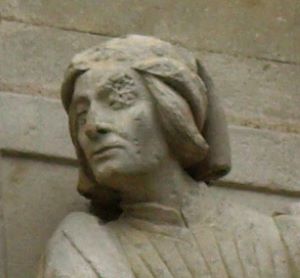
From Jacques Coeur’s sentencing in 1453, to the case of Superintendent of Finances Nicolas Fouquet (accused in 1661 of counterfeiting and embezzlement by Louis the 14th and de Colbert),2 to the sentence of John Law, whose bankruptcy began when he was convicted of counterfeiting in 1720,3 the shadow of the counterfeiter passed through the important political trials of the treasurers and financial managers of the king.4
During the Third Republic, counterfeiting extended outside the milieu of financial advisers and brought scandal to the heart of the French court and to political elites. The Affair of the Poisons (1679), for example, which ended with the incrimination of the mistress of Louis the 14th, Madame de Montespan, started with the discovery of alchemist counterfeiters.5 The Stavisky Affair, which rattled French politics in the 1930s, began similarly, with the arrest of the municipal pawnshop owner of Bayonne, Gustave Tissier, for fraud and the circulation of counterfeit banknotes.6
Finally, the face of the counterfeiter manifested itself in the social figure of the bandit, an enemy of the king and of the homeland (la patrie). This was the case of the Moorish bandit in the beginning of the 17th century, who defied the Spanish government in Catalogne and in the kingdom of Valence,7 and who Victor Hugo immortalized in the 19th century in The Man Who Laughs (1869). We could also reference the royalists who, in the spirit of the French Revolution, falsified assignats as part of their plots against the French Republic. The figure of the counterfeiting bandit is as stigmatized as it is lauded for resisting the sovereign power. Indeed, the counterfeiter battles on peripheral territory, like the Robin-Hoodesque Farinet who provided a form of justice to the most dispossessed.8
This heroisation of the counterfeiting bandit was quite successful. The “memoirs” of British counterfeiter Charles Black were quite popular when they were published in 1989. Thus, the historical sources of important cases of counterfeiting cannot be reduced to momentous political trials. The Ancien Regime canards (low-cost sensational newspapers), the press, political pamphlets, and literature all contributed to the construction of society’s image of the counterfeiter. Stories even began with legendary tradition, like that of the counterfeiting woman in Landes in the 19th and 20th centuries.9
Courts and Counterfeiters
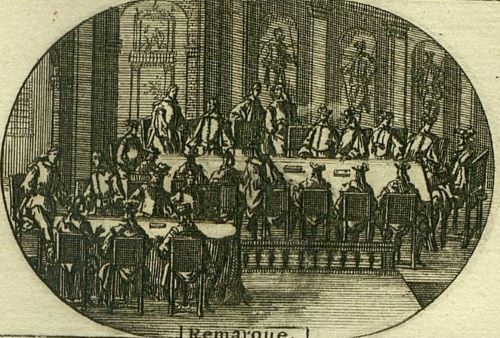
The following articles on important French and Spanish counterfeiters, which prioritize exceptional judicial procedures or exceptional impacts on public opinion, recognize their scandalous nature. These articles cover a large period of time: from the 15th to the 20th century. First, judicial sources help us to understand the construction of the criminal figure of the counterfeiter: a clemency letter provided by Charles the 7th in 1449, three trials for falsifying currency undertaken by the Council of Castile during the reign of Charles II of Spain (1665-1700), the judicial documentation of the Toulouse and Languedoc parliaments at the end of Louis 14th’s reign (1643-1715). Case studies of counterfeiters from the end of the Middle Ages and the Ancien Regime show the difficulties that judicial authorities had in defining money-related crimes and in considering them as lèse majesté. These three case studies share the fact that the monarch in power directly intervened, either by use of his powers of clemency or through commissions with (geographically) extensive judicial powers. For example, the Spanish judges at the border of Galicia and Portugal and the General Commissioner of the Cour des Monnaies in Lyon for Provence and Languedoc (1710-1713), Saint Maurice, all exercised extensive power over a large region.
The articles here which address the contemporary period juxtapose judicial sources and outside perspectives. Etienne Hofman depicts the public debate sparked by the publication of an article by Benjamin Constant on the case of Charles Lainé in the department of the North in 1818. This approach, however, does not imply that the judicial body played a negligible role. It was a judge who denounced the death penalty of locksmith de Givenchy le Noble to the editorial board of La Minerve française, a liberal opposition newspaper. Sébastien Soulier analyzes sixteen cases of fabricating and issuing counterfeit currency which were assessed by the Assizes Court of Puy de Dôme (1852-1914), using the published court records.
The complex story of bookstore-owner Paul Valentin Dupray de la Mahérie’s fraud is addressed by Viera Rebolledo Dhuin. Dupray de la Mahérie, associated with Prince of Crouy-Chanel, had Berthomé, a teller for the railroad bank, make him three million francs. Charged with a number of swindles, embezzlement, and use of counterfeit in 1866, the bookseller received a royal pardon in January 1867 and went back to his fraudulent activities, inventing a fake bank to attract investment from the catholic population around him. At the end of his life, he created fake titles to obtain 50 million francs from the Holy See. The use of multiple points of view and sources is even more present in the work of anthropologist Bernard Traimont, whose research revolves around a female counterfeiter in the Landes de Gascogne. No trace of her exists in the judicial archives of Mont de Marsan, so the author draws from a variety of sources with information on her family, house, and life to elucidate the story of this exceptional woman living at the intersection of two centuries (1689 to 1720). The accumulation of discourses on this female counterfeiter, notably between the beginning of the 19th century and the first half of the 20th, is the guiding force in the construction of her public identity.
Extrajudicial and Judicial Narratives of a Criminal Life
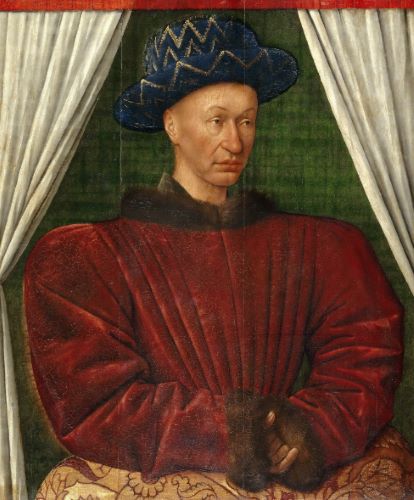
The authors featured in this dossier emphasize, above all, the value of narratives. Narratives explaining individuals’ paths from delinquency to counterfeiting are often judicial, by which we mean made by and for the judicial system. Nourished with elements of the investigation (witnesses’ accounts and clues obtained during perquisitions), they testify to stories of individual moral failure. The story of counterfeiting is the story of a loss of social status. For example, the criminal narrative of Pierre Chommeliz given by Charles the 7th’s Chancellery describes a victim of the (nearly finished) Hundred Years’ War and the unfortunate events that ruined him: it was, among other factors, the loss of his troops in the Velay that reduced Chommeliz to the worst of crimes, according to the Chancellery. This story belongs to the clemency system, and was used to justify the pardon given by Charles the 7th. Bad luck also struck Domingo de Orma, a merchant who was ruined and harassed for his debts in Bilbao before being accused of participating in a network of counterfeit money in 1670 for which the ramifications would reach as far as Bayonne. Loss of social status is even more important when the suspects work directly for the King. For example, army officers like Francisco Bugarin in 1672 in Gondomar, near the border between Galicia and the North of Portugal, and men of the law, like unemployed Pedro Bugarin, the brother and accomplice of the latter, or parliamentary advisors, like Joseph Marie de Villespassans in 1713 in Toulouse, all experienced particularly significant losses of social status. For the courts of the Ancien Régime, whether in France or Spain, the accusee’s fall from grace was defined, even more than by other social aspects of the counterfeiter, by the idea of treason against the royal service. The accusees could no longer be considered as simple, occasional, delinquents: they were thought of as hardened criminals capable of organizing a true criminal business.
The narrative of moral degeneration followed into the 19th century, reinforced by the press. According to Sébastien Soulier, the twenty-eight cases that were examined by the Assizes Court of Puy de Dôme between 1852 and 1914 treat suspects with diverse criminal backgrounds including robbery, vagrancy, begging, violence, desertion, hunting and fishing violations, bootleg match-selling, sex violations, and procurement. However, the loss of social status in itself of counterfeiting was enough for the press to qualify their life stories as proof of the “existence of men outside the law, at war with society and those that represent it”. This was the danger that the counterfeiter represented, and that is what is treated here. The idea that counterfeiters were organized in gangs lasted and reinforced the idea that they were plotting something larger.
Counterfeiters’ (legal) professions became a sign of guilt whenever they werelinked to a technical skill that could be associated with the manipulation of metal. This was the case for foundry workers, goldsmiths, iron workers, and locksmiths. In 1818, the locksmith Charles Lainé was labeled a counterfeiter and blamed for a plot (punishable with the death sentence) due to the simple discovery of his own professional material in his home near Arras. The Lainé Affair, on the other hand, provoked a different type of reaction from society, as the article and brochure of Benjamin Constant questioned the hypotheses of the judicial authorities. Lainé’s defense lawyers used the police’s own information to denounce the biased hatred of gendarme Jean Baptiste Gaillard, a Bonapartiste, for the suspect, a known royalist. Unlike the cases of counterfeiting in Puy de Dôme in the second half of the 19th century, the press was not unanimously convinced by the judicial narrative. The Lainé Affair allowed a space for a counter-narrative of judicial error, and Etienne Hofmann shows us the complex mechanisms of this reversal. The scandal of Lainé’s case broke the mold of judicial procedures to affect “public opinion” thanks to an extrajudicial narrative.
The case study dedicated to the bookseller Paul Valentin Dupray de la Mahérie (1828-1911) by Viera Rebolledo Dhuin shows how accounts of the degeneration of the crook, which were first developed by the judicial archives, were later taken up by the press, who denounced the speculative and diabolical counterfeiter. This, however, took a turn, as the counterfeiting bookseller was turned into a romantic hero when Paul Valentin Dupray de la Mahérie was prosecuted, yet again, for fraud (1911). The judicial narrative was a far cry from the story printed by the press, and this distance only increased between 1866 and 1910-1911. When the judicial narrative disappeared, the construction of the counterfeiter belonged only to mythology, folklorists, and fiction writers who rebuilt it, little by little. The heroization then took a new turn, which is the very subject of Bernard Traimond’s study of the female counterfeiter of Landes de Gascogne.10
In the hands of Gasconian folklorist Félix Arnaudin (1844-1921), the De Rauzet family’s conflicts with the Escource population in Landes (1689-1720) becomes the base of a legendary story about the fraudulent activities of the “Dame de Z”, a literary model of the counterfeiting woman. The story completely frees itself from the judicial event, which doesn’t refer to any fabrication of counterfeit money. The counterfeit money doesn’t exist anywhere except in the extrajudicial narrative of the folklorist.
The counterfeiter, as he or she exists in the different articles here, is a far cry from the image of a bandit created by E.J. Hobsbawn.11 This counterfeiter is as little based on the bandit of the high court as it is on the Robin Hood of the oppressed. Ramuz’s heroization of the counterfeiter Farinet seems to be an exception to this rule.12 Under the Ancien Régime, the social world of the counterfeiter was often that of the elites. In 19th century society, he or she represented a social danger for the judicial authorities, but the population didn’t see them as a rebel to admire.
Endnotes
- Olivier F. Dubuis, Le faux monnayage dans le Pays de Vaud (1715-1750), Lausanne, Éditions du Zèbre, 1999, p. 122.
- Daniel Dessert, Fouquet, Paris, Fayard, 1987.
- Edgar Faure, La banqueroute de Law, 17 juillet 1720, Paris, Gallimard, 1977.
- Daniel Dessert, Argent, pouvoir et société au Grand Siècle, Paris, Fayard, 1984.
- Jean-Christian Petitfils, L’affaire des Poisons. Crimes et sorcellerie au temps du Roi-Soleil, Paris, Perrin, 2010. Arlette Lebigre, L’affaire des Poisons, Paris, Complexe, 1989.
- Paul Jankowski, L’affaire Stavisky : anatomie d’un scandale politique, Paris, Fayard, 2000.
- Olivier Caporossi, « Le crime de monnaie des morisques au début du XVIIe siècle. Fausse monnaie et fausse religion dans la propagande anti-morisque », Cahiers de la Méditerranée, décembre 2009, n° 79, p. 223-240.
- André Donnet, La véritable histoire de Joseph-Samuel Farinet, faux-monnayeur, Lausanne, Payot, 1980.
- Bernard Traimond, « La fausse monnaie au village. Les Landes aux XVIIIe et XIXe siècles », Terrain revue d’ethnologie de l’Europe, 1994, n°23, p. 27-44.
- Bernard Traimond, Éthnologie historique des pratiques monétaires dans les Landes de Gascogne, Thèse d’histoire sous la direction de Maurice Agulhon, Université de Paris I Sorbonne, 1991, vol. 1, p. 66-97.
- Eric J. Hobsbawm, Les bandits, Paris, La Découverte, 1999.
- Charles-Ferdinand Ramuz, Farinet ou la fausse monnaie, Paris, Grasset, rééd. 1961.
Originally published by Criminocorpus – Revue hypermédia des crimes et des peines (11.12.2011), republished by OpenEdition Journals under the terms of a Creative Commons Attribution-NonCommercial-NoDerivs 4.0 International license.
About the Author