
Examining the reception of Italian cuisine in Europe with the early modern and modern movement of migrants and tourists.

By Dr. Ulrike Thoms
Professor of Economic and Social History
Max Planck Institute for the History of Science
Abstract
In recent decades, Italian cuisine has had a greater impact upon the development of eating habits than any other national cuisine. Spaghetti, pizza, tiramisù und espresso are ubiquitous in Europe and North America. This article reconstructs the reception of Italian cuisine in Europe, identifying and separating the complex tangle of factors that contributed to it. These included the image of Italy in art and literature, the movements of tourists and migrants, the role – which for a long time has generally been ignored – of the Italian state in promoting foreign trade and the economy, and the impact of epidemiology.
Introduction
For a long time, there has been a consensus in anthropology and other academic disciplines that eating and drinking are central elements of human identity. Food, in particular, reveals how closely nature and culture are intertwined.1 Culinary systems contain criteria for differentiation, ordering and classification of the lebenswelt and the fixation of the place, which the individual has in the world. From it are derived the rules which the members of a particular culture use for the production, preparation and consumption of foodstuffs. Claude Lévi-Strauss (1908–2009), therefore, describes the cuisine of a society as a language, which helps translate and depict social structures.2 Therefore, in studying eating habits, anthropologists such as Lévi-Strauss and Mary Douglas (1921–2007) have concentrated on revealing these structures and describing the set of rules that determine them.3
However, what does it mean when the currently most famous British chef, Jamie Oliver (born 1975), avowedly orientates towards above all the Mediterranean, Italian cuisine and seeks to spread this with missionary zeal,4 when a booklet with the best recipes of Scottish pubs and teahouses contains instructions for “tagliatelle with sun dried tomatoes, leeks and white wine”,5and when an American cookbook for European readers tries to sell “macaroni and cheese” as a classic American dish?6 This phenomenon of Italianisation, which is also evident in Germany, Switzerland, Belgium and the Netherlands, is striking and therefore has drawn considerable interest in food research, particularly in connection with the examination of the nation state, migration and globalisation.7 The existing studies of different national cuisines have repeatedly emphasised the central role played by stereotypes for both the construction of one’s own and the perception of the other’s cuisine.8 Besides this, a new interest in Mediterranean and, in particular, Italian cuisine has emerged motivated by health concerns and the view of Italian cooking as the embodiment of a diet rich in fish, fruit and vegetables that is low in meat and animal fats. This is not simply a change in “taste” or a product of globalisation but rather a phenomenon that goes back to a whole bundle of factors that are intertwined with one another in many ways. The following attempts to trace the outlines of the career of Italian cuisine in Europe and explore the reasons for its great success. It will try to show that, even over time and despite certain differences, the pattern of reception retained considerable similarities.
Certainly, there is strong evidence that eating habits in Europe have becoming increasingly similar.9 In practice, Italian restaurants exist everywhere.10 Figures on consumption, however, are generally average; they do not say anything on how the foodstuffs bought are prepared. In addition, they hide differences and thus also the diets of migrants, who maintain their eating habits longer than other elements of their lifestyle. However, for a long time, Italian restaurants have not only been run by Italians but also by other migrants, although one would expect that the padrone of a high-class Italian restaurant would be of Italian descent.
In recent years, it has become accepted that globalisation is not a unilinear process but rather means the migration of cultural goods in several directions and that it is not only driven by omnipotent economic powers.11 The determining factors are whether and how global developments are adopted and implemented locally and/or regionally by producers and consumers.12 This dialectic of globalisation and localisation is very clear in the spread of Italian cuisine. It is accompanied by the appreciation of regional products and cuisines, which had already began in the 1930s with the attempts to promote tourism and today are pushed by organisations such as Slow Food and Arche.13 Concrete economic interests have always been involved. At the same time, one can see that local tastes account for small but important differences in preparation, precisely when certain dishes with particular national connotations are adopted elsewhere. This can be seen in the example of the pizza, which is produced in countless national and regional variations.14 For example, in southern France herbed oil is always sprinkled over the pizza when it is taken out of the oven, while pizza takeaways in Germany offer pizza with asparagus and sauce hollandaise. In the Benelux countries and Great Britain, pizza is seen as a fast food, while Germany has – just as in the past – pizzerias which are visited by families as simple, uncomplicated and relatively cheap restaurants.
Indeed, the career of Italian cuisine can only be understood as a transfer process in which the eaters are not passive but rather actively reconfigure their diets. Decisive here is how they perceived Italian cuisine as a whole, what they judged to be “typically” Italian, what elements and dishes they adopted in their repertoire and how these elements differ between countries. This leads to the demand to see the career of Italian cuisine as a product of the circulation of people, information and goods that fundamentally changed the cooking styles of various European countries.
However, it is an inadmissible simplification to speak of an Italian cuisine as Italy was, of course, strongly politically and culturally divided well into the 19th century. Certainly, Italian cooking still dominated the European royal courts into the 16th century. From the 17th century, an international cuisine, strongly influenced by France drove it out.15 In Italy itself, there were considerable regional differences resulting from the diverse agrarian and industrial structures. Therefore, talk of a national cuisine would be inappropriate,16 not to mention that nation states only appeared late and their borders have not – and do not – always correspond to cultural boundaries. Thus, the food in regions of southern France and southern Italy is similar due to relative closeness in climate and the resulting agricultural methods and structures, which mean that the same products are available. The question of how to differentiate so-called national cuisines is also problematic – should one use foodstuffs, spices or methods of preparation/dishes? The Italian pizza is also known in France, here in the variation of the pissaladière. In Turkey, one eats the structurally similar lahmacun, in Elsass Flammkuchen and in Germany Zwiebelkuchen.17 Noodles are also known in Germany, and dishes similar to risotto exist in Spain (paella). Pistou, used – for example – to season bouillabaisse in Marseille, hardly differs from Genovese pesto. Equally, Spanish tapas are very similar to Italian appetisers. The differences are subtle; they first emerged in the wake of the professionalization and increasing international mobility of chefs, and the flood of gastronomic literature that began in the 19th century.18 Within this, from as early as the 18th century, the professional gastronomy in France has been developing a canon of classic dishes, whereas the Italians resisted the unifying influences of French cuisine.19 An equivalent to the middle-class, nationalist cookbooks that had been coming out in Europe since the middle of the 19th century only appeared in Italy in 1891 with La Scienza in cucina e l’arte di mangiar bene by Pellegrino Artusis (1820–1911).20 If the following talks of an Italian cuisine and its influence, then this is fully conscious of the fact that this is basically an inadmissible simplification which requires further refinement through a look at individual products or dishes and extension with a critical reconstruction of the image which other Europeans had of Italian food. Within the analysis, it is necessary to pay attention to the agents and intermediaries of these processes of cultural transfer through whom knowledge of Italian eating habits and customs arrived in other countries, whether it was in the intellectual luggage of those travelling through Italy or migrants, in the gastronomic literature or the concrete offers of trade.
The Importance of the Grand Tour and Tourism

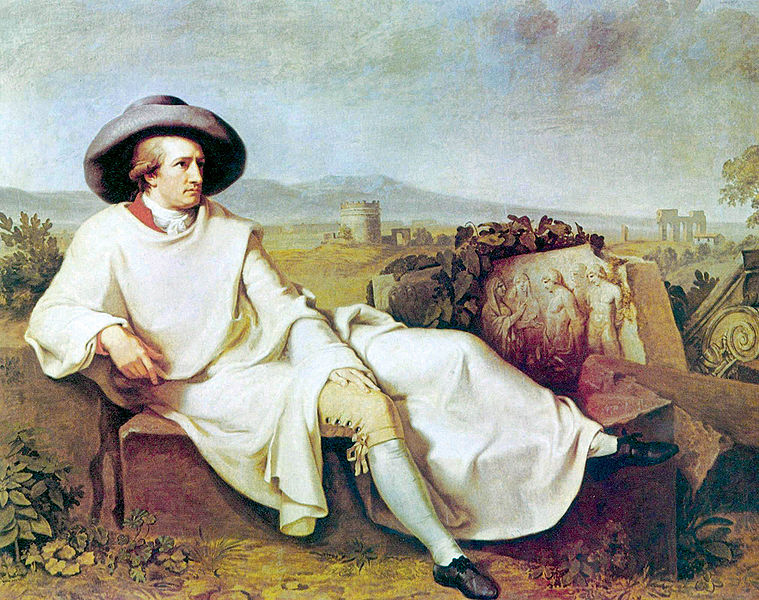
Movements of migration and travel are in general an important factor in the transfer of foodstuffs and the establishment of relationships of exchange between countries or continents; this is the case for potatoes, coffee and sugar, which arrived in Europe in the wake of colonisation.21 This is particularly clear from the example of the United States of America as a melting point; here the diversity of the cuisine is a symbol of the nation’s diversity. It is therefore of particular importance that since the 18th century, Italy has been the destination of those seeking edification and that the grand tour belonged to the conclusion of the education of every young man.22 In this context, numerous travelogues were written and published. In accordance with the goal of travel, they concentrated on art and culture, but increasingly turned their attention to politics, the economy and daily life. The picture they drew of Italy was of political division, ignorance, poverty, lawlessness and lethargy. The popular culture with its sense of beauty and sociability should as a moral force help overcome the predominant political division of the country. The beauties of the country also included the abundance of fruit and vegetables, which – along with its pleasant climate – made Italy appear to be an earthly paradise. According to the Italienische Reise (1786–1788) by Johann Wolfgang Goethe (1749–1832), the paradisiacal surroundings shaped the disposition and produced the boisterous cheerfulness of Italians, who worked to live. He saw the resulting passivity as responsible for Italy’s technical, scientific and economic backwardness,23 which he believed to be the primary reason for the simple, unsophisticated and authentic cuisine. Like Goethe, the 19th-century travel literature sought this authentic cuisine, and travellers reported on its rarity compared to the increasingly common international hotel cuisine aimed at broad tastes. Clearly, knowledge of foreign eating habits was expected as part of the education of travellers, albeit not always the adoption of them.24

For travellers in search of an authentic experience of travel, a growing range of guidebooks with practical information on planning and undertaking a journey had existed since the 18th century. Merchants, pilgrims and gentlemen had always used printed travel guides. However, the appearance of the Handbook for Travellers on the Continent (1829), published by the Briton John Murray (1808–1892) marked the creation of a modern type of commercial guidebook which contained maps and information on hotels, inns, local festivals and customs.25 This model was repeatedly copied, in Germany above all by Karl Baedeker (1801–1859), whose guides so dominated the market that his name became a synonym for an entire literary genre. Already the first Baedeker on Italy from 1866 offered a short introduction to Italian catering and its division into osterias, trattorias, ristorantes, cafés and bars, as well as a rough description of Italian food and in certain cases details of recommended restaurants and particular regional specialities.26 Tellingly, this information took up ever more space,27 until at the turn of the 20th century a new type of guide emerged that concentrated almost exclusively on eating and drinking. There was, for example, the guide by Hans Barth (1862–1928) Osteria: Ein Führer durch Italiens Schenken von Verona bis Capri (1908), which also sought to meet the educational appetites of the middle class with the many quotations littered through it.28 The increase in car ownership produced a further spurt of development. However, the new guidebooks for drivers, for example the Guida gastronomica d’Italia, were not a genuinely Italian invention.They followed the French model as already published in 1914 by the French Touring Club.29 These guidebooks did not present Italian cuisine as uniform, but rather emphasised regional differences that were seen as traditional and the very reason for the charm of travel. In the end, this produced the large, internationally known and to date most important gastronomic guides such as the Guide Michelin, which from 1923 contained not only driving routes but also tips on hotels and restaurants; in Germany, the VARTA-Führer came into the shops in 1957 and in 1969 the Gault-Millau. In Great Britain, too, The Good Food Guide, which first appeared in the 1950s, presented and evaluated restaurants.30
The development of travel literature indicates in general the growing role of food for those travelling to Italy. This suggests that it was sought out as an important element of the experience of travel. The local Italian tourist industry recognised this. After 1945, the Italian association for the promotion of tourism (E.N.I.T.; Ente Nationale Italiano per il Turismo) targeted a discriminating and affluent clientele that had time to discover the country. This clientele was invited to participate actively in the country’s culinary life. They were presented with the differences in the cultural code of Italian cuisine. This cooking might be simple, but the quality of the ingredients, the careful preparation and the diversity of regional differences easily compensated for this. Knowing these subtle differences was a cultural capital that defined social distinctions. In the period of nascent mass tourism, such subtleties were urgently needed in order to maintain social differentiation: for, alongside the travellers in search of edification and culinary experiences, there was now the mass tourist. For the latter, who had to be careful about money and therefore stayed in budget hotels, guesthouses or at a camping site, a new type of guidebook appeared on the market which above all contained practical tips, information on cheap restaurants and dishes; as a result, they played up to the stereotypes of Italian cooking and its reduction to a few dishes.31 These publications frankly and openly recommended eating in the pizzeria, in the restaurants of the less wealthy where guests could buy a meal for 68 pfennigs. In the same breath, they assured their readers that even the Florentines, famous for their sophisticated tastes, ate pizza now and again instead of enjoying an extended, time-consuming meal. As a result, the number of restaurants where customers ate standing, which today are blamed for the decline of Italian cooking, increased considerably.32


Nevertheless, tourists sought out the “genuine” Italian or regional cuisine. Already at the beginning of the 20th century, Italian restaurants advertised themselves as offering “genuine Roman” or “genuine Italian” cooking, which in turn is evidence of an adroit economic use of stereotypes. Those dishes appeared which today are seen as typically Italian – pizza, Neapolitan spaghetti, fonduta and bagna cauda from Piedmont, tagliatelle, tortellini and lasagne from Emilia-Romagna.33 In addition, the drawings and later photographs of Italian street scenes often sold as postcards to be sent home are telling: besides depictions of landscapes, one is struck by the picturesque images showing spaghetti drying in Naples’s streets or how men and boys eat from mobile snack bars.34
One should, however, not exaggerate the actual impact of tourism. In the 1950s and 1960s, the promotion and critique of tourism were far ahead of reality, and the financial opportunities of the European population in this time were still very limited;35 moreover, the adoption of Italian cuisine did not coincide with the movements of tourists. In 1961, only four per cent of Britons went on holiday abroad and of these only 17 per cent went to Italy. By 1975, i.e. the period in which Italian cuisine was booming in literature and catering, this figure was only seven per cent, while a third of travellers went to Spain, which – however – has barely left any traces in the British or German culture of eating.36 This in no way hindered the spread of Italian cooking. Instead, the images of Italy were emotionally charged. Through the ubiquity of Italy in magazines, in numerous Hollywood films set in Italy,37 Italian pop songs and the corresponding artists,38 Italian fashion and design of the 1950s and 1960s, an impression of Italy established itself in people’s heads that rested on the images from the 18th century and could be quoted whenever needed. In this way, Italy was not only promoted directly; it also acted as a reference for the advertisement of all sorts of products, for example the Vespa. Here, the country only served as a backdrop that evoked the good life.
Italian Migration


Of at least the same importance as the stream of travellers to Italy were the stream of Italian migrants. Labour migration, above all motivated by poverty, had been significant since the 18th century. In the early modern period, especially artists, plasterers, stonemasons and terrazzo layers, i.e. trained and well-paid craftsmen, travelled abroad for higher wages. Just as sutlers followed armies, so at the beginning of the 20th century did artists, tradesmen and ice-cream makers leave Italy in order to supply wine, tropical fruit and cheese to their compatriots, who placed considerable value on their native cuisine. Italian wine, lemons, anchovies and Parmesan cheese, but also macaroni, were commonly available in Munich, Paris and London as early as the 19th century. Cities with large Italian communities, for example Hamburg, also already had Italian greengroceries.39 These retailers often developed into taverns or restaurants.40 Although initially intended for Italians, these eateries were increasingly sought out by Germans. In addition, one must not forget the Italian chefs who played an important role, at least at the south German courts. They brought their culinary knowledge and, to a certain extent, their products. Italian ice-cream parlours were a special case: since the 19th century, Italian ice-cream makers have swarmed out of the 37 villages in the valleys of Zoldo and Caldore in the north Italian Dolomites across all of Europe in order to sell their ice-cream in summer. Even today, they return to their homeland in winter.41 In this point they clearly differ from the London hostels and cafes set up in Soho or the West End in the last quarter of the 19th century in order to supply the Italian immigrant communities. These mostly consisted of political fugitives or young men running from military service. Above all they attracted bohemians, who had little money but hunger and curiosity for new dishes. Many of these eateries were in the theatre districts. The 1860s and 1870s witnessed a veritable boom in the creation of new restaurants. An important attribute of these restaurants was the preferably “Italian”, picturesque decor.42 This decor had a drawing power of its own: thus, Josef Deutelmoser opened in 1890 the Osteria Bavaria in Munich, which was admittedly adorned with Italian-style frescos and offered Italian wine but served German food.43 In Berlin, in contrast, there were two Italian restaurants around 1900 that had been wine taverns in the past and were used by the 2,000 Italians living there as a meeting place; however, they were also visited by Germans.
The Italian migrants were seen as willing and industrious workers with only modest needs. Employers valued them due to their moderation. It was, however, well known that they rejected German food entirely, forming squadras to employ their own chefs.44 They used only the foodstuffs imported from Italy by the factory owners. Where this was impossible in the long term, there were protests or remigration.45 This was a confirmation of the claim in travel and gastronomic literature regarding the adherence to old traditions. The equally often stated simplicity of the cooking was observed critically by medical professionals and dieticians, particularly the Italians’ low consumption of meat.46 In the 19th century, dieticians were above all interested in creating a diet for workers that emphasised cost and utility. Their research demonstrated, in comparison to other Europeans, the Italians’ low consumption of meat, cheese and eggs – indeed, animal fats in general – and high consumption of bread, vegetables and wine, as well as the regional differences within Italy. Because the amount of animal protein was generally seen as the measure of the quality of a diet,47 the scientists were very sceptical of Italian cuisine, not least because it was known that pellagra was endemic in the maize-growing areas due to a lack of niacin. Often the Italians’ food was seen as weak and parallels to the their short stature were drawn.48 However, later studies of the workers of the Ruhr area in the 1940s confirm what was already evident from those of the 19th century – that this diet was sufficient to maintain health and performance. After the discovery of vitamins in 1913 and the recognition of the so-called lifestyle diseases resulting from a diet high in meat and fat, this perception changed and the earlier alleged disadvantage of Italian cooking became its great virtue. The adjusted view of Italian cuisine, high in fruit, vegetables and vitamins, not only harmonised with the new dietary teaching; it also fitted better into the economic situation of the 1920s and 1930s and the Fascist politics of Benito Mussolini (1883–1945), who used it to create and promote Italian identity.49 In this way, knowledge of how others fed themselves not only underpinned one’s own culinary identity but also legitimised the reform of food consumption by adopting traditional elements. Increasingly, Italian cooking was seen as a good example of a healthy and politically correct diet.50
Gastronomic Literature
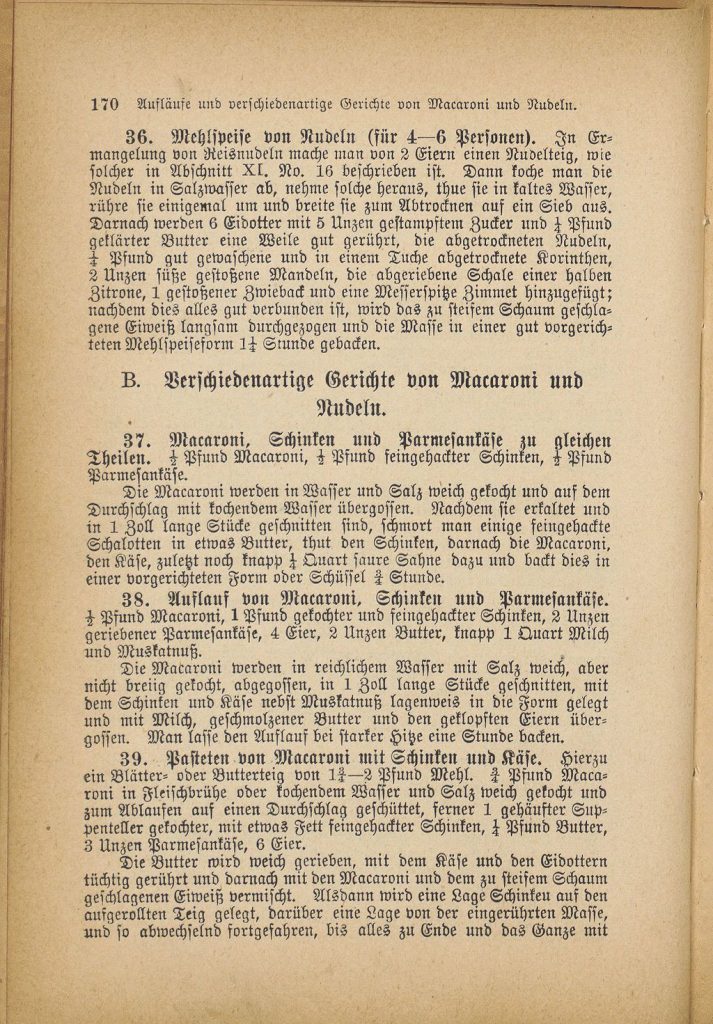
From the 1950s, these developments were taken up by the constantly growing stream of gastronomic literature. As evident from the above-mentioned example of the cookbook by Pellegrino Artusi, which is commonly seen as Italy’s first national cookbook, the gastronomic literature from Italy was received with something of a delay: Artusi’s work only appeared in Spain in translation in 1917, where it was followed by new editions in 1922, 1933 and 1948. At least based on the relevant national library catalogues, translations of this classic never appeared in France, Sweden, Norway, Poland, Finland or Czechoslovakia. In Germany, a translation was first published in 1986, in the Netherlands in 2001 and in Great Britain in 2003, i.e. that period of reception which Alan Warde (born 1949) has described as the period of the search for authenticity in ethnic cuisine. Clearly, only Spain had the conditions early on for the successful marketing of the book due to its similar culinary system and more rural, simple cooking, while the gastronomic literature of the other countries mentioned first had to translate these concepts itself. In these countries, single Italian recipes appeared instead in the different national cookbooks. Thus, the first edition of the classic cookbook by Henriette Davidis (1801–1876) from 1845 contains a recipe for “Macroni, oder Nudeln mit Parmisankäse [sic!]”.51 At the beginning of the 20th century, collections from different countries came out, for example Julius Menschl’s book Eine kulinarische Weltreise from 1913.52 From the 1920s, recipes with the adjective “Italian” appeared in women’s magazines or gastronomic journals. Specialised cookbooks on Italian cuisine were published at the same time, first in Switzerland and Austria, i.e. countries with direct contact to Italy where cultural exchange between the neighbouring peoples created the need to underline cultural differences. Even the title of Vittorio Agnetti’s book – “not just macaroni” – from 1916 shows that stereotypes had already acquired dominance. According to the forword, his goal as an Italian was to extend the culinary horizons of the reader, “to bring something genuinely new and original onto the gastronomic territory”. Cosi si mangia in Italia by Maria Leoni from 1914 and Die gute italienische Küche by Maria Gaeta-Hahne from 1928 contrasted the variety of Italian cooking with the common picture of a cuisine for poor people. They claimed that Italian cuisine even excelled that of the French in taste and richness.53
Other publications before the Second World War also sought above all to chip away at the myth that Italian food was humble and consisted mostly of polenta, pasta and tomato sauce.54 In so far as the results of the research on vitamins had become common knowledge and the restaurant menus – first after the First and then after the Second World War – became more simple, the simplicity of preparation, freshness, quality and purity of the raw ingredients became precisely the positive attributes of Italian food.55 However, this knowledge of a supposedly authentic and unadulterated cuisine only became a component of cultural capital and a sign of social distinction after the Second World War: in so far as financial considerations lost importance in the choice of food, the decisive factor was no longer just the quantity and prestige of an individual foodstuff but also its exoticism, quality, authenticity and skilled preparation. After 1950, an increased interest in “exotic” dishes became evident in journals, which in the past had only occasionally reported on other national cuisines. Here, Faustine Régnier has shown that the meanings of “exotic” and “foreign” were loaded differently in Germany and France, and that this resulted in a choice of recipes with different foci: in Germany the emphasis was on Mediterranean cooking, in France on the Arabic, African and Asian.56 The printed recipes not only had to make do with an extremely limited repertoire of Italian ingredients, but they also had to take into account the very limited culinary horizons of their readership and their still limited financial means; as a result, the books’ authenticity was incomplete. Thus, the women’s magazines studied reflect more aspirations than real practice.57

The success of specialised cookbooks suggests, however, that interest increased steadily from the 1950s: Margrit Diethelm’s book Mit Tomaten und Parmesan had admittedly already appeared in 1939, but only now achieved popularity. Graphically attractive, the book sold 44,000 times before 1955; before 1980, it went through 15 new editions. The 1963 paperback Buon Appetito published by Heyne-Verlag earned a similar response and was republished ten times before 1973. Characteristic of the development is the move towards gourmet cuisine. Thus, Diethelm’s book sported the subtitle “the aromatic Italian cuisine” and appeared in a series of cookbooks for “epicures”. While the recipes remained the same, the labelling changed, indicating a considerable shift in the perception of Italian food, which no longer appeared as the poor man’s cuisine. This was also evident in the case of the TV chef Clemens Wilmenrod (1906–1967), who was extremely popular in the 1960s, conducted research in – amongst other countries – Italy, discovered new products and delighted Germany with idiosyncratic creations of seemingly Italian provenance,58 but also in the replacement of cheap paperbacks by the laboriously produced collections of photographs that today dominate the market.
Significantly, the developments in other European countries took a similar course: in Great Britain, Mediterranean Food by the legendary cookbook author Elizabeth David (1913–1992) appeared in 1950. In 1954, came Italian Food,59 a collection of simple dishes and ingredients without pictures that still has a considerable reputation today. In France, a French translation of an Italian cookbook by Romeo Salta appeared under the title Les Plaisirs de la cuisine italienne in 1963, while in the Netherlands a short work De italiaanse Keuken by Toussie Salomonson-Keezer (d. 2005) was published in 1967. Cooking of Italy by the Paris-based American journalist Waverley Root (1903–1982)60, which in 1968 was published in a series of overviews of national cuisines by Time-Life International that is still popular today, played a particularly important role. Like the other books in the series, the volume was visually opulent. The recipes here were actually addenda or illustrations that rounded out the amusing and well-written discussion of the country and people, the regional differences in Italian cuisine and the (sometimes still exotic) ingredients. From 1969 to 1970, Danish, Swedish and German translations appeared. The latter clearly achieved some popularity as in Germany there were five new editions before 1983 with in total 45,000 copies. In 1974, Root tried unsuccessfully to build on this with The Best of Italian Cooking. However, it is extremely remarkable that of all people an American should stand out as a successful advocate of Italian cooking. The cookbook published by Sophia Loren (born 1934) in 1972 under the title In cucina con amore had an entirely different character. It contained no information on Italian culture and geography; it did not hitch its wagon to the particularities of difficult-to-obtain ingredients. Instead, it depicted Italian cuisine as uncomplicated family cooking. Short, seemingly personal stories and comments from the diva coupled this cuisine to the glamorous world of film. Loren used the cookbook after the birth of her son to present herself in a new role as faithful and caring wife and mother, as a modern Italian mamma.61 In accordance with this, the book contained photos of her preparing meals in her own kitchen, but also amongst the colourful range of Italian produce, thereby quoting a well-known pattern of depiction. This and the many references to everyday topics granted the book a considerable degree of authenticity that underlay its success. All of these works took a direction adopted by increasing numbers of authors and publishers, who sometimes even chose identical titles, for example the French cookbook Cuisine à l’italienne: 300 recettes from 1974. However, one must acknowledge that well into the 1980s, these new works still only trickled from the printing presses. The market for books on Italian cuisine was still relatively small; only in the 1980s did the boom begin, which culminated in the nigh-on flood of Italian cookbooks at the beginning of the 21st century. Up until the 1970s, the diffusion of Italian recipes and authentic ingredients were promoted by magazines or instructions in general or thematic cookbooks.62 After an early peak in the 1950s, the number of pertinent recipes also increased continually after 1970 in the journals studied so far.63 If one looks more closely at their design, one can see that the portion of Italian recipes in Germany was considerably more than in the French magazines after the Second World War. There are various reasons for this. A central factor might be the above-mentioned differences in the meaning of “exoticism” in the two countries. For all the regional differences, Italian cuisine was probably less exotic for the French due to the geographical proximity between the two countries and the similarities in the products available than for the West German post-war society, for which even garlic and Mediterranean herbs were new elements to which one had to grow accustomed. However, in both countries towards the end of the 1950s, the desire to know about the food of other cultures developed into a sign of cultural competence, while also reflecting the wanderlust that many could not satisfy through travel due to economic reasons. Authenticity, the permanent extension of one’s culinary horizons and the lifelong education of the palate now became cultural goods which one could use to express one’s lifestyle. At the same time, chefs became media stars and food the constant topic of mass-media communication. After 1945, restaurant criticism became a permanent feature in the Sunday editions of British newspapers and such respectable papers as the German Zeit and the French Le Monde; the restaurant critic was born, and the number of gastronomic magazines and guides increased.64
Food became a subject matter that not only dominated the conversations of housewives but was also a refined topic at parties and social occasions.65 Symptomatic of this was the emergence of TV chefs and their development into media stars: the pattern for this again came from the USA, which produced the first TV chef – Marcel Boulestin (1878–1943), who was on air between 1937 and 1939. Countless others followed,66 for example, in the 1960s, Julia Child (1912–2004) in the USA and Clemens Wilmenrod in Western Germany. How many people actually used the recipes, which ones they prepared, or how many followed the restaurant tips, is – however – questionable. According to a poll in Great Britain in 1966, 91 per cent of buyers of women’s magazines read the recipes printed there, but only 14 per cent of them tried them within the next 14 days.67 In other words: the media industry was deeply involved in the creation and maintenance of the gastronomic discourse but also in its democratisation.68 Its influence on the actual changes in lifestyle was, however, somewhat limited or, at best, unfolded via a protracted trickle-down effect. This impact could only be felt anyway after the creation of a corresponding culinary infrastructure with shops selling Italian foodstuffs and the necessary cooking implements or, put differently, with the globalisation of the foodstuffs industry, which made, for example, mozzarella ubiquitous.69 Here, alongside the migrants, the TV chefs’ connections to the food industry played a decisive role. Wilmenrod, for example, promoted tomatoes – not because of their Italian flair, but because the German marketing cooperatives were sitting on mountains of tomatoes and paid him for it. Other celebrities even created brands that carried their name.70 It is characteristic that the promotion of a foreign cuisine and new products went hand in hand, which all in all meant the commercialisation of the ethnic and the establishment and spread of structures of production and trade.
This was particularly true for the Italian ingredient par excellence, the tomato. It first arrived in Italy from Latin America in the 15th century and in the middle of the 19th century came to northwestern Europe via Austria. Here, it quickly spread after the First World War. The expansion of the Italian tinning industry began at the end of the 19th century with the tomato. Between 1897 and 1908 alone, this increased its production tenfold.71 At the same time, it spread to northern Europe: the areas in Germany planted with tomatoes grew from 24.7 to 1,388 hectares between 1913 and 1927.72 From the 1920s onwards, this industry processed them into tomato paste or puree, whereby the so-called Italian tomato puree was basically transformed into a ready-made sauce through the addition of dill, basil, salt or celery.73 In the 1940s, the “strongly concentrated tomato sauce associated with spaghetti” had already emerged as a new product in the tinning industry, which clearly drew on American examples.74 Noodle and spaghetti dishes with tomato sauce were already en vogue before the end of the First World War and were seen as elegant: for example, the German Blatt der Hausfrau from 1938 portrayed a couple eating spaghetti in a dignified atmosphere,75 while in 1939 the stylish magazine Die Dame showed a chef in a restaurant in Emilia-Romagna preparing spaghetti.76

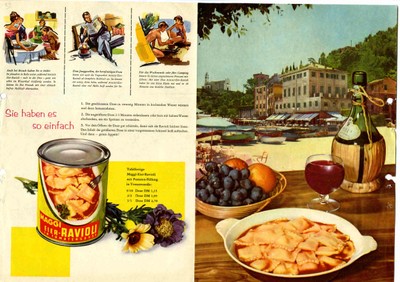
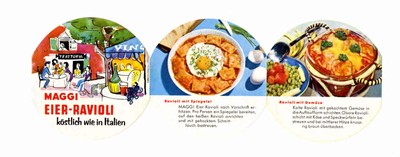
The industry used the market opportunity with these tomato products and after the Second World War created ready-made meals based on them: for example, in 1957, the Maggi food cooperation introduced tinned ravioli to the German market; in 1961, Miracoli – a partially ready-made meal, which imitated Spaghetti á la napoletana – followed.77 In the Netherlands, similar products only appeared a decade later.78 Other dishes spread via America to northern Europe. This is above all true of the pizza, which – emerging from the little Italies, the Italian communities of large American towns – had become popular in the USA. The pizzerias there played a decisive role in the popularisation of the pizza. Indeed, it was also in the USA that the frozen pizza was patented, which became an international bestseller.79 It was introduced into Germany in 1973. Sales were initially 2,800 tonnes, but this rose by 1980 to 23,000 tonnes and by 2007 to 253,000 tonnes. Today, every German citizen eats on average two frozen pizzas per week.80
The Italian Institute for Foreign Trade (I.C.E.) promoted the distribution of Italian foodstuffs and the profile of Italian cuisine over the long term through widespread advertising with leaflets and brochures. These publications, which were created through close cooperation with the Italian academy for gastronomy, claimed that the “dawn of the culinary art, i.e. the science and art of fine eating” emerged with the “epoch of the Italian Renaissance”. They postulated that:
Die Freude an der guten Küche ist, wie jene der Kunst, tief auf der Halbinsel verwurzelt. Sie harmoniert außerdem in den verschiedenen Regionen mit der Milde des Klimas, der Schönheit der Orte, der Verschiedenheit der Geschmäcker und den Talenten der städtischen und ländlichen Bevölkerung: um es kurz zu sagen, mit der Vielfalt des italienischen Genusses.81

Here, one can see clear echoes of motifs within the image of Italy that ran through the travel literature of the 18th century. At the same time, this offered models for tourist advertising.Although the variety of Italian cooking was presented in regional portraits, at the same time this view was increasingly constricted to the “wide-ranging and colourful gamut” of dishes based around the tomato. Tomato sauce, for which Artusi’s cookbook of 1891 had only given one recipe, had by 1950 progressed to the centre of that which was understood to be Italian cuisine.
Pizzeria und Osteria in Germany: The Spread of the Italian Restaurant after 1945
This leaves the question of how Italian restaurants came to be such a dominant part of the picture of European cities. The majority of these are the children of the post-war period, even if, as mentioned above, there were already Italian establishments in London, Berlin and Munich in the 19th century. These eateries offered Italian flair but not necessarily “authentic” Italian food. This would change with the restaurants that spread from the 1950s onwards. For Germany, one must refer to the first pizzeria in Heidelberg which opened in 1953, supposedly as a meeting place for the GIs stationed there who already knew this type of restaurant from the American Little Italies. In 1958, the first pizzeria in Sweden followed. This type of restaurant had roughly plastered walls, checked tablecloths, fishing nets and Chianti bottles – those elements which Italians believed would give the guests the impression for an evening that they were in Italy.82


There are more precise figures for the spread of Italian restaurants for Berlin, Munich and Amsterdam: they indicate considerable differences between southern and western Germany, and between Germany and the Netherlands. It is notable here that the Italians had such considerable and steady success even though Turks and Yugoslavs soon outnumbered them among the gastarbeiter.83 The spread of Italian and other ethnic eateries does not, however, correspond exactly to the significance of Italians in the migratory movements after 1945. For example, in the post-war period, the Chinese were predominant in the specialised ethnic restaurants even though they only played a marginal role in the post-war migration in Germany, Britain and the Netherlands.84 In London, for example, one tenth of all restaurants already had an Italian character in 1901, but by 1914 Chinese eating places dominated the scene.85In Amsterdam, the number of Italian restaurants first exceeded those of Asians in 2004. Here, Indonesian cooking played an important role due to immigration from the former colonies,86while in London the large number of immigrants from the Commonwealth was visible and contributed to the central importance of Indian restaurants.87
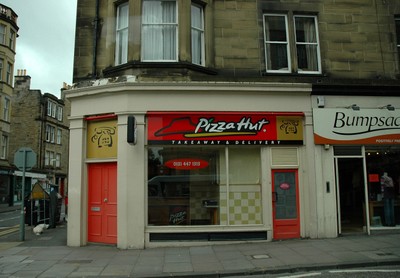
In other words: the decisive factor was not the actual movements of migration and the raw number of immigrants but the strength of the ethnic economies and networks they built. Above all in the 19th century, the foundation of “ethnic” restaurants grew out of the attempt to supply compatriots, but increasingly the Italians saw in them the opportunity to set up new businesses in a foreign country. This was the case in Western Germany in the 1970s when economic developments caused many of the Gastarbeiter (migrant workers) who had arrived in the 1950s and 1960s to lose their jobs. It did not require too much culinary knowledge to open a simple restaurant and the capital needed was small enough that friends or families could help provide it.88 For long-term development, it was crucial whether and how an ethnic cuisine created a particular image and social prestige. In general, migrant cuisine has a low social status, which is reflected, for example, in its low prices.89 However, in contrast to other migrant cuisines, the Italian managed to improve its social status: today, Italian restaurants occupy the best sites in European cities and the high-end segment; this is not true of their Turkish and Chinese counterparts. Thus, the Turkish-run eateries barely influenced the lively restaurant culture of the West German capital even though Turks form the largest migrant group. Their eateries are above all in the cheap segment of the fast-food catering and kebab shops, which has created a significant supply industry.90 Clearly, therefore, there is a hierarchy of migrants or different national cuisines. This hierarchy is different in each European country and the individual dishes of ethnic cuisines have different values depending on the country. Thus, pizza in the Netherlands and Great Britain is unanimously seen as fast food, and its place of sale a takeaway outlet; here, the Pizza Hut chain, originally established in the USA, has had considerable success. While in Germany pizza is certainly increasingly ordered from a takeaway, at the same time the pizzeria has been preserved as a cosy restaurant visited by families. In addition, as a result of significant diversification, luxury restaurants and pizzerias have developed. In the end this is a result of changes in the economic framework. Through the growing competition against other ethnic cuisines with a considerably lower price, Italian restaurants came under considerable pressure in the 1990s. As part of this growing competition, the restaurants diversified, creating a new type of discerning and expensive restaurant that had little in common with the simple eateries of the 1960s and 1970s and had considerably higher standards. Within this, the earlier economic pressure gave way to the stylisation of the cucina povera, which is not cheap due to the use of high-quality regional products, but which modern ascetic epicures celebrate as the height of simplicity.91 This is also connected to the impact of physical and dietary practices within the lifestyles of different social strata as described by the French sociologist Pierre Bourdieu (1930–2002) in his book on “the subtle differences”. According to him, health and slimness play a central role for the affluent, upper social classes. Fat-inducing pizza does not fit well with this; instead, the luxury restaurants celebrate Italian cuisine with light dishes and small portions. These aspects have been made popular not least by Ancel Keys (1904–2004). In cooperation with several European colleagues, he proved in sweeping epidemiological studies that the diets of Mediterranean countries, and above all of Italy, which are low in animal fat and rich in vegetables, olive oil and fish, are accompanied by a low risk of cardiovascular diseases.92Together with his wife Margaret, he published the cookbook Eat and Stay Well in 1959,which soon came out in different European versions, for example in Finland and Great Britain in 1959, and in Germany under the title Der gesunde Feinschmecker in 1961. While the book sought to sum up the ideals of Italian cuisine, in practice the recipes in it had little to do with Italian cooking and even less with culinary pleasure.93 It was only concerned with strict calorie counting and the reduction of fat and meat consumption at every price; at least in the German edition, the recipes hardly evoke the Italian taste. However, it was very successful: in Germany alone there were three new editions before 1968. The basic tenor accorded with the spirit of the age and its image of controlled and disciplined eaters. The number of similar cookbooks has so multiplied that one can barely keep track of them. However, the term which Keys inspired – “Mediterranean cuisine” – has become firmly established in dietary medicine,94 despite all the changes whereby the Mediterranean area, too, has witnessed a growth in the consumption of animals fats and meat. This does not seem to have damaged the contemporariness of the model presented and its commercial use: in 2006, the Spanish Ministry for Agriculture and Diet published a new official edition.
Conclusion
As has been shown, long before the beginning of the supposed Italian wave of the 1950s, a nuanced knowledge of Italian cuisine existed. This knowledge was carried up the culinary social scale and transformed into a form of status-defining consumption based on the understanding of “genuine” and “authentic” cuisine. The traditionalism of Italian cuisine emerged as a co-construction of the promotion of foreign trade and tourism, which in the 1960s fitted well to a culturally ambitious strata of intellectuals with anti-bourgeois pretentions that adopted this new form of eating. At the same time, a thorough commercialisation of Italian products and dishes took place in catering chains and the food industry, the beginnings of which are perhaps to be found in the USA. They exerted a strong unifying influence. However, the reception of Italian cuisine and its dishes was by all means different in the different European countries. Altogether, Italian cuisine was able to make clear its diversity and to mobilise the idea that protecting cultural goods, health and the environment was socially beneficial in order to ensure its own place within the increasing diversification of ethnic cooking.
Today, Italian cooking is in some ways the smallest common culinary denominator of a European society whose dietary habits are otherwise extremely individualised and commercialised. With all the national differences in the reception of Italian cooking, its structure nevertheless offers throughout Europe – if not the world – a recognisable and therefore seemingly reliable basis, at the same time opening points of identification with its broad range of culinary possibilities. The discerning, the health-conscious, the traditional, the hearty but also the fast Italian cuisine are variants whose common basis is socially accepted, even when the actual consumption takes place at entirely different social and financial levels and accordingly an enormous variety of Italian products are offered. The common ground of all these variations is still probably to be found in Italian cuisine’s claim to be traditional and thus pure, genuine and simple, whereby it meets the desire for home.
Appendix
Notes
- On this see the seminal article by Fischler, Food 1988, p. 275, as well as Scholliers, Food, Drink and Identity 2001 and Karmasin, Botschaft 2001.
- Levi-Strauss, L’Origine 1968.
- Douglas, Deciphering 1972.
- For example, on his homepage, Oliver mentions the Italian Contaldo Gennaro as his culinary mentor; his cookbooks contain numerous Italian-style recipes. Moreover, in 2007, he published Jamie’s Great Italian Escape, which was based on his experiences during a long journey to Italy.
- Oliver, Teapot Trail 1994, p. 14.
- Lukins, USA-Kochbuch 2004, p. 332.
- Otterloo, Immigrants 1987; Otterloo, Restaurants 2002; Tanner, Makkaroni-Esser 1997; Mestdag, Italiaans 2002; Mestdag, Introducing 2002; Möhring, Gastronomie 2007; Möhring, Food 2008. On examples for Germany, Switzerland and Austria, see: Spiekermann, Küche 2002; Sandgruber, Nationalspeisen 1997, Tanner, Makkaroni-Esser 1997.
- This article draws on earlier work on the spread of Italian cuisine in Germany based on a thorough examination of the primary sources, while the comparison within Europe employs above all secondary sources, which only here and there could be augmented with primary sources. There are now numerous studies of the history and development of Italian cuisine, among which the most noteworthy are those by Massimo Montanari and Alberto Capatti, Carol Helstosky and the recent translation into German of the work by John Dickie. Capatti / Montanari, La cuisine 2002; Dickie, Delizia 2008; see also Helstosky, Garlic 2004; Peter, Cucina 2007; DeMichielis, Osteria 1998; Amandonico, Pizza 2001; Mestdag, Italiaans 2002; Mestdag, Introducing 2002. The culinary export of dietary habits has been the subject of historical and sociological research since the 1980s, most of which examined questions of the history and sociology of migration rather than the history of diet. Calvo, Food 1985; Kershen, Food 2002; Diner, Hungering 2001; Levenstein, Response 1985; Colpi, Factor 1991; see also Gabaccia, Ethnic Food 1998; Mestdag Italiaans 2002. As one might expect, there are a large number of studies for countries with a high number of migrants such as the USA, Great Britain and the Netherlands. Otterloo, Immigrants 1987; Otterloo, Restaurants 2002; Otterloo, Position 2005; Panayi, Immigrant 2005. This trend has strengthened under the impact of globalisation. On this, see above all the works of the sociologist Alan Warde; for example Warde, Eating Globally 2000.
- Herrmann, Gleicht sich 1994; Wöhlken, Nahrungsmittelverbrauch 1981.
- On the history of the Italian restaurant in Germany, see Thoms, Sehnsucht 2006; Möhring, Gastronomie 2007; Möhring, Food Migration 2008.
- Arce / Marsden, Construction 1993.
- Atkins / Bowler, Food 2001, pp. 45–53; Kloos, Dialectics 2000; Burgers, World 2000.
- See Römhild, Fast food 2008; Slow Food Deutschland e.V., online: http://www.slowfood.de/ [09/08/2010]; Christliches Kinder- und Jugendwerk “Die Arche” e.V., online: http://www.kinderprojekt-arche.de/ [26/06/2012].
- See Sanchez, Carnets 2000.
- Mennell, Kultivierung 1988, pp. 102–106.
- Spiekermann, Küche 2002.
- Siehe Bittmann, Vive 1998.
- Csergo, Emergence 1999.
- On the Italian relationship to French cooking, see Dickie, Delizia 2008, pp. 212–218.
- On this, see Helstosky, Garlic 2004, p. 270; Dickie, Delizia 2008, pp. 238–261.
- Mintz, Sweetness 1985; Mennell / Murcott / Otterloo, Sociology 1992, pp. 75–80; Calvo, Migration 1982.
- Black, Grand Tour 2003.
- Goethe, Reise 1997, above all pp. 55, 112, 312–315.
- See the chapter on food in Black, Grand Tour 2003.
- See Spode, Reiseweltmeister 2003, p. 54.
- See Baedeker, Italien 1866, p. 240 and pp. XXXI–XXXIII.
- Baedeker, Italien 1926, pp. V–XIX.
- Barth, Osteria 1908.
- Capatti, Nascita 2007, p. 283; on the French example, see above all p. 288.
- Warde, Continuity 2003.
- See, for example, Höpfner, Außenhandel 1993, pp. 38–41.
- Ibidem, p. 39, and Fontana-Hentschel, Torta 2000 for a comment on this.
- Csergo, Emergence 1999, p. 509.
- English examples can be found at http://fxcuisine.com/Default.asp?Display=98 [05/08/2010], German examples at Ullstein Bilderdienst, online http://www.ullstein-bilderdienst.de [05/08/2010].
- Schildt, Wohlstand 1996, p. 70.
- The numbers are in Burnett, Eating Out 2004, p. 269
- Gundle, Hollywood Glamour 2002.
- Herkendell, Kulturaustausch 1996.
- Morandi, Italiener 2004, pp. 83–88, 91–95.
- For example, after 1780, Auerbachs Keller in Leipzig was an Italian wine tavern; see Peter, Cucina 2007; see also the references in Burnett, Eating Out 2004; Morandi, Italiener 2004, pp. 83–88, 91–95.
- Bovenkerk / Ruland, Eismacher 2007, p. 675.
- Burnett, Eating Out 2004, p. 93ff.
- DeMichielis, Osteria 1998, p. 8.
- Wennemann, Arbeit 1999, p. 152.
- Bermani / Bologna / Mantelli, Proletarier 1997 , pp. 138–140 and the site of the Bergbaumuseum, Bochum, online: http://www.angekommen.com/italiener/index.html [05/08/2010], as well as Wagenführ, Italien 1943, pp. 28–31.
- Wagenführ, Italien 1943, pp. 30–31.
- Serafini, Ernährung 1897, pp. 30–31.
- On the idea of a close connection between land and national character and the resulting differences in performance, see, in particular, Scheunert, Volksernährungsfragen 1937, p. 520f.
- See, above all, Sorcinelli, Identification Process 2001; also Dickie, Delizia 2008, pp. 308–321.
- [Anonymous], Die Ernährung der Völker 1936; [Anonymous], Die Ernährungsweise von vier europäischen Völkern 1939; Hintze, Ernährungsverhältnisse 1936.
- “macroni, or noodles with Parmisan [sic!] cheese”. Davidis, Kochbuch 1845, p. 113.
- Menschl, Weltreise 1913. See also Richter, Nationalgerichte 1935; Hintze, Ernährungsverhältnisse 1936; [Anonymous], Die Ernährung der Völker 1936; [Anonymous], Die Ernährungsweise von vier europäischen Völkern 1939.
- Agnetti, Makkaroni 1916, Einleitung; see also Gaeta-Hahne, Küche s.d. [1928].
- For an example, see Lutze, Plauderei 1904; [Anonymous], Gastronomische Bilder aus Neapel 1908.
- Diethelm, Mit Tomaten 1953.
- Régnier, Imagination 2003; on Germany, see also Wildt’s analysis of the “Blatt der Hausfrau”: Wildt, Wohlstand 1996, pp. 184–190 and 197–202.
- This is also true cum grano salis for the cookbooks which Inge Mestdag chose for the basis of her investigation; see, too, the discussion in Otterloo, Position 2005.
- On Wilmenrod, see http://www.ndr.de/unternehmen/organisation/ndr_geschichten/wilmenrod114.html[03/11/2010].
- On David, see Kippenberger, Wie England 2009.
- Root lived in Paris from 1927 to 1934 and after 1945 until his death and worked originally as the European correspondent of the Chicago Tribune, but published at the end of his life, however regular columns in the International Herald Tribune, in which he philosophised about food.
- On this, see Dickie, Delizia 2008, pp. 351–356.
- Inge Mestdag therefore used the most important Belgian cookbook for her analysis and Faustine Régnier and Michael Wildt employed the rapidly changing women’s magazines in order to trace the reception of Italian cuisine. In her analysis of German and French women’s magazines, Régnier has emphatically indicated that Italian cooking enjoyed considerable respect as early as the Renaissance, which was reflected by the comparatively high number of Italian recipes in the magazines since the 1930s.
- Régnier, Spicing up 2003, p. 209.
- See Warde, Continuity 2003; Drouard, Geschichte 2008, p. 119; Burnett, Eating out 2004, pp. 271–273.
- On this, see the autobiographical picture in Siebeck, Das Haar 1992, p. 101.
- A list of British TV chefs can be found at http://uktv.co.uk/food/chef/aid/530804[04/08/2010]; for the history of American TV chefs, see Collins, Cooking Shows 2009 and: http://www.nytimes.com/interactive/2009/08/02/magazine/20090802_COOKING_INTERACTIVE.html[04/08/2010].
- Burnett, Eating out 2004, p. 271.
- Stephen Mennell places particular emphasis on this argument; see Mennell, Kultivierung 1988, pp. 351–366.
- Using the example of Amsterdam, Anneke van Otterloo in particular draws attention to this; see Otterloo, Position 2005.
- Drouard, Geschichte 2008, p. 129ff.
- Capatti, Taste 1999, p. 497.
- Lehmann, Tomate 1953, p. xx.
- Jacobsen, Handbuch 1926, p. 455.
- Ziegelmayer, Ernährung 1947, p. 483.
- Blatt der Hausfrau 5 (1937/1938), online: Bild Nr. 01074622, see http://ullsteinbild.de[05/10/2010].
- Die Dame 10 (1939), online: Bild Nr. 01073716, see http://ullsteinbild.de [05/10/2010].
- Wildt, Wohlstand 1996, pp. 144–145.
- Otterloo, Chinese and Indonesian 2002, p. 160.
- see the patent at http://www.google.com/patents?id=cn1oAAAAEBAJ&printsec=abstract&zoom=4#v=onepage&q=&f=false [04/08/2010].
- See http://tiefkuehlkost.de/lexikon/pizza/ [04/08/2010].
- “The joy of good cuisine is, like that of art, deeply rooted on the peninsular. Moreover, it harmonised in the different regions with the climate, the beauty of the locations, the variety of tastes and the talents of the urban and rural population: to put it briefly, with the diversity of Italian enjoyment” [trans. by C.G]. [Anonymous], Essen nach italienischer Art s.d., p. 5f.
- De Michielis, Osteria 1998, p. 14.
- Herbert, Ausländerbeschäftigung 1986, p. 189.
- Del Boca / Venturini, Italian Migration 2005, pp. 305–306.
- Panayi, Immigrant 2005, p. 192.
- Otterloo, Position 2005, p. 183.
- Panayi, Immigrant 2005, p. 196.
- Pichler, Pioniere 2002, p. 261.
- See Barlösius, Soziologie 1999; p. 156; Levenstein, Response 1985. John Burnett has emphatically demonstrated that the Italian restaurants above all settled in the areas inhabited by artists and students, who had relatively little money but did not want to eat everyday fare. See Burnett, Eating Out 2004, pp. 279–281.
- On the Turkish supply industry, see, above all, Seidel-Pielen, Aufgespießt 1996, p. 87ff.
- Above all, see Baur / Furtwängler, Reichtum 1998.
- Keys, Epidemiological Studies 1966; Keys, Seven Countries 1980.
- Keys / Keys, Feinschmecker 1961.
- This coupling was established with the new edition of Keys’s works from 1975 with the title How to eat well and stay well the Mediterranean way.
Bibliography
- [Anonymous:] Die Ernährung der Völker, in: Zeitschrift für Volksernährung 14 (1939), p. 54.
- [Anonymous:] Die Ernährungsweise von vier europäischen Völkern, in: Zeitschrift für Volksernährung 11 (1936), p. 54.
- [Anonymous:] Essen nach italienischer Art, s.l., s.d.
- [Anonymous:] Gastronomische Bilder aus Neapel, in: Kochkunst und Tafelwesen 10 (1908), pp. 136–137.
- [Anonymous:] Die italienische Küche, in: Die praktische Berlinerin 24 (1927), no. 11, p. 18.
- Agnetti, V[ittorio]: Nicht nur Makkaroni! Italienische Nationalspeisen unter besonderer Berücksichtigung der traditionellen und charakteristischen Gewohnheiten in den verschiedenen Landesteilen: Piemont – Ligurien – Lombardei – Venedig – Reggio Emilia Romagna – Toskana – Rom – Neapel – Sizilien – Sardinien, Zürich 1916.
- Amandonico, Nikko: La Pizza: Ein Blick in die Seele von Neapel, Munich 2001.
- Arce, Alberto / Terry K. Marsden: The Social Construction of International Food: A new Research Agenda, in: Economic Geography 69 (1993), pp. 293–311.
- Atkins, Peter / Bowler, Ian: Food in Society: Economy, Culture, Geography, London 2001.
- Baedeker, K[arl]: Italien: Handbuch für Reisende, Coblenz 1866, vol. 2.: Mittel-Italien und Rom.
- Baedeker, K[arl]: Italien von den Alpen bis Neapel: Kurzes Reisehandbuch, 7th ed., Leipzig 1926.
- Barlösius, Eva: Soziologie des Essens: Eine sozial- und kulturwissenschaftliche Einführung in die Ernährungsforschung, Weinheim 1999.
- Barth, Hans: Osteria: Ein Führer durch Italiens Schenken von Verona bis Capri, Stuttgart 1908.
- Baur, Eva Gesine / Furtwängler, Irène: Italien: Der Reichtum der einfachen Küche, 3rd ed., Munich 1998.
- Bermani, Cesare / Bologna, Sergio / Mantelli, Brunello: Sozialgeschichte der italienischen Fremdarbeit in NS-Deutschland 1937 bis 1943: Übersetzt von Lutz Klinkhammer: Mit einem Vorwort von Karl Heinz Roth, Berlin 1997.
- Bittmann, Mark: Vive la Pizza: An Italian Classic gets a French Makeover, in: New York Times from 3. September 1998, p. F1.
- Black, Jeremy: Italy and the Grand Tour, New Haven, CT et al. 2003.
- Bovenkerk, Frank / Ruland, Loes: Italienische Eismacher in Europa seit dem späten 19. Jahrhundert, in: Klaus Bade et al. (eds.): Enzyklopädie Migration in Europa: Vom 17. Jahrhundert bis zur Gegenwart, Munich 2007, pp. 661–678.
- Burgers, Jack: A World of Difference: Between the Global and the Local, in: Don Kalb et al. (eds.): The Ends of Globalization: Bringing Society Back In, New York et al. 2000, pp. 239–251.
- Burnett, John: England Eats Out: A Social History of Eating Out in England from 1830 to the Present, Edinburgh 2004.
- Calvo, Manuel: Migration et alimentation, in: Social Science Information 21 (1982), pp. 383–446.
- Capatti, Alberto: Nascita del turismo gastronomico in Italia, in: Claudio Stroppa (ed.): Cibo, società e scienza dell’alimentazione, Rome 2007, pp. 283–311.
- Capatti, Alberto: The Taste for Canned and Preserved Food, in: Jean-Louis Flandrin / Massimo Montanari: Food: A Culinary History from Antiquity to the Present, New York 1999, pp. 492–499.
- Capatti, Alberto / Montanari, Massimo: La cuisine italienne: Histoire d’une culture, Paris 2002.
- Carpenter, Kenneth J. (ed.): Pellagra, Stroudsburg, PA 1981 (Benchmark Papers in biochemistry 2).
- Chiapparino, Francesco: Industrialization and Food Consumption in United Italy: A Review, in: Adel P. den Hartog (ed.): Food Technology, Science and Marketing: European Diet in the Twentieth Century, East Linton 1995, pp. 139–155.
- Collins, Kathleen: Watching What We Eat: The Evolution of Television Cooking Shows, New York 2009.
- Colpi, Terri: The Italian Factor: The Italian Community in Great Britain, Edinburgh 1991.
- Csergo, Julia: The Emergence of Regional Cuisines, in: Jean-Louis Flandrin: Food: A culinary History, from Antiquity to the Present, New York 1999, pp. 500–515.
- Davidis, Henriette: Praktisches Kochbuch: Zuverlässige und selbstgeprüfte Recepte der gewöhnlicheren und feineren Küche, Osnabrück 1845.
- Del Boca, Daniela / Venturini, Alessandro: Italian Migration, in: Klaus F. Zimmermann (ed.): European Migration: What Do We Know?, New York 2005, pp. 303–336.
- DeMichielis, Stefano: Osteria Italiana: Wo die Liebe zur italienischen Küche begann, München 1998.
- Dickie, John: Delizia! Die Italiener und ihre Küche: Geschichte einer Leidenschaft, Frankfurt am Main 2008.
- Diethelm, Margrit: Die würzige italienische Küche, Munich 1973.
- Diethelm, Margrit: Mit Tomaten und Parmesan: Italienische Rezepte für jedermanns Küche, s.l. [Munich] s.d [1953].
- Diner, Hasia R.: Hungering for America: Italian, Irish and Jewish Foodways in the Age of Migration, Cambridge, MA 2001.
- Douglas, Mary: Deciphering a meal, in: Daedalus, Winter, 101 (1972), pp. 61–81 [also: in: Mary Douglas: Implicit Meanings, London 1975, pp. 249–275].
- Drouard, Alain: Geschichte der Köche in Frankreich, Stuttgart 2008.
- Fischler, Claude: Food Habits, Social Change and the Nature/Culture Dilemma, in: Social Science Information 19 (1980), pp. 937–953.
- Fischler, Claude: Food, Self and Identity, in: Social Science Information 27 (1988), pp. 275–292.
- Fontana-Hentschel, Elisabetta: Torta tedesca: Randbemerkungen zu einigen Unterschieden zwischen deutscher und italienischer Eßkultur, in: Zibaldone: Zeitschrift für italienische Kultur der Gegenwart 30 (2000), pp. 77–88.
- Gabaccia, Donna R.: We Are What We Eat: Ethnic Food and the Making of Americans, Cambridge, MA 1998.
- Gaeta-Hahne, Maria: Die gute italienische Küche (La buona Cucina Italiana), Vienna s.d. [1928].
- Goethe, Johann Wolfgang von: Italienische Reise, 4th ed., Munich 1997.
- Gundle, Stephen: Hollywood Glamour and Mass Consumption in Postwar Italy, in: Journal of Cold War Studies 4 (2002), pp. 95–118.
- Helstosky, Carol: Garlic & Oil: Food and Politics in Italy, Oxford et al. 2004.
- Helstosky, Carol: Recipe for the Nation: Reading Italian History through la Szienza in Cucina and la Cucina futurista, in: Food and Foodways 11 (2003), pp. 113–140.
- Herbert, Ulrich: Geschichte der Ausländerbeschäftigung in Deutschland 1880 bis 1980: Saisonarbeiter, Zwangsarbeiter, Gastarbeiter, Berlin et al. 1986, pp. 188–189.
- Herkendell, Andreas W.: Deutsch-italienischer Kulturaustausch in der Schlagerwelt der fünfziger und sechziger Jahre, in: Italienisch: Zeitschrift für italienische Sprache und Literatur 18 (1996), no. 36, pp. 74–87.
- Herrmann, Roland: Gleicht sich der Nahrungsmittelverbrauch international an? Ein Messkonzept und empirische Ergebnisse für ausgewählte OECD-Länder, Jahrbuch der Absatz- und Verbrauchsforschung 1994, pp. 371–390.
- Hintze, Kurt: Die Ernährungsverhältnisse bei den verschiedenen Völkern zu den verschiedenen Zeiten, in: Zeitschrift für Volksernährung 11 (1936), pp. 145–147.
- Hirsch, August: Handbuch der historisch-geographischen Pathologie: Die chronischen Infections- und Intoxications-Krankheiten, parasitäre Wundkrankheiten und chronischen Ernährungs-Anomalien vom historisch-geographischen Standpunkte und mit besonderer Berücksichtigung der Aetiologie, Stuttgart 1883, vol. 2.
- Höpfner, Bernd: Der deutsche Außenhandel 1900–1945: Änderungen in der Waren- und Regionalstruktur, Frankfurt am Main et al. 1993 (Europäische Hochschulschriften, Reihe 5: Volks- und Betriebswirtschaft, 1403).
- Jacobsen, Eduard: Handbuch für die Konservenindustrie, Konservenfabriken und den Konserven-Grossbetrieb, Berlin 1926, vol. 1–2.
- Kaiser-Heyne, Helga: “Pastaschuta”: Vom Ursprung eines deutschen Leibgerichts, in: Ulrike Zischka et al. (eds.): Die anständige Lust: Von Eßkultur und Tafelsitten, Munich 1994, pp. 512–518.
- Karmasin, Helene: Die geheime Botschaft unserer Speisen: Was Essen über uns aussagt, Bergisch Gladbach 2001.
- Kershen, Anne J. (ed.): Food in the Migrant Experience, Aldershot 2002.
- Keys, Ancel et al.: Seven Countries: A Multivariate Analysis of Death and Coronary Heart Disease, Cambridge, MA et al. 1980.
- Keys, Ancel et al.: Epidemiological Studies related to coronary heart disease: Characteristics of men aged 40–59 in seven Countries, Tampere 1966 (Acta Medica Scandinavia, Supplementum 460).
- Keys, Ancel / Keys, Margaret: Der gesunde Feinschmecker: Das Buch eines Mediziners für den Arzt und die Laien über das gefährliche Fett und die Zusammenhänge von Herzkranzgefäßerkrankungen und Ernährung, zugleich ein Kochbuch mit vielen Rezepten und Speiseplänen für den Feinschmecker und auf Diätkost Angewiesenen, Stuttgart 1961.
- Kippenberger, Susanne: Wie England kochen lernte, in: Der Tagesspiegel vom 1. November 2009, online: http://www.tagesspiegel.de/weltspiegel/essen-trinken/wie-england-kochen-lernte/1625258.html [05/08/2010].
- Kittel, Walter / Schreiber, Walter / Ziegelmayer, Wilhelm: Soldatenernährung und Gemeinschaftsverpflegung, Dresden et al. 1939.
- Kloos, Peter: The Dialectics of Globalization and Localization, in: Don Kalb et al. (eds.): The Ends of Globalization: Bringing Society Back In, New York et al. 2000, pp. 281–297.
- Lehmann, Christian: Die Tomate, Leipzig 1953.
- Leoni, Maria: Cosi si mangia in Italia: Italienische Küche, 6th–7th ed., Rome 1913.
- Levenstein, Harvey: The American Response to Italian Food, 1880–1930, in: Food & Foodways 1 (1985), pp. 1–24.
- Levi-Strauss, Claude: Mythologica III: L’Origine des manières à table, Paris 1968 (German edition: Mythologica III: Der Ursprung der Tischsitten, 5th ed., Frankfurt am Main 2008).
- Loren, Sophia: In cucina con amore, Milan 1971 [German edition: Komm, iß mit mir, Berlin 1972].
- Lukins, Sheila: USA-Kochbuch, Königswinter 2004.
- Lutze, Arthur: Kulinarische Plauderei aus Italien, in: Kochkunst 6 (1904), p. 231.
- Mennell, Stephen: Die Kultivierung des Appetits: Die Geschichte des Essens vom Mittelalter bis heute, Frankfurt am Main 1988.
- Mennell, Stephen / Murcott, Anne / Otterloo, Anneke H. van: The Sociology of Food: Eating, Diet and Culture, in: Current Sociology 40 (1992), pp. 1–148.
- Menschl, Julius: Eine kulinarische Weltreise: Kulinarische und kulturelle Studien über Nationalgerichte und -getränke, Hotel-, Restaurantwesen, Cafés und Volksspeisehäuser in Nord-, Zentral- und Südamerika, Asien, Australien, Afrika und Europa, Leipzig 1913, vol. 1.
- Mestdag, Inge: Introducing Italian Cuisine into Flemish Home-meal Cooking in the Twentieth Century: An Analysis of the Flemish Cook Bible Ons kookboek (1927–1999), in: Food & History 1 (2002), pp. 156–178.
- Mestdag, Inge: Italiaans op Mijn Bord? Een Onderzoek naar de Receptie van de Italiaanse Keuken in België aan de Hand van het Maaltijdpatroon, in: Tijdschrift voor Sociologie 23, 2 (2002), pp. 139–162.
- Mintz, Sydney: Sweetness and Power: The Place of Sugar in Modern History, New York 1985.
- Möhring, Maren: Transnational Food Migration and the Internalization of Food Consumption: Ethnic Cuisine in Germany, in: Alexander Nützenadel et al. (ed.): Food and Globalization: Consumption, Markets and Politics in the Modern World, Oxford et al. 2008, pp. 129–152 (Cultures of Consumption Series).
- Möhring, Maren: Gastronomie in Bewegung: Migration, kulinarischer Transfer und die Internationalisierung der Ernährung in der Bundesrepublik Deutschland, in: Comparativ 17 (2007), pp. 68–85 (special edition: Ernährung im Zeitalter der Globalisierung, edited by Maren Möhring and Alexander Nützenadel).
- Morandi, Elia: Italiener in Hamburg: Migration, Arbeit und Alltagsleben vom Kaiserreich bis zur Gegenwart, Frankfurt am Main et al. 2004 (Italien in Geschichte und Gegenwart 19).
- Oliver, Jamie: The Teapot Trail: Scottish Recipe Book: The Ideal Companion to the Scottish Teapot Trails Series, Leyborn, North Yorkshire 1994.
- Otterloo, Anneke van: Foreign Immigrants and the Dutch at Table, 1945–1985: Bridging or Widening the Gap?, in: The Netherlands Journal of Sociology 23 (1987), pp. 126–144.
- Otterloo, Anneke van: The Changing Position of Exotic Foods in Post-War Amsterdam, in: Peter J. Atkins et al. (eds.): Food and the City in Europe since 1800, Berlin 2005, pp. 177–188.
- Otterloo, Anneke van: Chinese and Indonesian Restaurants and the Taste for Exotic Food: A Global-Local-Trend, in: Katarzyna Cwiertka (ed.): Asian Food: The Global and the Local, Richmond 2002, pp. 153–167.
- Panayi, Panikos: The Immigrant Impact upon London’s Food since c.1850, in: Peter J. Atkins et al. (eds.): Food and the City in Europe since 1800, Berlin 2005, pp. 189–199.
- Peter, Peter: Cucina e cultura: Kulturgeschichte der italienischen Küche, 2nd ed., Munich 2007.
- Pichler, Edith: .Migration, Community-Formierung und ethnische Ökonomie: Die italienischen Gewerbetreibenden in Berlin, Berlin 1997.
- Pichler, Edith: Pioniere, Arbeitsmigranten, Rebellen, Postmoderne und Mobile: Italiener in Berlin, in: Archiv für Sozialgeschichte 42 (2002), pp. 257–274.
- Régnier, Faustine: Spicing up the Imagination: Culinary Exoticism in France and Germany 1930–1990, in: Food and Foodways 11 (2003), pp. 189–214.
- Richter, Dieter: Reisen und Schmecken: Wie die Deutschen gelernt haben, italienisch zu essen, in: Hasso Spode et al. (eds.): Voyage: Jahrbuch für Reise- und Tourismusforschung 2002, Cologne 2002, pp. 17–29.
- Richter, Moritz: Nationalgerichte, ausgewählt aus allen Gebieten der Kochkunst vieler Länder: 595 Rezepte, zusammengestellt unter Benutzung der besten internationalen Quellen, 2nd ext. ed., Nordhausen 1935 (Kochkunst-Bibliothek, vol. 15).
- Römhild, Regina: Fast food, slow food: Ethnographische Studien zum Verhältnis von Globalisierung und Regionalisierung in der Ernährung, Frankfurt am Main 2008.
- [Salvatori, Clotilde:] Italiener in München: Clotilde Salvatori erzählt, in: Ulrike Zischka et al. (eds.): Die anständige Lust: Von Eßkultur und Tafelsitten, Munich 1994, pp. 512–518.
- Sanchez, Sylvie: Carnets de voyage d’une pizza aux Etats-Unis, in: Bastidiana: Cuisine, Alimentation, Métissages 31/32 (2000), pp. 159–192.
- Sandgruber, Roman: Österreichische Nationalspeisen: Mythos und Realität, in: Hans Jürgen Teuteberg et al. (eds.): Essen und kulturelle Identität: Europäische Perspektiven, Berlin 1997 (Kulturthema Essen 2), pp. 170–203.
- Scheunert, A[rthur]: Volksernährungsfragen der Gegenwart und ihre experimentelle Beantwortung, in: Der Forschungsdienst 3 (1937), pp. 519–532.
- Schildt, Axel: “Die kostbarsten Wochen des Jahres”: Urlaubstourismus der Westdeutschen (1945–1970), in: Hasso Spode (ed.): Goldstrand und Teutonengrill: Kultur- und Sozialgeschichte des Tourismus in Deutschland 1945 bis 1989, Berlin 1996, pp. 69–86.
- Scholliers, Peter (ed.): Food, Drink and Identity: Cooking, Eating and Drinking in Europe since the Middle Ages, Oxford et al. 2001.
- Seidel-Pielen, Eberhard: Aufgespießt: Wie der Döner über die Deutschen kam, Hamburg 1996.
- Serafini, Allessandro / Zagato, F.: Ueber die Ernährung des italienischen Universitäts-Studenten: Studiert in Padua: Experimentelle Untersuchungen, in: Archiv für Hygiene 29 (1897), pp. 141–184.
- Serventi, Silvano / Sabban, Françoise: Pasta: The Story of a Universal Food, New York 2000.
- Shapiro, Laurie J.: Ice Cream in Europe and North America, in: Patricia Lysaght (ed.): Milk and Milk Products from Medieval to Modern Times: Proceedings of the Ninth International Conference on Ethnological Food Research, Ireland, 1992, Edinburgh 1996, pp. 165–174.
- Siebeck, Wolfram: Das Haar in der Suppe habe ich nicht bestellt: Erinnerungen eines Berufsessers, Frankfurt am Main 1996.
- Sorcinelli, Paolo: Identification Process at Work: Virtues of the Italian Working-Class Diet in the First Half of the Twentieth Century, in: Peter Scholliers (ed.): Food, Drink and Identity: Cooking, Eating and Drinking in Europe since the Middle Ages, Oxford et al. 2001, pp. 81–97.
- Spiekermann, Uwe: Deutsche Küche – eine Fiktion: Regionale Verzehrsunterschiede im 20. Jahrhundert, in: Kurt Gedrich et al. (ed.): Ernährung und Raum: Regionale und ethische Ernährungsweisen in Deutschland, Karlsruhe 2002, pp. 47–73.
- Spiekermann, Uwe: Regionale Verzehrsunterschiede als Problem der Wirtschafts- und Sozialgeschichte: Räume und Strukturen im Deutschen Reich 1900–1940, in: Hans Jürgen Teuteberg et al. (eds.): Essen und kulturelle Identität: Europäische Perspektiven, Berlin 1997 (Kulturthema Essen 2), pp. 247–281.
- Spode, Hasso: Wie die Deutschen “Reiseweltmeister” wurden: Eine Einführung in die Tourismusgeschichte, Erfurt 2003.
- Tanner, Jakob: Italienische “Makkaroni-Esser” in der Schweiz: Migration von Arbeitskräften und kulinarische Traditionen, in: Hans Jürgen Teuteberg et al. (eds.): Essen und kulturelle Identität: Europäische Perspektiven, Berlin 1997 (Kulturthema Essen, 2), pp. 473–497.
- Thoms, Ulrike: Aufbau, Erschließung und Struktur eines Bestandes historischer Kochbücher und Haushaltslehren, in: Hauswirtschaft und Wissenschaft 42 (1994), pp. 273–280.
- Thoms, Ulrike: Sehnsucht nach dem guten Leben: Italienische Küche in Deutschland, in: Ruth E. Mohrmann (ed.): Essen und Trinken in der Moderne, Münster et al. 2006 (Beiträge zur Volkskultur in Nordwestdeutschland 108), pp 23–61.
- Wagenführ, Horst: Italien, Leipzig 1943 (Nationalwirtschaft und Außenhandel 1).
- Wagner, Christoph: Fast schon Food: Die Geschichte des schnellen Essens, Bergisch Gladbach 2001.
- Warde, Alan: Continuity and Change in British Restaurants, 1951–2001, in: Marc Jacobs et al. (eds.): Eating Out in Europe: Picnics, Gourmet Dining and Snacks Since the Late Eighteenth Century, Oxford et al. 2003, pp. 229–244.
- Warde, Alan: Eating Globally: Cultural Flows and the Spread of Ethnic Restaurants, in: Don Kalb et al. (eds.): The Ends of Globalization: Bringing Society Back in, New York et al. 2000, pp. 299–316.
- Wennemann, Adolf: Arbeit im Norden: Italiener im Rheinland und Westfalen des späten 19. und frühen 20. Jahrhunderts, Osnabrück 1999 (Schriften des Instituts für Migrationsforschung und interkulturelle Studien (IMIS) der Universität Osnabrück 2).
- Wiesel, Johann M.: Das neue Osterienbuch: Kulturgeschichtlicher und gastronomischer Führer durch die italienischen Schenken, Osterien und Tavernen, Rome 1937.
- Wildt, Michael: Vom kleinen Wohlstand: Eine Konsumgeschichte der fünfziger Jahre, Frankfurt am Main 1996.
- Wöhlken, Egon: Nahrungsmittelverbrauch im Mehrländervergleich: Analyse von Niveau und Entwicklungstendenz für OECD- bzw. EG-Länder, Münster 1981.
- Ziegelmayer, Wilhelm: Die Ernährung des deutschen Volkes: Ein Beitrag zur Erhöhung der deutschen Nahrungsmittelproduktion, Dresden et al. 1947.
Originally published by EGO: Journal of European History Online, 06.21.2011, under a Creative Commons Attribution-NonCommercial-NoDerivs 3.0 Unported license.
About the Author