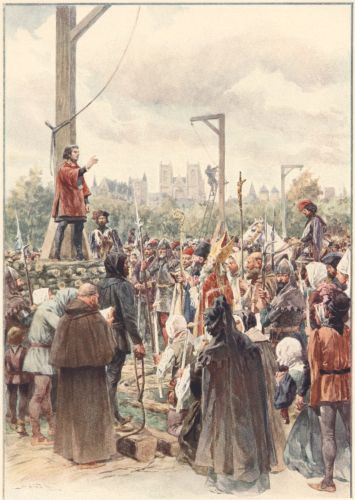
The trial of Gilles de Rais reveals how aristocratic privilege, violence, and medieval justice converged around allegations of extraordinary crimes against children.

By Matthew A. McIntosh
Public Historian
Brewminate
Introduction: Atrocity within Aristocratic Protection
In 1440, the arrest and trial of Gilles de Rais, a Breton nobleman and former companion of Joan of Arc, stunned contemporaries with allegations of extraordinary violence against children. The charges, preserved in ecclesiastical and secular records, described a pattern of predation that had allegedly unfolded over years. Yet the shock that followed his prosecution obscures a more difficult historical question. How had a figure of such prominence operated for so long without decisive intervention? The case demands attention not only as an episode of medieval atrocity but as a study in the structural protection afforded by aristocratic hierarchy.
De Rais occupied a position of unusual prestige within late medieval France. A marshal of France and a veteran of campaigns in the Hundred Years’ War, he was closely associated with Joan of Arc during the Loire campaign and the coronation of Charles VII. His military reputation, wealth, and territorial authority placed him among the upper ranks of the regional nobility. Historians consider him the primary inspiration for Charles Perrault’s fairy tale Bluebeard, hence the nickname for which he is most famous, Barbe Bleue. In a society ordered by feudal allegiance and deference, such status carried practical consequences. Local officials depended upon aristocratic patronage. Peasants and townspeople were economically and legally subordinate. To accuse a nobleman of grave crime was not merely a moral act. It was a political risk.
For years, according to trial testimony, rumors circulated concerning disappearances and irregular behavior within his domains. Yet formal prosecution did not materialize until church authorities and regional secular powers aligned against him. The eventual convergence of the Bishop of Nantes and the Duke of Brittany created the institutional conditions necessary for arrest and trial. This sequence suggests that accountability did not arise organically from communal outrage alone. It required a shift in political will among those capable of challenging aristocratic autonomy.
The trial of Gilles de Rais reveals more than the crimes attributed to him. It illuminates the mechanisms by which elite status can delay scrutiny, fragment jurisdiction, and suppress confrontation. Only when ecclesiastical and secular authorities found common cause did the protective architecture surrounding him collapse. The episode stands as a stark medieval example of how hierarchy can shield alleged predation until institutional rupture renders prosecution possible.
Noble Prestige and Military Capital
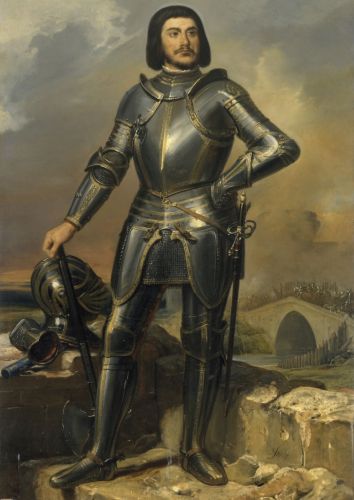
De Rais did not emerge from obscurity. Born into one of the most prominent noble families of Brittany, he inherited vast estates, fortified residences, and the social capital of lineage that had accumulated over generations. Through marriage to Catherine de Thouars, he consolidated additional territorial holdings, expanding both wealth and regional influence across key Breton domains. In the feudal order of fifteenth-century France, such assets were not merely economic resources. They conferred jurisdictional authority, military obligation, and the expectation of deference from dependents who lived and labored within noble lands. Aristocratic status structured everyday interactions, shaping legal recourse, access to protection, and patterns of loyalty. Long before any allegation surfaced, this embedded hierarchy influenced how local society perceived and responded to its most powerful figures. A nobleman of de Rais’ stature was not simply a private individual. He was a node within a network of feudal rights and obligations that discouraged confrontation and insulated reputation.
His military career intensified this protective aura. De Rais fought during the later phases of the Hundred Years’ War and was present during critical campaigns associated with Joan of Arc. He participated in the Loire offensive and the coronation of Charles VII at Reims, events central to the consolidation of Valois legitimacy. In recognition of his service, he was appointed Marshal of France in 1429, one of the kingdom’s highest military honors. The title signaled not only battlefield competence but royal trust. To confront such a figure was to risk challenging a man publicly marked by the crown as a defender of the realm.
Military prestige in late medieval society carried moral as well as political weight. Warfare was embedded within chivalric culture, which celebrated martial valor as evidence of noble virtue and divine favor. A decorated commander could embody ideals of loyalty, sacrifice, and Christian knighthood, reinforcing the perception that aristocratic status was intertwined with moral worth. Chronicles and court culture amplified these associations, linking military success to providential narrative. This symbolic capital complicated the reception of rumor. Allegations of hidden atrocity sat uneasily beside public memory of service to king and church, creating cognitive resistance within communities accustomed to equating rank with righteousness. The dissonance between celebrated warrior and accused predator did not automatically generate inquiry. Instead, prestige fostered hesitation and doubt, encouraging observers to attribute irregularities to misunderstanding, political intrigue, or malicious gossip rather than criminal conduct. Military honor functioned as reputational armor, slowing the translation of suspicion into action.
Wealth reinforced this insulation. De Rais’ estates financed retinues, artistic patronage, and elaborate displays of aristocratic magnificence. Such expenditure strengthened networks of loyalty and dependence. Those within his orbit benefited materially from association with his household. In a stratified society where economic survival often hinged on noble favor, accusations could threaten entire communities tied to aristocratic estates. Prestige was not abstract reputation alone. It was a system of obligations and benefits that discouraged scrutiny. Noble capital, accumulated through lineage, war, and wealth, delayed confrontation until forces greater than local deference intervened.
Jurisdictional Fragmentation and Delayed Prosecution
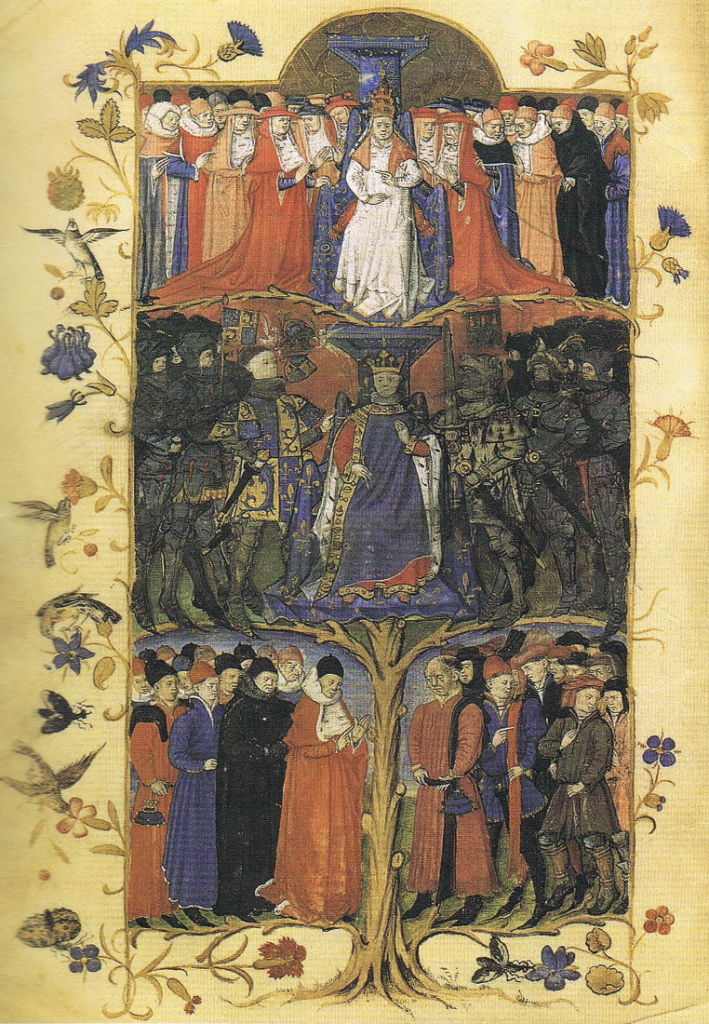
Late medieval France was not governed by a unified and centralized legal system. Authority was layered, negotiated, and often contested among feudal lords, royal officials, and ecclesiastical courts. Within this fragmented structure, jurisdiction depended upon geography, status, and the nature of the alleged offense. De Rais’ rank placed him within a legal gray zone. As a powerful nobleman holding extensive lands in Brittany, he exercised seigneurial authority over dependents while simultaneously owing allegiance to higher feudal superiors. This multiplicity of allegiances complicated the question of who possessed the legitimate authority to initiate proceedings against him.
Secular courts were constrained by aristocratic privilege and by the political consequences of prosecuting a marshal of France. Royal officials might hesitate to confront a figure so closely associated with the crown’s military successes. Local authorities, dependent upon noble cooperation for governance and defense, faced practical and personal risks in challenging him. The structure of feudal immunity did not render nobles legally untouchable, but it imposed procedural and political barriers that discouraged swift intervention. Accusation required not only evidence but sufficient backing to withstand retaliation or countercharge.
Ecclesiastical jurisdiction introduced another layer of complexity. Many of the charges ultimately brought against de Rais involved crimes that fell within the purview of church courts, particularly those concerning heresy, sacrilege, and alleged dealings with forbidden ritual practices. Canon law granted bishops and ecclesiastical tribunals authority over moral and spiritual offenses, and the church possessed investigative mechanisms that differed from secular procedure. Yet the practical exercise of this authority depended upon political calculation and institutional confidence. A bishop who initiated proceedings against a powerful noble risked backlash, especially if secular authorities refused cooperation. Church courts could summon, question, and condemn, but enforcement required collaboration with lay power. In the case of de Rais, ecclesiastical action unfolded within a regional political context in which alliances, rivalries, and ducal interests shaped the willingness to prosecute. The church possessed jurisdiction in theory, but its effective deployment required assurance that prosecution would not isolate ecclesiastical authority or provoke destabilizing conflict.
The eventual prosecution in 1440 illustrates how jurisdictional fragmentation could delay action until institutional alignment occurred. Only when the Bishop of Nantes and the Duke of Brittany found common cause did the machinery of justice begin to move decisively. Secular detention and ecclesiastical trial proceeded in tandem, reinforcing one another’s authority. The coordination of these powers reduced the risk borne by any single actor. Fragmented authority had shielded de Rais by dispersing responsibility; concentrated authority stripped that shield away. The delayed prosecution reflects not mere indifference but the systemic difficulty of translating suspicion into action within a divided legal landscape.
Community Denial and Social Deference

Hierarchy in late medieval society shaped not only legal structures but patterns of perception and response. Within seigneurial domains, nobles exercised judicial, economic, and military authority over local populations, presiding over courts, collecting dues, and commanding armed retinues. Peasants, servants, and artisans were bound by obligations that limited both mobility and voice. The social order was not merely political. It was embedded in theology, custom, and everyday practice, reinforcing the idea that rank reflected divine and natural hierarchy. In such an environment, rumor did not automatically translate into accusation. Even when disappearances occurred or suspicions circulated, social deference operated as a powerful restraint. To confront a lord was to challenge not only an individual but the system that structured daily life, law, and livelihood.
Economic dependency intensified this hesitation. Noble households provided employment, protection, and access to land. Retainers and servants relied upon aristocratic patronage for livelihood and security. Communities tied to de Rais’ estates benefited from his expenditures and feared the instability that might follow his downfall. Allegation carried collective consequences. Speaking openly could threaten not only personal safety but the fragile economic networks that sustained local society. Silence became a strategy of survival, reinforced by the asymmetry of power between accuser and accused.
Psychological dynamics further complicated the response to rumor. Deference to rank was embedded in cultural norms that equated nobility with honor, divine sanction, and inherited virtue. Chivalric ideology portrayed knights and marshals as guardians of Christian order, defenders of the weak, and exemplars of martial honor. To imagine that a celebrated marshal and companion of Joan of Arc might engage in sustained atrocity required a profound rupture in expectation. Communities often interpret disturbing information through the lens of existing hierarchy, seeking explanations that preserve established order and protect collective identity. Suspicion could be reframed as gossip, malicious invention, or tragic accident rather than evidence of systemic wrongdoing. Denial in such contexts is not simple ignorance. It is a socially conditioned mechanism that stabilizes belief in hierarchy and shields the community from the destabilizing implications of confronting entrenched power.
Fear also shaped communal reaction in tangible ways. Noble authority encompassed not only prestige but coercive capacity, including armed retainers and control over local justice. Lords could impose fines, detain subjects, or otherwise exert pressure through formal and informal means. Retaliation against those who challenged them was not abstract speculation but a credible risk. In environments where royal oversight was distant and ecclesiastical intervention uncertain, the prospect of standing alone against aristocratic power was daunting. The imbalance between potential harm and uncertain gain discouraged collective mobilization. Communities accustomed to dependence were unlikely to initiate confrontation without assurance of protection from higher authority. Deference was reinforced by prudence, and prudence favored silence.
Only when institutional rupture occurred did private suspicion crystallize into public acknowledgment. Once church and secular authorities acted in concert, testimony emerged with greater confidence. The transformation from rumor to accusation illustrates how community response depends upon perceived protection from above. Social deference and denial persist when hierarchy appears unassailable. When that hierarchy fractures, suppressed knowledge can surface rapidly. The case of De Rais demonstrates that silence often reflects structural constraint rather than absence of awareness.
Ecclesiastical Intervention and Institutional Alignment
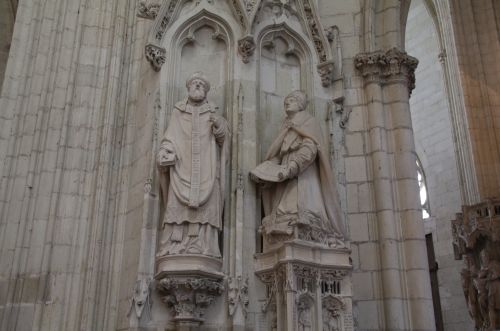
The decisive turn in 1440 did not begin with popular uprising or spontaneous royal command. It began with institutional initiative. The Bishop of Nantes, Jean de Malestroit, opened formal proceedings that brought De Rais under ecclesiastical scrutiny, focusing initially on charges of heresy and sacrilegious practices. Canon law provided the church with jurisdiction over moral and doctrinal offenses, including allegations that intersected with forbidden ritual, blasphemy, and abuses framed as violations of Christian order. By invoking ecclesiastical authority, the bishop shifted the matter from rumor within a feudal domain to formal inquiry within a recognized judicial structure. This move transformed private suspicion into institutional process.
Yet ecclesiastical authority alone would have been insufficient without secular cooperation. The Duke of Brittany, Jean V, exercised territorial sovereignty over the region in which de Rais’ estates were located. His willingness to authorize detention and support proceedings marked a crucial realignment of power. Secular arrest reinforced ecclesiastical charges, preventing de Rais from leveraging his military status or noble connections to evade inquiry. The collaboration between church and ducal authority narrowed the space within which aristocratic immunity had previously operated. What fragmentation had shielded, coordination now exposed.
The convergence of church and secular power also redistributed political risk. Earlier hesitation had reflected the dangers of unilateral action against a powerful noble whose lineage, military rank, and territorial influence made confrontation perilous. Once both institutions aligned, responsibility was shared and legitimacy amplified, diminishing the likelihood that any single authority would bear the full weight of reprisal. Ecclesiastical courts conducted interrogations and issued theological judgments grounded in canon law, while secular authorities ensured custody, public order, and enforcement of sentence. This dual structure created a framework in which spiritual condemnation and temporal punishment reinforced one another. It insulated individual actors from isolation and signaled that prosecution reflected collective institutional will rather than factional vendetta. Alignment reduced the plausibility that the charges were mere personal attack or political intrigue. It reframed the proceedings as defense of moral and social order, projecting an image of unified authority acting in concert to restore stability.
The prosecution of Gilles de Rais illustrates how elite immunity can persist until institutional interests converge. Fragmented authority diffused accountability, but coordinated authority concentrated it. When ecclesiastical concern over heresy intersected with ducal political calculation, the protective architecture surrounding de Rais collapsed. The shift did not originate from below but from recalibration within the upper tiers of governance. Accountability emerged not from the erosion of hierarchy but from its internal realignment, demonstrating that in stratified societies justice often depends upon the alignment of competing powers rather than the mere existence of law.
Shock and Retrospective Moral Clarity

The arrest and public proceedings of 1440 generated a wave of shock that transformed local rumor into collective horror. Once formal charges were announced and testimony recorded, allegations that had circulated in fragmented and uncertain form acquired institutional weight and narrative coherence. What may previously have been whispered as suspicion now appeared in the structured language of indictment, framed by clerical officials and supported by sworn depositions. The spectacle of judicial inquiry altered perception in decisive ways. Authority had declared the accusations credible enough to prosecute, and that declaration reshaped communal interpretation. Shock did not arise solely from the substance of the charges. It arose from their validation by recognized institutions, which converted private unease into public certainty and reoriented moral judgment around an official account.
Retrospective moral clarity often follows such validation. After arrest and confession, narratives harden. Ambiguity gives way to coherence. Communities reframe prior uncertainty as overlooked warning signs or suppressed knowledge. In the case of De Rais, the trial transcripts present testimony that constructs a pattern of atrocity extending over years. Once this pattern was articulated within a courtroom setting, it offered an explanatory framework for earlier disappearances and anxieties. What had been isolated incidents became evidence within a unified moral narrative.
The role of confession in producing this clarity cannot be overstated. Medieval judicial culture placed heavy evidentiary weight on admission of guilt, particularly in cases involving heresy and grave moral offense. The recorded confessions attributed to de Rais, delivered under ecclesiastical procedure, provided narrative closure. Whether interpreted as sincere repentance, compelled admission, or strategic accommodation, the confession stabilized the moral meaning of the case. It allowed authorities to present the prosecution not merely as political maneuver but as revelation of truth. Confession transformed contested accusation into affirmed guilt within the logic of medieval jurisprudence.
Public execution further consolidated this moral framing. Punishment enacted in visible form communicated institutional resolution and moral restoration to a watching community. The burning of a condemned noble signaled that rank did not ultimately exempt one from divine and legal judgment once institutional alignment occurred. It inverted the earlier structure of protection by demonstrating that aristocratic privilege could be publicly stripped away. Execution also marked a definitive break between past protection and present condemnation, dramatizing the triumph of aligned authority over insulated status. Shock crystallized into lesson. The community could reinterpret its earlier deference as tragic misjudgment, now corrected by decisive intervention. The spectacle affirmed that justice, though delayed, had reasserted moral order.
This retrospective clarity, however, risks obscuring the processes that delayed accountability. Once horror is confirmed, the structural conditions that permitted its persistence may recede from view. The narrative becomes one of monstrous individual deviance rather than of hierarchical insulation and institutional hesitation. The case of De Rais demonstrates how shock can both illuminate and simplify. It reveals atrocity, yet it can conceal the architecture that enabled it, replacing structural analysis with moral condemnation alone.
Elite Immunity as Structural Pattern

The case of De Rais resists confinement to individual pathology. While the accusations against him were extraordinary in scale and brutality, the mechanisms that delayed his prosecution were neither unique nor anomalous within late medieval society. Aristocratic hierarchy, jurisdictional fragmentation, and economic dependency formed a structural environment in which elite actors enjoyed practical insulation from immediate scrutiny. The delay in accountability was not simply a failure of morality. It reflected the architecture of power in a stratified polity.
Aristocratic protection operates through the accumulation of capital in multiple forms. Lineage confers inherited legitimacy, embedding a noble within dynastic networks that predate and outlast any single controversy. Military distinction generates symbolic honor, linking personal identity to narratives of sacrifice, loyalty, and defense of realm and faith. Wealth sustains patronage networks that bind dependents through obligation and reward, making confrontation costly for those economically tied to elite households. Jurisdictional authority enables control over local justice, allowing nobles to influence or delay proceedings within their domains. These elements reinforce one another, creating a layered shield in which reputation, influence, and institutional leverage overlap. The more deeply embedded an aristocrat is within political, economic, and social systems, the higher the threshold required to initiate formal challenge. Allegation alone is insufficient. It must be matched by institutional capacity and political will capable of overcoming entrenched advantage, and such capacity rarely materializes without coordinated action from above.
Such insulation does not remove vulnerability; it postpones exposure. Immunity is contingent upon alignment among governing institutions. As long as secular and ecclesiastical authorities remain divided or hesitant, elite actors benefit from dispersed responsibility. Fragmented power diffuses risk, allowing accusations to stagnate within rumor rather than crystallize into prosecution. When governing institutions act in concert, however, the protective lattice can unravel with surprising speed. The fall of de Rais illustrates this conditional nature of aristocratic protection.
The pattern extends beyond this single case. Medieval Europe provides numerous examples in which noble status complicated legal action, particularly when charges implicated high-ranking figures whose downfall carried significant political ramifications. In such contexts, prosecution frequently followed shifts in alliance, succession, or regional balance of power rather than purely moral awakening. Accusations might linger unresolved until a change in ducal favor, episcopal leadership, or royal strategy altered the calculus of risk. Justice emerged not as spontaneous ethical correction but as outcome of recalibrated interests among institutions competing for authority. Elite protection therefore appears less as aberration and more as predictable feature of hierarchical governance. It reflects the interdependence of status, jurisdiction, and political negotiation in societies where law operated through layered sovereignties rather than centralized enforcement.
Recognizing elite immunity as structural also reframes the meaning of public outrage. Shock and condemnation often intensify after prosecution begins, not before, because institutional action redefines what is permissible to say and believe. Once authorities signal that a powerful individual is subject to judgment, communities recalibrate their perceptions, and suppressed suspicion can transform into open denunciation. Institutional rupture provides moral permission. Outrage alone rarely destabilizes entrenched hierarchy; it gains traction when elite consensus fractures and enforcement becomes plausible. The sequence matters. The events of 1440 suggest that communal revulsion did not produce prosecution. Rather, prosecution produced communal clarity. Structural realignment preceded emotional consolidation, revealing how power and perception interact in moments of elite collapse.
To identify elite immunity as a structural pattern is not to deny individual responsibility. It is to situate individual action within a system that shapes response. De Rais’ prosecution reveals both the endurance and the limits of aristocratic protection. Hierarchy shielded him for years, yet that shield depended upon fragile alignments among church, nobility, and regional authority. When those alignments shifted, insulation dissolved. The episode stands as a medieval demonstration of how concentrated status can delay justice until institutional interests converge, reminding us that impunity often rests less on secrecy than on structure.
Conclusion: Hierarchy, Power, and the Limits of Impunity
The fall of De Rais in 1440 does not read as the inevitable triumph of justice over evil. It reads as the consequence of shifting alignments within a stratified society whose structures both enabled and eventually constrained aristocratic protection. For years, lineage, military prestige, economic patronage, and jurisdictional fragmentation created a shield that discouraged scrutiny and diffused responsibility. Immunity was not absolute, but it was durable because it rested upon interlocking forms of capital that reinforced one another. Rumor alone could not penetrate that lattice of privilege. Only when ecclesiastical and regional secular authorities moved in deliberate partnership did that network of protection unravel. The prosecution thus reflects not a sudden eruption of conscience but a shift in the political calculus among competing authorities, demonstrating that accountability required structural convergence rather than mere moral outrage.
Hierarchy structured both silence and action. Social deference constrained communities, while fragmented jurisdiction diffused responsibility among competing authorities. When power remained dispersed, hesitation prevailed. When power aligned, prosecution followed. The case demonstrates that in late medieval France, law operated within networks of rank and negotiation. Justice required not merely accusation but sufficient institutional backing to overcome entrenched privilege. Structure determined pace. Alignment determined outcome.
Yet the collapse of de Rais’ immunity also reveals the limits of aristocratic protection. Status delayed accountability but could not permanently withstand coordinated authority. Once prosecution began, confession, trial, and execution reversed the symbolic meaning of rank. A marshal of France became a condemned criminal. The spectacle of punishment signaled that noble privilege was contingent, not invulnerable. Aristocratic security evaporated once the institutions that sustained it withdrew their backing.
The legacy of the case lies in this tension between endurance and fragility. Elite immunity can persist for years within hierarchical systems, particularly when jurisdiction is divided and communities are economically and socially dependent upon noble power. But such immunity rests upon alignments that are inherently unstable, shaped by shifting political calculations and competing institutional interests. When those alignments change, insulation collapses with abrupt finality, revealing how conditional aristocratic security truly is. The trial of Gilles de Rais stands not only as a record of alleged atrocity but as a demonstration of how hierarchy both shields and ultimately limits impunity. It exposes the paradox of stratified governance: concentrated status can delay justice, yet that same concentration renders elites vulnerable once the institutions that empower them withdraw protection. Accountability emerges not from the disappearance of hierarchy but from shifts within its upper tiers.
Bibliography
- Bataille, Georges. The Trial of Gilles de Rais. Translated by Richard Robinson. Los Angeles: Amok Press, 1990.
- Bossard, Eugène. Gilles de Rais, Maréchal de France, dit Barbe-Bleue (1404–1440). Paris: Honoré Champion, 1886.
- Duby, Georges. The Three Orders: Feudal Society Imagined. Translated by Arthur Goldhammer. Chicago: University of Chicago Press, 1980.
- Dunn-Lardeau, Brenda and Sandra Beckett. “’Ogre’ or ‘Saint’? Reopening the gilles de rais trial: Michel tournier’s Gilles & Jeanne.” The European Legacy 1:3 (1996), 1133-1139.
- Kieckhefer, Richard. Magic in the Middle Ages. Cambridge: Cambridge University Press, 1989.
- Mansfield, Nick. “Christianity Would Not Want a World from which Violence was Excluded’: God, Bataille and Derrida on the Sovereign Logic of Religious Child Killing.” Cultural Studies Review 18:2 (2012), 129-146.
- Pernoud, Régine, and Marie-Véronique Clin. Joan of Arc: Her Story. Translated by Jeremy DuQuesnay Adams. New York: St. Martin’s Press, 1998.
- Rosenwein, Barbara H. A Short History of the Middle Ages. 4th ed. Toronto: University of Toronto Press, 2014.
- Vale, Malcolm. War and Chivalry: Warfare and Aristocratic Culture in England, France and Burgundy at the End of the Middle Ages. Athens: University of Georgia Press, 1981.
Originally published by Brewminate, 02.23.2026, under the terms of a Creative Commons Attribution-NonCommercial-NoDerivatives 4.0 International license.
About the Author