
Medicaid cuts would result in widespread coverage losses.

By Natasha Murphy
Director, Health Policy
The Center for American Progress

By Andrea Ducas
Vice President, Health Policy
The Center for American Progress
Introduction
Congressional Republicans in both chambers have passed a budget resolution requiring the House Committee on Energy and Commerce to cut at least $880 billion through 2034. Because Medicaid accounts for approximately 93 percent of non-Medicare funding that the committee oversees, the program is expected to absorb the overwhelming share of these reductions. To achieve these cuts, Republican leaders, including House Speaker Mike Johnson (R-LA) and Energy and Commerce Chair Brett Guthrie (R-KY), are reportedly considering proposals to shrink federal matching funds that support state Medicaid expansion populations and/or to impose burdensome work reporting requirements that would lead to massive coverage losses.
The Affordable Care Act (ACA) guarantees states an enhanced federal medical assistance percentage (FMAP) of 90 percent to cover Medicaid costs for adults with family incomes up to 138 percent of the federal poverty level, with states covering the remaining 10 percent. This funding structure has enabled 40 states and Washington, D.C., to expand Medicaid and provide coverage for more than 20 million Americans. Shrinking the FMAP would shift significant financial burdens onto states, several of which have laws that trigger automatic rollbacks of Medicaid expansion if federal support declines.
Medicaid Cuts Would Cost Thousands of Lives
In 2023, 92 percent of Medicaid enrollees under age 65 who could work were already working—largely in low-wage, seasonal, or part-time roles that do not offer employer-sponsored insurance or insurance with affordable premiums. Federal work reporting requirements would force these enrollees to regularly document and verify their work hours in order to maintain their coverage. Although framed by Republican leadership as a way to promote employment, evidence has consistently shown that Medicaid work reporting requirements fail to increase employment and instead create costly administrative burdens for states that result in significant coverage losses. In fact, a 2024 advisory opinion from the U.S. Department of Health and Human Services general counsel determined that, in the face of this evidence, imposing work reporting requirements contradict Medicaid’s primary mission of delivering health coverage to those who qualify. Notably, for work reporting requirements to deliver any fiscal savings, enrollees would have to be dropped from the Medicaid program.
As the nation’s single-largest health insurance program, Medicaid covers critical health services for nearly 72 million Americans, including low-income individuals, children, older adults, and people with disabilities. Medicaid coverage improves access to preventive care and supports early diagnosis and treatment and management of chronic and acute conditions. It also provides enrollees with access to essential maternal health, behavioral health, and long-term care services. Accordingly, multiple studies have found that Medicaid expansion is associated with significant reductions in mortality. Building on this evidence, a 2021 CAP analysis estimated that expanding Medicaid in all remaining nonexpansion states at that time would have saved at least 7,000 lives each year. Proposals to cut Medicaid—whether by imposing work reporting requirements or shrinking the FMAP—would therefore produce the opposite effect, endangering the health and lives of Americans.
In fact, a new Center for American Progress analysis finds that the FMAP reductions favored by Republican leadership would lead to roughly 34,200 deaths each year, while work reporting requirements would result in about 15,400 deaths.
FMAP Reductions Would Cost an Estimated 34,200 Lives Each Year
If Congress shrinks the enhanced FMAP and states respond by eliminating their Medicaid expansions in 2026, 15.9 million people would lose their coverage and, as a result, 10.8 million would become uninsured according to estimates from the Urban Institute. A 2017 study by health economist Benjamin D. Sommers found that Medicaid expansion was associated with “one life saved annually for every 239 to 316 adults gaining insurance.” Applying the more conservative end of Sommers’ range to Urban’s projection of 10.8 million more uninsured, CAP estimates that cutting the enhanced FMAP for expansion enrollees would lead to about 34,200 deaths each year.
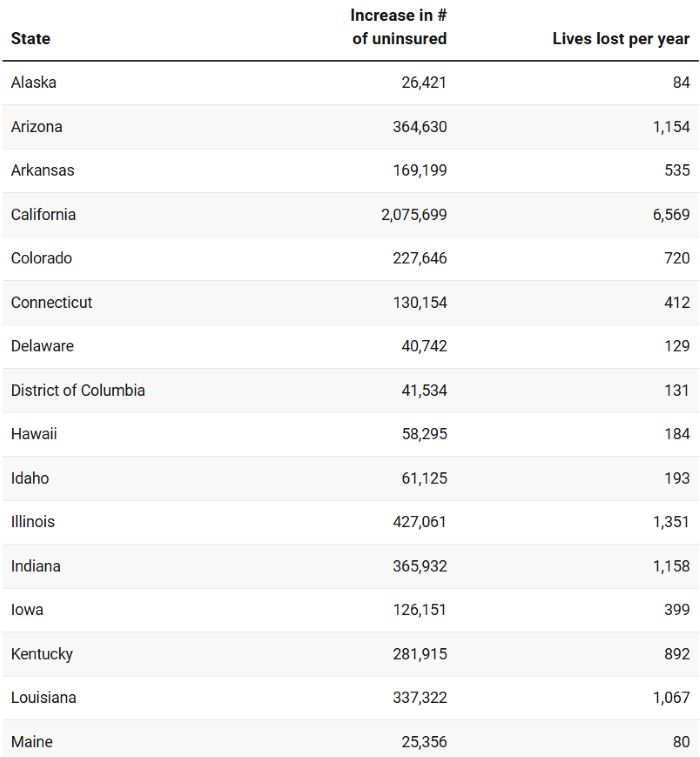
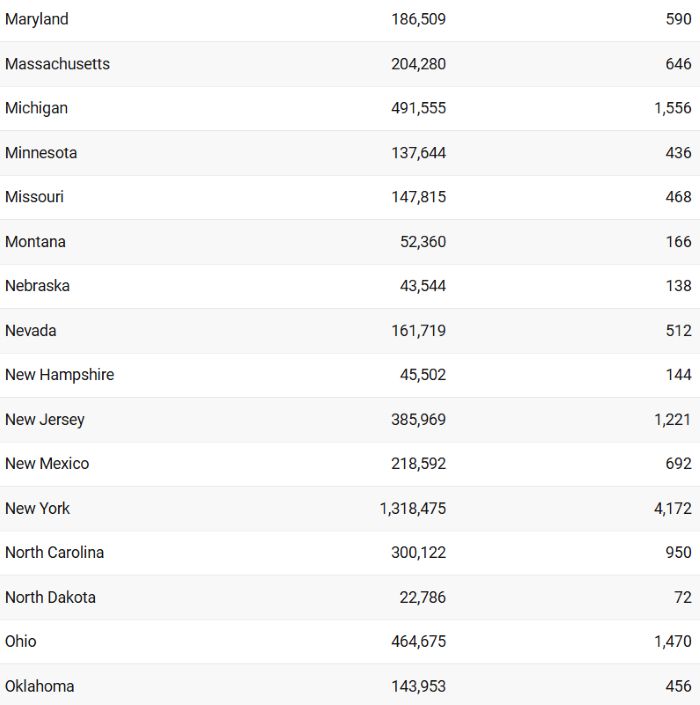
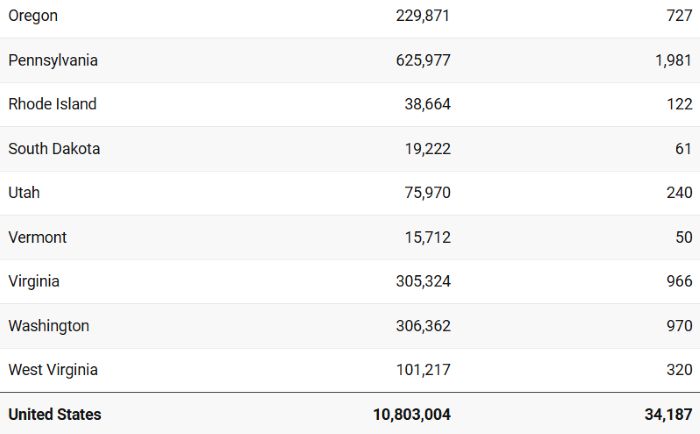
As shown in Table 1, the state-by-state fallout of such FMAP cuts would be enormous: More than 2 million Californians and 1.3 million New Yorkers would become uninsured, leading to more than 6,500 and 4,100 deaths each year, respectively.
Work Reporting Requirements Would Cost an Estimated 15,400 Lives Each Year
Several Republican lawmakers, including House Speaker Mike Johnson (R-LA), have proposed implementing work reporting requirements to cut federal Medicaid spending. The Urban Institute estimates that applying these requirements to only Medicaid expansion enrollees ages 19 to 55 would result in 4.6 million to 5.2 million people losing coverage in 2026. Urban further assumes that essentially all people who would lose Medicaid coverage due to these requirements would become uninsured as a result, given limited access to affordable alternatives through the marketplace or employer coverage.
Drawing from examples of earlier state failures with work reporting requirements, these losses would largely be due to confusion and difficulties with state reporting systems, not because of enrollees’ failure to meet requirements. Applying the conservative end of Sommers’ range to the midpoint of Urban’s range, CAP estimates that a federal Medicaid work reporting requirement for the expansion population would lead to roughly 15,400 deaths each year.
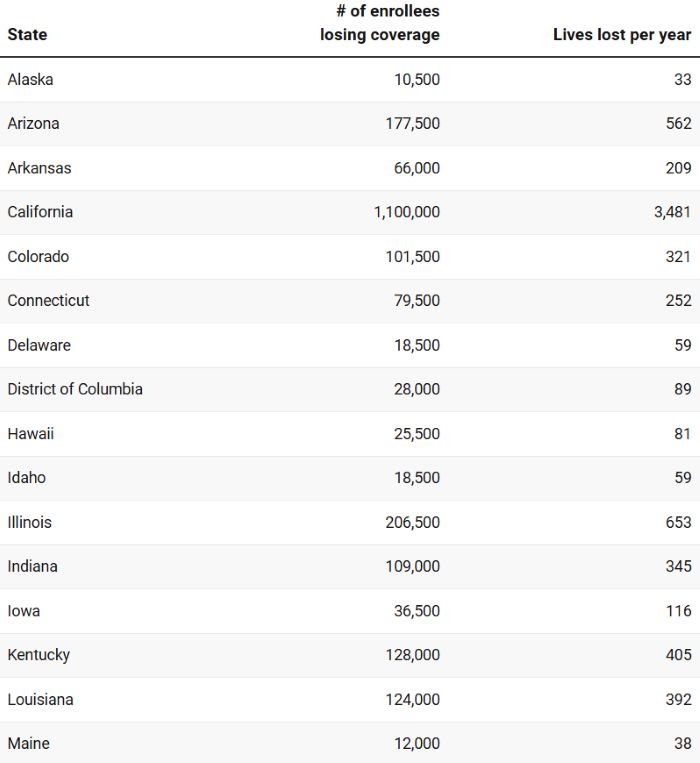
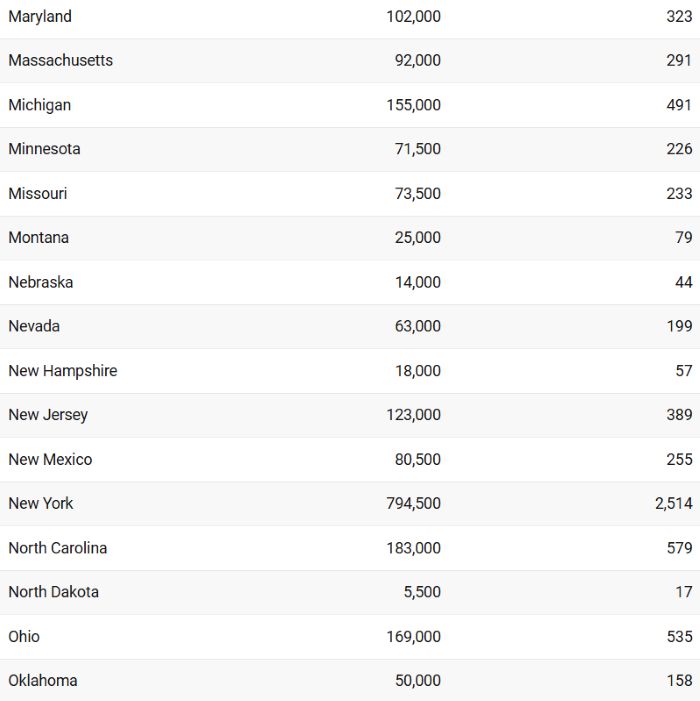
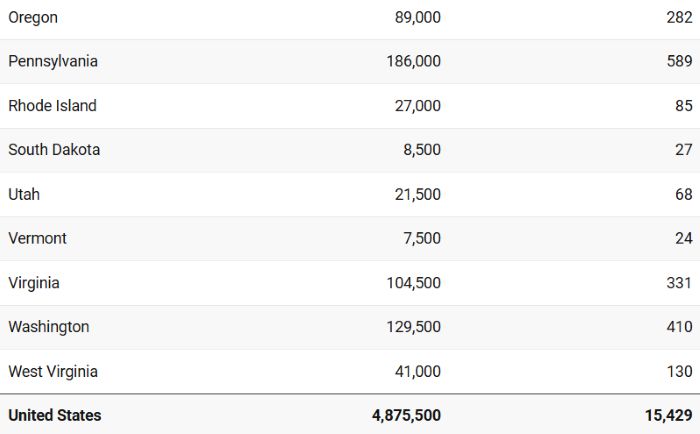
Table 2 quantifies the state-by-state impacts of work reporting requirements. On average, 186,000 Pennsylvanians would lose coverage and nearly 600 would die annually as a result. Meanwhile, in Arizona, 177,00 people would lose coverage, leading to more than 550 deaths each year.
Conclusion
Congressional Republicans are considering proposals that would severely undermine the Medicaid program, threatening coverage for millions of Americans. Whether through reduced federal funding or punitive administrative barriers such as work reporting requirements, these measures would lead to widespread coverage losses and, by conservative estimates, tens of thousands of preventable deaths each year.
Originally published by The Center for American Progress, 04.23.2025, republished with permission educational, for non-commercial purposes.
About the Author