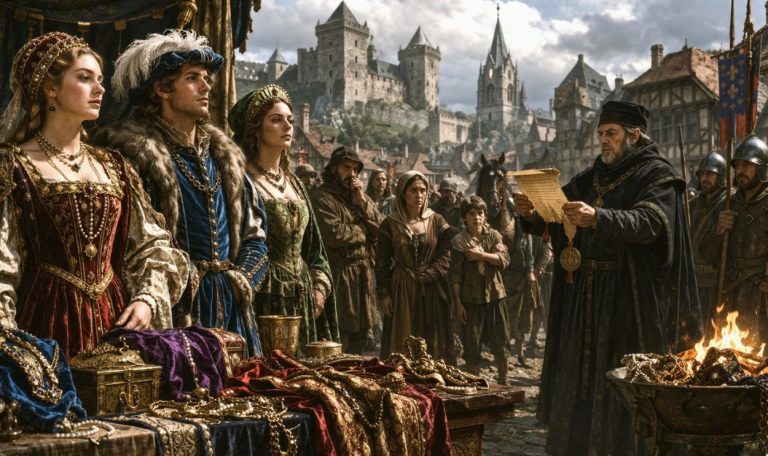
Greenland’s medieval history reveals that sovereignty in the North Atlantic was never an empty abstraction waiting for modern states to define it.

By Matthew A. McIntosh
Public Historian
Brewminate
Introduction: Sovereignty Before the Modern State
Modern debates over Greenland often proceed from an implicit assumption that sovereignty is a recent, flexible, and negotiable concept, one that can be recalibrated according to strategic necessity or political will. This assumption is historically unfounded. Long before the emergence of modern nation-states, sovereignty functioned as a lived and articulated reality, expressed through settlement, law, religious authority, and collective recognition. To treat Greenland as a space newly subject to claim or acquisition is to ignore the deep historical structures that embedded it within European political imagination centuries ago.
In the medieval world, sovereignty did not depend on centralized bureaucracies, standing armies, or fixed borders in the modern sense. Instead, it emerged through relationships: between land and people, ruler and ruled, law and custom, faith and authority. These relationships were neither abstract nor symbolic. They were enacted through habitation, legal assemblies, ecclesiastical organization, and allegiance to recognized powers. Distance complicated governance, but it did not nullify it. A land was sovereign not because it was easily controlled, but because it was meaningfully integrated into recognized systems of order.
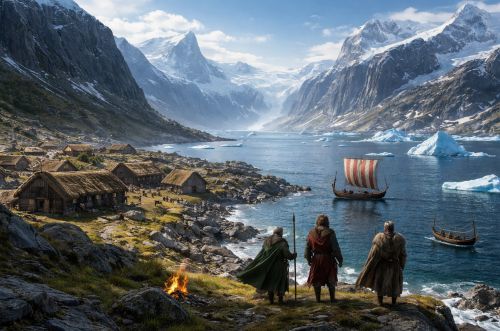
Greenland entered these systems during the Viking Age, when Norse settlers extended Scandinavian social, legal, and religious structures across the North Atlantic. Through farms, assemblies, churches, and episcopal authority, Greenland became legible within medieval frameworks of dominion. It was named, governed, taxed, Christianized, and remembered. These acts mattered. They established Greenland not as an empty frontier, but as a place with history, law, and political meaning. Even when contact weakened and settlements declined, claims of authority persisted in legal memory and ecclesiastical record.
Understanding this medieval foundation matters now because contemporary rhetoric surrounding Greenland unconsciously revives these older assumptions about dominion and entitlement. The idea that a distant land may be claimed by virtue of power, proximity, or strategic interest echoes pre-modern logics that treated territory as an extension of authority rather than a home to distinct peoples. By recovering Greenland’s medieval history of sovereignty, this essay challenges the notion that territorial ambition is a modern innovation. Instead, it reveals how easily abandoned restraints allow ancient habits of power to reassert themselves in new forms.
Norse Expansion and the Political Meaning of Settlement (c. 10th–11th Centuries)
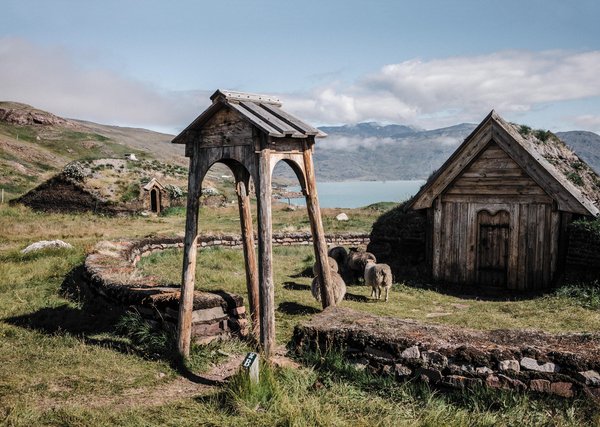
The Norse settlement of Greenland in the late tenth century emerged from a broader pattern of North Atlantic expansion that linked Norway, Iceland, and the western seas into a connected political and cultural world. This movement was not aimless migration driven solely by exile or adventure. It followed established norms of land-taking, social organization, and authority that had already been tested in Iceland. Greenland was conceived from the outset as a place that could be settled, governed, and integrated into familiar structures of order rather than as a temporary outpost on the margins of civilization.
Erik the Red’s leadership in founding the Greenland settlements reflected this continuity. The decision to settle Greenland was framed through the same social mechanisms that had underpinned earlier Norse expansions. Land was claimed, named, and distributed according to recognized customs. Farms were established in clustered communities, replicating the agrarian and social patterns of Iceland and western Norway. Settlement itself functioned as a political act, asserting control through habitation and use rather than through conquest or proclamation alone.
Legal culture followed settlement closely. Norse society did not separate law from everyday life, and Greenland was no exception. Assemblies modeled on the Icelandic Althing provided a framework for dispute resolution and communal governance. Law-speakers, chieftains, and local elites operated within accepted traditions that bound settlers to shared norms. These institutions mattered because they transformed physical presence into recognized authority. Greenland was not merely occupied. It was governed in ways that contemporaries understood as legitimate.
Settlement also carried symbolic weight within the wider Norse world. Greenland was not imagined as detached from Scandinavian society, but as part of a continuous North Atlantic sphere. Sagas and legal references placed it within a network of known lands, reinforcing its status as a recognized community rather than an unknown frontier. The act of naming Greenland itself was an assertion of familiarity and claim, embedding the land within Norse cultural memory and political geography.
By the early eleventh century, Greenland’s settlements had become durable expressions of sovereignty rooted in everyday practice. Authority was exercised through farming, law, kinship, and mutual obligation rather than through distant command. This form of sovereignty was local, relational, and resilient. It depended not on constant oversight from Norway, but on the recognition that Greenland belonged within a shared political and cultural order. In this sense, Norse settlement established a foundational claim that would persist long after direct control weakened, anchoring Greenland’s place in European political imagination.
Law, Assembly, and the Reach of Scandinavian Authority

Norse settlement in Greenland was accompanied by the deliberate extension of Scandinavian legal culture, a defining feature of medieval sovereignty. Law was not an abstract ideal but a lived system that structured social relations, resolved disputes, and affirmed belonging within a wider political order. The presence of law distinguished settlement from mere occupation. Through legal practices, Greenland became legible as a governed society rather than a peripheral colony existing outside recognized authority.
Central to this system were assemblies modeled on those of Iceland, where communal governance operated through consensus, custom, and adjudication. These gatherings provided a forum for resolving conflicts, affirming rights, and enforcing norms without reliance on centralized coercive power. Law-speakers and local leaders carried authority not because they represented distant rulers, but because they embodied collective recognition. In this way, Greenland participated in a broader Scandinavian legal tradition that emphasized continuity and legitimacy over direct control.
Legal authority in Greenland also extended beyond local governance to questions of allegiance and obligation. By the eleventh century, Greenlanders formally acknowledged the authority of the Norwegian crown, integrating the settlements into a larger political hierarchy. Tribute obligations and legal recognition bound Greenland to Norway in ways that contemporaries understood as meaningful assertions of sovereignty. Distance limited enforcement but did not invalidate the relationship. Medieval authority was relational rather than territorial in the modern sense, resting on acknowledgment rather than constant intervention.
This framework reveals an important feature of medieval sovereignty: reach was defined by recognition, not proximity. Greenland’s inclusion within Scandinavian legal imagination meant that its status endured even as communication weakened. Law functioned as memory as much as mechanism, preserving claims across time and space. The survival of these legal ties underscores how medieval systems could sustain authority over distant lands without dissolving into ambiguity or abandonment.
Christendom and Ecclesiastical Sovereignty in Greenland

Christianization marked a decisive stage in Greenland’s integration into medieval systems of authority. Conversion was not merely a spiritual transformation but a political one, embedding Greenland within the universal structure of Latin Christendom. In the medieval world, ecclesiastical organization functioned as a transregional framework of legitimacy, capable of binding distant communities into a shared moral and legal order. Through the Church, Greenland ceased to be merely a Scandinavian settlement and became part of a broader Christian geography that stretched from Rome to the Arctic.
The process of conversion followed patterns already established in Iceland and Norway. Churches were built at key settlements, and Christian rites replaced earlier pagan practices as the dominant religious framework. These changes carried institutional consequences. Christian communities required clerical oversight, sacramental administration, and integration into ecclesiastical hierarchies. The physical presence of churches and graveyards signaled permanence and continuity, reinforcing the perception that Greenland was not a transient frontier but a settled Christian land.
The establishment of the Diocese of Gardar in the early twelfth century formalized Greenland’s ecclesiastical status. With its own bishop, Greenland entered directly into the administrative structure of the medieval Church. Bishops were not merely spiritual leaders; they were legal authorities, landholders, and representatives of both ecclesiastical and secular power. The existence of a diocese demonstrated that Greenland was considered capable of sustaining institutional governance and worthy of recognition within the Church’s territorial organization.
Papal acknowledgment further strengthened Greenland’s claim to legitimacy. Inclusion in papal correspondence and ecclesiastical records placed Greenland firmly within the conceptual boundaries of Christendom. These references mattered deeply in a medieval context. To be named and recognized by the Church was to exist politically as well as spiritually. Greenland’s distance from Rome did not diminish its status; rather, its inclusion testified to the Church’s claim of universal reach.
Ecclesiastical sovereignty also functioned as a stabilizing force amid geographic isolation. While secular oversight from Norway could be intermittent, the Church provided continuity through doctrine, ritual, and recordkeeping. Tithes, clerical appointments, and adherence to canon law created enduring links between Greenland and the wider Christian world. These ties persisted even as material connections weakened, preserving Greenland’s place within medieval political memory.
The role of Christendom in Greenland reveals how sovereignty operated through overlapping authorities rather than singular control. Spiritual and temporal power reinforced one another, producing a layered system of dominion that transcended distance. This ecclesiastical integration challenges modern assumptions that sovereignty requires constant enforcement. In medieval terms, Greenland was sovereign precisely because it was recognized, administered, and remembered within enduring institutional structures that outlived the settlements themselves.
Indigenous Presence and the Limits of Medieval Recognition

The Norse presence in Greenland unfolded within a landscape that was not uninhabited. Indigenous Arctic peoples, ancestors of today’s Inuit, occupied and traversed Greenland long before and during Norse settlement. Medieval European sources acknowledged these populations, often referring to them as Skrælingar, yet this recognition did not translate into political legitimacy within Norse or Scandinavian legal frameworks. The existence of Indigenous societies was noted, but their sovereignty was not conceptualized in terms the medieval European world was prepared to recognize.
Encounters between Norse settlers and Indigenous Greenlanders appear sporadically in archaeological evidence and written sources, suggesting a mixture of contact, trade, and conflict. Material finds indicate exchanges of goods, while saga literature preserves accounts of tension and violence. These interactions reveal a frontier zone where two distinct social worlds overlapped without shared assumptions about law, land, or authority. The absence of mutual recognition meant that coexistence was fragile and often mediated by force rather than negotiated norms.
Medieval Scandinavian concepts of sovereignty were deeply exclusionary. Political legitimacy rested on participation in recognizable systems of law, kinship, and Christian belief. Societies that did not operate within these structures were effectively invisible as political actors. Indigenous Greenlanders were therefore perceived not as rival sovereign communities but as external populations beyond the bounds of legal and religious order. This limitation was not accidental. It reflected a broader medieval worldview that equated authority with cultural conformity.
The failure to recognize Indigenous sovereignty had lasting consequences. Norse claims to Greenland were articulated as if settlement and ecclesiastical presence alone conferred dominion, leaving no conceptual space for parallel systems of governance. This framework allowed European authority to imagine itself as uncontested even in regions where Indigenous life continued independently. The resulting historical record is therefore asymmetrical, preserving Norse claims in detail while rendering Indigenous political structures largely invisible.
This imbalance exposes the limits of medieval recognition and the moral constraints of its sovereignty. While Norse settlement embedded Greenland within European legal and religious systems, it did so by excluding alternative forms of political legitimacy. That exclusion would echo forward into later colonial encounters, where the absence of recognized sovereignty was repeatedly used to justify appropriation. Understanding this boundary clarifies both the reach and the blindness of medieval authority, revealing how sovereignty could be asserted without consent and remembered without acknowledgment.
Decline, Distance, and the Persistence of Claim (14th–15th Centuries)
By the fourteenth century, Norse Greenland entered a period of gradual decline shaped by environmental, economic, and demographic pressures. Climatic cooling associated with the onset of the Little Ice Age shortened growing seasons and strained already marginal agricultural systems. At the same time, Greenland’s position within North Atlantic trade networks weakened. Demand for walrus ivory declined as alternative sources became available, reducing Greenland’s economic relevance to Europe. These material challenges eroded the viability of the settlements without immediately erasing their political or cultural significance.
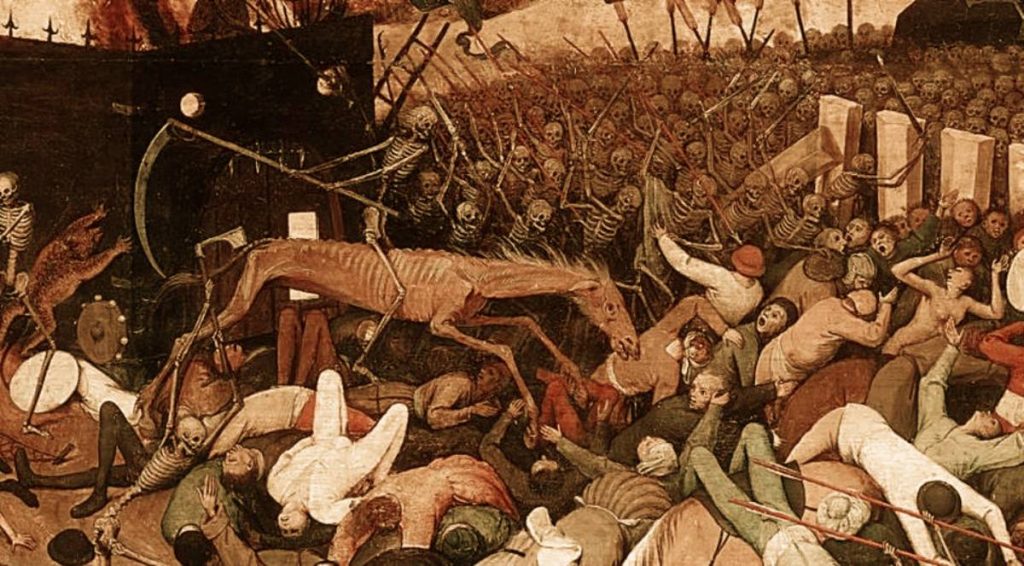
Distance compounded these difficulties. Greenland’s connections to Norway and the wider Scandinavian world depended on infrequent maritime contact, which became increasingly unreliable as political instability spread across Europe. The Black Death devastated Norway in the mid-fourteenth century, weakening royal authority and disrupting administrative oversight. Communication with Greenland became sporadic, and episcopal succession at Gardar faltered. Yet the absence of regular contact did not amount to an abandonment of claim. In medieval terms, sovereignty did not dissolve simply because supervision lapsed.
Legal and ecclesiastical memory preserved Greenland’s status even as its settlements faded. Royal documents continued to reference Greenland as part of the Norwegian realm, and ecclesiastical records maintained its place within the Church’s territorial imagination. Authority persisted through recognition rather than enforcement. Medieval sovereignty functioned as an inherited condition, capable of surviving long intervals of silence and neglect. Greenland remained claimed because it remained remembered.
This persistence reveals a crucial distinction between control and claim. The disappearance of Norse settlements did not retroactively render Greenland ownerless, nor did it erase the frameworks that had once defined its place within European authority. Medieval political culture allowed for dormant sovereignty, sustained through legal tradition and institutional continuity. This precedent complicates modern assumptions that authority expires with absence. It demonstrates how claims over distant lands could endure across centuries, shaping later imperial ambitions and reviving old logics of entitlement long after the conditions that produced them had vanished.
Conclusion: Medieval Dominion and Modern Entitlement
Greenland’s medieval history reveals that sovereignty in the North Atlantic was never an empty abstraction waiting for modern states to define it. Long before contemporary debates over strategy or security, Greenland had been settled, governed, Christianized, and incorporated into recognizable systems of law and authority. Norse settlers and ecclesiastical institutions embedded the island within a shared political imagination that treated land, people, and power as inseparable. These structures did not resemble modern nation-states, but they functioned as legitimate expressions of dominion in their own time, leaving behind durable claims that outlived the settlements themselves.
This history complicates modern assumptions about entitlement and acquisition. Medieval sovereignty rested less on continuous control than on recognition, memory, and institutional continuity. Authority could persist across distance, silence, and even abandonment. The persistence of Greenland in legal and ecclesiastical records demonstrates how claims could remain meaningful long after the material conditions that sustained them had collapsed. Far from rendering Greenland ownerless, decline reinforced its status as a place already inscribed within European frameworks of power.
At the same time, this medieval legacy exposes the moral limits of early sovereignty. Norse authority was asserted through systems that excluded Indigenous political recognition, rendering Inuit presence peripheral to European legal thought. That exclusion was not incidental. It reflected a broader medieval tendency to equate legitimacy with cultural and religious conformity. This blind spot would later be inherited by early modern and modern imperial systems, which repeatedly invoked historical claims while ignoring the sovereignty of those who did not fit inherited categories of authority.
The reappearance of territorial rhetoric in the present draws its force from these deep historical patterns. Modern entitlement echoes medieval assumptions about dominion, distance, and power, even as it operates within a world shaped by very different legal and ethical norms. Recovering Greenland’s medieval history does not justify contemporary coercion. Instead, it reveals how easily ancient habits of power reemerge when restraint weakens and memory is selectively invoked. History’s value here lies not in legitimizing ambition, but in exposing its origins, limits, and dangers.
Bibliography
- Brink, Stefan. “Legal Assembly Sites in Early Medieval Scandinavia.” Journal of Scandinavian Studies 75, no. 3 (2003): 293–314.
- Byock, Jesse L. Viking Age Iceland. London: Penguin, 2001.
- Crawford, Barbara E. Scandinavian Scotland. Leicester: Leicester University Press, 1987.
- Diamond, Jared. Collapse: How Societies Choose to Fail or Succeed. New York: Viking, 2004.
- Ervo, Laura, Pia Letto-Vanamo, and Anna Nylund, eds. Rethinking Nordic Courts. Princeton: Springer Publishing, 2021.
- Güven, Koray. “The Distinctive Features of Scandinavian Law and The Problem of Locating It among the Legal Families of the World.” Istanbul Law Review 78:1 (2020): 99-137.
- Hofstra, Tette and Kees Samplonius. “Viking Expansion Northwards: Mediaeval Sources.” Arctic 48:3 (1995): 235-247.
- Jakobsen, Uffe and Henrik Larsen. “The Development of Greenland’s Self-Government and Independence in the Shadow of the Unitary State.” The Polar Journal 14 (2024): 9-27.
- Jones, Gwyn. A History of the Vikings. Oxford: Oxford University Press, 1968.
- McGhee, Robert. The Last Imaginary Place: A Human History of the Arctic World. Oxford: Oxford University Press, 2004.
- Roesdahl, Else. The Vikings. London: Penguin, 1976.
- Seaver, Kirsten A. The Frozen Echo: Greenland and the Exploration of North America, ca. A.D. 1000–1500. Stanford: Stanford University Press, 1996.
- Sigurðsson, Jón Viðar. Scandinavia in the Age of Vikings. Ithaca: Cornell University Press, 2021.
- Wolf, Kirsten. Daily Life of the Vikings. Westport, CT: Greenwood Press, 2004.
Originally published by Brewminate, 01.19.2026, under the terms of a Creative Commons Attribution-NonCommercial-NoDerivatives 4.0 International license.
About the Author