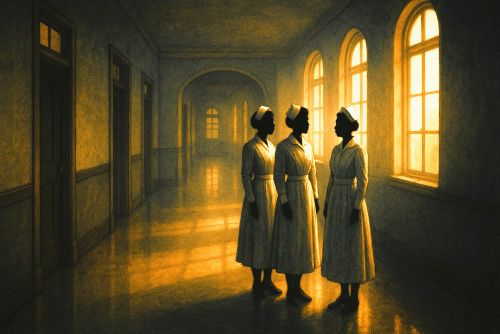
The history of the Black Angels reveals how racial inequality, gendered labor, and medical innovation intersected within one of New York City’s most important public health institutions.

By Matthew A. McIntosh
Public Historian
Brewminate
Introduction
Tuberculosis shaped the social and medical landscape of early twentieth-century New York City with a force that strained every level of municipal infrastructure. Seaview Hospital, constructed on Staten Island beginning in 1913 and expanded through the 1930s, was envisioned as the nation’s largest specialized tuberculosis institution and became a central site in the city’s campaign against an airborne disease that killed thousands annually.1 Public health officials confronted an epidemic that disproportionately affected the urban poor, and they built complex systems of quarantine, open-air treatment, and long-term institutional care to contain an illness that had no reliable cure before the advent of streptomycin.2 The scale of the crisis created an immediate labor shortage that would come to define the hospital’s history.
That shortage deepened when white nurses increasingly refused to work in high-risk tuberculosis facilities. Municipal records from the New York City Department of Hospitals show repeated failures to recruit or retain white nursing staff during the 1930s and 1940s, particularly in institutions that housed the most infectious patients.3 Administrators responded by turning to Black women who occupied a constrained labor market shaped by segregation in nursing schools and discriminatory hiring practices across city hospitals. Black newspapers documented recruitment campaigns encouraging Black women to apply to Seaview, and city hiring rolls confirm the arrival of more than three hundred Black nurses, attendants, and ward helpers over the course of the mid-century.4 Their work was not framed as a professional opportunity but as a solution to a labor crisis produced by racial and occupational hierarchies.
The Black women who entered Seaview’s wards encountered an environment defined by physical danger, emotional strain, and long hours spent in close proximity to highly infectious patients. Oral histories preserved at the Schomburg Center for Research in Black Culture provide firsthand accounts of this labor and describe caregivers who performed feeding, bathing, suctioning, linen management, and respiratory support.5 Their duties exceeded the limited job descriptions assigned to attendants and support workers, and they frequently acquired advanced clinical skills informally through experience rather than formal hospital training. Their daily labor made them indispensable to the functioning of the institution even as municipal standards denied them the recognition granted to white registered nurses elsewhere.
Their presence also shaped the development of treatments that would transform the global history of tuberculosis. Seaview Hospital participated in clinical trials of streptomycin and later PAS and isoniazid, and these experiments were possible only because nursing staff maintained patient stability through constant bedside care. Correspondence and reports from the Rutgers University archives associated with Selman Waksman’s streptomycin research reference Seaview as a crucial site of early testing during the 1940s.6 By sustaining patients through the long course of experimental therapy, the Black nurses of Seaview became essential participants in the infrastructure of medical discovery, even though they appear only sparsely in written scientific accounts.
Yet their contributions remained largely unrecognized for decades. Early institutional histories of Seaview, as well as municipal reports on the city’s tuberculosis program, rarely acknowledged the racialized structure of its workforce or the critical labor performed by Black women.7 Only recent scholarship, museum projects, and public history initiatives have begun the work of documenting their role and correcting the historical narrative. Their experiences reveal how racial inequality shaped both the burdens and achievements of American public health, and they show how Black women sustained a system that depended on their labor while failing to grant them full professional legitimacy.
The story of the Black Angels is thus a story of simultaneous exploitation and indispensability. It is a history of women who worked in the shadows of a segregated labor system yet transformed the practice of tuberculosis care and contributed to one of the most significant medical breakthroughs of the twentieth century. Their experiences force a reconsideration of how racialized labor sustained public health institutions and how historical memory has obscured the people who made medical progress possible. This essay reconstructs their world, examines the conditions that shaped their work, and restores the significance of a group of women whose contributions demand a central place in the history of American medicine.
Tuberculosis Crisis and the Medical Landscape of Early 20th-Century New York

Tuberculosis shaped public health planning in New York City long before the emergence of effective antibiotic therapy. Early twentieth-century mortality statistics issued by the New York City Department of Health listed tuberculosis as the city’s leading cause of death, and its spread through tenement districts created sustained anxiety among reformers and municipal officials.8 Public health campaigns emphasized open-air treatment, nutritional support, and prolonged rest, yet these therapeutic regimens offered limited success against a disease that thrived in overcrowded spaces. Tuberculosis mortality peaked in many districts before the First World War, but case numbers remained high enough in the interwar period to justify expanded municipal investment.
To respond to this crisis, the city began constructing specialized sanatoria, including Seaview Hospital on Staten Island. The Department of Hospitals described the facility as a central component of its long-term plan to isolate and treat infectious patients, noting that Seaview would eventually become the largest tuberculosis institution in the United States.9 The hospital’s open-air pavilions, segregated wards, and extensive grounds reflected prevailing medical theories about fresh air, sunlight, and environmental control as primary modes of therapeutic management. These designs also acknowledged the need for sustained institutional care for patients who often remained ill for months or years, even under ideal treatment conditions.
Despite these architectural aspirations, the city struggled to maintain adequate staffing in tuberculosis hospitals during the 1920s and 1930s. Tuberculosis was widely recognized as one of the most dangerous occupational exposures for healthcare workers, and the combination of long hours, heavy manual labor, and proximity to infection discouraged white nurses from applying. Medical historians have documented similar patterns of staffing shortages in sanatoria across the United States, where nurses confronted high patient loads and limited therapeutic tools.10 These conditions created vulnerabilities in the city’s public health infrastructure and generated chronic operational challenges at sites like Seaview.
The difficulty of retaining nursing staff intensified as municipal budgets contracted during the Depression. The Department of Hospitals reported repeated failures to fill nursing vacancies at Seaview, and internal memos referenced the reluctance of applicants to accept tuberculosis assignments.11 City officials acknowledged that wages alone could not compensate for the occupational risk associated with intensive-contact caregiving. The resulting shortages forced the hospital to rely on a small pool of overextended staff who managed large numbers of infectious patients with minimal support, a situation that jeopardized both worker safety and patient outcomes.
These pressures framed the city’s decision to recruit Black women into tuberculosis care during the 1930s and 1940s. Segregation in nursing education limited their access to training opportunities in better-resourced hospitals, and discriminatory hiring practices further narrowed their employment prospects. Historians of African American health labor have shown how structural racism funneled Black women into positions considered undesirable or dangerous by white workers.12 Within New York City, this dynamic intersected directly with the tuberculosis staffing crisis, creating a labor pathway that would eventually bring hundreds of Black caregivers to Seaview.
The broader medical context also changed rapidly as scientific research began to identify new treatments. Although streptomycin would not be introduced until the 1940s, earlier bacteriological studies and public health experiments influenced New York City’s strategies for disease control. The apparent stability of sanatorium regimes masked the uncertainty physicians felt about their therapeutic effectiveness, particularly as bacteriology reshaped understandings of infection and transmission.13 By the time Seaview entered the antibiotic era, its earlier decades had already revealed the structural weaknesses of a system burdened by high patient loads, dangerous working conditions, and a workforce shaped by racial inequality. These conditions formed the foundation on which the Black Angels would later build their indispensable role in tuberculosis care.
Why Black Nurses Were Recruited: Racialized Labor Markets and Structural Exclusion
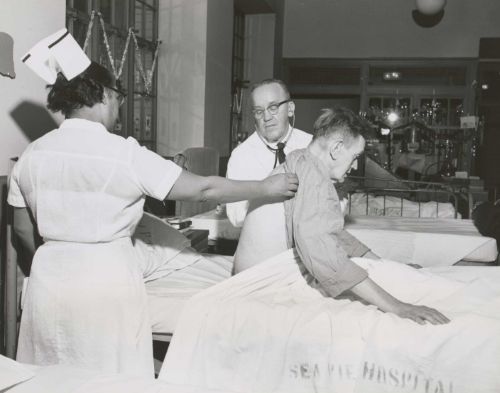
The recruitment of Black women to Seaview Hospital emerged from a labor environment defined by racial discrimination and occupational risk. Although municipal hospitals maintained large nursing staffs, entrance into these positions depended on formal training in programs that routinely excluded Black applicants. Nursing schools at Bellevue and other major New York institutions admitted few, if any, Black students through the first half of the twentieth century, a pattern documented in surveys of nursing education conducted by state and municipal agencies.14 Limited access to training translated directly into limited access to civil service positions, which made the tuberculosis wards one of the few spaces where Black women could secure paid work within the city’s medical system. The labor shortage at Seaview intersected with these barriers, creating an opportunity structured by exclusion rather than equal access.
As white nurses increasingly rejected tuberculosis assignments, city officials and hospital administrators turned to Black women who faced fewer employment alternatives. Newspaper coverage in the New York Amsterdam News, one of the principal Black newspapers in New York City, reported recruitment drives encouraging Black women to apply for work at Seaview during the 1930s and 1940s.15 Civil service hiring rolls held at the New York City Municipal Archives confirm that these recruitment efforts produced a steady influx of applicants who accepted jobs in an environment widely regarded as dangerous. Their willingness to take on roles that white nurses refused reflected both economic need and structural exclusion from safer positions, not simply a desire to participate in public health work.
The positions available to these women varied in training requirements and compensation, yet all involved prolonged direct contact with infectious patients. Job descriptions for attendants and practical nurses in the Department of Hospitals files list responsibilities such as feeding, cleaning, bed making, and assisting with patient mobility, tasks that carried high risk in tuberculosis wards.16 Black women filled these roles at rates far exceeding their representation in other city hospitals, illustrating how racial inequality shaped both the composition of the workforce and the distribution of occupational hazards. Their assignments were not limited to auxiliary labor; as staffing pressures intensified, many undertook complex caregiving tasks that required skill and judgment even without formal recognition as registered nurses.
Some contemporary reports from municipal authorities attempted to portray Seaview hiring practices as based on merit alone, but this narrative collapses under scrutiny. Historians of African American labor have shown that claims of equal opportunity frequently masked entrenched discriminatory structures in government institutions. Scholars examining early twentieth-century Black employment patterns note that Black women were often welcomed into dangerous or low-status positions precisely because white workers avoided them.17 The same dynamic operated at Seaview, where official rhetoric about fairness obscured the reality that racialized labor markets steered Black women into roles that were indispensable to the hospital’s operation but carried disproportionate risk. Understanding this structural context clarifies why more than three hundred Black caregivers eventually formed the core of Seaview’s workforce.
Labor, Risk, and Professional Identity: Daily Life of the Black Angels
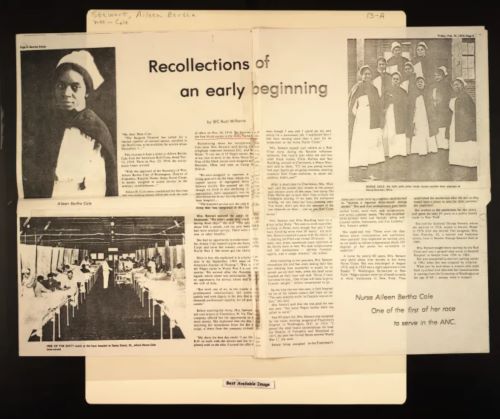
Daily life for the Black women who staffed Seaview Hospital combined physical exhaustion, emotional strain, and constant proximity to airborne infection. Tuberculosis caregiving required frequent bedside contact, and the women who entered the wards confronted a level of occupational risk that shaped both their routines and their identities as workers. Archival reports and oral histories describe repeated cycles of feeding, bathing, repositioning, and monitoring patients whose respiratory distress often demanded immediate intervention.18 These tasks were performed in crowded wards where windows remained open year-round to promote air circulation, conditions that placed caregivers in the path of infectious droplets for prolonged periods.
Many of the women performed duties that exceeded their formal job classifications. Municipal job descriptions for attendants and practical nurses listed basic custodial and supportive responsibilities, yet oral histories preserved at the Schomburg Center show that they often assumed roles associated with trained nursing practice.19 They administered oxygen therapy, prepared patients for procedures, managed linen changes for individuals too weak to move independently, and provided comfort during episodes of severe coughing and hemoptysis. Although they lacked the professional licensure held by registered nurses, their responsibilities required quick judgment and technical skill developed through experience rather than structured instruction.
The emotional demands of the work were equally significant. Tuberculosis patients frequently remained at Seaview for months or years, and caregivers developed relationships that deepened the sense of responsibility carried by the women on the wards. Several oral histories recount moments in which attendants stayed with patients during acute respiratory crises, providing reassurance while simultaneously managing the physical tasks required to stabilize them.20 These accounts challenge administrative narratives that characterized their roles as auxiliary, revealing instead a caregiving environment in which emotional labor and clinical support were inseparable.
Despite this intensive work, the professional status of the Black Angels remained marginalized. Hospital administrators often classified them as attendants or helpers, and this terminology reinforced a hierarchy that placed white registered nurses at the center of institutional prestige. Scholars of nursing history note that discriminatory credentialing practices systematically excluded Black women from roles that offered professional advancement.21 At Seaview, these practices maintained a divide between formal recognition and the realities of daily labor, even as the women’s skills became indispensable to the functioning of the wards.
The combination of occupational danger, limited recognition, and substantial responsibility created a unique professional identity for the Black Angels. They worked within a system that relied on their presence yet denied them the full benefits and status granted to white nurses elsewhere. Their experiences illustrate how Black women carved out spaces of authority within institutions structured by inequality, using skill and resilience to uphold a public health system in crisis. By confronting the dangers of tuberculosis care while developing sophisticated clinical competencies, they reshaped the boundaries of uncredentialed nursing labor and demonstrated the depth of expertise required to sustain Seaview Hospital during its most challenging decades.
The Black Angels and the Transformation of TB Treatment
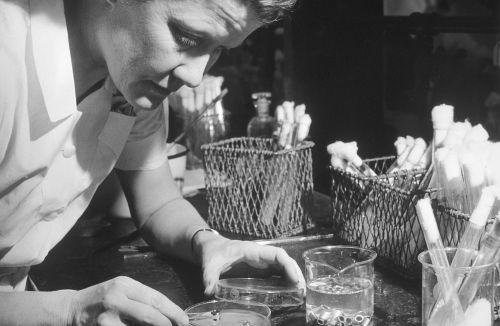
The emergence of antibiotic therapy in the 1940s transformed the medical landscape of tuberculosis care, and Seaview Hospital played a significant role in the early evaluation of new treatments. Before streptomycin became widely available, physicians relied on rest cures and environmental control, which offered limited success against advanced disease. The arrival of streptomycin shifted the therapeutic focus toward bacteriological intervention, and Seaview became one of several institutions that participated in observational and clinical evaluations of the drug. Contemporary scientific reports and archival correspondence from Rutgers University document the hospital’s involvement in these early studies, placing it within a wider national network of tuberculosis research.22 Although the published scientific literature rarely acknowledged the labor of bedside caregivers, these innovations depended on daily patient maintenance performed by the Black Angels.
Administering early antibiotic regimens required intensive monitoring because streptomycin produced side effects that could complicate treatment. Physicians needed regular assessments of hearing loss, renal function, and symptomatic changes, and these evaluations often depended on observations recorded by nursing staff.23 The Black Angels, already central to patient care, became key intermediaries between patients and physicians by identifying declines in respiratory function, noting adverse reactions, and relaying information essential for therapeutic adjustment. Their vigilance ensured that patients remained stable enough to continue experimental therapy, particularly during phases when dosage protocols were still being refined. Their labor therefore shaped the feasibility and the quality of the clinical data generated at Seaview.
The introduction of additional drugs such as para-aminosalicylic acid (PAS) and isoniazid expanded the possibilities for combination therapy, and Seaview contributed to the evaluation of these new regimens as well. Medical historians have shown that combination therapy dramatically reduced mortality and shortened treatment time, which placed further importance on consistent documentation of patient progress.24 Because Black caregivers provided near-constant bedside monitoring, they were positioned to observe therapeutic shifts that occurred gradually, including improvements in appetite, reductions in night sweats, or changes in cough severity. These observations, often recorded in patient charts or relayed directly to attending physicians, formed part of the evidentiary foundation supporting the adoption of antibiotic protocols nationwide.
Despite their contributions, the Black Angels remained largely absent from formal accounts of tuberculosis research. Scientific publications focused on bacteriological theories, drug efficacy, and statistical analysis, leaving little room to acknowledge the operations of clinical care that sustained patients through difficult treatments. Scholars examining the history of medicine have emphasized that bedside labor often disappears from institutional narratives even when it plays a critical role in enabling medical discovery.25 The experiences of the Black Angels demonstrate how racialized labor structures influenced not only who provided care but also how knowledge was produced within clinical settings. Their involvement in day-to-day treatment contributed to medical advances that reshaped global tuberculosis management, even though the historical record obscured their central role.
Public Memory, Racial Erasure, and the Afterlife of Seaview Hospital
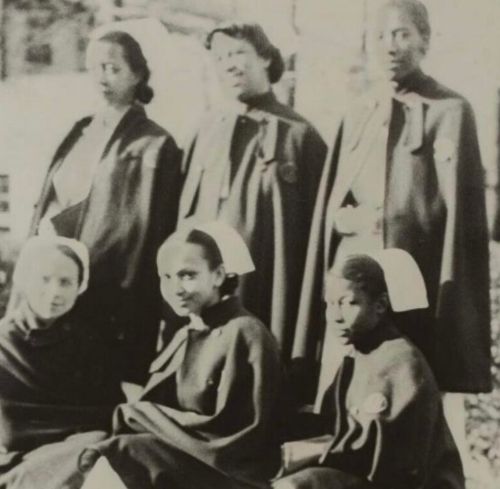
Public recognition of the Black Angels developed slowly, shaped by a historical record that privileged administrative narratives and medical achievements while largely obscuring the labor of bedside caregivers. Early twentieth-century annual reports from the New York City Department of Hospitals offered detailed accounts of building expansions, budget allocations, and therapeutic developments but rarely described the racial composition of the workforce or the experiences of the women who performed the most physically demanding labor.26 This silence reflected broader municipal reporting conventions that emphasized institutional output rather than the human dimensions of care, and it created a documentary landscape in which the presence of more than three hundred Black caregivers could remain unnamed.
The absence of these women from institutional histories mirrored a national pattern of erasure within medical narratives. Scholars of African American medical labor have shown that Black healthcare workers often appeared only marginally in official documents even when they formed the backbone of patient care in segregated or underserved institutions.27 Their labor was essential yet rarely framed as a site of expertise, and the same dynamic structured how Seaview was remembered. As the hospital entered the antibiotic era and tuberculosis mortality declined, public attention shifted toward scientific progress rather than the workers who made the daily operations of the institution possible.
When Seaview Hospital began downsizing in the mid-twentieth century, the historical record grew even thinner. Reports detailing the transition of its facilities into rehabilitation and chronic care units offered little retrospective acknowledgment of the Black Angels or of the role they played during the decades of high tuberculosis incidence.28 As institutional priorities changed, the memory of the tuberculosis wards faded, and the women who had sustained them became even less visible. The transition of Seaview’s physical campus into a collection of long-term care buildings further distanced the public from the era in which the hospital had served as a major tuberculosis center.
Recovering the history of the Black Angels has depended heavily on oral history projects, journalistic investigations, and community-driven memory work rather than on traditional medical or administrative records. Interviews housed at the Schomburg Center for Research in Black Culture preserve some of the only firsthand accounts of daily life on the wards, offering perspectives that municipal documents omitted.29 These narratives provide insight into caregiving routines, emotional experiences, and workplace challenges, and they form a crucial counter archive that fills gaps left by official reports. Without these testimonies, the full extent of the nurses’ contributions would remain difficult to reconstruct.
Public history initiatives have played a central role in reintroducing the Black Angels into broader historical consciousness. Exhibitions, documentary features, and local commemorations have highlighted their work, situating their experiences within conversations about racial inequality in medicine and the undervaluation of Black women’s labor.30 These efforts draw on archival materials, oral histories, and surviving institutional records to create a more complete account of Seaview’s history. They also illustrate how community memory can correct omissions in official narratives and emphasize the interconnectedness of race, labor, and medical innovation.
Even as recognition grows, gaps in the historical record remain substantial. The Black Angels continue to appear infrequently in academic medical histories, and much of the available documentation exists outside traditional archival collections. Historians of public health have argued that the structures that once excluded Black women’s labor from formal acknowledgment still shape which stories are preserved.31 The afterlife of Seaview Hospital thus offers a case study in how racialized labor can be both essential and structurally forgotten. Remembering the Black Angels not only restores their place in the history of tuberculosis care but also demonstrates the necessity of examining who is missing from institutional narratives and why these absences persist.
Conclusion
The history of the Black Angels reveals how racial inequality, gendered labor, and medical innovation intersected within one of New York City’s most important public health institutions. Their work sustained Seaview Hospital during decades when tuberculosis remained a leading cause of death, and their caregiving formed the foundation upon which antibiotic therapy could be tested and refined. Public health officials and medical researchers relied on their presence, yet administrative reports and institutional histories rarely acknowledged the depth of their contribution. This tension between indispensability and invisibility exemplifies broader patterns in the history of American medicine, where Black women provided critical labor without receiving the recognition accorded to their white counterparts.32
Their story also illuminates the structural forces that shaped opportunities within the health professions. Segregation in nursing education, discriminatory hiring practices, and a racialized division of labor created conditions in which Black women entered positions that white nurses rejected. These circumstances produced a workforce that was both essential and marginalized, and the Black Angels developed complex forms of skill and resilience within an environment defined by danger and limited institutional support. Their experiences challenge conventional narratives of medical progress by highlighting the human labor that underpinned the development of antibiotic treatment and the maintenance of large-scale public health facilities.33
Recovering their history underscores the importance of examining who is included in the archival record and who is absent. Oral histories, community memory projects, and recent scholarship have begun to reinsert the Black Angels into the story of tuberculosis care, yet substantial gaps remain. Their legacy demonstrates that medical history cannot be understood solely through scientific milestones or administrative decisions but must also engage with the lived experiences of those whose labor sustained institutions during periods of crisis. Recognizing their contributions enriches our understanding of public health history and affirms the need to address the structural inequalities that shaped, and continue to shape, the healthcare workforce.34
Appendix
Footnotes
- New York City Department of Hospitals, Annual Report (New York: Municipal Printing Office, 1931), sections on Seaview Hospital development.
- New York City Department of Health, Tuberculosis in New York City: Annual Summary (1920–1945), mortality tables and public health plans.
- New York City Department of Hospitals, Annual Report (1934–1943), staffing statistics for Seaview Hospital.
- Recruitment and hiring coverage in the New York Amsterdam News, issues from the 1930s and 1940s; corroborated by civil service hiring rolls in the New York City Municipal Archives.
- Schomburg Center for Research in Black Culture, New York Public Library, Oral History Collections relating to Black nurses at Seaview Hospital.
- Rutgers University Special Collections and University Archives, Selman A. Waksman Papers, correspondence on streptomycin trials and references to Seaview Hospital participation.
- Early institutional references in New York City Department of Hospitals, Annual Report series and promotional materials for Seaview Hospital.
- New York City Department of Health, Annual Report of the Department of Health of the City of New York (New York: Municipal Printing Office, 1915–1930), mortality tables for pulmonary tuberculosis.
- New York City Department of Hospitals, Annual Report (New York: Municipal Printing Office, 1931), sections on Seaview Hospital development and institutional capacity.
- Barron H. Lerner, Contagion and Confinement: Controlling Tuberculosis along the Skid Road (Baltimore: Johns Hopkins University Press, 1998), chapters on nursing labor and sanatorium staffing.
- New York City Department of Hospitals, internal correspondence on staffing shortages during the early 1930s, New York City Municipal Archives, Department of Hospitals Collection.
- Andrea Patterson, “Germs and Jim Crow: The Impact of Disease on the Racial Division of Labor in the Deep South,” Journal of African American History 93, no. 4 (2008): 497–520.
- Sheila M. Rothman, Living in the Shadow of Death: Tuberculosis and the Social Experience of Illness in American History (New York: Basic Books, 1994), discussions on bacteriology and therapeutic uncertainty.
- Darlene Clark Hine, Black Women in White: Racial Conflict and Cooperation in the Nursing Profession, 1890–1950 (Bloomington: Indiana University Press, 1989), chapters on northern nursing schools and segregation patterns.
- Recruitment reporting in the New York Amsterdam News during the late 1930s and early 1940s, accessible through ProQuest Historical Newspapers.
- New York City Department of Hospitals, job classifications and duty descriptions in the Department of Hospitals Records, New York City Municipal Archives.
- Michelle Mitchell, Righteous Propagation: African Americans and the Politics of Racial Destiny after Reconstruction (Chapel Hill: University of North Carolina Press, 2004), analysis of Black women’s labor markets and structural constraints.
- Oral testimony describing ward environments in the Schomburg Center for Research in Black Culture, New York Public Library, Oral History Collections related to Seaview caregivers.
- New York City Department of Hospitals, duty descriptions for attendants and practical nurses, Department of Hospitals Records, New York City Municipal Archives; see also Schomburg Center oral histories for accounts of expanded responsibilities.
- Schomburg Center for Research in Black Culture, Oral History Collections, interviews documenting caregiving relationships and emotional labor among Seaview workers.
- Darlene Clark Hine, Black Women in White, analysis of credentialing barriers and racialized nursing hierarchies.
- Rutgers University Special Collections and University Archives, Selman A. Waksman Papers, correspondence and reports referencing streptomycin evaluations involving Seaview Hospital.
- U.S. Public Health Service reports in the late 1940s and Thomas M. Daniel, Captain of Death: The Story of Tuberculosis (Rochester: University of Rochester Press, 1997), chapters on early antibiotic trials.
- Sheila M. Rothman, Living in the Shadow of Death, analysis of therapeutic shifts following the introduction of PAS and isoniazid.
- Barron H. Lerner, Contagion and Confinement, discussions on the invisibility of nursing labor in tuberculosis histories; Rothman, Living in the Shadow of Death, chapters on clinical routines and patient care.
- New York City Department of Hospitals, Annual Report (New York: Municipal Printing Office, 1930–1950), institutional summaries and statistical reports that omit workforce racial data.
- Darlene Clark Hine, Black Women in White; Vanessa Northington Gamble, “Under the Shadow of Tuskegee: African Americans and Health Care,” American Journal of Public Health 87, no. 11 (1997): 1773–1778.
- New York City Department of Hospitals, Annual Report (1955–1965), transition reports on Seaview facilities and redevelopment of services.
- Schomburg Center for Research in Black Culture, New York Public Library, Oral History Collections relating to Seaview caregivers and African American hospital workers.
- Local Staten Island historical society exhibits and contemporary journalistic projects documented in The New York Times and related public history programs highlighting Seaview’s workforce.
- Michel-Rolph Trouillot, Silencing the Past: Power and the Production of History (Boston: Beacon Press, 1995), theoretical framework for understanding structural silence in historical narratives.
- Vanessa Northington Gamble, “Under the Shadow of Tuskegee: African Americans and Health Care,” American Journal of Public Health 87, no. 11 (1997): 1773–1778.
- Darlene Clark Hine, Black Women in White, analysis of segregated labor structures in nursing.
- Michel-Rolph Trouillot, Silencing the Past, framework for interpreting archival silences and historical erasure.
Bibliography
- Daniel, Thomas M. Captain of Death: The Story of Tuberculosis. Rochester: University of Rochester Press, 1997.
- Gamble, Vanessa Northington. “Under the Shadow of Tuskegee: African Americans and Health Care.” American Journal of Public Health 87, no. 11 (1997): 1773–1778.
- Hine, Darlene Clark. Black Women in White: Racial Conflict and Cooperation in the Nursing Profession, 1890–1950. Bloomington: Indiana University Press, 1989.
- Lerner, Barron H. Contagion and Confinement: Controlling Tuberculosis along the Skid Road. Baltimore: Johns Hopkins University Press, 1998.
- Mitchell, Michelle. Righteous Propagation: African Americans and the Politics of Racial Destiny after Reconstruction. Chapel Hill: University of North Carolina Press, 2004.
- New York Amsterdam News. Various issues, 1930s–1940s. Accessed via ProQuest Historical Newspapers.
- New York City Department of Health. Annual Report of the Department of Health of the City of New York. New York: Municipal Printing Office, 1915–1930.
- New York City Department of Health. Tuberculosis in New York City: Annual Summary. New York: Municipal Printing Office, 1920–1945.
- New York City Department of Hospitals. Annual Report. New York: Municipal Printing Office, 1930–1950.
- New York City Department of Hospitals. Annual Report. New York: Municipal Printing Office, 1955–1965.
- New York City Department of Hospitals. Duty descriptions, job classifications, and internal staffing correspondence. Department of Hospitals Records, New York City Municipal Archives.
- Rothman, Sheila M. Living in the Shadow of Death: Tuberculosis and the Social Experience of Illness in American History. New York: Basic Books, 1994.
- Rutgers University Special Collections and University Archives. Selman A. Waksman Papers. Correspondence and reports relating to streptomycin trials and Seaview Hospital.
- Schomburg Center for Research in Black Culture, New York Public Library. Oral History Collections relating to Seaview caregivers and African American health workers.
- Staten Island Historical Society. Exhibitions and public history materials relating to Seaview Hospital. Various dates.
- Trouillot, Michel-Rolph. Silencing the Past: Power and the Production of History. Boston: Beacon Press, 1995.
- U.S. Public Health Service. Reports on streptomycin monitoring and early antibiotic therapy, late 1940s.
- The New York Times. Articles and public history features referencing Seaview Hospital and the Black Angels. Various dates.
Originally published by Brewminate, 12.10.2025, under the terms of a Creative Commons Attribution-NonCommercial-NoDerivatives 4.0 International license.
About the Author