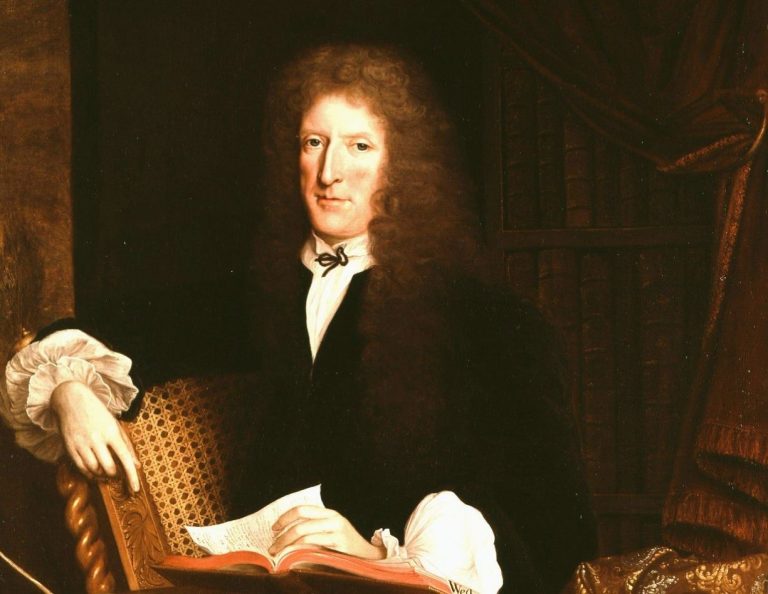

Acoustical science fundamentally transformed the ways that Victorians conceptualized the relations between aesthetics and the body.

By Shannon Draucker
PhD Candidate in English
Boston University
This article focuses on new developments in the burgeoning field of acoustical science that emerged in the mid-to-late-nineteenth century. During this time, sound science began to flourish in England, particularly through lectures by Hermann von Helmholtz and John Tyndall at the Royal Institution. The publications of Helmholtz’s Die Lehre von den Tonempfindungen als physiologische Grundlage für die Theorie der Musik (On the Sensations of Tone as a Physiological Basis for the Theory of Music) (1863, trans. 1875) and John Tyndall’s Sound (1867) also contributed to the transmission of acoustical theory mid-century. This entry traces the reception of these scientific ideas in musical, medical, educational, and literary circles in Victorian England. Focusing especially on new discoveries about sound’s capacity to incite physiological sensations, this essay argues that acoustical science fundamentally transformed the ways that Victorians conceptualized the relations between aesthetics and the body.
In his Christmas Lecture at the Royal Institution of Great Britain on 27 December 1873, the physicist John Tyndall (1820-1893) enraptured his audience members with demonstrations of the wonder of sound.[1] The London Daily News chronicled Tyndall’s appeal to his listeners—mostly children and their parents—with his acoustical tricks, which ranged from “magic wands”—rods he made to vibrate in response to musical notes—to singing flames—gaseous flames that “danced” in response to bells struck with hammers (“Holiday” 5; see Fig. 1). Tyndall explained how sound, which travels as a wave or pulse through the air, causes “shivers” or “tremors” in humans’ auditory nerves (“Holiday” 5). In his notes for the lecture, Tyndall wrote, “Show the explosive violence of the sound . . . a series of flame images where sound is heard. Beautiful!” (RI MS JT/4/6a). The London Daily Newsreported on the audience’s enthusiastic response to the lecture:
[T]here was not anywhere traceable on the faces of the children present anything approaching a conviction of unfair dealing on the part of the parents or guardians who had taken them to hear a lecture ‘On the Propagation of Sound’ upon the afternoon following Boxing night. On the contrary, the beaming faces that circled the stage at Covent Garden or Drury Lane on Friday night did not outshine in signs of cheerful appreciation the performance those who surrounded Professor Tyndall in the Lecture Hall of the Royal Institution…[T]he professor left his class to ponder over the truths that were bursting upon them. (“Holiday” 5)

Tyndall’s lecture marks just one of the lively and popular acoustical demonstrations that occurred in London during the latter half of the nineteenth century. Tyndall gave lectures on sound at the Royal Institution beginning in 1857 and continued them throughout the next three decades. His friend and mentor, the German physicist Hermann von Helmholtz (1821-1894), delivered two high-profile lectures on musical acoustics at the Royal Institution during his visit to London in April 1861.[2] Two years later, from February to May 1863, the German philologist Max Müller (1823-1900) offered a series of lectures on language and sound that discussed Helmholtz’s acoustical work at length—discussions that aroused the interest of the British mathematician and musicologist Alexander Ellis, who would later translate Helmholtz’s work into English (Steege 195).[3] The occurrence of these acoustical lectures in London, and especially at the Royal Institution—Britain’s “central theatre for popular lectures on science,” as David Cahan writes—indicates Victorian England’s preoccupation with the science of sound (Cahan, “Elite” 59).[4]
This essay will discuss the proliferation of acoustical science and its connection to human physiology in Britain during the latter half of the nineteenth century, a period that sound theorist Jonathan Sterne deems an age of “Ensoniment” (rather than “Enlightenment”) and literary critic John Picker terms an “Ausculative Age” (Sterne 2; Picker 7).[5] During the mid-to-late-nineteenth century, thinkers in the burgeoning field of acoustical theory, including Helmholtz, Tyndall, and Edmund Gurney, increasingly emphasized that sound should be conceived as a material rather than ethereal entity. Physicists understood that sound existed as a series of waves consisting of air particles that, when traveling in constant, periodic motion, produced music. Other scientists translated these physical discoveries into physiological ones and explored how sound waves acted on the human body. Just as thinkers in the field of what Benjamin Morgan has recently called “materialist” or “embodied” aesthetics championed the notion that “aesthetic experience [is] . . . routed through the bodily substrate of consciousness,” acoustical scientists introduced the notion that hearing and listening were physiological as well as physical processes (Morgan 89).
The following paragraphs discuss several early theories that connected sound to the body and then focus on later discoveries by Helmholtz, Tyndall, and others. The subsequent sections explore how these acoustical ideas—many of them developed by Continental scientists like Helmholtz—were transmitted in England. The rest of the entry traces how discoveries about sound and corporeality impacted fields such as music, medicine, education, and literature. Sound science offered Victorians in a variety of disciplines new ways to imagine the links between aesthetic and embodied experiences.
Sound science began to emerge as a distinct field of study in the late-eighteenth and early-nineteenth centuries. According to sound theorist Jonathan Sterne, while the scientific exploration of other senses, namely sight, was prominent in the eighteenth century—a period that science historian Leigh Eric Schmidt associates with a stark “ocularcentrism”—auditory science was slower to develop (Sterne 2; Schmidt 3-4). In 1817, the surgeon and anatomist John Harrison Curtis lamented the contemporary ignorance of human hearing processes: “[T]he ear, though the most important of all the senses, has hitherto claimed but little attention from the profession” (Curtis xxv). In his 1855 history of the development of auditory science, the aurist William Robert Wilde (Oscar Wilde’s father) wrote that aural surgery and anatomy were still “at a very low ebb, particularly in Great Britain” at the beginning of the nineteenth century (Wilde 31). Sterne argues that this was due in part to scientists’ frustration with the anatomical complexities of the ear, an organ made up of dozens of tiny, intricate bones and membranes (Sterne 54-5).
Early studies of hearing emerged from studies of sight, as late-eighteenth and early nineteenth-century oculists shifted their attention from the eye to the ear. In 1788, the physician and anatomist Peter Degravers updated the second edition of his 1780 treatise on the eye with an addendum about ear anatomy and pathology (Wilde 29-30).[6 ]In 1797, the physicist Thomas Young used a large inheritance from his uncle to study the similarities between light and sound vibrations (Trower 37).

Doctors interested in deafness also contributed to growing knowledge about ear anatomy and physiology in the early nineteenth century. In 1816, Curtis founded the Royal Dispensary for Diseases of the Ear on Dean Street in Soho Square, where he treated patients and conducted research (Wilde 30-1).[7] He experimented with a variety of acoustical instruments to aid the hearing impaired, including the Hearing Trumpet, the Artificial Ear, and his own invention, the Acoustical Chair, an armchair with a sound barrel affixed to either side that would amplify nearby sounds (Curtis 1-15).
With these studies of the anatomy and physiology of the ear arose explorations of the processes of sound production and transmission. Ernst Chladni, whom Tyndall later deemed the “father of modern acoustics,” demonstrated the material effects of sonic vibration by studying the movement patterns formed by dust and sand on glass in response to the sounding of a tuning fork or the drawing of a violin bow (Jackson 43; see Fig. 2). Inspired by Georg Christian von Lichtenberg’s 1771 experiments with the patterns created by electrical sparks on powder, resin, and dust, Chladni investigated whether sound behaved similarly (Jackson 43). Chladni’s experiments represented early investigations of sound as a force that could affect the material world in predictable—but often invisible—ways.[8]

Despite these earlier studies, in the 1850s, Helmholtz still believed that the scientific world lacked a “summa acoustica,” or general theory of sound (Picker 85). Like Degravers and Young, Helmholtz began his acoustical work as an extension of work in ocular science and his curiosity about the applications of optics to acoustics. Helmholtz began to study sound in 1855 and began lecturing on harmony and music in Germany in 1856 (Vogel 267; Steege 22).[9] These studies developed into his landmark 1863 work Die Lehre von den Tonempfindungen als physiologische Grundlage für die Theorie der Musik (On the Sensations of Tone as a Physiological Basis for the Theory of Music), which the psychologist and later sound theorist Edmund Gurney hailed as an “epoch-making book in the branch of physics which deals with musical sound” (Gurney vi). In this work, Helmholtz explored the concept of sympathetic vibration, or the notion that sound could cause nearby passive bodies such as strings, bells, and glass to vibrate at the same frequency as the tone emitted (Helmholtz 39). This is why, for example, an opera singer’s voice could break glass (Helmholtz 39).[10] Helmholtz’s theories extended to the vibratory responsiveness of the human body, which he believed acted like a “nervous piano” that responded to specific wavelengths of sound (Helmholtz 129).[11] He suggested that the hair-like nerve fibers in the cochlea, the inner cavity of the ear, behaved like strings that vibrate sympathetically to sonic events (Helmholtz 129).
To conduct many of his experiments, Helmholtz developed a resonator: a device that emitted specific, concentrated frequencies of sound and communicated them to human listeners (Helmholtz 531). When the “nipple” of the resonator was attached to the inner ear and the resonator was struck with a tuning fork, the sound would cause the hairs and nerves inside the ear to vibrate at the frequency of the resonator, which would dampen any other ambient noise (Helmholtz 531).
Helmholtz also described the effects of sound on the rest of the human body. He wrote of the “twitching,” “agitations,” and “irritation” of the nerves and muscles in response to the sounding of a tone in the ear (Helmholtz 148). As Sterne writes, Helmholtz’s contributions were twofold; he discovered that hearing involved the principles of physiology as well as the principles of physics (Sterne 65-6).
Helmholtz’s acoustical ideas made their way to England relatively quickly. In 1861, Michael Faraday, the Royal Institution’s Fullerian Professor of Chemistry, and Henry Bence Jones, the Secretary of the Royal Institution, invited Helmholtz to give a Friday Evening Discourse—the most prestigious lecture slot at the Institution—on the conservation of force (Cahan, “Elite” 59). Helmholtz’s Friday Evening Discourse took place on 12 April 1861.[12] In his journal, Tyndall remarked about the large audience for Helmholtz’s lecture but noted that he believed the talk was “not followed, nor I believe appreciated,” as the subject “has already been much talked about in London” (RI MS JT/2/10).[13]
Yet, during the same visit, Helmholtz also offered a course of two afternoon lectures on acoustics, which took place on 8 and 10 of April (RI MS AD/12/E/03/A; see Fig. 3).[14] According to the Illustrated London News, Helmholtz used tuning forks to demonstrate how sound waves produce both fundamental tones and upper partial tones, or overtones, which vibrate at higher frequencies than their fundamental tones (ILN 1861 380). Musical notes are actually complex combinations of fundamental tones and their overtones, which can vary in intensity depending on the speed at which they vibrate (ILN 1861 380). The properties that comprise what humans hear as music, in other words, are governed by the physics of sound.
In these lectures, Helmholtz also showed diagrams of the human ear and communicated, as the Illustrated London News wrote, “the effect which musical combinations would have on the soul” (ILN 1861 380).

Helmholtz’s acoustical lectures at the Royal Institution seemed to have been as hotly anticipated and widely discussed as his Friday Evening Discourse on the conservation of force. Several British newspapers advertised Helmholtz’s lectures on sound.[15] The Illustrated London News, which began advertising Helmholtz’s acoustical lectures as early as December 1860, gave a detailed account of how Helmholtz demonstrated “the great power of the human ear,” which was “instanced in its faculty of distinguishing between the mingled sounds of a crowded ballroom” (ILN 1861 333).
During his 1861 trip to London, Tyndall wrote, Helmholtz made “numerous English friends” with whom he dined, heard lectures, and attended theatre performances (RI MS JT/1/T/482).[16] While in London, Helmholtz also visited the Royal Society, of which he had been a foreign member since 1860 and from whom he would receive the prestigious Copley Medal in 1873—an honor that reflects, as Cahan writes, “the strong social relationship that [Helmholtz] had developed with the British scientific elite” (Cahan, “Awarding” 1).
Perhaps most important for the history of sound science in England was Helmholtz’s friendship with Tyndall, which began during Helmholtz’s 1861 visit, since their relationship seems to have reinvigorated Tyndall’s own interest in acoustics and sound physiology.[17] Tyndall’s 1861 notebooks reveal that the two men collaborated on several acoustical projects while Helmholtz was in London, tinkering together on acoustical apparatuses and visiting an organ factory on Albany Street (RI MS JT/2/10).[18]
After Helmholtz left England, he and Tyndall corresponded frequently about acoustics; the two men often addressed each other as “Lieber Freund” or “Bester Freund” (“Dear Friend” or “Best Friend”) (RI MS JT/1/T/481-503). Tyndall wrote to Helmholtz on several occasions to praise his work. On 16 January 1864, Tyndall wrote to Helmholtz to commend his “excellent work” in On the Sensations of Tone and asked him where he might find a siren instrument of the kind Helmholtz described in the book (RI MS JT/1/T/481).[19] In another (undated) letter, Tyndall remarked, “I have closely studied the first part of the Ton-Emp-findungen lately—It is admirable” (RI MS JT/1/T/503).
Tyndall’s writings and lectures reflect his commitment to sharing Helmholtz’s ideas with a wider British audience. In his introduction to Sound, published in 1867, Tyndall signaled his indebtedness to Helmholtz:
Four years ago a work was published by Professor Helmholtz . . . the scientific portion of which I have given considerable attention Copious references to it will be found in the following pages (Tyndall, Sound viii)
Helmholtz wrote to Tyndall on several occasions in support of his efforts to communicate acoustical science to the Victorian public In November 1866, Tyndall wrote to Helmholtz:
I already saw in the Phil. Mag that you have illustrated the composition of sounds for your listeners at the Royal Institution with electric light and I am grateful to you for making the basis of sound impressions comprehensible to people in this way.” (RI MS JT/1/H/44-TRANS)
In November 1867, Helmholtz reassured Tyndall that he did not consider Tyndall’s work on sound, which Helmholtz’s wife Anna was translating into German, to be a form of competition:
As far as concerns the translation of ‘On Sound’ there can be no question of any rivalry on the score of sound impressions On the contrary the more published by scientific authorities in the sense of my theory, the more impression is gradually made on the public influence and on musicians. (RI MS JT/1/H/31; RI MS JT/1/H/45-TRANS)
Tyndall continued to give demonstrations on acoustics at the Royal Institution throughout his career, including at Christmas Lectures in 1865 and 1873 and in other lecture series in 1871 and 1879 (Proceedings Vol. IX).[20] On Friday, 29 December 1865, the Morning Post reported that Tyndall’s Christmas Lectures on sound that year were “more fully attended than on any previous occasion” (Morning Post 1865 2). In January 1875, the Cambridge Independent Press shared that Tyndall’s acoustical lectures drew an “overflowing auditory” and “fill[ed] every seat in the theatre, demonstrat[ing] the popularity of the speaker” (CIP 3).
In his lectures, Tyndall repeatedly emphasized the physiological aspects of hearing and listening. For instance, he opened his talk on 20 April 1871, by comparing a man to a musical instrument: “These keys and strings are the five senses, each with its apparatus of nerves specially adapted for the needs to the sense to which it belongs” (RI MS JT/4/6a). Later in his career, Tyndall became interested in sound’s interactions with the atmosphere and the effects of weather patterns on sound.[21] Yet, he still continued to discuss the physiological processes involved in sound perception. In his second 1879 lecture, he told his audience members, “We thus must make clear what may be called the mechanical basis of aesthetic feeling” (RI MS JT/4/6b).
Tyndall was not the only member of the British scientific community to share and build upon Helmholtz’s work and to communicate new understandings of the physiology of sound to the British public. From February to May 1863, Max Müller gave a course titled “Lectures on the Science of Language” at the Royal Institution, in which he discussed Helmholtz’s then newly-published (in German) book. Alexander Ellis, who was in the audience, was fascinated by Helmholtz’s ideas and approached Müller after the lecture to ask about the possibility of translating Helmholtz’s work into English (Steege 195). When Helmholtz returned to London in the spring of 1864 to give a course of six lectures on the conservation of energy, he and Ellis met and made plans for the translation (RI MS GB/03/105; Steege 195).[22] Ellis released his first translation (of Helmholtz’s third German edition) in 1875 and his second translation (of Helmholtz’s fourth German edition) in 1885, to which he included his own addendum about sound (Steege 195; J. Davies 167-8).[23]
With Ellis’s translations as well as Tyndall’s Sound now available in England, other scientists continued to develop theories of acoustics and physiology. In 1877, John William Strutt, the third Baron Rayleigh, published The Theory of Sound, in which he discussed how musical sounds could initiate intense bodily responses. Musical notes, he suggested, emerge as a result of rapid and more regular vibrations of the air, in contrast to “noise” that occurs in response to slower and more irregular vibrations (Rayleigh 5, 14). In his 1880 work The Power of Sound, Gurney studied the application of Helmholtz’s ideas to music theory. Gurney wrote that while Helmholtz’s book and acoustical studies in general have been “widely popularized,” he sought to uncover how acoustical ideas relate to specific musical properties such as melody and harmony (Gurney v-vi). He wrote at length about the abilities of certain kinds of music to act on the human body: “In melody . . . there is perpetually involved something more even than a suggestion of movement, namely, a direct impulse to move; which is not only felt but constantly yielded to in varying degrees” (Gurney 103). Likewise, another English psychologist named James Sully, who attended lectures by Helmholtz in Berlin in 1871-2, wrote in his 1874 work Sensation and Intuition that certain kinds of music have “deeply stimulative capabilities” that inspire muscular motor activity (Flint 245; Picker 90; Sully 230-1).[24]
Acoustical science also intersected with theories of physiological aesthetics, proponents of which, as Morgan has recently written, privileged the study of somatic, corporeal responses to art and believed that “aesthetic experience [is] routed through the bodily substrate of consciousness” (Morgan 89). Grant Allen’s Physiological Aesthetics(1877), for instance, applied philosophies of physiological aesthetics to sound and music.[25] Allen theorized that the pleasure experienced upon hearing music is proportional to the number of nerves excited and that volume of sound is related to the “intensity of stimulation” of human nerves (Allen 109).[26]
New discoveries in the field of acoustical science traveled beyond the scientific community and entered the Victorian popular imagination. While articles about sound appeared in newly-emerging scientific periodicals like the popular scientific journal Nature (founded in 1869) and the more psychologically- and philosophically-oriented Mind(founded in 1876), acoustics also permeated non-scientific periodicals.[27] For instance, in 1885, the Tory journal The National Review published a piece titled “Body and Music” by a relatively unknown author named E. Carey. This article relays the narrative of a “professor”—ostensibly fictional, though clearly based on figures like Tyndall and Helmholtz—who offers a public lecture on music and sensation for the “evening’s entertainment” (Carey 382). The professor urges his audience members to abandon their “effete superstition(s)” about the abstract powers of music and launches into a scientific explanation of sound vibrations and the actions of the eardrums and auditory nerves (Carey 383). When one audience member describes being moved to tears by music, the professor replies that his emotional state was simply a reaction to certain vibrations of the air due to sound (Carey 386). Like Helmholtz, Tyndall, and Gurney, Carey’s “professor” describes the kinesthetic potential of music, particularly the unique ability of dance music to arouse intense bodily sensations:
[W]hen a dance-tune is played, the molecular charge, or the wave of motion which it produces, is conveyed to the sensory or afferent nerve along which it is conducted to a nerve-centre, where it meets with a quantity of energy, such, as we learn from physiology, which is thereupon transmitted, or reflected, along a connected motor or efferent nerve, and actuates through the agency of the proper muscles the movements proper to dancing. (Carey 387)
Carey not only offered a lighthearted glimpse into the world of public acoustical lectures but also instructed his readers about the physiological aspects of sound.
Acoustics also became central to Victorian music curricula. In 1873, the theologian and musicologist Sedley Taylor published a textbook titled Sound and Music, which contained in-depth discussions of the theories of Helmholtz and Tyndall.[28] In the preface to the first edition, Taylor described lecturing on the subject at the “South Kensington Museum, the Royal Academy of Music, and elsewhere” (Taylor vii).[29] Copies of Taylor’s book were distributed to students at the Royal College of Music, founded in 1882 (Taylor vii). Similarly, John Broadhouse’s The Student’s Helmholtz (1881) was required reading for music students at Oxford. Upon its 1887 release, a similar text, T. F Harris’s Hand Book of Acoustics for the Use of Musical Students, marketed itself as essential to musical study:
[I]t will enable a candidate to successfully work any papers set in Acoustics at the ordinary musical examinations, including those of the Tonic Sol-fa College, Trinity College, and the examinations for the degree of Bachelor of Music at Cambridge and London. (Hiebert 240; Harris iii-v)
Indeed, several universities required acoustical study as part of their examination proceedings In 1891, both Trinity College London and Oxford advertised in the Musical News that students could receive fellowships and degrees by passing examinations on acoustics and sound physiology (Musical News 1891 113, 543). The Oxford advertisement even specified that students could focus on “Helmholtz’s Sensations of Sound” or works by “Dr. Pole, Dr. Stone, or Sedley Taylor” (Musical News 1891 543).[30] In his preface to the third edition of The Student’s Helmholtz (1892), Broadhouse wrote:
The Universities of Cambridge and London set papers in Acoustics at their examinations for musical degrees…There is, it is believed, little doubt that the other Universities will in due course follow the example set by Cambridge and London, by adding Acoustics to their curriculum for music degrees. (Broadhouse v-vi)
Medical professionals also began to deploy contemporary sound science—particularly new notions of sound’s effects on the human body—in their work. In what music historians have referred to as the early “music therapy” movement, physicians at a range of institutions—from the Cure and Nursing Home in Illenau, Germany to the Earlswood Asylum in England, and the Perkins School of the Blind in Boston—began to use music to treat patients with physical and mental illnesses (Davis 10). An anonymously published 1881 article in The Musical Times and Singing-Class Circular, titled “Music as a Relief to Pain,” refers to a French surgeon named Mr. Vigouroux, who “has obtained the mitigation of pain by administering a recurrent series of sound-waves, by means of a tuning-fork and a sounding-board, to the affected part” (“Relief” 458). Similarly, an October 1880 article in The Musical Times by Henry Clunn references music’s “sensible influence on the circulation of the blood” (Lunn 600). In 1892, the doctor J. Ewing Hunter wrote in the British Medical Journal of an experiment he conducted at his hospital in which seven out of ten patients exposed to music experienced fever reduction (Hunter 923).
Some Victorian “music therapists” believed that music could energize as well as soothe patients. On 24 October 1891, the physician Edwin Goodall wrote a letter to the British Medical Journal, which read:
If, for example, one could inoculate a refractory maniac or deluded patient with a nocturne by Chopin, and so make him susceptible to the influence of suggestion . . . it is conceivable that [the lunatic] might yield up to Strauss or Gung’l that which he guards jealously from the trained psychiatrist. (Goodall 920)
In the Musical Times article on “Music as a Relief to Pain,” the author writes of “a doctor who, finding his patient in a state of confirmed melancholia, managed to induce her to try over some of the music for which she had an especial fondness in former years, and thus not only restored her temporarily to comparative cheerfulness but . . . managed in an almost incredibly short time to effect a permanent cure” (“Relief” 458). Victorian physicians thus translated contemporary discoveries about the physiology of music into medical practice.
Several philanthropic organizations arose based on studies of music’s healing effects on the human body. In 1891, Frederick Kill Harford, an Associate at the Royal College of Music, founded the Guild of St. Cecilia, an organization that brought musicians into a variety of London hospitals and mental institutions because they believed they could alleviate patients’ suffering. The British Medical Journal and other periodicals widely publicized the work of the Guild, and major medical figures such as Florence Nightingale and Sir Richard Quain (the physician to Queen Victoria) praised the organization (Davis 11-12).
Nineteenth-century educators also drew on contemporary understandings of the links between sound and the body to implement new disciplinary techniques. Musical drills—thought to help discipline students’ bodies and minds—became integral parts of many educational programs. Late nineteenth-century physical education manuals such as R. H. McCartney’s Gill’s Physical Exercises or Dumb Bell Drill with Musical Accompaniments (1881) and Barbell or Wand Exercises (n.d.), include music as a crucial component Exercise 14 in Barbell or Wand Exercises, for example, directs students to complete “one movement to each bar of music” (McCartney 32).[31] Educational thinkers such as McCartney thus put new ideas about the kinesthetics of music to practical use.
Acoustical theory perhaps most prominently found its way into Victorian popular culture through literature. As Picker, Gillian Beer, Delia Da Sousa Correa, Phyllis Weliver, and others have argued, Victorian writers were aware of and deeply interested in contemporary sound science. As Picker points out, George Eliot and George Henry Lewes owned six of Helmholtz’s works, including the 1868 French edition of On the Sensations of Tone, which they annotated, as well as German editions and collections of Helmholtz’s popular lectures (Picker 87). In a February 1869 entry in her journal, Eliot wrote: “I am reading about plants, and Helmholtz on music” (Eliot 135). In another entry, Eliot engaged with Helmholtz more explicitly:
If two sonorous bodies tuned in unison or in octaves, one is made to sound, the other will also sound without being touched. Thus the pitch of the notes of a church bell may be ascertained by playing upon a flute under the bell. No sooner is the note blown than the bell will ‘begin to vibrate, emitting’ softly the same note (qtd. in Picker 87)
As Da Sousa Correa has pointed out, we see Eliot’s literary inheritance of these ideas in The Mill on the Floss (1860), in which Eliot emphasizes, according to da Sousa Correa, the “unconscious physiological sensation of music” (Da Sousa Correa 113-114). The heroine Maggie, Da Sousa Correa writes, “does not merely remember but feels ‘the music . . . vibrating in her still’” (Da Sousa Correa 113-114).
Thomas Hardy also demonstrated a long-term interest in and engagement with physiological aesthetics and acoustical theory. John Hughes, Alisa Clapp-Itnyre, and Mark Asquith have written on the importance of music to Hardy’s life and works. While critics like Hughes and Asquith have emphasized Hardy’s affinity for Romantic ideas about music’s transcendent, sublime power, Hardy was also deeply interested in music’s physical and physiological potential.[32] He interacted with Rayleigh at meetings of the Geological Society in London, of which both were members (G. Davies 236). Hardy also read, annotated, and took notes on Gurney’s article “On Some Disputed Points in Music” (1876), which refers at length to the theories of Helmholtz (Hardy, Literary Notebooks I 51). In addition, Hardy took notes on Romanes’s “World as an Eject,” published in the Contemporary Review in July 1886, which discusses Helmholtz’s ideas of sympathetic vibration. With Hardy’s annotations in parentheses, it reads: “The objective explan [scientific] given by Helmholtz of the effects of a sonata on the human brain [e.g. number of vibrations, &c.]” (Hardy, Literary Notebooks I 174). Hardy was thus aware of and curious about the intricacies of sonic vibration and the embodied nature of music listening and performance.
Gerard Manley Hopkins was also interested in the ideas of Helmholtz and Tyndall, which, Beer argues, he learned of in scientific periodicals such as Nature as well as more generalist publications such as The Academy and Nineteenth Century (Beer 244). Hopkins also met Tyndall in the Alps in 1868 (Beer 260). According to Beer, Hopkins was “delighted by optics and acoustics,” especially Helmholtz’s discussion of the different colors, or timbres, of sound (Beer 247). Beer argues that Hopkins absorbed ideas about sound color and “wrote his poems for the voice;” to Hopkins, how poetry sounded was of the utmost importance (Beer 247).
While Picker, Beer, Weliver, and others have uncovered the influence of acoustical ideas on Victorian writers—particularly those about sonic vibrations and waves—there is still room for work on literary responses to ideas about sound and physiology that scientists like Tyndall and Helmholtz emphasized. In the context of Tyndall’s and Helmholtz’s studies of ear anatomy and physiology; for instance, the following passage from Hardy’s The Return of the Native in which Hardy’s aptly-named heroine Eustacia—perhaps a nod to the Eustachian tube of the ear– takes on greater import:[33]
Throughout the blowing of these plaintive November winds that note bore a great resemblance to the ruins of human song which remain to the throat of fourscore and ten It was a worn whisper, dry and papery, and it brushed so distinctly across the ear that, by the accustomed, the material minutiae in which it originated could be realized as by touch. (94)
Here, the synesthetic imagery of the sound of the wind “realized as by touch” calls to mind the growing Victorian appreciation of the exquisite sensitivity of the human ear as discussed by Helmholtz and Tyndall. The tactile imagery of the wind “brushing” against Eustacia’s ear reflects Helmholtz’s notion that sound ignites the vibration of the nerves in the cochlea and Tyndall’s discovery that the ear contains thousands of hair-like fibers that resemble a “lute of 3,000 strings” (Helmholtz 39; Tyndall 324-5).
Similarly, the English novelist J. Meade Falkner’s The Lost Stradivarius (1895) contains an explicit reference to Helmholtz’s notion of sympathetic vibration when two Oxford students hear the sounds of a wicker chair creaking in response to music and theorize that the sounds can be explained by “theories of vibration and affinity . . . there must be in the wicker chair ossiers responsive to certain notes of the violin, as panes of glass in church windows are observed to vibrate in sympathy with certain tones of the organ” (Falkner 13).
The concept of vibratory influence also appears in Mary Augusta Ward’s 1888 novel Robert Elsmere, when the secondary heroine Rose plays violin for her future lover “in a way which set every nerve in [him] vibrating!” (Ward 253). Rose’s musical action and her listener’s visceral reaction echo contemporary theories of sound and nervous response. Though these moments only scratch the surface of the intersections between acoustics and Victorian literature, they indicate that members of the Victorian literary community were attuned to new advancements in sound physiology. These authors used acoustical science to engage with music not merely as a metaphor, symbol, or poetic convention, but rather as a way of capturing the material relationships between art and sensation.
The acoustical work of Helmholtz, Tyndall, and others thus propelled Victorian thinkers in a variety of fields to engage with sound in new ways—from developing music curricula about the physical nature of melody and harmony, to advancing medical techniques that cured pain with sonic vibration, to imagining narratives in which characters and objects quiver. In the Victorian era, then, sound not only created dancing flames, shaking glass, and vibrating bodies, but also fundamentally transformed the epistemological frameworks that nineteenth-century thinkers used to understand both their aesthetic and material worlds.
Appendix
Notes
- Tyndall titled this lecture “On the Motion and Sensation of Sound.”
- Helmholtz titled this lecture series “On the Physiological and Psychological Causes of Musical Harmony and Discord.”
- Müller titled this lecture series “Lectures on the Science of Language.”
- Founded in 1799, the Royal Institution arose in response to French Revolution-era concerns about Britain’s lack of access to Continental science (James, “History” 2). Though it began as a proprietary organization, the Royal Institution became a membership organization in 1810 (James, “History” 2). Unlike other (often more exclusive) scientific organizations, such as the Royal Society, which, as James and Peers write, had their meetings “restricted to their Fellows and their few guests to hear learned papers,” the Royal Institution’s doors on Albermarle Street in Mayfair were open to all who could afford to join, including women (James and Peers 131, 141). The 1799 Prospectus for the Royal Institution describes it as an “Institution For diffusing the Knowledge, and facilitating the general Introduction, of Useful Mechanical Inventions and Improvements; and for teaching, by Courses of Philosophical Lectures and Experiments, the application of Science to the common Purposes of Life” (Prospectus 23-4). These lectures provided both scientific knowledge and entertainment—“a source of novelty that was turned into impressive theatre,” as James G. Paradis writes (Paradis 150).
- Several recent BRANCH articles have discussed the intersections between music and science in the nineteenth century. Phyllis Weliver’s “On Tonic Sol-fa, January 1842” highlights the role of science in musical pedagogy, which Helmholtz’s translator Alexander Ellis advocated. Christopher Keep’s “The Introduction of the Sholes & Glidden Type-Writer, 1874” discusses the role of acoustics in telegraphic technology. Other BRANCH articles mention Helmholtz’s work. Deanna Kreisel, Linda Shires, and Mary Wilson Carpenter all discuss Helmholtz’s optical and ophthalmological studies. Martin Meisel considers Helmholtz’s lectures on energy and force.
- Degravers’s 1780 treatise on the eye was titled “A Complete Physico-Medical and Chirurgical Treatise on the Human Eye”), and his 1788 addendum was titled “Physico-Medical and Chirurgical Treatise on the Human Ear” (Wilde 29-30).
- For more on auditory diseases in nineteenth-century British literature and culture, please see Jennifer Esmail, Reading Victorian Deafness (2013).
- Chladni published his findings in his 1787 book Entdeckungen über die Theorie des Klanges (“Discoveries in the Theory of Sound”), and his work aroused widespread interest across Europe; he showed his plates to Napoleon, for instance (Jackson 34).
- Helmholtz presented his first paper on acoustics and ear anatomy at the Niederrheinische Gesellschaft 1856 (Vogel 267). In 1857, he gave a public lecture titled “Ueber die physiologischen Uraschen der musikalischen Harmonie” (“On the Physiological Causes of Harmony”) for non-scientific audiences (Steege 22).
- As Picker points out, while Helmholtz was not the first scientist to introduce sympathetic vibration—thinkers as early as Galileo experimented with the effects of pitch on glass and string—he was “the first to place it so centrally and with such lucid precision in a broadly conceived theory of hearing” (Picker 86).
- Helmholtz was not the first to use the piano/instrument metaphor to describe processes of the nervous system. The physiologist Johannes Müller, for instance, likened the nervous response of the brain to “playing upon a many-stringed instrument, whose strings resound as the keys are touched. The mind is the player or exciter, the primitive fibers of all the nerves spreading through the brain are the strings, and the nerve endings are the keys” (qtd. in Steege 65-6). Yet, as Steege points out, Müller still emphasized the autonomous mind or “spirit,” while Helmholtz emphasized bodily processes: “[A]t the keyboard (the motor nerve endings) of Müller’s mechanism was an autonomous will in the form of the Geist or Seele, mind or spirit, whereas Helmholtz locates the subject in the role of the piano (via the sensory nerves, which conduct energy in the opposite direction from the motor nerve); the agent pressing the keys has disappeared” (Steege 65-6).
- [Helmholtz’s 1861 Friday Evening Discourse was titled “On the Application of the Law of the Conservation of Force to Organic Nature.”
- The Morning Post was similarly critical: “Such considerations of the effects of the actions of force carry us into the misty region of metaphysics, in which German philosophers delight to ramble; and Professor Helmholtz imagines he has discovered in the dim twilight the source of the vital principal” (Morning Post 1861 4). Cahan writes that Helmholtz did not actually want to present on the conservation of force, “but because Bence Jones and Faraday insisted on this and because the Institution was paying for his other two lectures (both on the physiological foundations of music), he was forced to agree” (Cahan, “Elite” 59-60). Though his lecture on force was perhaps unappreciated, Helmholtz was nonetheless invited back to the Royal Institution in April 1864 to lecture on the conservation of energy (Cahan, “Elite” 61).
- Helmholtz titled his lecture series on acoustics “Musical Acoustics, and on the Physiological and Psychological Causes of Musical Harmony and Discord.”
- On Saturday, 29 December, 1860, the Illustrated London News wrote, “[Helmholtz] has consented to deliver two lectures in English at the Royal Institution of Great Britain, in April next, ‘On Musical Acoustics, and on the Physiological and Psychological Causes of Musical Harmony and Discord’” (ILN 1860 21). On Saturday, 9 March, 1861, the following advertisement appeared in Bell’s Weekly Messenger: “[T]wo lectures on Musical Acoustics, and on the Physiological and Psychological Causes of Musical Harmony and Discord, by Professor Helmholtz, of Heidelberg” (Bell’s 4).
- Tyndall’s notebooks reveal that after Tyndall’s lecture on Thursday, 21 March, 1861, he, Helmholtz, and several other leaders at the Royal Institution, including George Busk, John Lubbock, and William Carpenter, went to see “gymnastic performances at the Alhambra” – a West End theatre and music hall (RI MS JT/2/10). The English physician and zoologist William Carpenter threw a party for Helmholtz, which was attended by leading British scientists such as the mathematician Thomas Archer Hirst and the physicist James Clerk Maxwell (Cahan, “Elite” 59-60).
- Tyndall gave a preliminary series of lectures on sound in 1857, on Thursday afternoons from 22 January to 2 April. In his ninth lecture in 1857, Tyndall referenced “the various nerves of the wonderful human body” and the “appropriation of auditory nerve to sound” (RI MS JT/4/6a).
- On 3 April, Tyndall recorded helping Helmholtz with an acoustical apparatus (RI MS JT/2/10). On Friday, 5 April, the two men went to the organ factory on 119 Albany Street (RI MS JT/2/10).
- The French engineer Charles Caignard de la Tour invented the siren in 1819, a device in which air is forced through holes in circular, metal disks by a bellows; the more rapid rotation the disk, the higher the tone would sound (“The Acoustic Siren”). Multiple scientists, including Heinrich Wilhelm Dove, who designed a version that would emit several sounds simultaneously, improved upon the siren (“The Acoustic Siren”). Helmholtz developed another version in 1862, the “double siren,” which allowed for the production of even more tones (“The Acoustic Siren”).
- Tyndall’s eight lectures in 1871 ran from 20 April to 8 June, and his eight 1879 lectures ran from 13 February to 3 April (Proceedings Vol. IX). In 1882, he gave a lecture titled “resemblance of Sound, Light, and Heat” (RI MS JT/4/6b).
- Tyndall studied sound’s ability to travel through wind and water and different atmospheric conditions; he conducted outdoor experiments at locations such as Kew Gardens, Wimbledon Common, and Old Deer Park and gave lectures on his findings in 1879 and 1882 (RI MS JT/4/6b).
- For more on the relationship between Ellis, Müller, and Helmholtz, please see Steege.
- Ellis’s work on Helmholtz drew attention from other British scientists; in 1867, for instance, Alexander Graham Bell traveled to Ellis’s house London in 1867 to hear about Helmholtz’s theories (Stock 315). Bell wrote in his journals that Ellis “[s]pent several hours explaining the theories and experiments of Professor Helmholtz” (qtd. in Stock 315). Some members of the British public critiqued Ellis’s choice to add an addendum to his 1885 translation. The Musical Times deemed the addendum a reflection of Ellis’s “vanity” and “intellectual delusion” (qtd. in G. Davies 167-8).
- Sully praised Helmholtz at length in Sensation and Intuition: “The physiologist who has reached by far the most brilliant results in…objective analysis of sensation, is Professor Helmholtz. His now famous doctrine of upper-tones is a signal instance of this method of research” (Sully 58). He later commended Helmholtz’s theories as accounting for “much of the mysterious influence of musical impression” and insisted that they should be a “matter of importance to every reflective lover of the art” (Sully 170).
- Allen dedicated his book to Herbert Spencer, who in his “On the Origin and Function of Music” (1857) also illustrated the intersection between music and the body, though he was more interested in sound production. Spencer wrote of the “muscles that move the chest, larynx, and vocal chords, contracting like other muscles in proportion to the intensity of the feelings” (Spencer 404). As Morgan points out, however, Spencer—in his emphasis on the human mind and feelings—aligned more with other associationist thinkers like Alexander Bain (discussed in more detail in the next footnote) than with music physiologists (Morgan 94).
- In his recent book The Outward Mind (2017), Morgan distinguishes between physiological aesthetics and other, earlier associationist philosophies. According to Morgan, associationist thinkers such as Bain, Spencer, and J.S. Mill privileged scientific accounts of the mind to describe aesthetic response; they believed aesthetic pleasure and a sense of beauty developed “out of essentially contingent associations of sensations and ideas” (Morgan 56). For proponents of physiological aesthetics, however, a sense of aesthetic beauty was more “mechanical” – based in bodily response rather than feelings and mental associations (Morgan 60).
- The X-Club, a scientific organization and dining club to which Tyndall as well as Hirst, Lubbock, and T.H. Huxley belonged, was also involved in the production of Nature (Barton 53). The X-Club, which met from 1864-1892, stood for, as Ruth Barton writes, “serious research, against aristocratic patronage of science, for a naturalistic world view, and against the commercialization of science” (Barton 53-4).
- The full title of Taylor’s work is Sound and Music: A Non-Mathematical Treatise on the Physical Constitution of Musical Sounds and Harmony, including the Chief Acoustical Discoveries of Professor Helmholtz (1873).
- The bookplate on the inside of the edition of Taylor’s book that is currently held in the Royal College of Music Library reveals that the book was presented to the Royal College of Music by Macmillan & Co. on 17 October, 1883 (Taylor).
- On 6 March 1891, Trinity College London advertised in Musical News that students could receive fellowships by passing examinations on the philosophy of music, “including advanced knowledge of Musical Acoustics” (Musical News 1891 13). On 4 September, 1891, Oxford stated in Musical News that candidates for the degree of Doctor in Music at Oxford could focus their examinations on acoustics (Musical News 1891 543).
- As some scholars have noted, the use of music for bodily regulation could have more troubling implications as well, as it could encourage repetitive, unconscious work and thus accompany problematic labor practices or forms of bodily control. In her BRANCH article “On Tonic Sol-Fa,” Phyllis Weliver discusses music’s ties to reflexive bodily action: “Music was specifically….frequently being used to explain how association worked and reflexive actions resulted: continued repetition of the same actions would cause a pianist, for instance to grow less labored in connecting the notes on the page and the notes on the keyboard, until the association became unconscious” (Weliver, “On Tonic Sol-Fa”). For more discussions of music and bodily discipline in Victorian England, please see Weliver; Golding, Music and Academia in Victorian Britain; Jeffrey Richards, Imperialism and Music: Britain, 1876-1953; and Annie J. Randall (ed.), Music, Power, and Politics.
- Hughes investigates the relationship between music and individual experience in Hardy’s fiction and poetry, especially music’s connection with human expression, inspiration, and memory, and discusses how Hardy’s inclusion of folk songs in his novels contribute to his nostalgic portrayals of forgotten rural traditions (Hughes 2-5). Clapp-Itynre writes of Hardy’s use of the tradition of bawdy folk songs as both a “euphemism for sex” and a “celebration of the working, rural class—complete with their harsh, crude customs” (Clapp-Itynre 174, 180). Asquith mentions Hardy’s interest in contemporary sound science, yet he focuses more on music’s illumination of metaphysical questions of selfhood in the context of a Darwinian framework in which music is tied to sexual selection. According to Asquith, contemporary understandings of the connections between sound and the nervous system aroused concerns about man’s susceptibility to external influences. The notion of music as a “quantifiable sensory experience,” Asquith argues, complicated notions of individual agency, as “the individual was reduced to a simple cluster of sensations” (Asquith 83). Morgan, Pamela Gossin, and William Cohen have also recently discussed Hardy’s engagements with the body and the senses.
- Eustacia’s name is especially evocative in the context of nineteenth-century sound science, given contemporary discussions of the Eustachian tube. The anatomist and scientist William Wright, for instance, wrote, “In the tympanum we find two principal passages, the first is called the Eustachian tube, which is partly bony, and partly cartilaginous, and descending into an oblique position, forms a trumpet-like prominent entrance into the pharynx, a little above the lower passage of the nose” (Wright 72-3).
Bibliography
- “The Acoustic Siren.” The Science Teaching Collection: Acoustics. Smithsonian Natural Museum of American History. 14 September 2017. <americanhistory.si.edu>
- Advertisement for Degree of Doctor of Music at Oxford University. Musical News. 4 September 1891. 543. MS. Royal College of Music Archives. Royal College of Music Library, London. 5 July 2017.
- Advertisement for Trinity College Fellowship Examination. Musical News. 6 March 1891. 13. MS. Royal College of Music Archives. Royal College of Music Library, London. 5 July 2017.
- Allen, Grant. Physiological Aesthetics. Henry S. King & Co., 1877. Web. Archive.org. 10 May 2016.
- “Art, Science, and Literature.” Newcastle Journal. 12 March 1861. 4. Web. The British Newspaper Archive. 14 September 2017.
- Asquith, Mark. Thomas Hardy, Metaphysics and Music. Hampshire: Palgrave, 2005. Print.
- Barton, Ruth. “‘An Influential Set of Chaps:’ The X-Club and Royal Society Politics, 1865-85.” British Journal for the History of Science 23:1 (March 1990): 53-81. Web. JSTOR. 13 September 2017.
- Beer, Gillian. Open Fields: Science in Cultural Encounter. Oxford: Oxford UP, 1996. Print.
- Bell’s Weekly Messenger. 9 March 1861. 4. Web. The British Newspaper Archive. 25 July 2017.
- Broadhouse, John. The Student’s Helmholtz: Musical Acoustics; or, the Phenomena of Sound as Connected with Music. 1881. 3rd ed. London: William Reeves, 1892.
- Burchfield, J.D. “John Tyndall at the Royal Institution.” “The Common Purposes of Life”: Science and Society at the Royal Institution of Great Britain. Ed. Frank A.J.L. James. 2002. 147-168. New York: Routledge, 2017. Print.
- Cahan, David. “The Awarding of the Copley Medal and the ‘Discovery’ of the Law of Conservation of Energy: Joule, Mayer and Helmholtz Revisited.” Notes and Records of the Royal Society (2011): 1-15. Web. The Royal Society Publishing. 15 September 2017.
- —. “Helmholtz and the British Scientific Elite: From Force Conversation to Energy Conservation.” The Royal Society Journal of the History of Science 66 (2012): 55-68. Web. Open Access. 25 April 2014.
- —. Hermann von Helmholtz and the Foundations of Nineteenth-Century Science. Berkeley: U of California P, 1993. Print.
- Cambridge Independent Press. 23 January 1875. 3. Web. The British Newspaper Archive. 25 July 2017.
- Carey, E. “The Body and Music.” The National Review. London: W.H. Allen & Co., 1885. 382-390. Web. Google Books. 10 June 2016.
- Carpenter, Mary Wilson. “A Cultural History of Opthalmology in Nineteenth-Century Britain.” BRANCH: Britain, Representation and Nineteenth-Century History. Ed. Dino Franco Felluga. Extension of Romanticism and Victorianism on the Net. Web. 11 September 2017.
- Clapp-Itnyre. Angelic Airs, Subversive Songs: Music as Social Discourse in the Victorian Novel. Athens: Ohio UP, 2002. Print.
- Cohen, William. Embodied: Victorian Literature and the Senses. Minneapolis: U of Minnesota P, 2009. Print.
- ‘The Common Purposes of Life’: Science and Society at the Royal Institution of Great Britain. Ed. Frank A.J.L. James. 2002. New York: Routledge, 2017. Print.
- Cummings, W.H. “Music as a Medicine.” Musical News 21:1 (March-December 1891): 426. MS. Royal College of Music Archives. Royal College of Music Library, London. 5 July 2017.
- Curtis, John Harrison. A Treatise on the Physiology and Diseases of The Ear. London: John Anderson, 1819. Web. Google Books. 5 June 2016.
- Da Sousa Correa, Delia. George Eliot, Music and Victorian Culture. Hampshire: Palgrave, 2003. Print.
- Davies, Gordon L. Herries. Whatever is Under the Earth: The Geological Society of London, 1807-2007. London: The Geological Society, 2007. Print.
- Davies, James Q. and Ellen Lockhart. “Introduction: Fantasies of Total Description.” Sound Knowledge: Music and Science in London, 1789-1851. 1-26. Chicago: U of Chicago P, 2016. Print.
- Davis, William. “Music Therapy in Victorian England.” British Journal of Music Therapy 2:1 (1988): 10-16. Web. Oxford Journals. 15 October 2016.
- Eliot, George. The Journals of George Eliot. Eds. Margaret Harris and Judith Johnston. Cambridge: Cambridge UP, 1998. Print.
- Esmail, Jennifer. Reading Victorian Deafness: Signs and Sounds in Victorian Literature and Culture. Athens: Ohio UP, 2013. Print.
- Falkner, J. Meade. The Lost Stradivarius. 1895. 3rd ed. Edinburgh: Blackwood and Sons, 1896. Web. Google Books. 15 September 2017.
- “The Faraday Museum.” Royal Institution of Great Britain. 2014. <http://www.rigb.org/visit-us/faraday-museum>
- Flint, Kate. The Victorians and the Visual Imagination. Cambridge: Cambridge UP, 2000. Print.
- Golding, Rosemary. Music and Academia in Victorian Britain. 2013. New York: Routledge, 2016. Print.
- Goodall, Edwin. “Music As Therapeutic Agency.” The British Medical Journal (October 24, 1891): 920. Web. Google Books. 16 October 2016.
- Gossin, Pamela. Thomas Hardy’s Novel Universe: Astronomy, Cosmology, and Gender in the Post-Darwinian World. Aldershot: Ashgate, 2007. Print.
- Gurney, Edmund. The Power of Sound. London: Smith, Elder, & Co., 1880. Web. Archive.org. 10 May 2016.
- Hardy, Thomas. Literary Notebooks of Thomas Hardy, Vols. I and II. London: Macmillan, 1985. Print.
- —. The Return of the Native. 1878. Toronto: Broadview Editions, 2013. Print.
- Harris, T.F. Hand Book of Acoustics for the Use of Musical Students. 1887. 3rd Edition. London: J. Curwen and Sons, n.d. Print.
- Hemholtz, Anna. Letter to John Tyndall. 18 November 1867. MS. Royal Institution of Great Britain Archives (RI MS JT/1/H/31). Royal Institution of Great Britain, London. 17 July 2017.
- Helmholtz, Hermann. On the Sensations of Tone. 1863. Ed. Alexander Ellis. New York: Dover Publications, 1954. Print.
- —. Translation of Letter from Hermann von Helmholtz to John Tyndall. 29 November 1866. MS. Royal Institution of Great Britain Archives (RI MS JT/1/H/44-TRANS). Royal Institution of Great Britain, London. 11 July 2017.
- —. Translation of Letter from Hermann von Helmholtz to John Tyndall. 24 November 1867. MS. Royal Institution of Great Britain Archives (RI MS JT/1/H/45-TRANS). Royal Institution of Great Britain, London. 11 July 2017.
- Hiebert, Elfrieda. “Listening to the Piano Pedal: Acoustics and Pedagogy in Late Nineteenth-Century Contexts.” Osiris 28:1 (January 2013): 232-253. Web. JSTOR. 28 April 2014.
- “A Holiday Afternoon with Professor Tyndall.” London Daily News. 29 December 1873. Web. The British Newspaper Archive. 13 September 2017.
- Hughes, John. “Ecstatic Sound:” Music and Individuality in the Work of Thomas Hardy. Aldershot: Ashgate, 2001. Print.
- Hunter, J. Ewing. “Is Soft Music a Calmative in Cases of Fever?” British Medical Journal (1892): 923. Web. JSTOR. 15 January 2017.
- “Iconic Objects.” Royal Institution of Great Britain. 2014. <http://www.rigb.org/our-history/iconic-objects>
- Illustrated London News. 29 December 1860. 21. Web. The British Newspaper Archive. 25 July 2017.
- Illustrated London News.13 April 1861. 333. Web. The British Newspaper Archive. 25 July 2017.
- Illustrated London News. 20 April 1861. 380. Web. The British Newspaper Archive. 25 July 2017.
- Jackson, Myles W. Harmonious Triads: Physicists, Musicians, and Instrument Makers in Nineteenth-Century Germany. Cambridge: The MIT P, 2006. Print.
- James, Frank A.L. “Guides to the Royal Institution of Great Britain: History.” Royal Institution of Great Britain.2000. <http://www.rigb.org/docs/brief_history_of_ri_1.pdf>
- James, Frank A.L. and Anthony Peers. “Constructing a Space for Science at the Royal Institution of Great Britain.” Physics in Perspective 9 (2007): 130-185. Web. JSTOR. 15 July 2017.
- Keep, Christopher. “The Introduction of the Sholes & Glidden Type-Writer, 1874.” BRANCH: Britain, Representation and Nineteenth-Century History. Ed. Dino Franco Felluga. Extension of Romanticism and Victorianism on the Net. Web. 11 September 2017.
- Kivy, Peter. Music, Language, and Cognition: And Other Essays in the Aesthetics of Music. Oxford: Oxford UP, 2007. Print.
- Kreisel, Deanna. “The Discovery of Hyperspace in Victorian Literature.” BRANCH: Britain, Representation and Nineteenth-Century History. Ed. Dino Franco Felluga. Extension of Romanticism and Victorianism on the Net.Web. 11 September 2017.
- Lunn, Henry C. “Musical Doctors.” The Musical Times and Singing-Class Circular 21:452 (1 Oct. 1880): 495-6. MS. Royal College of Music Archives. Royal College of Music Library, London. 5 July 2017.
- McCartney, R.H. Barbell or Wand Exercises For Use in Schools with Musical Accompaniment. London: George Gill and Sons, 1881. Web. Google Books. 15 January 2017.
- Meisel, Martin. “On the Age of the Universe.” BRANCH: Britain, Representation and Nineteenth-Century History. Ed. Dino Franco Felluga. Extension of Romanticism and Victorianism on the Net. Web. 11 September 2017.
- Morgan, Benjamin. The Outward Mind: Materialist Aesthetics in Victorian Science and Literature. Chicago: The U of Chicago P, 2017. Print.
- The Morning Post. 15 April 1861. 4. Web. The British Newspaper Archive. 5 September 2017.
- The Morning Post. 29 December 1865. 2. Web. The British Newspaper Archive. 5 September 2017.
- The Morning Post. 18 March1879. 3. Web. The British Newspaper Archive. 5 September 2017.
- “Music as a Relief to Pain.” The Musical Times and Singing-Class Circular XXII (1881): 458. MS. Royal College of Music Archives. Royal College of Music Library, London. 5 July 2017.
- Notices of the Proceedings at the Meetings of the Members of the Royal Institution of Great Britain. Volume VII (1873-5). London: William Clowes and Sons, 1875. Web. HathiTrust Digital Library. 8 September 2017.
- Notices of the Proceedings at the Meetings of the Members of the Royal Institution of Great Britain. Volume VIII (1875-8). London: William Clowes and Sons, 1879. Web. HathiTrust Digital Library. 8 September 2017.
- Notices of the Proceedings at the Meetings of the Members of the Royal Institution of Great Britain. Volume IX (1879-81). London: William Clowes and Sons, 1881. Web. HathiTrust Digital Library. 8 September 2017.
- Paradis, James G. “Satire and Science in Victorian Culture.” Victorian Science in Context. Ed. Bernard Lightman. 143-178. Chicago: U of Chicago P, 1997. Print.
- Picker, John. Victorian Soundscapes. Oxford: Oxford UP, 2003. Print.
- Pite, Ralph. Thomas Hardy: The Guarded Life. New Haven: Yale UP, 2007. Print.
- Prospectus of the Royal Institution of Great Britain. London: Bulmer and Co., 1800. Web. Google Books. 8 September 2017.
- Rayleigh, John William Strutt. The Theory of Sound. London: Macmillan and Co., 1877. Web. Archive.org. 10 May 2016.
- Registers of Members. 1861-2. MS. Royal Institution of Great Britain Archives (RI/MS/AD/12/E/03/A): vi-vii. Royal Institution of Great Britain, London. 17 July 2017.
- Schmidt, Leigh Eric. Hearing Things: Religion, Illusion and the American Enlightenment. Cambridge: Harvard UP, 2000. Print.
- Shires, Linda M. “Color Theory – Charles Lock Eastlake’s 1840 Translation of Johann Wolfgang von Goethe’s Zur Farbenlehre (Theory of Colours.” BRANCH: Britain, Representation and Nineteenth-Century History. Ed. Dino Franco Felluga. Extension of Romanticism and Victorianism on the Net. Web. 11 September 2017.
- Spencer, Herbert. Letter to John Tyndall. 3 November 1886. MS. Royal Institution of Great Britain Archives (RI MS JT/1/S/129). Royal Institution of Great Britain, London. 11 July 2017.
- —.“The Origin and Function of Music.” 1857. Essays: Scientific, Political, and Speculative, Vol. II. London: Williams and Norgate, 1891. Web. Google Books. 10 May 2016.
- Steege, Benjamin. Helmholtz and the Modern Listener. Cambridge; Cambridge UP, 2012. Print.
- Sterne, Jonathan. The Audible Past: Cultural Origins of Sound Reproduction. Durham: Duke UP, 2003. Print.
- Stock, Jonathan P.J. “Alexander J. Ellis and His Place in the History of Ethnomusicology.” Ethnomusicology 51:2 (Spring/Summer 2007): 306-25. Web. JSTOR. 15 June 2017.
- Syllabus. “A Course of Six Lectures on the Natural Law of Conservation of Energy by Professor H. Helmholtz, F.R.S.” MS. Royal Institution of Great Britain Archives (RI MS GB 03/0104-6). Royal Institution of Great Britain, London.
- Sully, James. Sensation and Intuition: Studies in Psychology and Aesthetics. London: C. Kegan Paul & Co., 1880. Web. Archive.org. 10 May 2016.
- Taylor, Sedley. Sound and Music: A Non-Mathematical Treatise on the Physical Constitution of Musical Sounds and Harmony, including The Chief Acoustical Discoveries of Professor Helmholtz. 1873. 2nd ed. London: Macmillan & Co., 1883. Print.
- Trower, Shelley. Senses of Vibration: A History of the Pleasure and Pain of Sound. London: Bloomsbury, 2012. Print.
- Tyndall, John. Fragment from John Tyndall to H. Helmholtz. N.d. MS. Royal Institution of Great Britain Archives (RI MS/T/503). Royal Institution of Great Britain, London. 11 July 2017.
- —. Journal of John Tyndall, October 1858-July 1871. MS. Royal Institution of Great Britain Archives (RI MS JT/2/10). Royal Institution of Great Britain, London. 17 July 2017.
- —. Letter from John Tyndall to Hermann von Helmholtz. 16 January 1864. MS. Royal Institution of Great Britain Archives (RI MS JT/1/T/481). Royal Institution of Great Britain, London. 11 July 2017.
- —. Letter from John Tyndall to Hermann von Helmholtz. 1 June 1865. MS. Royal Institution of Great Britain Archives (RI MS JT/1/T/482). Royal Institution of Great Britain, London. 12 July 2017.
- —. Letter from John Tyndall to Hermann von Helmholtz. 10 October 1870. MS. Royal Institution of Great Britain Archives (RI MS JT/1/T/487). Royal Institution of Great Britain, London. 12 July 2017.
- —. Letter from John Tyndall to Hermann von Helmholtz. N.d. MS. Royal Institution of Great Britain Archives (RI MS JT/1/T/503). Royal Institution of Great Britain, London.
- —. Notes for Lectures on Sound, Vol. I. 1854-1875. MS. Royal Institution of Great Britain Archives (RI MS JT/4/6a). Royal Institution of Great Britain, London. 17 July 2017.
- —. Notes for Lectures on Sound, Vol. II. 1875-1882. MS. Royal Institution of Great Britain Archives (RI MS JT/4/6B). Royal Institution of Great Britain, London. 17 July 2017.
- —. Sound. London: Longmans, Green, and Co., 1867. Web. Archive.org. 20 April 2014.
- —. Volume of Manuscript Lecture Notes of John Tyndall. Notes for Lectures on Sound, Vol. II. 1875-1882. MS. Royal Institution of Great Britain Archives (RI MS JT/4/6b). Royal Institution of Great Britain, London. 12 July 2017.
- Valentine to John Tyndall. N.d. MS. Royal Institution of Great Britain Archives (RI MS JT/8/3). Royal Institution of Great Britain, London. 17 July 2017.
- Vogel, Stephan. “Sensations of Tone, Perception of Sound, and Empiricism: Helmholtz’s Physiological Aesthetics.” Hermann von Helmholtz and the Foundations of Nineteenth-Century Science. Ed. David Cahan. Berkeley: University of California Press, 1993. 259-290. Print.
- Ward, Mary Augusta. Robert Elsmere. 1888. Brighton: Victorian Secrets, 2013. Print.
- Weliver, Phyllis. The Musical Crowd in English Fiction, 1840-1910. New York: Palgrave Macmillan, 2006. Print.
- —. “On Tonic Sol-fa, January 1842.” BRANCH: Britain, Representation and Nineteenth-Century History. Ed. Dino Franco Felluga. Extension of Romanticism and Victorianism on the Net. Web. 15 January 2017.
- —. Women Musicians in Victorian Fiction, 1860-1900: Representations of Music, Science, and Gender in the Leisured Home. Aldershot: Ashgate, 2000. Print.
- Wilde, William Robert. Practical Observations on Aural Surgery and the Nature and Treatment of Diseases of the Ear. Philadelphia: Blanchard & Lea, 1853. Web. Google Books. 10 May 2016.
- Wright, William. An essay on the human ear. London: Longman, Hurst, Rees, Orme, and Brown, 1817. Web. Archive.org. 10 May 2016.
- Zon, Bennett. Representing Non-Western Music in Nineteenth-Century Britain. Rochester: U of Rochester P, 2007. Print.
Originally published by BRANCH Collective (June 2018) under the terms of a Creative Commons Attribution 3.0 Unported license.
About the Author