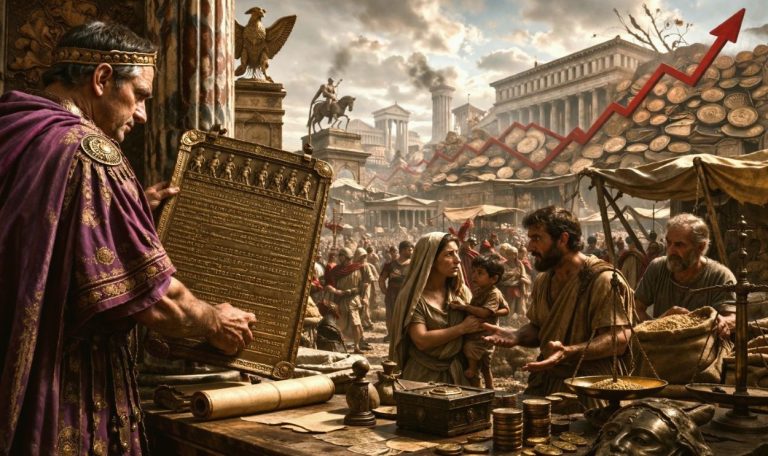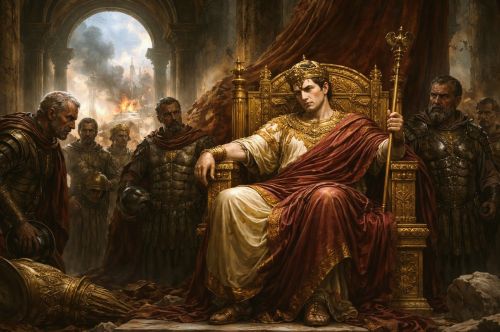
Inheriting imperial power amid systemic crisis, Honorius embodied the widening gap between symbolic sovereignty and functional control in late Roman governance.

By Matthew A. McIntosh
Public Historian
Brewminate
Introduction: Inherited Authority in an Era of Structural Collapse
When Emperor Theodosius I died in 395 CE, the Roman Empire did not collapse; it divided. His sons Arcadius and Honorius assumed authority over East and West respectively, formalizing an administrative separation that had been developing for decades. Yet the division did not produce parity. The Western Empire inherited the more fragile fiscal base, longer and more exposed frontiers, and a military system increasingly dependent upon federate forces whose allegiance rested on negotiation rather than tradition. Honorius, only ten years old at his accession, did not inherit a stable dominion. He inherited a state already strained by structural imbalance.
The imperial office, however, remained symbolically potent. Law codes were promulgated in the emperor’s name. Coinage bore his image. Court ritual affirmed continuity with the Augustan and Theodosian past. Authority appeared intact. Yet beneath these forms lay mounting weakness. Revenue contraction constrained frontier defense. Regional military commanders accumulated disproportionate influence. Aristocratic intermediaries mediated policy between court and provinces. The institutional shell of empire endured even as the material foundations that sustained it eroded.
The anecdote recounting Honorius’ supposed confusion between the city of Rome and his pet chicken named Roma has long shaped popular memory of his reign. Whether apocryphal or preserved through hostile narrative tradition, the story survives because it condensed a wider perception of detachment. Procopius, writing in the sixth century, presents the episode as illustrative rather than investigative, and later retellings amplified its satirical edge. The persistence of the narrative reflects less a secure chain of evidence than a durable interpretive framework. Late antique historiography often reduced complex administrative decline to emblematic scenes designed to communicate moral failure. The chicken story operates as a literary device through which contemporaries and successors expressed frustration with imperial insulation. It captured, in miniature, the suspicion that the emperor remained protected by ceremony and distance while the western provinces endured escalating insecurity. Its endurance reveals as much about memory and political rhetoric as it does about Honorius himself.
Honorius was neither the singular architect of Western collapse nor a trivial incompetent. His reign instead reveals the widening tension between inherited legitimacy and operational capacity in the early fifth century. He governed amid accelerating military pressure, diplomatic instability, and administrative fatigue that predated his maturity. Youth, court isolation, and reliance upon powerful generals shaped the empire’s response to these challenges. The result was a growing disjunction between symbolic sovereignty and effective command an imbalance that would become starkly visible in the decades that followed.
The Political Inheritance of 395 CE: Division without Stability

The death of Theodosius I in January 395 CE marked the final consolidation of imperial division between East and West. While administrative bifurcation had existed before, Theodosius’ settlement formalized two courts under his sons: Arcadius in Constantinople and Honorius in the West. The arrangement did not signal immediate rupture. Laws continued to be issued in both emperors’ names, and imperial ideology maintained the fiction of unity. Yet beneath this ceremonial coherence lay a developing asymmetry. The eastern provinces possessed denser urban networks, stronger fiscal systems, and greater strategic depth. The West inherited wider frontiers, a thinner tax base, and a heavier military burden relative to its resources.
The western fiscal structure had long depended upon North African grain revenues and Gallic taxation, but collection mechanisms were increasingly strained by local aristocratic resistance and regional instability. The imperial government required steady revenue to maintain mobile field armies, subsidize federate contingents, and support court administration. As tax compliance faltered and territorial insecurity mounted, fiscal contraction intensified. The imbalance was not catastrophic in 395, but it limited flexibility. The Western Empire possessed fewer reserves with which to respond to unexpected shocks.
Military organization further complicated the inheritance. The late Roman army had evolved into a system combining frontier garrisons with mobile field forces commanded by magistri militum. In theory, this structure provided defensive depth. In practice, it required coordination, rapid communication, and stable leadership. The increasing incorporation of federate troops, Gothic and other Germanic groups settled within imperial borders under treaty obligations, added a layer of diplomatic complexity. These arrangements were not inherently unstable; federate service had precedent. Yet loyalty was contingent upon consistent payment, recognition, and political trust. In an environment of court rivalry and fiscal strain, these conditions were not always met.
The Western court also faced the challenge of internal political equilibrium. Powerful generals, notably Stilicho, emerged as indispensable figures in managing both military and diplomatic affairs. The emperor’s minority elevated such commanders from advisors to effective guardians of policy. While this arrangement preserved continuity in the short term, it created structural dependency. Authority resided symbolically in the emperor, but operational command flowed through military intermediaries. This division between titular sovereignty and executive capacity introduced fragility into decision-making processes.
The geographic relocation of the western capital to Milan and later to Ravenna reinforced this pattern. Ravenna’s defensible marshlands provided security against invasion, but the city’s distance from Rome and from volatile frontier regions deepened the court’s insulation. The move reflected strategic calculation: the imperial center sought defensibility in an era of mounting pressure along the Rhine and Danube. Yet physical security came at political cost. Ravenna’s marsh-bound isolation reduced daily interaction with senatorial elites in Rome and limited direct imperial visibility among provincial populations. Communication between court and frontier commanders depended upon layered bureaucratic channels, slowing responsiveness in moments that demanded speed. Moreover, the symbolic shift away from Rome complicated imperial legitimacy. Though Rome no longer functioned as the primary administrative capital, its cultural and ideological weight endured. Governing from a protected enclave risked reinforcing perceptions of remoteness at precisely the moment when imperial presence required reinforcement.
By 395, the Western Roman Empire did not stand on the brink of immediate dissolution. It retained administrative continuity, military forces, and ideological legitimacy. What it lacked was structural resilience equal to its expanding burdens. Division without effective coordination, fiscal limitation without reform, and delegated command without clear hierarchy created an environment in which crises would test not merely individual competence but institutional capacity itself. Honorius inherited this configuration. His reign unfolded within the constraints it imposed.
Court Isolation and the Problem of Ravenna
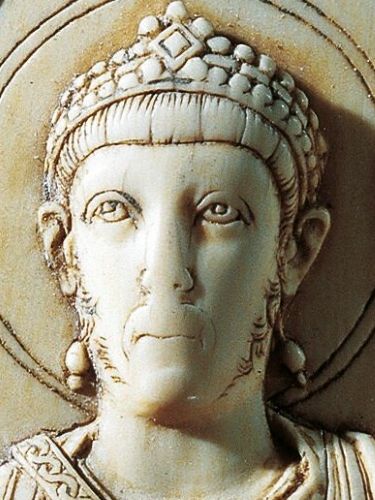
The relocation of the western imperial court to Ravenna in 402 CE was a strategic response to mounting military pressure in northern Italy. Milan, previously the effective capital of the West, had grown vulnerable to Gothic movements across the Alpine passes and to the broader instability radiating from frontier breakdown along the Rhine and Danube. Ravenna, by contrast, was shielded by marshlands, lagoons, and limited land approaches that rendered it exceptionally difficult to assault. Its harbor access provided supply advantages, while its geography complicated siege warfare. From a purely military perspective, the decision was rational and arguably necessary. The emperor’s person was the embodiment of Roman sovereignty; safeguarding him was not merely symbolic but constitutional. Yet the shift from Milan to Ravenna carried consequences that extended beyond tactical defense. By embedding the court within a naturally fortified enclave, the Western government prioritized imperial survival over imperial presence, subtly altering the relationship between ruler and realm.
Ravenna’s geography fostered insulation. Its relative inaccessibility, while advantageous in crisis, restricted the informal channels through which imperial authority traditionally interacted with senatorial elites, military commanders, and provincial delegations. Court ceremonial intensified within this protected enclave. Access to the emperor became mediated through layers of officials, chamberlains, and military intermediaries. Physical removal from Rome, the symbolic heart of the empire, further weakened the perception of imperial immediacy. The emperor remained sovereign in law and ritual, but increasingly distant from the lived realities of frontier warfare and provincial distress.
This isolation amplified the influence of key court figures, most notably Stilicho, whose position as magister militum and guardian of Honorius effectively placed executive authority in his hands. As long as Stilicho maintained military credibility and political support, this arrangement preserved stability. However, the concentration of practical power in a single general heightened vulnerability to factional intrigue. Court rivalries, accusations of disloyalty, and shifting alliances transformed Ravenna into a theater of political maneuvering in which access to the emperor became a decisive instrument. The emperor’s reliance on intermediaries, combined with restricted access to alternative counsel, narrowed the range of perspectives shaping policy at critical moments. When governance depends upon a single conduit of military competence, the removal of that conduit exposes the fragility beneath ceremonial unity.
The problem of Ravenna was not incompetence but constriction. Defensive architecture protected the emperor but limited adaptive responsiveness. Insulation fostered dependence; dependence intensified political fragility. When Stilicho fell from favor and was executed in 408 CE, the network of military coordination he had maintained fractured rapidly. The court’s seclusion did not merely symbolize detachment; it structured it. By prioritizing imperial security over imperial integration, the Western government deepened the gap between ceremonial sovereignty and effective command at precisely the moment when cohesion was most needed.
Stilicho, Delegated Power, and the Fragility of Military Command
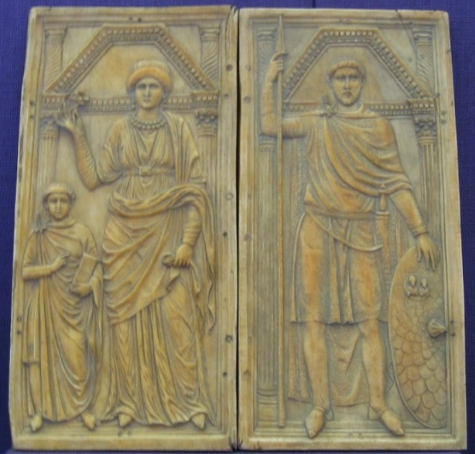
Flavius Stilicho stood at the center of western governance during Honorius’ minority. As magister militum and the late Emperor Theodosius I’s trusted general, Stilicho claimed guardianship over both Honorius and, controversially, Arcadius in the East. Whether that claim reflected genuine testamentary authority or political maneuvering, it positioned Stilicho as the indispensable executor of imperial policy in the West. His marriage into the Theodosian dynasty further reinforced his proximity to imperial legitimacy, embedding him within the ruling house rather than merely alongside it. Stilicho’s military competence, diplomatic negotiation with Gothic groups, and management of frontier crises provided continuity at a time when the emperor himself could not exercise direct command. He coordinated responses to incursions in Italy and the Balkans, balanced relations with federate leaders, and sought to preserve the integrity of western defenses amid mounting strain. In practical terms, Stilicho became the axis around which western stability revolved, embodying the fusion of military command and civil authority that Honorius could not yet personally sustain.
Delegated authority, however, is structurally unstable when its legitimacy remains contested. Stilicho’s dominance bred resentment among court factions and suspicion among eastern officials who rejected his claims to broader guardianship. His mixed Vandal heritage further complicated perceptions within a political culture increasingly sensitive to ethnic boundaries amid barbarian settlement. Military leadership in the late empire required not only battlefield effectiveness but also the maintenance of trust across civil and court hierarchies. Stilicho’s position depended upon a delicate equilibrium between imperial favor, aristocratic cooperation, and military loyalty. The arrangement functioned so long as his authority remained unchallenged.
Stilicho’s campaigns against Alaric and other Gothic forces illustrate both the potential and limits of delegated power. He achieved tactical successes and temporarily stabilized Italy, preventing immediate catastrophe at moments when Gothic advances threatened the peninsula. Yet broader strategic resolution proved elusive. Negotiated settlements with federate groups required fiscal resources, political backing, and sustained confidence between Roman authorities and Gothic leadership. These conditions were unevenly present. The western court oscillated between confrontation and accommodation, reflecting competing assessments of risk, honor, and expediency. Stilicho’s efforts to integrate Gothic contingents into imperial structures reveal an awareness of demographic and military realities, but they also exposed the empire’s dependency on groups whose allegiance remained contingent. His capacity to coordinate military defense did not translate into durable structural reform. The underlying pressures of manpower shortages, fiscal contraction, and migratory movements persisted beyond individual engagements, limiting the transformative potential of even successful campaigns.
The execution of Stilicho in 408 CE marked a decisive rupture. Court intrigue, fueled by accusations of treachery and alleged collusion with barbarian forces, culminated in his arrest and death under the authority of Honorius. The purge extended beyond Stilicho himself to his supporters within the military establishment, dismantling a network of officers who had developed experience managing federate diplomacy and frontier coordination. This sudden removal of the western empire’s most experienced commander did not simply eliminate a political rival; it destabilized command continuity at a critical juncture. Federate troops who had negotiated directly with Stilicho faced uncertainty regarding their status and payment. Internal distrust deepened. Delegated authority had concentrated operational competence in one figure; its abrupt elimination exposed the absence of institutional redundancy capable of sustaining strategy without him.
The consequences were immediate and severe. Without Stilicho’s coordinating presence, diplomatic channels with Alaric deteriorated. Gothic forces, previously managed through negotiation and calibrated confrontation, advanced with fewer constraints. Internal purges of barbarian troops serving within Roman ranks further weakened defensive capacity. The state’s response to crisis shifted from strategic management to reactive fragmentation. Authority remained vested in Honorius, yet effective military leadership fractured into competing and often inexperienced hands.
Stilicho’s career reveals the paradox of delegated command in late Roman governance. Concentrating power in a capable general could stabilize an empire governed by a minor emperor, but it also deepened dependency upon personal authority rather than institutional resilience. When that personal authority collapsed, the system lacked mechanisms to absorb the shock. The fragility of western command in 408 was not solely the result of conspiracy or misjudgment; it was the culmination of a structure that substituted individual competence for durable integration between civil sovereignty and military execution.
The Gothic Crisis and Diplomatic Failure

The crisis surrounding Alaric and the Visigoths did not emerge abruptly in 408 CE, nor was it reducible to simple invasion. Gothic groups had entered imperial territory decades earlier under negotiated settlement after the Battle of Adrianople in 378. Their incorporation into Roman military structures reflected a broader late imperial strategy of accommodation. By the early fifth century, however, these arrangements had grown strained. Payment delays, disputed status, and shifting political alliances created conditions in which federate loyalty could no longer be assumed. Alaric’s leadership represented not merely external aggression but the assertion of a commander seeking secure recognition within the imperial hierarchy.
Alaric’s campaigns in Italy between 401 and 410 revealed the fragility of Roman diplomatic management. Initially confronted by Stilicho, the Gothic advance was contained through a mixture of military engagement and negotiated settlement. Yet after Stilicho’s execution, the diplomatic architecture sustaining these arrangements collapsed. The Western court vacillated between hostility and concession, alternately refusing and promising payments, titles, or territorial accommodation. Envoys were dispatched, proposals drafted, and partial agreements tentatively reached, only to be undermined by factional hesitation within Ravenna. Such inconsistency signaled weakness. In late Roman political culture, negotiated integration required credible commitment backed by reliable fiscal support and political endorsement. Without unified backing from court elites, offers extended to Alaric appeared provisional and reversible. The absence of sustained policy coherence deepened mistrust and escalated confrontation, transforming what might have remained a difficult negotiation into a spiraling confrontation shaped by suspicion and recalculation.
The movement of Gothic forces across the Italian peninsula exposed structural deficiencies in western defense. Frontier troops had already been redeployed to address crises elsewhere, leaving Italy comparatively vulnerable. Local elites, long accustomed to imperial protection, faced the reality of mobile warfare within the heartland of the empire. The inability to decisively defeat or fully integrate Alaric’s forces demonstrated that the Western government lacked both the resources and unified command necessary to impose durable solutions. The crisis was not solely military; it was administrative. Coordination between fiscal policy, military deployment, and diplomatic negotiation proved inadequate under conditions of court instability.
Negotiation attempts in 409 and 410 further illustrate the breakdown of strategic clarity. Alaric sought recognition as magister militum and secure provisioning for his followers, requests that reflected the logic of incorporation rather than annihilation. The court, wary of elevating a Gothic leader to high office yet unable to eliminate him militarily, hesitated. Competing factions within Ravenna advanced divergent strategies, some advocating accommodation, others insisting upon resistance or delay. This internal division produced contradictory signals that undermined Rome’s bargaining position. Each failed negotiation eroded credibility. The Gothic leader’s repeated marches on Rome were not expressions of irrational destruction but instruments of leverage in a protracted bargaining process. The tragedy lay in the state’s inability to reconcile short-term political anxieties with long-term structural necessity. Instead of converting federate leadership into stable imperial partnership, the Western government allowed distrust and indecision to convert negotiation into siege.
When Rome was finally sacked in August 410, the event shocked the Mediterranean world, yet it did not signify immediate territorial annihilation. The city was plundered but not destroyed; imperial administration continued elsewhere. Nonetheless, the sack crystallized the consequences of diplomatic miscalculation layered upon institutional fragility. The Gothic crisis revealed that federate integration without stable policy coherence could transform negotiated partnership into adversarial confrontation. It exposed the limits of imperial authority when fiscal constraint, political factionalism, and military dependency converged. The failure was not a single decision but a pattern of inconsistency that allowed a manageable challenge to escalate into symbolic catastrophe.
The Sack of Rome (410 CE): Symbolic Catastrophe
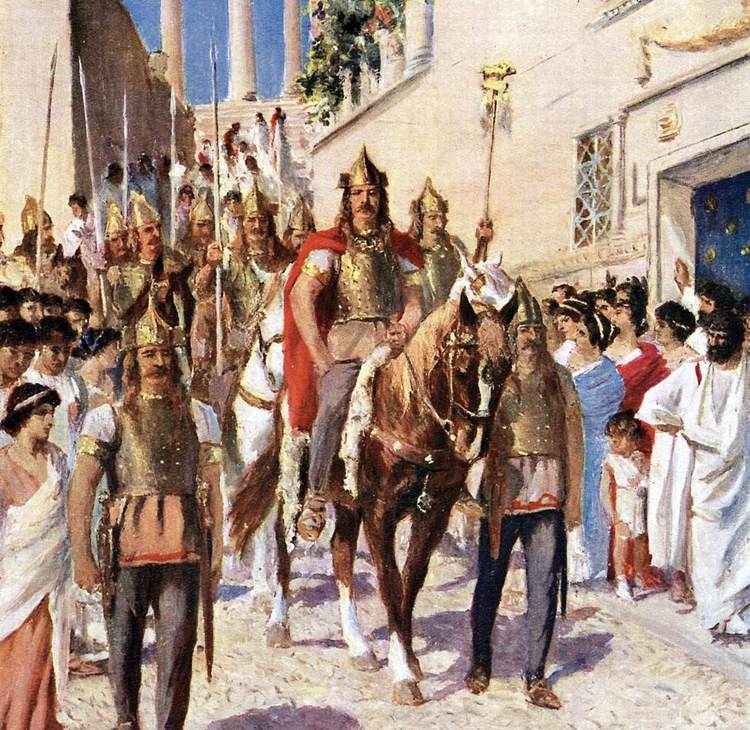
When Alaric’s forces entered Rome in August 410 CE, the event reverberated far beyond the physical damage inflicted upon the city. For nearly eight centuries, Rome had not fallen to a foreign enemy. Even as imperial administration shifted to Milan and later Ravenna, the city retained unmatched symbolic gravity. It remained the architectural embodiment of imperial continuity, the seat of senatorial prestige, and the cultural axis of Mediterranean memory. Its breach signaled not merely military failure but the puncturing of an idea: that Rome, however strained, was inviolate.
The sack itself was limited in duration and scope compared to later medieval devastations. Contemporary accounts describe plunder, the seizure of captives, and episodes of violence, yet the city was not razed nor permanently occupied. Churches reportedly offered sanctuary, and Gothic forces withdrew after three days. From a strictly strategic standpoint, the Western Empire survived the episode. Administrative functions continued, and imperial authority did not immediately dissolve. Nevertheless, the psychological impact eclipsed the material destruction. The event demonstrated that the empire could no longer guarantee the security of its most venerable city.
Reactions across the Roman world reveal the depth of the shock. Pagan critics interpreted the catastrophe as divine retribution for the abandonment of traditional cults, arguing that Christian ascendancy had undermined Rome’s protective deities. Christian writers, in turn, reframed the event within a providential framework, insisting that earthly cities were transient while the heavenly city endured. The debate found its most enduring expression in Augustine’s City of God, composed in the years following the sack. Augustine did not deny the severity of the event; rather, he repositioned it within a theology that detached ultimate meaning from imperial fortune. The sack catalyzed not only political anxiety but intellectual transformation.
Within the Western court, however, the response remained constrained by existing structural limitations. Honorius, secure in Ravenna, did not mount a dramatic counteroffensive nor enact sweeping reform. Military resources were insufficient for decisive retaliation, and diplomatic recalibration lagged behind events. The empire’s inability to prevent the sack had already revealed its vulnerabilities; its limited capacity to respond underscored them. The persistence of imperial ritual and administration after 410 masked a reality of diminished authority over both territory and narrative.
The event also accelerated shifts in elite perception. Senatorial families reconsidered the security of their estates and the reliability of imperial protection. Some relocated wealth and influence away from Italy, reinforcing regional fragmentation. The sack did not immediately terminate senatorial culture, but it weakened confidence in centralized stability. Symbolic rupture can outpace institutional collapse; the memory of 410 lingered as evidence that the imperial system was no longer unassailable.
The sack of Rome was a symbolic catastrophe before it was a political one. It exposed the widening gulf between ceremonial sovereignty and operational control. The emperor’s authority persisted in law and ritual, yet the city that had once anchored imperial identity had been breached by forces it could neither decisively defeat nor permanently integrate. The event did not end the Western Roman Empire, but it crystallized the structural erosion already underway. What had been gradual became visible. What had been manageable became undeniable.
The Chicken Anecdote: Myth, Memory, and Political Narrative
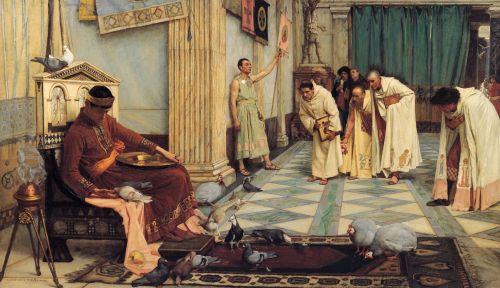
The anecdote recounting Honorius’ supposed confusion between the city of Rome and his pet chicken named Roma appears in Procopius’ The Wars, written more than a century after the events it describes. According to the story, when informed that “Rome has perished,” Honorius initially believed his prized chicken had died and expressed relief upon learning that it was the city, not the bird, that had fallen. The narrative’s chronological distance from the sack of 410 immediately raises questions about its reliability. Procopius wrote within a literary tradition that favored pointed moral exempla and sharp character sketches. His purpose was not neutral archival preservation but interpretive commentary within a broader narrative of imperial fortunes.
The endurance of the story owes less to its factual credibility than to its symbolic compression. In a single image, it captures perceived detachment, insulation, and trivialization of catastrophe. The emperor’s alleged concern for a pet rather than a capital city functions as satirical shorthand for political failure. Late antique historiography frequently relied upon such anecdotes to distill complex administrative decline into vivid episodes. Whether Honorius ever uttered such words is less significant than the fact that contemporaries and successors found the image plausible. Plausibility reflects reputational formation rather than documentary proof.
Memory in late antiquity operated through narrative condensation. Political criticism often circulated through stories that dramatized moral deficiency and simplified structural decline into personal failing. Such episodes functioned pedagogically as much as polemically, offering readers a memorable framework through which to interpret disorder. The chicken anecdote aligns with broader patterns in Roman historiography in which rulers were judged through emblematic scenes, moments that revealed character under stress or exposed the distance between public role and private disposition. In many cases, these vignettes became more durable than legislative acts or administrative reforms, precisely because they translated abstraction into image. The story situates Honorius within a lineage of emperors whose reputations were shaped as much by literary framing as by administrative record. Its survival across centuries suggests that later writers found in Honorius a convenient figure through whom to explain imperial contraction, not because he alone caused it, but because his reign coincided with visible rupture.
Modern scholarship approaches the anecdote cautiously. Historians recognize both its rhetorical function and its evidentiary limits. The Western Empire’s difficulties cannot be reduced to a ruler’s alleged naiveté or distraction. Fiscal constraints, military overstretch, federate tensions, and court factionalism shaped events far more decisively than personal eccentricity. To elevate the chicken story above structural analysis risks replicating the very narrative simplification that late antique writers employed for polemical effect.
Yet to dismiss the anecdote entirely would overlook its interpretive value. The story endures because it encapsulates a widely held perception: that the emperor remained insulated from the gravity of collapse. Myth and memory do not invent reputations ex nihilo; they crystallize existing anxieties. In the case of Honorius, the chicken anecdote operates as a narrative lens through which structural paralysis was personified. It reveals how contemporaries and later observers sought meaning in crisis by attaching systemic failure to a single, memorable image.
Structural Paralysis: Youth, Inheritance, and Institutional Exhaustion
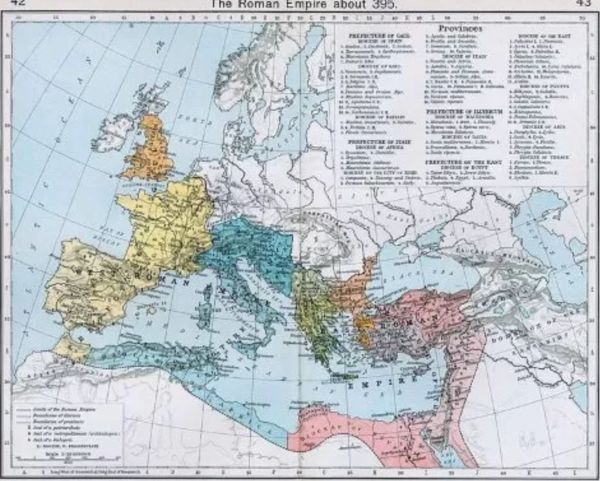
Honorius ascended the throne at approximately ten years of age, elevated not by experience but by dynastic continuity. In late Roman political culture, hereditary succession offered stability in theory, preserving legitimacy through bloodline and projecting the continuity of imperial order. Theodosian lineage carried enormous symbolic capital, particularly after Theodosius I had reunified the empire and asserted Nicene orthodoxy as imperial doctrine. Yet symbolic inheritance did not confer administrative maturity. In practice, minority rule transferred effective governance to guardians, generals, and court officials whose authority derived from proximity to the throne rather than formal constitutional design. Youth did not automatically doom an emperor; earlier precedents demonstrate that capable regencies could sustain imperial continuity and even enact reform. What distinguished Honorius’ accession was the context in which it occurred. Minority rule unfolded within an environment already strained by fiscal contraction, frontier instability, and intensifying reliance on federate diplomacy. The problem was not simply age but timing, not simply inexperience but inheritance amid exhaustion.
Inheritance in this context preserved symbolic continuity while masking administrative fragility. The imperial office retained its theological and legal aura, projecting permanence even as territorial control fluctuated. Coinage, law codes, and ceremonial audiences sustained the illusion of unbroken sovereignty. However, the mechanisms necessary to translate imperial will into coordinated action (stable revenue collection, disciplined military command, and coherent diplomatic strategy) were increasingly impaired. A ruler dependent upon intermediaries cannot easily reform the structures that empower them. The very arrangement that safeguarded dynastic legitimacy deepened institutional inertia.
Institutional exhaustion compounded this vulnerability. By the early fifth century, the Western Empire confronted cumulative pressures rather than singular catastrophe. Decades of military redeployment, federate negotiation, and fiscal strain had narrowed strategic margins. Provincial administration remained functional but less elastic. Aristocratic landholding intensified local autonomy at the expense of centralized responsiveness. The state’s ability to absorb shocks diminished gradually, producing a condition in which crises exposed preexisting weakness rather than creating it. Structural fatigue limited the range of viable policy options available to any emperor, regardless of personal capacity.
The disjunction between ceremonial authority and operational command widened under these conditions. Honorius remained the juridical source of power, yet practical execution depended upon generals, ministers, and shifting court alliances. Each delegation of authority preserved imperial dignity while redistributing effective control. When those delegated structures faltered (through purge, rivalry, or military defeat) the emperor’s symbolic position offered little compensatory strength. Institutional frameworks that had evolved to stabilize minority rule proved insufficient in an era demanding rapid adaptation.
Structural paralysis should not be misread as personal indifference. It describes a system in which inherited legitimacy outpaced functional capability and in which continuity of office obscured erosion of capacity. Honorius governed within a narrowing corridor of possibility shaped by fiscal limitation, diplomatic uncertainty, administrative fragmentation, and the cumulative weight of earlier decisions. His reign illustrates how political forms can persist even as the capacity to sustain them erodes gradually rather than catastrophically. Authority endured in law, ritual, and representation; efficacy receded in coordination, enforcement, and defense. The Western Empire did not collapse because one ruler failed, but because inherited structures could no longer reconcile ceremonial continuity with operational demand. Honorius’ reign stands less as a moral fable than as a case study in the limits of dynastic legitimacy under conditions of institutional fatigue.
Conclusion: Authority without Power
The reign of Honorius has often been reduced to caricature: a distracted ruler, a sheltered court, a sack that symbolized imperial humiliation. Yet when placed within the structural realities of the early fifth-century West, his tenure reveals something more instructive than personal incompetence. Honorius governed at a moment when the forms of empire remained intact while the mechanisms sustaining them were under profound strain. Dynastic continuity preserved legitimacy. Ritual and law projected sovereignty. Administrative offices functioned. But beneath these visible continuities, fiscal contraction, military dependency, diplomatic fragility, and factional politics narrowed the state’s capacity for decisive action.
The Western Roman Empire in 410 CE did not lack authority; it lacked elasticity. It retained titles, institutions, and ideological coherence. What it increasingly lacked was the coordinated capacity to enforce will across distance and diversity. The disjunction between image and execution became especially visible in moments of crisis. The sack of Rome exposed this gap dramatically, but the divergence had developed gradually. Authority persisted in symbolic form even as operational integration faltered. Honorius presided over that divergence rather than inventing it.
To interpret his reign solely through the lens of anecdote or personality is to misunderstand the nature of late imperial decline. Structural exhaustion does not announce itself with immediate collapse. It manifests through delayed response, inconsistent policy, reliance upon intermediaries, narrowing fiscal margins, and the erosion of trust between central authority and peripheral actors. Youth and court isolation amplified these tendencies, but they did not create them. The administrative state inherited by Honorius was already operating within reduced strategic bandwidth, constrained by demographic shifts, migratory pressures, and internal competition among elites. Personal shortcomings, where they existed, unfolded within a system that had lost the capacity to translate legitimacy into effective command without extraordinary coordination. Honorius embodied a political order in which inherited legitimacy could no longer compensate for diminishing structural resilience. His reign illustrates the limits of dynastic stability when institutional renewal fails to accompany succession, and when ceremonial continuity substitutes for structural adaptation.
Authority without power is not an absence of rule; it is a condition in which sovereignty continues to be performed even as its practical reach contracts. The Western Empire endured for decades after the sack of Rome, but its capacity to command events rather than react to them steadily diminished. Honorius’ government reveals how political forms may survive the erosion of their foundations. Ceremony can outlast control. Titles can outlast territory. And inherited office can persist long after the structures necessary to sustain it have begun to fail.
Bibliography
- Augustine. The City of God. Translated by Henry Bettenson. London: Penguin Classics, 2003.
- Brown, Peter. The Rise of Western Christendom: Triumph and Diversity, AD 200–1000. 2nd ed. Malden, MA: Blackwell, 1996.
- Cameron, Averil. The Mediterranean World in Late Antiquity, AD 395–700. London: Routledge, 2002.
- Claudian. In Eutropium and political panegyrics.
- Claudian. Panegyricus de Honorio Augusto and related political poems.
- Halsall, Guy. Barbarian Migrations and the Roman West, 376–568. Cambridge: Cambridge University Press, 2005.
- Heather, Peter. The Fall of the Roman Empire: A New History of Rome and the Barbarians. Oxford: Oxford University Press, 2005.
- —-. Goths and Romans, 332–489. Oxford: Clarendon Press, 1991.
- Kovács, Tamás. “410: Honorius, his Rooster, and the Eunuch (Procop. Vand. 1.2.25-26).” Graeco-Latina Brunesia 25:2 (2020), 131-148.
- Kulíkowski, Michael. Rome’s Gothic Wars: From the Third Century to Alaric. Cambridge: Cambridge University Press, 2006.
- Matthews, John. Western Aristocracies and Imperial Court AD 364–425. Oxford: Clarendon Press, 1975.
- Orosius. The Seven Books of History Against the Pagans. Translated by Roy J. Deferrari. Washington, D.C.: The Catholic University of America Press, 1964.
- Procopius. The Wars. Translated by H. B. Dewing. Cambridge, MA: Harvard University Press, 1914.
- Sozomen. The Ecclesiastical History or Sozomen, Comprising a History of the Church, from A. D. 324 to A. D. 440. Translated by Edward Walford. London: Henry G. Bohn, 1855.
- Van Nuffelen, Peter. Orosius and the Rhetoric of History. Oxford: Oxford University Press, 2012.
- Ward-Perkins, Bryan. The Fall of Rome and the End of Civilization. Oxford: Oxford University Press, 2005.
- Wolloch, Nathaniel. “Animals in Enlightenment Historiography.” Huntington Library Quarterly 75:1 (2012, 53-68.
- Zosimus. New History. Translated by Ronald T. Ridley. Canberra: Australian Association for Byzantine Studies, 1982.
Originally published by Brewminate, 03.02.2026, under the terms of a Creative Commons Attribution-NonCommercial-NoDerivatives 4.0 International license.
About the Author