A small but growing number of house cats have gotten sick from H5N1.

By Sarah Boden
Health and Science Reporter
90.5 WESA Pittsburgh
Introduction
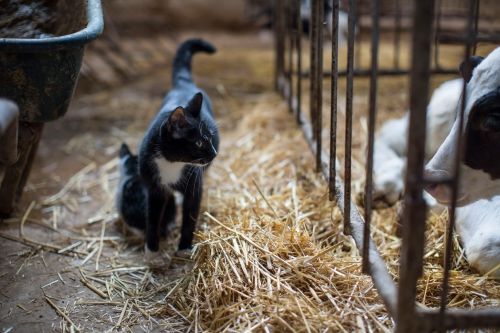
More than 80 domestic cats, among many other types of mammals, have been confirmed to have had bird flu since 2022 — generally barn cats that lived on dairy farms, as well as feral cats and pets that spend time outdoors and likely caught it by hunting diseased rodents or wild birds.
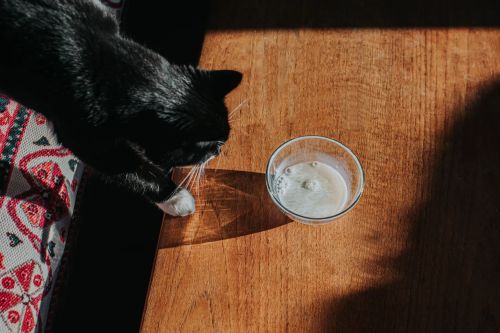
Now, a small but growing number of house cats have gotten sick from H5N1, the bird flu strain driving the current U.S. outbreak, after eating raw food or drinking unpasteurized milk. Some of those cats died.
The strain of bird flu currently circulating has not adapted to efficiently spread among people. And there have been no known cases of cat-to-human transmission during the current outbreak of H5N1.
Still, there’s always been the risk that cats, which are arguably only semi-domesticated, could bring home a disease from a midnight prowl.
“Companion animals, and especially cats, are 100% a public health risk in terms of the risk of zoonotic transmission to people,” said virologist Angela Rasmussen, who studies disease progression in emerging viruses at the University of Saskatchewan’s Vaccine and Infectious Disease Organization.
This is because we snuggle with and sleep in bed with our cats. When we’re not looking, cats drink from our water glasses and walk on kitchen counters. So, cat owners should be aware of the ongoing spread of bird flu. “By reducing the risk to your cats, you reduce the risk to yourself,” Rasmussen said.
Rasmussen doesn’t think pet owners should be afraid their cats will give them bird flu but said taking precautions is good for pets, and for public health.
Signs of bird flu in cats include runny nose and discharge around the eyes, explained Michael Q. Bailey, president-elect of the American Veterinary Medical Association.
H5N1 also causes neurological problems like dizziness and seizures, which are symptoms of rabies, too. Rabies is almost always fatal, and it poses a threat to human health, so any animal suspected of having the viral disease must be euthanized. Bailey encourages people to ensure pets are up-to-date on their vaccinations.
Veterinarian Jane Sykes, who specializes in infectious diseases in cats and dogs at the University of California-Davis School of Veterinary Medicine, said people should not assume it’s bird flu if their cat is sick — even if their animal spends time outdoors or eats a raw diet. Upper-respiratory illnesses are common in cats, while H5N1 is “still pretty rare.”
Sykes gives her indoor cat, Freckles, regular kibble exclusively. She told NPR and KFF Health News she has no concerns about Freckles getting H5N1 because the heating process of making dry or canned pet food kills viruses.
More Cases in Cats, More Risk to Humans
Some people feed their pets raw meat or unpasteurized milk because they think it’s a more nutritious or natural diet. The American Veterinary Medical Association’s website discourages this due to foodborne pathogens like salmonella and listeria, and now the highly pathogenic H5N1.
By keeping pets healthy, veterinarians play an essential role in protecting humans from zoonotic diseases. The American Veterinary Medical Association says the risk of H5N1 spilling over from a pet to a person is “considered extremely low, but not zero.”
State and local public health agencies, including those in Los Angeles County and Washington state, have issued similar warnings against raw food diets for pets.
Concerns for human health are partly why the FDA announced last month it is now requiring cat and dog food companies to update their safety plans to protect against bird flu.
This came after the Oregon Department of Agriculture discovered a cat that was “strictly an indoor cat” had contracted H5N1 and died after consuming a frozen turkey product made by the raw pet food brand Northwest Naturals. It stated that “tests confirmed a genetic match between the virus in the raw and frozen pet food and the infected cat.”
Northwest Naturals voluntarily recalled that batch of its frozen turkey-based product. The company told KFF Health News and NPR that the recall involved “a small product run” and that it has concerns about the accuracy of the Oregon Agriculture Department’s testing.
Los Angeles County’s public health department said five cats from two households tested positive for bird flu after drinking unpasteurized raw milk from the Raw Farm dairy in California’s Central Valley.
Raw Farm voluntarily recalled its milk and cream after retail products tested positive for H5N1, but it denies any food safety issues, calling the concern “a political issue.”
Veterinarians also warn pet owners not to allow cats unsupervised time outside as there’s the risk of them getting H5N1 by interacting with other animals that might carry the disease.
“This is a very scary virus, given that it can infect so many different host species,” said Bruce Kornreich, director of Cornell University’s Feline Health Center.
At least one instance of a cat infecting a person with bird flu occurred in 2016. As NPR reported, a veterinarian in New York City caught the virus after having close contact with infected cats. The vet experienced mild symptoms and quickly recovered.
In that case, the strain of bird flu was H7N2, not the H5N1 that is now circulating in the U.S.
H7N2 is a very different type of virus, Sykes explained. But she said it shows that cat-to-human transmission of avian influenza is theoretically possible.
There isn’t a lot of research on transmission of bird flu from companion animals like cats or dogs to humans, though Rasmussen agreed it’s definitely a concern: The more infections you have in animals, “the more your luck is potentially going to run out.”
Most people who have caught H5N1 are agricultural workers who had direct contact with infected poultry or cattle. Of at least 67 confirmed human cases of H5N1 in the U.S., there’s been one fatality in an immunocompromised person who had contact with birds.
In general, zoonotic disease researchers want more H5N1 surveillance in companion animals of all types. Even if the human death toll of H5N1 remains relatively low, it remains a public health risk.
Chances for Mutation
Part of the concern with this H5N1 outbreak is that bird flu viruses change. Just a few mutations could make this strain adept at spreading between people. And the more people who catch H5N1, the more likely it would adapt to be more efficient, said Suresh Kuchipudi, a virologist at the University of Pittsburgh School of Public Health, where he researches zoonotic diseases. Kuchipudi has studied H5N1 in cats.
Another concern is something called reassortment. If an animal or person is infected with two viruses at once, the viruses can trade genetic material, creating something new. This is common in influenza, so virologists are on the lookout for a case in which the bird flu reassorts to make a virus that’s far more contagious, and potentially more virulent.
Virologist Rasmussen is way more worried about this happening in pigs. Human respiratory physiology is more like that of swines than felines. So far, the current outbreak of H5N1 has not reached commercial hog operations. Rasmussen hopes it stays that way.
Kuchipudi said that reassortments are relatively rare events, but the outcome is completely unpredictable. Sometimes the results are benign, though it was likely a reassortment that involved an avian virus that led to the 1918 flu pandemic, which killed an estimated 50 million people. In the century since, virologists have established a global surveillance network to monitor influenza viruses. Scientists say continued investment in this network is key to preparing for and hopefully preventing another pandemic.
Winter is “reassortment season” because of all the influenza viruses circulating, Rasmussen said. A reassortment in cats could technically be possible since these pets occasionally get seasonal flu, but it’s highly unlikely. Rather, Rasmussen said, it’s more likely that a cat would pass H5N1 to a human who already has seasonal flu, and then a reassortment happens in the sick person. While the risk isn’t zero, Rasmussen doubts this will happen. It would depend on how ill the human was, and how much virus they’re exposed to from their cat.
“Unless the cat is really shedding a ton of virus, and you’re kind of making out with the cat, I think it would be hard,” she said.
Rasmussen and Kuchipudi caution there isn’t enough research to know for sure how much virus cats shed, or even how they shed the virus.
The Centers for Disease Control and Prevention was poised to release a new study about H5N1 in cats, but that was delayed when the Trump administration paused the Morbidity and Mortality Weekly Report. That investigation, revealed through emails obtained by KFF Health News in a public records request, found that house cats likely got bird flu from dairy workers.
Scientists and public health agencies should question previously held assumptions about bird flu, Kuchipudi urged. He noted that 20 years ago nobody would have predicted that bird flu would infect dairy cattle the way it is now.
Dogs Seem to Fare Better
The FDA says other domesticated animals, including dogs, can get bird flu infections. There are no confirmed cases of H5N1 among dogs in the U.S., though in other countries they have died from the virus.
There’s some disagreement and an overall lack of research on whether cat biology makes them more susceptible to H5N1 than other mammals, including humans, pigs, or dogs.
But cat behaviors, such as their love of dairy and predation of wild birds, put them at higher risk, Kuchipudi said. Also, living in groups might play a role as there are more feral cat colonies in the U.S. than packs of stray dogs.
There’s very little people can do about the H5N1 circulating in wild birds. As Rasmussen explained, “It’s flying around in the skies. It’s migrating north and south with the seasons.”
But she said there’s a lot people can do to keep the virus out of their homes.
That includes limiting a pet’s exposure to H5N1 by not feeding them raw food or unpasteurized milk, and trying to keep them from interacting with animals like rodents and wild birds that could be infected with the virus.
Originally published by KFF Health News, 02.10.2025, under the terms of a Creative Commons Attribution-NonCommercial-NonDerivatives 4.0 International license.
About the Author