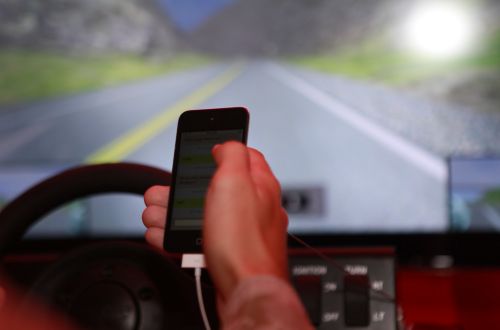
Distracted driving has become one of the most dangerous and prevalent causes of vehicle accidents. A driver’s attention is the critical resource that prevents crashes. When that attention diverts to phones, food, or passengers, reaction times slow and hazard detection fails. The split second you need to avoid a collision disappears when your focus isn’t on the road.
Distraction operates differently than impairment but causes comparable harm. A drunk driver’s coordination and judgment deteriorate while their attention might still focus somewhat on driving. A distracted driver keeps normal coordination but loses the awareness needed to respond to hazards. Both conditions result in preventable crashes and serious injuries.
Modern technology has multiplied distractions exponentially compared to a decade ago. Understanding how distracted driving leads to serious accidents reveals why this behavior carries devastating consequences for everyone sharing the road.
The danger of divided attention affects every driver regardless of experience or skill. Seconds matter enormously when driving at highway speeds. Understanding how distracted driving accidents occur helps illuminate why prevention matters so profoundly. Recognizing the serious consequences of distracted driving can motivate safer choices behind the wheel.
Common Forms of Distraction
Cell phone use represents the most significant and visible distraction in modern driving. Text messaging demands visual attention from the road and manual manipulation of the phone. Checking emails or social media compounds the problem. Phone calls, even hands-free, reduce cognitive capacity for processing driving-related information. Navigation applications require attention that should remain on traffic and road conditions. The constant accessibility of phones creates perpetual temptation to check messages despite knowing the dangers.
In-vehicle activities create distractions beyond phones. Eating and drinking while driving diverts attention and impairs manual control. Adjusting radio stations, climate controls, or entertainment systems pulls focus from the road. Grooming activities including makeup application, hair styling, or shaving take eyes and attention away. Passenger interactions including conversations with children or animated social discussion can overwhelm attention capacity. Any activity requiring mental or physical resources increases distraction and crash risk.
External distractions originate outside the vehicle but capture driver attention. Billboards and signs are designed to catch attention at just the wrong moment. Accidents on the roadside draw eyes away from the driver’s path. Pedestrians, animals, or unusual roadside situations command attention. Beautiful scenery or interesting landmarks capture focus momentarily. These external distractions sometimes cause secondary accidents when drivers rear-end other vehicles while looking elsewhere.
Reaction Time and Awareness Loss
Reaction time increases measurably when drivers are distracted. Texting while driving increases reaction time by two to three seconds at highway speeds. Two seconds represents roughly 130 feet at sixty miles per hour. That distance is easily enough to make the difference between stopping safely and colliding with a vehicle ahead. The human brain cannot process road hazards when attention is elsewhere. By the time attention returns to driving, critical opportunities to avoid danger have vanished.
Hazard detection completely fails when visual attention is diverted. A distracted driver won’t see a pedestrian entering the crosswalk until too late. Red lights, stop signs, and traffic signals are missed. Curve warnings and road hazards aren’t perceived. Brake lights from vehicles slowing ahead aren’t registered. The distracted driver’s brain is processing phone content rather than traffic information. This means the driver is essentially blind to road hazards despite eyes being technically open.
Cognitive load from distraction impairs decision-making about speed and following distance. A distracted driver might not adjust speed for weather conditions or traffic density. Safe following distances aren’t maintained because the driver’s attention isn’t on their gap from other vehicles. Decisions about lane changes occur without adequate assessment of blind spots. The mental resources required for safe driving are consumed by the distraction rather than the driving task.
High-Risk Driving Situations
Heavy traffic environments compound distraction dangers exponentially. When traffic is dense and requires constant adjustment, distraction becomes especially dangerous. A moment of inattention in rush hour traffic can trigger chain-reaction collisions. Merge situations demand full attention to judge gaps and vehicle speeds. Distracted drivers frequently misjudge merge opportunities, causing near-misses and actual collisions. Freeway driving requires constant awareness that distraction undermines completely.
Highway driving at high speeds makes distraction particularly dangerous. Speeds that allow only seconds to react to hazards combine with the extended range of potential hazards. A distracted driver traveling at seventy miles per hour has minimal time to perceive and respond to dangers. Road debris, disabled vehicles, animals, or sudden traffic slowdowns all require immediate response. Night driving intensifies the danger because visibility is already reduced. Adding distraction removes critical attention needed for safe night driving.
Bad weather conditions make distraction even more hazardous than usual. Rain, snow, and fog reduce visibility and traction, increasing the need for driver attention. A distracted driver has no margin for error in poor visibility. Hydroplaning and skidding become more likely when drivers aren’t fully attentive. Construction zones with lane restrictions and modified traffic patterns demand full attention. Distraction in these challenging driving conditions multiplies crash risk substantially.
Why Distraction Is Hard to Prove
Distraction leaves minimal physical evidence compared to impairment or mechanical failure. Toxicology tests detect alcohol and drugs but nothing proves distraction objectively. Blood tests don’t show divided attention. Breathalyzers have no distraction equivalent. Establishing distraction often depends on circumstantial evidence and witness testimony. A witness might report seeing a driver using a phone, but that observation depends on someone being positioned to notice.
Phone records sometimes provide evidence of texting or calls at the time of the accident. However, phone records show communication attempts but not whether the driver actually had the phone in hand. A parked vehicle owner might have their phone on without handling it. Proving the driver was actively distracted by the phone when the accident occurred requires more than just phone records. Insurance companies and prosecutors often struggle to prove distraction definitively.
Reconstruction experts can sometimes infer distraction from accident patterns and vehicle damage. A rear-end collision where the striking vehicle never braked suggests the driver wasn’t paying attention. Sudden lane changes or failure to slow for hazards suggest inattention. However, these inferences can be disputed by defendants claiming mechanical failure or sudden medical events. Without clear evidence of distraction, proving it in court becomes challenging despite suspicion that distraction caused the accident.
Conclusion
Distracted driving leads to serious accidents with regularity despite the preventability of the behavior. Cell phones, in-vehicle activities, and external distractions all compromise driver attention critically. Reaction time increases and hazard detection fails when drivers are distracted. Heavy traffic, highway driving, and poor weather all intensify the danger. Proving distraction after accidents proves difficult despite its prevalence as a cause. Understanding the serious consequences of distracted driving underscores the importance of prioritizing full attention while driving. Every moment of distraction introduces risk that can result in severe injury or death for yourself and others sharing the road.
About the Author