The Palace was also a mark of 17th-century engineering innovation.

By Sonja Anderson
Daily Correspondent/Contributor
Smithsonian Magazine
The sprawling grounds of France’s opulent Palace of Versailles are not only a masterpiece of landscaping, but a mark of 17th-century engineering innovation. The property’s ornamental fountains and ponds, for example, were only made possible by a specially built machine that pulled water from the Seine and pushed it up a steep hill to Versailles.
The machine was designed at the request of the French king Louis XIV—the monarch who commissioned Versailles, also known as the Sun King. His and his successors’ courts are mainly remembered for ostentatious finery, but their immense wealth also enabled discovery, and Versailles turned into a hotbed for science: a theme explored by a new exhibition at the Science Museum in London: “Versailles: Science and Splendor.”
“The exhibition highlights how science flourished at Versailles, from the kings’ personal interest in luxurious scientific instruments and spectacular demonstrations, to its strategic role beyond the palace through newly founded institutions and scientific expeditions,” says Glyn Morgan, the museum’s curatorial lead for exhibitions, in a statement.
The show spans the 17th and 18th centuries, covering the reigns of Louis XIV (who founded the French Academy of Sciences in 1666), Louis XV and Louis XVI (who was executed in 1793 during the French Revolution). Through more than 120 artifacts, the exhibition illustrates the importance of art and science in the French royal court.
Many of the objects show innovations in medicine, such as a curved scalpel designed by Louis XIV’s royal surgeon, Charles-François Félix.When the king developed a royal anal fistula, his surgeon had to invent a customized scalpel. Félix tested his tool on local peasants, killing several in the process. As the Guardian’s Jonathan Jones writes, “The rehearsals worked: He fixed the royal fistula and Louis XIV lived on until 1715, his 72-year reign a world record.”
Under the reign of Louis XV (who ruled between 1715 and 1774), a midwife called Madame du Coudray became a powerful force against French infant mortality. The king hired her to travel throughout rural France to train other midwives in the mechanics of birth, employing “sophisticated life-sized mannequins,” per the statement. Du Coudray ultimately educated more than 5,000 women and physicians, and her last surviving model is on display in the exhibition.

After Louis XV died of smallpox, his son and successor Louis XVI announced that the royal family would get inoculated. Included in the exhibition are posters made to reassure the public of the strategy’s success.
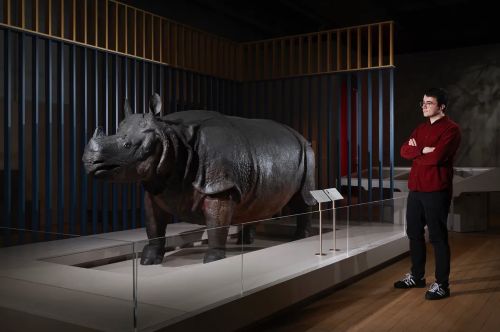
Science at Versailles extended to the wonders of the natural world. French botanists grew and studied exotic plants. Versailles had a menagerie stocked with animals like coatis and cassowaries. Visitors to the Science Museum will be able to see the menagerie’s most famous resident: Louis XV’s rhinoceros, given to the king by a French governor based in India and later dissected and taxidermied upon its death.
“As it was studied by scientists, it became incredibly important to our growing zoological knowledge,” as Morgan tells the Observer’s Vanessa Thorpe. “The photographs really did not do justice to just how impressive and characterful it is. The skin is almost jet black.”
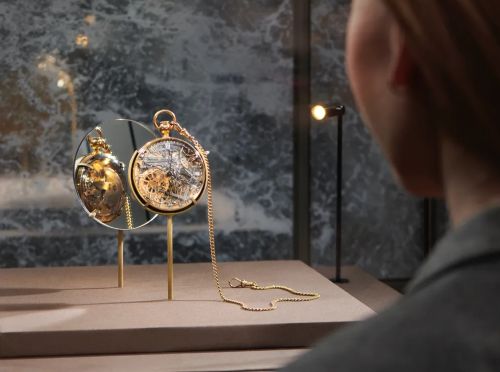
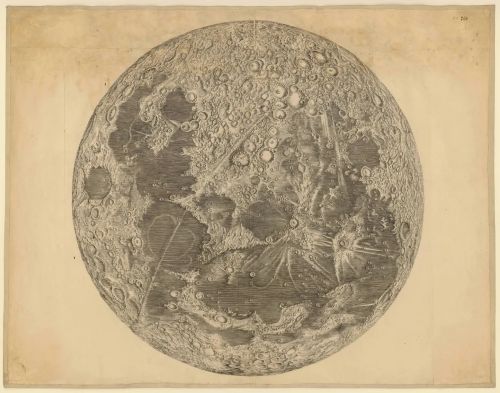
Also on display are philosopher Emilie du Châtelet’s handwritten, annotated French translation of Isaac Newton’s Principia Mathematica; the watch made for Louis XVI’s wife, Marie Antoinette, by Abraham-Louis Breguet; and an early map of the moon drawn by Jean-Dominique Cassini in 1679. The French Revolution claimed the lives of some of the French royal court’s thinkers, but their advances were permanent. Per the Guardian, “Science strode on.”
“Royal ambition, scientific knowledge and ideals of beauty culminated at Versailles in spectacular demonstrations and brilliant innovations from the brightest minds of the time,” says Ian Blatchford, director and chief executive of the Science Museum Group, in the statement. “We are thrilled to introduce our visitors to these fascinating stories through the stunning objects on display.”
Originally published by Smithsonian Magazine, 01.14.2025, reprinted with permission under a Creative Commons license for educational, non-commercial purposes.
About the Author