The reign of Charles VI demonstrates that political systems are often capable of surviving incapacity far longer than they are willing to acknowledge it.

By Matthew A. McIntosh
Public Historian
Brewminate
Introduction: The Unsayable Problem of Incapacity
Political systems are often more adept at accommodating failure than confronting it directly. When the individual at the center of authority becomes incapable of governing, institutions face a dilemma that is simultaneously legal, moral, and existential. Removal threatens continuity, legitimacy, and the symbolic stability upon which authority depends, while open acknowledgment of incapacity risks exposing how fragile that authority truly is. In many cases, the problem is not simply whether a ruler can govern, but whether the system itself can survive admitting that he cannot. As a result, political orders frequently choose a third path that avoids decisive action altogether: denial. Governance proceeds as if nothing fundamental has changed, even as power quietly migrates away from the figure who is meant to embody it, leaving behind a hollowed but formally intact structure.
Incapacity poses a distinct problem from unpopularity, incompetence, or political opposition. It cannot be resolved through elections, rebellions, or ordinary elite turnover, nor can it easily be framed as a disagreement over policy or direction. Instead, it forces institutions to confront the unsettling reality that authority may persist in name while collapsing in function. This creates powerful incentives to redefine incapacity as temporary, exaggerated, or irrelevant, even when evidence mounts to the contrary. The danger lies not only in the ruler’s condition itself, but in the institutional habits that form around avoiding its acknowledgment. The refusal to say what is widely known hardens into a governing principle, shaping bureaucratic behavior, elite loyalty, and public rhetoric alike. The system learns to operate within a shared fiction, prioritizing continuity over clarity.
Historically, such moments reveal how deeply political legitimacy depends on collective performance. Authority is maintained through ritual, language, and continuity, even when meaningful decision-making is displaced onto councils, regents, or informal factions operating behind the scenes. The state adapts around the incapacitated ruler, preserving the fiction of control while normalizing workarounds that were never meant to be permanent. What begins as emergency accommodation gradually becomes routine governance, eroding accountability without ever formally abolishing it.
The reign of Charles VI of France offers a stark and instructive case of this phenomenon. His prolonged and intermittent incapacity did not lead to removal or abdication, but to decades of institutional improvisation designed to sustain the appearance of kingship. By examining how medieval France governed a ruler who could not rule, what follows explores a recurring political pattern: the willingness of systems to stretch themselves indefinitely in order to avoid confronting the unsayable truth that the person at the center of power can no longer fulfill the role they occupy.
Medieval Kingship and the Problem of the Living Crown

Medieval European kingship located authority not in an abstract office, but in the living body of the ruler. The king was not merely a magistrate or administrator charged with executing law. He was the vessel through which sovereignty flowed, sanctified through coronation and bound to divine favor in ways that fused politics, theology, and social order. Royal power was therefore embodied rather than delegated, personal rather than procedural. This arrangement endowed monarchy with immense symbolic force and emotional loyalty, reinforcing obedience through ritual and belief. At the same time, it created a profound structural vulnerability. When the king was present and capable, the system functioned with remarkable coherence and predictability. When he was incapacitated yet alive, however, the system lacked a legitimate means of response that did not threaten its own foundations.
The sacral character of kingship made removal profoundly dangerous. Coronation was not simply a legal ceremony but a theological transformation, one that rendered the king God’s anointed on earth. To depose such a figure was to invite charges of sacrilege, rebellion, and cosmic disorder. Medieval political thought allowed for resistance to tyranny in limited and carefully hedged forms, but it was deeply uneasy with the idea that a crowned king could be declared unfit to rule while still living. Death resolved the problem cleanly. Minority could be managed through regency. Incapacity, however, occupied an intolerable middle space.
This tension was intensified by the doctrine that the crown itself was continuous and immortal, even as the king remained mortal and fallible. Medieval jurists and theologians increasingly articulated the idea that royal authority transcended the physical body of the ruler, yet in practice governance still required that body to act. The king’s presence in councils, courts, and rituals was not ornamental. It was constitutive. When illness, madness, or incapacity disrupted that presence, authority did not automatically transfer elsewhere. Instead, it lingered awkwardly, attached to a figure who could no longer perform the functions expected of him.
Because medieval monarchy lacked a formalized mechanism for declaring incapacity, political actors were forced to improvise within narrow constraints. Regents, councils, queens, and princes might assume practical authority, but always in the king’s name rather than their own, and always with careful attention to precedent and symbolism. Documents continued to issue under the royal seal. Justice was administered as if the king remained fully sovereign. Ceremonies and proclamations reaffirmed royal authority even when decision-making had clearly shifted elsewhere. These measures were not merely polite fictions or ceremonial excesses. They were defensive strategies designed to preserve legitimacy by maintaining the appearance that the crown remained fully operative, even as its human bearer could no longer sustain that role.
The result was a political culture that prioritized continuity over clarity. The fear of rupture encouraged elites to tolerate prolonged dysfunction rather than risk the destabilizing consequences of formal acknowledgment. This preference hardened into habit. Kingship ceased to be understood as a functional responsibility and became instead a condition that endured regardless of performance. In this context, monarchy was not simply a role that could be reassigned when circumstances demanded adjustment. It was a living state that bound the polity to the ruler’s body, whether that body was capable or not. The problem of the living crown thus reveals a central paradox of medieval governance: the very sanctity that shielded monarchy from arbitrary removal also rendered it dangerously inflexible when confronted with sustained incapacity.
Charles VI: Illness, Episodes, and the Fracture of Authority
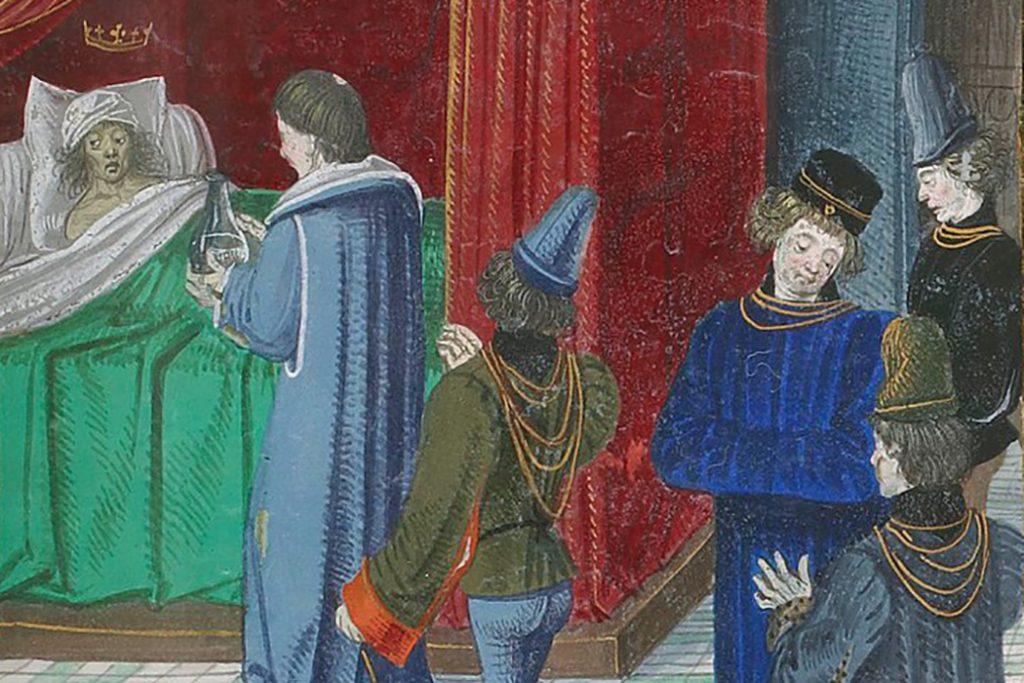
Charles VI inherited the crown in 1380 amid high expectations of renewal and stability after the long and troubled reign of Charles V. His early years offered little indication of the crisis to come. Contemporary accounts describe an energetic young monarch, capable of asserting authority and participating fully in the rituals and responsibilities of kingship. It was precisely this promising beginning that later intensified the shock of his collapse. When incapacity emerged, it did not appear as a steady decline but as a sudden rupture, disrupting assumptions about continuity and forcing the political community to confront a king who was neither reliably present nor permanently absent.
The first major episode of Charles VI’s illness occurred in 1392 during a military expedition, when he abruptly attacked members of his own retinue and afterward fell into a prolonged state of mental confusion. Chroniclers struggled to describe what they witnessed, often framing his condition in religious, moral, or supernatural terms rather than medical ones, reflecting the limited diagnostic language available to them. Reports describe the king failing to recognize his wife, denying his own identity, and displaying violent agitation followed by withdrawal and silence. These episodes unsettled not only the court but the broader political order, as they unfolded in public and could not be concealed. Yet they were also followed by periods of apparent recovery. Charles sometimes regained sufficient clarity to attend councils, receive envoys, and participate in ceremonial life. These recoveries reinforced the belief that his condition might pass and made it far more difficult to categorize his illness as permanent or decisive.
It was this intermittency that proved most destabilizing. Unlike a monarch who died young or ruled only as a minor, Charles VI oscillated unpredictably between moments of lucidity and collapse. Each recovery renewed the expectation that full authority might soon be restored, discouraging decisive institutional change. Each relapse reopened questions that had never been resolved. The court, the nobility, and the administrative apparatus were forced into a cycle of adjustment and retreat, continually recalibrating their behavior without ever establishing a stable alternative structure of governance.
As the king’s illness persisted, authority fractured along factional lines with increasing intensity. Competing groups claimed to act in Charles’s interest, invoking his name, seal, and supposed will while advancing their own political agendas. The absence of a clear constitutional mechanism for declaring incapacity meant that disputes over governance quickly became disputes over legitimacy itself. Councils multiplied and overlapped, regencies shifted without firm grounding, and rival princes positioned themselves as protectors of the crown rather than claimants to power. Political actors learned to operate within ambiguity, exploiting uncertainty rather than resolving it. The king remained the formal source of authority, but the exercise of that authority was increasingly mediated, contested, and weaponized by those who governed in his stead.
The fracture of authority under Charles VI was therefore not the result of a single institutional failure, but of prolonged uncertainty sustained by denial. The crown continued to function symbolically even as its practical coherence eroded. Decisions carried royal legitimacy without royal direction. Loyalty was demanded without clarity of command. By refusing to confront incapacity directly, the French polity allowed instability to become structural. What emerged was not the absence of kingship, but a hollowed version of it, one in which authority survived in name while dissolving in practice.
Governing Without the King While Pretending He Governed
As Charles VI’s incapacity became a recurring and increasingly predictable feature of political life, governance steadily detached itself from the person of the king while continuing to invoke his authority as its formal source. Councils assumed responsibility for decision-making, military command shifted to princes of the blood and trusted nobles, and administrative routines evolved to function with little expectation of royal intervention. Yet these adaptations were carefully framed as provisional measures undertaken on the king’s behalf rather than substitutions for his rule. Official documents continued to issue in his name, royal seals authenticated decisions he had neither initiated nor reviewed, and legal continuity was preserved through formulaic references to royal will. In practice, the machinery of government learned to operate autonomously, even as it remained rhetorically tethered to an absent sovereign.
This arrangement depended heavily on ritualized performance and selective visibility. Public appearances by the king, however brief, constrained, or orchestrated, were invested with exaggerated significance. Moments of lucidity were carefully showcased to reassure elites and subjects that the crown remained intact and functional. When Charles was unable to appear, proclamations, messengers, and symbolic gestures filled the void, emphasizing continuity rather than absence. The court developed a sophisticated sensitivity to perception, recognizing that authority depended not only on decisions made, but on the sustained belief that the king still governed. Governance thus became a dual process: practical authority was exercised elsewhere, while symbolic authority was meticulously preserved at the center through ceremony, language, and controlled disclosure.
The insistence on governing in the king’s name also served to discipline political ambition. By framing all action as derivative of royal will, factions could compete for influence without openly challenging the crown itself. Princes of the blood, royal counselors, and court factions presented themselves not as alternatives to kingship but as its guardians. This strategy reduced the immediate risk of deposition or civil rupture, but it also entrenched rivalry and suspicion. Without a clear acknowledgment of incapacity, no actor could claim undisputed legitimacy, and every assertion of authority invited counterclaims grounded in loyalty to the king.
The gap between authority and agency widened. Decisions were made, wars fought, and policies enacted without the stabilizing presence of a sovereign who could arbitrate disputes or command obedience. Yet the refusal to acknowledge this reality prevented the development of new institutional norms capable of compensating for the king’s absence. The result was a system that functioned, but only precariously. Governance persisted through improvisation and performance rather than clarity and accountability. By pretending that the king governed, the French state delayed confronting the deeper crisis of legitimacy that incapacity had already made unavoidable.
Institutional Denial as Political Strategy

What began as an improvised response to crisis gradually hardened into a governing strategy. Institutional denial was not simply the absence of acknowledgment, but an active process through which incapacity was managed, reframed, and ultimately normalized within political life. By refusing to name the problem directly, elites avoided the immediate shock that formal recognition would have produced. Denial allowed governance to proceed without triggering constitutional rupture, public panic, or elite realignment, even as it displaced responsibility and obscured lines of authority. This refusal to confront reality ceased to be temporary caution and became a durable mode of political behavior. The system learned to function by suppressing clarity, treating acknowledgment itself as the greater danger.
Denial functioned as a form of risk management. Acknowledging incapacity would have forced elites to answer questions they were ill-prepared to resolve. Who possessed legitimate authority in the king’s absence. On what basis could decisions be made. How long could substitution continue without becoming usurpation. By leaving these questions unanswered, institutions preserved flexibility at the cost of clarity. Ambiguity became a resource. It allowed multiple actors to claim provisional authority while avoiding the appearance of disloyalty. The system learned to survive within uncertainty rather than resolve it.
This strategy also reshaped political incentives. Loyalty was measured not by effectiveness, but by adherence to the fiction of continuity. Those who questioned the king’s capacity risked being labeled destabilizing or treasonous, while those who affirmed his authority, regardless of practical reality, were rewarded with legitimacy and access. Institutional denial thus disciplined dissent and rewarded compliance. It narrowed the range of acceptable discourse, making honest assessment increasingly difficult even when dysfunction was widely recognized.
The long-term consequence of institutional denial was not stability, but erosion. By refusing to confront incapacity, the state undermined its own credibility in ways that accumulated slowly but relentlessly. Authority survived rhetorically while weakening structurally, creating a widening gap between official language and lived political experience. Decisions appeared arbitrary, responsibility became diffuse, and trust decayed as outcomes worsened without explanation or accountability. Denial preserved the crown in form but hollowed it in substance. What had been adopted as a strategy to protect legitimacy ultimately accelerated its decay, leaving institutions weaker, less coherent, and more vulnerable to fracture.
The Long Erosion: Civil War, Factionalism, and Hollow Authority
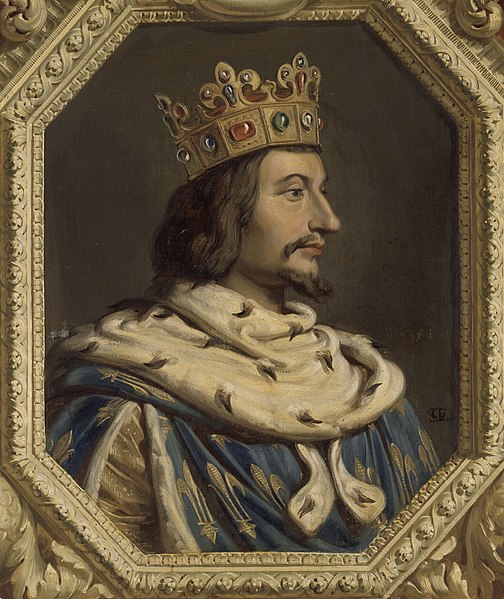
The effects of prolonged incapacity and institutional denial did not remain confined to court procedure or administrative improvisation. They reshaped the political landscape of France itself. As the king’s authority became increasingly symbolic, the absence of a decisive arbiter intensified rivalries among those who governed in his name. What had begun as a strategy to preserve unity gradually eroded the very cohesion it sought to protect. The state continued to function, but without a stable center capable of enforcing limits or resolving conflict.
Factionalism flourished under these conditions with growing intensity and permanence. Competing groups aligned themselves around princes of the blood, most notably the factions later identified with Orléans and Burgundy, each claiming fidelity to the crown while advancing sharply incompatible political agendas. Because no actor could openly replace the king or formally redefine authority, struggles for power were displaced into contests over proximity, access, and interpretation of royal will. Councils, offices, and military commands became sites of rivalry rather than coordination. The fiction of continuity made these conflicts more dangerous rather than less, as rivals framed their ambitions as acts of loyalty rather than bids for control. Violence emerged not as rebellion against the crown, but as competition within it, cloaked in the language of service and protection.
The inability to resolve authority at the center also destabilized loyalty throughout the realm. Nobles, municipal leaders, and military commanders were forced to navigate shifting allegiances without clear guidance or consistent enforcement. Royal commands carried formal legitimacy but lacked the practical authority needed to ensure compliance, encouraging selective obedience and strategic delay. Local actors learned to hedge their commitments, responding to whichever faction appeared momentarily ascendant while maintaining rhetorical allegiance to the king. This pattern corroded the expectation that royal authority would be coherent or predictable. What had once been understood as a hierarchical system of command increasingly resembled a fragmented network of negotiated power.
Civil conflict was not an aberration within this system, but a logical outcome. The Armagnac–Burgundian struggle emerged from precisely the conditions institutional denial had produced: ambiguous authority, rival claims of guardianship, and the absence of a sovereign capable of imposing final settlement. Each faction portrayed itself as the true defender of the king and the realm, while accusing its opponents of endangering both. War thus unfolded under the banner of legitimacy rather than its rejection, masking structural decay beneath familiar forms.
External pressures compounded these internal failures. The French crown’s inability to present a unified front weakened its position during the later phases of the Hundred Years’ War in concrete and measurable ways. Diplomatic coherence suffered as rival factions pursued divergent strategies, sometimes negotiating independently or undermining one another’s agreements. Military coordination faltered, with commanders responding to factional priorities rather than centralized planning. The credibility of royal commitments diminished as foreign powers learned that decisions issued in the king’s name might not be enforced uniformly. England and its allies exploited these divisions, intervening opportunistically and deepening French vulnerability. The erosion of authority at home thus translated directly into strategic weakness abroad.
By the end of Charles VI’s reign, the consequences of pretending continuity had become impossible to ignore. Kingship persisted as an institution, but its capacity to command loyalty, enforce decisions, and embody collective purpose had been severely compromised. Authority did not collapse suddenly. It had thinned, stretched, and frayed over decades of unresolved incapacity. The tragedy of the period lies not in the king’s illness itself, but in the state’s refusal to confront it. In preserving the appearance of authority at all costs, the French polity allowed its substance to drain away, leaving behind a crown that endured in name while failing in practice.
From Medieval Denial to Modern Executive Systems
The crisis posed by Charles VI’s incapacity was shaped by medieval assumptions about embodied sovereignty, but the underlying dynamics did not disappear with the decline of sacral kingship. Modern executive systems, despite their constitutional frameworks, professional bureaucracies, and formal mechanisms for removal, continue to exhibit a deep reluctance to confront incapacity directly. The language has changed, and the institutions have grown more elaborate, but the fundamental anxiety remains the same. Acknowledging that the individual at the center of authority can no longer perform the role threatens continuity, legitimacy, and the appearance of stability upon which modern states still rely. As in the medieval period, the perceived risks of saying the unsayable often outweigh the perceived dangers of prolonged dysfunction.
Unlike medieval monarchies, modern political systems formally distinguish between the office and the person who occupies it. Executives are theoretically removable, replaceable, and subject to law in ways that medieval kings were not. Constitutions outline procedures for addressing incapacity, succession, and emergency authority, presenting an image of rational preparedness. Yet in practice, these mechanisms are rarely designed to function in conditions of partisan polarization or elite fragmentation. They require political consensus to operate effectively, and when that consensus is absent, formal remedies remain unused. Under these conditions, institutions revert to familiar patterns of avoidance. Authority is preserved symbolically while governance shifts informally to aides, advisors, party leadership, or administrative bodies operating behind the scenes, all while insisting that executive capacity remains intact.
This process mirrors medieval denial in its effects, if not its theological justification. Decision-making migrates away from the executive while continuing to bear the executive’s signature. Public communication emphasizes continuity, reassurance, and normalcy, even as insiders quietly acknowledge dysfunction. Moments of apparent competence are amplified, while evidence of incapacity is reframed as exaggeration, hostility, or partisan attack. The system adapts not by resolving the problem, but by insulating it, allowing daily governance to proceed without addressing the legitimacy of who is actually exercising power.
Modern bureaucratic states are especially well suited to sustaining this form of denial over extended periods. Their size, complexity, and reliance on administrative continuity allow governance to persist even when executive leadership falters significantly. Procedures replace judgment, routine substitutes for direction, and institutional momentum carries policy forward with minimal visible disruption. This capacity for self-maintenance is often celebrated as resilience or institutional strength. Yet it carries a hidden cost. When systems stretch themselves to accommodate incapacity indefinitely, they normalize governance without accountability and reduce transparency at precisely the moment it is most needed. The executive becomes a symbolic node rather than an active decision-maker, while real authority disperses into less visible and less accountable channels.
The transition from medieval to modern governance thus represents less a rupture than a transformation in form. The king’s body no longer anchors sovereignty, but the fear of confronting incapacity remains structurally embedded. What changes is the justification, not the behavior. Medieval France preserved the fiction of a ruling king to avoid sacrilege and civil rupture. Modern states preserve the fiction of executive competence to avoid political fallout and institutional destabilization. In both cases, denial offers short term stability at the expense of long term legitimacy.
Saying the Unsayable: Incapacity, Loyalty, and Political Fear
The greatest obstacle to confronting executive incapacity is rarely legal ambiguity. It is political fear. Acknowledging incapacity requires elites to act collectively in ways that carry immediate personal and institutional risk. Careers, alliances, and reputations are bound to the existing order, and any move to name incapacity threatens to unravel those arrangements. Loyalty becomes conflated with silence, while criticism is reframed as destabilization. In such environments, the unsayable is not avoided because it is uncertain, but because it is dangerous to articulate.
This fear reshapes the meaning of loyalty itself in profound ways. Rather than being measured by commitment to effective governance, constitutional responsibility, or institutional integrity, loyalty is increasingly defined as adherence to continuity at all costs. Political actors learn that survival depends less on competence than on public alignment with the central figure, regardless of private doubts. Those who raise concerns about capacity are treated as disloyal to the person at the center of power, even when their concerns are framed in explicitly institutional or procedural terms. By contrast, those who defend the fiction of competence are rewarded with access, protection, and legitimacy. This inversion corrodes professional norms, discourages honest assessment, and elevates performative allegiance over functional responsibility.
Political fear also narrows the range of acceptable discourse, reshaping how incapacity can even be discussed. Language becomes euphemistic, carefully managed, and strategically vague, avoiding direct acknowledgment in favor of implication and denial. Evidence of incapacity is reframed as misunderstanding, exaggeration, or partisan hostility, while responsibility for interpretation is shifted onto critics rather than institutions. Moments of failure are isolated, contextualized, or dismissed as aberrations, while moments of coherence are amplified and circulated as proof of normalcy. Institutions that depend on public trust, including media organizations and administrative bodies, often participate in this rhetorical containment, reinforcing the appearance of stability even as internal awareness of dysfunction grows. The result is a widening gap between private acknowledgment and public performance, one that becomes increasingly difficult to sustain.
Saying the unsayable becomes not an act of clarity, but an act of rupture. The reluctance to speak openly is therefore rational, even when it is corrosive. Political systems adapt to avoid the moment of reckoning, stretching denial across months or years rather than confronting incapacity decisively. Yet this delay carries its own cost. The longer incapacity is masked by loyalty and fear, the more legitimacy erodes when reality can no longer be contained. Silence preserves order in the short term, but it deepens instability over time.
Conclusion: When Continuity Becomes the Greater Danger
The reign of Charles VI demonstrates that political systems are often capable of surviving incapacity far longer than they are willing to acknowledge it. Medieval France did not collapse because its king was ill. It unraveled because the institutions surrounding him chose continuity over confrontation, performance over resolution. By preserving the fiction of rule rather than addressing its absence, the state protected legitimacy in the short term while eroding it over decades. The danger lay not in incapacity itself, but in the collective decision to treat acknowledgment as more destabilizing than dysfunction.
This pattern reveals a broader truth about political authority. Legitimacy is not sustained solely by continuity of form, but by coherence between authority and capacity. When that coherence breaks, systems face a choice between adaptation and denial. Denial offers reassurance, familiarity, and the avoidance of immediate conflict. Adaptation requires risk, confrontation, and the willingness to redefine power openly. Charles VI’s France chose denial, and in doing so allowed authority to thin until it could no longer command loyalty or discipline factions that claimed to serve it.
Modern political systems, despite their legal frameworks, procedural safeguards, and constitutional language of accountability, remain vulnerable to the same temptation. The fear of instability, backlash, and institutional rupture continues to discourage elites from naming incapacity when it appears, even when mechanisms formally exist to do so. As in the medieval past, loyalty is often redirected away from institutional responsibility and toward the preservation of appearances. Political actors reassure themselves that continuity is synonymous with stability, even as governance becomes increasingly opaque and unaccountable. The historical record, however, is unambiguous. When continuity is preserved at the expense of accountability, erosion does not stop. It deepens quietly, weakening norms, hollowing authority, and leaving institutions less capable of responding when crisis finally becomes unavoidable.
The lesson of Charles VI is therefore not antiquarian, but structural and enduring. Political orders that refuse to confront incapacity do not preserve stability. They postpone reckoning while compounding damage. Continuity, when severed from capacity, becomes a danger rather than a safeguard, encouraging systems to normalize dysfunction as routine governance. By the time denial can no longer be sustained, legitimacy has already been drained of substance. Authority survives in name but not in force. History’s warning is clear and unforgiving. Systems that cannot say the unsayable eventually lose the very authority they sought to protect.
Bibliography
- Autrand, Françoise. Charles VI: La folie du roi. Paris: Fayard, 1986.
- Bellaguet, Louis-François, ed. Chronique du Religieux de Saint-Denis, contenant le règne de Charles VI, de 1380 à 1422. 6 vols. Paris: Crapelet, 1839–1852.
- Bloch, Marc. The Royal Touch: Sacred Monarchy and Scrofula in England and France. London: Routledge, 1973.
- Friedrich, Carl J. Constitutional Government and Democracy. Boston: Ginn and Company, 1950.
- Froissart, Jean. Chroniques. Translated by Geoffrey Brereton. London: Penguin, 1978.
- Guenee, Bernard. Between Church and State: The Lives of Four French Prelates in the Late Middle Ages. Chicago: University of Chicago Press, 1991.
- —-. States and Rulers in Later Medieval Europe. Oxford: Blackwell, 1985.
- Hirschman, Albert O. Exit, Voice, and Loyalty: Responses to Decline in Firms, Organizations, and States. Cambridge: Harvard University Press, 1970.
- Huntington, Samuel P. Political Order in Changing Societies. New Haven: Yale University Press, 1968.
- Huot, Sylvia. “An Iconography of Trauma: The Fraught Identity of King Charles VI in Its Literary and Cultural Context.” Digital Philology: A Journal of Medieval Cultures 12:1 (2023): 1-29.
- Janis, Irving L. Groupthink: Psychological Studies of Policy Decisions and Fiascoes. Boston: Houghton Mifflin, 1982.
- Kantorowicz, Ernst H. The King’s Two Bodies: A Study in Medieval Political Theology. Princeton: Princeton University Press, 1957.
- Neustadt, Richard E. Presidential Power and the Modern Presidents. New York: Free Press, 1990.
- Oakley, Francis. Kingship: The Politics of Enchantment. Oxford: Blackwell, 2006.
- Perroy, Edouard. The Hundred Years War. Translated by W. B. Wells. New York: Capricorn Books, 1945.
- Skinner, Quentin. The Foundations of Modern Political Thought, Volume I: The Renaissance. Cambridge: Cambridge University Press, 1978.
- —-. Visions of Politics, Volume II: Renaissance Virtues. Cambridge: Cambridge University Press, 2002.
- Skowronek, Stephen. The Politics Presidents Make: Leadership from John Adams to George Bush. Cambridge: Harvard University Press, 1993.
- —-. Presidential Leadership in Political Time. Lawrence: University Press of Kansas, 2008.
- Tierney, Brian. The Crisis of Church and State, 1050–1300. Toronto: University of Toronto Press, 1988.
- Tilly, Charles. Coercion, Capital, and European States, AD 990–1990. Oxford: Blackwell, 1990.
- Weber, Max. Economy and Society. Edited by Guenther Roth and Claus Wittich. Berkeley: University of California Press, 1978.
Originally published by Brewminate, 01.29.2026, under the terms of a Creative Commons Attribution-NonCommercial-NoDerivatives 4.0 International license.
About the Author