The response by the U.S. and Western Europe to evens in Israel and Gaza have been out of step with others.

By Dr. Jorge Heine
Interim Director, Frederick S. Pardee Center for the Study of the Longer-Range Future
Boston University
Introduction
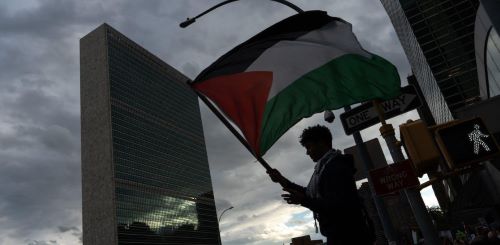
The lopsidedness was stark: 120 countries voted in favor of a resolution before the United Nations on Oct. 26, 2023, calling for a “humanitarian truce” in the war in Gaza. A mere 14 countries voted against it.
But the numbers tell only half the story; equally significant was the way the votes fell. Those voting against the resolution included the United States and four members of the European Union. Meanwhile, about 45 members abstained – including 15 members of the EU, plus the United Kingdom, Canada, Australia and Japan.
Seldom has the isolation of the West been so apparent.
As a scholar who has written on the rise of the Global South – countries mainly, but not exclusively, in the Southern Hemisphere that are sometimes described as “developing,” “less developed” or “underdeveloped” – what strikes me is the degree to which this major fault line between the political North and South has risen again to the fore. It reflects long-in-the-making forces in world affairs.
While the leaders of countries like the U.S., the U.K. and Germany have been among the most strident supporters of Israel during the crisis, the same is not true for non-Western nations.
Key rising powers from the Global South have been among the most adamant nations outside the Arab world in their criticism of this unwavering Western support of Israel.
Indonesia and Turkey – both with large Muslim populations – have both been heavily critical of Israel’s bombing campaign in Gaza, a response to 1,400 Israelis being killed by Hamas militants on Oct. 7.
But they have been joined by the leaders of Brazil, South Africa and other Global South nations in taking a firm stand. President Luiz Inácio Lula da Silva of Brazil went as far as to label the campaign in Gaza a “genocide” – a comment echoed by South Africa’s government when, on Nov. 6, 2023, it recalled its ambassador to Israel in protest. While the U.S. has used the word genocide in relation to Russia’s action in Ukraine, the Biden administration has pointedly said the term doesn’t apply to current events in Gaza.
The Global South’s Coming of Age
The international reaction to the war in Gaza reflects a deeper, long-standing trend in world politics that has seen the fracturing of the established U.S.-dominated, rules-based order. The growing influence of China and the fallout of the war in Ukraine – in which many Global South countries have remained neutral – has upended international relations.
Many analysts point to an emerging multipolar world in which members of the Global South have, as I have written, forged a new active nonaligment path.
And 2023 has been the year that has seen the coming of age of this more assertive Global South.
Some of this is structural. In August, Johannesburg hosted a summit of the BRICS group – a bloc that consists of Brazil, Russia, India, China and South Africa – during which 21 countries from across the Global South applied to join. Six were invited to do so: Argentina, Egypt, Ethiopia, Iran, Saudi Arabia and the United Arab Emirates – and they will formally join in January 2024.
This 11-strong BRICS+ group will represent 46% of the world’s population and 38% of the world’s gross domestic product.
In contrast, the Group of Seven leading economies, or G7, represents less than 10% of the world’s population and 30% of the global economy.
On Nov. 7, U.S. Secretary of State Antony Blinken met with his G7 counterparts in an attempt to forge a consensus on how to deal with the crisis in the Middle East. Speaking in Japan, he urged that the Western-dominated G7 speak with “one clear voice” on the Middle East crisis.
The question is, can the BRICS+ – and more generally the Global South – do likewise given that it includes an array of countries with very different political and economic systems?
Latin America’s Pushback
The reaction to the Israel-Hamas violence suggests to me that the Global South is able to speak with, if not one voice, at least a chorus that is not discordant.
Historically, many African and Asian nations have tended to support the Palestinian cause – Indonesia does not even recognize the state of Israel.
But perhaps more surprising has been the strong reaction in Latin America to Israel’s actions in Gaza.
In short order, Bolivia broke diplomatic relations with Israel, and Chile and Colombia called their ambassadors from Jerusalem for consultations – an established diplomatic tool to indicate disapproval of a country’s conduct.
Brazil, in its capacity as current chair of the United Nations Security Council, introduced the resolution supporting a cease-fire in Gaza. Mexico’s permanent representative to the United Nations, Ambassador Alicia Buenrostro, called for the “occupying power” of Israel to cease its claim to the Palestinian territories.
Western Denialism
The question is: If the Global South is speaking this way on the issue, is the West listening? The voting patterns of Western representatives at the U.N. suggest the answer is “no.”
In turn, this only adds to the general discontent across the developing world with the current structure of the U.N. Security Council and its lack of representativeness.
The fact that no country from Africa or Latin America is among the permanent members that enjoy veto power – compared with Western Europe, which is represented by both France and the U.K. – has long been a source of irritation in the Global South. So, too, is the perceived “double standard” being applied by the West to conflicts around the world. Whereas in Ukraine much is made of the humanitarian suffering being inflicted on the Ukrainian people, the same does not seem to apply to what is happening in Gaza, where Palestinian health authorities report more than 10,000 people have been killed in less than a month, 40% of them children.
More generally, there appears to be a degree of denial in the West over the tectonic shift in world order toward a more assertive Global South.
Western commentators and analysts from think tanks in London and Washington even contend that the very term “Global South” should not be used – with much of the criticism against the term directed at its alleged imprecision, but also because it would contribute to greater international polarization.
Yet, the term was never meant to be geographical. Rather, it is a geopolitical and geohistorical one – and one that is coming into its own with great verve as the Global South provides an alternative voice to the West, first over the conflict in Ukraine and now over Gaza. And no amount of Western denialism will be able to block it.
Originally published by The Conversation, 11.08.2023, under the terms of a Creative Commons Attribution/No derivatives license.
About the Author