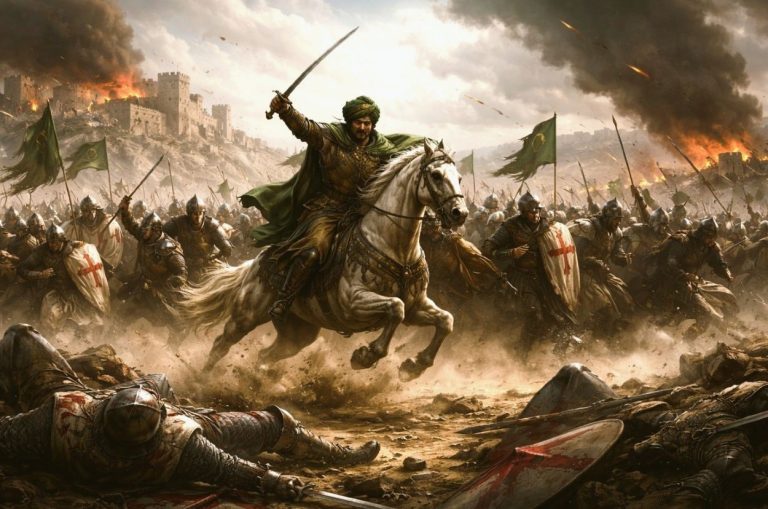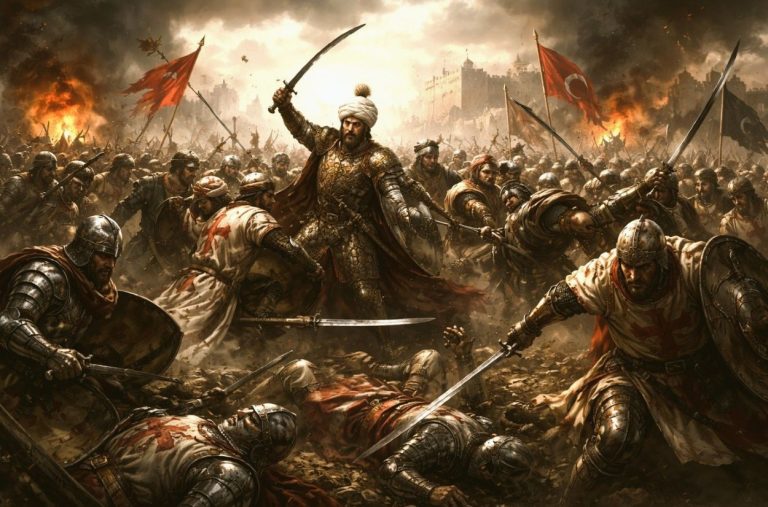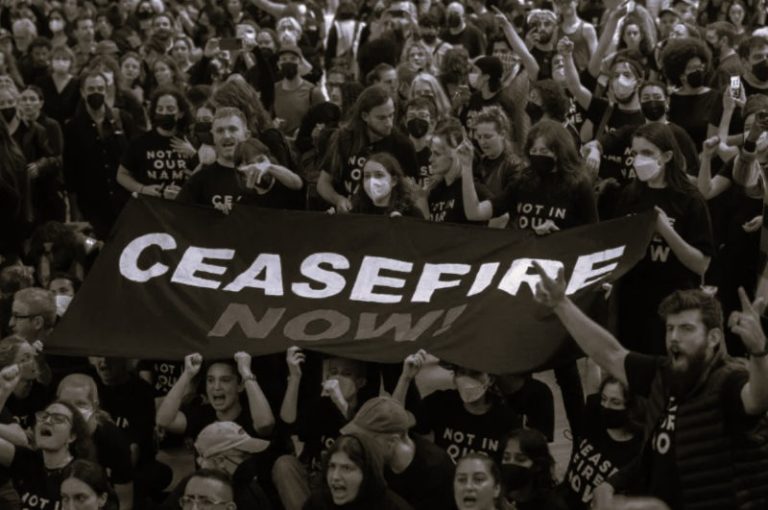
This dangerous moment recalls the darkest days of U.S.-Iranian tensions.

By Matthew A. McIntosh
Public Historian
Brewminate
The story of U.S.-Iranian relations is one of shifting alliances, deep betrayals, and geopolitical power struggles that have defined the last century. What began as a relatively neutral relationship has metastasized into one of the most enduring hostilities in modern international politics. From the days of early American missionaries in Persia to the very real possibility of a regional war igniting a global conflict today under President Donald Trump’s second term, this relationship has never been simple—and it may now be more precarious than ever.
Initial American involvement in Iran was cultural and educational, not political. In the 19th century, American missionaries helped establish schools and hospitals, including the famed Alborz College in Tehran. These activities laid a foundation of goodwill that would not last. Iran’s discovery of oil in 1908 changed everything, drawing in British and eventually American commercial interests. Iran soon found itself caught in the widening net of great power competition, though the United States remained largely in the background during this early period.
World War II altered that balance. Iran’s geographic location made it a crucial supply corridor for the Allies, and in 1941, Britain and the Soviet Union jointly invaded the country to oust the pro-German Reza Shah. His son, Mohammad Reza Pahlavi, was installed in his place. With the rise of the Cold War, the United States saw Iran as a critical bulwark against Soviet expansion. The relationship deepened—but so did American involvement in Iran’s internal affairs.
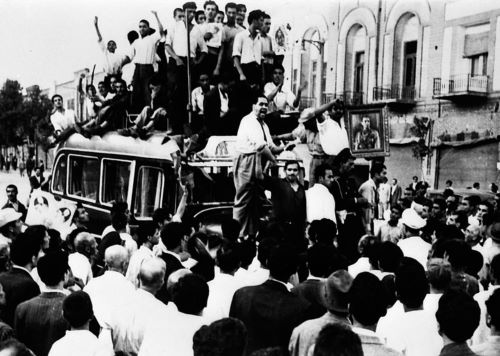
That involvement reached a dramatic and world-altering peak in 1953, when the CIA helped orchestrate the overthrow of Iran’s democratically elected Prime Minister Mohammad Mossadegh. Mossadegh had dared to nationalize Iran’s oil industry, threatening the interests of the British and alarming Washington, which feared Iran might tilt toward the Soviet Union. The U.S.-backed Operation Ajax removed Mossadegh and cemented the Shah’s power. It also planted a deep seed of distrust that still poisons U.S.-Iranian relations.
Under the Shah’s rule, Iran became a pillar of American policy in the Middle East. U.S. companies flooded the country with military and technological assistance. The Shah embarked on a campaign of Westernization, modernization, and brutal political repression—supported by his secret police, SAVAK, trained in part by the CIA. While Iran prospered economically, the social and cultural fabric of the nation frayed. Islamist and nationalist resentment grew under the surface, reaching a boil in the late 1970s.
The 1979 Iranian Revolution was a cataclysm for U.S. policy. Ayatollah Ruhollah Khomeini swept to power, declaring Iran an Islamic Republic and condemning the United States as the “Great Satan.” Months later, Iranian students stormed the U.S. Embassy in Tehran and took 52 Americans hostage for 444 days. The hostage crisis shattered diplomatic relations and defined Iranian-American enmity for a generation.
In the 1980s, the Reagan administration quietly supplied arms to Iran during the Iran-Iraq War in a murky covert operation known as the Iran-Contra Affair, even while publicly supporting Iraq. The hypocrisy of this double-dealing only reinforced Tehran’s perception of the United States as duplicitous and manipulative.
The fall of the Soviet Union did nothing to soften the U.S.-Iranian impasse. During the 1990s and early 2000s, the U.S. increasingly portrayed Iran as a sponsor of terrorism and a rogue state. After the September 11 attacks, tensions worsened, particularly when President George W. Bush placed Iran in his infamous “Axis of Evil” in 2002.
The Obama administration made a bold—some would say desperate—attempt at détente. After years of secret negotiations, the United States and five other world powers signed the Joint Comprehensive Plan of Action (JCPOA) with Iran in 2015. The deal placed tight restrictions on Iran’s nuclear program in exchange for relief from crippling sanctions. Supporters called it a diplomatic triumph. Critics, including then-candidate Donald Trump, saw it as capitulation to a hostile regime.
In 2018, during his first term, President Trump fulfilled his campaign promise and unilaterally withdrew from the JCPOA. The move reimposed sweeping sanctions on Iran and initiated a “maximum pressure” campaign aimed at destabilizing the Islamic Republic’s economy and government. Tensions escalated rapidly. Iran resumed aspects of its nuclear program, increased its regional aggression, and clashed with U.S. forces in Iraq and the Persian Gulf.
In January 2020, Trump ordered the assassination of Iranian General Qasem Soleimani in Baghdad. Iran responded with missile strikes against U.S. bases in Iraq. For a moment, war seemed imminent—but both sides pulled back. Still, the act further deteriorated already frail channels of communication.
After a brief lull during the Biden administration, Trump’s return to the White House in 2025 has brought with it a renewed sense of confrontation. With his second term now underway, President Trump has resumed his hardline stance, publicly disavowing the JCPOA and warning of military action if Iran advances further toward nuclear capability. Diplomatic contact between the two nations is effectively frozen.
The situation has become even more volatile following a major Israeli airstrike on Iranian territory and Tehran’s retaliatory missile launches earlier this past week. The United States, under Trump’s renewed alliance with Israel, has backed Israeli “defensive measures” and deployed additional military assets to the region. While Trump has not yet committed to direct intervention, his administration has issued stern warnings to Iran and signaled that further attacks may not go unanswered.
This dangerous moment recalls the darkest days of U.S.-Iranian tensions. The ghosts of 1953, 1979, and 2020 hover above the present crisis. The American public remains largely divided, with some applauding Trump’s firm stance and others fearing the spiral into yet another Middle Eastern war—one that could involve not just Iran but its allies in Russia and China.
More than a century of complex interactions, covert interventions, ideological oppositions, and broken trust has led to a fragile and explosive present. What comes next will depend not only on the choices of leaders in Washington and Tehran but on whether either nation can finally escape the gravitational pull of history.
Originally published by Brewminate, 06.23.2025, under the terms of a Creative Commons Attribution-NonCommercial-NoDerivatives 4.0 International license.
About the Author