The U.S. and others have little leverage over Israel.

By Dr. Gregory F. Treverton
Professor of Practice in International Relations
Dornsife College of Letters, Arts and Sciences
University of Southern California
Introduction
While the Biden administration has maintained its strong support of Israel’s war aim of eliminating Hamas in Gaza, that support has for weeks been tempered by statements from U.S. officials saying Israel needs to minimize deaths of civilians as it continues fighting.
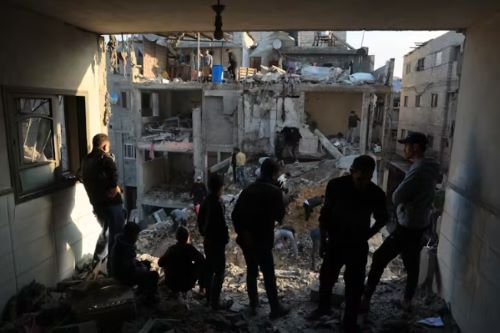
Those mild rebukes appear to have been ignored by the Israelis. Their continued widespread bombing has raised the death toll in Gaza, according to the Hamas-run Health Ministry, to 18,600. And the growing tension between Biden and Israel’s leader, Benjamin Netanyahu, broke into the open on Dec. 12. Biden warned Israel that it is “losing support” over the war. Netanyahu publicly disagreed with the U.S. goal of having the Palestinian Authority run Gaza.
The Conversation’s senior politics and democracy editor Naomi Schalit interviewed Gregory F. Treverton of USC Dornsife, a former chairman of the National Intelligence Council in the Obama administration, about the divisions between Israel and the U.S. In the end, Israel’s behavior, says Treverton, shows “the limits of influence” the U.S. holds.
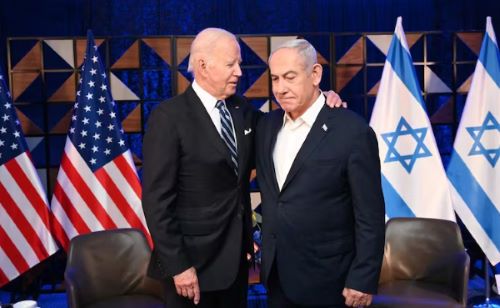
The U.S. has criticized Israel’s conduct of the war. Israel has ignored that criticism. That looks like humiliation for the Biden administration. What is going on?
This is a pattern we’ve seen before. We saw it in the war Israel fought against Hezbollah in Lebanon in 2006. The U.S. was trying to push Israel to be more humane in the way they conducted that war. So while the disagreement is not especially new, it is not just humiliating but also shows the limits of influence.
Indeed, throughout the U.S.-Israeli relationship, there has been a lot of the tail wagging the dog. Israel has been good at playing American politics. And so it is hard to put the kind of pressure on Israel that the objective facts would suggest the U.S. should be able to wield. After all, Israel is by far the biggest recipient of U.S. foreign aid. And the U.S. has stood with Israel firmly for a very long time. So to that extent, it is a bit humiliating that all that apparent influence doesn’t get listened to.
Is Israel, as you say, “very good at this” because they they live in a rough neighborhood, or because of the pressure domestic politics plays on Biden? What gives them the power to do this?
Surely it is partly the rough neighborhood – Israelis certainly see themselves as living in a very rough neighborhood. So the typical pattern is the U.S. says “go easier.” Israel says “give us a few more days.” That was the pattern in 2006 and has been the pattern this time – Israel asks for a little bit more time to accomplish its military objective. But if its ability to ignore U.S. demands stems primarily from living in a rough neighborhood, Israel does have a lot of influence in the United States. Majorities in both parties in Congress support Israel, though there is increasing dissent over that support on college campuses and elsewhere. In a recent Pew poll, four times as many Democrats as Republicans in the U.S. thought Israel was going too far in its military operation.
Biden recently said Israel is “losing support” over the war and its “indiscriminate bombing of Gaza.” Netanyahu said the Palestinian Authority will never run Gaza, despite U.S. support for that idea. What does this more open division tell us?
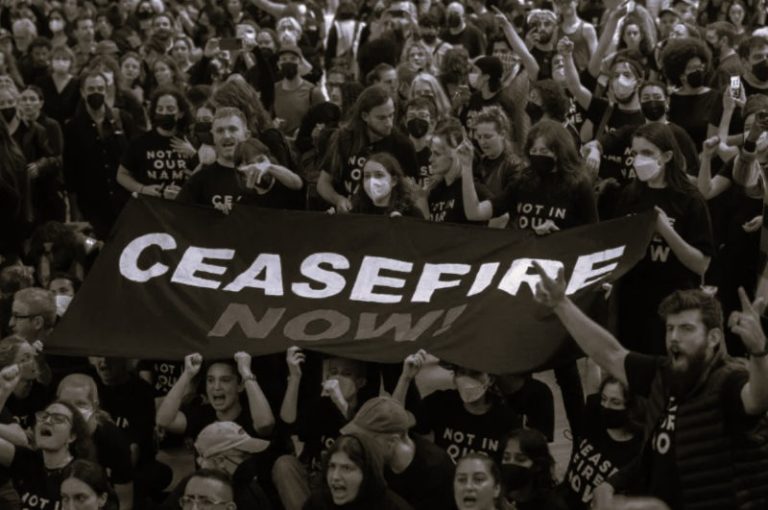
It tells us that things are getting worse between the two countries for sure. It obviously reflects the frustration on Biden’s part and the administration’s part. It is a marker, I think, of how isolated Israel is now in global public opinion and is obviously taking the U.S. with it. So that’s a big source of frustration for the administration. It really is time for some kind of cease-fire again, and maybe another release of some hostages. But that doesn’t seem in the cards soon.
What are Biden’s options at this point? It sounds like you’re saying Biden doesn’t have much that he can do. And, in fact, it looks like within Israel, Netanyahu – whose government may fall once the war slows or ends – is using Biden’s disapproval to shore up his political standing with his right-wing supporters.
Certainly, Netanyahu’s playing to the right makes the problem even harder for the Biden administration. Netanyahu’s problem is more his right flank than Washington. And so that makes it difficult for the U.S. to exert the kind of influence it should. And we still don’t have an understanding of what the Israeli sense of the endgame is. On the current track, they wind up, it seems, occupying Gaza. They surely don’t want to do that. My guess is behind the scenes the Israelis are thinking about some option involving the Palestinian Authority, even though Israel says it wants no part of that.
Biden went to a fundraiser the other day and told attendees that Netanyahu was the leader of “the most conservative government in Israel’s history” that “doesn’t want a two-state solution” to the Palestinian conflict. “I think he has to change, and with this government, this government in Israel is making it very difficult for him to move,” Biden said. When a president makes such a statement in a fundraiser, it’s not going to remain secret. What an extraordinary thing for a head of state to say about another government.
It amounts in some sense to calling for regime change in Israel. We all assume that once the war is over, Netanyahu will be gone. But obviously if he has any thoughts of staying on, he does need to think about a different coalition. World opinion is going to force him to think seriously about the Palestinians, if not about a two-state solution. Whatever else has happened, Hamas certainly succeeded in its objective of getting the Palestinians’ desire for statehood back on the global agenda. And Netanyahu is going to have to deal with that at some point.
What are the elements that Biden has to consider as he manages this situation going into the future?
He starts with generally strong American support for Israel that cuts across both parties. But the thing he needs to cope with is the increasing concern among progressives, especially young people in the Democratic Party, that there’s way too much suffering by the Palestinians, that something has to be done. And now it seems to me there’s almost a global consensus that this war needs to end. That’s the challenge that the administration faces: to try and heed that global consensus while letting Israel do the things it feels it needs to do in Gaza.
And that’s really an impossible circle for Biden to square. President Lyndon Johnson used to say that sometimes being president was like being a mule in a hailstorm. “There’s nothing to do but to stand there and take it,” he said.
Originally published by The Conversation, 12.13.2023, under the terms of a Creative Commons Attribution/No derivatives license.
About the Author