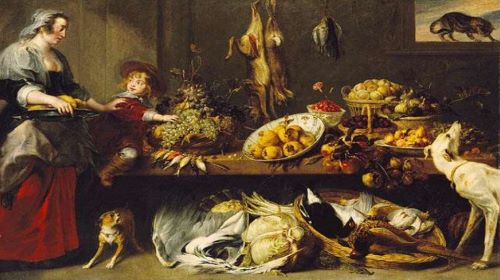
The history of food is the history of human development.

By Douglas Broom
Senior Writer, Forum Agenda
World Economic Forum
Introduction
We are what we eat. But what we eat can also tell us a lot about our history as a species on this planet and the evolution of human society.
Early humans were hunters as well as foragers. Domesticating animals and planting crops created settled communities which in turn looked for new flavours and foods. Food trade moved from a local to a global business which is today worth $1.5 trillion, according to the UN Food and Agriculture Organization.
But despite the value of food traded globally having doubled since 1995, we still live in an age of food inequality and sharply contrasting attitudes. While 850 million people go hungry around the world, in developed countries, food has become a lifestyle and political issue that delineates social groups.
What’s for certain is that much of today’s food production is unsustainable and in need of a radial overhaul if we are to feed the extra two billion people who will swell the global population over the next 30 years.
As the World Economic Forum features its Bold Actions for Food as a Force for Good virtual event from 23-24 November 2020, let’s take a look at the foods that shaped our history.
Meat: A 2.5-Million-Year-Old Taste

Archaeologists believe that early humans ate a diet of fruit, seeds and bark, supplemented occasionally by meat. The first evidence of humans using tools to cut and prepare meat has been dated to more than 2.6 million years ago.
The first animals to be domesticated for food use are thought to have been sheep in southwest Asia 13,000 years ago. Goats were likely domesticated about 3,000 years later. Preserving meat was a skill learned soon afterwards, as the discovery of a 2,500-year-old portion of beef in China attests.
Cereals: The Dawn of Agriculture
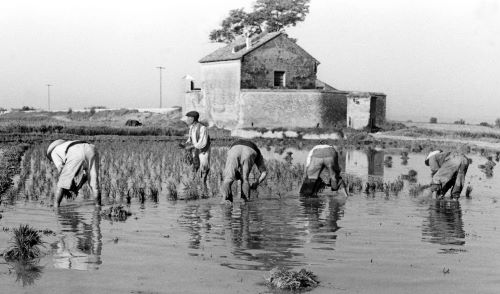
The earliest humans ate seeds from wild grasses and the cultivation of cereals is believed to have begun independently in different parts of the world about 12,000 years ago. Wheat is thought to have been the first cultivated cereal.
Rice cultivation is estimated to have begun about 8,000 years ago in China and India, although wild varieties were being eaten long before then. Early cultivation produced only low yields, but 10,000 years ago the city of Jericho was one of the first towns to grow prosperous on growing cereals.
Spices: The Globalization of Flavor
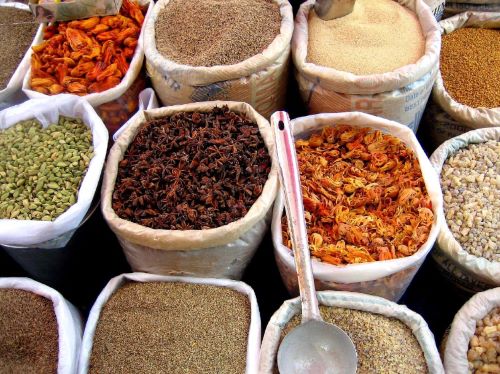
No one is quite sure when the spice trade started, but it was already established 4,000 years ago with cinnamon from Sri Lanka and cassia from China being sold by merchants in the Middle East.
Trade during the Roman Empire has been described by one expert as the birth of globalization, with the establishment of what became known as the Spice Routes. People and ideas flowed along these routes up to the Middle Ages, helping to shape our modern world.
Potatoes: The First Global Food?
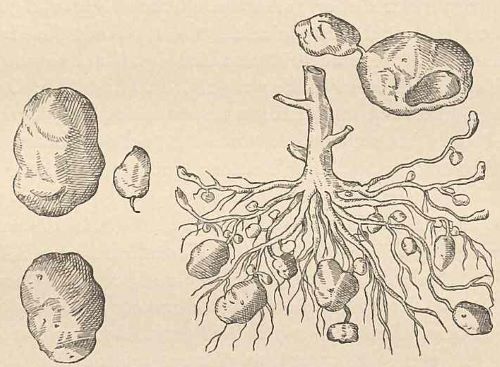
Although believed to have evolved from the poisonous tuber of an ancestor of the nightshade plant family, the potato was first cultivated in the Peruvian Andes 10,000 years ago. After being brought to Europe in the 1500s, it spread rapidly across the world to become a global food.
China, India and Ukraine are today’s biggest growers and potatoes are now an everyday part of the diet for people across the globe. There is even a long running feud between France and Belgium over who invented French fries.
Avocados: The Symbol of Trendy Eating

Hailed as a superfood, thanks to its healthy unsaturated fats, avocados have become so valuable that armed guards protect the “green gold” in Mexico and criminal gangs find the fruit as profitable as opium.
Due to the popularity of avocado toast, the fruit is now synonymous with hipster culture. But environmentalists say a pack of two avocados has a carbon footprint of 850g of CO2 – double that of a kilo of bananas.
Originally published by the World Economic Forum, 11.23.2020, under the terms of a Creative Commons Attribution-NonCommercial-NoDerivatives 4.0 International license.
About the Author