
By making the state inseparable from the sovereign’s image, Louis XIV achieved extraordinary control in the present while undermining durability in the future.

By Matthew A. McIntosh
Public Historian
Brewminate
Introduction: When Power Learned to Perform Itself
The consolidation of political authority in early modern Europe did not depend solely on law, taxation, or military force. It also depended on visibility, repetition, and controlled access to power. In seventeenth-century France, the central problem facing the monarchy was not simply how to govern territory, but how to neutralize a nobility that had long understood power as something negotiated, contested, and personal. The legacy of feudal autonomy and aristocratic privilege meant that obedience could not be assumed, even under an increasingly centralized state. Loyalty had to be reshaped. Authority had to be made convincing not only in moments of crisis, but as a permanent condition of daily life.
It was under Louis XIV that this challenge was resolved through performance rather than constitutional settlement. Louis did not simply centralize the state. He reimagined it as an extension of his own person. Power was no longer something exercised intermittently through institutions. It was displayed daily through ritual, architecture, etiquette, and controlled access. Governance became something one witnessed as much as something one obeyed. The state did not merely function. It appeared.
This shift marked a fundamental transformation in how legitimacy operated. Rather than grounding authority in shared institutions or legal restraint, the Sun King system fused political power with spectacle. Versailles was not just a royal residence or administrative hub. It was a carefully constructed image of permanence, hierarchy, and radiance. Court ritual did not supplement governance. It replaced older mechanisms of negotiation by making proximity to the king the primary source of status and survival. In this environment, loyalty became a matter of presence, and dissent became indistinguishable from personal insult.
Louis XIV perfected a political model in which institutional legitimacy collapsed into personal performance. By turning governance into a continuous display centered on his own image, Louis transformed the French state into a brand. Authority was no longer justified through participation or law, but through repetition, visibility, and awe. Power learned to perform itself, and in attaching legitimacy to spectacle, it quietly hollowed out the institutions it claimed to embody.
After the Fronde: The Political Need for Spectacle Control

The Fronde left an indelible mark on the political imagination of seventeenth-century France. What began as a series of aristocratic and parliamentary revolts against fiscal pressure and royal authority evolved into a prolonged crisis that exposed the fragility of monarchical power. For a young Louis XIV, the experience was formative. He witnessed nobles mobilize private armies, Paris turn hostile, and royal authority reduced to negotiation and retreat. The lesson was unmistakable. Military victory alone could not guarantee obedience. The nobility’s capacity to challenge the crown had to be neutralized at a deeper level.
The Fronde demonstrated that aristocratic power did not depend solely on land or arms. It depended on dense networks of patronage, local prestige, and symbolic authority that could be activated quickly in moments of crisis. Noble influence was sustained through visibility in provincial life, control over regional offices, and the ability to present resistance as defense of tradition rather than rebellion. Attempts to suppress this power through force alone risked entrenching aristocratic identity as oppositional and heroic. Louis instead pursued a strategy that redirected ambition itself. By redefining where honor could be earned and where recognition could be secured, he sought to drain provincial power of its meaning. The objective was not to eliminate the nobility as a class, but to restructure the conditions under which noble status could exist.
Spectacle became the instrument of this transformation. By reorganizing political life around ritualized presence rather than autonomous authority, Louis converted potential rivals into participants in a system they no longer controlled. Court life replaced provincial power bases as the primary arena of status competition. Access to the monarch, visibility in ritual, and recognition within court hierarchy became the new currencies of influence. Nobles who once asserted authority through resistance or regional command were now compelled to compete for attention, favor, and symbolic inclusion at the center. The memory of rebellion was not erased, but overwritten by a new political grammar in which ambition could only be expressed through performance sanctioned by the crown.
Spectacle functioned as preventative governance. The rituals, ceremonies, and hierarchies of the court did not merely display royal power. They disciplined aristocratic behavior by absorbing ambition into performance. The Fronde had revealed what happened when nobles acted independently. The Sun King system ensured that they would instead act publicly, predictably, and under constant observation. Political stability was secured not by reconciliation or reform, but by transforming rebellion into theater.
Versailles as Logo: Architecture and the Visual Capture of Power
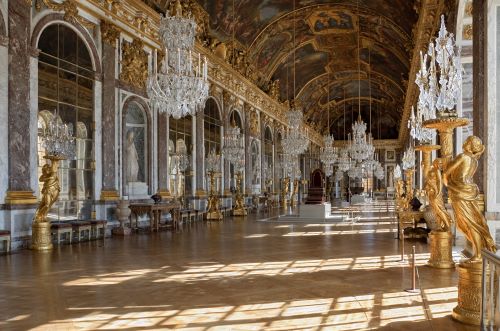
Versailles was not conceived as a royal residence in the traditional sense, nor was it simply an extravagant expression of personal taste. It was designed as a political instrument, one that transformed architecture into a language of authority capable of operating continuously without direct command. Where medieval palaces balanced defense, administration, and symbolism, Versailles dispensed with fortification entirely. Its purpose was not to protect the king from rivals but to render rivals harmless by enclosing them within a carefully staged environment. Power would no longer be exercised behind walls or asserted episodically through force. It would be displayed constantly, illuminated by ritual and scale, and made so omnipresent that resistance appeared both futile and socially unintelligible.
Under Louis XIV, architecture became a mechanism for organizing political reality. The palace radiated outward from the king’s apartments, establishing spatial hierarchy as political hierarchy. Distance from the monarch translated directly into status, influence, and access. Every corridor, garden axis, and ceremonial room reinforced the same lesson: authority emanated from a single point. To navigate Versailles was to rehearse one’s position within the political order, repeatedly and visibly.
This spatial logic replaced older forms of aristocratic power rooted in land, lineage, and local command. At Versailles, noble identity was stripped of regional autonomy and reconstituted as courtly proximity. A duke with vast provincial holdings held less effective power than a lesser noble with daily access to the king’s presence. Architecture performed a subtle dispossession. Nobles retained titles and honors, but their practical influence was rechanneled into dependence on visibility within a controlled space.
Versailles also functioned as a visual argument about permanence. Its scale, symmetry, and lavish ornamentation conveyed inevitability rather than contingency. Unlike medieval palaces that reflected generations of construction, compromise, and adaptation, Versailles presented itself as a unified and completed vision. The impression was not of a state evolving over time, but of an order already perfected. This aesthetic coherence mattered politically. It suggested that the existing hierarchy was not provisional or negotiable, but natural and enduring. The palace did not merely house power. It claimed to embody it, offering visual proof that authority was stable, radiant, and beyond challenge.
Versailles operated as a logo in the modern sense. It condensed a complex political system into an instantly recognizable image that could be reproduced in engravings, paintings, descriptions, and diplomatic reports. Foreign ambassadors, visiting elites, and domestic subjects encountered not abstract institutions or legal frameworks but a spectacle of coherence centered on the king’s person. The palace stood for France itself, collapsing the distinction between state and sovereign. To criticize policy within such a system was not merely to dispute a decision. It was to disrupt the image through which national identity was understood and projected.
The visual capture of power at Versailles ensured that authority could be maintained without constant intervention. Architecture disciplined behavior through repetition and immersion, shaping expectations before words were spoken or commands issued. Every visit reinforced the same hierarchy, the same dependencies, the same narrative of radiance and order. Governance became inseparable from design. The palace taught obedience not through decree, but through experience.
Court Ritual and the Performance of Authority
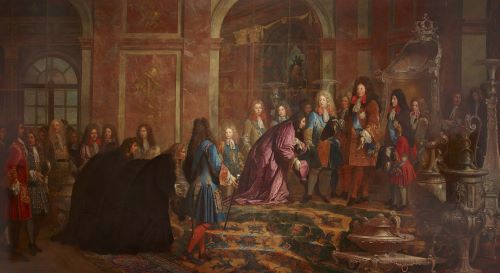
If Versailles captured power visually, court ritual animated it. The daily routines of Louis XIV’s court were not ceremonial excess layered atop governance, nor were they harmless displays of tradition. They were governance itself, translated into movement, gesture, and access. From the lever to the coucher, the king’s most ordinary actions were transformed into public events governed by strict protocol and rank. Attendance was not optional theater. It was political participation redefined. Authority was exercised not through debate, negotiation, or institutional procedure, but through choreography that trained elites to internalize hierarchy as habit.
Under Louis XIV, ritual replaced law as the primary medium through which power circulated among elites. Access to the king’s presence became the central currency of political life, more valuable than office or title alone. Who was admitted to the inner chambers, who was permitted to assist in dressing the king, who observed from a distance, and who was excluded entirely were distinctions that carried real political consequences. These hierarchies were neither fixed nor transparent. They were constantly adjusted, creating a climate of uncertainty that intensified dependence. Nobles expended enormous energy interpreting these signals, competing for favor, and guarding against symbolic demotion. Political ambition no longer sought leverage through institutions or regional authority. It sought proximity, visibility, and recognition within the orbit of the king’s body.
This system did more than reward loyalty. It neutralized independence. Nobles who once exercised authority through hereditary command, military leadership, or provincial influence were compelled to relocate their ambitions to Versailles, where status depended on ritual participation rather than autonomous action. Time spent performing courtly duties was time not spent cultivating alternative power bases or mobilizing local support. Ritual functioned as a disciplinary mechanism, absorbing aristocratic energy into a spectacle that reinforced hierarchy while appearing to honor tradition.
Ritual also reframed obedience as privilege. Participation in the king’s daily life was experienced as an honor rather than a constraint, even when it entailed submission, waiting, and symbolic humiliation. The language of service masked the reality of dependence, allowing inequality to present itself as intimacy. Nobles competed eagerly for roles that publicly affirmed their subordination because those roles offered visibility, relevance, and survival within the new political order. Authority no longer needed to compel obedience overtly or punish dissent constantly. It relied on desire. Obedience was internalized because exclusion from ritual life carried social and political death.
Through court ritual, Louis XIV ensured that power was continuously enacted rather than episodically asserted. Governance became a performance without intermission, sustained by repetition and expectation. The king did not merely rule from Versailles. He was Versailles in motion. By transforming authority into a daily spectacle, the Sun King system made hierarchy feel natural, loyalty feel voluntary, and domination feel ceremonial.
Patronage, Culture, and the Branding of Taste
Political authority under Louis XIV extended beyond architecture and ritual into the realm of culture itself. Art, literature, language, and aesthetics became instruments through which the monarchy defined not only power, but legitimacy. Taste was no longer a matter of personal preference or regional tradition. It was standardized, curated, and elevated into a national marker. To participate in French cultural life was increasingly to participate in a system that bore the imprint of the king’s image and values.
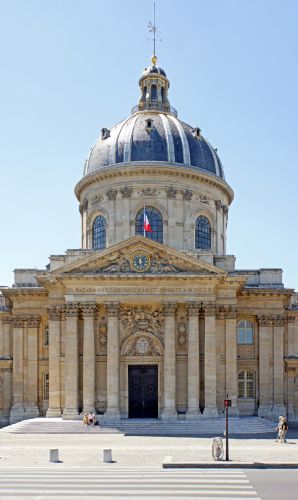
Under Louis XIV, patronage functioned as a mechanism of both inclusion and control. Writers, artists, musicians, and architects depended on royal favor not merely for prestige, but for material survival and professional continuity. The crown established and expanded academies to regulate language, art, and intellectual production, transforming creativity into an extension of state order. These institutions did not simply encourage excellence. They defined its boundaries, set its criteria, and policed its expression. What counted as refinement, clarity, and correctness was determined at the center and disseminated outward, aligning cultural authority tightly with political hierarchy. Artistic independence narrowed as recognition increasingly required institutional approval.
This system collapsed the distinction between cultural achievement and loyalty. Success depended not only on talent or innovation, but on alignment with the values and image promoted by the monarchy. Praise of the king, celebration of order, and reverence for hierarchy were rewarded with visibility, commissions, and advancement. Dissenting voices were not always silenced through imprisonment or exile. More often, they were marginalized through neglect, exclusion from patronage, and denial of access to influential circles. Patronage created a powerful incentive structure in which conformity appeared as opportunity rather than coercion, making cultural obedience feel voluntary.
Language itself became a site of branding. The regulation of French through the Académie Française elevated a particular style of expression associated with clarity, order, and restraint, qualities that mirrored the political ideals projected by the monarchy. Linguistic uniformity was framed as cultural refinement rather than political discipline, allowing standardization to proceed without overt resistance. Regional dialects, stylistic experimentation, and rhetorical excess were subtly devalued. To speak, write, and create “properly” was to reflect the aesthetic of absolutism. Taste operated as a quiet but pervasive form of governance, shaping not only artistic output but habits of thought and expression.
The international dimension of this cultural branding further strengthened its authority. French art, fashion, manners, and language spread across European courts, positioning France as the arbiter of refinement and modernity. Diplomatic prestige merged with cultural influence, making admiration for French taste inseparable from recognition of French power. Foreign elites adopted French styles to signal sophistication, effectively reproducing the monarchy’s aesthetic logic beyond its borders. The king’s image traveled not only through ambassadors and armies, but through salons, theaters, wardrobes, and academies that others sought to emulate. Cultural dominance became a multiplier of political authority.
Louis XIV used patronage and cultural regulation to ensure that power extended into the imagination. Governance no longer ended at the limits of law or ritual. It shaped desire, aspiration, and identity. By branding taste itself as royal, the Sun King system made authority feel elegant, natural, and desirable. Cultural life did not challenge power. It rehearsed it, embedding obedience within admiration.
Coinage, Diplomacy, and the Internationalization of the Brand
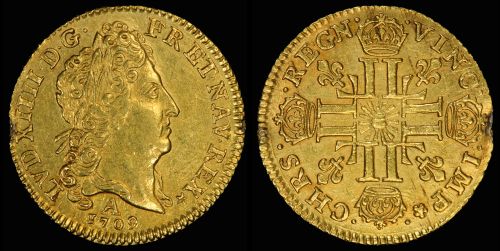
The branding of the French state under Louis XIV extended beyond court and culture into the mechanisms through which France presented itself to the wider world. Coinage, official documents, and diplomatic ceremony became vehicles for projecting a coherent and unmistakable image of authority. Currency functioned as a medium of everyday contact between subjects and sovereignty. The king’s image circulated constantly, reinforcing the association between economic stability and personal rule. Money did not merely facilitate exchange. It reminded its users whose order made exchange possible.
Foreign diplomacy amplified this personalization in deliberate and highly structured ways. Embassies, treaties, and ceremonial encounters were staged as performances of royal grandeur rather than as negotiations between equal institutions. Diplomatic protocol emphasized rank, precedence, and spectacle, turning international relations into carefully choreographed displays of hierarchy. The reception of ambassadors, the order of seating, the splendor of attire, and the scale of court ceremonies all communicated France’s position in the world through the person of its monarch. Success abroad was presented not as the outcome of administrative competence or collective strategy, but as evidence of Louis’s personal magnificence and authority. Diplomacy ceased to be a technical practice and became another arena in which the monarch’s image was rehearsed and affirmed.
War further intensified this process by transforming military conflict into a stage for personal legitimacy. Campaigns were framed as demonstrations of royal vigor, destiny, and resolve, regardless of their practical cost or strategic ambiguity. Victories were celebrated through medals, monuments, and official narratives that foregrounded the king’s will and glory, while defeats were reframed as honorable trials or temporary setbacks endured in service of greatness. Even when Louis was physically absent from the battlefield, his presence was symbolically omnipresent, invoked through proclamations, iconography, and ritual commemoration. Warfare functioned less as a means of resolving disputes than as a spectacle that reinforced the image of France as inseparable from its sovereign.
This internationalization of the brand shaped how other states perceived and responded to France. To engage with French power was to engage with the persona of Louis XIV himself. Admiration and resentment alike became personalized, focusing attention on the monarch rather than on the administrative, fiscal, and social structures that sustained his rule. This personalization magnified France’s presence on the world stage while simultaneously obscuring its internal vulnerabilities. Foreign observers encountered brilliance, coherence, and confidence, even as the material burdens of war and spectacle strained the state beneath the surface.
By exporting spectacle through coinage, diplomacy, and war, Louis XIV ensured that the fusion of state and self-extended far beyond Versailles. The French state became legible internationally as a branded entity, recognizable through image, ceremony, and style. Authority traveled not only through treaties and armies, but through symbols that made France appear unified, radiant, and indivisible from its king. The brand succeeded in commanding attention. Its cost would become apparent only later.
“L’état, c’est moi”: Institutional Collapse into the King’s Person
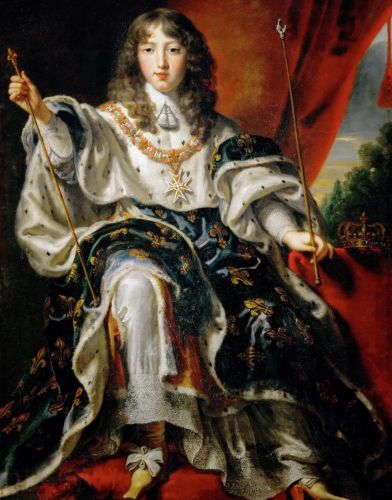
Whether or not Louis XIV ever uttered the phrase “L’état, c’est moi” is beside the point. What matters is that the system he constructed operated as if the statement were true in practice, logic, and effect. Over the course of his reign, the distinction between the French state and the king’s person narrowed until it became symbolic. Institutions continued to exist, laws continued to be issued, and officials continued to administer policy, but these structures no longer carried independent explanatory weight. Their authority was intelligible only through their relationship to the monarch. The state functioned, yet it did so as an extension of one body, one will, and one cultivated image. Governance did not disappear into chaos. It disappeared into personality.
This collapse of institutional legitimacy into the king’s person was not achieved through the abolition of offices or the dismantling of bureaucracy. It occurred through displacement rather than destruction. Decision-making authority migrated upward, while responsibility migrated outward. Ministers executed policy, but initiative was understood to originate with the king’s judgment. Administrative systems absorbed complexity, risk, and blame, while success was symbolically consolidated at the top. Failures could be attributed to subordinates, circumstance, or necessity, preserving the illusion of infallible central direction. Governance came to be understood less as a system of offices with shared accountability and more as the expression of royal intention mediated through obedient hands.
Critically, this personalization altered the meaning of criticism. To question policy was no longer to engage in debate over governance. It was to cast doubt on the judgment, competence, or virtue of Louis XIV himself. Opposition took on a moral dimension, easily framed as ingratitude or disloyalty. The fusion of state and sovereign rendered dissent suspect not because it violated law, but because it violated loyalty. Political disagreement was absorbed into the language of personal affront.
The long-term consequence of this arrangement was structural fragility. A system that depends on personal authority cannot easily outlive the person who embodies it. While the Sun King system produced extraordinary coherence and control during Louis’s lifetime, it weakened the capacity of institutions to command loyalty on their own terms. The state learned to speak through one voice, but in doing so it lost the ability to speak without it. What appeared as absolute strength was a concentration of legitimacy that left little behind once the spectacle ended.
Conclusion: The Cost of a Branded State
The Sun King system achieved what few political orders ever manage: near-total coherence between authority, image, and obedience during a single lifetime. Through spectacle, ritual, architecture, patronage, and cultural regulation, Louis XIV created a state that appeared unified, radiant, and unquestionable. Power did not merely operate efficiently. It appeared inevitable, omnipresent, and self-justifying. For contemporaries, this fusion of governance and performance resolved the instability exposed by the Fronde and delivered decades of visible order. The branded state worked, in the narrow sense that it successfully neutralized dissent, redirected aristocratic ambition, and centralized authority without constant resort to repression. What law and force could not fully secure, spectacle accomplished by making obedience feel natural.
Yet the very success of this system concealed its underlying cost. By collapsing institutional legitimacy into the king’s person, Louis hollowed out the capacity of the state to command loyalty independently. Institutions survived, but they no longer trained subjects to trust process, law, or collective authority. They trained them to recognize image. Governance became intelligible through spectacle rather than accountability. When authority is learned visually and ritually, it cannot easily be transferred once the performer disappears.
This personalization of legitimacy also reshaped political expectations in dangerous ways. Subjects learned to equate stability with personal dominance and order with visibility. When later rulers proved unable to replicate the Sun King’s performance, the system offered no alternative foundation for obedience. Institutions that had been reduced to instruments of display lacked the credibility to command trust during crisis. The brand had been strong, but it had consumed the structure beneath it.
The Sun King system reveals the central paradox of branded power. By making the state inseparable from the sovereign’s image, Louis XIV achieved extraordinary control The state learned to speak with one voice, to present itself as radiant, unified, and complete, but in doing so it forgot how to speak without a performer at its center. What remained after the spectacle faded was not absolutism at its most resilient, but a political order dangerously dependent on memory, repetition, and the impossible task of sustaining a brand once its creator was gone.
Bibliography
- Bédard, Jean-François. “Political Renewal and Architectural Revival during the French Regency: Oppenord’s Palais-Royal.” Journal of the Society of Architectural Historians 68:1 (2009), 30-51.
- Beik, William. Absolutism and Society in Seventeenth-Century France. Cambridge: Cambridge University Press, 1985.
- Bluche, François. Louis XIV. Berkeley: University of California Press, 1990.
- Burke, Peter. The Fabrication of Louis XIV. New Haven: Yale University Press, 1992.
- Chartier, Roger. The Cultural Origins of the French Revolution. Durham: Duke University Press, 1991.
- Clay, Lauren. “Patronage, Profits, and Public Theaters: Rethinking Cultural Unification in Ancien Régime France.” The Journal of Modern History 79:4 (2007), 729-771.
- Collins, James B. The State in Early Modern France. Cambridge: Cambridge University Press, 1995.
- Elias, Norbert. The Court Society. New York: Pantheon Books, 1969.
- Kettering, Sharon. “Patronage and Politics during the Fronde.” French Historical Studies 14:3 (1986), 409-441.
- Lynn, John A. Giant of the Grand Siècle: The French Army, 1610–1715. Cambridge: Cambridge University Press, 1997.
- Rosasco, Betty. “Masquerade and Enigma at the Court of Louis XIV.” Art Journal 48:2 (1989), 144-149.
- Saint-Simon, Louis de Rouvroy. Memoirs. Selected editions.
- Stahl, Alan M. “The Classical Program of the Medallic Series of Louis XIV.” The Princeton University Library Chronicle 76:1-2 (2015), 267-287.
- Tocqueville, Alexis de. The Old Regime and the Revolution. Chicago: University of Chicago Press, 1998 ed.
Originally published by Brewminate, 02.09.2026, under the terms of a Creative Commons Attribution-NonCommercial-NoDerivatives 4.0 International license.
About the Author