Three major waves of border changes in 20th-century Europe.

By Dr. Lorena De Vita
Assistant Professor of Humanities
Utrecht University

By Dr. Jarsolav Ira
Research Coordinator, Comparative Modern History
Member of the Seminar of General and Comparative History
Departmental Coordinator, Erasmus+
Local Coordinator, TEH21 and TEMA+
Leader, Cultural Heritage – Identities – Public Places – Cities (CHIPPC)
Center for the Study of Man and Society
Institute of World History
Charles University

By Dr. Thomas Serrier
Professor of History
University of Lille

By Dr. Andrew Tompkins
Lecturer in German and European History
University of Sheffield
Introduction
Political borders in twentieth-century Europe are usually thought of as lines on a map, separating one nation-state from another. In practice, however, there are many borderlands and border zones where belonging is ambiguous, arbitrary, or unstable. Throughout the twentieth century, European borders shifted repeatedly, and some have reemerged or continued to divide people long after being dismantled. What borders mean and how they are represented has also changed over time. This chapter examines how European borders changed over the course of the twentieth century, and analyses what they have meant at different times.
Border Shifts
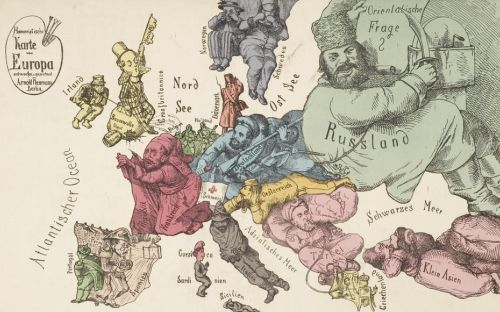
There were three major waves of border changes in twentieth-century Europe, each tied to the settlement of war: from 1918–1919 at the end of the First World War, in 1945 at the end of the Second World War, and from 1989–1991 following the end of the Cold War.
The First World War led to the disintegration of land empires within Europe and the creation of new nation-states from their former domains. For populations that had long felt stifled under the rule of distant powers, the 1918 peace conference at Versailles presented an opportunity for ‘national self-determination’ that would bring similar people together within independent states. For others—especially minorities and the inhabitants of mixed regions like Silesia or cities like Danzig (now Gdańsk, Poland), Triest (now Trieste, Italy), and Salonica (now Thessaloniki, Greece)—new borders could mean lost rights, dispossession, or forced migration. During the peace conference, the United States, United Kingdom, and France formally decided which states would exist where, but border changes were also shaped by local situations over which the ‘big three’ victors had no control. Poland, which had been partitioned out of existence in the eighteenth century, returned to the map of Europe as a multi-ethnic state that included Lithuanians, Belarussians, Ukrainians and Germans; the German Empire lost Alsace-Lorraine in the west and parts of Prussia in the east; several new states were consciously multinational, including the ‘Kingdom of Serbs, Croats, and Slovenes’ (later Yugoslavia) and Czechoslovakia. For better or for worse, the Second World War fundamentally redrew the map of Europe.
Conflicts over borders nevertheless continued between the two World Wars, especially between Germany and its neighbours. Hitler’s annexation of Austria and of parts of Czechoslovakia in 1938 were but the prelude to a larger war in which both Nazi Germany and the Soviet Union (USSR) engaged in large-scale social engineering projects that violently altered the ethnic composition of Europe, most importantly the systematic killing and displacement of Europe’s Jewish population. By the time the war ended, millions of people had been murdered, deported, or displaced. After the Allies defeated the Axis Powers, they drafted a blueprint for the post-war settlement at the Potsdam Conference in 1945, which rearranged the continent’s internal borders more durably. However, the Allies’ unfinished plans quickly became a rigid reality, as conflict between the USSR and the USA led to the indefinite postponement of a final peace treaty. In occupied Germany, for instance, the Western and Soviet occupation zones became separate states that competed with one another for nearly forty years. The Berlin Wall, though not built until 1961, became the symbol of a hard border between East and West running across the European subcontinent.
Few European borders changed substantially during the Cold War era but, in 1989, the unexpected collapse of Soviet-style communism called into question both the placement and meaning of borders across Europe. While much of the post-war order remained intact after 1990, there were several momentous changes: East and West Germany united, the Czech Republic and Slovakia ‘divorced’, the USSR dissolved, and Yugoslavia disintegrated. Thereafter, large parts of Europe became more closely integrated within the structures of the European Union (EU) and the Schengen Agreement, both of which dramatically changed how European borders functioned.
Today’s EU was originally founded in 1957 (as the ‘European Communities’, or EC) by six western member states, but it expanded in four key stages: the so-called ‘northern enlargement’ in 1973, through which Denmark, Ireland, and the United Kingdom became EC members; the ‘Mediterranean enlargements’, which added Greece in 1981 and Portugal and Spain in 1986 (marking an important milestone in these countries’ transition from dictatorship to democracy); the accession of Austria, Finland, and Sweden—all countries that had pursued a policy of neutrality during the Cold War—to the renamed and restructured European Union (created by the Maastricht Treaty) in 1993; and the long, complex ‘eastern enlargement’ that brought in ten new members in 2004 (Czech Republic, Hungary, Poland, Slovakia, Slovenia, Lithuania, Latvia, Estonia, Malta and Cyprus), followed by three more in 2007 (Bulgaria and Romania) and 2013 (Croatia).
These changes have not only altered the location of the EU’s external borders to the north, south, and east, but also affected how its internal borders work. A milestone in this regard was the signing, in 1985, of the Schengen Agreement, which aimed to abolish checks at shared borders and to create a single external border. The agreement’s implementation was delayed repeatedly, not least because of Western European fears after 1989 that the EU’s parallel eastern enlargement would lead to mass immigration. The Schengen Agreement entered into force between some countries in 1995, gradually expanding to encompass most (but not all) EU states and some non-EU members (Norway and Switzerland), today promising the free movement of some 400 million people within the Schengen Area. This represents a huge shift compared to the hard borders and divisions that characterised long stretches of European geopolitical history especially during—but also prior to—the Cold War.
The process of EU integration and the signing of the Schengen Agreement have undeniably reduced barriers to individual mobility and trade between European states, but the practice has not always lived up to the loftier promises and expectations of ‘open borders’. EU states have repeatedly suspended Schengen and reintroduced temporary border controls. This has usually taken place briefly in advance of international summits or in response to terrorism, and sometimes for extended periods. In 2015, many European states closed their borders to refugees seeking asylum from civil wars in Northern Africa and the Middle East, and renewed these ‘temporary’ restrictions for years thereafter. Tellingly, in 2020, the first reaction to the Covid-19 pandemic in much of the EU was to close borders, effectively shutting down free movement in an attempt to curb the spread of the virus. And while many Europeans are by now accustomed to roaming freely throughout the continent, non-Europeans—including trading partners and the citizens of former colonies of past empires of European nations—have faced increasing restrictions on their mobility into and within Europe. European borders have become very open to some people and very closed to others, with checks exercised across wide zones rather than only at border crossings. To many observers, the Nobel Peace Prize awarded to the EU in 2012 for its contribution “to the advancement of peace and reconciliation, democracy and human rights” is a bitter counterpoint to the remilitarised and digitalised borders that surround what critics describe as ‘Fortress Europe’.
The history of Europe’s internal and external borders is therefore also the history of their simultaneously inclusive and exclusive impulses, which continue to evolve.
Changing Meanings of Borders
Borders are much more than just a line of division and administrative tool for controlling space and territory. Some scholars have drawn attention to the prominence, and even agency, of borders in structuring identities or inciting artistic representations. Others have looked at borders as contact zones and spheres of cultural exchange. Yet others have thematised everyday life along borders. The focus has shifted from borders to borderlands, as landscapes that in many respects were critical spaces of a social drama rather than peripheries. Scholars have also had to reflect on how the many different terms associated with borders (frontière, border, confine, kraina, Grenze) have circulated for centuries as nomadic concepts that also create unavoidable misunderstandings.
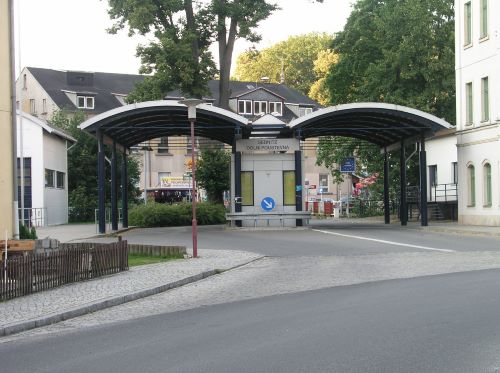
The Czech-German border illustrates some of these points. Since it is partly formed by mountain ranges, its location has been stable and enduring, but its roles have changed several times. Prior to 1938, it was the state border between Germany and Austria-Hungary (later Czechoslovakia). Often more significant, though, was the language border, or ethnic boundary, that went further inland and which helped to define the so-called borderland, a vast peripheral area that was largely coterminous with German-speaking territories. Between 1938 and 1945, the ethnic boundary became the state border after the signing of the Munich Agreement, which was concluded by Nazi Germany, the United Kingdom, France and Italy and which permitted German annexation of the Sudetenland of western Czechoslovakia. From 1945 to 1948, the state border was restored, but the ethnic boundary was removed following the expulsion of the German population. As a result, the borderland acquired new meaning as a territory to be resettled and cultivated afresh. After 1948, that part of the state border which was shared with West Germany became part of the ‘Iron Curtain’, or ‘stronghold of peace and socialism’, respectively, that separated two competing blocs and their socioeconomic systems. The borderland in the narrow sense of a border zone turned into a heavily guarded, militarised area. After 1989, the opening of the Czech-German border proceeded in parallel with the general delegitimisation of internal borders in Europe, culminating in the Schengen regime. Perhaps more importantly though, the border finally lost its long-cultivated meaning as an identity-reproducing frontier against the major national enemy.
In the Czech national imagination, the border has long carried a strong national meaning as the frontier dividing ‘us’ from the national enemy, augmented by a larger civilisational meaning of the frontier between Slavic and Germanic worlds. The no less fundamental boundary between the socialist and the capitalist system, concurrent with the ‘Iron Curtain’ and the line dividing ‘aggressive’ imperialists and the ‘peace-seeking’ socialist camp, enhanced the existing template with new meaning. No wonder, then, that the border was a strong theme of artistic representations, ranging from poetry to novels and short stories. Czechoslovak film production followed suit, with Král Šumavy (King of the Bohemian Forest, 1959), a film about border guards hunting a human trafficker, representing an apex of the genre. Dozens of films, ranging from simple propaganda to more critical dramas, employed themes from crime and espionage to stage psychological inquiries into the formative nature of the border for its guards, or for those who came to build a new society in the rough conditions of borderlands. Film experts and historians have decoded the borderland in fiction as a social laboratory in which new socialist characters were formed, a sort of eastern ‘Wild West’ in which the border played a role similar to that of the western frontier of American civilisation—and it was the border guards who played the heroes of this ‘socialist Western’ (or ‘Eastern’) genre.
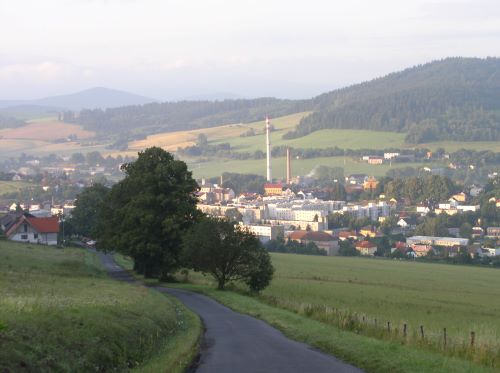
The border played a role in narratives that (re)produced large-scale collective identities, as well as in propaganda that legitimised the new spatial and ideological order (with its radical closure of borders) after 1948. But the border also had an identity-forming role in its own right. In the first half of the twentieth century, the border region of Chodsko and the predominantly Czech towns in the south-west part of the borderland, such as Kdyně, used the region’s strategic position as a bulwark against outsiders, not only to reaffirm their specific regional and local identities, but also to claim special assets, such as district status. In the new conditions of socialist Czechoslovakia, small towns also capitalised on their proximity to the dividing line between two divergent socioeconomic systems—albeit mostly symbolically, through self-promotion. For instance, a 1979 book celebrating the 700-year anniversary of Nové Hrady, a town located close to the Austrian border, claimed that its jubilee had “broader political implications”, as it highlighted the importance of building and guarding socialism at the very frontiers of the Soviet bloc. At the same time, however, the radical change of population in much of the borderland led to a lack of local attachment to or sense of place in the region, a problem that continues to affect parts of it today.
In terms of everyday culture, a specific milieu of controlled territory evolved during the socialist era. The everyday coexistence of the local population with military border guards and police forces was accepted—and retrospectively remembered—with mixed feelings: a positive sense of security; a negative sense of omnipresent surveillance; the often-praised role of border guards in building social amenities and producing cultural activities in small border towns; the abandonment or planned dilapidation of settlements in the border zone.
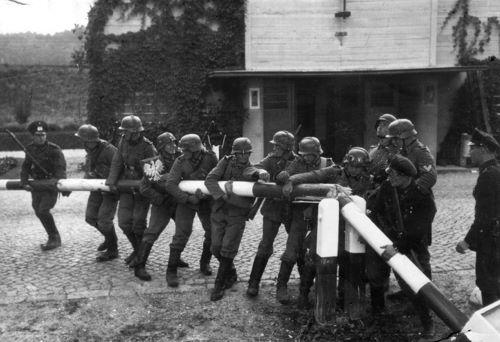
At first sight, the post-1989 era appeared to overcome these dramatic divisions and fears. The work of Polish contemporary artist Zbigniew Libera illustrates this. He drew attention to this profound change with his work Kolarze (Cyclists, 2002), which shows its protagonists calmly removing a border post. He positioned the cyclists to mimic Wehrmacht soldiers from an infamous Nazi propaganda photograph taken in September 1939, during Germany’s invasion of Poland—two radically different crossings of the same border. Characteristic of this fluid regime of territoriality, a number of local initiatives all over Central Europe promoted what the Polish historian Robert Traba has called the idea of “open regionalism”, particularly with regard to the legacies of their national neighbours across the border. With the enlargement of the EU, the expansion of the Schengen Area, and the spread of low-cost travel, border crossings became a routine experience for most Europeans. In 2009, the Austrian artists Iris Andraschek and Hubert Lobnig conveyed this idea in an art installation along the Austro-Czech border. Amid images of the barbed wire that once stood there, their work displayed large metal letters posing the question: “where do the borders disappear to?”
Memory of Borders
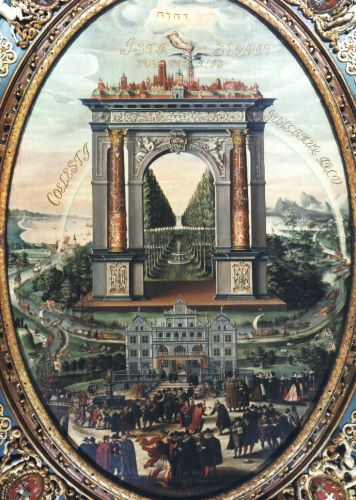
Unlike Libera’s cyclists, many Europeans in the twentieth century often paid a high price for passing, crossing, or knocking down borders. They were equally aware of the cost of the painful new allegiances involved in changes of territory. Several places, such as Berlin, Trieste, Strasbourg, Lviv/Lwów/Lemberg and Danzig/Gdańsk (the latter transfigured in the 1959 novel Tin Drum by German writer Günter Grass), symbolise the centrality of the border issue in European history.
Hence borders—especially those that cut and divide—have been evoked in dozens of twentieth-century cultural productions, lurking as they do in the recesses of family and collective memories. The novel They Divided the Sky (1963) by the German writer Christa Wolf illustrates this, as does the moving Passages (1994) by the Israeli artist Dani Karavan, a memorial site at Portbou in homage to the German intellectual Walter Benjamin (1892–1940), who tried to escape the Nazis and committed suicide in this Spanish border town in 1940. The Berlin Wall, erected in 1961, was for a long time the symbol of inhumanity and oppression par excellence. Conversely, the fall of the wall amid euphoric scenes in November 1989 has allowed it to serve as an icon of ‘passage’ and a symbol of overcoming arbitrary borders.
Derelict borders such as these stand out in landscapes that have long been the scenes of clashes between neighbouring countries and systems. The Green Belt along the former German-German border and the Berlin Wall Trail for pedestrians and cyclists are two of the best-known examples. The Rhine River is another emblematic one: it has served as the site of European institutions in Strasbourg since the Second World War and, more recently, as the symbolic backdrop for a final tribute to a “great European”, following the death of the former German Chancellor Helmut Kohl (1930–2017).
Considering that past borders have manifested in a variety of modes, the concept of ‘phantom borders’ is helpful. It describes former territorial demarcations that seem to re-emerge after periods of absence, or which continue to structure spaces even after territorial shifts have led to their removal. The abolished borders of continental empires—the Habsburg, Ottoman, and German Empires, but also the Soviet Empire and the border dividing Germany from 1949 to 1989—continue to have a long-lasting effect. This can be seen today in architecture, settlement patterns, industrial heritage, infrastructural legacies, maps and statistics, and other social practices. Telling examples can be found in the electoral maps of many countries in east-central Europe, and in this sense the case of Poland in the early twentieth century is anything but unique: regional differences in voting patterns between the eastern and western parts of the country recall the interwar state borders, sites of forced migration after the Second World War, and even older boundaries of partitioned Poland from 1795 to 1918.
Conclusion
Borders and boundaries remain, as French historian Daniel Nordman has written, a “paradox in space”. The ambiguous Borne-frontière (‘Boundary Marker’) sculpture carved in 1945 by the French-Romanian artist Constantin Brâncuşi (1876–1957) also expresses this fundamental ambivalence, showing four surfaces featuring pairs of human profiles chiselled face-to-face in limestone, apparently exchanging a kiss: romantic encounter or frozen confrontation? Borders can be both a frontline and a place of encounter, a barrier and a pathway. Amid the territorial conflicts of the interwar period, the prominent French historian Lucien Febvre argued in his 1931 essay ‘Le Rhin’ (‘The Rhine’) that this famous border river represented both a coupure (cut) and a couture (seam).
European states have often called on this function (or illusory promise) of separation and protection, and they continue to do so when reestablishing their border systems—with Brexit, the so-called refugee crisis in 2015, and the Covid-19 lockdown as telling examples. As a result, borders have generated diametrically opposed responses, from demands for their abolition to drastic measures to reinforce them. In his plea Pour l’Europe (‘For Europe’, 1963), the French politician Robert Schuman (1886–1963), one of the architects of the European Communities, argued that one of the aims of European integration was finding a position between these two poles: “It is not a question of obliterating ethnic and political borders. They are a historical fact, and we do not presume to correct history […] What we want is to remove the rigidity from borders, what I would call their intransigent hostility.”
Suggested Reading
- Amilhat Szary, Anne-Laure, ‘Walls and Border Art: The Politics of Art Display’, Journal of Borderlands Studies 27:2 (2012), 213–228.
- Ballinger, Pamela, History in Exile: Memory and Identity at the Borders of the Balkans (Princeton: Princeton University Press, 2002).
- Diener, Alexander C. and Joshua Hagen, Borders: A Very Short Introduction (Oxford: Oxford University Press, 2012).
- Foucher, Michel, Le retour des frontières (Paris: CNRS, 2016).
- Jeanpierre, Laurent, ‘Frontières’, in Dictionnaire des concepts nomades en sciences humaines, ed. by Olivier Christin (Paris: Métaillié, 2010), pp. 157–171.
- Kopal, Petr et al., Král Šumavy: komunistický thriller (Prague: Academia, 2019).
- Serrier, Thomas, ‘The History of Europe is the History of its Borders’, in Europa. The European Way since Homer: History, Memory, Identity, ed. by Etienne François and Thomas Serrier with Akiyoshi Nishiyama, Pierre Monnet, Olaf B. Rader, Valérie Rosoux, and Jakob Vogel (London: Bloomsbury, 2021).
- Van Houtum, Henk, Olivier Kramsch and Wolfgang Zierhofer, eds, Bordering Space (Aldershot: Ashgate, 2005).
- Wiedemann, Andreas, “Komm mit uns das Grenzland aufbauen!”: Ansiedlung und neue Strukturen in den ehemaligen Sudetengebieten 1945–1952 (Essen: Klartext, 2007).
- Wilson, Thomas M. and Hastings Donnan, eds, Border Identities: Nation and State at International Frontiers (Cambridge: Cambridge University Press, 1998).
Chapter 1.2.3: Borders in Contemporary History (ca. 1900–2000), from The European Experience: A Multi-Perspective History of Modern Europe, 1500–2000, published by Open Book Publishers (02.06.2023) under the terms of a Creative Commons Attribution-NonCommercial 4.0 International license.
About the Author