It was solely for the use of the government, not a response to any kind of demand on the part of society at large.

By Dr. Daniel C. Waugh1
Professor Emeritus of History
University of Washington

By Dr. Ingrid Maier1
Professor Emeritus of Slavic Languages
Uppsala Universitet
Treatments of the emergence of European “modernity” invariably emphasise the development of mechanisms for the rapid dissemination of knowledge. The establishment of postal networks and in the seventeenth century the rapid proliferation of printed newspapers made possible the sharing of news across political and social boundaries, thus contributing to a growing sense of “contemporaneity” on, eventually, a Europe-wide scale.2 The degree to which Muscovite Russia participated in this “information revolution” has been debated, though the impression persists that cultural barriers and conscious choice to a considerable degree limited any meaningful connection prior to the era of Tsar Peter I “The Great” (r. 1682–1725).
The issue here is not whether there was some degree of “Westernisation” prior to Peter, affecting primarily a small segment of the Russian elite. That such was the case has long been well known. This “Westernisation” involved translation of foreign books, acquisition of knowledge about history and geography, adoption of foreign fashion or artistic norms, and much more. Our subject here is the acquisition of current foreign news in a regular and timely fashion, a process that would require establishing a connection with what we might term the “state-of-the-art” communications mechanisms shared across much of Europe and which could not, ultimately, depend on irregular and unpredictable contacts. In the first instance, the evidence is to be found in the so-called kuranty, translations and summaries of foreign news produced for the Muscovite government. This essay will trace the history of their development and contextualise them with reference to the broader European communications revolution of the seventeenth century.
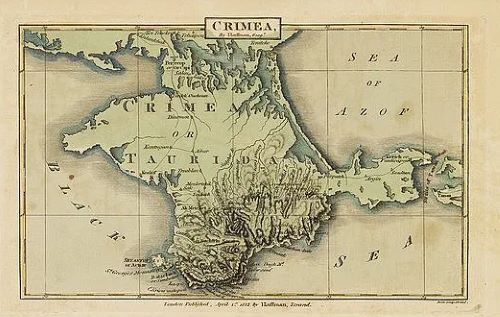
Down through history, governments have prioritised the acquisition of foreign news that might be relevant to political or military concerns. With the development in Muscovy of formal bureaucratic institutions and record-keeping, starting in the late fifteenth century, we can begin to trace how its government was kept informed of foreign affairs. In the first instance, this was through the reports brought back by the infrequent embassies sent abroad, or those obtained from foreign visitors to Moscow. Military intelligence obtained along the borders presumably contributed in important ways to knowledge about immediate neighbours but this can be difficult to document. Developments which, elsewhere in Europe, were already beginning to revolutionise communication—the establishment of the Habsburg Imperial Post, the development of extensive networks of correspondents, especially for commercial intelligence, and the beginnings of permanent diplomatic representation at foreign courts—had as yet no impact in Muscovy. Nonetheless, it is possible to document a growing Muscovite awareness of the importance of obtaining foreign news. By the middle of the sixteenth century, instructions to ambassadors would regularly include the requirement to learn about foreign alliances and alignments.3 Even if there was no regular courier network to ensure rapid communication, for extended periods there were, in effect, resident Muscovite diplomatic agents in the Crimea, who would report in some detail both on Crimean affairs and more broadly about the Ottoman Empire.4 To the degree that the acquisition of foreign news was deemed important, it was solely for the use of the government, not a response to any kind of demand or curiosity on the part of society at large. In this regard, throughout the seventeenth century, Muscovy continued to differ from the rest of Europe, where private initiatives and the commercialisation of news and information networks formed an important part of the communications revolution. Except for news which might pertain to immediate neighbours of Muscovy, its government only very gradually acquired more than a vague understanding of current events farther afield and felt no particular urgency to have news of them which might be fresh enough to have operative value.
As Andrew Pettegree has emphasised, news in early modern Europe might be transmitted in various media: it would be a mistake to assert, as historians of the periodical press have tended to do, that the development of printed newspapers (first known from 1605) defines the subject.5 In fact, some of the major centres of news acquisition and dissemination (Venice being an important example) did not have regularly published newspapers, relying rather on irregular separates devoted to events of particular significance. There was a large market for broadsides and pamphlets, whose content complemented the generally dry “objective” political communications in newspaper articles. The separates might emphasise religious dispute, contain political polemics, or illustrate paranormal or natural wonders. Serious economic information was often left to the extensive networks of private, handwritten letters. Even those who were interested mainly in international politics often preferred to rely on information from such trusted correspondents, rather than on printed sources. Oral communication of rumour—which, of course, is difficult to document—continued to be important. It is essential to keep this picture in mind in assessing Muscovite foreign news, especially given the fact that before the early eighteenth century there was no such thing as a printed newspaper produced in Russia.
The analysis which follows here is limited by the uneven state of the preservation and publication of the primary sources. Prior to the seventeenth century, we have only a handful of news pamphlets that made their way to Russia and were translated. They are not without interest—for example, a report about an earthquake and even a pamphlet devoted to Columbus’s discovery of America—but their acquisition surely was a matter of chance.6 There is no reason to suspect that they hint at any significantly larger body of such news pamphlets which Muscovy might have acquired.
Of greater value here are the reports of Muscovite ambassadors, whose files date from the late fifteenth century. What came to be termed the stateinye spiski were written reports filed at the end of an embassy.7 The earliest ones tend to be rather cryptic, probably reflecting the fact that much which was transmitted orally was not committed to writing, but from the beginning of the second half of the sixteenth century, they become increasingly detailed. In the first instance, such reports were intended to show that the ambassador had fulfilled precisely his instructions and ensured that the honour of his ruler was not in any way impugned. Thus we find specifics of diplomatic exchanges and descriptions of ceremonies and, occasionally, entertainments. Since instructions to ambassadors regularly required that they learn of alliances and alignments of the court to which they were sent, the stateinye spiski contain often cryptic, formulaic indications about who was friends with whom, hostile to whom, etc. From the end of the sixteenth century, the stateinye spiski sometimes include appendices with translations of foreign news reports.
By themselves though, the stateinye spiski sketch an imperfect picture of Muscovite news acquisition.8 They inform only on the occasion of the dispatch of an embassy. Such foreign missions were infrequent and irregular, even though they grew in number during the seventeenth century. Since the ambassadors reported only at the end of an embassy (until the last third of the seventeenth century, when the European postal networks made possible the release of regular dispatches to Moscow), the news they brought might be very dated and have little operative value by the time it reached the Kremlin. Granted, during any negotiation, either abroad or in Moscow, news might be communicated in ways that could influence the outcome. That was more likely to be the case where foreign embassies were in Moscow than in situations where the Russian representatives were abroad, handcuffed by instructions that gave them little flexibility to agree on anything of substance without first consulting Moscow.
Since only a small portion of the very extensive archival files of reports sent to Moscow by its military governors (voevody) in the seventeenth century has been published, it is difficult to document exactly how significant such reports were in the acquisition of foreign news. Clearly though, these commanders were critical providers of information regarding what was going on adjacent to the Muscovite borders.9 Its sources could be merchants, other travellers (including, in the South, Balkan clerics hoping to obtain financial support in Muscovy), and spies sent specifically to gather foreign intelligence. Important news generally would be communicated by courier, which meant it might arrive in timely fashion. While in the first instance the voevody reported to the Razriadnyi prikaz (which was in charge of military service appointments), news of particular interest regarding foreign affairs might also be quickly forwarded to the Ambassadorial Chancery (Posol′skii prikaz) or one of the departments with regional competence such as the Chancery for Ukrainian Affairs (Malorossiiskii prikaz). While systematic study of such material is a task for the future, arguably the reports by the border commanders constituted perhaps the single most significant source of foreign news for the Kremlin, focussed as they were on matters directly relevant to the state’s security. While such reports might include news from further afield, the government needed to develop mechanisms which would ensure its regular and timely acquisition. In this then lies the story of the Muscovite kuranty, which is inseparable from the history of Muscovy’s foreign post.
The term kuranty here will be used as a shorthand to designate a wide range of translated news sources acquired in Muscovy during the seventeenth century. In the Muscovite context, the term first appears around 1650, borrowed from the titles of some (especially Dutch) newspapers,10 but in fact the acquisition of such sources and their translation has an earlier history.
Since the kuranty had first become known to scholars only from fragmentary publication of a few texts, there was little serious study of these news sources until the last decades of the twentieth century. To the degree that there had been any interest, the focus was on the question of whether they presaged the first publication of newspapers in Russia initiated under Tsar Peter I.11 The mistaken notion that they were the equivalent of a “newspaper” is one we question in our conclusion. In his Ph.D. dissertation, Daniel Waugh devoted a chapter to the kuranty, exploring in a limited way the relationship between the translations and some of their sources, and in the context of examining Muscovite writings about the Turks looked more broadly at a range of translated pamphlets which seemed to have been produced in conjunction with the Muscovite acquisition of foreign news.12 One real obstacle to meaningful study of the texts had been the limited knowledge of their foreign sources. What turned out to be extensive files of Western newspapers acquired in seventeenth-century Moscow had lain largely untouched in the Russian archives, and the labour-intensive process of locating additional sources in multiple repositories outside Russia had not begun. The publication of a few of the original newspapers in the vesti-kuranty series launched in 1972 (see below) enabled Roland Schibli to write a detailed monograph exploring the translation techniques at least for a limited period in the first half of the seventeenth century.13 The work of Ingrid Maier has opened a new era in the study of the texts, as, almost single-handedly, she has been responsible for locating many of the originals the translators used and thus has been able substantially to expand our knowledge about virtually every aspect of the way the sources were processed by the translators in Muscovy. Her work for the first time provided a meaningful comparative perspective from the history of the European press, and her monograph-length treatment of the subject accompanies the first major compendium of the foreign source texts.14 Fortunately, on the Russian side, we also now have the contributions of Stepan Shamin, whose published kandidat dissertation on the kuranty in the time of Tsar Fedor Alekseevich (r. 1676–82) provides valuable information about the process of news acquisition, the content of texts, the instances where it is possible to document dissemination of texts outside the chancery milieu and more.15
The systematic publication of the texts began in 1972 in a series given the generic title Vesti-kuranty, reflecting the fact that often the news (vesti) came not from published newspapers but from manuscript newsletters or other sources.16 Unfortunately, decisions about what to include in the Vesti-kuranty series (hereafter abbreviated to its generic title V-K) mean that it is far from a complete record of foreign news arriving and translated in Moscow, since many of the archival foreign relations files have not been systematically explored to identify relevant material. That said, the kuranty that are available offer a reasonable approximation of the flow of foreign news and clear evidence as to how it was processed.
Documents in the first five volumes of the series (ostensibly covering the period from 1600 through the 1650s) leave us with the impression that news acquisition was unpredictable, vacillating between some periods of intensive and regular communication, and long periods when there was nothing (perhaps, of course, a reflection of poor preservation, rather than an indication of an actual void). Frequently the Russian translations of that period were based on news handed over to the Muscovite authorities by foreign merchants or agents, their sources being either printed newspapers or manuscript newsletters. Dutch merchants and entrepreneurs—Isaac Massa, Georg Klenck (Iurii Klink) and Carp Demulin are among them—provided a good many of the early foreign news sources.17 These sources often provide no information regarding the initiative for the supplying of such news: surely many of the foreigners voluntarily provided it, presumably in the hope of solidifying their position in the eyes of the Muscovite authorities, but one also has to imagine that pressures were exerted to ensure that information received through private correspondence was shared with the Russian officials. It was a normal procedure that foreigners would be interrogated on arrival in Muscovy. Since such news often came into Muscovy via the Northern route from the White Sea, by the time reports about events in Western Europe reached the Kremlin, they might be several months old. Furthermore, navigation via the Northern route extended only over a relatively short period of summer months.
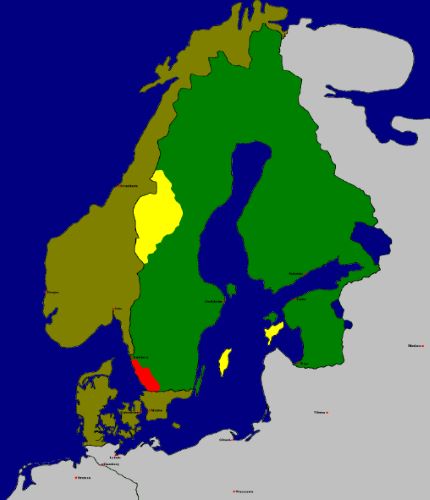
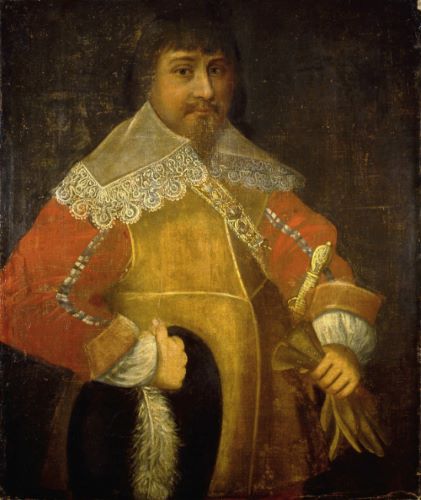
News arriving via Arkhangelsk would continue to be translated in subsequent decades. However, improvements to this irregular and slow transit would perforce involve more direct routes via the Baltic, taking advantage of the developing Northern European postal and merchant networks. Annotations on many of the news compilations indicate that they were forwarded from Pskov or Novgorod. In 1631, a certain Melchior Beckmann sent newsletters from Stockholm.18 For more than a decade beginning in 1636, a Swedish resident in Moscow, Peter Krusbjörn, supplied a substantial number of news reports.19 His successor Karl Pommering took up where Krusbjörn left off.20 There were opportunities for the Muscovite Ambassadorial Chancery to hire agents who might supply news on a regular basis. A Rigan, who wrote under the nom-de-plume of Justus Filimonatus, offered to send news to Moscow, and in fact over more than half a year between late 1643 and mid-1644 submitted a series of reports from Riga and Danzig.21 In the 1640s, we increasingly see Peter Marselis, an important Danish entrepreneur, among those supplying news. His sons would later, for a brief period, run the Muscovite foreign post. John Hebdon, who subsequently would carry out commissions for Tsar Aleksei Mikhailovich, also became a supplier of news in the 1640s. One of the impressive instances of intensive news acquisition came when a Muscovite embassy was in Stockholm between June and October 1649, from which it transmitted translations of foreign news via courier on a weekly basis over several months. Twenty of these translations have been preserved.22 The most important source was the Wochentliche Zeitung published in Hamburg. Overall, despite some gaps we might attribute to vagaries of preservation, the quantity and coverage of foreign news received in Moscow in the 1640s is impressive.
Even if their acquisition was irregular, strikingly the first foreign newspapers made their way to Russia within a relatively short time after they had first begun to appear on a regular basis in the West.23 The earliest evidence for a weekly newspaper in Europe is from 1605, with the earliest known examples from 1609. By 1620, there were already several regularly published German and Dutch newspapers and the first in English and French (printed in the Netherlands). As early as 1621, only three years after the first appearance of a Dutch weekly newspaper, at least a couple of numbers had arrived in Moscow where they were translated. Translations into Russian from German newspapers also date from this year. During the first half of the seventeenth century, it seems that the German newspapers, primarily those published in Hamburg, were much more often the sources for kuranty than were the Dutch (primarily from Amsterdam). The Russian archival files preserve only occasional copies of the foreign newspapers which served as sources for the kuranty during the first half of the seventeenth century, the earliest German example dating from 1631 and earliest Dutch newspaper from 1646. Yet it was precisely these files that first drew the attention of historians in the first half of the nineteenth century to the Muscovite acquisition of foreign news. For the second half of the seventeenth century, the state of preservation is substantially better—over 2600 individual numbers of the German papers, most of which are unique copies not preserved in other European collections, and more than 650 numbers of Dutch newspapers.24
In the circumstances in which it seems relatively few of the newspapers were making their way to Moscow, the initial response of the Ambassadorial Chancery seems to have been to translate large portions of them, if not necessarily their entirety.25 The result was the availability in Russian of a substantial collection of news about the events of the Thirty Years War, often containing detail that surely would have been meaningless to a reader in Muscovy and of no direct relevance for the shaping of Muscovite foreign policy. By the time of the Russian embassy in Stockholm in 1649, clearly the translators were being selective, using parts of some articles, omitting others, and combining material from several sources.26 In addition to the newspaper accounts, the officials in the Kremlin received and had translated larger separates. They had the entire texts of treaties, including the Swedish-Danish treaty of Brömsebro27 in 1645, the treaty between the Netherlands and Spain of January 1648 in Münster, and that between the German Empire and Sweden in summer 1648 in Osnabrück—thus, two of the three treaties which ended the Thirty Years War in 1648.28 They obtained texts of pamphlets with the famous appeal of King Charles I and later a description of his execution in 1649, an event which offended the tsar’s government and resulted in the curbing of English trading privileges.29 Since copies happened to be received (not, it seems, consciously sought out by the chancery) of extended accounts concerning the miraculous cures effected at the waters of the much-frequented Protestant spa at Hornhausen in Northern Germany, those too were translated.30 Surely this material would have struck a chord amongst those in Moscow familiar with the listings of cures appended to saints’ lives and tales about miracle-working icons. Indeed, accounts of the paranormal, including prognostications by self-proclaimed holy men, formed part of the output of the translators in the Ambassadorial Chancery, alongside propaganda that included fictive missives from the Ottoman sultan threatening death and destruction to Christian Europe.31
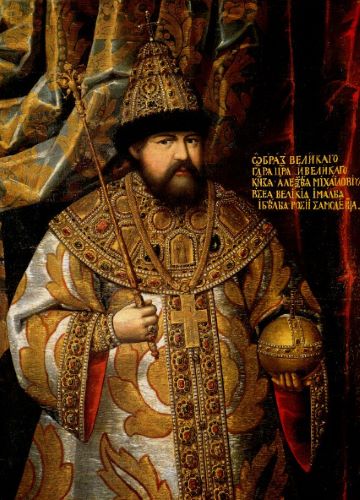
The real push to regularise the acquisition of foreign news dates from the reign of the second Romanov, Tsar Aleksei Mikhailovich (1645–76). An important reason for this appears to have been the personality and intellectual interests of the tsar himself. While we lack details, we know that part of his youthful education included exposure to European broadsides. The inventory of his Privy Chancery (Prikaz tainykh del), which had been created at the beginning of the long war against Poland in 1655 and was disbanded only after the tsar’s death in 1676, offers ample evidence about his broad interests.32 Among the files were many stateinye spiski and, significanctly, long runs of the kuranty. In an instruction to his chief foreign affairs adviser Afanasii Ordin-Nashchokin in 1659, the tsar indicated he wanted to be supplied with foreign news on a monthly basis.33 Soon afterwards, a Russian embassy to England and Italy was tasked with exploring the possibilities of engaging regular correspondents to send news to Moscow, though it seems no concrete arrangements followed. It is hardly a surprise that when the Muscovite foreign post was finally established in 1665, it was under the auspices of Aleksei Mikhailovich’s Privy Chancery, with the explicit purpose of obtaining foreign news on a regular basis.34 Some credit the initiative to Ordin-Nashchokin, although direct evidence is lacking. He certainly had shown initiative earlier in establishing his own network of correspondents across the Northern borders, and had been one of the suppliers of foreign news to the tsar.
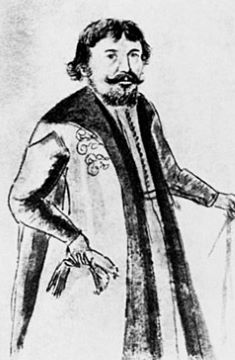
In May 1665, a postal contract was drawn up with the Dutch entrepreneur Johann van Sweeden, who had for some time been active in Muscovy.35 He was to be paid a lump sum each year to maintain a postal route to Riga with predictable bi-weekly deliveries of foreign news. Van Sweeden’s system was independent of the long-standing Muscovite network of horse relays (the iamskaia gon′ba). His riders had to wear uniform clearly marked with postal insignia. It was his responsibility to negotiate with the postmaster in Swedish-held Riga the details of the schedule and what news was to be acquired.
This arrangement through a private contractor was not unusual in the larger context of the various efforts by the Muscovite government in the seventeenth century to tap foreign expertise, which in the first instance had been for the improvement of the Muscovite military by hiring mercenaries and raising arms production to a more efficient and technically advanced level. Nor was it unusual elsewhere in Europe when new postal networks were being established, to contract them to entrepreneurs who might have had some previous experience in managing such a system.36 Just as in Muscovy, so elsewhere in Europe the development of the post and the dissemination of news went hand in hand: European postmasters often were the collectors and purveyors (even publishers) of newspapers. A generation earlier, a Muscovite foreign post probably would have been impossible, given the fragmented and often contentious nature of the various postal services in Northeastern Europe. Even if there were still improvements to be made and conflicts to be adjudicated, by the 1660s the postal networks in the Baltic region, which extended through the Northern German states West to Antwerp, South into Italy, and North into Sweden, were in place.37 To connect Muscovy via Riga, between which there had already been quite regular communication, was a logical next step.
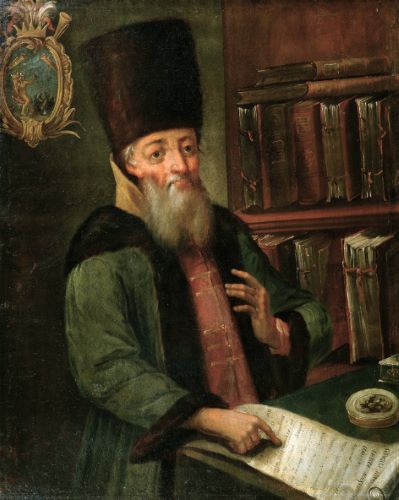
Despite the fact that van Sweeden seems to have had no previous experience in running a postal network, as near as we can tell he did manage to fulfill the terms of his contract and provide news from Riga on a bi-weekly basis.38 Even though van Sweeden’s contract was renewed in 1668, in that same year the management of the post was abruptly handed over instead to the Marselis family, who enjoyed the favour of Ordin-Nashchokin. Apart from personal loyalties, the move may in part reflect an effort by Ordin-Nashchokin, now in charge of the Ambassadorial Chancery, to streamline the management of Muscovite foreign affairs. The post was now delivered to his department, not routed first to the tsar’s Privy Chancery. When Ordin-Nashchokin lost his position in 1671, the post was handed over to Andrei Vinius, only to have it come back to Leonhardt Marselis when Vinius was sent abroad on a foreign embassy that lasted from 1672 to 1674.
Under the Marselises, there was a substantial reorganisation (and upgrading) of the service, with the posts running weekly to both Riga and Vilna. The latter route was necessitated by the Truce of Andrusovo (1667), which established diplomatic residents of Poland-Lithuania and Muscovy in the respective capitals, requiring that they be able to communicate on a regular basis with their superiors. Moreover, the post was no longer to be an independent, private transport service; instead it was to use the Muscovite horse relays, within which system some carriers were to be assigned specifically to postal duties and expected to keep to a regular schedule. Maintaining the schedule was not always easy, the initial targets for transit times were overly optimistic, the riders often incompetent (or drunk), and weather and road conditions hindered speedy travel.39 However, it seems that the Marselises did manage to establish a regular schedule, if with somewhat slower delivery than had originally been envisaged. An English embassy in Moscow in 1669 was able to send weekly reports back to London through the post.40 Under optimal conditions, those letters spent a little over a month in transit. A year or so later, a Swedish resident in Moscow, the Reval-born merchant Christoff Koch (later ennobled von Kochen), began to send weekly reports via Novgorod (which was on the Riga postal route) to Narva, which were copied there and sent to Reval, Stockholm and probably to other places.41 The Swedish diplomat Johann Kilburger, writing in detail about Muscovy and its trade in 1674, indicated that the elapsed time for mail between Riga and Moscow was nine to eleven days, which was certainly faster than had been possible a few years earlier.42 Nine days may be somewhat optimistic. In the 1690s, for which we have a decent run of statistics for the route, it seemed to deliver the mail between the two cities in about eleven days with reasonable consistency (counting the day of departure and day of arrival).43
The Vilna route also ran efficiently for a time and certainly was actively used by Vasilii Tiapkin during his residency in Poland from 1673 to 1677.44 However once he left (and the Polish resident also had departed Moscow) the route became increasingly problematic, maintained in the first instance because of the continuing negotiations between the two countries which would result in the “Permanent Peace” of 1686.
In the final quarter of the seventeenth century, the Muscovite foreign post was managed by Andrei Vinius, whose Dutch father had come to Muscovy as an entrepreneur. The younger Vinius was probably born in Moscow, must have grown up bilingual, and from an early age, starting in the mid-1660s, served as a translator in the Ambassadorial Chancery.45 He surely would have been involved in the translation of Dutch and probably also German newspapers; we have a number of other translations written during his long career in Russian service, which lasted until his death in 1717. Even before he became postmaster, Vinius would have been one of the best informed Muscovite officials regarding European affairs; that, plus his language competence, would explain why he was selected to travel as an ambassador to several European states in 1672 in what would prove to be an unsuccessful effort to build a European coalition to fight the Turks.46 On his return, he assumed the postmastership, eventually taking on other important administrative responsibilities. So busy had he become in the 1690s that for a time his son Matvei officially took over the post, even though there is good reason to believe that his father continued to manage it.
In Muscovy, Vinius never could assume the role sometimes taken by foreign postmasters, simultaneously becoming the publisher of a newspaper. However, there is good reason to think that Vinius was a key figure in the processing and dissemination of foreign news in Muscovy, beyond his obvious involvement in acquiring the foreign news materials and facilitating their translation and summary. Insights into Vinius’s role in news dissemination can be gained from the diary of the Scottish mercenary Patrick Gordon. When in Moscow, Gordon would often meet with him; when abroad, Gordon sent Vinius reports on a regular basis, and when posted in Ukraine, through his correspondence with Vinius back in Moscow, Gordon regularly received news, sometimes in the form of published newspapers. In general, there seems to have been extensive exchange of foreign news amongst the Muscovite elite connected with the court. Arguably, Vinius stood at the centre of this web of information.
The documents relating to Vinius’s management of the posts make it clear that he understood their significance for the acquisition of foreign news. When he was arguing for the closure of the Vilna route in 1681, on the basis of its being little used and too costly, he buttressed his case by stating:
And the Imperial and Dutch newspapers, which formerly were sent through the Vilna post, are now sent as well from Königsberg through Riga, and in addition, according to my agreement with the printer of the Riga newspapers, a third set of newspapers—the Riga ones—are now being sent, which never were received previously. And in these newspapers there is always more Polish and Swedish news than in the Königsberg or Dutch ones.47
In the summer of 1683 he added:
And since 1681 only the Riga post has been running, and they have undertaken to send through the Riga post every week without interruption all the news of what is happening in Europe and in some parts of Asia.48
These comments highlight shifts in the importance of various foreign news sources as the seventeenth century progressed, even if Vinius might have stretched the facts in order to strengthen his argument. Oddly, during the first year Tiapkin was in Poland, hardly any foreign newspapers arrived via the Vilna route, a fact Shamin explains by suggesting Tiapkin’s own reports superseded them.49 While some of the Dutch papers continued to be received and excerpted regularly, we know that amongst the German newspapers, those published in Berlin were extremely popular in Moscow in the period between 1668 and 1676.50 Königsberg papers similarly became very significant as sources for news in Muscovy, since, until the appearance of published newspapers in Riga (from 1681, at the latest), they were issued closest to the Muscovite borders, were full of news directly relevant to Muscovite interests, and could be obtained rapidly via the Vilna post. Kilburger specifically mentions in 1674 the regular receipt and translation of Hamburg, Königsberg and Dutch printed newspapers as well as manuscript newsletters.51 To the degree that statistics of preserved copies of the German papers from this period in the Moscow archives might reflect their relative popularity, newpapers published in Danzig were third behind those of Berlin and Königsberg. So far there is no reason to think that what we know about the composition of the sources for the kuranty translations during 1671–72 (those years to be covered in the next volume of the V-K series) will change significantly for succeeding years of the seventeenth century.
With the regularisation of the acquisition of foreign news (as a result of the establishment of the foreign post) clear patterns emerge in the way the Kremlin dealt with what was now, for Muscovy, a constant surfeit of information.52 When both the Riga and Vilna posts were functioning according to schedule, from six to eight news deliveries a month might arrive in Moscow. The translators had no choice but to be very selective if the news was to be made available in Russian without delay as soon as it had arrived through the mail.
While there are exceptions involving the translation of foreign reports undertaken by members of a Muscovite embassy abroad or at border posts,53 for the most part the foreign news was processed in Moscow. After a short-lived contretemps in which Leonhardt Marselis was reprimanded for having opened the mailbags before handing them over to the Ambassadorial Chancery, the normal procedure was for them to be delivered sealed, even if private correspondence might then be handed unsealed to the postmaster for local delivery. Marselis also incurred the ire of the translators by suggesting to them the articles they should translate; he was told in no uncertain terms that it was none of his business, as the translators themselves had the expertise to decide. Of course in the absence of hard evidence this leaves open the question of how exactly decisions were made regarding what news was important. We can but assume that the translators, if regularly reading the foreign news sources as they arrived (and given the fact that at least some of them would have had a network of contacts in Moscow from which they could have acquired other information), would have an ongoing sense of the important developments across Europe. Presumably it did not take much to know the current priorities of Muscovite foreign policy and to have a sense therefore of what news should be deemed most relevant. Extant copies of the foreign newspapers in the Moscow archives often contain marginal markings which apparently specify which news might be of the greatest interest. And some copies of the papers were additionally annotated as having been translated or, on the contrary, containing nothing of particular interest since they duplicated information already in hand.
What “translation” really meant, though, needs some close examination.54 There are some serious methodological challenges to be addressed before it is possible to determine how the translators dealt with their sources. They generally would indicate in the heading for each set of the kuranty whether the source was printed or handwritten, in German or Dutch, both, or, rarely, in some other language. However, in some instances, it seems that an indication of sources in both German and Dutch is erroneous, as in fact news was drawn from only one. In the absence of such headings, translation from a single language might be assumed. With rare exceptions (generally in the first half of the century, when whole newspapers might be translated), there is no indication of place, date or publisher of the original. Pamphlet titles might be translated, but not the titles of newspapers: the sources are generally termed simply kuranty, sometimes with the qualifier that they included both handwritten and printed items. While in a very few instances the translators selected from a single newspaper, which might make it easier to match the translation with the original (assuming there is an extant copy), more often any given set of the kuranty was compiled from reports in several separate issues of the foreign newspapers, and that information in turn might be supplemented with handwritten sources which have not yet been identified.
While they tended to condense and often simply to paraphrase their sources, at least in the early part of the century the translators generally would draw any given news item in a set of the kuranty from only one or perhaps two foreign sources. Later, our task of identifying sources becomes ever more complicated as they proliferated in Moscow and the translators tended to combine information from several different reports under a single date. Often there would be more than one newspaper containing a similar report but with the same dateline as in other papers that contained the same news.
It is important to keep in mind here that the average German newspaper of the period, printed in quarto (4o), would contain half a dozen to a dozen articles.55 The Dutch papers, published in small folio, with smaller font and generally with much shorter articles, might contain two dozen or more news items. There are a few examples where as many as half a dozen datelined articles in a single set of the kuranty can be traced to a single Dutch newspaper. Given the relatively poor preservation of the German newspaper originals for the 1660s, it is difficult to generalise about the degree of selectivity by the translators for any given number of a German newspaper.56
In short, all of these considerations, compounded by the fragmentary and scattered preservation of the original sources, render analysis of the translation techniques extremely difficult. That said, it is possible to suggest why, in many cases, material from the original was omitted or simplified. In the first instance, material deemed peripheral to the substance of the news report (or not at all relevant to the Muscovite government’s understanding of foreign affairs) might be deleted. The translator might deem irrelevant qualifications in the original news report regarding the degree to which a particular report was reliable. Of course, omitting such doubts would make the information in the resulting “translation” seem more authoritative than it was. Translators might omit or elide passages they could not understand (for example, quotations or words in Latin, which often found their way into the Dutch or German texts). Unfamiliar geographical locations might be dropped, although there also developed a practice of providing marginal glosses to those that remained but that might be assumed unfamiliar to the tsar or his boyars (nobles) when the texts were read to them. On the other hand, in such cases translators might add explanations in the text and might, on occasion, even update an entry with information that had not been known to the foreign writer or publisher.
Apart from editorial techniques, the accuracy of the translations (or summaries) is of considerable importance.57 Sometimes, in the process of transcription, foreign names were garbled beyond recognition. Syntactical constructions in the originals might be misunderstood; words might be mistaken for ones of similar appearance but with a totally different meaning. Occasionally the lexical errors are surprising, as we would assume the words involved should have been familiar. While instances of such errors add up, on the whole the translations were not badly done, especially considering the haste with which they were produced. The translators seem to have had a decent knowledge of the Russian vernacular; their failings might have been due to their apparent lack of formal education in the foreign languages they were translating. It would be easy to explain this if, as seems to have been the case, some of the translators grew up in Moscow, learning Russian while young, speaking the family (foreign) language at home, but never having had the opportunity to acquire much formal schooling in it. Only infrequently does a kuranty text identify who translated it, but whether linguistic analysis of those translations can help us to identify who undertook other, anonymous, ones is questionable. Given the small number of those who knew Dutch, we might venture to guess who was responsible for translating the Dutch newspapers, but for German, there are more possibilities.
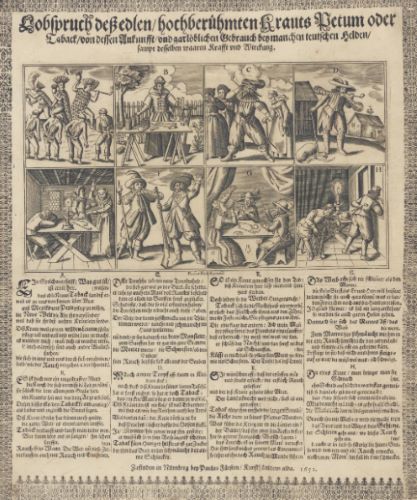
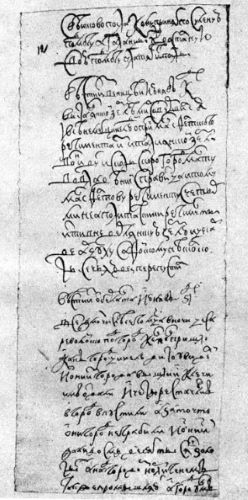
Normally at most two or three copies of the kuranty translations were made. In some instances, we have both the draft copy, replete with crossed out text, corrections, etc., as well as the clean copy which presumably would have been taken to the tsar. There seems to have been a process where the translation was reviewed for possible further correction by a different individual before it was finalised.
The manuscripts occasionally have inscriptions added on the reverse indicating they had been read to the tsar, and even more rarely, “while the boyars listened in the antechamber”. Shamin suggests that it was the normal procedure for this to happen within a day or two of the receipt of the foreign post.58 In instances where the tsar was out of town, the kuranty might be taken to him, though this could involve some days’ delay. During the seventeenth century it seems that the interest of the rulers in hearing the news fluctuated, depending on the individual and on particular circumstances. While obviously interested in the news, Peter the Great, always impatient, began to require short summaries based on the longer compendia, so we begin to see such condensations in the last years of the seventeenth century. All in all, it is reasonable to suggest that the processes by which rulers and their advisers acquainted themselves with foreign news back in the seventeenth century were not vastly different from the processes today. Yes, political leaders may view, listen directly to, or read news sources, but at the same time, most of them have to rely on summaries of intelligence prepared by their staffs. Of course this process has the inherent danger that the staffers may not always select the right thing, may tell their bosses what they think they want to hear, or may deliberately skew their selection so as to influence decision-making.
After the establishment of the foreign post in 1665, the kuranty files are sufficiently complete to indicate the government priorities in obtaining foreign news. Here we can assume that the texts reflect a conscious policy of selection, not simply a possibly random compilation of whatever happened to be available. There are few surprises: by definition, news tends to be that which its consumers perceive to be relevant to their particular interests. In the Muscovite case, in the first instance this was information relating to its immediate neighbours, those states with which it had relations (whether friendly or hostile), and news about other states which might affect Muscovite security, political or economic interests. The most common topics in the 1660s included: news about Poland, the Ottoman Empire and its vassals; news relating to the competition for control of Ukraine; the Ottoman wars against Venice and the Austrian Habsburgs; events in Hungary and Transylvania; reports about Muscovy; and news relating to political and commercial matters in the Baltic region, involving Sweden, Denmark, Holland and England.59 The reports about Poland and Ukraine frequently focus on the rebellion by the Polish magnate Lubomirski and on the complicated politics involving the Cossacks. The Anglo-Dutch war was of considerable interest, since it affected Baltic trade; some reports translated from Dutch newspapers were cargo lists for the East Indies fleets which had recently arrived in Amsterdam. There are reports in the kuranty about the peregrinations of the Swedish Queen Christina after she had abdicated, a subject that seems to have intrigued many followers of the news throughout Europe. An interesting view of what was being obtained in Moscow during this period can be seen in a scrapbook kept by Andrei Vinius, where amongst a broad range of visual material is an engraving of the great fire of London in 1666 and several engravings from news broadsides devoted to the Venetian naval wars against the Ottomans in defence of Crete.60
To a considerable degree, these emphases in the kuranty of the 1660s were similar to the material one finds in the German-language newspapers published in Northern Europe; the same information also tended to dominate the handwritten newsletters being sent regularly to London by the English residents in Hamburg, whose sources included regular reports out of Poland and from Vienna.61 Those foreign reports rarely included news from Moscow, perhaps because little was to be had, but also possibly because it was simply of less interest than it seems to have been in Moscow itself (see below).
Certain subjects were of such interest that entire separate pamphlets were translated (in addition to whatever shorter notices were in the periodical press).62 Noteworthy among them were reports about the treaty between the Netherlands and the Archbishopric of Münster in 1666; the abdication of Polish King Jan Kazimierz in 1668 and the election of his successor Michał Wiśnowiecki in 1669; a pamphlet containing a fictive threatening letter by the Ottoman sultan addressing the Habsburg Emperor in 1663; and the disorders in the Ottoman Empire in Arabia, especially during the brief period in 1665 and 1666 when, throughout Europe, attention was focussed on the Jewish false messiah Shabbetai Zevi. Some of the translated separates are of interest for the fact that at least a few copies of them eventually found their way into wider circulation beyond the Ambassadorial Chancery: this is the case with the account about the Polish election and the fictive letter by the sultan.63 Probably the most intensively reported event, concerning the Ottoman disorders and Shabbetai Zevi, did not get into wider circulation. Throughout Europe it was a true news sensation, not only unsettling Jewish communities everywhere and thus affecting commerce, but connecting with the eschatological concerns of various religious groups. The kuranty contain both translations of newspaper articles (notably from the Oprechte Haerlemse Courant) and translations from separate broadsides and pamphlets about the false messiah.64 The interest in Moscow may in part be explained by the fact that anything that would unsettle the Ottoman Empire could have a bearing on whether the Turks might be able to pursue an aggressive policy in Southern Poland and Ukraine; similarly, Shabbetaian unrest clearly had the potential to destabilise Poland. It is also reasonable to assume that the atmosphere in Moscow involving the Church Schism and the concurrent eschatological expectations would have created an environment conducive to the spread of news about Shabbetai. In fact though, this may explain why the news never made it out of the chanceries (except in a separately produced anti-Jewish polemical book published somewhat later in Ukraine65): the Orthodox authorities and the Muscovite government seem to have been particularly concerned to suppress any manifestations of “popular religion” (including eschatological agitation) that could not be controlled and directed by the Church.
Not surprisingly, the coverage by the kuranty of foreign political news in the 1670s and 1680s seems to have been little different from that of the preceding decade, given that Muscovite foreign policy concerned itself with the same issues. News out of Poland and Ukraine and anything relating to the wars against the Turks and Tatars was of particular importance at a time when there were few periods of peace. Considerable diplomatic attention was devoted to the creation of a broad European coalition to fight the Turks, but any agreement with Poland about this was hindered by the historical legacy of its hostility with Muscovy, suspicions of deceit, and the as yet only tentative nature of the Truce of Andrusovo of 1667, which ongoing negotiations would succeed in converting into a “Permanent Peace” only in 1686. Following the military disaster of the loss of Chyhyryn in 1678, Muscovy achieved a temporary respite by signing a peace with the Tatars in 1681, but it was again drawn into the Ottoman wars following the Turkish failure at Vienna in 1683, which began a long and successful military effort to push the Turks out of East-Central Europe. Among the noteworthy events of this long conflict that were reported in the Russian translations from the European press were: the destruction of the Parthenon during its siege by the anti-Ottoman forces in 1687; and, a decade later, the important victory over the Ottomans achieved by the Habsburg armies under Eugene of Savoy at Zenta.66 The first of these events, which had little strategic significance, probably attracted little attention when it was reported in the kuranty (nor would its cultural importance have been understood), but the second was the subject of several reports which made their way out of the confines of the chanceries and into wider circulation. In general, these decades were ones in which such translated items as the fictive letters of the sultan found wider audiences in Muscovy, although how we explain their appeal is uncertain. Was it because of the widespread concern over the Ottoman threat, or because of their being analogous to other polemical texts that circulated in Muscovy, or might there be some other explanation?
In his study of the kuranty, which focusses on the period of the 1670s and 1680s, Stepan Shamin delineates a number of topics (beyond the political reportage) which help us to appreciate the breadth of subject matter covered in the translations of foreign news and may thereby enhance our appreciation of why the kuranty would have interested the Muscovite elite. His focus is on what the news reports would have informed their Muscovite readers about various aspects of daily life and culture in Europe.67
Even today, by its very nature, the news often focusses on what threatens lives and livelihoods. In the world of the seventeenth century, understandably there was considerable attention devoted to reports of epidemics and disasters inflicted by severe weather. Of course, writing about such matters had a long history in Russia (as can be seen in chronicles and miracle tales). The news reports of the seventeenth century might cite them as evidence of divine dispensation (punishment for sins) or it might avoid such indications entirely. Reports sometimes specifically cast doubt on superstitious interpretations. For Muscovy, the news about epidemics was particularly significant, and we have evidence the government would quickly act to establish quarantines at borders if there was any indication of the spread of contagion.68 This is one of the clearest indications of how the news in the kuranty was actually used, and how its timely receipt was important.
Phenomena of nature such as comets or meteor showers were a traditional source of concern; during earlier times in Russia and elsewhere these were often interpreted as warnings of some impending doom.69 There was no clear distinction between what we term scientific astronomy and astrology. In this fertile soil for speculation and superstition, the occasional newspaper reports and often dramatically illustrated pamphlet separates or broadsides would resonate. A good many such accounts were translated, and the emphasis seems to have been on those that related the natural phenomena to impending disaster.70 It is of interest in this regard to compare the kuranty reports of the widely viewed comet of 1680 with reports about the same comet which Sir Peter Wyche, the English resident in Hamburg, sent home. The Russian texts (one apparently translated from an illustrated broadside) include, seemingly without comment or expression of doubt, the popular perceptions of the comet as a warning of disaster whose appearance coincided with other paranormal phenomena. The educated Wyche, who made it clear “my assent is not easily wonne to Wonders”, nonetheless reported all these prognostications and stories about other supernatural phenomena. However, as a member of the Royal Society, he also recorded scientific observations about the comet and asked that they be sent on for the Society to use.71
Just as the reports on Shabbetai Zevi could not have been welcomed by the authorities if they threatened the stable order and official religious controls, likewise we find evidence that prognostications based on abnormal events in nature might be actively suppressed, for example in the period of political unrest following the death of Tsar Fedor Alekseevich in 1682. Of course not all of the real or imagined heavenly phenomena lent themselves to negative interpretations—one example, known to have entered Muscovy via Ukraine, was based on an apparently popular depiction of signs in the heavens interpreted to foretell the ultimate defeat of the Turks.72 Some copies of this escaped the chanceries, perhaps with the support of someone in a high place, since propaganda to drum up support for the wars against the Ottomans would undoubtedly have had official encouragement.
There is no clear line to be drawn between some of the texts relating to the Ottoman wars, “heavenly” phenomena or other reports of unnatural events (for example, “monstrous births”), and a broader range of translated material in the kuranty that touches on various aspects of European religious affairs. The machinations of the Devil lurked in some reports, alongside others that clearly focussed on matters of secular political import. Readers of the kuranty could in fact find out a lot about Protestant vs. Catholic conflicts, Papal policies, and disputes within the Catholic Church, in addition to material about the confrontation between the world of Islam and Christian Europe. The intentions of the Papacy regarding the Orthodox world were clearly of concern in considering potential alliances to fight the “common enemy of Christianity”.
Public ceremonies, generally involving royalty and the European elite, were frequently reported in the Western news: celebrations of weddings, births, birthdays, military victories, and funerals. It is thanks to this interest that we have some valuable reports that have helped to rewrite the history of the first court theatre in Moscow.73 While by no means all such reports made their way into the kuranty translations, this news was of interest if for no reason other than the fact that the Muscovite government kept close track of ceremonies that might in some way involve its own honour and prestige. This was not merely a matter of how one’s own ambassadors might be received, but whether others were given more lavish treatment. In addition, there surely has to have been some interest in the possibility of emulating entertainments that were common to other major courts. The fact that fireworks were already a part of some celebrations in Muscovy in the late seventeenth century is one indication of such an interest. By the time of Peter’s conquest of Azov in 1696, it is clear that in Moscow there was already a very good sense of the Baroque ceremonial celebration of military victories. One can at least posit that knowledge of the role of theatre and dance in court entertainment (even if not specifically derived from translated reports in the kuranty) had a bearing on the creation of the court theatre for Aleksei Mikhailovich.
Much has been made of the Muscovite government’s concern over protocol in diplomacy, including in particular the accurate rendering of the tsar’s titles. Frequently, negotiations foundered upon disputes over titulature. Such concerns were hardly unique to the Kremlin, any more than concerns other governments would express over the way their affairs were reported in the news. One might think that there was no particular value to the Kremlin in translating from foreign news reports about Muscovite business—after all, they could learn nothing of a factual nature about what was going on at home beyond what they already knew. Yet in fact there is a significant amount of material in the kuranty containing reports from Moscow.74 There are well-known examples when, as the result of the publication of some report in the West, the tsar’s government lodged an official protest, demanding that the offending publications be destroyed and their authors or publishers punished. One suspects that some of these incidents were deliberately blown out of proportion to serve some other diplomatic aim; of course, if there was little that could be done to curb private publishers, the response from the recipients of the complaints might be inaction. Only in rare instances did foreign authorities attempt to comply with what Moscow demanded.75
There is considerable evidence of widespread concern in Europe over the accuracy of reporting. English agents in the Baltic region would complain about what Dutch or German newspapers said about English affairs and constantly prodded their controllers in Whitehall to provide English versions of events that could be used in the foreign capitals to counter adverse propaganda. Sir Peter Wyche wrote to Sir Lionell Jenkins from Hamburg on 3 September 1680 (OS),
I am in continuall Warre against the Impudent Libellers, But I must confesse I yet can not bethincke my selfe how to putt in practice Your Commands, to buy off the Gazettiers, to speake neither good nor bad of Our affaires. With all humble submission I thincke they are to bee more roughly handled and every Minister in his Post is to oblige the Government where he is, not to allow them to print the scandalous advices… I have complained, and will have the Printer severely punisht…76
The attitude expressed here and the action it proposed are little different from what we find the Kremlin doing if a foreign news report offended it.
Apart from anything that would have been of concern to the Muscovite government, in Muscovy the Scottish General Patrick Gordon, a passionate adherent of the Catholic Stuarts, was distressed when he received news (probably based on Dutch reports) about the invasion of William of Orange in 1688 that led to the “glorious revolution” that toppled King James II and VII.77 To him those reports were biased, even if, as he admitted, they had some element of truth about the weakness of the Royalists’ efforts to put James back on the throne. What Gordon may not fully have appreciated was the degree to which the Dutch Resident in Moscow, Baron von Keller, was perhaps manipulating the news he received (quite apart from the events of 1688) and was transmitting to the Muscovite officials, in ways that worked against English interests.78
This history opens up for us the possibility that by the 1680s, if not earlier, the acquisition and dissemination of foreign news in the elite circles in Moscow might have a significant political impact. The official acquisition of foreign news and its translation contributed to this awareness of contemporary events in Europe, but it was surely only part of the reason why there was a level of knowledge within the Foreign Suburb, and in the regular interactions between the foreigners and the arbiters of Muscovite affairs, that far exceeded what it might have been only a generation earlier. It was not merely an awareness of the value of factual reporting, but of the usefulness of manipulating the news for one’s own advantage. Indeed, as Shamin has suggested, there is some indication that foreign news stories were manipulated in translation to serve even domestic purposes, and by the mid-1660s there is evidence the Muscovite government was arranging to have stories planted in the Western press that would reflect favourably on Muscovy. While we have no proof it was acted on, a Swedish merchant in Lübeck, Johann van Horn, made a concrete proposal in 1667 to Ordin-Nashchokin whereby he would have become, in effect, Muscovy’s press agent in the West.79 In any event, the planting of favourable stories had become a common practice by the time of Peter, which undoubtedly helps to explain why he created the published Vedomosti, so that the government would have its own organ for spreading internally the news that would support the tsar’s policies.
In processing the flow of foreign news, the Muscovite functionaries quickly developed a sense that careful selection was imperative, as was the awareness that timeliness in receipt was significant if the information was to have any operative value. This may have been less significant than the dramatic transformation in Europe that resulted from the communications revolution, during which, as Wolfgang Behringer points out, people began to mark time by the postal schedules, and a common salutation might be “What’s news?”80 At very least though, it is clear that being saturated with news did not mean accepting all of it uncritically.
Certainly there was a relationship between the acquisition of foreign news and the making of foreign policy. Yet there are very few direct indications that foreign policy decisions followed upon receipt of a particular news item via the kuranty, or depended on the receipt of such news. Of course this could merely reflect a convention whereby such indications would not have made it into the written record, especially where that written record all too rarely provides any insight into the actual deliberations that resulted in the adoption of a particular policy. Another possibility, though, is that news sources other than the kuranty were more significant, since at least for neighbouring countries they might be more current and/or accurate. Where historians have paid close attention (which is all too rarely) to the acquisition of news and its relationship to the making of foreign policy (a noteworthy exception is the negotiations leading to the Permanent Peace with Poland in 1686), the evidence suggests that information obtained by well-placed agents played a crucial role, rather than the news reports coming out of Poland that were commonly printed in the newspapers.81 Might it not be, as evidence from Western Europe continues to remind us, that the handwritten reports of trusted agents were much more likely to be valued by those in power than anything in the newspapers? Perhaps Baron Mayerberg’s sneer about how the benighted Muscovites in the 1660s believed anything they read in the printed foreign newspapers is totally wrong: when it came to practical policies, they may have believed little of it.82 At the very least, they were selective in what they actually used. At best, we might posit that the importance of the kuranty lay in what they contained about the broader context of European affairs which was not usually to be found in the more localised intelligence reports. Yet the evidence shows that in the process of selecting what news to translate, the Kremlin functionaries often deliberately narrowed the focus to the subjects that lay closest to home.
The pre-eminent historian of the Muscovite post, I. P. Kozlovskii, articulated clearly the idea that the foreign post was, at least potentially, of immense cultural significance for Russia. Yet, by the end of the seventeenth century, when so few Russians were actually using it, he had to confess that its cultural impact had been disappointing. If we are to assess the cultural impact of the kuranty, whose history is inseparable from that of the post, we might be forced to reach the same conclusion, which is hardly at odds with what we already know about cultural change in late Muscovy. We must stress again that the kuranty were never intended for broad distribution; the news in them was deemed confidential, for the eyes and ears of the tsar and his close advisers. However, there is something to be said about the impact of the post and the kuranty beyond the circles of the court in Moscow.
Certainly one can trace the spread of a rather small number of manuscript copies of some of the translations that were part of the corpus of the kuranty.83 Even as early as the late fifteenth and the first half of the sixteenth century, the few translated foreign pamphlets we have in Muscovy are to be found exclusively in a few monastic miscellanies. Whether it is sufficient to conclude, as Shamin does, that they therefore “left a noteworthy mark on the cultural and religious life of sixteenth-century Russia” may, of course, be debated.84 One then has to jump ahead to the second quarter of the seventeenth century to find evidence about the spread of translated “news pamphlets”, evidence that, significantly, may be found in documents concerning government investigations about possible sedition or religious deviance. Rare are the instances in which we encounter more than an isolated copy of a text in some manuscript miscellany. Exceptions include the apocryphal letters of the sultan and a few pamphlets with prognostications based on wonder signs. Undoubtedly, people with close connections to the Ambassadorial Chancery somehow facilitated the making of copies that made their way outside the chancery milieu, even if it is difficult to identify who the individuals were. There are rare instances in which, on receipt of news about, say, an important victory of a Muscovite ally, the authorities would deliberately disseminate that news in order that the event be celebrated publicly. Unofficial channels may have circumvented the Ambassadorial Chancery (for example, if texts were translated in Ukraine). Whatever exactly the processes, what we really want to know is whether any of the translated brochures or occasional news reports of political or military events might have changed the worldview of Russian readers. To the extent that we can identify who owned the manuscripts, the “readership” would seem in the first instance to involve those who might already have been in a position to acquire a broader outlook than the ordinary peasant or villager. The content and number of the texts is so limited that they could hardly have done much to open up a wider world and provide their owners or readers with a sense of contemporaneity. If anything, arguably they generated interest because they connected with contemporary preconceptions and fitted comfortably within the framework of existing Muscovite culture.
Were we to follow the lead of some historians of the European press, we might wish to make the case that the kuranty provide evidence for increasing rationalism and secularism that are deemed to be hallmarks of modernity. Yet, even for other parts of Europe, such an emphasis has come under question, as scholars explore more broadly the ways in which news was transmitted and the content of the various popular genres transmitting it. Certainly there is no lack of material in the kuranty regarding the paranormal or natural wonders, and, as we have seen, some of what there is might be understood most persuasively within a context of traditional religious culture. Just because the kuranty were the province of a court elite does not mean then that this elite had moved far from the cultural milieu in which they were raised, any more than the readers of Western newspapers in, say, Hamburg, can be assumed to have abandoned a providential view of the world inspired by deep religious devotion. The spread of kuranty texts may be significant as an indication of change in the patterns of Muscovite interaction with its neighbours and some kind of greater integration of Muscovy in Europe, but we should be very cautious in drawing any conclusions from such limited evidence regarding what the foreign news could possibly have meant for those who read or heard it. To have possessed a few of the translated reports hardly makes the owners of the manuscripts “readers of the foreign news” in any meaningful sense.85
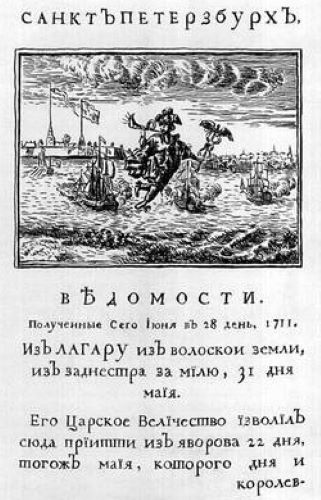
Since earlier studies of the kuranty focussed on their relationship to the first published newspaper in Russia, Peter’s Vedomosti, a few concluding comments on that subject are in order. Clearly the kuranty were not “Russia’s first newspaper”, if by newspaper we mean a publicly available periodical publication communicating news about current events. The kuranty were not published. They were not created to meet some broader demand from society at large to be informed regularly and rapidly about current events. Therefore, despite the fact that very occasionally items from the kuranty made it into wider circulation, it is impossible to speak of their having a role in the creation of a “public sphere”, as Jürgen Habermas argued (problematically) for the European newspapers of the seventeenth and early eighteenth centuries. That said, it is clear that the mechanisms that were in place and functioning well by the last decades of the seventeenth century, connecting Muscovy with the European news networks, were essential to the creation of the Vedomosti, whose first issue (not extant in printed form) seems to have appeared in 1702.86 That is, to the degree that foreign reports made it into the new printed newspapers in Russia, they were supplied in a way that differed little from what had become Muscovite practice. What Peter and his advisers knew about the nature and role of the European press, knowledge acquired in part through the kuranty, surely provided the inspiration for a regular, published organ of news controlled by the government and intended as a tool for generating support for Peter’s policies. The European experience certainly contained examples of a politically controlled press alongside the more abundant and freewheeling private news publications, which were nonetheless not immune to censorship and proscription. Was Peter’s goal in creating the Vedomosti to educate its readers and listeners and not merely to whip up enthusiasm for his policies? Possibly. But such a goal cannot be read into the history of the creation and development of the kuranty. As with so many other developments, the history of the kuranty is indeed part of the story of Russia’s “Europeanisation” or “modernisation”, but inevitably we need to recognise that developments we can trace both in Russia and elsewhere in Europe generally do not move in synchrony. Newspapers in Russia only began to play the role attributed to them in the West in a later era.
Endnotes
- The authors gratefully acknowledge the support provided by The Swedish Foundation for Humanities and Social Sciences (Riksbankens jubileumsfond, project no. RFP12–0055:1).
- Wolfgang Behringer, Im Zeichen des Merkur. Reichspost und Kommunikationsrevolution in der Frühen Neuzeit. Veröffentlichungen des Max-Planck-Instituts für Geschichte, Bd. 189 (Göttingen: Vandenhoeck & Ruprecht, 2003); Brendan Dooley, ‘Die Entstehung von Gleichzeitigkeit im europäischen Bewusstsein auf der Grundlage der politischen Nachrichtenpresse’, in Presse und Geschichte: Leistungen und Perspektiven der historischen Presseforschung, ed. by Astrid Blome and Holger Böning (Bremen: Edition lumière, 2008), 49–66; The Dissemination of News and the Emergence of Contemporaneity in Early Modern Europe, ed. by Brendan Dooley (Farnham, Surrey and Burlington, VT: Ashgate, 2010).
- Knud Rasmussen, ‘On the Information Level of the Muscovite Posol′skij prikaz in the Sixteenth Century’, Forschungen zur Osteuropäische Geschichte, 24 (1978), 88–99.
- Aleksei V. Vinogradov, Russko-krymskie otnosheniia 50-e–vtoraia polovina 70-kh godov XVI veka, 2 v. (Moscow: Institut rossiiskoi istorii RAN, 2007).
- Andrew Pettegree, The Invention of News: How the World Came to Know about Itself (New Haven and London: Yale University Press, 2014); cf. Holger Böning, Welteroberung durch ein neues Publikum. Die deutsche Presse und der Weg zur Aufklärung. Hamburg und Altona als Beispiel. Presse und Geschichte—Neue Beiträge. Bd. 5 (Bremen: Edition lumière, 2002), and idem, ‘Ohne Zeitung keine Aufklärung’, in Presse und Geschichte, ed. by Blome and Böning, pp. 141–78. Previous to Pettegree’s recent synthesis, various authors have adopted a more balanced view about the importance of media other than just printed periodical newspapers. See, for example, several of the essays in Die Entstehung des Zeitungswesens im 17. Jahrhundert: Ein neues Medium und seine Folgen für das Kommunikationssystem der Frühen Neuzeit, ed. by Volker Bauer and Holger Böning (Bremen: Edition lumière, 2011).
- Nataliia A. Kazakova, Zapadnaia Evropa v russkoi pis′mennosti XV–XVI vekov. Iz istorii mezhdunarodnykh kul′turnykh sviazei Rossii (Leningrad: Nauka, 1980).
- For a sampling of the texts, see Puteshestviia russkikh poslov, ed. by Dmitrii S. Likhachev (Moscow: Izdatel′stvo Akademii nauk SSSR, 1954); on the procedures for composing the reports, see Aleksei A. Novosel′skii, ‘Raznovidnosti krymskikh stateinykh spiskov XVII v. i priemy ikh sostavleniia’, Problemy istochnikovedeniia, 9 (1961), 182–94.
- Cf. Mikhail A. Alpatov, ‘Chto znal Posol′skii prikaz o Zapadnoi Evrope vo vtoroi polovine XVII v.?’, in Istoriia i istoriki. Istoriografiia vseobshchei istorii. Sbornik statei (Moscow: Nauka, 1966), 89–129, who relies primarily on them in his assessment of the information level of the Ambassadorial Chancery in the seventeenth century. Noteworthy among those who have attempted to broaden the perspective offered by Alpatov is the late Elena I. Kobzareva, ‘Izvestiia o sobytiiakh v Zapadnoi Evrope v dokumentakh Posol′skogo prikaza XVII veka’ (Kand. dissertation, Moskovskii gosudarstvennyi universitet, 1988). Her specific examples focus on information about England; she pays considerable attention to the kuranty.
- Nikolai Ogloblin, ‘Voevodskie vestovye otpiski XVII v. kak material po istorii Malorossii’, Kievskaia starina, 12 (1885), 365–416.
- Daniel Clarke Waugh, ‘Seventeenth-Century Muscovite Pamphlets with Turkish Themes: Toward a Study of Muscovite Literary Culture in Its European Setting’ (Ph.D. dissertation, Harvard University, 1972), App. IIa, pp. 447–51, http://faculty.washington.edu/dwaugh/publications/kurantyterminologydissappIIa.pdf; Stepan M. Shamin, ‘Slovo “kuranty” v russkom iazyke XVII–XVIII v.’, Russkii iazyk v nauchnom osveshchenii, 1. 13 (2007), 119–52.
- A. N. Shlosberg, ‘Nachalo periodicheskoi pechati v Rossii’, Zhurnal Ministerstva narodnogo prosveshcheniia, 35. 2 (September 1911), 63–135; Aleksei A. Pokrovskii, ‘K istorii gazety v Rossii’, in Vedomosti vremeni Petra Velikogo, vyp. 2: 1709–19 gg. (Moskva: Sinodal′naia tipografiia, 1906), pp. 1–98.
- Waugh, ‘Muscovite Pamphlets’, Ch. 2, http://faculty.washington.edu/dwaugh/publications/muscovitekurantydissch2text.pdf and http://faculty.washington.edu/dwaugh/publications/muscovitekurantydissch2notes.pdf. For his publications based on the dissertation, see citations in various notes below.
- Roland Schibli, Die ältesten russischen Zeitungsübersetzungen (Vesti-Kuranty), 1600–50. Quellenkunde, Lehnwortschatz und Toponomastik. Slavica Helvetica, Bd. 29 (Bern and New York: Peter Lang, 1988).
- See her ‘Vvodnaia chast′’, introduction to V-K VI/2, whose full citation is in n. 16. Many of her other publications are cited below.
- Stepan M. Shamin, Kuranty XVII stoletiia. Evropeiskaia pressa v Rossii i vozniknovenie russkoi periodicheskoi pechati (Moscow and St Petersburg: Al′ians-Arkheo, 2011).
- The volumes are: Vesti-kuranty: vols 1–5: I (1600–39); II (1642–44); III (1645–46, 1648); IV (1648–50); V (1651–52, 1654–55, 1658–60), ed. by N. I. Tarabasova, V. G. Dem′ianov et al. (Moscow: Nauka, 1972; 1976; 1980; 1983; 1996) [hereafter abbreviated V-K I, II, etc.], vol. 6, pt. 1, Russkie teksty, 1656, 1660–62, 1664–70, ed. by A. M. Moldovan and Ingrid Maier (Moscow: Rukopisnye pamiatniki drevnei Rusi, 2009) [hereafter: V-K VI/1], vol. 6, pt. 2, Inostrannye originaly k russkim tekstam, ed. by Ingrid Maier (Moscow: Iazyki slavianskikh kul′tur, 2008) [hereafter: V-K VI/2]. For a detailed review of V-K I, see Daniel C. Waugh, ‘The Publication of Muscovite Kuranty’, Kritika, 9. 3 (1973), 104–20; a detailed review of V-K V, by Vadim Borisovich Krys′ko and Ingrid Maier, in Russian Linguistics, 21 (1997), 301–10. It was only with publication of V-K VI that the deficiencies noted in those reviews began to be addressed.
- See V-K I, passim. For a review of the transmission and processing of foreign news in this period, see Schibli, Die ältesten russischen Zeitungsübersetzungen, esp. Ch. 2.
- V-K I, pp. 133–38, 161–62.
- V-K I, pp. 167–76, 182–92, 204–07, 209–14; V-K II, pp. 11–14, 50, 88–91, 122–23, 125–26, 207–09; V-K III, pp. 78–82, 121–30.
- E.g., V-K III, pp. 190–96.
- V-K II, pp. 40–43, 54–55, 59–74, 76–80, 83–84, 97–103, 109–13, 126, 131–38, 146–47, 167–72, 178–83.
- V-K IV, pp. 97–169. For an analysis, see Ingrid Maier, ‘Newspaper Translations in Seventeenth-Century Muscovy. About the Sources, Topics and Periodicity of Kuranty “Made in Stockholm” (1649)’, in Explorare necesse est. Hyllningsskrift till Barbro Nilsson. Acta Universitatis Stockholmensis. Stockholm Slavic Studies, vol. 28 (Stockholm: Almqvist & Wiksell, 2002), 181–90.
- Maier, ‘Vvodnaia chast′’, introduction to V-K VI/2, pp. 29, 53–57.
- V. I. Simonov, ‘Deutsche Zeitungen des 17. Jahrhunderts im Zentralen Staatsarchiv für alte Akten (CGADA), Moskau’, Gutenberg-Jahrbuch (1979), 210–20; Ingrid Maier, ‘Niederländische Zeitungen (‘Couranten’) des 17. Jahrhunderts im Russischen Staatsarchiv für alte Akten (RGADA), Moskau’, Gutenberg-Jahrbuch (2004), 191–218.
- See the analysis by Schibli, Die ältesten russischen Zeitungsübersetzungen.
- Maier, ‘Newspaper Translations’, p. 188.
- V-K III, pp. 21–39. See Ingrid Maier, Verbalrektion in den ‘Vesti Kuranty’ (1600–60). Eine historischphilologische Untersuchung zur mittelrussischen Syntax. Acta Universitatis Upsaliensis. Studia Slavica Upsaliensia, 38 (Uppsala: Acta Universitatis Upsaliensis, 1997), pp. 37–41.
- V-K III, pp. 161–79; V-K IV, pp. 13–64. See Maier, Verbalrektion, pp. 41–60.
- V-K III, pp. 159–61; V-K IV, pp. 82–85. On the translation of Charles I’s ‘Declaration to all His Subjects’, see Ingrid Maier and Nikita Mikhaylov, ‘“Korolevskii izvet ko vsem ego poddannym” (1648 g.)—pervyi russkii perevod angliiskogo pechatnogo teksta?’, Russian Linguistics, 33 (2009), 289–317.
- V-K III, nos. 48–49, pp. 133–42, and nos. P8–9, pp. 241–51. The first of these texts, no. 48 (see Maier, Verbalrektion, pp. 72–74), is a complete translation of Gründlicher unnd Warhaffter Bericht/ von dem Wundersamen Heilbrunnen/ so newlicher Zeit auß sonderbahrer Göttlicher Gnade/ in dem Stifft Halberstadt bey einem Dorff Hornhausen genant […] (n.p., n.d. [1646]). The second text, no. 49, is an almost complete translation of Weiterer Bericht Von dem wundersamen Heyl-Brunnen/ Welcher von einem Knaben/ als derselbe am fünfften Martii auß der Schuel gegangen/ zuerst erfunden worden […] (n.p., 1646).
- Stepan M. Shamin, ‘“Skazanie o dvukh startsakh”: K voprosu o bytovanii evropeiskogo eskhatologicheskogo prorochestva v Rossii’, Vestnik tserkovnoi istorii, 2008, 2 (10), 221–48; D. K. Uo [Daniel C. Waugh], Istoriia odnoi knigi: Viatka i “nesovremennost′” v russkoi kul′ture Petrovskogo vremeni (St Petersburg: Dmitrii Bulanin, 2003), pp. 48–53, 100–02, 294–95, 298–301; Daniel C. Waugh, The Great Turkes Defiance: On the History of the Apocryphal Correspondence of the Ottoman Sultan in Its Muscovite and Russian Variants, with a foreword by Academician Dmitrii Sergeevich Likhachev (Columbus, OH: Slavica Publishers, 1978).
- Daniel C. Waugh, ‘The Library of Aleksei Mikhailovich’, Forschungen zur osteuropäischen Geschichte, 38 (1986), 299–324; idem, ‘Azbuka znakami lits: Egyptian Hieroglyphs in the Privy Chancellery Archive’, Oxford Slavonic Papers, 10 (1977), 46–50 [with four plates]; idem, ‘Tekst o nebesnom znamenii 1672 g. (k istorii evropeiskikh sviazei moskovskoi kul′tury poslednei treti XVII v.)’, in Problemy izucheniia kul′turnogo naslediia (Moscow: Nauka, 1985), 201–08.
- Shamin, Kuranty, pp. 83–84.
- For details on the early history of the Muscovite post, see D. Uo [Waugh] ‘Istoki sozdaniia mezhdunarodnoi pochtovoi sluzhby Moskovskogo gosudarstva v evropeiskom kontekste’, Ocherki feodal′noi Rossii, 19 (2017), 394–442. A good overview of Muscovy’s Riga postal connection is Enn Küng, ‘Postal Relations Between Riga and Moscow in the Second Half of the 17th Century’, Past: Special Issue on the History of Estonia (Tartu-Tallinn: National Archives, 2009), 59–81. The still unsurpassed history of the Muscovite post throughout the second half of the seventeenth century is I. P. Kozlovskii, Pervye pochty i pervye pochtmeistery v moskovskom gosudarstve, 2 vols (Warsaw: Tip. Varshavskogo uchebnogo okruga, 1913), in which vol. 2 contains most of the important archival documents.
- For the text, Waugh, ‘Muscovite Pamphlets’, App. IIc, pp. 510–12, http://faculty.washington.edu/dwaugh/publications/vansweedencontractdissappIIc.pdf. On van Sweeden, see Kozlovskii, Pervye pochty, vol. 1, pp. 60–62.
- See, e.g., Karl Heinz Kremer, Johann von den Birghden 1582–1645. Kaiserlicher und königlich-schwedischer Postmeister zu Frankfurt am Main (Bremen: Edition lumière, 2005).
- See Pārsla Pētersone, ‘Entstehung und Moderisierung der Post- und Verkehrsverbindungen im Baltikum im 17. Jahrhundert’, Liber Annalis Institut Baltici (Acta Baltica, 35) (Königstein im Taunus, 1997), 199–218; Küng, ‘Postal Relations’; Magnus Linnarsson, ‘The Development of the Swedish Post Office, c. 1600–1721’, in Heiko Droste, ed., Connecting the Baltic Area: The Swedish Postal System in the Seventeenth Century (Stockholm: Södertörns högskola, 2011), pp. 25–47.
- For details, see Uo, ‘Istoki sozdaniia’.
- See Kozlovskii, Pervye pochty, for much of the relevant documentation. Weather could interrupt the normally regular postal deliveries elsewhere in Europe as described in reports sent to London by English agents in Hamburg. The winter of 1667 seems to have been especially severe. On 26 January 1667, the English agent reported “The northern posts for the most are yet to come w-ch. delay is onely caus’d by the great quantity of snow in Suedeland & the Danish streames frozen” (National Archives, London, SP 101/39, unpaginated, newsletter addressed to Joseph Williamson at Whitehall, probably sent from Hamburg on the same date).
- The reports from the embassy headed by Sir Peter Wyche between June and October are in the National Archives, London, SP 91/3. While there are a few gaps (possibly due simply to the loss of a letter), the dates suggest weekly communication.
- For the early part of the communications which Koch sent from Moscow to the Swedish governor in Narva on nearly a weekly basis, see Riksarkivet (Stockholm), E4304, Bengt Horns Samling. A forthcoming article by Heiko Droste and Ingrid Maier, ‘Christoff Koch (1637–1711)—Sweden’s Man in Moscow’ (forthcoming in Travelling Chronicles: Episodes in the History of News and Newspapers from the Early Modern Period to the Eighteenth Century, ed. by Siv Gøril Brandtzæg, Paul Goring and Christine Watson), will discuss his reports and this network; see also Maier’s chapter on the reports about Stepan Razin in the present volume.
- See Boris G. Kurts, Sochinenie Kil′burgera o russkoi torgovle v tsarstvovanie Alekseia Mikhailovicha (Kiev: Tip. I. I. Chokolova, 1915), p. 160.
- Daniel C. Waugh, ‘The Best Connected Man in Muscovy? Patrick Gordon’s Evidence Regarding Communications in Muscovy in the 17th Century’, Journal of Irish and Scottish Studies, 7. 2 (2014 [2015]), 61–124 (pp. 96–97).
- Aleksandr N. Popov, Russkoe posol′stvo v Pol′she v 1673–1677 godakh. Neskol′ko let iz istorii otnoshenii drevnei Rossii k evropeiskim derzhavam (St Petersburg: Tip. Morskogo kadetskago korpusa, 1854).
- For Vinius’s management of the post, the fundamental work remains Kozlovskii, Pervye pochty, starting with Ch. 4. More generally for his biography, the fullest treatment is Igor′ N. Iurkin, Andrei Andreevich Vinius, 1641–1716 (Moscow: Nauka, 2007).
- Nataliia A. Kazakova, ‘A. A. Vinius i stateinyi spisok ego posol′stva v Angliiu, Frantsiiu i Ispaniiu v 1672–74 g.’, Trudy Otdela drevnerusskoi literatury, 39 (1985), 348–64.
- Kozlovskii, Pervye pochty, vol. 2, pp. 57–58.
- Ibid., p. 69.
- Shamin, Kuranty, p. 89.
- Maier, ‘Vvodnaia chast′’, pp. 77–81; Simonov, ‘Deutsche Zeitungen’.
- Kurts, Sochinenie Kil′burgera, p. 161.
- Maier, ‘Vvodnaia chast′’, Chs. 4, 5; Shamin, Kuranty, pp. 88 and passim.
- Maier, ‘Newspaper Translations’; Shamin, Kuranty, pp. 97–98. When Peter the Great was in Holland in 1697, his translators were translating foreign news reports and sending them back to Moscow alongside the original newspapers. See Ingrid Maier, ‘Presseberichte am Zarenhof im 17. Jahrhundert. Ein Beitrag zur Vorgeschichte der gedruckten Zeitung in Russland’, Jahrbuch für Kommunikationsgeschichte, 6 (2004), 103–29 (p. 109).
- For further details on the challenges of identifying the original Russian texts and the features of the translations in the cases where the sources are now known cf. Maier, ‘Vvodnaia chast′’, esp. Chs. 4–6.
- Maier, ‘Vvodnaia chast′’, pp. 89–91.
- Ibid., pp. 141–42.
- This is the subject of ibid., Ch. 5.
- Shamin, Kuranty, pp. 112–16, 123–28.
- See Maier, ‘Vvodnaia chast′’, pp. 91–108.
- On the Vinius scrapbook (album), which Daniel Waugh has examined de visu, see N. Levinson, ‘Al′bom “Kniga Viniusa”—Pamiatnik khudozhestvennogo sobiratel′stva v Moskve XVII veka’, Ezhegodnik Gosudarstvennogo istoricheskogo muzeia. 1961 god (Moscow: Gosudarstvennyi istoricheskii muzei, 1962), 71–98. Amidst considerable controversy in Russia, the album was recently sent to the Netherlands for restoration; a facsimile edition, which we have not seen, has been published: Al′bom Viniusa, ed. and intro. by I. M. Beliaeva and E. A. Savel′eva (St Petersburg: BAN and Al′faret, 2010).
- See the files in National Archives, London, SP 101/39, 101/42 and 101/43. These newsletters were presumably sent under the cover of the letters between the Hamburg residents and their correspondents in London, now filed as SP 82.
- See the overview in Maier, ‘Vvodnaia chast′’, pp. 108–31.
- For the fictive letters of the sultan, see Waugh, Great Turkes; Daniel Waugh, ‘The Russian versions of the apocryphal correspondence with the Ottoman sultan’, in Christian-Muslim Relations. A Bibliographical History, Volume 8. Northern and Eastern Europe (1600–1700), ed. by David Thomas and John Chesworth (Leiden: Brill, 2016), pp. 981–88; Ingrid Maier and Stepan Shamin, ‘Legendarnoe poslanie turetskogo sultana nemetskim vladeteliam i vsem khristianam’ (1663–64 g.). K voprosu o rasprostranenii perevodov evropeiskikh pamfletov iz Posol′skogo prikaza v rukopisnykh sbornikakh’, Drevniaia Rus′. Voprosy medievistiki, 30. 4 (2007), 80–89. Maier located the Dutch original for the translation of 1664, a broadside brought to Moscow by Dutch merchants via Arkhangelsk.
- Daniel C. Waugh, ‘News of the False Messiah: Reports on Shabbetai Zevi in Ukraine and Muscovy’, Jewish Social Studies, 41. 3–4 (1979), 301–22; Ingrid Maier and Wouter Pilger, ‘Polnische Fabelzeitung über Sabbatai Zwi, übersetzt für den russischen Zaren’, Zeitschrift für slavische Philologie, 62. 1 (2003), 1–39; Ingrid Maier and Daniel C. Waugh, ‘“The Blowing of the Messiah’s Trumpet”. Reports about Sabbatai Sevi and Jewish Unrest in 1665–1667’, in Dissemination, ed. by Dooley, pp. 137–52.
- Ioanikii Haliatovs′kyi, Mesia Pravdivyi Isus Khristos Syn Bozhii… (Kiev, 1669).
- Daniel C. Waugh, ‘News Sensations from the Front: Reportage in Late Muscovy concerning the Ottoman Wars’, in Rude & Barbarous Kingdom Revisited: Essays in Russian History and Culture in Honor of Robert O. Crummey, ed. by Chester Dunning, Russell Martin and Daniel Rowland (Bloomington: Kritika, 2008), pp. 491–506 [with 2 plates]. The material there about the reports on Zenta needs substantial revision, to incorporate unpublished texts in the Russian archives.
- For what follows here, see Shamin, Kuranty, Ch. 4.
- Apart from the examples cited by Shamin, one should note that the news about the major plague outbreak of 1665, translated for the kuranty, was marked by enclosing the relevant articles in boxes and placing crosses in the margins to indicate how important this news was. See RGADA, coll. 155, descr. 1, 1666 g., no. 11, fols. 56–57, 59; published in V-K VI/1, no. 65, pp. 231–32. Presumably these markings, undoubtedly contemporary, were to indicate items that were to be copied or cited in warnings to be sent to border commanders.
- See, for example, Wolfgang Harms, Das illustrierte Flugblatt in der Kultur der Frühen Neuzeit: Wolfenbüttler Arbeitsgespräch 1997 (Frankfurt am Main: Peter Lang, 1998). For a thought-provoking analysis of the changing interpretations of “natural wonders”, see Katharine Park and Lorraine J. Daston. ‘Unnatural Conceptions: The Study of Monsters in Sixteenth- and Seventeenth-Century France and England’, Past and Present, 92 (1981), 20–54, and the same authors’ Wonders and the Order of Nature, 1150–1750 (New York and Cambridge, MA: Zone Press, 1998).
- Apart from Shamin’s Kuranty, pp. 216–31, see, e.g., Stepan Shamin and Andrei P. Bogdanov, ‘Prirodnye iavleniia v tsarstvovanie Fedora Alekseevicha i chelovecheskoe soznanie (po gazetnoi informatsii Posol′skogo prikaza)’, in Istoricheskaia ekologiia i istoricheskaia demografiia (Moscow: ROSSPEN, 2003), pp. 239–55 (pp. 244–46).
- National Archives, London, SP 82/16, containing letters of Sir Peter Wyche, English resident in Hamburg, to Sir Lionell Jenkins, here fol. 241, page 3 of letter sent 14/24 January 1681. Wyche’s reports about the comet and what was being said about it begin on 23 November 1680 (Old Style) and continue through 21 January.
- Waugh, ‘Tekst’. For significant new information and a different interpretation regarding the origins of the text and its illustration, see Iurii D. Rykov and Stepan Shamin, ‘Novye dannye o bytovanii perevodnogo izvestiia o Vengerskom nebesnom znamenii 1672 g. v russkoi rukopisnoi traditsii XVII veka’, in Istoriografiia, istochnikovedenie, istoriia Rossii X–XX vv. (Moscow: Iazyki slavianskikh kul′tur, 2008), pp. 263–308.
- See Claudia Jensen and Ingrid Maier, ‘Orpheus and Pickleherring in the Kremlin: The “Ballet” for the Tsar of February 1672’, Scando-Slavica, 59. 2 (2013), 145–84; idem, ‘Pickleherring Returns to the Kremlin: More New Sources on the Pre-History of the Russian Court Theater’, Scando-Slavica, 61. 1 (2015), 7–56. Both articles with some revisions have now been published together: see Klaudiia Dzhensen and Ingrid Maier, Pridvornyi teatr v Rossii XVII veka. Novye istochniki (Moscow: “Indrik”, 2016).
- There is an extended discussion of this material in Shamin, Kuranty, Ch. 3.
- E.g., ibid., p. 151.
- National Archives, London, SP 82/16, fols. 175-175v.
- Waugh, ‘The Best Connected Man’, p. 112.
- Thomas Eekmann, ‘Muscovy’s International Relations in the Late Seventeenth Century: Johan van Keller’s Observations’, California Slavic Studies, 14 (1992), 44–67.
- Shamin, Kuranty, pp. 152–53, no.18.
- Behringer, Im Zeichen des Merkur, pp. 106–07, p. 117.
- Kirill A. Kochegarov, Rech′ Pospolitaia i Rossiia v 1680–1686 godakh. Zakliuchenie dogovora o Vechnom mire (Moscow: INDRIK, 2008).
- Avgustin Meierberg, “Puteshestvie v Moskoviiu Barona Avgustina Meierberga”, in Utverzhdenie dinastii. Andrei Rode. Avgustin Meierberg. Samuel′ Kollins. Iakov Reitenfel′s (Istoriia Rossii i Doma Romanovykh v memuarakh sovremennikov XVII–XX vv.) (Moscow: Fond Sergeia Dubova. Rita-Print, 1997), p. 90.
- Shamin, Kuranty, brings together an overview of such material in his concluding Chapter 5; he has elaborated on the history of several texts in various articles cited there and in work that continues to appear as he mines the Russian manuscript collections.
- Cf. ibid., p. 283.
- Cf. ibid., p. 302.
- There is a common misperception that the first printed Vedomosti date from 1703, but as K. V. Kharlampovich convincingly argued, even though no printed copies are extant, manuscript copies suggest that the first two numbers appeared near the end of 1702. See Konstantin V. Kharlampovich ‘Vedomosti Moskovskogo gosudarstva 1702 goda’, Izvestiia Otdeleniia russkogo iazyka i slovesnosti Rossiiskoi Akademii nauk, 23. 1 (1918), 1–18. Kharlampovich’s argument seems to have been accepted by the compilers of the standard bibliography of Petrine imprints in Slavonic type, T. A. Bykova and M. M. Gurevich, in Opisanie izdanii, napechatannykh kirillitsei. 1689-ianvar′ 1725 g. (Moscow and Leningrad: Izdatel′stvo Akademii nauk SSSR, 1958), p. 83. Those unique copies are in the manuscript which is the subject of Waugh, Istoriia odnoi knigi.
Chapter 3: Muscovy and the European Information Revolution: Creating the Mechanisms for Obtaining Foreign News, from Information and Empire: Mechanisms of Communication in Russia, 1600-1850 (edited by Simon Franklin and Katherine Bowers), published 11.27.2017 under the terms of a Creative Commons Attribution 4.0 International license.
About the Author