How Mongol commanders weaponized fear, rumor, and narrative networks to weaken resistance, demonstrating that information strategy shaped conquest across Eurasia.

By Matthew A. McIntosh
Public Historian
Brewminate
Introduction: Fear, Information, and the Strategy of Empire
The Mongol conquests of the thirteenth century reshaped the political geography of Eurasia with extraordinary speed. Within only a few decades, armies led first by Temüjin, known to history as Genghis Khan, and later by his successors dismantled states across northern China, Central Asia, Persia, and the Middle East. Scholars have long emphasized the Mongols’ exceptional mobility, discipline, and logistical coordination as key factors in this expansion. Yet military strength alone does not fully explain how relatively small nomadic forces repeatedly defeated larger sedentary states and compelled the submission of distant cities. Alongside battlefield effectiveness, Mongol commanders relied on a sophisticated understanding of psychological pressure and information circulation, recognizing that reputation and fear could shape political decisions long before armies arrived at a city’s walls.
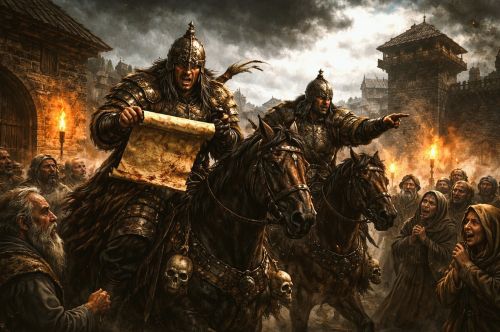
The manipulation of narrative was central to this strategy. During several campaigns, cities that resisted Mongol demands were subjected to devastating destruction. Medieval chroniclers described mass killings, the dismantling of urban infrastructure, and the systematic elimination of ruling elites. However, these acts of violence were rarely carried out in complete isolation. Survivors were frequently allowed to escape the destroyed cities, carrying stories of catastrophe into surrounding regions. These accounts, whether fully accurate or amplified through rumor, traveled along the commercial and communication networks that connected Central Asia, the Iranian plateau, and the wider Islamic world. Merchants, caravan leaders, refugees, and travelers acted as informal transmitters of information, spreading descriptions of Mongol warfare across distances that no single army could immediately cover. Stories of annihilated cities such as Merv, Nishapur, or Bukhara circulated widely in marketplaces, caravanserais, and diplomatic courts, shaping perceptions of Mongol power even among communities that had not yet encountered Mongol forces directly. In many cases the narratives were likely intensified as they traveled, as witnesses and intermediaries repeated accounts of destruction that reinforced the image of an unstoppable and merciless enemy. As a result, the reputation of Mongol brutality spread rapidly ahead of the armies themselves. In many cases, communities chose to surrender immediately rather than risk the consequences of resistance.
An important dimension of Mongol strategy is revealed by this pattern: the deliberate use of information environments as a weapon of war. Long before the emergence of modern media systems, premodern societies possessed dense networks of communication through merchants, travelers, refugees, and diplomatic envoys. They demonstrated a clear awareness of how these networks functioned. By allowing terrifying stories of destruction to circulate, they transformed isolated acts of violence into powerful signals directed at other potential opponents. The psychological effect could be dramatic. Entire cities capitulated without fighting, calculating that submission offered the only plausible chance of survival. Mongol warfare relied not only on military force but also on the manipulation of collective expectations and fears.
Understanding this strategy requires examining the relationship between violence, rumor, and political decision-making in the medieval world. The Mongol campaigns illustrate how narratives of destruction could travel across vast distances and influence the choices of rulers who had never encountered their armies directly. Fear became a strategic resource, magnifying the power of their forces and accelerating imperial expansion. What follows explores Mongol psychological warfare as an early form of information strategy, analyzing how terror narratives circulated through Eurasian information channels and how they shaped the behavior of entire societies confronted with the possibility of Mongol conquest.
The Steppe Context: Warfare, Mobility, and Strategic Communication

The military culture of the Mongols developed within the ecological and social environment of the Eurasian steppe, a vast grassland zone stretching from eastern Mongolia to the Black Sea. Life in this landscape demanded mobility, resilience, and the ability to coordinate widespread movement. Pastoral nomadic societies depended on seasonal migrations, flexible social organization, and the management of livestock herds that served as both economic resources and logistical foundations for warfare. These conditions shaped a style of combat that emphasized speed, adaptability, and decentralized coordination. By the time Genghis Khan unified the Mongol tribes in the early thirteenth century, these traditions had already produced a military culture capable of conducting campaigns across immense territories.
Mounted warfare lay at the heart of this system. Mongol warriors were expert horsemen from childhood, capable of firing composite bows with remarkable accuracy while riding at high speed. The army typically relied on multiple horses per soldier, allowing rapid movement without exhausting the animals that carried them. The logistical advantage enabled Mongol forces to outmaneuver opponents and sustain long-distance campaigns that would have been difficult for sedentary armies dependent on slower supply systems. Speed itself became a strategic weapon. Opponents often found themselves unable to predict the location or timing of their attacks, a condition that amplified the mental strain already created by reports of earlier conquests. The combination of mounted archery and operational mobility allowed Mongol forces to strike suddenly, retreat when advantageous, and reappear at unexpected locations. These tactics often created confusion among enemy commanders who were accustomed to slower and more rigid forms of warfare. The psychological effect of this unpredictability was considerable, as defenders struggled to anticipate the movements of armies capable of quickly covering vast distances.
Equally important was the Mongols’ capacity for coordination and communication across large areas. Steppe societies had long relied on messenger networks and signal systems to maintain cohesion among widely dispersed groups. Under Genghis, these practices were refined into an organized system of command that allowed orders to move quickly between units operating far apart from one another. Military leaders transmitted instructions through mounted couriers. This communication infrastructure ensured that Mongol armies could execute complex maneuvers and coordinated assaults even when operating across wide fronts.
The Mongols also placed strong emphasis on reconnaissance and intelligence gathering before major engagements. Scouts were sent ahead of advancing armies to collect information about terrain, defenses, and potential routes of approach. Merchants, diplomats, and travelers sometimes served as additional sources of intelligence, providing knowledge about distant regions before campaigns began. Attention to information allowed Mongol commanders to plan operations carefully and exploit weaknesses in enemy defenses. In many cases, cities and states faced Mongol armies that already possessed detailed knowledge of their political divisions, fortifications, and economic resources. Their openness to incorporating foreign specialists and local informants further enhanced their intelligence capabilities. Engineers, translators, merchants, and administrators drawn from conquered territories frequently contributed information that helped commanders understand unfamiliar regions. As a result, Mongol armies rarely advanced blindly; they moved through landscapes that had often been carefully studied through reconnaissance and intelligence networks long before the first cavalry units appeared.
These communication and intelligence systems were closely linked to the Mongols’ ability to shape perceptions among their opponents. Because their forces could move quickly and gather information efficiently, they were also able to control the pace and direction of campaigns in ways that heightened uncertainty among enemy populations. Rumors about Mongol movements, often transmitted through the same trade and diplomatic channels that carried ordinary news, contributed to an atmosphere of fear and unpredictability. Opponents frequently struggled to determine whether reports of approaching armies were accurate or exaggerated, a confusion that sometimes encouraged early surrender. The circulation of these reports often preceded the Mongol armies themselves, creating mental perceptions that weakened resistance before any military confrontation occurred. The information environment surrounding Mongol campaigns became an integral part of their strategic advantage, amplifying the impact of their mobility and battlefield effectiveness.
The strategic environment of the Eurasian steppe produced a distinctive fusion of mobility, communication, and psychological pressure. Mongol warfare was not merely a matter of battlefield tactics but part of a broader system that integrated intelligence gathering, rapid movement, and the broad circulation of information. These capabilities created the conditions in which fear narratives could spread quickly through Eurasian networks, amplifying the reputation of Mongol power long before armies appeared on the horizon. The effectiveness of psychological warfare cannot be understood without recognizing how deeply it was rooted in the logistical and cultural foundations of steppe military practice.
The Mongol Military System under Genghis Khan
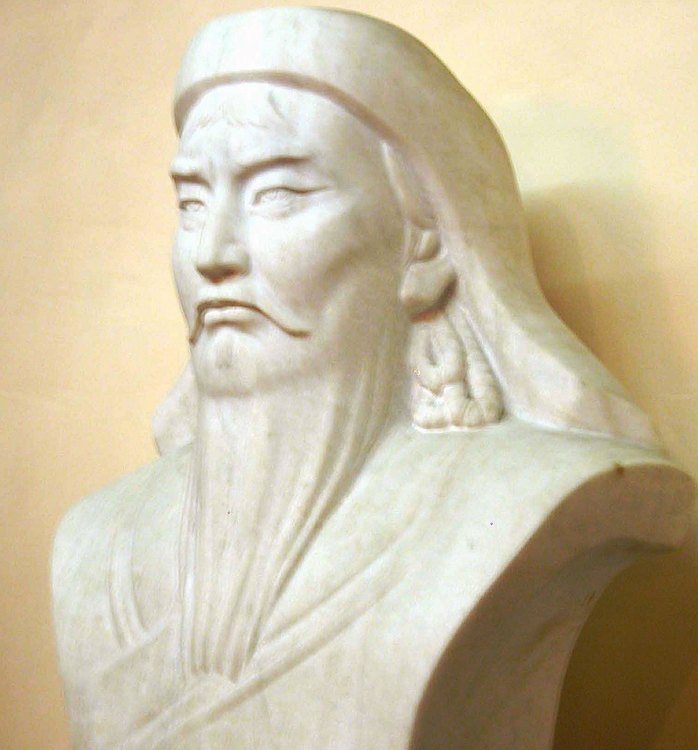
The transformation of warfare under Genghis represented one of the most important military reorganizations of the medieval world. Before Temüjin’s rise to power, the steppe was dominated by rival tribal confederations whose alliances were often fluid and unstable. Military forces were typically organized around kinship groups and tribal loyalties, which made large-scale coordination difficult. He systematically dismantled these structures after consolidating authority over the Mongol tribes in 1206. In their place he constructed a military system based on personal loyalty, discipline, and merit rather than lineage. This reorganization created a unified army capable of operating across vast territories and executing coordinated campaigns with remarkable efficiency.
At the core of the system was the decimal organization that structured the Mongol army into hierarchical units. Soldiers were grouped into units of ten (arban), one hundred (jaghun), one thousand (mingghan), and ten thousand (tumen). Each level of command was responsible for discipline, supply, and tactical coordination within its formation. This structure allowed commanders to mobilize large armies while maintaining clear chains of authority and communication. Because units were often composed of individuals drawn from different tribal backgrounds, the system weakened older clan loyalties that might challenge central authority. The result was a highly flexible military organization capable of dividing into smaller detachments for reconnaissance or raids while still functioning as a cohesive force during major battles. The tumen became the operational backbone of Mongol armies, capable of operating independently while remaining integrated within larger campaign strategies. Commanders of these formations exercised considerable tactical discretion, allowing Mongol forces to conduct simultaneous operations across wide geographic areas. Organizational clarity enabled Mongol armies to coordinate complex maneuvers such as encirclements, feigned retreats, and multi-directional assaults that required disciplined cooperation among units.
The military also emphasized strict discipline and collective responsibility. Soldiers within each unit were held accountable for one another’s conduct, reinforcing loyalty to the larger organization rather than to individual tribal leaders. Genghis enforced severe penalties for disobedience, desertion, or failure in battle, but he also promoted capable commanders regardless of their social origins. Meritocratic advancement allowed talented individuals to rise quickly within the military hierarchy. This approach not only strengthened operational effectiveness but also ensured that leadership positions were filled by individuals whose authority derived from proven competence.
Beyond organizational reform, Genghis integrated intelligence gathering into the planning of military campaigns. Mongol commanders collected detailed information about the political and economic conditions of regions they intended to invade. Merchants and diplomatic envoys often served as informal observers who reported on trade routes, city defenses, and internal rivalries within targeted states. Scouts were deployed far ahead of advancing armies to map terrain and identify vulnerabilities in enemy positions. These intelligence networks allowed Mongol forces to select strategic objectives carefully and to exploit divisions among their opponents before launching attacks. Intelligence gathering also served a diplomatic and psychological purpose. Information about the wealth of cities, the rivalries between ruling elites, or the dissatisfaction of subject populations could be used to shape Mongol demands for submission. In some cases, Mongol envoys arrived with remarkably detailed knowledge of local politics, a display of awareness that could intimidate rulers and reinforce the perception that resistance was futile. Such informational advantages allowed Mongol commanders to combine military action with psychological warfare, weakening opposition before a siege or battle even began.
The Mongol army also demonstrated an unusual capacity to incorporate specialized knowledge from conquered peoples. Engineers, artisans, and administrators captured during earlier campaigns were frequently employed in later operations. Chinese and Persian siege engineers, for example, introduced advanced techniques that enabled Mongol forces to overcome fortified cities that had previously been difficult targets for nomadic armies. By combining steppe cavalry tactics with foreign technical expertise, they developed a hybrid military system capable of confronting a wide range of adversaries. Adaptability played a crucial role in the expansion of the empire across regions with very different military traditions.
The military structure under these reforms was both disciplined and highly adaptable. The Mongol army under Genghis functioned as an integrated institution capable of coordinating intelligence, logistics, and battlefield tactics across immense distances. Such organization magnified the impact of their campaigns and helped sustain the empire’s rapid expansion during the thirteenth century. The effectiveness of psychological warfare during these campaigns cannot be separated from this institutional framework, for it was the combination of organizational discipline, operational mobility, and strategic planning that allowed Mongol commanders to transform reputation and fear into powerful instruments of imperial conquest.
Terror as Policy: Massacres and Calculated Violence

Violence played a central role in the Mongol conquest strategy, not simply as an instrument of battlefield victory but as a deliberate tool for shaping the political environment in which wars were fought. Cities that resisted their demands for submission often faced catastrophic consequences. Chroniclers across Eurasia recorded episodes in which urban populations were killed, infrastructure was destroyed, and ruling elites were eliminated after a city refused to surrender. While medieval sources sometimes exaggerated the scale of these events, the pattern of punitive destruction itself is well attested. The Mongols used overwhelming violence selectively to demonstrate the consequences of resistance and to establish a reputation that would influence the behavior of other cities long before Mongol armies arrived.
One of the most frequently cited examples of this strategy occurred during the campaign against the Khwarazmian Empire between 1219 and 1221. After the execution of Mongol merchants by the Khwarazmian governor of Otrar and the subsequent breakdown of diplomatic relations, Genghis launched a major invasion of Central Asia. Several cities that resisted Mongol forces experienced devastating reprisals. Chroniclers described the destruction of urban centers such as Bukhara, Samarkand, Merv, and Nishapur. Although modern historians treat many medieval casualty figures with caution, the broader narrative suggests that Mongol commanders were willing to carry out extreme punitive actions when confronted with defiance. These acts served as public demonstrations of the cost of resistance and were widely reported by witnesses who later carried these accounts to other regions.
The destruction of cities was often accompanied by symbolic actions designed to reinforce the message of Mongol dominance. In some cases the ruling elites of captured cities were executed publicly, while artisans and skilled workers were spared and deported to serve the needs of the expanding empire. Such practices both punished resistance and strengthened Mongol administrative and military capabilities. By selectively eliminating political leadership while preserving valuable labor, the Mongols transformed conquest into a process that simultaneously spread fear and secured practical resources for future campaigns. Skilled craftsmen, engineers, scribes, and administrators were often relocated to other parts of the empire, where their expertise could contribute to siege warfare, infrastructure building, or imperial administration. Selective preservation of human capital demonstrates that Mongol violence, while often extreme, was not indiscriminate. Instead, it was embedded within a broader strategic logic that distinguished between populations that could be useful to the empire and those whose elimination would serve as a warning to others. The message conveyed to neighboring communities was unmistakable: submission could preserve life and economic activity, while resistance could lead to annihilation.
The effectiveness of these actions depended not only on violence itself but also on the circulation of information about that violence. Reports of destroyed cities traveled quickly through merchant networks and refugee populations moving along the Silk Road. Survivors carried stories of the devastation they had witnessed, and these narratives were repeated and expanded as they spread across Central Asia, Persia, and the Middle East. As a result, the Mongols’ reputation for ruthlessness often reached distant cities long before Mongol armies appeared nearby. Communities that had never encountered Mongol forces directly nevertheless faced the psychological impact of these accounts.
In many cases the fear generated by such reports encouraged cities to surrender without fighting. Commanders frequently offered terms that promised protection for populations that submitted peacefully and accepted Mongol authority. The contrast between mercy and destruction reinforced the strategic logic of warfare. Cities that surrendered were often spared and integrated into the Mongol imperial system, while those that resisted became examples intended to influence future decisions by other communities. They created a powerful incentive structure in which the rational choice for many rulers was to capitulate rather than risk catastrophic punishment.
The pattern of calculated violence during the Mongol conquests demonstrates how terror could function as an instrument of imperial expansion. Rather than relying solely on continuous military confrontation, leaders used selective destruction to construct a reputation that magnified their power across vast regions. This reputation shaped the decisions of rulers, merchants, and urban populations who calculated the risks of resistance in light of widely circulated stories about Mongol campaigns. In effect, violence operated not only as a physical act but also as a communicative signal directed at audiences far beyond the immediate battlefield. The destruction of a single city could influence the behavior of dozens of others, transforming local acts of brutality into regional psychological events. By combining military force with the deliberate amplification of fear narratives, the Mongols could reshape the political landscape of Eurasia in ways that extended far beyond the immediate reach of their armies.
Survivor Narratives and the Weaponization of Rumor
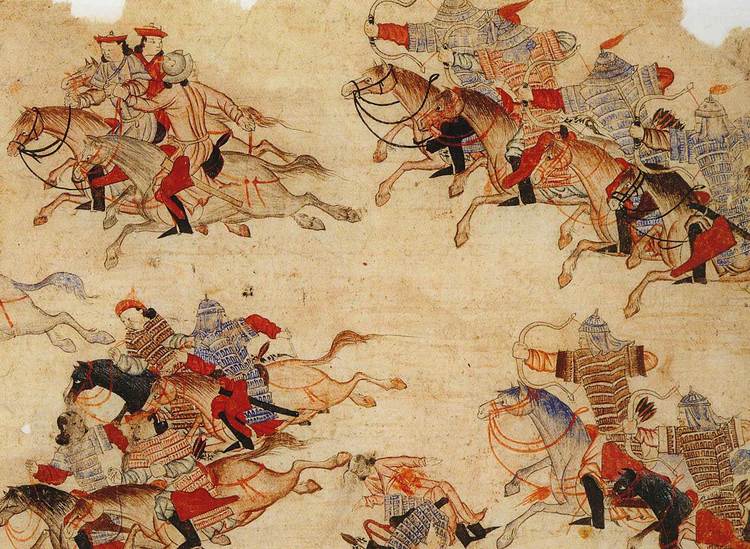
A crucial element of psychological warfare was the strategic role played by survivors who carried news of conquest into neighboring regions. After the destruction of a resisting city, Mongol commanders sometimes allowed a portion of the population to escape or deliberately avoided pursuing those who fled the initial devastation. These survivors became unwitting messengers, spreading stories of the scale and brutality of Mongol attacks. In societies where communication relied heavily on oral transmission and traveler networks, such firsthand testimony carried enormous persuasive power. Accounts of destroyed cities, executed rulers, and depopulated landscapes circulated widely among merchants, refugees, and travelers moving along the commercial arteries that connected Central Asia with the Middle East and eastern Europe.
These narratives did not remain confined to the communities that initially experienced Mongol conquest. Refugees and merchants carried their accounts across the broader Silk Road system, where news traveled through caravan networks linking cities from Transoxiana to the Mediterranean world. Commercial hubs such as Tabriz, Aleppo, and Cairo functioned as major information crossroads in which stories from distant regions were repeated, interpreted, and amplified. Caravanserais and trading districts served as gathering points where merchants, diplomats, and travelers exchanged news about political developments across Eurasia. In such environments, dramatic reports of destroyed cities and fleeing populations could circulate with great speed among diverse audiences. As the reports moved from one audience to another, they often acquired new layers of interpretation and exaggeration. Medieval societies were highly responsive to dramatic accounts of catastrophe, and stories of Mongol destruction quickly became part of a larger discourse of fear that shaped political decision-making across wide areas. The interconnected nature of commercial and diplomatic travel ensured that narratives originating in Central Asia could reach regions hundreds or even thousands of miles away within relatively short periods of time.
The circulation of such narratives meant that their reputation often preceded their armies by months or even years. Rulers who had never encountered Mongol forces directly nevertheless heard repeated descriptions of cities that had been destroyed after resisting Mongol demands. Diplomatic envoys and merchants sometimes relayed detailed accounts of Mongol tactics, further reinforcing the perception that Mongol armies were both unstoppable and merciless. These stories influenced calculations made by local elites, particularly in regions where political divisions or military weakness made resistance risky. The spread of rumor became an indirect extension of Mongol military power.
Importantly, these fear narratives did not require precise accuracy to be effective. Even when casualty figures or descriptions of destruction were exaggerated, the broader message remained consistent: defiance could lead to catastrophe. Medieval chronicles frequently recorded enormous casualty numbers that modern historians regard with skepticism, yet the persistence of such accounts demonstrates how deeply Mongol conquests affected contemporary perceptions. The psychological impact of these stories was often more significant than the factual details themselves. Cities contemplating resistance had to weigh the uncertain possibility of survival against the widely circulated reports of annihilation that followed failed defenses elsewhere. In many cases, the uncertainty itself proved decisive. Even if a particular city believed that the reported scale of destruction might be exaggerated, the mere possibility that the rumors were true could influence political leaders to seek accommodation rather than confrontation.
The weaponization of rumor functioned as an extension of Mongol strategic planning. By allowing narratives of devastation to circulate freely through trade routes and refugee networks, commanders magnified the political consequences of individual campaigns. Fear traveled faster than cavalry, reaching distant cities long before Mongol forces could appear at their gates. Rumor became a force multiplier that expanded the psychological reach of Mongol power across Eurasia. The interaction between violence, narrative transmission, and political calculation demonstrates how the Mongols effectively transformed information networks into instruments of imperial expansion.
Trade Routes, Merchants, and Information Networks
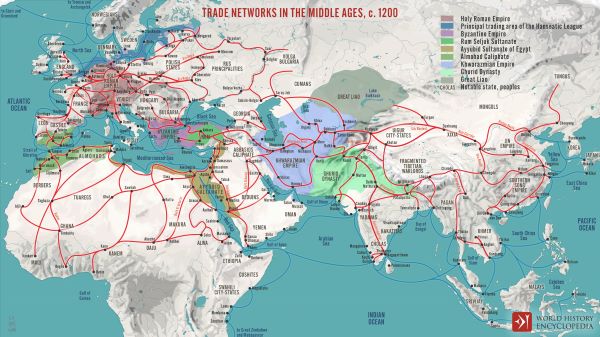
The vast commercial networks that linked Eurasia in the medieval period played a critical role in the transmission of information during the Mongol conquests. Long before they unified large portions of the continent, trade routes connecting China, Central Asia, the Islamic world, and the Mediterranean functioned not only as channels of commerce but also as systems of communication. Merchants, caravan leaders, religious travelers, and diplomatic envoys carried news along the same routes used for transporting silk, spices, and precious metals. When Mongol armies began their campaigns in the early thirteenth century, these existing networks quickly became conduits through which reports of Mongol activity circulated to wider areas.
Merchants were particularly important in this informational landscape. Trading communities often maintained contacts across multiple regions, linking distant markets through familial and commercial relationships. Because merchants regularly traveled between cities and caravan stations, they frequently served as informal transmitters of political news. Reports of Mongol victories, sieges, and destroyed cities moved rapidly through these trading circles. Commercial travelers who witnessed the aftermath of Mongol campaigns or encountered refugee populations carried these accounts to new audiences. In marketplaces and caravanserais, discussions of movements became part of the everyday exchange of information that accompanied long-distance trade. Merchant networks were especially effective in spreading news because traders depended on accurate information about political conditions, road safety, and regional stability to protect their goods and investments. As a result, news about military activity was often treated as critical intelligence within commercial communities, ensuring that reports of conquest circulated fast and wide.
Caravanserais and urban trade centers functioned as key nodes in these communication networks. Located along major routes across Central Asia and the Middle East, caravanserais provided lodging, storage, and security for traveling merchants. These facilities also served as gathering points where travelers from different regions exchanged news about conditions along the routes ahead. As Mongol armies advanced through Central Asia and Persia, such locations became sites where stories of destruction and conquest were repeated and interpreted by successive groups of travelers. Information that originated in one city could be carried by merchants to another, where it was further transmitted to additional destinations.
The movement of refugees also contributed significantly to the spread of information about campaigns. When cities were attacked or threatened, portions of the population often fled to neighboring regions in search of safety. These displaced individuals carried firsthand accounts of the violence they had witnessed. Their stories, conveyed to local populations and political authorities, reinforced the growing perception that Mongol armies represented an unprecedented threat. In many cases refugee testimony provided the most immediate and emotionally powerful descriptions of Mongol warfare, amplifying the fear already circulating through merchant networks. Refugees frequently arrived in surrounding cities with vivid accounts of massacres, destroyed neighborhoods, and the collapse of political authority in conquered regions. Such testimony was often interpreted as confirmation of rumors already circulating through trade networks. The emotional intensity of these narratives made them especially persuasive, encouraging urban populations and political leaders to treat Mongol expansion as a looming catastrophe rather than a distant conflict.
Diplomatic and religious travelers likewise participated in these information flows. Envoys traveling between courts gathered news about military developments and political alliances, which they reported to rulers seeking to understand the swiftly changing balance of power in Eurasia. Religious figures, including Muslim scholars, Christian missionaries, and Buddhist monks, also moved across long-distance routes and often recorded the conditions they encountered. Through these multiple channels, news of Mongol conquests circulated through diverse social groups whose movements connected distant regions into a shared informational environment.
These overlapping networks of merchants, refugees, envoys, and religious travelers created an expansive communication system that extended across much of Eurasia. The Mongol campaigns unfolded within this interconnected landscape, where information could move far beyond the immediate reach of military forces. Reports of violence and military success spread widely, influencing political calculations in cities and courts that had not yet faced Mongol armies directly. The interaction between commercial networks and military events illustrates how trade routes functioned not only as economic arteries but also as pathways through which narratives of fear and power circulated during the Mongol expansion. The speed with which such information traveled demonstrates that medieval Eurasia possessed a surprisingly dynamic informational environment in which news, rumor, and eyewitness testimony could move quickly between regions. The Mongols benefited not only from their own mobility but also from the existing communication systems that carried stories of their campaigns across the continent.
Psychological Warfare in Practice: Case Studies
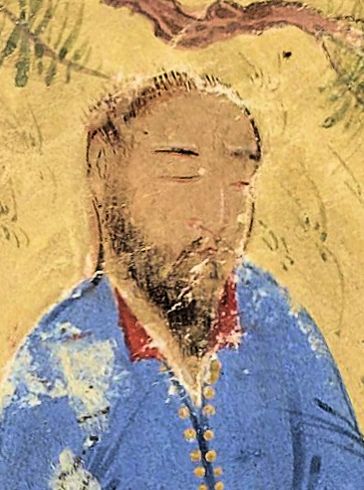
The practical operation of psychological warfare can be observed most clearly through specific episodes during the thirteenth-century conquests. Individual campaigns demonstrate how violence, rumor, and calculated displays of power were used together to shape the decisions of opposing cities. These cases reveal that commanders rarely relied on terror alone; instead, they combined intimidation with offers of submission that allowed communities to avoid destruction if they accepted Mongol authority. The strategic value of fear lay in its ability to influence political calculations before prolonged military engagements became necessary.
After the diplomatic breakdown between Genghis and the Khwarazmian ruler Muhammad II, Mongol forces advanced across Central Asia and targeted several major urban centers. At Bukhara, their armies breached the city’s defenses and imposed severe punishment on those who resisted. Persian chroniclers described the capture of the city as a dramatic moment in which Mongol authority was publicly asserted before the population. Although later accounts often embellished these events, the symbolic message was clear: defiance of Mongol demands would bring catastrophic consequences. The fall of Bukhara quickly became one of the earliest widely circulated examples of Mongol power.
The siege and destruction of Merv in 1221 offers another revealing case. Merv was one of the largest cities in the eastern Islamic world and a major center of trade and scholarship. When the city resisted Mongol forces, the resulting destruction shocked contemporaries across the region. Chroniclers recorded immense casualty figures and described the systematic devastation of the urban landscape. Modern historians treat many of these figures with caution, but the impact of the event on regional perceptions was unmistakable. News of Merv’s fall spread swiftly along commercial and refugee routes, reinforcing the reputation of Mongol armies as capable of annihilating even the most prosperous cities. Merv’s prominence as a major urban center meant that its destruction carried symbolic weight beyond its immediate geographic context. Scholars, merchants, and administrators who had once been connected to the city carried accounts of its destruction to distant regions, amplifying the sense that Mongol campaigns represented an unprecedented level of devastation. The fall of Merv became part of a broader narrative that shaped the expectations of other cities confronting the possibility of Mongol attack.
A similar dynamic appeared during the conquest of Nishapur. The city resisted Mongol authority and became the target of an especially severe reprisal following the death of a commander during the siege. Medieval sources describe the destruction of the city and the elimination of much of its population. While the details vary among different chronicles, the episode illustrates how Mongol commanders responded to resistance with acts intended to reinforce their reputation for overwhelming retaliation. Reports of Nishapur’s destruction circulated widely, contributing to the atmosphere of dread that surrounded Mongol advances across Persia.
The Mongol campaign in the Middle East later produced another powerful example in the fall of Baghdad in 1258 under Hülegü Khan. As the capital of the Abbasid Caliphate, Baghdad held enormous political and symbolic significance within the Islamic world. The Mongol siege ended with the capture of the city and the collapse of Abbasid authority. Contemporary observers across the region described the destruction as a catastrophic turning point. Although the scale of the devastation remains debated, the fall of Baghdad demonstrated that even the most prestigious political centers could not rely on their historical prestige or defensive structures to deter Mongol armies. The event resonated deeply across the Islamic world, where Baghdad had long been associated with political authority and cultural leadership. Reports of the city’s fall circulated widely, reinforcing the perception that Mongol forces possessed both the military capability and the willingness to dismantle even the most established centers of power. This episode served as one of the most powerful illustrations of how Mongol campaigns could reshape political expectations across vast regions.
These cases illustrate how Mongol commanders used selective episodes of destruction to shape the broader political landscape of Eurasia. Cities that resisted Mongol authority sometimes became examples whose fate was widely reported and discussed in neighboring regions. These stories traveled along commercial routes, diplomatic channels, and refugee networks, reinforcing the perception that resistance was likely to end in disaster. By combining military force with the strategic amplification of fear, the Mongols created a psychological environment in which surrender frequently appeared to be the most rational choice available to threatened communities.
Narrative Construction in Medieval Sources
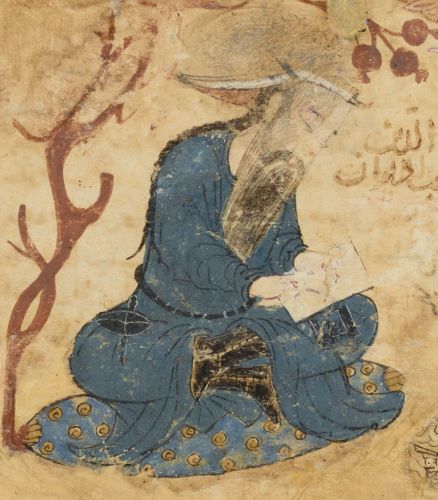
Understanding Mongol psychological warfare requires careful examination of the medieval sources that describe it. Much of what historians know about Mongol campaigns comes from chroniclers who recorded the invasions from the perspective of societies that had suffered catastrophic defeat. Persian, Arabic, Chinese, and European writers documented events that seemed to them both unprecedented and terrifying. These authors frequently emphasized the scale of destruction and the overwhelming nature of Mongol military power. Their narratives provide invaluable evidence about how fear spread across regions threatened by Mongol expansion.
Among the most important accounts are the Persian histories written by Ata-Malik Juvayni and later by Rashid al-Din. Juvayni, who served the Mongol administration in the thirteenth century, produced one of the earliest detailed descriptions of the conquests. His work combined eyewitness testimony with reports gathered from participants in the campaigns. Because he operated within the administrative structures of the Mongol Empire, Juvayni also had access to official information that earlier chroniclers lacked. His narrative provides a complex portrait that simultaneously condemns the devastation of Mongol warfare while acknowledging the political authority that Mongol rulers had established across conquered territories. Rashid al-Din, writing under the Ilkhanid court in the early fourteenth century, expanded the historical record with additional information drawn from Mongol sources and administrative archives. His massive historical compilation sought to integrate Mongol history into a broader universal narrative that connected steppe traditions with the histories of the Islamic world, China, and Europe. Together, the works of Juvayni and Rashid al-Din form the core textual foundation for modern historical understanding of Mongol expansion.
Chinese sources offer another perspective on the Mongol expansion. Official histories compiled under the Yuan dynasty, along with earlier records concerning the rise of the Mongols on the steppe, describe the consolidation of power under Genghis and the expansion of Mongol rule across Eurasia. These texts often emphasize administrative organization, military discipline, and imperial governance rather than simply focusing on terror. Their accounts help historians balance the more catastrophic portrayals found in Persian and Middle Eastern chronicles.
European observers also contributed to the developing image of Mongol warfare. Travelers and envoys such as Giovanni da Pian del Carpine and William of Rubruck visited the Mongol Empire during the thirteenth century and recorded detailed descriptions of Mongol political institutions, military practices, and diplomatic customs. Their reports circulated widely in Europe and helped shape contemporary understanding of the Mongol threat. Although these observers did not witness the earliest waves of conquest, their writings reinforced the perception that Mongol armies possessed extraordinary organizational capacity and strategic discipline.
The tone and content of these sources were shaped by the circumstances in which they were written. Authors who lived through the devastation of Mongol invasions often emphasized the unprecedented nature of the violence they described. Some writers worked within political systems established by Mongol rulers and had incentives to present the empire as a legitimate and divinely sanctioned power. Juvayni’s writings, for example, reflect both his horror at the destruction of Persian cities and his recognition that Mongol rule had become a political reality that administrators and scholars had to navigate. Later writers working under Mongol patronage sometimes framed the conquests as part of a providential transformation of the political order. These contrasting perspectives reveal how historical narratives could simultaneously function as records of trauma, instruments of political accommodation, and attempts to explain the sudden emergence of a vast Eurasian empire.
Modern historians approach these sources with both caution and appreciation. While some medieval accounts undoubtedly exaggerate casualty figures or dramatize certain events, they also reveal how contemporaries understood the experience of Mongol conquest. The stories they recorded circulated across trade networks, diplomatic channels, and refugee communities, helping to shape the broader reputation of Mongol armies. The narratives themselves became part of the historical process they described, contributing to the spread of fear that accompanied Mongol expansion across Eurasia.
Historiography: Exaggeration, Propaganda, and Historical Interpretation
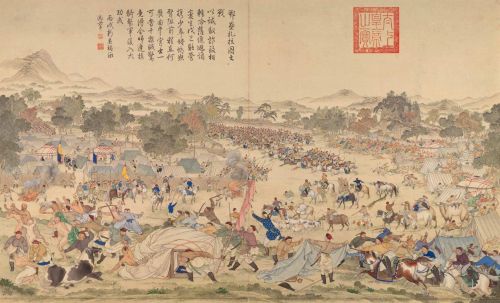
The historical interpretation of Mongol psychological warfare has long been shaped by the dramatic narratives preserved in medieval chronicles. Early accounts portrayed the Mongol conquests as episodes of unparalleled devastation that swept across Eurasia with astonishing speed. Chroniclers writing in Persia, the Middle East, and Eastern Europe frequently emphasized the destruction of cities, the collapse of established political systems, and the immense loss of life that accompanied the invasions. For centuries, these narratives formed the foundation of historical understanding, reinforcing the image of Mongol armies as agents of nearly apocalyptic violence.
Modern historiography has approached these accounts with greater methodological caution. Historians now recognize that many medieval writers recorded events from positions of trauma, political pressure, or limited information. Casualty figures reported in some chronicles appear extraordinarily large, sometimes exceeding the estimated population of the cities described. As a result, scholars have increasingly examined the rhetorical and literary conventions that shaped these texts. Medieval historical writing often employed dramatic numerical estimates and vivid descriptions to convey the magnitude of catastrophe rather than to produce precise demographic records. Historians have been encouraged to compare narrative sources with archaeological evidence, administrative documents, and demographic studies to evaluate the plausibility of reported events. Rather than dismissing the chronicles outright, modern scholarship seeks to understand how narrative exaggeration functioned as a literary tool that communicated the psychological shock experienced by communities confronting the sudden arrival of Mongol armies.
Some historians have argued that the Mongols themselves deliberately cultivated this reputation for overwhelming violence. By allowing stories of destruction to circulate widely, Mongol commanders could weaken resistance before launching new campaigns. In this interpretation, the terrifying narratives recorded by chroniclers were not simply exaggerated reports but elements of a broader strategy of intimidation. The reputation of Mongol armies as unstoppable forces became an important political asset, encouraging cities and rulers to surrender rather than risk annihilation. Psychological warfare functioned not only on the battlefield but also through the circulation of information about past campaigns.
Other scholars emphasize that the image of Mongol brutality must be balanced against the administrative and political structures that emerged within the empire. Once Mongol authority had been established in a region, rulers frequently sought to restore trade networks, protect merchants, and stabilize local governance. These policies complicate the image of Mongol rule as purely destructive. The empire that emerged from the conquests depended heavily on commercial exchange, diplomatic communication, and administrative cooperation across vast territories. Systems of taxation, postal communication, and long-distance trade developed under Mongol rule created new forms of connectivity across Eurasia. This administrative dimension of Mongol governance suggests that the violence of the initial conquests was closely linked to a subsequent effort to integrate conquered regions into a functioning imperial system. Historians increasingly interpret Mongol expansion as a process that combined extreme military coercion with pragmatic policies designed to maintain long-term political stability.
Recent scholarship has also explored the cultural and narrative dimensions of the Mongol conquests. Chroniclers writing within different intellectual traditions interpreted Mongol expansion through their own religious, political, and moral frameworks. Islamic historians sometimes depicted the invasions as divine punishment or as a catastrophic test of the political order, while European observers framed the Mongols as mysterious and potentially apocalyptic forces emerging from the distant steppe. These interpretive frameworks shaped the language used to describe Mongol campaigns and influenced how stories about their violence circulated across Eurasia. Cultural expectations about divine judgment, imperial legitimacy, and historical catastrophe influenced how writers constructed their accounts of Mongol expansion. By examining these interpretive frameworks, historians gain insight not only into the events themselves but also into the mental worlds of the societies that recorded them.
These historiographical debates highlight the complexity of interpreting Mongol psychological warfare. Medieval narratives captured genuine experiences of devastation while simultaneously shaping the reputation that Mongol armies carried from one region to another. Modern historians treat these sources both as historical evidence and as cultural artifacts that reveal how societies understood the shock of Mongol expansion. By examining the interplay between violence, narrative, and historical memory, scholars have developed a more nuanced understanding of how fear and information functioned within the broader strategy of Mongol imperial expansion.
Comparative Perspective: Psychological Warfare before the Modern Era
Although the Mongol conquests provide one of the most dramatic examples of psychological warfare in premodern history, the strategic use of fear and narrative manipulation was not unique to the Mongols. Across the ancient and medieval world, military leaders understood that shaping the expectations of enemies could be as important as winning battles on the field. The deliberate cultivation of reputations for brutality, the spread of intimidating rumors, and the symbolic display of power appear repeatedly in the historical record. Examining these broader patterns places Mongol strategies within a longer tradition of warfare in which information and perception functioned as critical tools of imperial expansion.
Classical empires frequently employed intimidation to secure submission from rival communities. Assyrian kings in the first millennium BCE famously recorded their military victories in inscriptions that described the destruction of rebellious cities in vivid and sometimes gruesome detail. These accounts were carved into stone monuments and displayed publicly across the empire, ensuring that news of royal power reached both subjects and potential adversaries. Similarly, Roman military campaigns occasionally relied on exemplary punishment to discourage resistance. The destruction of Carthage in 146 BCE and the brutal suppression of revolts in the provinces demonstrated how imperial powers used acts of devastation to reinforce their authority and discourage future rebellion.
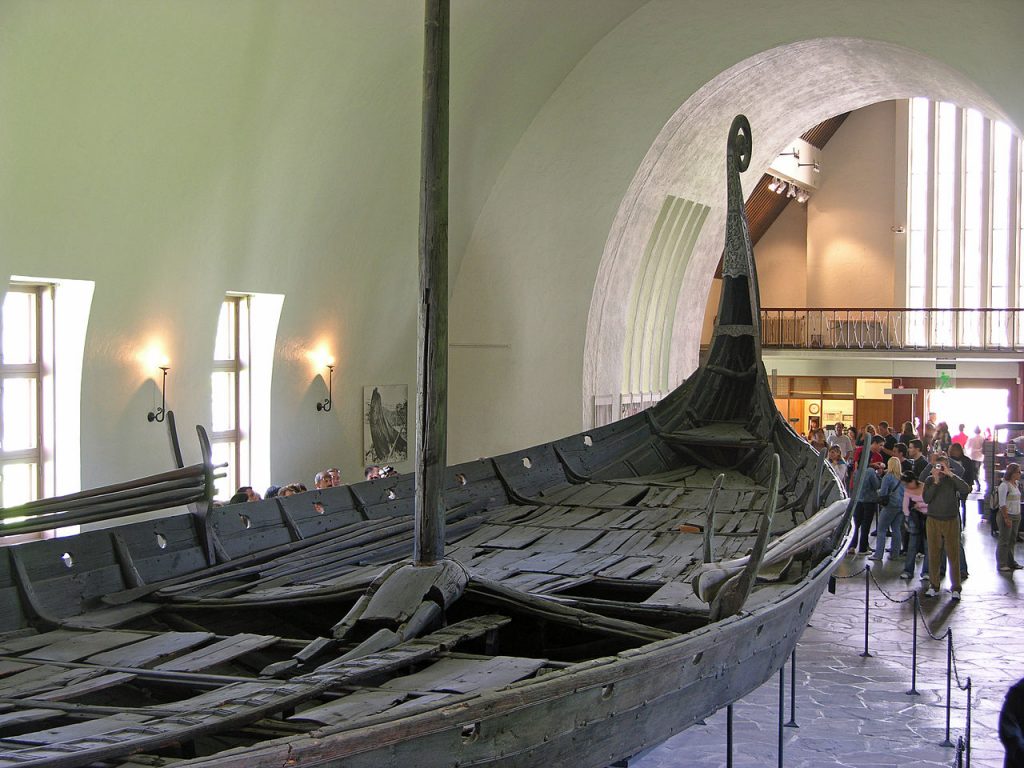
Medieval warfare also reveals numerous examples of strategic intimidation and reputation management. During the Viking expansions of the ninth and tenth centuries, the sudden and often devastating raids on coastal communities created an enduring image of Viking ferocity that spread rapidly across Europe. The reputation of Viking warriors as relentless raiders often preceded their arrival, influencing how communities prepared for or responded to attacks. In other contexts, medieval rulers used public displays of punishment, the destruction of rebellious towns, or the symbolic humiliation of defeated enemies to communicate the consequences of defiance.
Despite these parallels, the Mongol use of psychological warfare possessed distinctive characteristics. The geographic scale of Mongol expansion allowed fear narratives to circulate across an unusually vast network of trade routes and diplomatic channels. Information about Mongol campaigns traveled quickly through merchant communities, refugee populations, and political envoys moving between major urban centers. This mobility allowed stories of destruction to shape expectations across entire regions long before Mongol armies actually arrived. The integration of steppe mobility with Eurasian trade networks amplified the reach of these narratives, enabling reports of Mongol victories to move from Central Asia to the Middle East, Eastern Europe, and China. Merchants and diplomats who traveled along the Silk Road carried both goods and information, often transmitting dramatic accounts of Mongol campaigns that shaped the political calculations of rulers far from the immediate zone of conflict. The Mongol Empire transformed existing channels of communication into conduits for psychological influence, allowing fear itself to travel ahead of the armies that generated it.
Comparative analysis highlights both the continuity and the uniqueness of Mongol psychological warfare. Earlier empires had long understood the strategic value of intimidation, but the Mongols integrated narrative manipulation into a broader system of mobility, communication, and military organization that operated across the Eurasian landmass. By examining these wider historical patterns, historians can better understand how the Mongols transformed older practices of intimidation into a highly effective strategy that reshaped political decision-making across multiple civilizations.
Conclusion: Information, Fear, and the Power of Narrative in Mongol Conquest
The Mongol conquests of the thirteenth century demonstrate that warfare in the premodern world involved far more than battlefield tactics and numerical strength. Mongol commanders understood that the perceptions of enemies could shape the outcome of campaigns long before armies met in direct combat. By combining military mobility, selective violence, and the deliberate circulation of intimidating narratives, the Mongols transformed fear itself into a strategic resource. Cities that believed resistance would end in annihilation often surrendered without a prolonged fight, allowing Mongol forces to expand their authority with remarkable speed across Eurasia.
This strategy depended heavily on the interaction between real events and the stories that circulated about them. The destruction of cities such as Merv, Nishapur, and Baghdad produced powerful narratives that traveled through merchant networks, diplomatic channels, and refugee movements. These stories were recorded by chroniclers who sought to explain the extraordinary upheavals unfolding around them. Although many of these accounts were shaped by exaggeration, rhetorical tradition, or the emotional shock experienced by witnesses, they nonetheless played a significant role in shaping the reputation of Mongol armies across vast regions.
The effectiveness of Mongol psychological warfare emerged from the interaction between military action and narrative transmission. Acts of violence provided the initial events that generated fear, while the circulation of reports amplified their psychological impact far beyond the immediate battlefield. As merchants, travelers, and political envoys carried these stories across Eurasia, they contributed to the formation of a collective perception that Mongol resistance was futile. The Mongol Empire used existing communication networks to spread reputational power alongside military force.
Examining Mongol campaigns through the lens of information and narrative reveals that psychological warfare is not exclusively a modern phenomenon. Long before the emergence of mass media or modern propaganda systems, empires could influence political outcomes by shaping how events were understood and communicated. The Mongols demonstrated an exceptional capacity to integrate this informational dimension into their military strategy. Their campaigns illustrate how fear, rumor, and narrative could operate as powerful instruments of imperial expansion, reshaping the decisions of entire societies confronted with the prospect of Mongol conquest.
Bibliography
- Abu-Lughod, Janet L. Before European Hegemony: The World System A.D. 1250–1350. New York: Oxford University Press, 1989.
- Allsen, Thomas T. Commodity and Exchange in the Mongol Empire: A Cultural History of Islamic Textiles. Cambridge: Cambridge University Press, 1997.
- —-. Culture and Conquest in Mongol Eurasia. Cambridge: Cambridge University Press, 2001.
- Amitai, Reuven, and Michal Biran, eds. The Mongol Empire and Its Legacy. Leiden: Brill, 2000.
- Barfield, Thomas J. The Perilous Frontier: Nomadic Empires and China. Oxford: Blackwell, 1989.
- Carpine, Giovanni da Pian del. The Story of the Mongols Whom We Call the Tartars. Translated by Christopher Dawson. London: Sheed and Ward, 1955.
- di Cosmo, Nicola, Allen J. Frank, and Peter B. Golden, eds. The Cambridge History of Inner Asia: The Chinggisid Age. Cambridge: Cambridge University Press, 2009.
- Farrokh, Kaveh and Manouchehr Moshtagh Khorasani. “The Mongol invasion of the Khwarazmian Empire.” Medieval Warfare 2:3 (2012), 43-49.
- Goldsworthy, Adrian. The Complete Roman Army. London: Thames and Hudson, 2003.
- Jackson, Peter. The Mongols and the Islamic World: From Conquest to Conversion. New Haven: Yale University Press, 2017.
- Juvayni, Ata-Malik. The History of the World Conqueror. Translated by John Andrew Boyle. Cambridge, MA: Harvard University Press, 1958.
- Martin, H. Desmond. “The Mongol Army.” Journal of the Royal Asiatic Society 75:1-2 (1943), 46-85.
- May, Timothy. The Mongol Art of War. Yardley, PA: Westholme Publishing, 2007.
- —-. The Mongol Conquests in World History. London: Reaktion Books, 2012.
- McEwan, G. J. P., ed. The Royal Inscriptions of Mesopotamia. Toronto: University of Toronto Press, 1987.
- Morgan, David. The Mongols. 2nd ed. Oxford: Blackwell, 2007.
- Price, Neil. Children of Ash and Elm: A History of the Vikings. New York: Basic Books, 2020.
- Rashid al-Din. The Successors of Genghis Khan. Translated by John Andrew Boyle. New York: Columbia University Press, 1971.
- Wainwright, E.H. “The Mongol Invasions of Europe.” Kleio 3:2 (1971), 25-33.
- Weatherford, Jack. Genghis Khan and the Making of the Modern World. New York: Crown, 2004.
- William of Rubruck. The Mission of Friar William of Rubruck. Translated by Peter Jackson. London: Hakluyt Society, 1990.
Originally published by Brewminate, 03.19.2026, under the terms of a Creative Commons Attribution-NonCommercial-NoDerivatives 4.0 International license.
About the Author