

By Kenneth Schwartz
Muslims around the world are preparing for Ramadan, the month of worship, sacrifice and charity that begins Thursday around much of the globe as soon as the new moon is sighted.
As with the springtime festivals observed by the other two great religions – Easter for Christians and Passover for Jews – the coronavirus is forcing Muslims to make bigger sacrifices this year than ever before.
While it cannot be said that Ramadan 2020 will be less joyful, this year’s observance will be different.
During Ramadan, many of the faithful pray in large groups with their shoulders often touching.
This year, however, imams and the faithful are changing their plans and looking for ways to try to ensure they have the full experience and that non-Muslims who are invited to take part can also see what Ramadan is about.
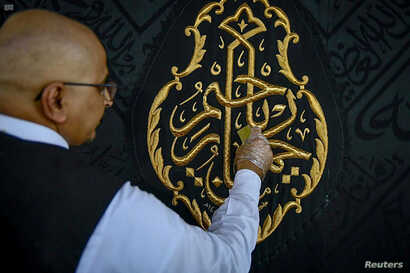
Saudi Arabia’s Grand Mufti Sheikh Abdulaziz Al al-Sheikh, the country’s highest religious authority, ruled that evening prayers called Taraweeh should be performed at home.
The United Arab Emirates are among those nations who have suspended group prayers in mosques, and Egyptian authorities have barred all public iftars — the daily breaking of the sunup-to-sundown fast.
Muslims in the United States are also looking at ways to adjust to the realities of the COVID-19 lockdown while still performing their Ramadan obligations.
Imam Omar Suleiman of Dallas, Texas, says Ramadan is a comprehensive month of worship of which only one aspect is gathering in a mosque.
“The overall story of our religious community is not one on insisting on worshipping in congregation, but one that is really shining and serving the community at large,” he said.
Suleiman says he is preparing for a virtual iftar — getting everyone together on Zoom, a videoconferencing app, to break fast together.
“There are communities that are thinking about how to improvise to where the mosque will still have some sense of a ritual being performed there … having a small group of five or seven people just perform the prayer there just for that,” he said.
Suleiman said that when people are as vulnerable as they are now, they become more empathetic and think more and more about the hungry, the poor and the lonely.
“Loneliness is a pandemic,” he said. “People who were suffering before are just going to be suffering more right now, so we’re going to need to be thinking about them far beyond this. I think in our vulnerability, we can develop empathy and that’s a fundamental part of Ramadan.”
A major part of Ramadan is the act of charitable giving called zakat. Islam requires its followers to perform zakat at least once a year. Those who can afford to must donate a percentage of their yearly earnings to charity.
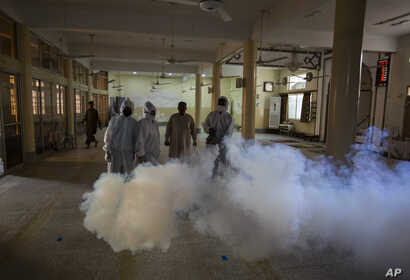
Many Muslims like to wait until Ramadan to perform zakat. But the coronavirus pandemic has led to massive job losses. Many may not be able to meet their obligations at this time.
Muslim leaders say zakat is not necessary if one isn’t able to carry it out because of a financial setback. But giving takes all forms.
According to the Prophet Muhammad, “even a smile on the face to your brother is charity,” Suleiman said.
If there is a silver lining surrounding this year’s unique Ramadan, Ibrahim Anli, who heads the Rumi Forum, a nonprofit dedicated to interfaith dialogue, says it could lead to a deeper understanding between the great faiths, where there is so much apprehension and mistrust.
“On one hand, this physical distance and social distancing might be a barrier for one form of activity and meetings, but on the other hand, thanks to the selectability of online platforms, it might even facilitate even larger and more frequent meetings,” Anli said.
He said virtual iftars means “this is definitely going to be a very unique remarkable Ramadan.”
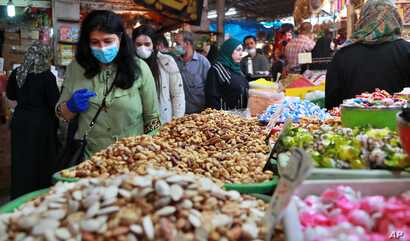
Iftars, a meal enjoyed among family or sometimes at huge banquet-style settings, include lentil soup, juices, dried fruit, and a traditional salad called fattoush, dressed with olive oil and bread.
Some worshipers pack cafes and restaurants to break their fast while others share bread with those in need.
But, despite the changes this year, Anli says the meaning of Ramadan will not be diluted.
No matter how one does it, he said, breaking the fast is “sharing that moment with a feeling of fraternity, friendship, understanding, and respect: Muslim, non-Muslim, all around the same table.”
Originally published by Voice of America, 04.23.2020, under a Government Public Domain license.