Contemporary Nubian heritage reflects the historical complexity and richness.

By Dr. Yasmin Moll
Assistant Professor of Anthropology
University of Michigan
Introduction
Jada Pinkett Smith’s new Netflix documentary series on Cleopatra aims to spotlight powerful African queens. “We don’t often get to see or hear stories about Black queens, and that was really important for me, as well as for my daughter, and just for my community to be able to know those stories because there are tons of them,” the Hollywood star and producer told a Netflix interviewer.
The show casts a biracial Black British actress as the famed queen, whose race has stirred debate for decades. Cleopatra descended from an ancient Greek-Macedonian ruling dynasty known as the Ptolemies, but some speculate that her mother may have been an Indigenous Egyptian. In the trailer, Black classics scholar Shelley Haley recalls her grandmother telling her, “I don’t care what they tell you in school, Cleopatra was Black.”
These ideas provoked commentary and even outrage in Egypt, Cleopatra’s birthplace. Some of the reactions have been unabashedly racist, mocking the actress’s curly hair and skin color.
Egyptian archaeologists like Monica Hanna have criticized this racism. Yet they also caution that projecting modern American racial categories onto Egypt’s ancient past is inaccurate. At worst, critics argue, U.S. discussions about Cleopatra’s identity overlook Egyptians entirely.
In Western media, she is commonly depicted as white – most famously, perhaps, by screen icon Elizabeth Taylor. Yet claims by American Afrocentrists that current-day Egyptians are descendants of “Arab invaders” also ignore the complicated histories that characterize this diverse part of the world.
Some U.S. scholars counter that ultimately what matters is to “recognize Cleopatra as culturally Black,” representing a long history of oppressing Black women. Portraying Cleopatra with a Black actress was a “political act,” as the show’s director put it.
Ironically, however, the show misses an opportunity to educate both American and Egyptian audiences about the unambiguously Black queens of ancient Nubia, a civilization whose history is intertwined with Egypt’s. As an anthropologist of Egypt who has Nubian heritage, I research how the stories of these queens continue to inspire Nubians, who creatively retell them for new generations today.
The One-Eyed Queen
Nubians in modern Egypt once lived mainly along the Nile but lost their villages when the Aswan High Dam was built in the 1960s. Today, members of the minority group live alongside other Egyptians all over the country, as well as in a resettlement district near the southern city of Aswan.
Growing up in Cairo’s Nubian community, we children didn’t hear about Cleopatra, but about Amanirenas: a warrior queen who ruled the Kingdom of Kush during the first century B.C.E. Queens in that ancient kingdom, encompassing what is now southern Egypt and northern Sudan, were referred to as “kandake” – the root of the English name “Candace.”
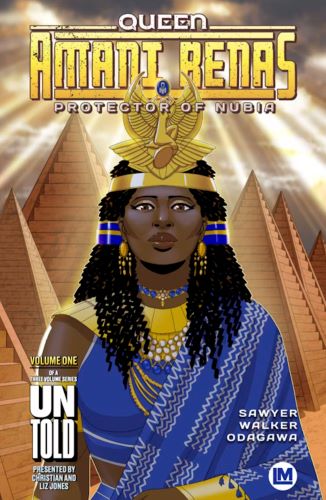
Like Cleopatra, Amanirenas knew Roman generals up close. But while Cleopatra romanced them – strategically – Amanirenas fought them. She led an army up the Nile about 25 B.C.E. to wage battle against Roman conquerors encroaching on her kingdom.
My own favorite part of this story of Indigenous struggle against foreign imperialism involves what can only be characterized as a power move. After beating back the invading Romans, Queen Amanirenas brought back the bronze head of a statue of the emperor Augustus and had it buried under a temple doorway. Each time they entered the temple, her people could literally walk over a symbol of Roman power.
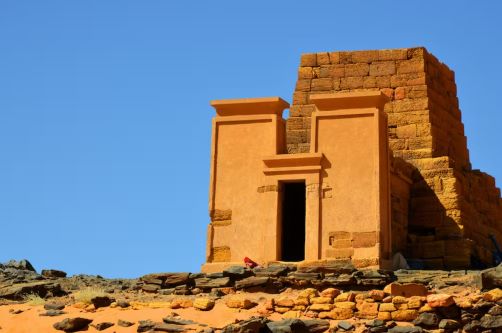
That colorful tidbit illustrates those queens’ determination to defend their autonomy and territory. Amanirenas personally engaged in combat and earned the moniker “the one-eyed queen,” according to an ancient chronicler of the Roman Empire named Strabo. The kandakes were also spiritual leaders and patrons of the arts, and they supported the construction of grand monuments and temples, including pyramids.
Interwoven Cultures and Histories
When people today say “Nubia,” they are often referring to the Kingdom of Kush, one of several empires that emerged in ancient Nubia. Archaeologists have recently started to bring Kush to broader public attention, arguing that its achievements deserve as much attention as ancient Egypt’s.
Indeed, those two civilizations are entwined. Kushite royals adapted many Egyptian cultural and religious practices to their own ends. What’s more, a Kushite dynasty ruled Egypt itself for close to a century.
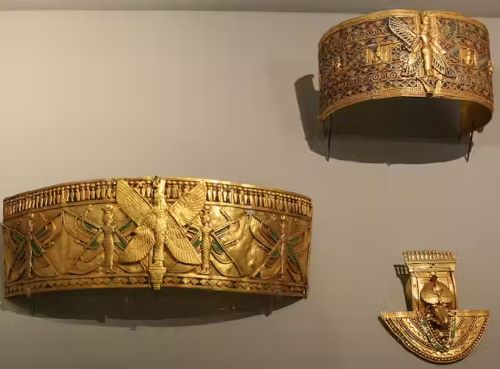
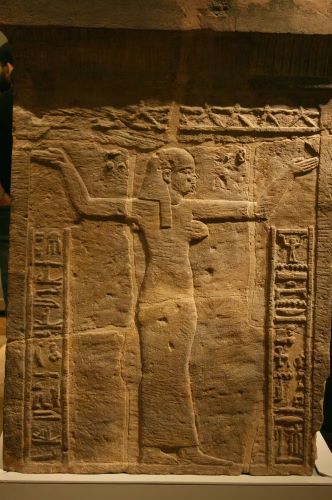
Contemporary Nubian heritage reflects that historical complexity and richness. While their traditions and languages remain distinctive, Nubians have been intermarrying with other communities in Egypt for generations. Nubians like my mother are proudly Egyptian, yet hurtful stereotypes persist.
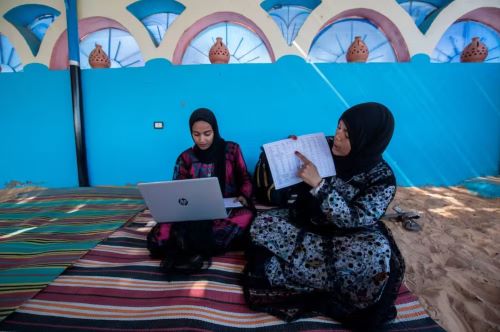
Today, some Black Americans embrace Cleopatra as a powerful symbol of Black pride. But the idea of ancient Nubia as a powerful African civilization also plays a symbolic role in contemporary Black culture, inspiring images in everything from cosmetics to comics.
Egyptian Voices
Researchers do argue about Cleopatra’s heritage. U.S. conversations about her, however, sometimes reveal more about Western racial politics than about Egyptian history.
In the 19th century, for example, Western interest in ancient Egypt took off amid colonization – a fascination called “Egyptomania.” Americans’ fixation with the ancient civilization reflected their own culture’s anxieties about race in the decades after slavery was abolished, as scholar Scott Trafton has argued.
A century later, a 1990s advertisement for a pale-colored doll of queen Nefertiti sparked debate in the U.S. about how to represent her race.
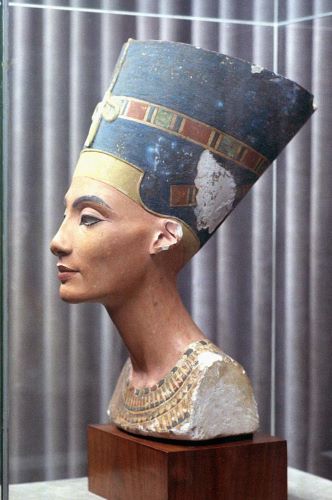
Nefertiti’s bust – one of the most famous artifacts from ancient Egypt – is on display at a German museum. Egypt has called for the artifact’s return for close to a hundred years, to no avail. Even Hitler took a personal interest in the bust, declaring that he “will not renounce the queen’s head,” according to archaeologist Joyce Tyldesley.
Even today, contemporary Egyptian perspectives are almost absent in Western depictions of ancient Egypt. Only one Egyptian scholar is interviewed in the new Netflix series’ four episodes, as he himself notes, and he is employed not by an Egyptian university, but by a British one.
For many Egyptians, this lack of representation rehashes troubling colonial dynamics about who is considered an “expert” about their past. The Netflix series “was made and produced without the involvement of the owners of this history,” argues the Egyptian journalist Sara Khorshed in a review of the series.
To be sure, there is anti-Black bias in Egyptian culture, and some of the social media reaction has been slur-filled and racist. Educating people about the stories of Nubian queens like Amarinenas might be a way to encourage a more inclusive understanding of who is Egyptian.
Yet I believe Egyptians’ frustrations about portrayals of Cleopatra also reflect long-standing concerns that their own understandings of their past are not taken seriously.
That includes Black Egyptians, like my mother. When I asked her if she planned to see the Cleopatra series, she shrugged. She already knows that queen’s story well from its many portrayals on screen, whether in Hollywood films or Egyptian ones.
“I will wait for the series on Amanirenas,” she said.
Originally published by The Conversation, 06.09.2023, under the terms of a Creative Commons Attribution/No derivatives license.
About the Author