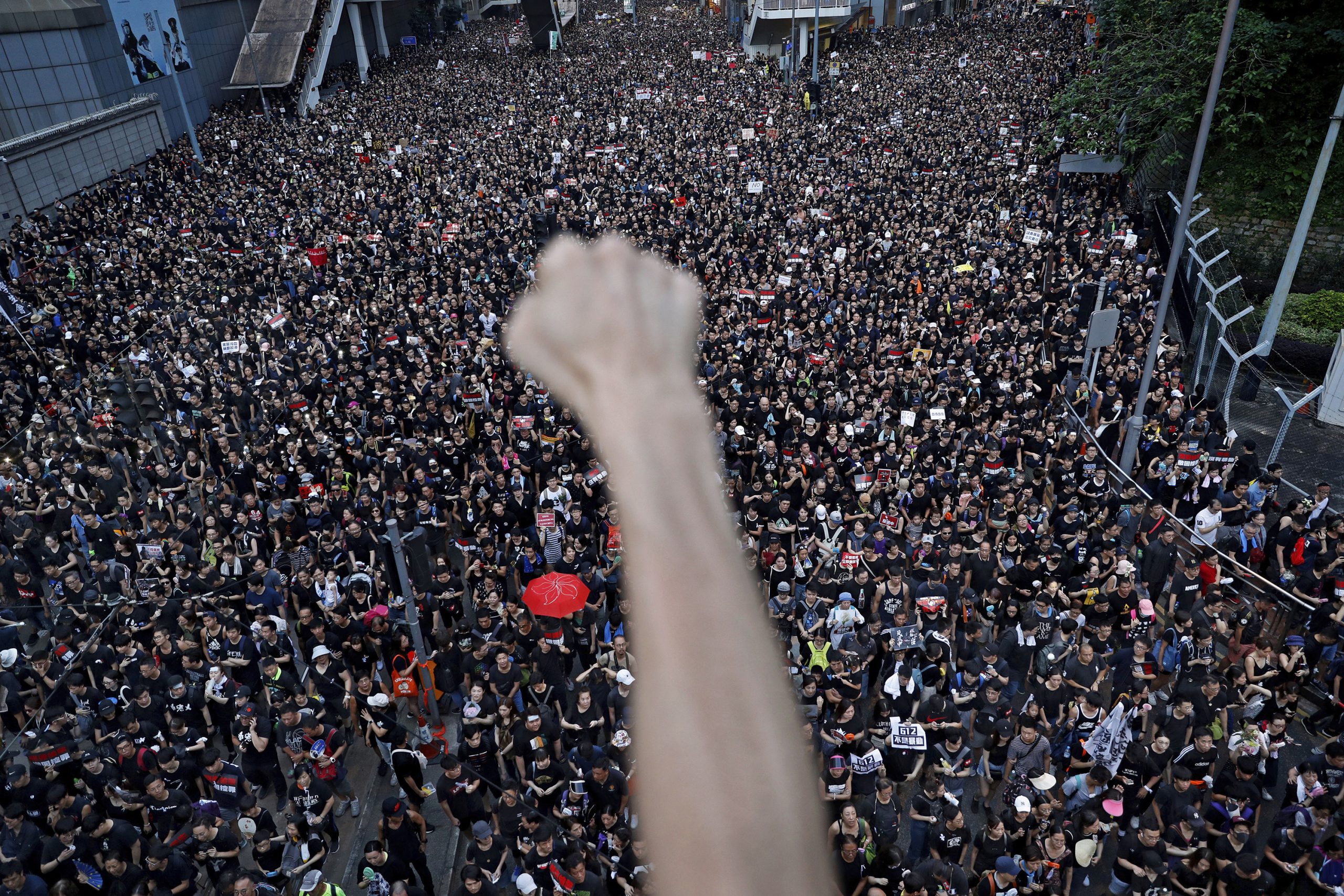
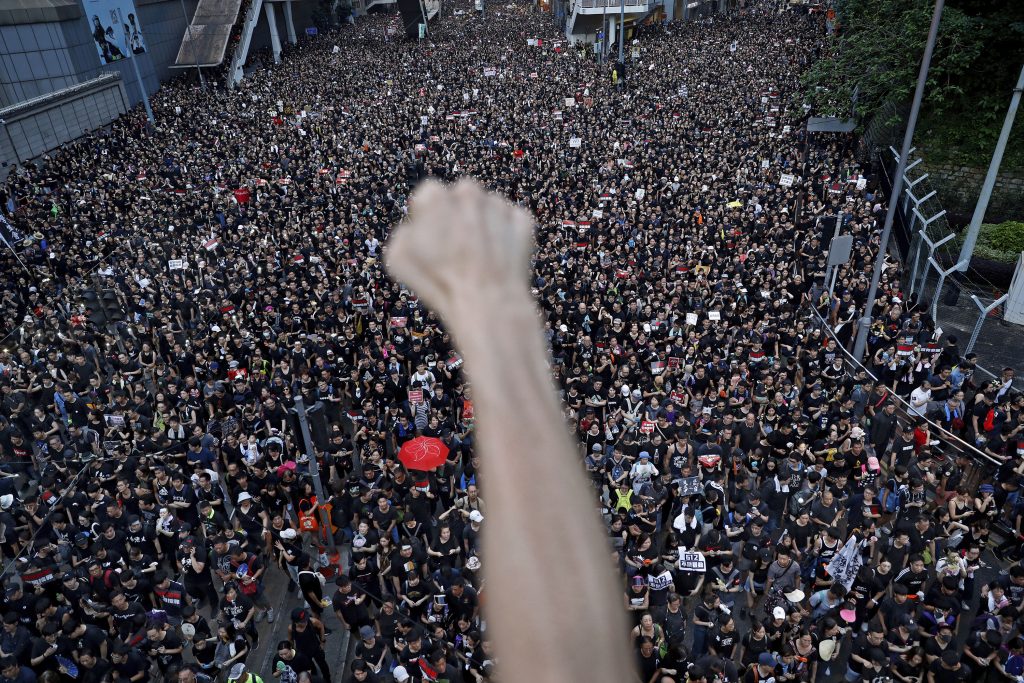
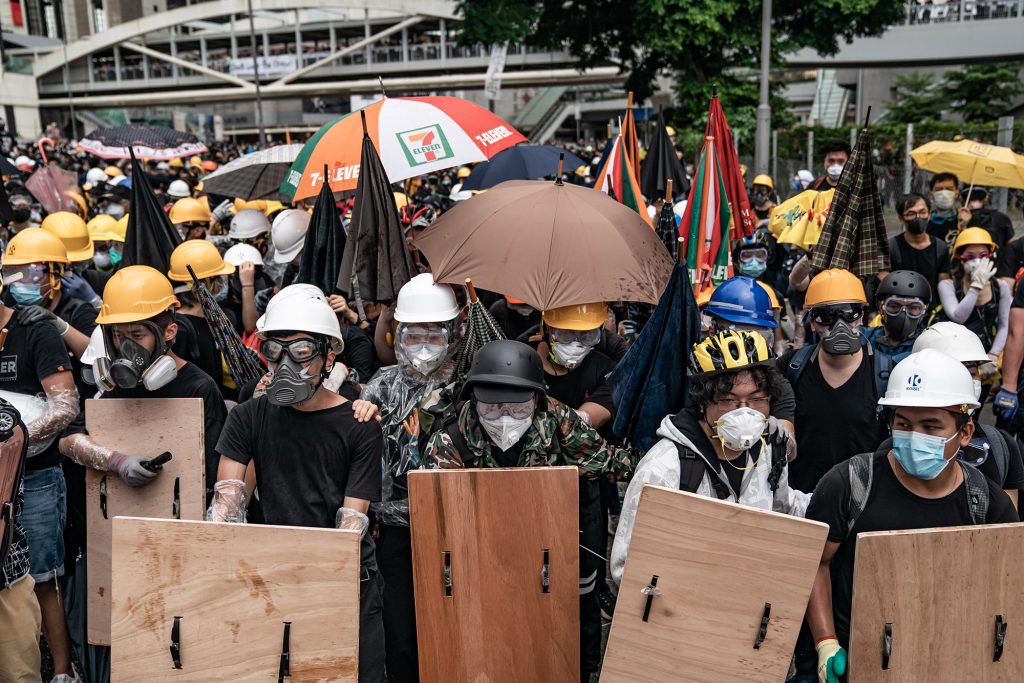
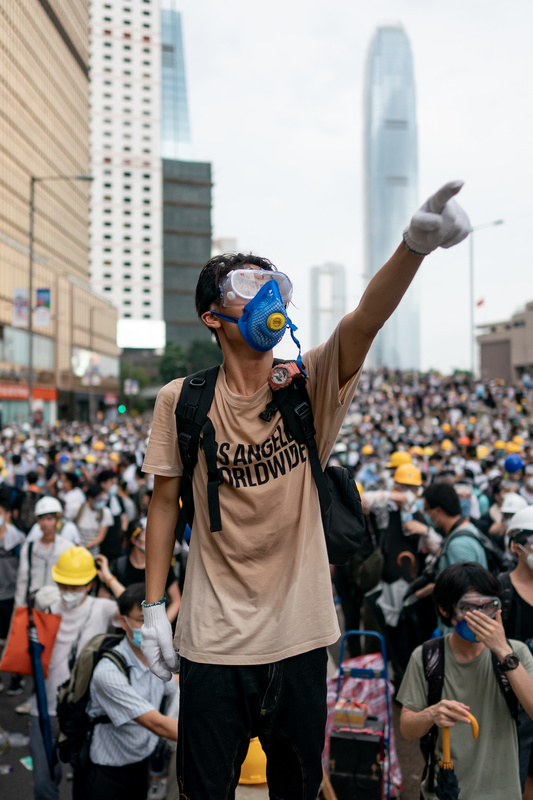
Protesters march on the streets against an extradition bill in Hong Kong on Sunday, June 16, 2019. Hong Kong has been rocked by major protests for the past two weeks over legislative proposals that many view as eroding the territory’s judicial independence and, more broadly, as a sign of Chinese government’s efforts to chip away at the freedoms of this semi-autonomous city. (AP Photo/Vincent Yu)
Protesters march on the streets against an extradition bill in Hong Kong on Sunday, June 16, 2019. Hong Kong has been rocked by major protests for the past two weeks over legislative proposals that many view as eroding the territory’s judicial independence and, more broadly, as a sign of Chinese government’s efforts to chip away at the freedoms of this semi-autonomous city. (AP Photo/Vincent Yu)
In 2019, dozens of protests erupted throughout the world. See what triggered the events and what has changed.
Protesters around the world demanded change
this year. While most protests were sparked by local issues, such as
rising fuel prices or dissatisfaction with a leader, there were
commonalities. Demonstrators shared many of the same grievances,
including over economic inequality, corruption, and poor governance.
“People across the board are generally pushing to
have their voices heard, and they feel like their current political
systems have not been responsive,” Saskia Brechenmacher of the Carnegie
Endowment for International Peace told CFR. “So they’re trying to use
other channels, such as protesting, to make a difference.”
Dominated by young people and largely leaderless, the protests have had varying degrees of success, and many of them continue today.
France: The Yellow Vests
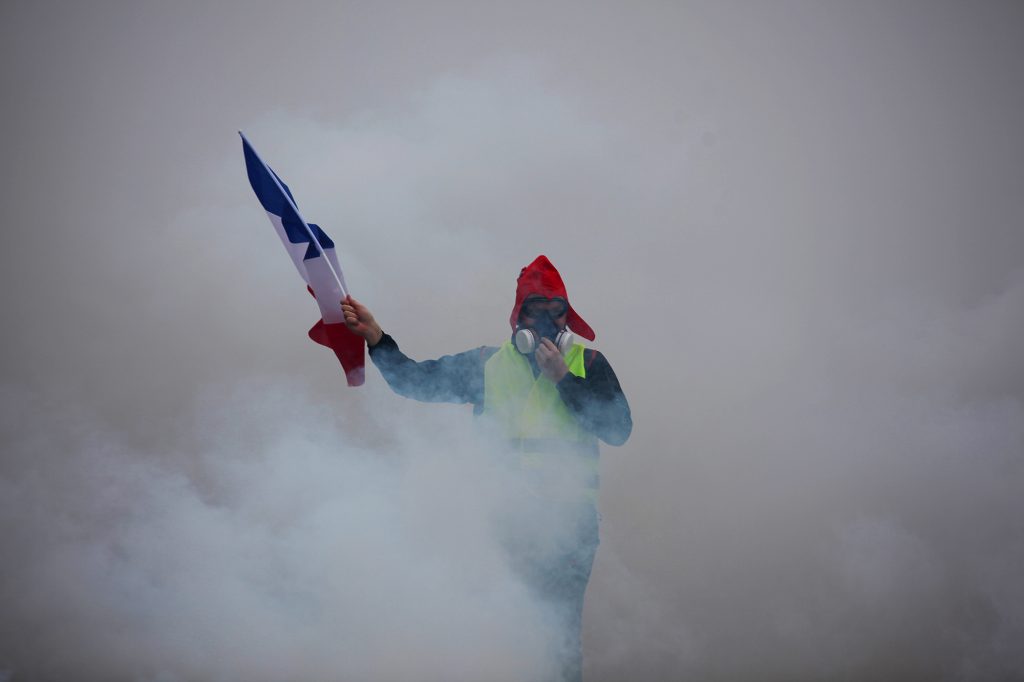
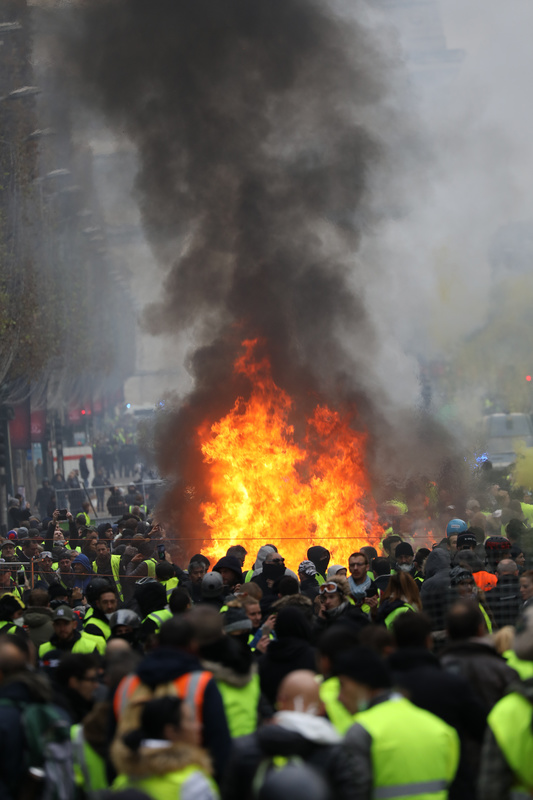
A demonstrator holds a French flag as he walks amid the tear gas during a protest of Yellow vests (Gilets jaunes) against rising oil prices and living costs, on December 1, 2018 in Paris. – Anti-government protesters torched dozens of cars and set fire to storefronts during daylong clashes with riot police across central Paris on December 1, as thousands took part in fresh “yellow vest” protests against high fuel taxes. (Photo by Theo LEGENDRE / AFP) (Photo by THEO LEGENDRE/AFP via Getty Images)
Peak participation. More than 250,000 people on November 17, 2018.
The spark. An increase in fuel taxes.
PARIS, FRANCE – NOVEMBER 24: Protesters wearing yellow vests protest against rising fuel prices on the Champs-Elysees avenue on November 24, 2018 in Paris France. The police have used tear gas and water cannon to in an attempt to disperse the protest, which was organised by ‘Yellow Vests’ (Vestes Jaunes), a protest movement without political affiliation that protests against taxes and rising fuel prices. (Photo by Antoine Gyori/Corbis via Getty Images)
The stakes. Many of the demonstrators had worried about the tax increase in late 2018 because they have to drive long distances for work, highlighting economic inequality between urban and rural communities. The protesters, who were at the center of what became known as the Yellow Vests movement, initially wanted the government to withdraw the proposed hike. Eventually, they also called for higher wages, reforms to address inequality, and the resignation of President Emmanuel Macron.
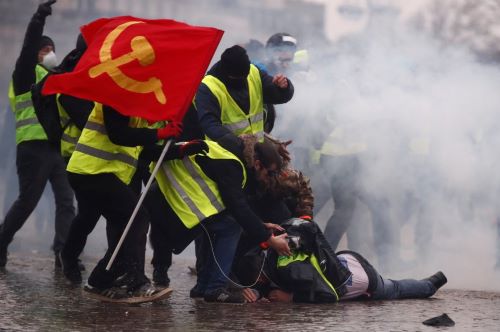
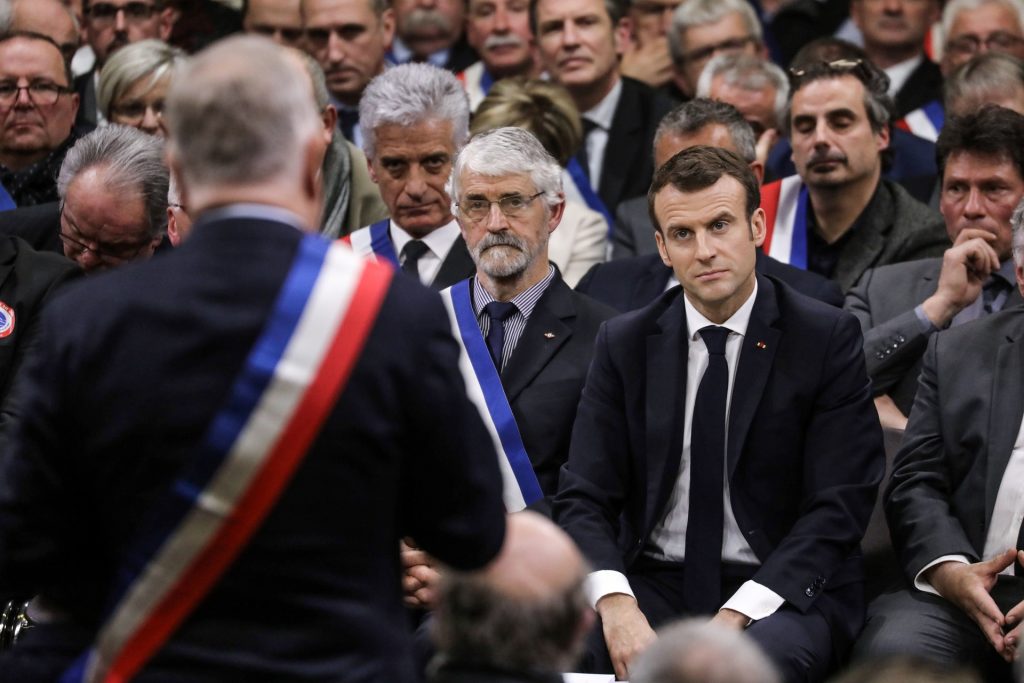
Protesters wearing yellow vests help a person injured by a water cannon during a demonstration by the “yellow vests” movement near the Arc de Triomphe in Paris, France, January 12, 2019. REUTERS/Christian HartmannFrench President Emmanuel Macron attends a meeting with some 600 mayors of Occitania to relay their constituent’s grievances on January 18, 2019 in Souillac, southern central France, as part of the “great national debate”, a central plank of the Macron’s bid to turn around his embattled presidency since the “yellow vest (gilets jaunes) movement protests. – Facing the biggest test of his presidency, the French president has launched a series of public forums inviting voters to express their concerns and hopes after two months of anti-government protests. The “Great National Debate”, aimed at quelling the “yellow vest” (gilet jaunes) anger over inequality and the French president’s perceived indifference to the struggles of rural and small-town France, will run for two months until March 15, 2019. (Photo by Ludovic MARIN / POOL / AFP)
It is fundamentally an anti-elite, anti-establishment movement. It is also very much a visibility movement, a movement of people who are saying: I want to be seen and heard.
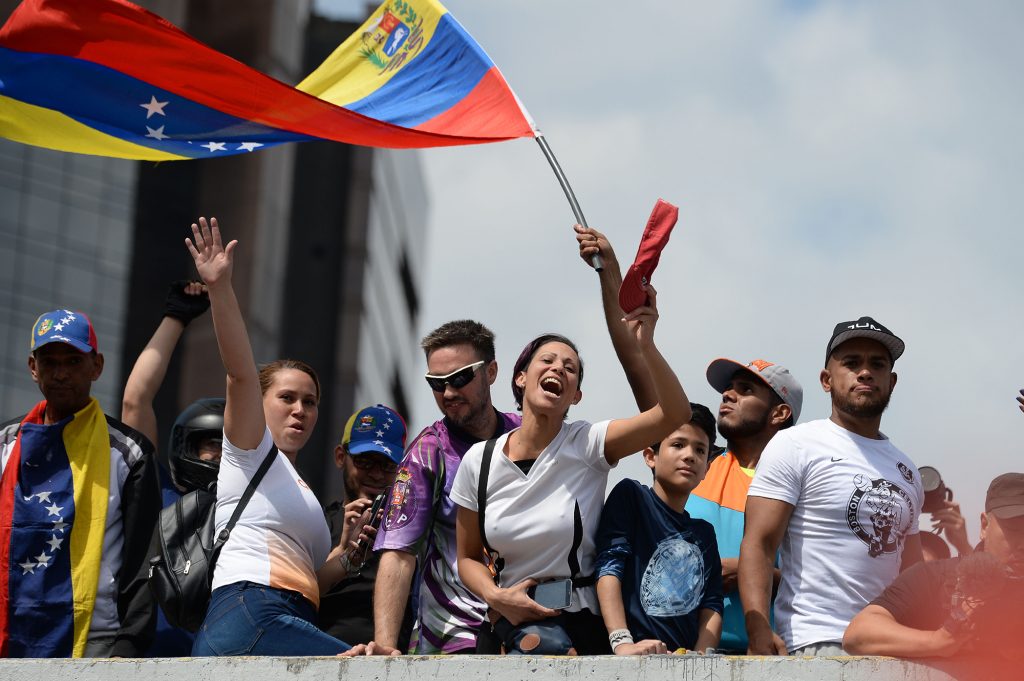
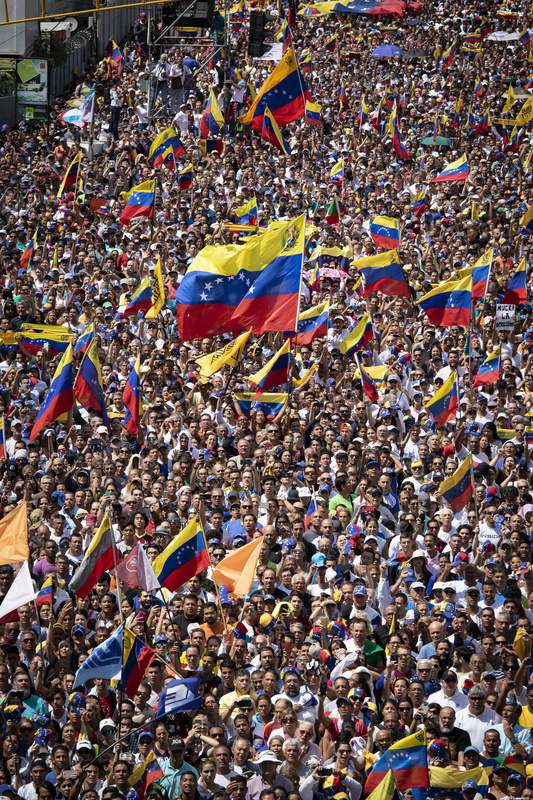
An opposition supporter waves a national flag during a gathering with Venezuelan opposition leader Juan Guaido, in Caracas on February 2, 2019. – Tens of thousands of protesters were set to pour onto the streets of Caracas to back self-proclaimed acting president Guaido’s calls for early elections as international pressure increased on President Nicolas Maduro to step down. Major European countries have set a Sunday deadline for Maduro to call snap presidential elections. (Photo by Federico PARRA / AFP)
Peak participation. Tens of thousands of people on January 23.
The spark. Opposition leader Juan Guaido challenges President Nicolas Maduro after Maduro is sworn in for a second term in January.
02 February 2019, Venezuela, Caracas: Demonstrators waving Venezuelan flags. More than one hundred thousand Venezuelans are estimated to have demonstrated in Caracas for the self-proclaimed interim president Guaidó. The change of power is imminent, said the 35-year-old leader of the opposition in a speech to his supporters. Photo: Rayner Peña R/dpa (Photo by Rayner Peña R/picture alliance via Getty Images)
The stakes. Since he took office in 2013, Maduro has worked to consolidate his political power. Under his rule, Venezuela has suffered from a humanitarian crisis that has included extremely high inflation, severe food and medicine shortages, and soaring crime rates. An estimated 4.5 million people have left the country. Guaido’s supporters want Maduro to step down, and Guaido has said that, if his leadership challenge succeeds, his government will hold elections within a year.
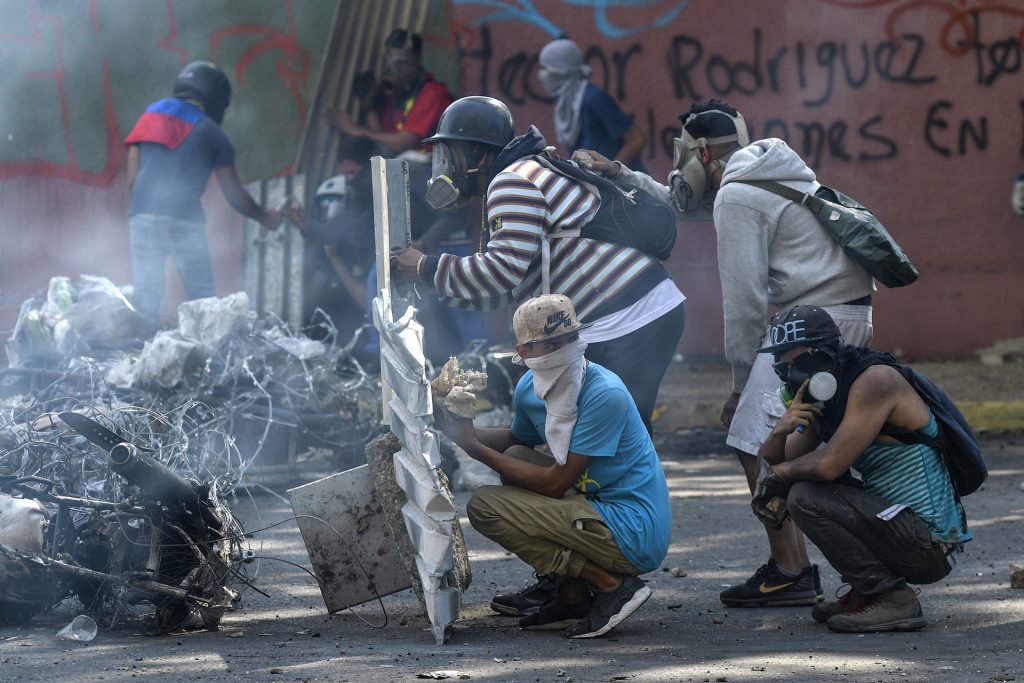
Anti-government protesters clash with security forces during the commemoration of May Day on May 1, 2019 after a day of violent clashes on the streets of the capital spurred by Venezuela’s opposition leader Juan Guaido’s call on the military to rise up against President Nicolas Maduro. – Guaido called for a massive May Day protest to increase the pressure on President Maduro. (Photo by Matias Delacroix / AFP)
The status. Maduro remains in power with security forces largely still loyal to him and with support from Cuba, Russia, and Turkey. Guaido, recognized as the interim president by about fifty countries including the United States, continues to call his supporters to protest in the streets. Talks between the two sides have so far failed.
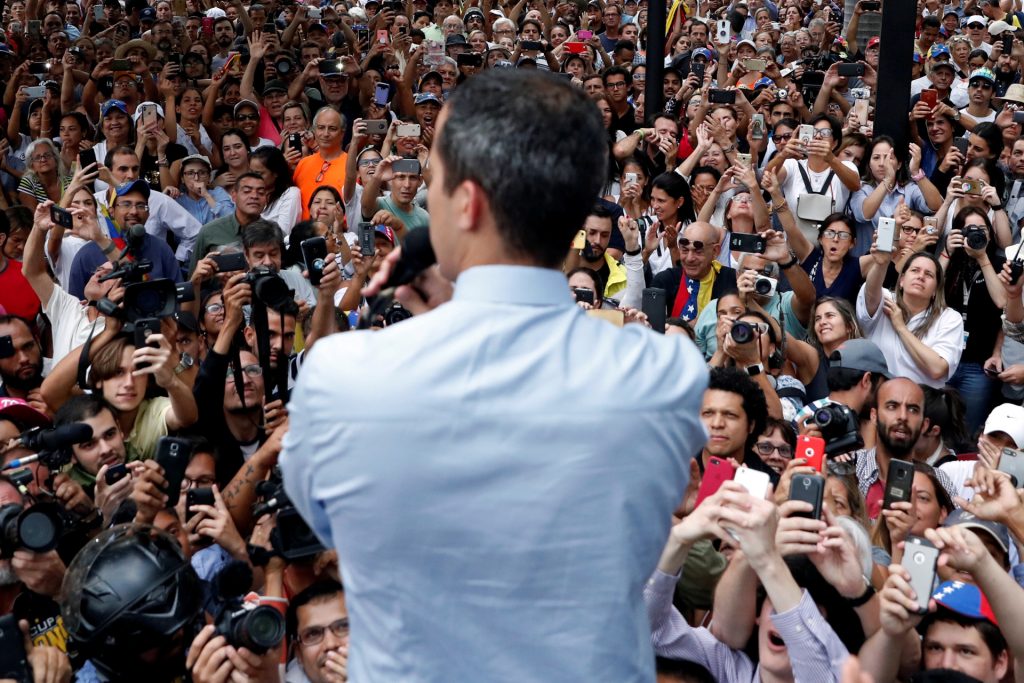
Venezuelan opposition leader Juan Guaido takes part in a protest against President Nicolas Maduro’s government in Caracas, Venezuela, March 12, 2019. REUTERS/Carlos Garcia Rawlins
Past efforts for change in Venezuela foundered on divisions within the domestic opposition and the international community. Today’s consensus in and out of the country offers the best chance of bringing democracy back, but not if the U.S. breaks it.
Shannon K. O’Neil, Senior Fellow
Algeria: Changing of the Old Guard?
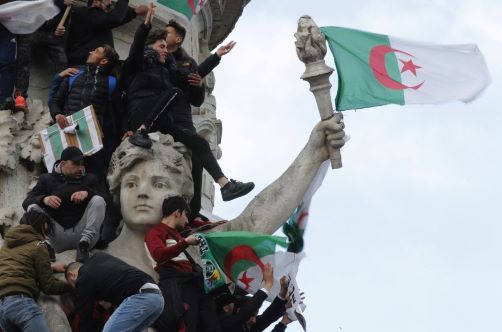
Protestors hold Algerian flags as they attend a demonstration against President Abdelaziz Bouteflika on the Place de la Republique, in Paris, France, March 10, 2019. REUTERS/Philippe Wojazer
Peak participation. Up to eight hundred thousand people on February 22.
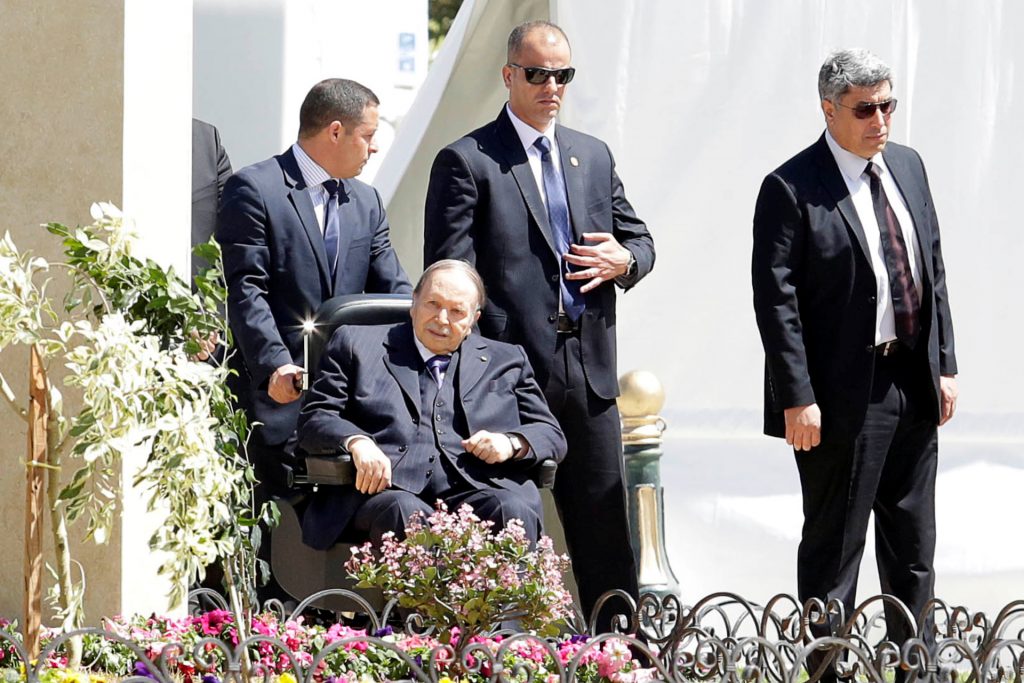
The spark. President Abdelaziz Bouteflika, who held office since 1999, announced that he would run for a fifth term.
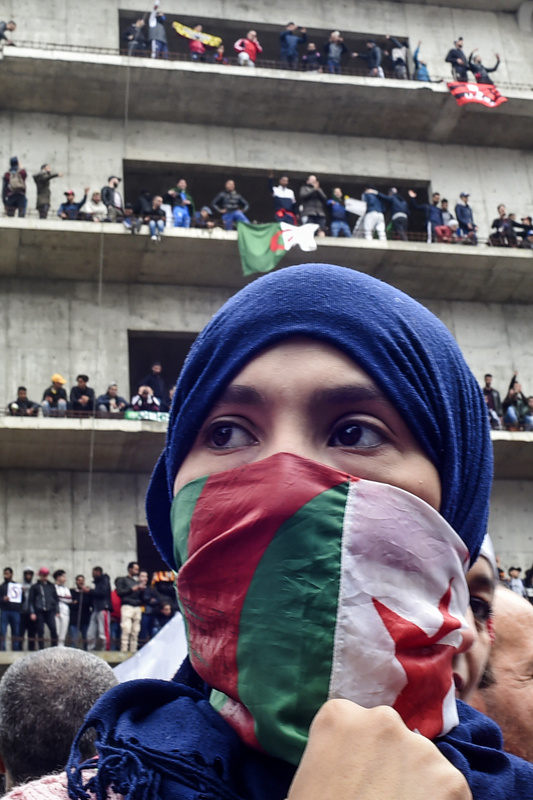
A woman covers her face with the national flag, as Algerian protesters demonstrate in the capital Algiers against ailing president’s bid for a fifth term on March 8, 2019. – Tens of thousands protested across Algeria today in the biggest rallies yet against ailing President Abdelaziz Bouteflika’s bid for a fifth term, despite the defiant leader’s warning of the risk of “chaos”. (Photo by RYAD KRAMDI / AFP)
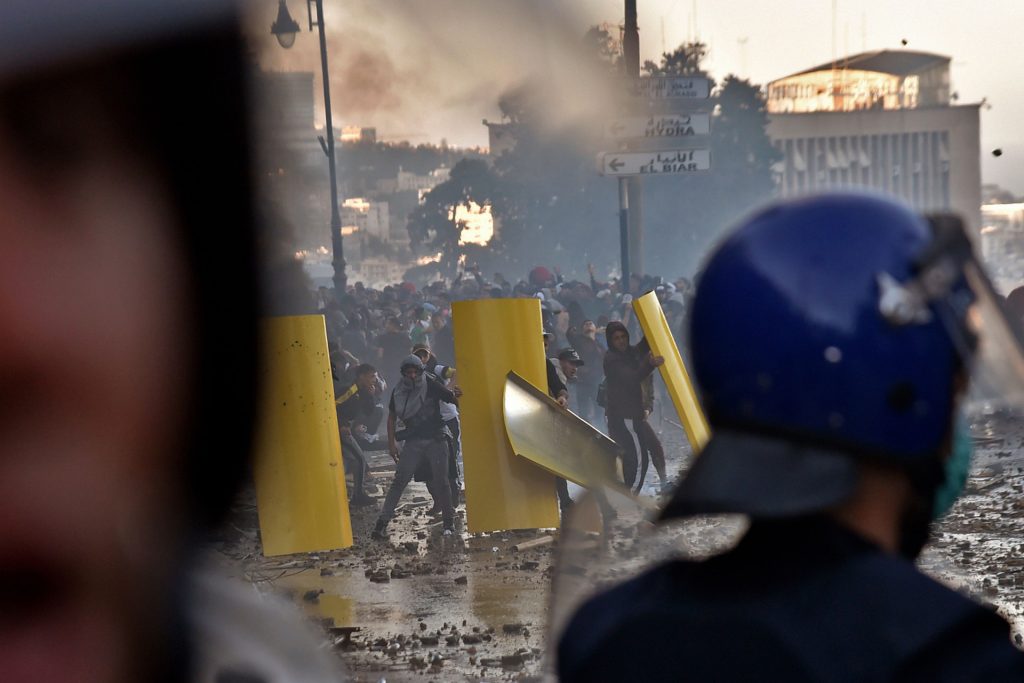
The stakes. Protesters believed the ailing Bouteflika was a figurehead, with Algeria being largely ruled by powerful army chiefs, politicians, and business elites since its 1962 independence. Bouteflika resigned in April, following six weeks of protests. But protesters now call for massive political reforms, and the ruling elite have yet to step aside.
Algerian protesters use makeshift barriers during clashes with security forces amidst protests against ailing President Abdelaziz Bouteflika’s bid for a fifth term in power in the capital Algiers on March 1, 2019. – The demonstrations came a week after tens of thousands of people rallied in the North African state against 82-year-old Bouteflika’s decision to stand in the April 18 election. (Photo by RYAD KRAMDI / AFP)
The status. Many protesters boycotted the December election to choose Bouteflika’s successor and demanded that more be done to address corruption and that army elites get out of government, including Army Chief of Staff Ahmed Gaid Salah. Former Prime Minister Abdelmadjid Tebboune, seen as the military’s preferred candidate, won the election.
Algerian President Abdelaziz Bouteflika is seen in Algiers, Algeria April 9, 2018. REUTERS/Ramzi Boudina – RC1C589131D0
Revolutions entail the simultaneous overthrow of a mutually reinforcing political and social order. That has not happened in Algeria. It may yet, but until it does the political advantage lies with the existing elite who control the guns and, importantly, the means to use the institutions of the state against their opponents.
Steven A. Cook, Senior Fellow
Sudan: A Dictator Departs
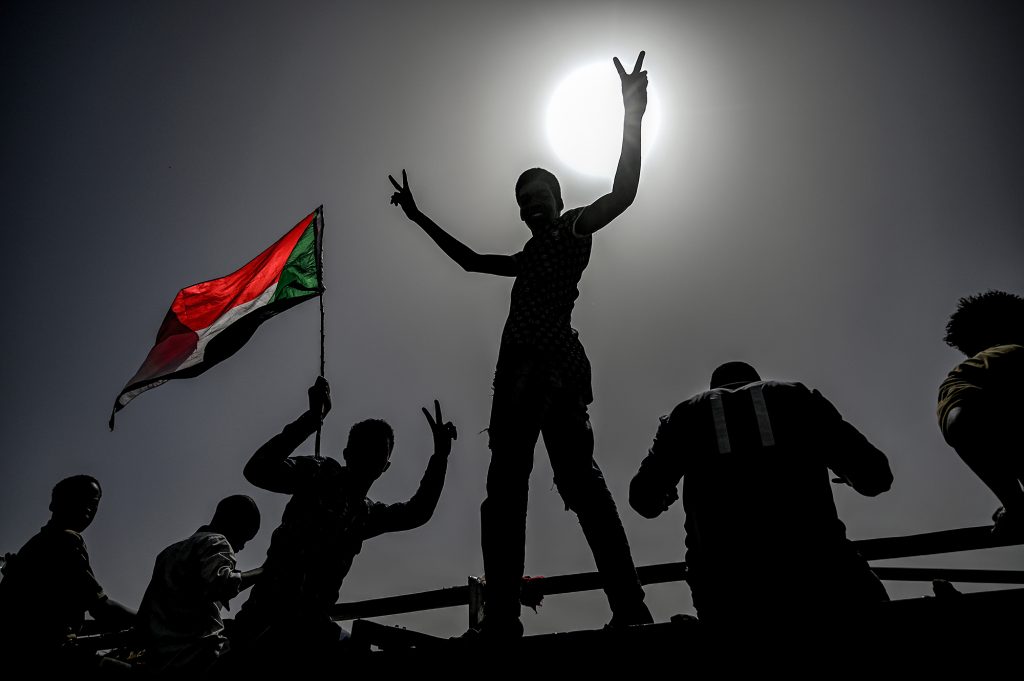
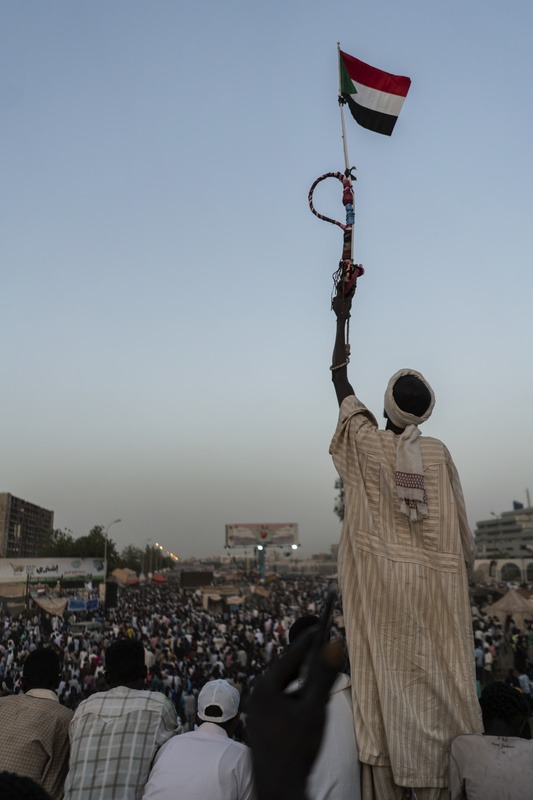
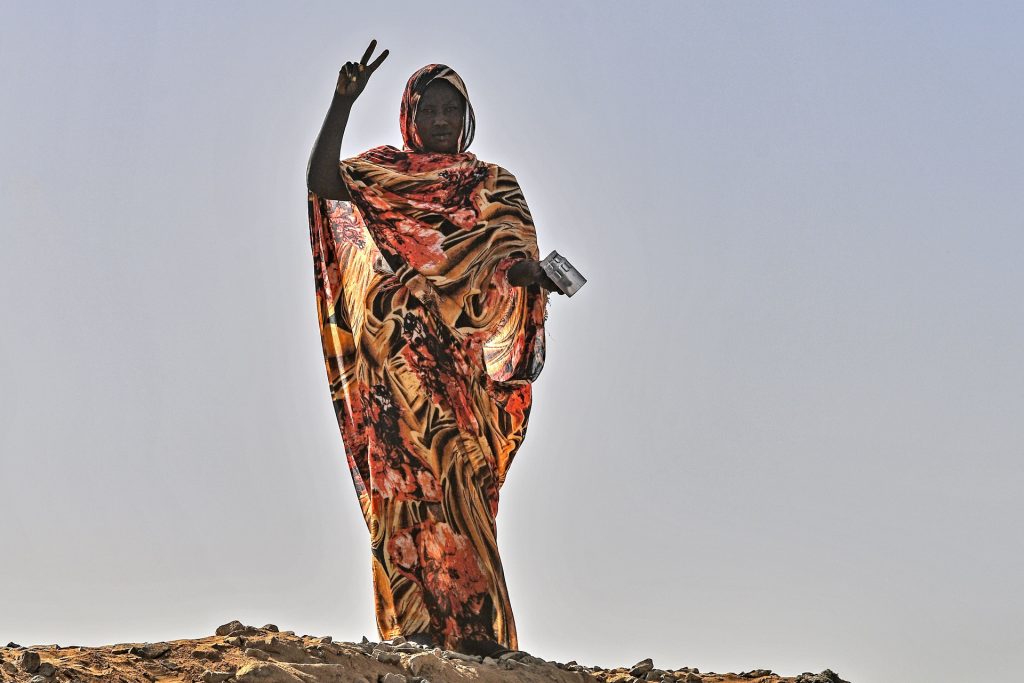
Sudanese protestors wave flags and flash victory signs as they continue to protest outside the army complex in the capital Khartoum on April 17, 2019. – Sudanese protesters hardened their demand that the military men in power quickly step down and make way for civilian rule, refusing to budge from their sit-in outside army headquarters. (Photo by OZAN KOSE / AFP)
Peak participation. Tens of thousands of people on June 30.
The spark. The government reduced subsidies for fuel and bread in December 2018.
KHARTOUM, SUDAN – APRIL 26: A group of Sudanese protestors is standing on a railway bridge during the ongoing protests against the military junta on April 26, 2019 in Khartoum, Sudan. After months of protesting from the people of Sudan, organised by the Sudanese Professionals’ Association (SPA), President Omar al-Bashir was ousted having been in power since 1989. The following day they also forced his successor, Awad Ibn Auf, to step down. The SPA and the people have organised a sit in at the Ministry of Defence calling for the “third fall” of the Transitional Military Council who are currently in charge. (Photo by Fredrik Lerneryd/Getty Images)
The stakes. Sudan had suffered from economic woes that included inflation and high youth unemployment under President Omar al-Bashir, who had been in power for thirty years and oversaw one of Africa’s most repressive states. Bashir’s resignation in April 2019, following demands by protesters and military commanders, set off a tumultuous clash over new leadership. A transitional military council took over, but demonstrators demanded the transfer of power to civilian rule.
TOPSHOT – A Sudanese protester flashes the V for victory signr during a sit-in outside the army headquarters in the capital Khartoum on April 30, 2019. – Tensions are mounting in Khartoum as the leaders of the protest and the ruling military differed on the composition of a joint council that would include representatives of the army and civilians to rule the country. (Photo by OZAN KOSE / AFP
The status. In August, the military council and protest leaders agreed to create a joint military-civilian council that will run the country for three years, at which point a new election will be held. The swearing in of Prime Minister Abdalla Hamdok marked a major shift for a country that has been dominated by military regimes since its independence. In December, Bashir was sentenced to two years in detention for corruption. Human rights organizations report that more than one hundred people were killed during the protests, likely many of them by Sudan’s intelligence agency.
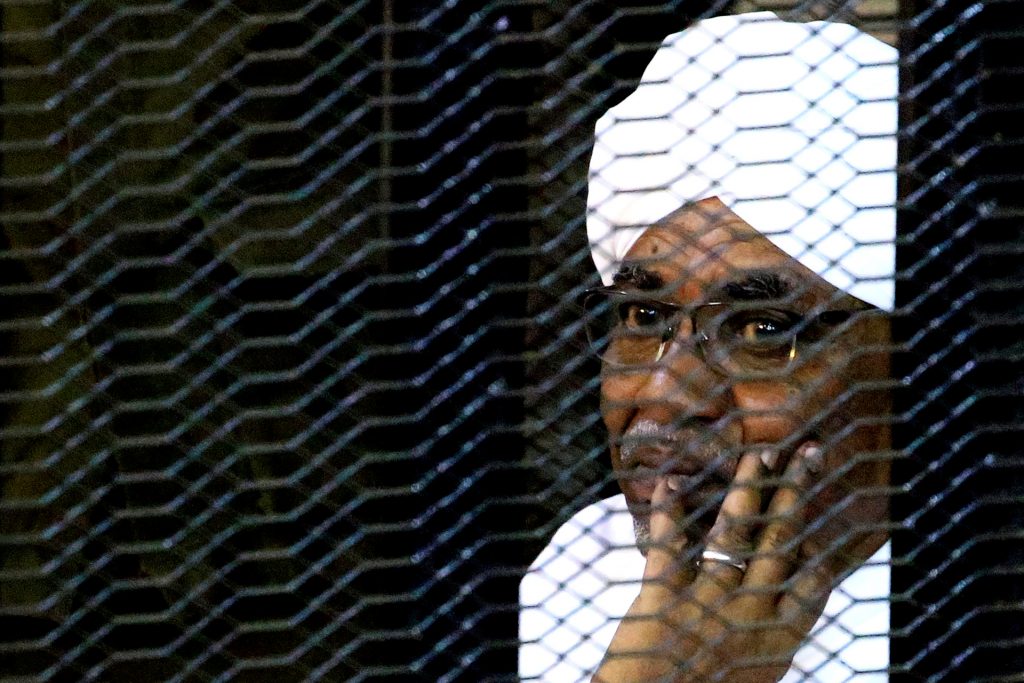
Sudan’s former president Omar Hassan al-Bashir sits inside a cage at the courthouse where he is facing corruption charges, in Khartoum, Sudan September 28, 2019. REUTERS/Mohamed Nureldin Abdallah
Lasting stability and growth in Sudan requires structural reform and a response to popular demands for a new basis of political legitimacy.
Michelle Gavin, Senior Fellow
Hong Kong: The Fight for Democracy
HONG KONG, HONG KONG – JULY 1: Anti-extradition protesters use makeshift shield to defend themselves during a clash with police outside the Legislative Council Complex ahead of the annual flag raising ceremony of 22nd anniversary of the city’s handover from Britain to China on July 1, 2019 in Hong Kong, China. Thousands of pro-democracy protesters faced off with riot police on Monday during the 22nd anniversary of Hong Kongs return to Chinese rule as riot police officers used batons and pepper spray to push back demonstrators. The citys embattled leader Carrie Lam watched a flag-raising ceremony on a video display from inside a convention centre, citing bad weather, as water-filled barricades were set up around the exhibition centre. (Photo by Anthony Kwan/Getty Images)
Peak participation. Two million people on June 16.
The spark. A bill proposed in March that would have allowed extraditions to mainland China.
HONG KONG, HONG KONG – JUNE 12: A protester makes a gesture during a protest on June 12, 2019 in Hong Kong China. Large crowds of protesters gathered in central Hong Kong as the city braced for another mass rally in a show of strength against the government over a divisive plan to allow extraditions to China. (Photo by Anthony Kwan/Getty Images)
The stakes. Hong Kong was guaranteed certain democratic freedoms and some autonomy from mainland China during the handover from the United Kingdom in 1997. But many in Hong Kong fear they could lose those freedoms as Beijing tightens its grip over the city. Protesters’ demands include electoral reforms and amnesty for arrested demonstrators. Some are also calling for Chief Executive Carrie Lam to resign. The protests pose a challenge for Chinese President Xi Jinping over whether to respond with force, and risk harming Beijing’s international image, or give in to protesters’ demands.
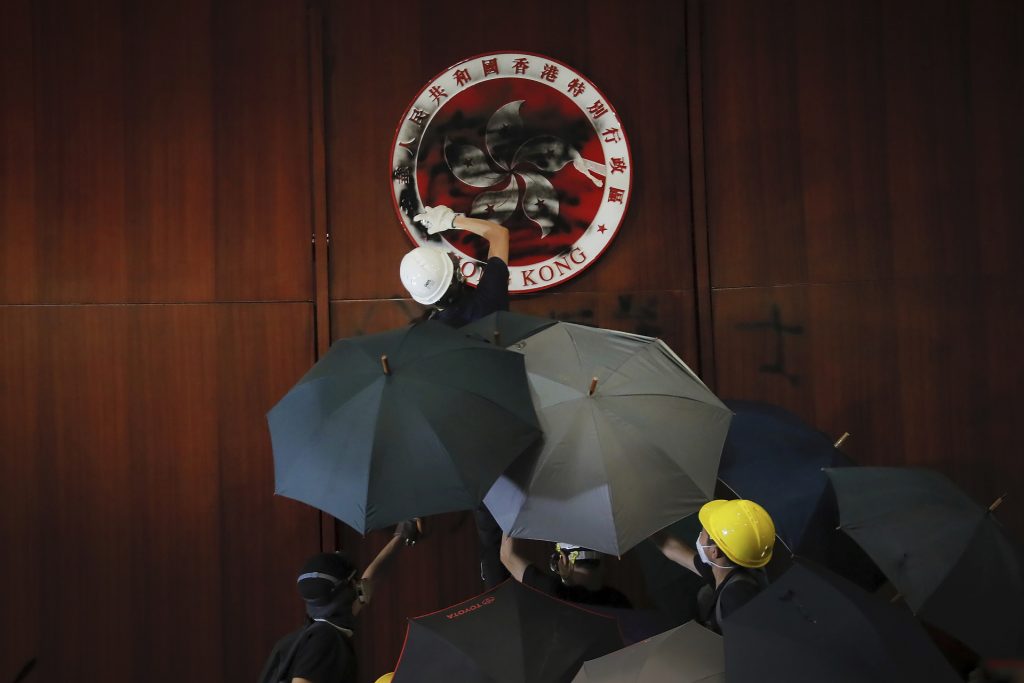
Protesters with umbrellas help a protester defaces the Hong Kong emblem after they broke into the Legislative Council building in Hong Kong, Monday, July 1, 2019. Protesters in Hong Kong took over the legislature’s main building Monday night, tearing down portraits of legislative leaders and spray painting pro-democracy slogans on the walls of the main chamber. (AP Photo/Kin Cheung)
The status. The Hong Kong government withdrew the extradition bill in October. But protests have continued, with some becoming violent. At least five thousand people have been arrested and hundreds of others injured. Some experts fear that Beijing could send its troops into the city. The United States has also become involved, with President Donald J. Trump signing a law that mandates sanctions on Chinese officials for human rights abuses.
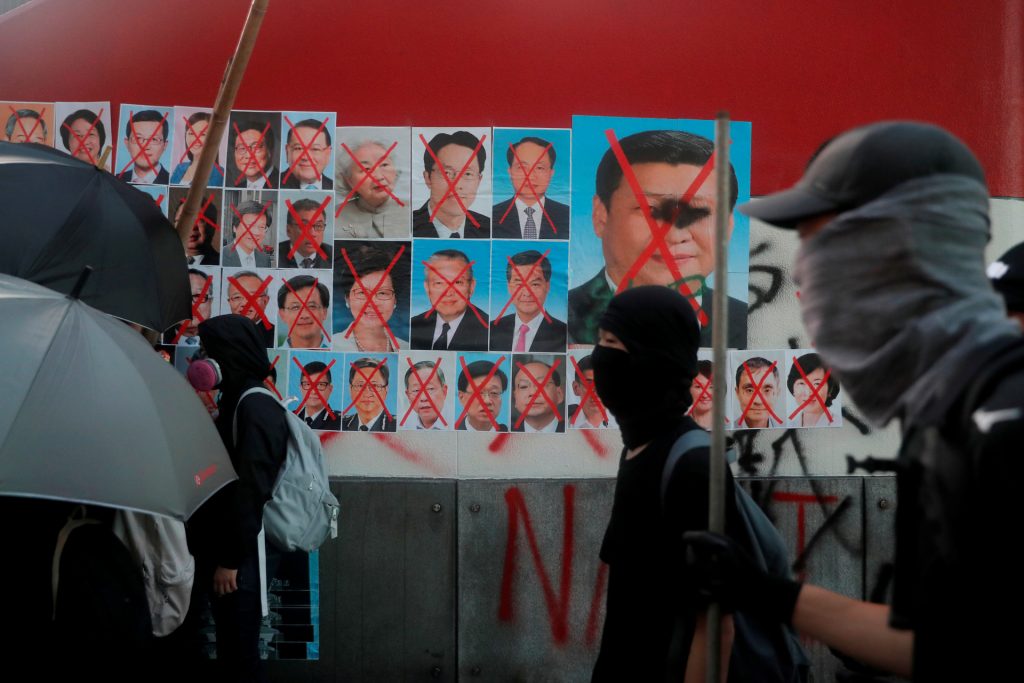
Anti-government protesters walk past defaced pictures of Chinese President Xi Jinping and other members of the government, in Hong Kong, China October 6, 2019. REUTERS/Susana Vera
Beijing knows that military repression in Hong Kong would be even more disastrous to its international relations than the 1989 Tiananmen Square massacre. Yet it will use force if necessary.
Jerome A. Cohen, Adjunct Senior Fellow
Puerto Rico: Island in a Storm
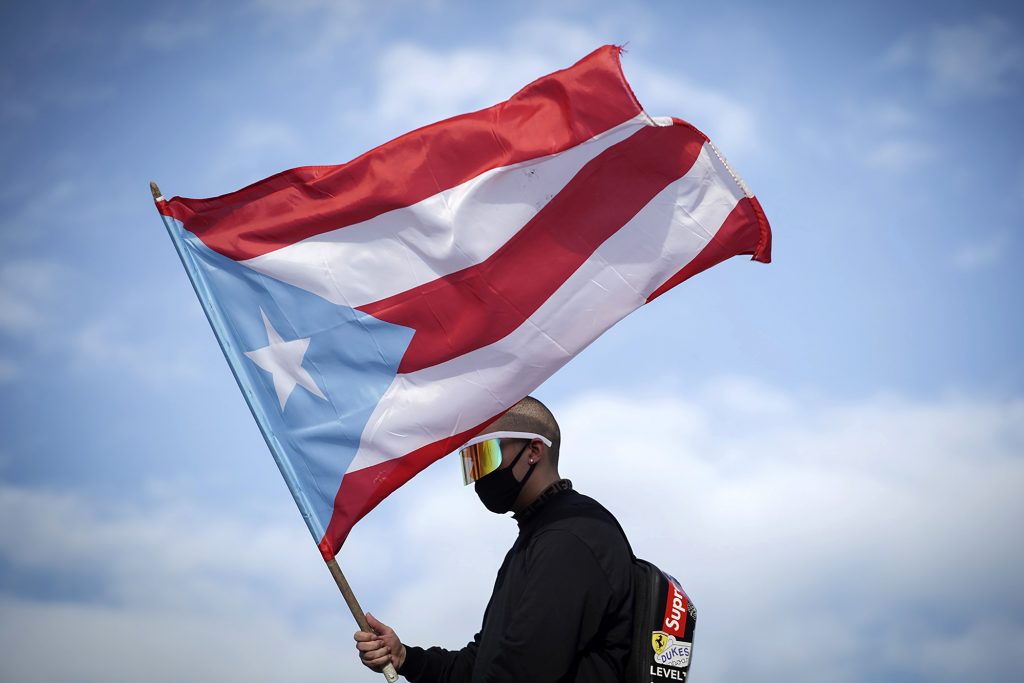
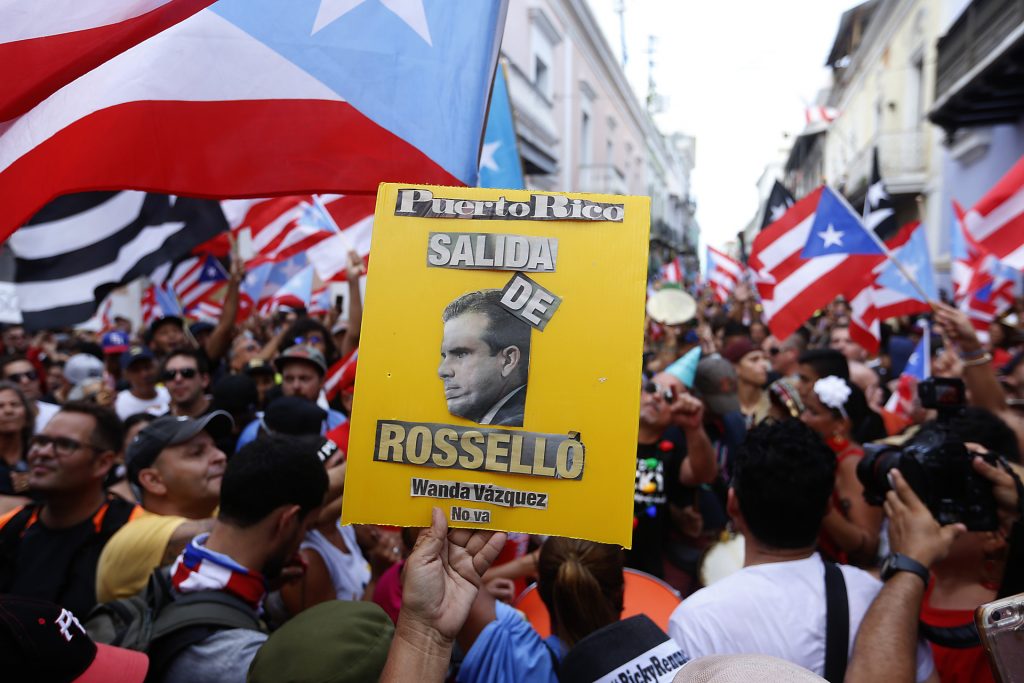
Puerto Rican reggaeton singer Bad Bunny waves a Puerto Rican flag as he takes part of a demonstration demanding Governor Ricardo Rossello’s resignation in San Juan, Puerto Rico on July 17, 2019. – Thousands marched in Puerto Rico for a fifth day on Wednesday demanding the resignation of Governor Ricardo Rossello, following corruption accusations and the leak of text chats in which he made sexist and homophobic remarks. (Photo by eric rojas / AFP) / The erroneous mention appearing in the metadata of this photo by Eric Rojas has been modified in AFP systems in the following manner: [singer Bad Bunny] instead of [singer Bud Bunny]. Please immediately remove the erroneous mention[s] from all your online services and delete it (them) from your servers. If you have been authorized by AFP to distribute it (them) to third parties, please ensure that the same actions are carried out by them. Failure to promptly comply with these instructions will entail liability on your part for any continued or post notification usage. Therefore we thank you very much for all your attention and prompt action. We are sorry for the inconvenience this notification may cause and remain at your disposal for any further information you may require. (Photo credit should read ERIC ROJAS/AFP via Getty Images)
Peak participation. 1.1 million people on July 24.
The spark. A leak in July oftext messages in which Governor Ricardo Rossello used vulgar, homophobic, and sexist language and made light of people who died in Hurricane Maria’s wake in 2017.
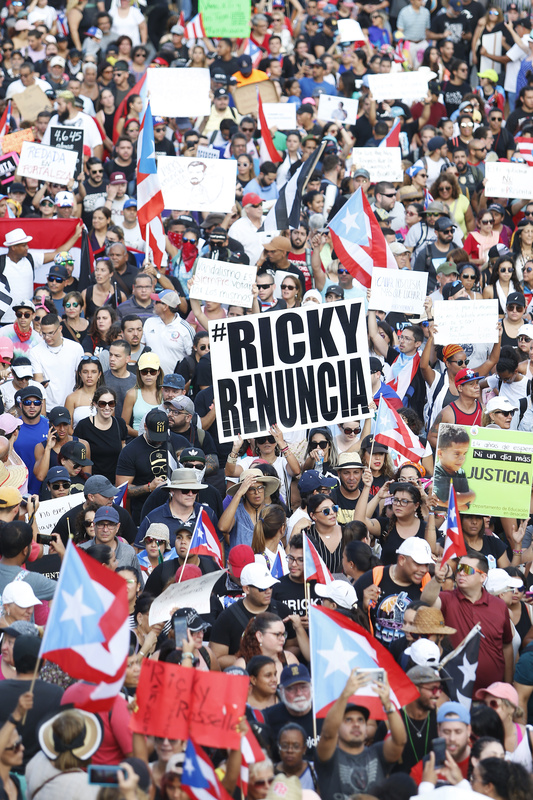
OLD SAN JUAN, PUERTO RICO – JULY 17: Thousands of demonstrators protest against Ricardo Rossello, the Governor of Puerto Rico July 17, 2019 in front of the Capitol Building in Old San Juan, Puerto Rico. They are calling on Rossello to step down after a group chat was exposed that included misogynistic and homophobic comments. The sign reads Ricky resign. (Photo by Jose Jimenez/Getty Images)
The stakes. The island suffers from a severe debt crisis—it filed for the biggest U.S. municipal bankruptcy ever in 2016—and recession that has continued for more than a decade. Hurricane Maria exacerbated problems, and many Puerto Ricans criticized the government’s response to the disaster, accusing top officials of mishandling recovery funds. Protesters saw the texts as evidence that their elected leaders would not be able to get Puerto Rico out of its economic crisis and lacked empathy for citizens.
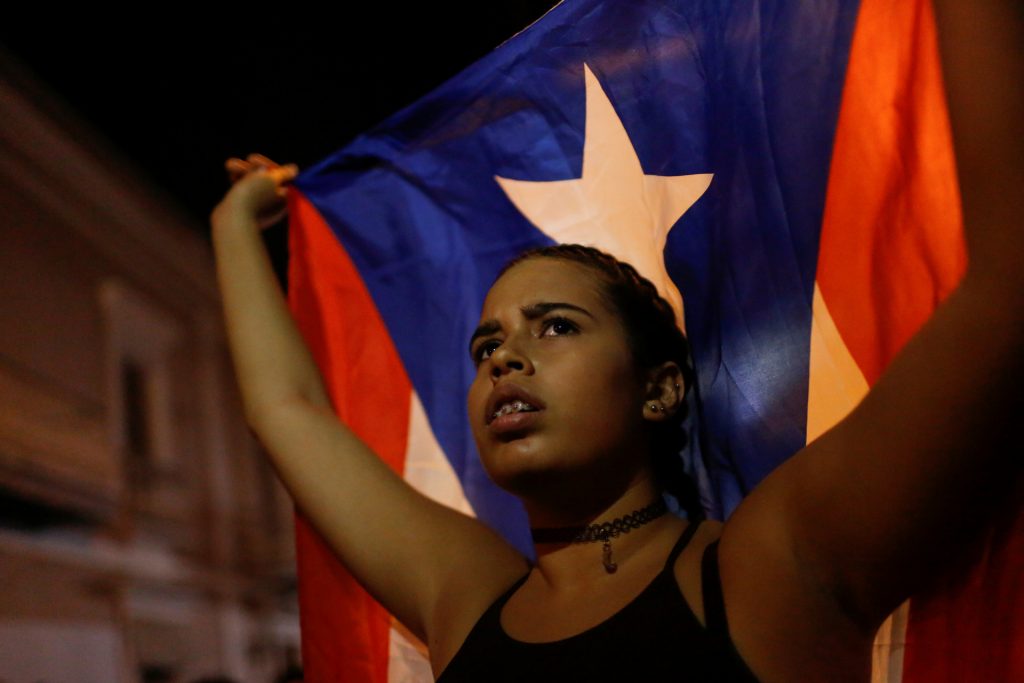
A woman waves a Puerto Rican flag during ongoing protests calling for the resignation of Governor Ricardo Rossello in San Juan, Puerto Rico July 23, 2019. Picture taken July 23, 2019. REUTERS/Marco Bello
The status. Rossello stepped down in August. By law, Puerto Rico’s secretary of state should have replaced him, but he also resigned, along with more than a dozen other officials, because of his involvement in the scandal. Wanda Vazquez, the secretary of justice, was eventually sworn in as interim governor, and a new election is set for November 2020.
SAN JUAN, PUERTO RICO – AUGUST 02: People celebrate together after the 5pm hour which was when Ricardo Rossello, the Governor of Puerto Rico, agreed to step down from power on August 2, 2019 in Old San Juan, Puerto Rico. The Governor agreed to step down after protesters spent days asking for the resignation of Gov. Rosselló after a group chat was exposed that included misogynistic and homophobic comments. (Photo by Jose Jimenez/Getty Images)
Puerto Rico’s economy is currently benefiting from the disaster and recovery spending approved after Maria. But that funding will run out—so we more or less know that Puerto Rico faces a significant negative economic shock over the next ten to fifteen years.
Brad W. Setser, Senior Fellow
Climate Protests: Marching for the Planet
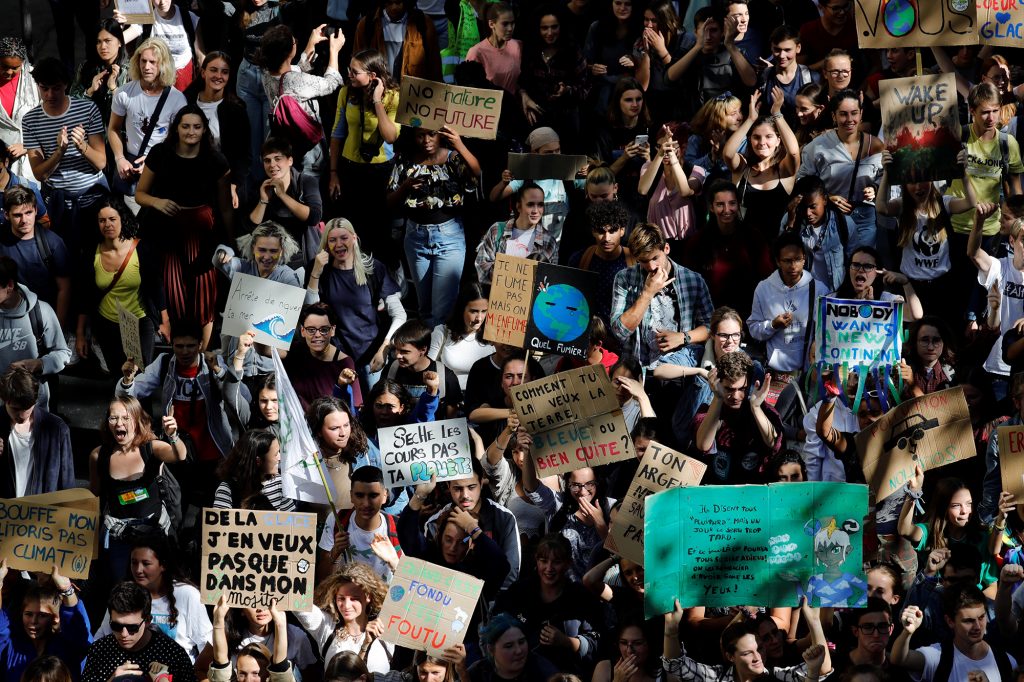
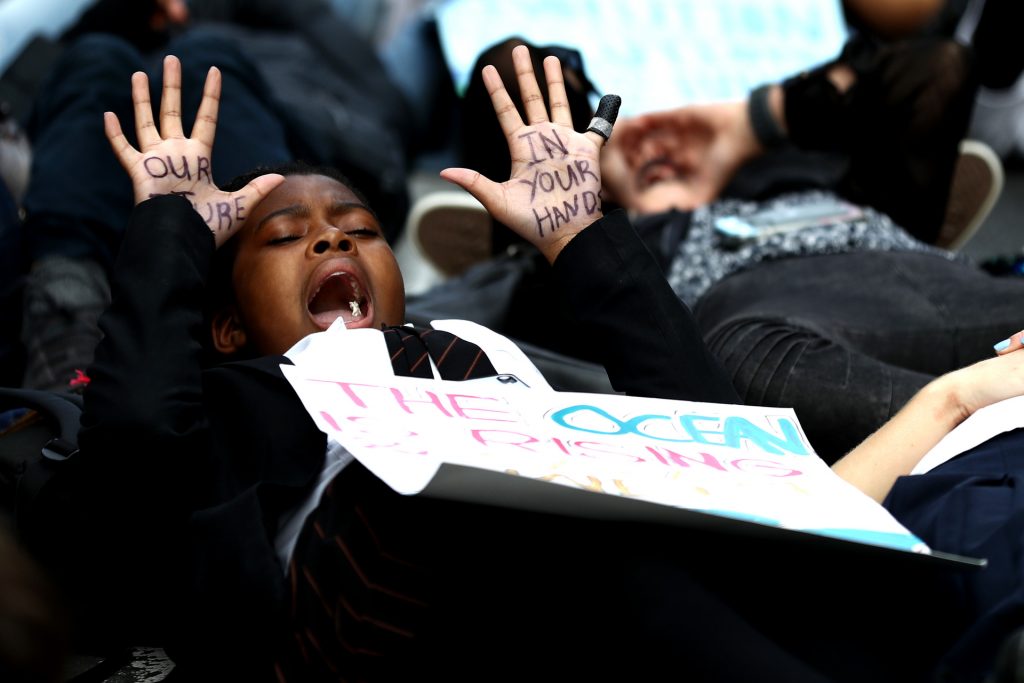
TOPSHOT – People take part in a protest for climate action on September 20, 2019 in Paris, as part of a global climate action day. (Photo by Thomas SAMSON / AFP) (Photo credit should read THOMAS SAMSON/AFP via Getty Images)
Peak participation. Four million people worldwide on September 20.
The spark. A worsening climate crisis.
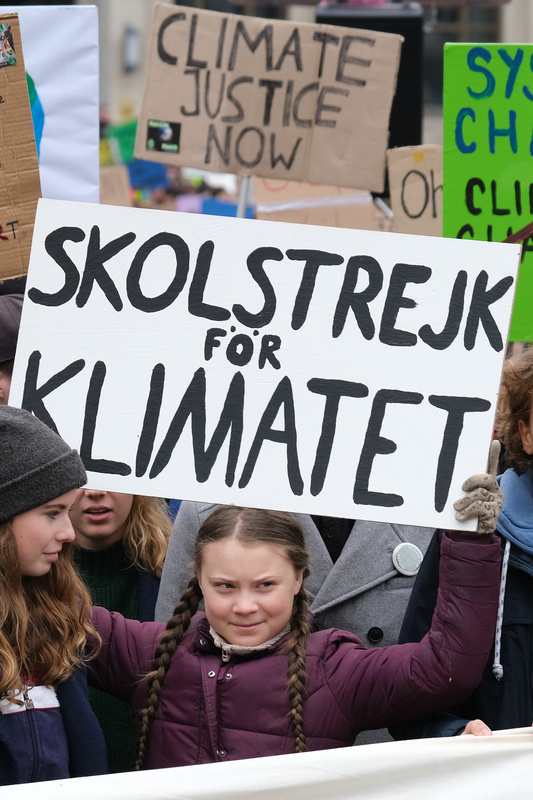
BERLIN, GERMANY – MARCH 29: Swedish teenaged climate activist Greta Thunberg (C) holds up her Swedish “School Strike for the Climate” sign while participating in a Fridays for Future march on March 29, 2019 in Berlin, Germany. Thousands of pupils and children took part in the demonstration to demand more action to stop climate change. (Photo by Sean Gallup/Getty Images)
The stakes. The predominately young protesters, including sixteen-year-old Swedish activist Greta Thunberg, who started a school strike last year, are frustrated with their governments’ failure to confront climate change. In recent years, top scientists, including those at the United Nations, have reported that the world faces dire consequences—including rising sea levels and flooding in major cities, extreme weather, and food shortages—that will only get worse if humans don’t take immediate action to curb greenhouse gas emissions. Protesters demand that world leaders act now, including by committing to net-zero carbon emissions by 2030.
AUCKLAND, NEW ZEALAND – MAY 24: School children march down Queen Street during a climate change protest on May 24, 2019 in Auckland, New Zealand. Thousands of students across New Zealand are demonstrating in the streets again to fight for climate change action. (Photo by Hannah Peters/Getty Images)
The status. Young people continue to skip school in protest of inaction. Some countries have strengthened their commitments under the Paris Agreement on climate, but scientists warn that more needs to be done. Negotiators at this year’s UN climate talks largely failed to make progress on commitments to reduce emissions.
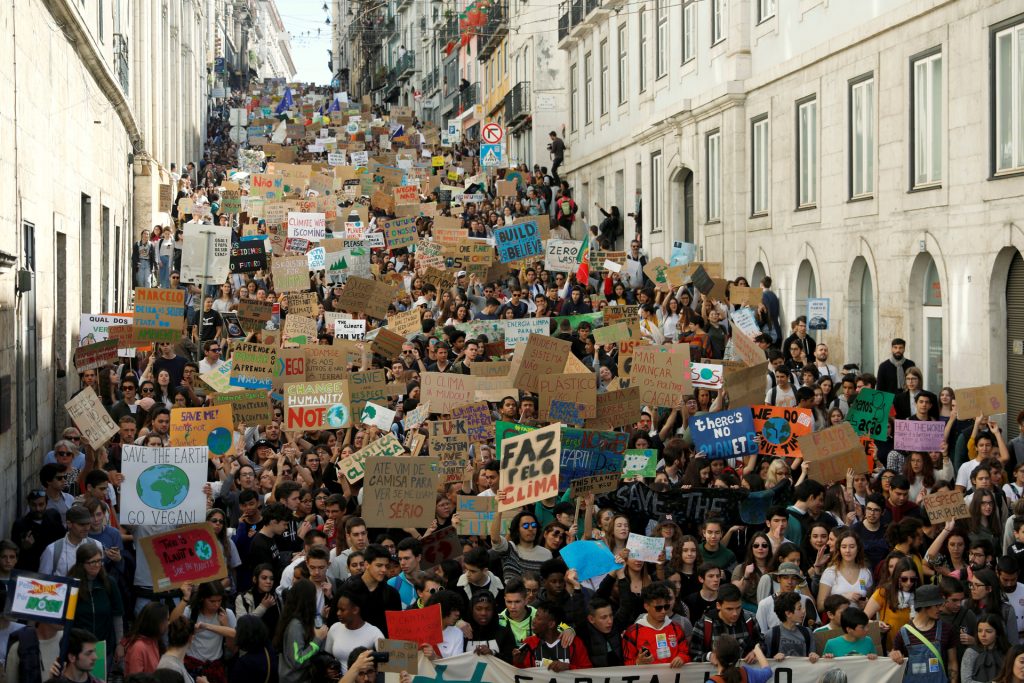
Students protest to demand action on climate change in Lisbon, Portugal March 15, 2019. REUTERS/Rafael Marchante TEMPLATE OUT
World leaders need some outside-the-box thinking about steps to strengthen their national commitments to shrink their greenhouse gas emissions ahead of the next phase of the Paris Agreement.
Amy Myers Jaffe, Senior Fellow
Lebanon: The WhatsApp Revolt
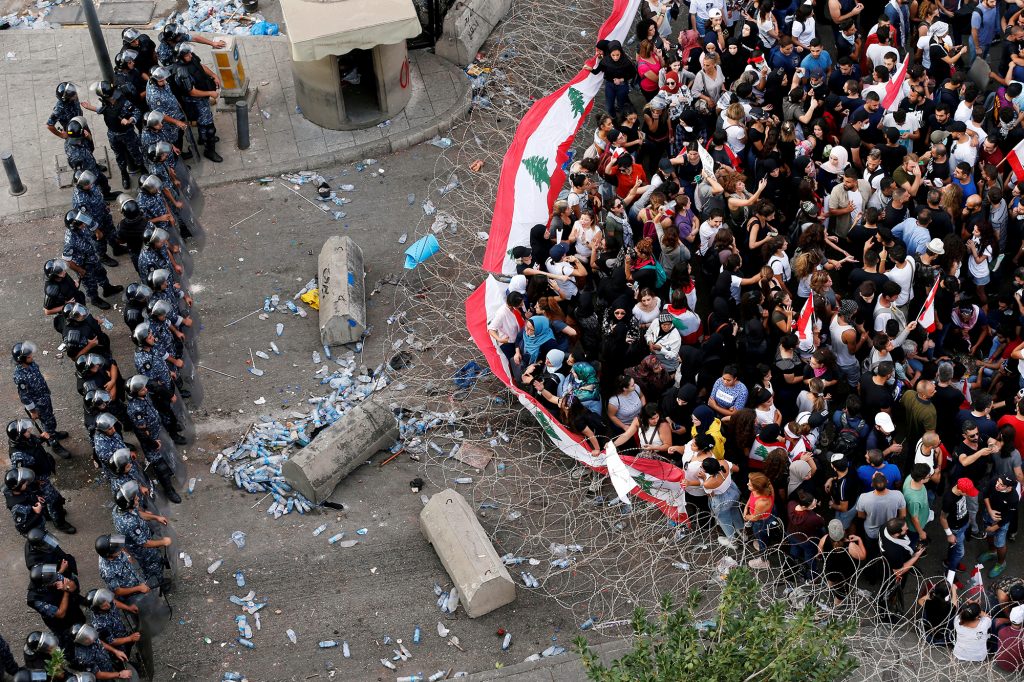
FILE PHOTO: Demonstrators carry national flags as riot police stand guard behind barbed wire during an anti-government protest in Beirut, Lebanon October 19, 2019. REUTERS/Mohamed Azakir/File Photo
Peak participation. Up to one million people on October 21.
The spark. New taxes on internet-based calls, including through WhatsApp.
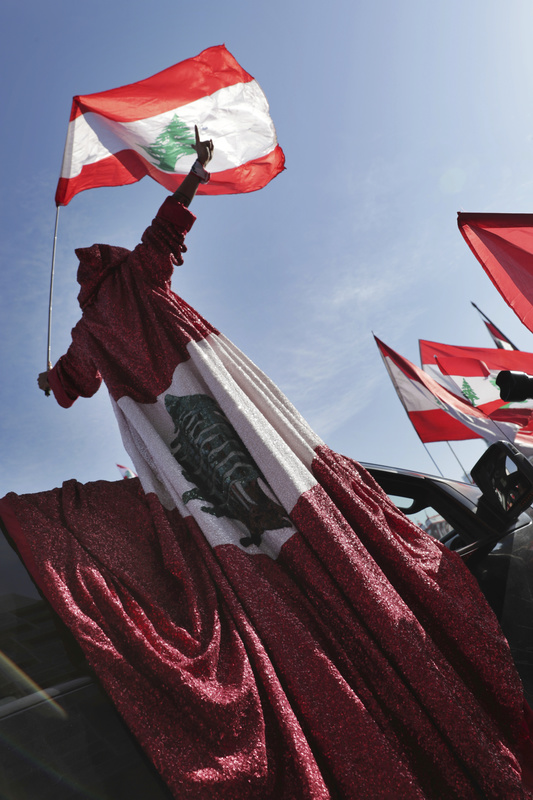
An anti-government protester wears a robe presenting the Lebanese national flag during an alternative independence celebrations at the Martyr square, in downtown Beirut, Lebanon, Friday, Nov. 22, 2019. Protesters gathered for their own alternative independence celebrations, converging by early afternoon on Martyrs’ square in central Beirut, which used to be the traditional location for the official parade. Protesters have occupied the area, closing it off to traffic since mid-October. (AP Photo/Hassan Ammar)
The stakes. Many saw lapses in basic services as evidence of the sectarian political system’s flaws.Protesters want complete political reform, with a new technocratic government and an investigation into corruption. They have also directed their anger toward Hezbollah, the Iran-backed Shia political party and militant group, for serving as Tehran’s proxy in Beirut.
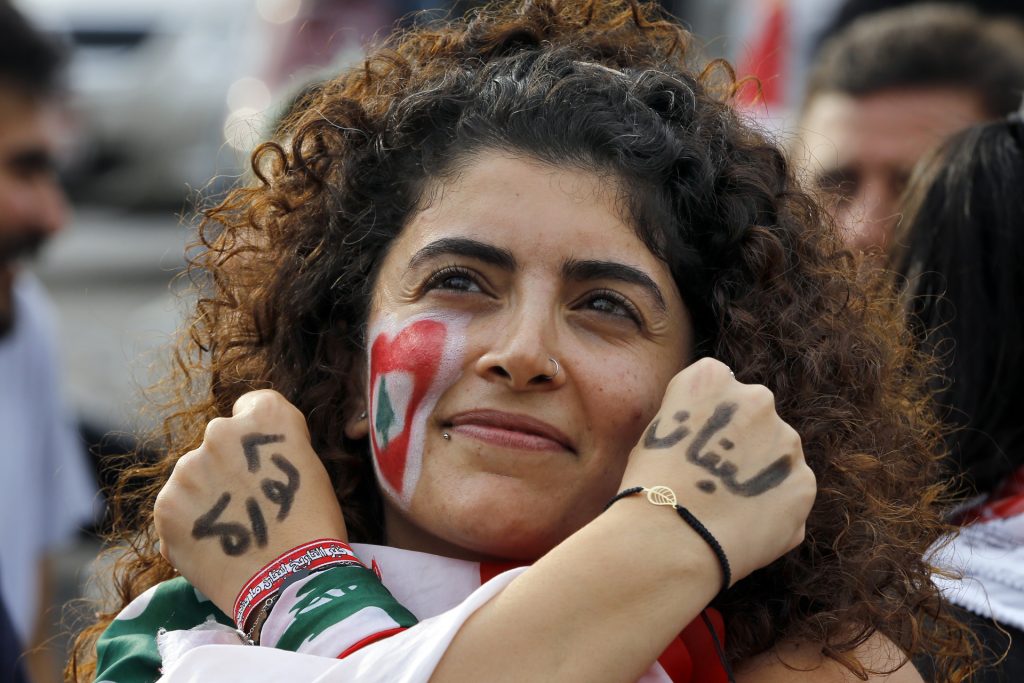
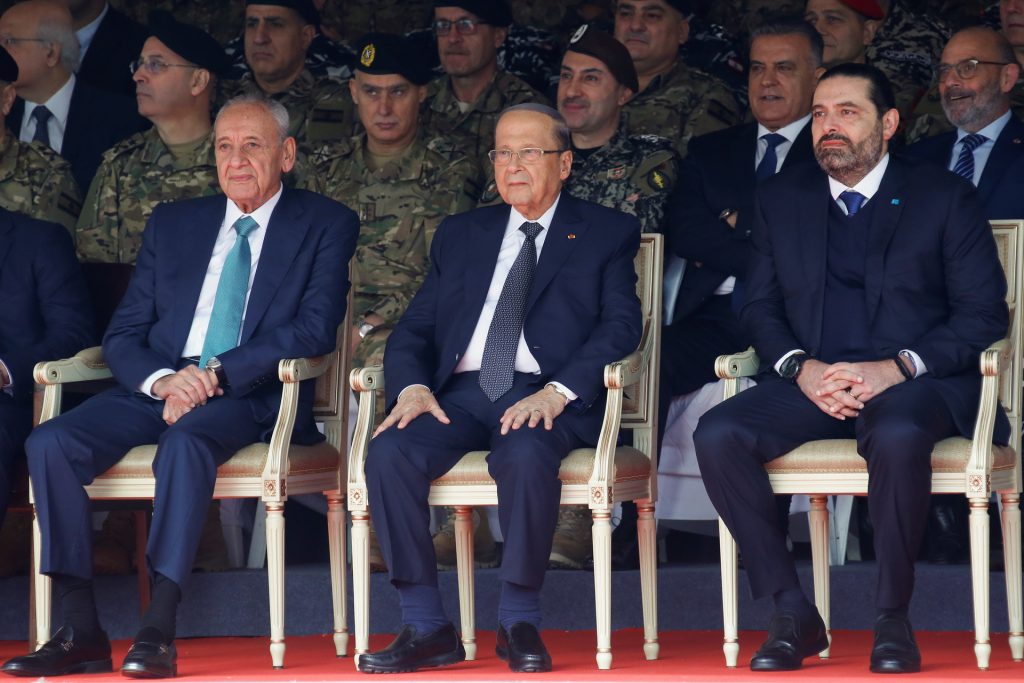
An anti-government protester displays the words “Revolution” left, and “Lebanon” right, in Arabic on her hands, as she sits on the ground to block a road in Beirut, Lebanon, Saturday, Oct. 26, 2019. The removal of the roadblocks on Saturday comes on the tenth day of protests in which protesters have called for civil disobedience until the government steps down. (AP Photo/Bilal Hussein)Lebanese Speaker of the Parliament Nabih Berri, Lebanon’s President Michel Aoun and caretaker Prime Minister Saad al-Hariri attend a military parade to mark the 76th anniversary of Lebanon’s independence at the Ministry of Defense in Yarze, Lebanon November 22, 2019. REUTERS/Mohamed Azakir
The status. The WhatsApp tax was quickly dropped. Prime Minister Saad Hariri proposed economic reforms, including halving the salaries of parliament members, but protesters said they were not enough. Hariri and his cabinet resigned in late October; a new government has yet to form.
Chile: Outrage and Inequality
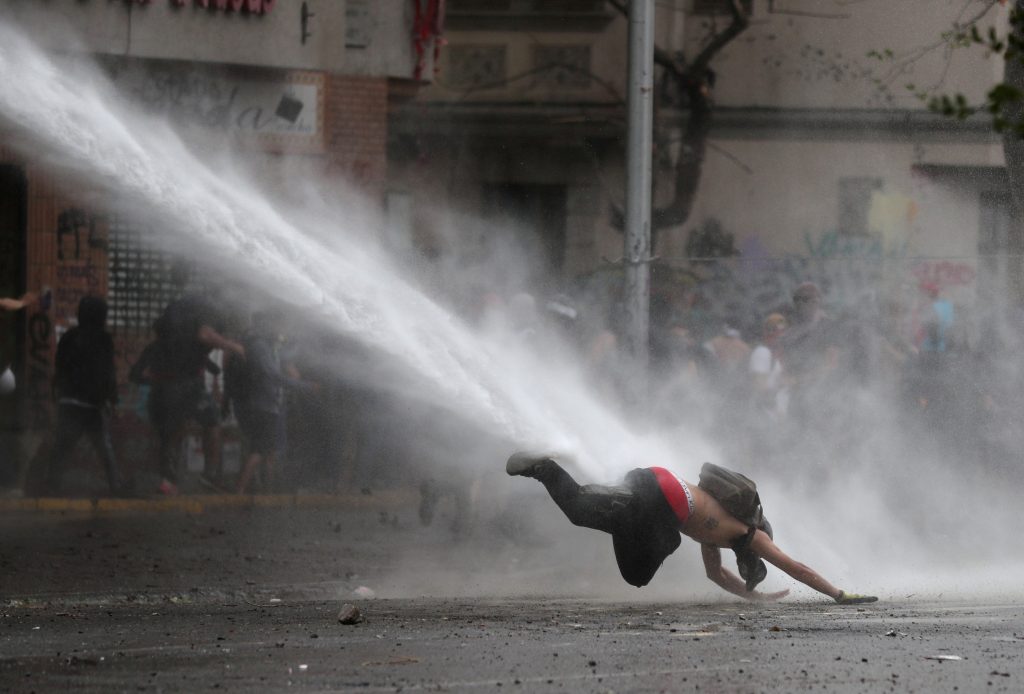
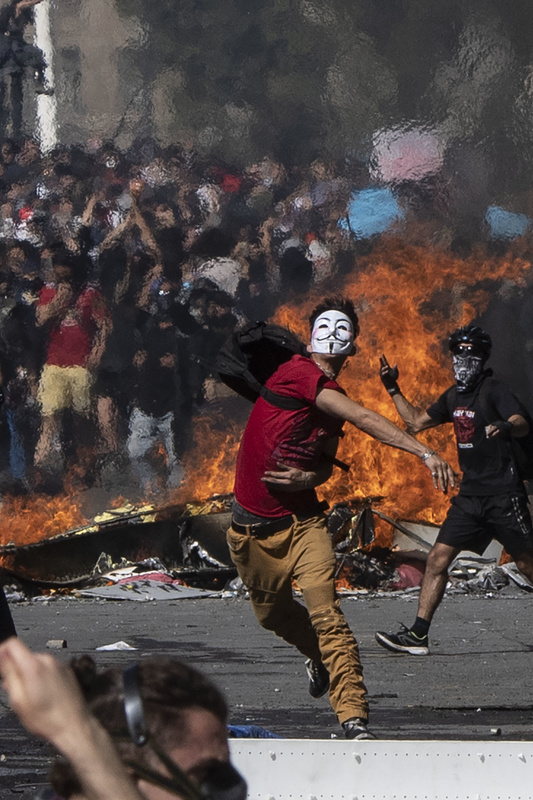
A demonstrator dives to the ground from a water cannon during a protest against Chile’s government in Santiago, Chile November 11, 2019. REUTERS/Ivan Alvarado TPX IMAGES OF THE DAY
Peak participation. 1.2 million people on October 25.
The spark. An increase in public transportation fares.
TOPSHOT – People demonstrate at Plaza Italia on the fifth straight day of street violence which erupted over a now suspended hike in metro ticket prices, in Santiago on October 22, 2019. – President Sebastian Pinera convened a meeting with leaders of Chile’s political parties on Tuesday in the hope of finding a way to end street violence that has claimed 15 lives, as anti-government campaigners threatened new protests. (Photo by Pedro UGARTE / AFP)
The stakes. Chile is one of the worst countries for wealth inequality in the world; many citizens are frustrated with low wages, unaffordable housing, and an education system that leaves poorer students in debt. The protests could mean major changes for the country, as protesters demand economic reforms, a new constitution, and President Sebastian Pinera’s resignation.
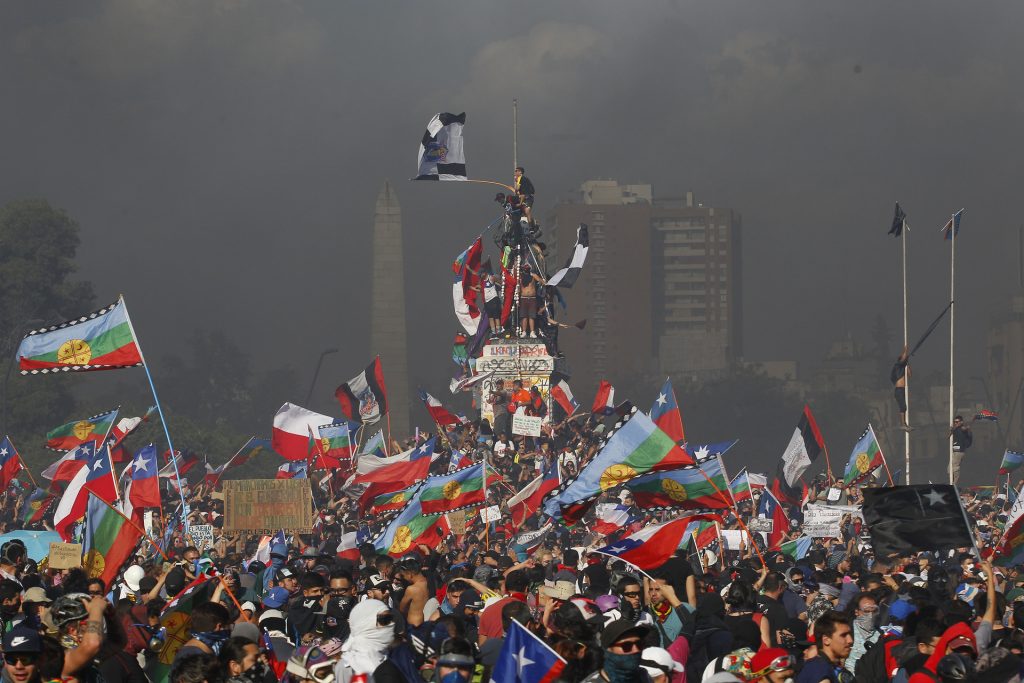
SANTIAGO, CHILE – NOVEMBER 12: Protesters shout slogans and wave flags of Chile and the Mapuche people during a national strike and general demonstration called by different workers unions on November 12, 2019 in Santiago, Chile. Call was made by the National Strike Committee which gathers workers of different industries including port, mining, construction, industry, trade, education, health care, agriculture and public services sectors. On Sunday, Government announced it has agreed to start the process to write a new Constitution for the country, which is one of the most repeated demands by the demonstrators since October 18. Social unrest continues since a raise in subway fare triggered more demands related to health care, pension system, public education, social mobility, privatization of water services and corruption. (Photo by Marcelo Hernandez/Getty Images)
The status. Pinera initially sent troops to the streets. He later reversed the fare hike and announced some reforms, including increasing the minimum wage and raising taxes on the wealthy, but the protests continue. Pinera was forced to pull Chile out as the host of an Asia-Pacific Economic Cooperation forum in November and a major UN climate conference the following month. More than two dozen people have died, and six thousand people have been detained. Lawmakers agreed to hold a countrywide referendum in April 2020 on whether to rewrite the constitution.
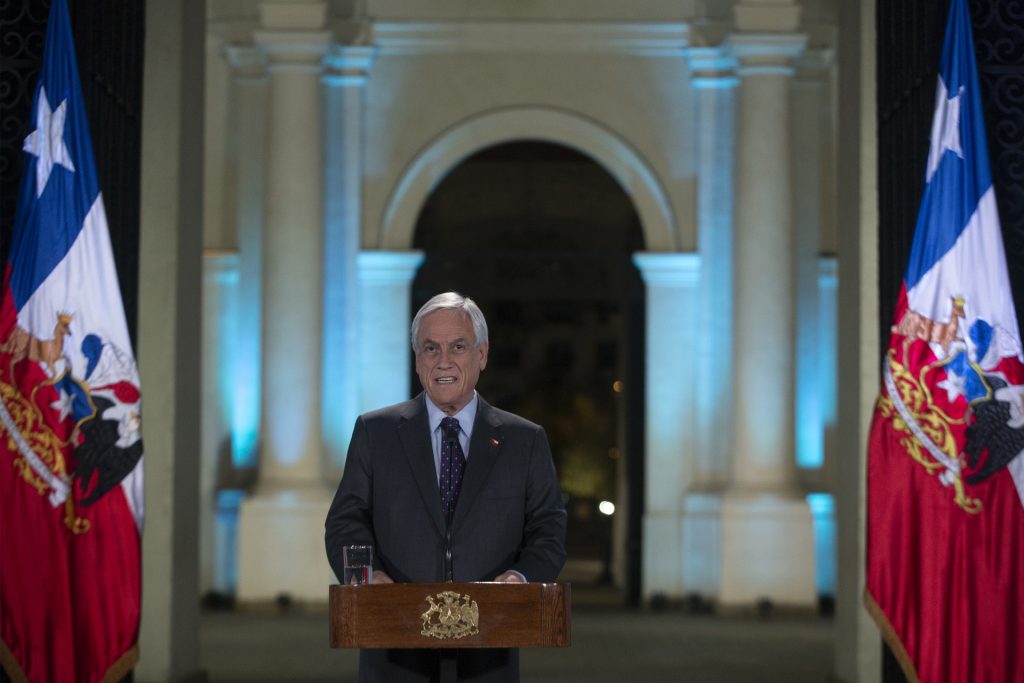
Chilean President Sebastian Pinera addresses the nation in Santiago, on November 17, 2019. – Chile said Friday it will hold a referendum to replace the country’s dictatorship-era constitution — a key demand of protesters after nearly a month of violent civil unrest. (Photo by CLAUDIO REYES / AFP) (Photo by CLAUDIO REYES/AFP via Getty Images)
The immediate trigger—the equivalent of a four cent rise in metro fare—struck a nerve among many Chileans, who say income growth has not kept pace with rising education, housing, and health-care costs.
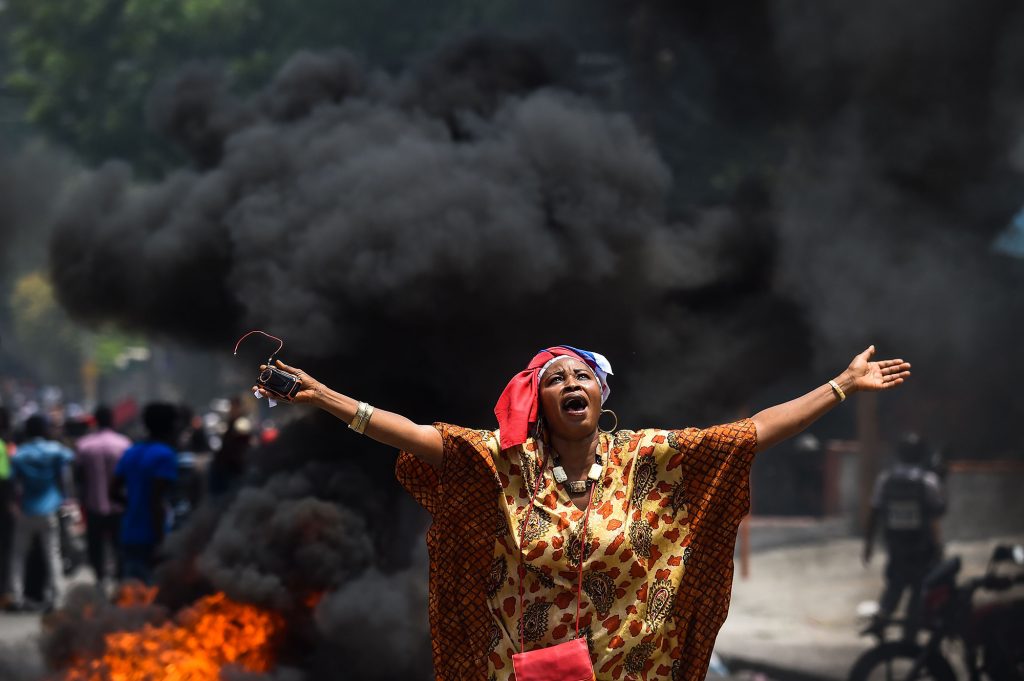
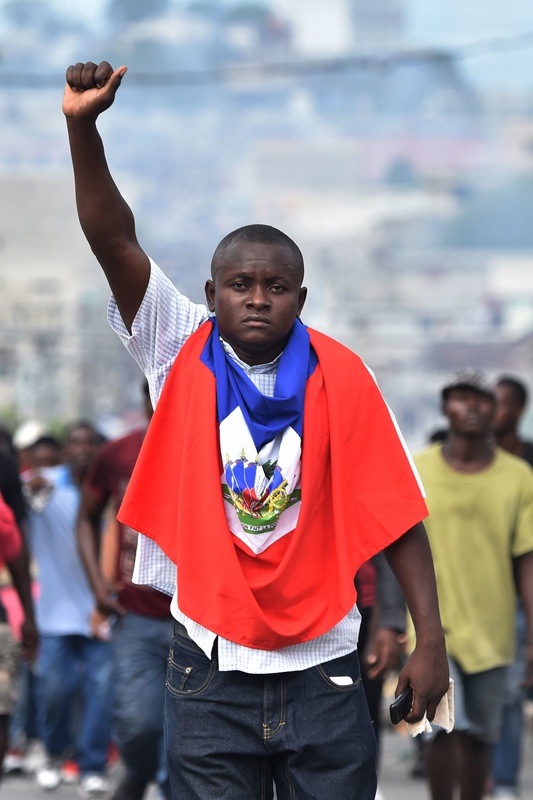
A demonstrator holds up her arms and chants slogans during a protest against the ruling government in Port-au-Prince on June 9, 2019. – A man was killed on the sidelines of the demonstration that gathered several thousand demonstrators on June 9 in Port-au-Prince demanding the resignation of President Jovenel Moise over allegations of embezzlement. (Photo by CHANDAN KHANNA / AFP) (Photo credit should read CHANDAN KHANNA/AFP via Getty Images)
Peak participation. Tens of thousands of people on October 13.
The spark. A shortage of fuel and food.
TOPSHOT – A man holds up his fist as demonstrators march through the streets of Port-au-Prince, on November 23, 2018, demanding the resignation of Haitian President Jovenel Moise. – Protesters blocked streets and lit tires in several sectors of the Haitian capital. The international community has called on Haiti’s political leaders to open a dialogue in the wake of deadly protests against President Moise. (Photo by HECTOR RETAMAL / AFP)
The stakes. President Jovenel Moise promised to boost Haiti’s economy, which is the poorest in the Western Hemisphere, and improve conditions for poor and working-class Haitians when he took office in 2017. But the country has continued to suffer from rising inflation, and its economic crisis worsened after the collapse of an oil-purchasing program with Venezuela. The protests, which intensified in September, threaten to plunge the country deeper into crisis. The opposition group leading the protests is calling for the removal of Moise and parliament members, arguing that they pocketed billions of dollars meant for development.
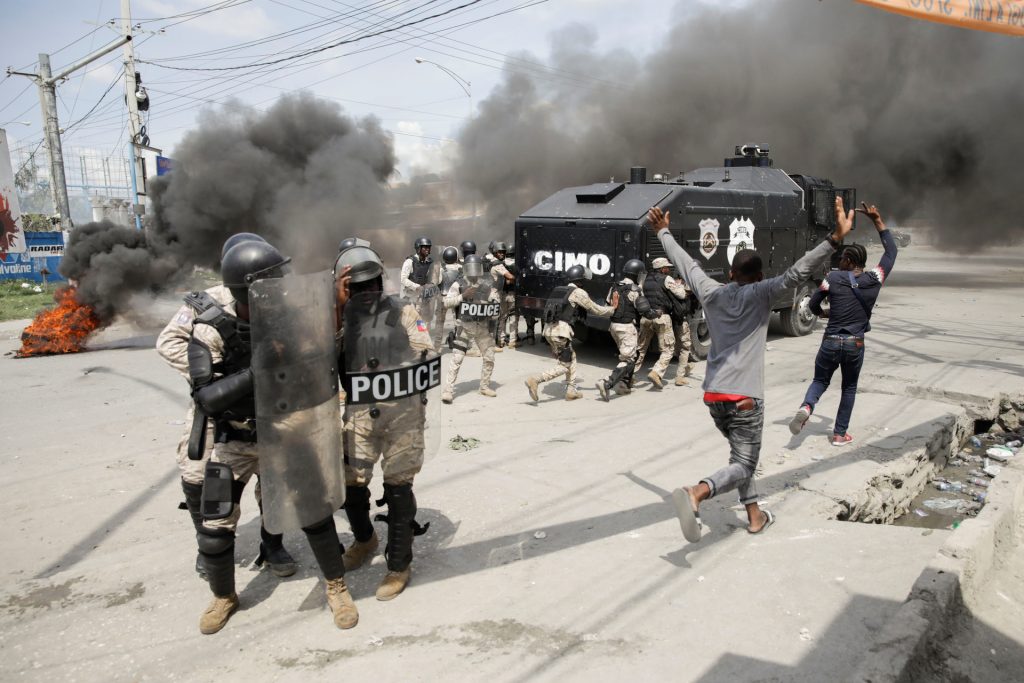
Protesters react as security forces take position during a demonstration to demand the resignation of Haitian president Jovenel Moise, in the streets of Port-au-Prince, Haiti October 4, 2019. REUTERS/Andres Martinez Casares
The status. Opposition leaders created a committee to establish a transitional government, but Moise has refused to step down. Shortages of food and fuel are still widespread. UN agencies estimate that ongoing unrest has left some 3.7 million people suffering from food insecurity, and experts warn that the humanitarian crisis is likely to get worse.
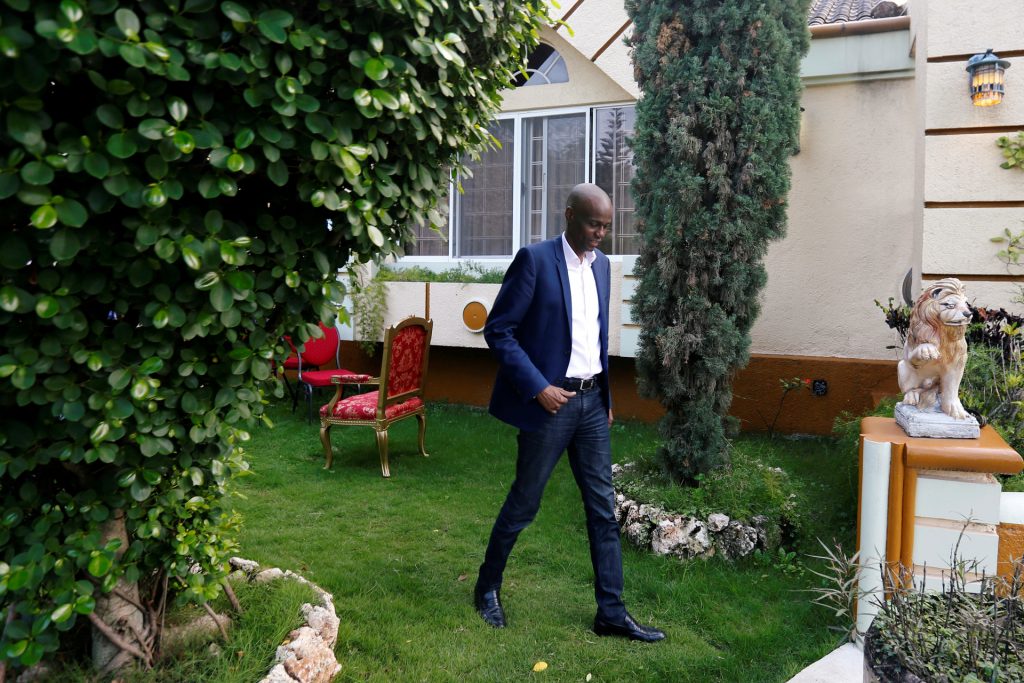
Haiti’s President Jovenel Moise walks in the garden of his home after speaking with Reuters, in Port-au-Prince, Haiti November 15, 2019. Picture taken November 15, 2019. REUTERS/Jeanty Junior Augustin REFILE
So far, Moise has refused to budge, though some of his allies have pressed him to make concessions, such as bringing members of the opposition into his government. Even if he did step down, the struggle to replace him could be equally chaotic.
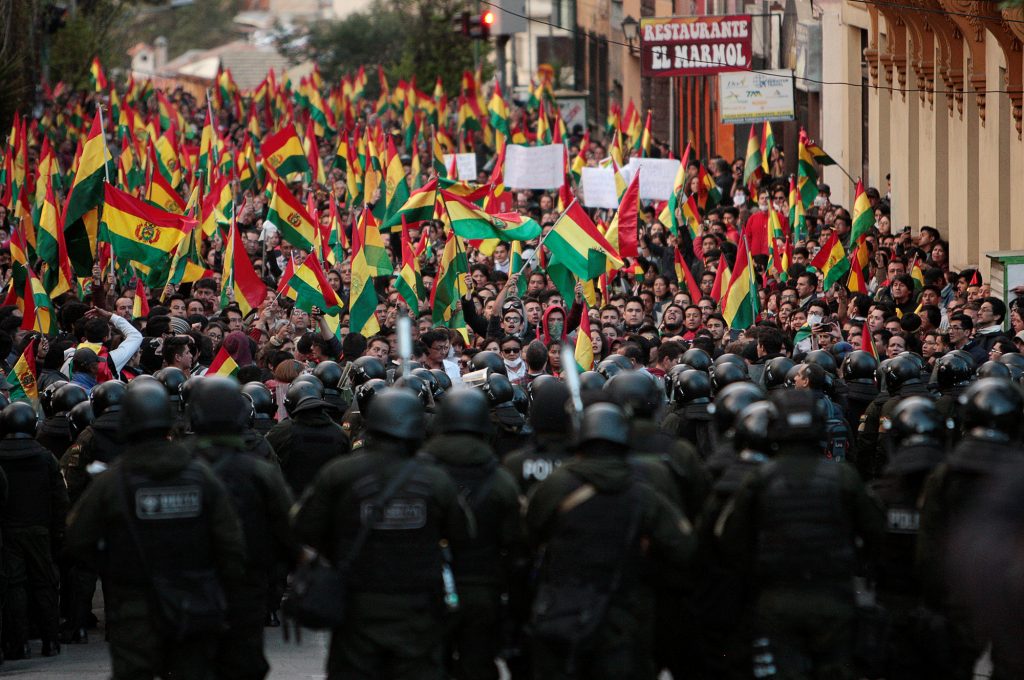
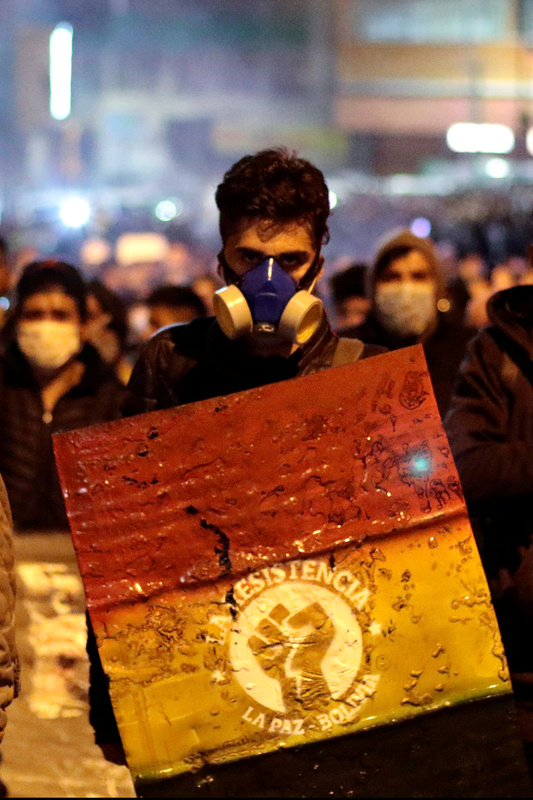
Demonstrators gather to protest next to Abaroa square in La Paz, Bolivia, October 24, 2019. REUTERS/Manuel Claure
Peak participation. One hundred thousand people on October 21.
The spark. Accusations of fraud in the presidential election.
Opponents of Bolivia’s President Evo Morales sing the national anthem during clashes with Morales’ supporters, in La Paz, Bolivia November 5, 2019. Picture taken November 5, 2019. REUTERS/Manuel Claure
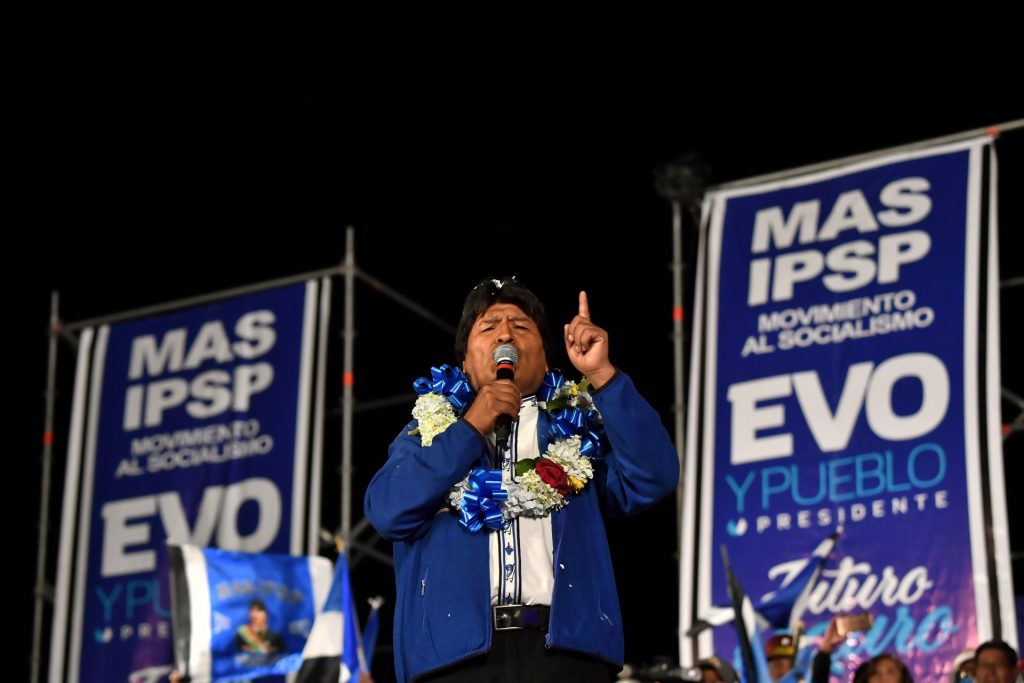
The stakes. Protesters argued that President Evo Morales’s fourth bid for office was unconstitutional, and the Organization of American States found that the October election was manipulated in his favor. The country’s first indigenous leader and known for his leftist policies, Morales had held office since 2005. But amid the protests, he resigned and fled to Mexico, setting the stage for a test of Bolivia’s democracy. His resignation has heightened polarization between indigenous, socialist supporters of Morales and religious-conservative opposition groups.
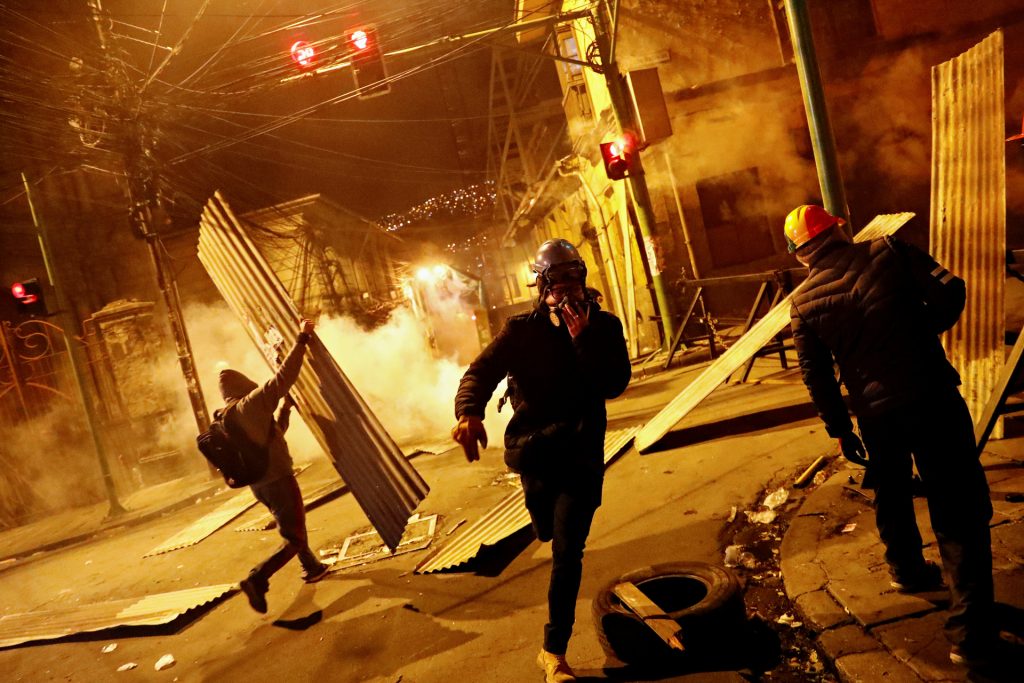
Demonstrators wearing gas masks and carrying barricades run during clashes between protesters against Bolivia’s President Evo Morales and government supporters, in La Paz, Bolivia November 7, 2019. REUTERS/Kai Pfaffenbach
The status. After Morales resigned, opposition leader Jeanine Anez Chavez declared herself interim president. But clashes between Morales’s predominantly indigenous supporters and state security forces have intensified, and dozens of people have died. Morales has called his exit a coup and said he is ready to return to Bolivia, even though Anez has barred him from running in a new election, which is supposed to be held within three months.
Bolivia’s President and presidential candidate Evo Morales speaks during a political rally in El Alto, Bolivia, on October 16, 2019 ahead of the October 20th presidential elections. (Photo by PEDRO UGARTE / AFP)
Reinstating democratic processes will be a top priority to placate protesters, and Anez has just ninety days to organize a new presidential election. The goodwill of the military’s rank and file will go a long way in helping Bolivia’s next president establish order.
Paul J. Angelo, Fellow
Iraq: Baghdad’s Power Outage
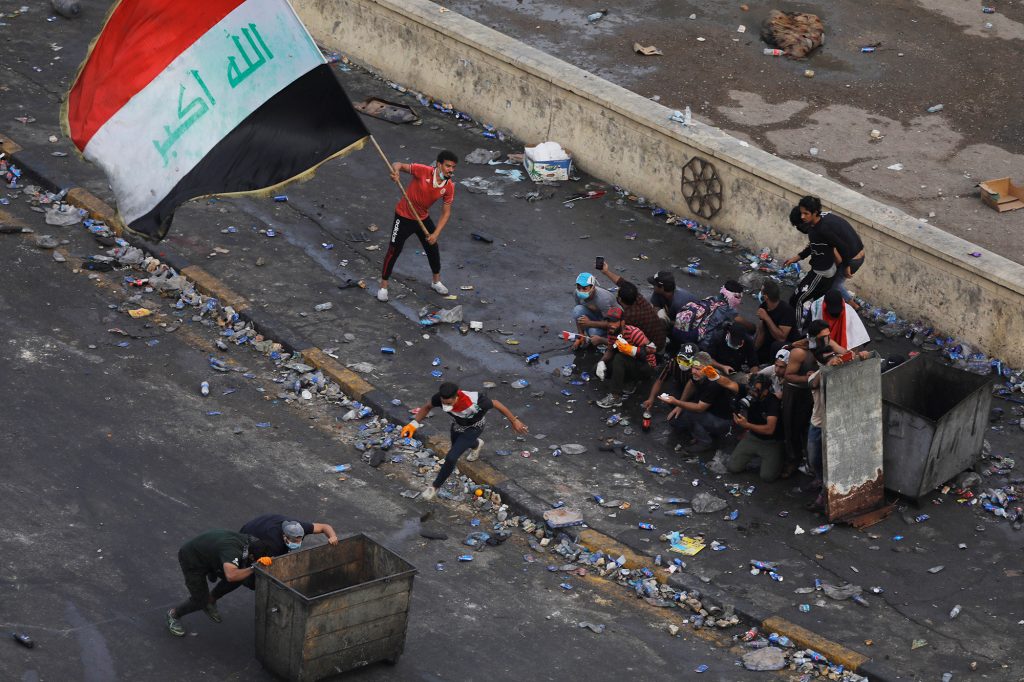
A demonstrator holds the Iraqi flag, as they take part in a protest over corruption, lack of jobs, and poor services, in Baghdad, Iraq October 27, 2019. REUTERS/Thaier Al-Sudani
Peak participation. Tens of thousands of people on October 29.
The spark. The government’s insufficient response to economic inequality and a lack of job opportunities.
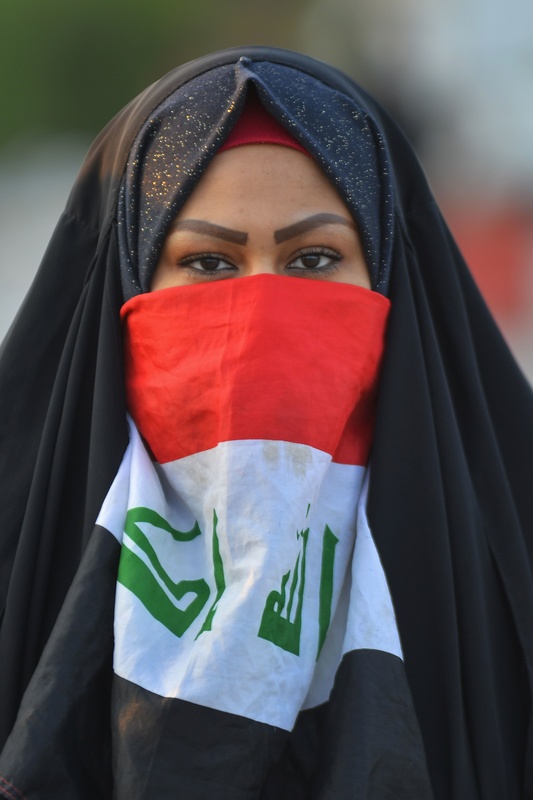
TOPSHOT – An Iraqi protester covers part of her face with the national flag during an anti-government demonstration in the central holy shrine city of Najaf on November 2, 2019. – Iraqi security forces clashed with anti-government protesters in the early hours of Saturday near the capital’s Tahrir Square, leaving one demonstrator dead and dozens more wounded, medical sources said. (Photo by Haidar HAMDANI / AFP)
The stakes. Many Iraqis are frustrated with the government’s failure to provide basic services such as electricity, and they say that elites spend the country’s significant oil revenues on themselves, with half of the government budget going toward paying bureaucrats’ salaries. Protesters demand an overhaul of the political system, testing whether the fragile country can implement democratic change. They have also rejected Iranian influence in Iraq’s politics.
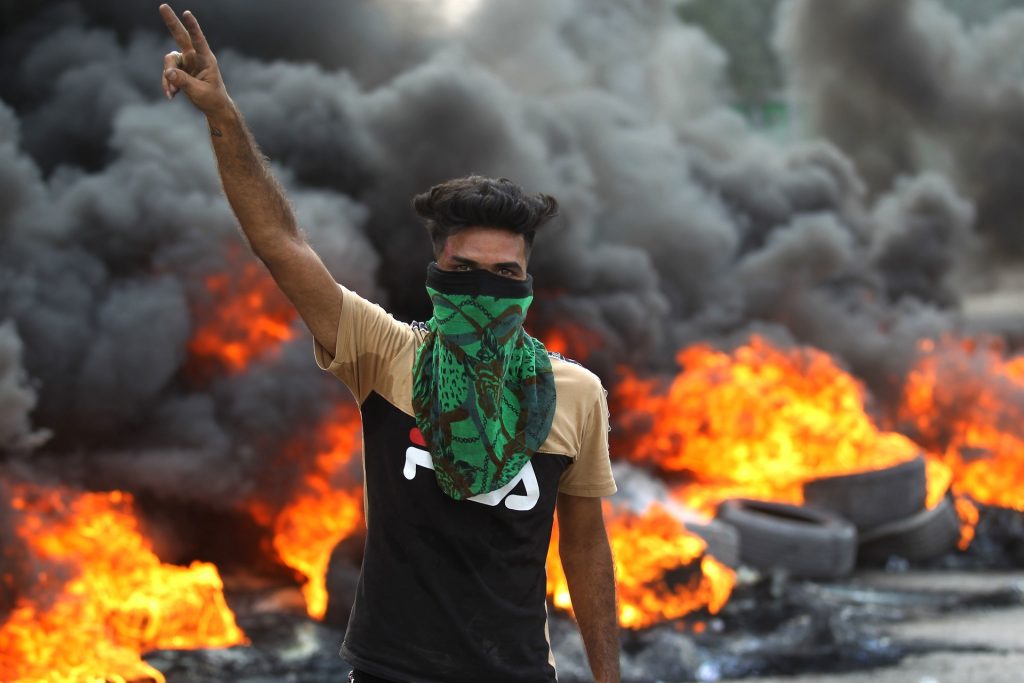
An Iraqi protester flashes the v-sign during a demonstration against state corruption, failing public services and unemployment in the Baladiyat district of the capital Baghdad on October 2, 2019. – Iraq’s president and the United Nations urged security forces to show restraint after two protesters were killed in clashes with police that other top officials blamed on “infiltrators.” (Photo by AHMAD AL-RUBAYE / AFP)
The status. Security forces have responded overwhelmingly with violence. More than four hundred people have died and thousands more injured since protests began. In late November, Prime Minister Adel Abdul-Mahdi resigned, but protesters have demanded more, including early elections and accountability for government corruption and violence by security forces.
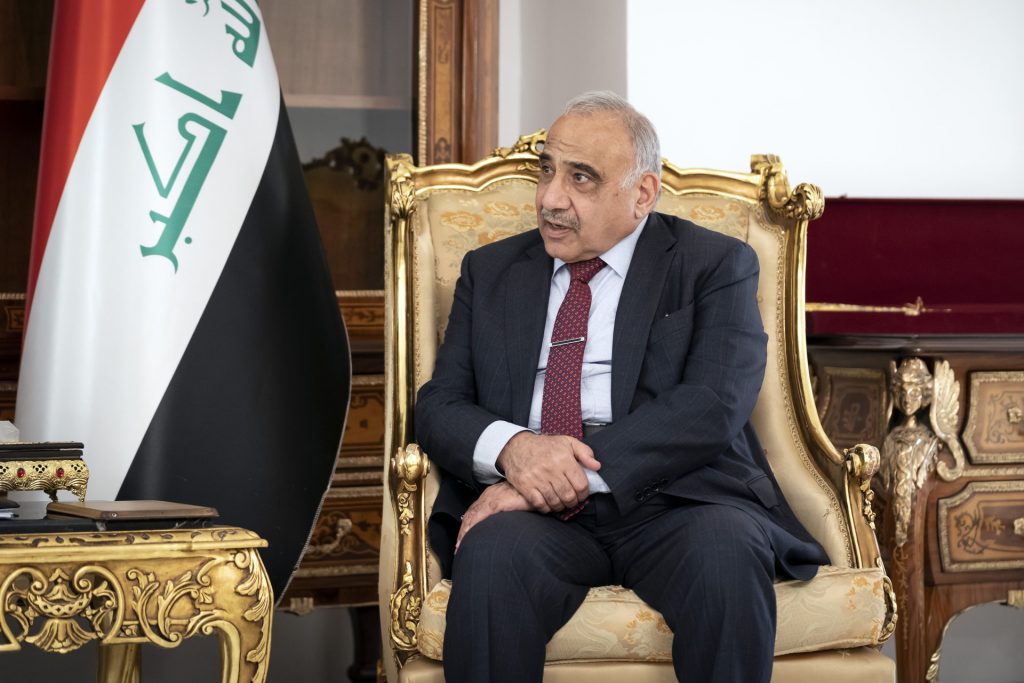
BAGDAD, IRAQ – JUNE 08: Adil Abdul-Mahdi, Prime Minister of Iraq, pictured during a meeting with German Foreign Minister Maas (unseen) on June 08, 2019 in Bagdad, Iraq. (Photo by Thomas Koehler/Photothek via Getty Images)
The only way protesters will get what they want is if Iraq’s ruling elite perceives it to be more dangerous to ignore their demands or to make only cosmetic changes—as they have done so far—than to enact the dramatic and difficult reforms needed to galvanize the private sector economy.
Max Boot, Senior Fellow
Iran: A Brutal Crackdown
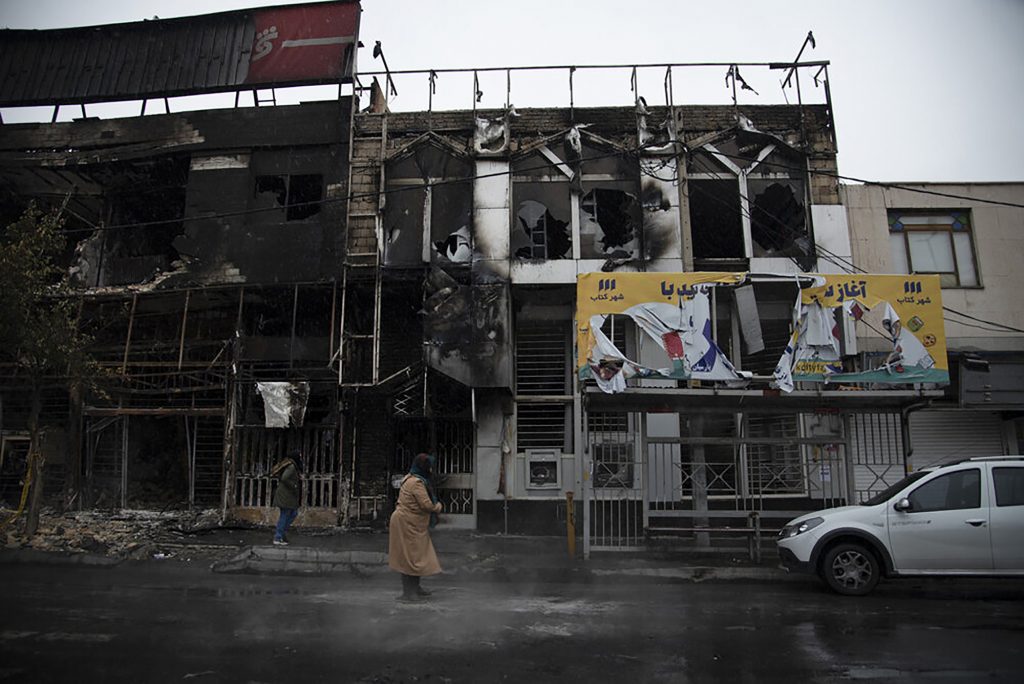
In this photo taken Monday, Nov. 18, 2019, and released by Iranian Students’ News Agency, ISNA, people walk past buildings which burned during protests that followed the authorities’ decision to raise gasoline prices, in the city of Karaj, west of the capital Tehran, Iran. An article published Tuesday in the Keyhan hard-line newspaper in Iran is suggesting that those who led violent protests will be executed by hanging as the unrest continues. (Masoume Aliakbar/ISNA via AP)
Peak participation. Thousands of people in mid-November.
The spark. An end to fuel subsidies.
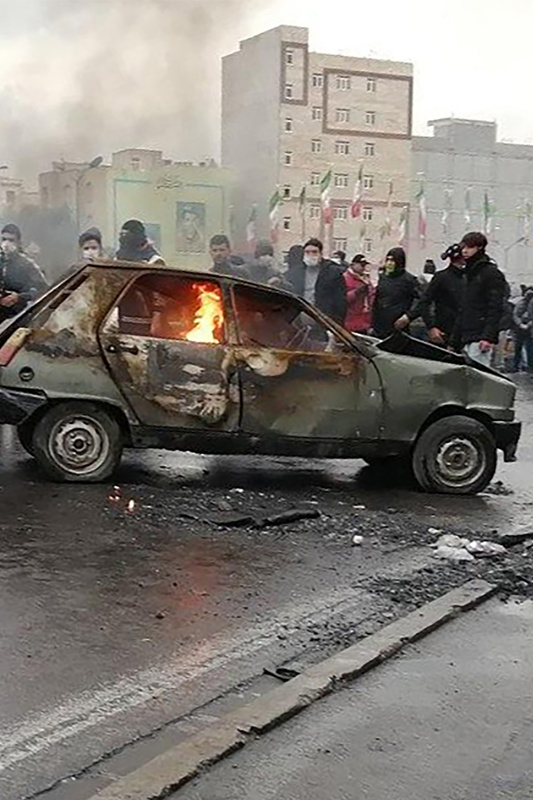
Iranian protesters gather around a burning car during a demonstration against an increase in gasoline prices in the capital Tehran, on November 16, 2019. – One person was killed and others injured in protests across Iran, hours after a surprise decision to increase petrol prices by 50 percent for the first 60 litres and 300 percent for anything above that each month, and impose rationing. Authorities said the move was aimed at helping needy citizens, and expected to generate 300 trillion rials ($2.55 billion) per annum. (Photo by – / AFP)
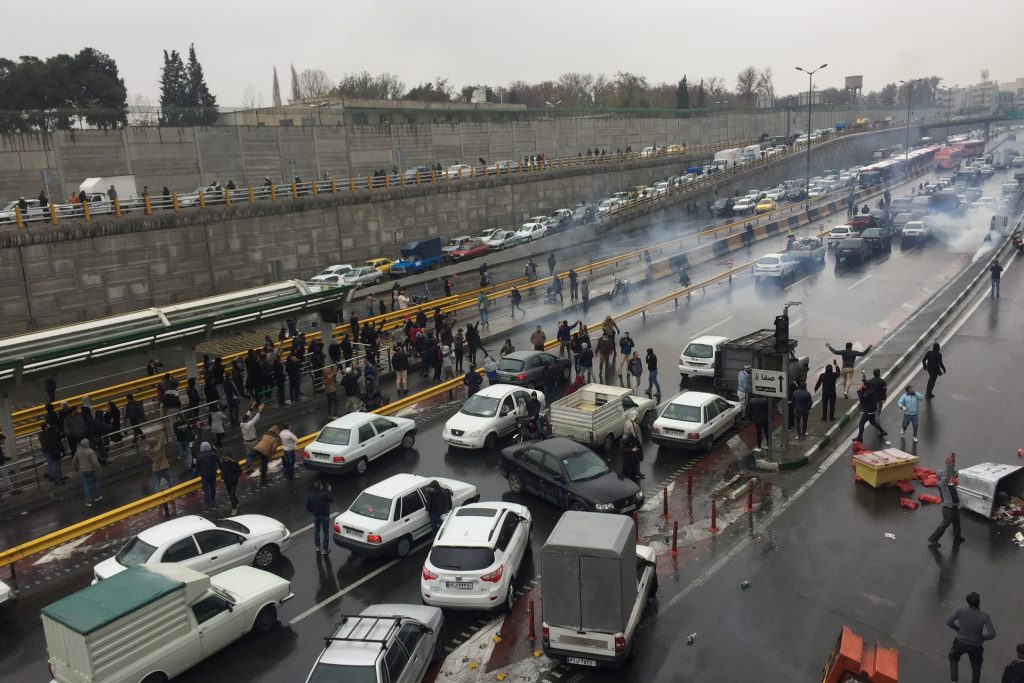
The stakes. The regime is attempting to weather stepped-up U.S. sanctions while avoiding popular revolt.Ongoing economic problems, including high inflation and unemployment, were exacerbated by the collapse of the 2015 nuclear deal this year as Washington reapplied sanctions. The higher fuel prices were introduced on a late Friday night in November without warning, and protests led by low-income and working-class residents erupted in dozens of cities and towns.
People stop their cars in a highway to show their protest for increased gas price in Tehran, Iran November 16, 2019. Nazanin Tabatabaee/WANA (West Asia News Agency)
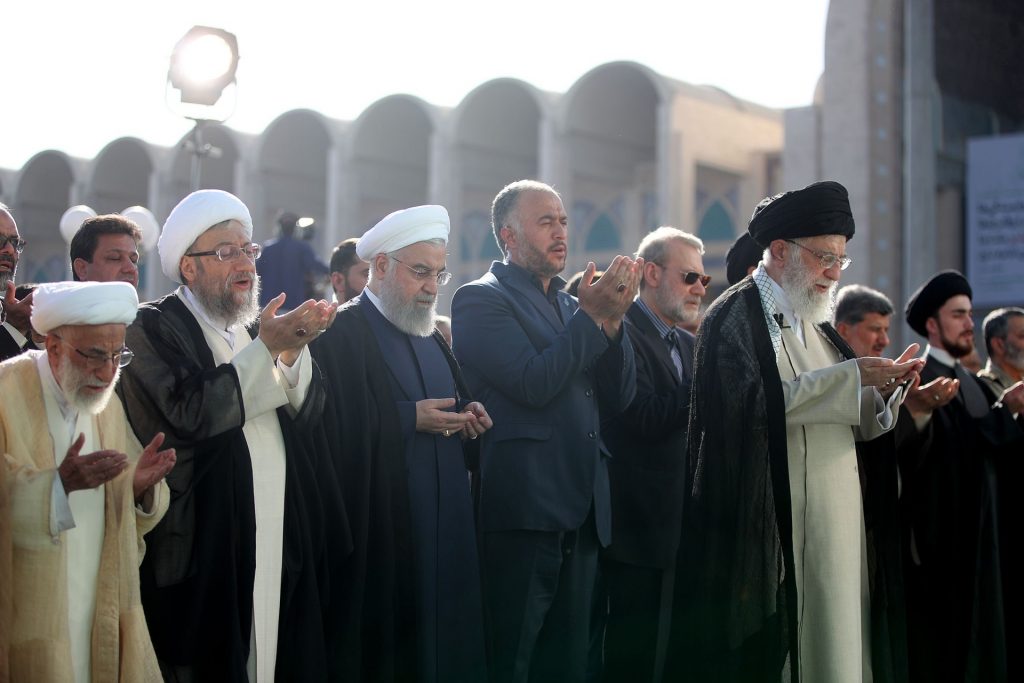
The status. President Hassan Rouhani said the government would compensate many Iranians for the increased fuel prices. Meanwhile, security forces quickly quashed the protests, reportedly killing more than two hundred people, detaining nearly seven thousand, and shutting down the internet for days. The country’s supreme leader, Ali Khamenei, said the crackdown was justified.
TEHRAN, IRAN – JUNE 5: (—-EDITORIAL USE ONLY MANDATORY CREDIT – “IRANIAN SUPREME LEADER PRESS OFFICE / HANDOUT” – NO MARKETING NO ADVERTISING CAMPAIGNS – DISTRIBUTED AS A SERVICE TO CLIENTS—-) Supreme Leader of Iran, Ali Khamenei (front) leads the Eid al-Fitr Prayer at Grand Prayer Grounds (Mossalla) in Tehran, Iran on June 5, 2019. Irans Parliament Speaker Ali Larijani, Iranian President Hassan Rouhani, Ayatollah Chairman of the Assembly of Experts, Ahmad Jannati (L) and Iranian President of the Judiciary Sadeq Larijani (L-2) attended the prayer. Muslims around the world celebrate Eid al-Fitr marking the end of the holy fasting month of Ramadan. (Photo by IRANIAN SUPREME LEADER PRESS OFFICE – Handout/Anadolu Agency/Getty Images)
The Iranian government might gain control of the streets once again, as has happened in the past. But the latest demonstrations reveal an uncomfortable truth for the regime: that the Islamic Republic is increasingly a government without supporters.