Local police may deputize them.

By Dr. Amy Cooter
Director of Research, Academic Development, and Innovation
Center on Terrorism, Extremism, and Counterterrorism
Middlebury Institute of International Studies at Monterey
Middlebury College
Introduction
President-elect Donald Trump has reaffirmed that once he takes office he plans to declare a national emergency and use the military on American streets to accomplish his promises to round up and deport millions of undocumented migrants.
Many experts’ concerns about this program have included the facts that immigrants contribute enormous value to the U.S. economy and mass deportation would hurt food production, housing construction and other crucial industries. Other scholars have analyzed how deportation traumatizes families.
I have an additional concern about a renewed focus on deportation as someone who has studied U.S. domestic militias for more than 15 years: Some militia units may see it as their duty to assist with such efforts. In fact, local police may even deputize certain militias to help them deport immigrants.
Anti-Government, but Supporting National Defense
Militias are generally wary of the government. They’ve even been known to use violence against politicians and other government representatives, including police. I have found in my research that the militias’ disdain for the federal government is especially strong because they believe it is too big and corrupt and takes too much of their income through taxation.
But militia members’ negative beliefs about immigration and self-declared mission to protect the country could lead them to join a national mass-deportation effort.
My research finds that militia members generally believe the falsehoods that undocumented migrants are a threat to public safety.
For some, my research finds, this perception is rooted in xenophobia and racism. Other militia members misunderstand what is required to obtain U.S. citizenship: They believe that anyone who enters the country illegally is, by definition, a criminal and has therefore already proven their intention to not follow the laws and generally be a good American. This is not true, because migrants may seek asylum regardless of their immigration status for up to a year after entering the country.
Members with both sets of motives believe that undocumented migrants are taking jobs away from more deserving citizens and are generally receiving unearned benefits from being in the country. Trump’s promises to crack down on immigration appeal to militia members of both types.

Militia members also believe that one of the few legitimate functions of the federal government as outlined by the Constitution is national defense. In that sense, those who believe migrants are an urgent threat could see the military’s involvement in a mass-deportation operation as consistent with a duty to defend the nation.
Most scholars agree that even if it were technically legal, domestic deployment of the military would be an alarming threat to democracy.
Active Participation
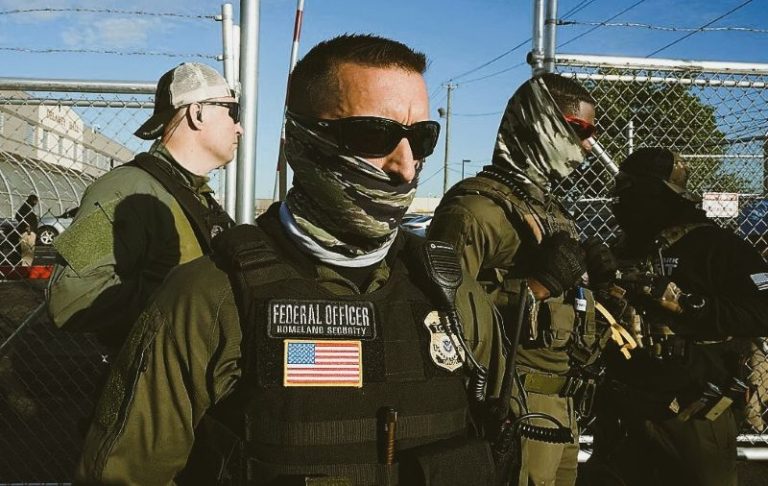
Some militia units in border states have been engaged in deportation efforts for a long time. They typically patrol the border, sometimes detain migrants and regularly call the U.S. Border Patrol to report their findings.
Border Patrol agents have historically expressed skepticism and concerns about militia involvement with border monitoring due to the unverifiable skills and motives of civilian support.
Some state, county and local police also do immigration enforcement, and in recent years they have seemed to become more open to civilian assistance.
Some local police agencies, particularly sheriffs, are already asking for civilian assistance managing perceived problems with migrants. Others have hosted anti-immigration events with militias who patrol the border under an effective, if not formal, deputization of their actions.

Militias may also be called on directly. In the past, Trump has directly addressed militias. The most cited example is his instruction in a Sept. 29, 2020, presidential debate, directing the Proud Boys to “stand back and stand by.” People had similar interpretations of his comments in advance of the Jan. 6, 2021, insurrection.
But I have long believed these appeals started much earlier. In 2018 Trump pardoned the men who inspired the Bundy family occupation and standoff at the Malheur National Wildlife Refuge in Oregon. I believe that was an early attempt to garner support from people in militia circles.
A Volatile Combination
The military has already been getting involved in immigration enforcement in unprecedented ways. In early 2024, Texas Gov. Greg Abbott claimed the U.S. Border Patrol was not protecting his state from an “invasion” from would-be immigrants. He deployed his state’s National Guard to an area of the border, blocking the Border Patrol from working in that section. That blockade continues.
In a second term, Trump has little incentive to restrain his rhetoric or his actions. The Supreme Court has ruled that presidents have broad immunity from criminal prosecution for actions taken while in office. Even if he does not directly appeal to private citizens to control the border or detain people whom they believe to be undocumented migrants, his official presence and hard-line stance on immigration may be enough to provide legitimacy to vigilante action.

In November 2024, two militia members were convicted of a variety of federal offenses, including conspiracy to murder federal agents, for a plot to kill Border Patrol agents whom the men believed were failing to adequately protect the border from crossing migrants.
Not all militia members support mass deportation, especially if it involves unconstitutionally deploying military forces on U.S. soil. That’s clear from my research.
“The military is the military, and law enforcement is law enforcement,” one militia member replied when I asked some of my long-term contacts for their perspectives on Trump’s declaration to use the military. “They are separate for a reason.”
This man believes undocumented migrants pose dangers – but thinks shifting the military’s role would be even more harmful. Not all militia members are so circumspect.
Originally published by The Conversation, 11.25.2024, under the terms of a Creative Commons Attribution/No derivatives license.
About the Author