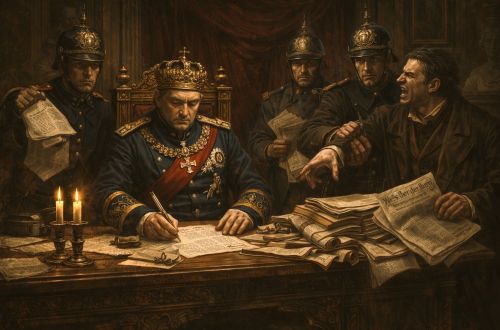
In 1843 Prussia, King Frederick William IV’s press edict tightened state control, revealing how censorship preserved monarchy while reshaping public discourse.

By Matthew A. McIntosh
Public Historian
Brewminate
Introduction: Regulation without Abolition
The history of censorship is often narrated in dramatic terms: presses smashed, editors imprisoned, pamphlets publicly burned. Such spectacles make repression visible. Yet the nineteenth century witnessed the emergence of a different model, one embedded not in theatrical displays of force but in bureaucratic procedure. The Prussian Press Edict of 1843 did not abolish newspapers, nor did it silence the printed word across the kingdom. Instead, it tightened the regulatory mechanisms through which publication occurred. By reshaping licensing requirements and strengthening pre-publication review, the Prussian state constrained the range of permissible political criticism while maintaining the outward existence of a functioning press.
Prussia in the decades after the Napoleonic Wars confronted a growing and increasingly articulate public sphere. Expanding literacy, urbanization, and the rise of a politically conscious middle class contributed to the proliferation of newspapers and periodicals. Political journalism became a vehicle for discussion of constitutional reform, civil rights, and the limits of monarchical authority. While earlier measures such as the Carlsbad Decrees of 1819 had imposed significant restrictions across the German Confederation, the persistence of critical commentary revealed the difficulty of containing debate through blunt instruments alone. By the early 1840s, the Prussian monarchy faced a press that was neither revolutionary in the immediate sense nor wholly compliant.
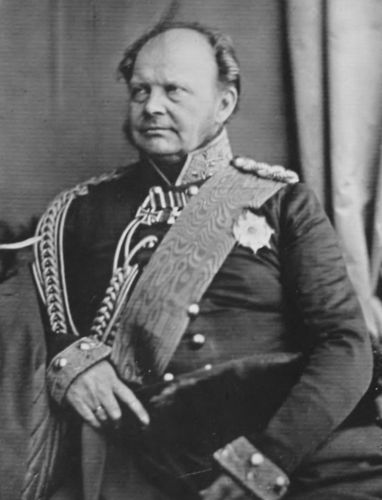
King Frederick William IV, who ascended the throne in 1840, articulated a vision of governance rooted in Christian monarchy and social harmony. He did not present himself as an enemy of public discussion in principle. Rather, he viewed unrestrained political agitation as corrosive to moral order and monarchical legitimacy. Within this framework, criticism of state policy could be interpreted not as constructive engagement but as destabilizing incitement. The challenge was not to eradicate print culture but to discipline it. The Edict emerged as a mechanism through which the state could recalibrate the boundaries of acceptable discourse without resorting to overt suppression.
The Prussian Press Edict illustrates control without abolition. By tightening licensing procedures, expanding the authority of censors, and embedding oversight within routine administration, Prussia transformed censorship into a structural feature of bureaucratic governance. Newspapers continued to circulate, editors continued to publish, and public debate did not disappear from urban centers such as Berlin, Cologne, and Königsberg. Yet the range of permissible critique contracted under procedural choke points that made publication contingent upon official authorization. The edict did not require spectacular trials or public punishments to be effective. Instead, it relied on the vulnerability of publishers to suspension, delay, and revocation of licenses. Its power lay in procedural dependency. The significance of the edict resides not in dramatic repression but in its administrative subtlety. It marks a stage in the modernization of censorship, where control operated through paperwork, licensing, and oversight rather than through visible coercion, signaling the maturation of a bureaucratic state capable of disciplining dissent within the ordinary routines of governance.
Political Context: Prussia after the Napoleonic Era
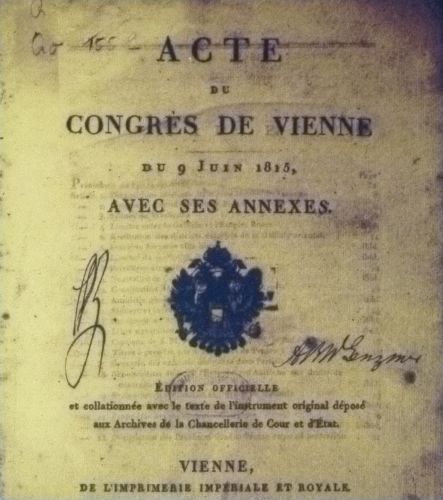
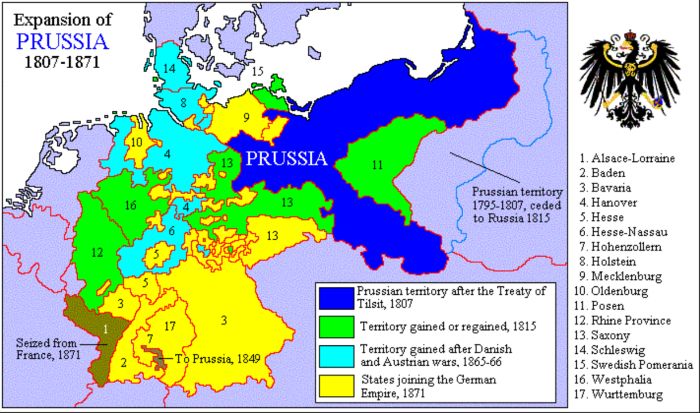
The defeat of Napoleon and the reordering of Europe at the Congress of Vienna in 1815 transformed Prussia from a battered kingdom into a major continental power. Territorial expansion along the Rhine and in Westphalia brought economically dynamic and politically active populations under Berlin’s authority. These regions, influenced by French administrative reforms and legal modernization, possessed traditions of civic participation and public debate that did not always align comfortably with conservative monarchical governance. The integration of these territories expanded Prussia’s economic base but also intensified exposure to liberal political currents circulating across Europe.
The early nineteenth century witnessed the growth of a politically literate middle class shaped by university education, commercial expansion, and professionalization. Newspapers multiplied in number and influence, especially in urban centers such as Berlin and Cologne. The press became a forum for discussions of constitutionalism, representative institutions, civil liberties, and the proper limits of monarchical authority. Editorials, serialized essays, and political commentary allowed readers to engage with debates that extended beyond local concerns into broader questions of governance within the German Confederation. Although the Carlsbad Decrees of 1819 sought to curb nationalist agitation and liberal journalism by imposing censorship across the Confederation, enforcement was uneven and the appetite for political discourse persisted. Publishers adapted to restrictions through strategic language and indirect critique, demonstrating both the resilience of the press and the difficulty of eliminating debate through blunt prohibition. Public opinion, while not institutionalized in a parliamentary framework, increasingly crystallized through printed commentary and pamphleteering, creating a sphere of discussion that operated parallel to official political structures.
Prussia’s rulers navigated this evolving public sphere with caution. The memory of the French Revolution and subsequent upheavals remained vivid among conservative elites. Political reform, in their view, risked unleashing forces that could destabilize monarchical order and social hierarchy. The state’s administrative apparatus expanded in capacity during these decades, professionalizing censorship offices and enhancing oversight of publications. Yet outright suppression of all debate proved impractical and potentially counterproductive. The challenge was to balance modernization and control.
By the time Frederick William IV assumed the throne in 1840, pressures for reform had not abated. Expectations for a constitution and broader political participation circulated among segments of the educated public. Newspapers provided space for cautious critique as well as more assertive demands. The monarchy’s response was shaped by anxiety over revolutionary contagion, particularly as unrest flared periodically elsewhere in Europe. Within this context, the 1843 Edict must be understood as part of a broader effort to contain political agitation without dismantling the structures of print culture that had become integral to Prussian society.
The Press Edict of 1843: Legal Structure and Administrative Mechanisms
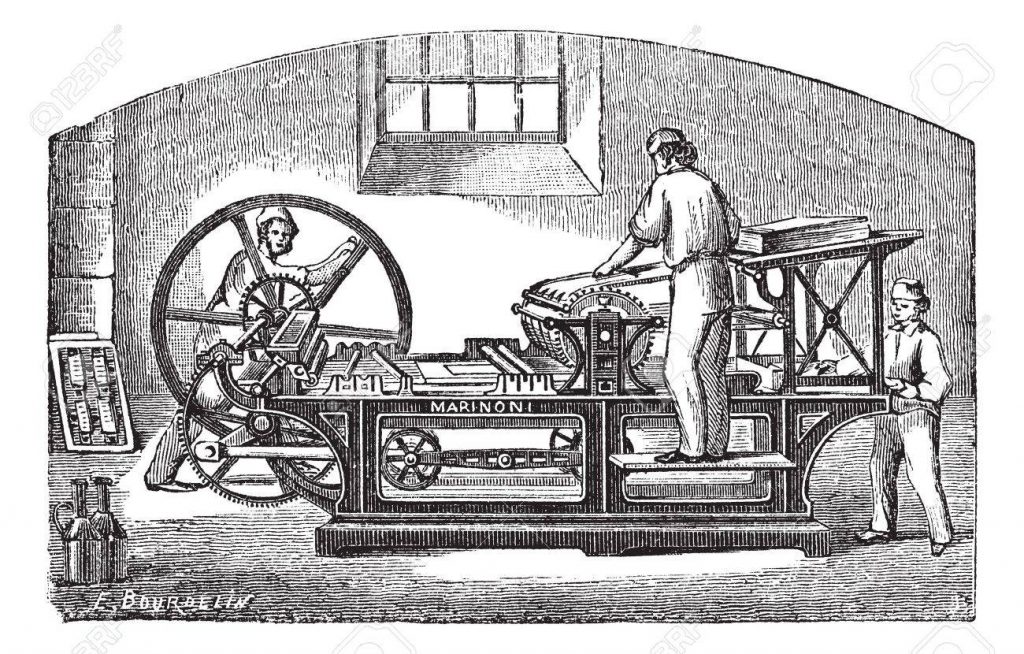
The Press Edict of 1843 did not emerge as an abrupt innovation but as a recalibration of existing censorship structures. Prussia had long maintained mechanisms for reviewing and restricting printed material, particularly in the wake of the Carlsbad Decrees. What distinguished the 1843 edict was its tightening of procedural requirements and its reinforcement of bureaucratic authority over publication. Rather than eliminating newspapers, the state refined the points at which it could intervene. Control became more systematic, more centralized, and more dependent on bureaucratic discretion.
At the heart of the edict lay strengthened pre-publication oversight. Newspapers and periodicals were required to submit material for approval before printing, expanding the role of official censors in shaping content. This system created a temporal bottleneck: publication depended not merely on editorial judgment but on bureaucratic clearance. In practice, this meant that politically sensitive articles could be delayed, revised, or rejected before reaching readers. The power to withhold approval allowed officials to shape not only what was said but when it could be said, a crucial factor in an era when newspapers were becoming vehicles for rapid political commentary. Delays could blunt the impact of criticism, particularly during moments of controversy or policy debate. The requirement of prior review transformed censorship from reactive punishment into anticipatory control, allowing the state to prevent dissemination rather than prosecute after the fact. By embedding oversight at the point of production, the monarchy inserted itself directly into the communicative process.
Licensing enforcement became structurally decisive. Publication rights were contingent upon state approval, and licenses could be suspended or revoked for violations of press regulations. This dependency introduced structural vulnerability into the press system. Editors and publishers operated within a framework in which continued existence depended upon maintaining official favor. The threat of closure did not need to be frequently exercised to be effective. Its presence shaped editorial calculation. Licensing operated as leverage embedded within legal architecture.
The edict further codified the categories of prohibited content. Criticism deemed injurious to the dignity of the monarchy, subversive of public order, or inflammatory toward social institutions could trigger intervention. These categories were intentionally broad, allowing censors considerable interpretive latitude. Ambiguity enhanced administrative flexibility. Officials could assess tone, implication, and rhetorical framing as well as explicit statements, thereby extending regulatory reach beyond overt calls for reform. This breadth allowed authorities to interpret criticism of policy as an indirect challenge to monarchical legitimacy. The legal language framed intervention as protection of stability rather than suppression of opinion, presenting censorship as a neutral defense of order. Such framing helped normalize oversight by embedding it within the vocabulary of lawful governance rather than arbitrary repression.
Enforcement relied on professionalized censorship offices integrated into the Prussian administrative hierarchy. Censors evaluated submissions, corresponded with publishers, and documented infractions. The process generated records and reports that fed into centralized oversight, creating a paper trail of compliance and violation. This bureaucratic infrastructure distinguished mid-nineteenth-century censorship from earlier, more episodic forms. Regulation was routinized and embedded within administrative routine. Decisions flowed through offices rather than erupting through dramatic decrees or public spectacles. The professionalization of censorship also meant that oversight could be applied with technical precision. Officials assessed not only overtly political statements but nuances of tone and suggestion, applying their interpretive authority within established procedures. The state’s capacity to monitor and discipline print expanded alongside its broader administrative modernization, reinforcing the integration of censorship into the machinery of governance.
The cumulative effect of these mechanisms was to narrow the boundaries of permissible political discourse without extinguishing the press itself. Newspapers continued to appear, and public discussion did not vanish. Yet the space for sustained criticism of monarchical authority contracted under procedural pressure. By embedding control within licensing, prior approval, and discretionary interpretation, the Edict exemplified regulation without abolition. It signaled the maturation of censorship as an administrative practice, aligned with the evolving capacities of the modern bureaucratic state.
Licensing as Leverage
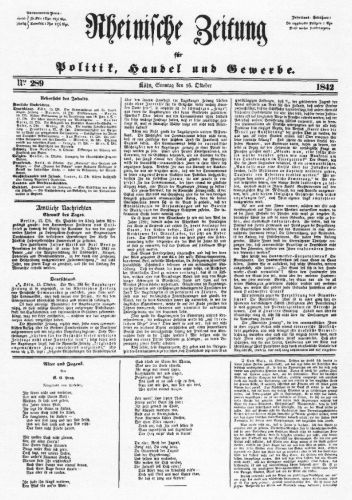
Licensing functioned as the structural fulcrum upon which Prussian press control turned. Unlike outright prohibition, which declares speech unlawful in sweeping terms, licensing embeds dependency within the ordinary operation of publication. A newspaper could exist only so long as it possessed official authorization from the state. That authorization was neither permanent nor unconditional. It was contingent, reviewable, and revocable under defined but flexible criteria. In this framework, the state did not need to suppress every critical article or outlaw opposition journalism as a category. It needed only to retain discretionary power over the legal status of the publication itself. The vulnerability of a license transformed regulation into leverage. Editors understood that the continuity of their enterprise rested not solely on readership or financial solvency, but on administrative approval. This structural dependency transformed legal permission into an instrument of discipline, subtly reshaping the incentives under which political commentary was produced.
This authority operated through both formal and informal mechanisms. Formally, infractions could trigger suspension or withdrawal of authorization. Informally, the possibility of such action shaped editorial decision-making. Publishers aware that their financial survival depended upon continued approval were incentivized to moderate tone and avoid sustained confrontation with authorities. The costs of defiance were not merely reputational but existential. Printing presses required capital, distribution networks required stability, and subscribers required continuity. Licensing control exerted pressure at multiple levels of the press economy. It harnessed economic dependency to political oversight.
The leverage embedded in licensing also reduced the need for dramatic enforcement. Closure could occur through administrative notice rather than public trial, often communicated through official correspondence that carried the force of law without the spectacle of courtroom drama. Officials did not need to parade editors before tribunals in highly visible prosecutions that might generate sympathy or public controversy. A suspension or non-renewal communicated sufficient warning to others operating within the same regulatory environment. Because licenses were individual and specific, enforcement could be selective. Critical publications could be targeted while more compliant newspapers continued to function, preserving the appearance of pluralism. This selectivity reinforced caution among publishers without creating universal shutdown. It fostered a climate in which editors recalibrated their rhetoric preemptively, anticipating the boundaries of tolerance. The press as an institution survived, even as its most confrontational voices were disciplined through administrative procedure rather than overt repression.
Licensing as leverage illustrates the transformation of censorship into a bureaucratic instrument. Rather than suppressing speech through sweeping bans, the Prussian state inserted itself into the preconditions of publication. Control over authorization created a choke point through which all printed material had to pass. In this structure, freedom was conditional, mediated by administrative approval. The Edict demonstrates how regulatory dependency can narrow public debate without abolishing it, embedding constraint within the legal architecture of modern governance.
Bureaucratic Enforcement and the Avoidance of Martyrdom
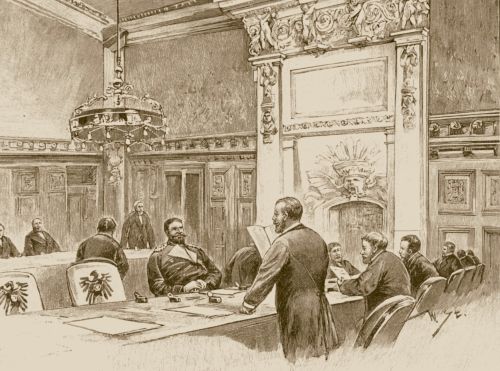
Prussian authorities understood that overt repression could generate unintended consequences. Public trials of editors, dramatic confiscations, or highly visible punishments risked transforming critics into symbols of resistance. In an era when liberal and nationalist ideas circulated across the German states, the spectacle of persecution could amplify the very voices the monarchy sought to restrain. The administrative turn in censorship reflected not only institutional modernization but political calculation. By embedding enforcement within procedural routine, the state minimized opportunities for oppositional mobilization.
Enforcement typically unfolded through correspondence, formal notices, and procedural sanction rather than theatrical confrontation. A warning from a censor’s office, a delayed approval, or a temporary suspension communicated disapproval without igniting public controversy. Editors might be required to revise or omit specific passages before publication, sometimes through iterative exchanges between publishers and officials. Such interventions were framed as technical corrections within a lawful regulatory framework rather than as punitive acts against political dissent. Because decisions were conveyed through administrative channels rather than public tribunals, they lacked the drama that could galvanize sympathy. The press and its readership often encountered the effects of censorship as absence or modification rather than as spectacle. This quiet enforcement reduced the likelihood that readers would rally around an embattled publisher, and it deprived critics of a platform from which to claim victimhood. Discipline occurred through procedure, and its procedural character diffused attention away from confrontation.
This method also preserved the monarchy’s self-image as guardian of order rather than instigator of repression. Frederick William IV did not present himself as an enemy of intellectual life or a destroyer of print culture. By relying on bureaucratic enforcement, the regime maintained a rhetorical distinction between legitimate governance and arbitrary suppression. Administrative action could be justified as necessary to uphold public peace, protect social harmony, and defend the dignity of the state. The legal framing of enforcement insulated the monarchy from accusations of capricious tyranny, even as it curtailed sustained criticism. Because sanctions were issued through offices and regulations rather than dramatic decrees, they appeared as the predictable outcome of legal norms. This procedural mediation softened the visible edge of coercion. It allowed the state to discipline dissent while sustaining the narrative that it remained committed to lawful administration rather than despotic impulse.
The avoidance of martyrdom was integral to the effectiveness of the Edict. Selective suspensions and license withdrawals discouraged defiance without producing iconic victims. The press continued to operate, albeit within narrowed boundaries. By preferring paperwork to spectacle, Prussia demonstrated how a modernizing bureaucratic state could discipline dissent while preserving outward stability. The result was a system in which suppression operated through routine procedure rather than dramatic confrontation, aligning political control with administrative efficiency.
Public Debate as Destabilization
In official discourse, the tightening of press regulation in 1843 was justified not as hostility toward opinion itself but as a defense against destabilization. Prussian authorities framed unrestrained political commentary as a potential catalyst for disorder, moral decay, and revolutionary agitation. The memory of 1789 and subsequent upheavals across Europe lingered in conservative political thought. Public debate, especially when it touched on constitutional reform or the limits of monarchical authority, could be cast as a step toward unrest. Within this interpretive framework, censorship became a preventative measure rather than an act of repression.
The language of order permeated official reasoning. Newspapers critical of policy were not merely inconvenient; they were portrayed as eroding respect for institutions and encouraging imprudent political enthusiasm. The monarchy and its supporters depicted the state as an organic community whose cohesion required disciplined communication. Criticism that challenged the moral or political authority of the crown could be construed as an assault on that cohesion. By defining certain forms of debate as destabilizing, the state reframed opposition as a threat to collective well-being rather than as legitimate dissent.
This conceptualization had practical implications for censorship. If public discussion was understood as potentially inflammable, then regulatory oversight appeared prudent. Pre-publication review, licensing control, and discretionary intervention could be defended as safeguards against escalation. The broad categories of prohibited content in the Press Edict reflected this reasoning. Statements that might undermine confidence in governance, question the legitimacy of monarchical authority, or encourage agitation were subject to scrutiny, even if they stopped short of explicit calls for revolt. The elasticity of these categories allowed administrators to intervene at early stages of criticism rather than waiting for overt confrontation. Preventative logic justified anticipatory control. Censors could treat tone, implication, and rhetorical framing as indicators of destabilizing intent. In this way, the interpretation of political language became a site of administrative judgment. Regulation was framed as moderation, and moderation as protection against disorder.
The portrayal of debate as destabilizing also shaped how readers and publishers navigated the public sphere. Editors aware of official sensitivities moderated tone to avoid appearing incendiary. Writers adopted indirect language, irony, or abstract philosophical discussion in place of direct political challenge. Such adaptations did not eliminate critical thought, but they altered its expression. The contraction of overt criticism was both imposed and internalized. Regulatory pressure reshaped communicative norms within the press.
By casting public debate as a potential threat to order, the Prussian state aligned censorship with preservation rather than domination. The Edict embodied this logic. It treated political journalism not simply as expression but as an activity with consequences for social stability. The assumption that unchecked commentary could erode loyalty or inflame unrest provided moral justification for intervention. In doing so, the monarchy positioned itself as guardian of cohesion rather than adversary of liberty. Yet this framing also redefined the limits of permissible speech. Critique that once might have been tolerated as part of public deliberation became reinterpreted as risk. The edict illustrates how states can recast debate as destabilization, embedding suspicion of open discussion within the vocabulary of protection. Stability and constraint became intertwined, shaping the contours of the nineteenth-century Prussian public sphere.
Administrative State and the Management of Opinion
The Press Edict of 1843 must be situated within the broader maturation of the Prussian bureaucratic state. By the mid-nineteenth century, Prussia had developed a professional civil service characterized by hierarchical organization, standardized procedures, and centralized reporting. Governance increasingly operated through documentation, regulation, and oversight rather than through episodic royal intervention. Ministries maintained structured channels of communication, provincial authorities corresponded with Berlin in regularized formats, and officials were trained within a culture that emphasized discipline and procedural consistency. The management of the press became one component of this expanding bureaucratic apparatus. Opinion was not confronted solely as a political problem but as a managerial matter subject to procedural control. In this environment, censorship was integrated into the same systems that oversaw taxation, policing, and infrastructure. It became normalized as part of governance rather than presented as an extraordinary act of suppression.
Censorship offices were integrated into this evolving structure. Officials reviewed submissions, issued directives, and recorded infractions in systematic fashion. Reports circulated upward through administrative channels, allowing the central government to monitor trends in political commentary across different regions. This flow of information enabled coordination and consistency in enforcement. Rather than relying on isolated decisions by local authorities, the state cultivated a networked system of supervision. In this configuration, control of opinion became part of routine governance, embedded in the everyday practices of civil administration.
The bureaucratization of censorship also altered its character. Decisions were justified through reference to regulations and legal categories rather than personal fiat. The authority of the censor derived from institutional position rather than arbitrary command. This procedural grounding gave enforcement a veneer of neutrality and predictability. Officials could claim to apply established standards rather than to suppress viewpoints selectively, framing their interventions as technical compliance with the law. Yet the interpretive latitude built into those standards ensured that discretion remained central. Broad phrases such as protection of public order or preservation of monarchical dignity allowed censors to exercise judgment in assessing tone, implication, and context. The administrative state combined formal rule with flexible application, enabling subtle calibration of permissible discourse. In doing so, it transformed censorship from a visible assertion of power into a structured administrative function.
Management of opinion extended beyond individual articles to broader patterns of communication. Authorities observed recurring themes in political journalism, identifying areas of sustained criticism or agitation. The accumulation of reports allowed officials to assess the tone of the press and to anticipate potential flashpoints. Regulation functioned not merely as reactive intervention but as ongoing surveillance of the public sphere. The press became an object of continuous observation, its outputs cataloged and evaluated within bureaucratic frameworks.
Through these mechanisms, the Prussian state demonstrated how a modernizing administration could shape public discourse without resorting to sweeping prohibitions. Opinion was managed rather than eradicated. The administrative state inserted itself into the circuits of communication, filtering and channeling debate through procedural oversight. The Edict reveals the alignment of censorship with bureaucratic governance. It reflects a transitional moment in which political control over speech was institutionalized within the structures of modern administration, marking the integration of opinion management into the ordinary machinery of the state.
Conclusion: The Modernization of Censorship
The Edict represents a pivotal moment in the evolution of state control over public discourse. It neither extinguished the press nor relied on spectacular repression to assert authority. Instead, it embedded constraint within administrative routine. By strengthening pre-publication review, tightening licensing enforcement, and expanding discretionary interpretation, the Prussian state narrowed the boundaries of acceptable political criticism while preserving the outward structure of a functioning public sphere. Suppression shifted from overt prohibition to procedural management.
This shift reflects a broader transformation in governance during the nineteenth century. As the Prussian administrative state matured, its capacity to regulate expanded beyond taxation and policing into the realm of opinion. The management of the press became aligned with bureaucratic logic: documentation, oversight, reporting, and coordinated enforcement. Censorship ceased to appear as episodic royal intervention and instead assumed the character of institutional process. The modernization of administration and the modernization of censorship proceeded together. Control of speech became inseparable from the routines of governance.
The Press Edict also demonstrates the political advantages of regulatory leverage. By avoiding dramatic trials and public spectacles, the monarchy reduced the risk of producing martyrs or galvanizing opposition. Licensing dependency and anticipatory review encouraged self-restraint among editors without requiring constant punitive action. The public sphere was not silenced; it was channeled. Debate persisted, but within boundaries shaped by administrative discretion. This model of control proved adaptable and durable, precisely because it did not announce itself as the abolition of expression.
In this sense, the Press Edict of 1843 illustrates the modernization of censorship as a structural phenomenon. It reveals how a state can discipline dissent not through dramatic bans but through the architecture of regulation. The press continued to operate, and political discussion persisted within Prussian society. Yet the terms of participation were conditioned by bureaucratic oversight. The episode underscores a central tension of modern governance: the expansion of administrative capacity creates new mechanisms for shaping opinion. In Prussia, censorship became less visible but more deeply integrated into the machinery of the state, marking a transition from spectacle to system in the politics of speech.
Bibliography
- Blackbourn, David. History of Germany, 1780–1918: The Long Nineteenth Century. Oxford: Blackwell, 1997.
- Clark, Christopher. Iron Kingdom: The Rise and Downfall of Prussia, 1600–1947. Cambridge, MA: Belknap Press, 2006.
- Henke, Manfred. “Toleration and Repression: German States, the Law and the ‘Sects’ in the Long Nineteenth Century.” Studies in Church History 56 (2020), 338-361.
- Kitchen, Martin. A History of Modern Germany, 1800–2000. Oxford: Blackwell, 2006.
- Schneider, Carl E. “The Establishment of the First Prussian Consulate in the West.” The Mississippi Valley Historical Review 30:4 (1944), 507-520.
- Siemann, Wolfram. Metternich: Strategist and Visionary. Cambridge, MA: Belknap Press, 2016.
- Sperber, Jonathan. Rhineland Radicals: The Democratic Movement and the Revolution of 1848–1849. Princeton: Princeton University Press, 1991.
Originally published by Brewminate, 02.24.2026, under the terms of a Creative Commons Attribution-NonCommercial-NoDerivatives 4.0 International license.
About the Author