
Opponents of medically-assisted death distort the truth, selectively using and twisting facts.
Refuting Misinformation
Opponents of death with dignity use a number of cases to allege issues with the legislation. Without exception, these allegations distort the truth, selectively using and twisting facts to support the bogus claims. As with a lot of misinformation, reality is more complicated and facts reveal the shortcomings and falsehoods of the opposition’s claims.
Stephanie Packer
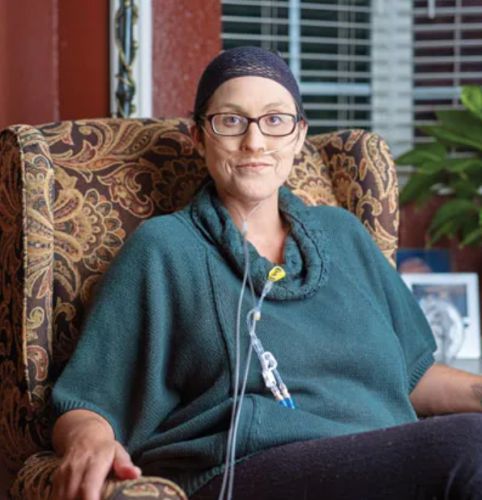
Allegation: An insurance company denied coverage for chemotherapy to Ms. Packer, a long-time anti-“assisted suicide” advocate, but approved or even offered her medications under the new California End of Life Option Act, with a co-pay of $1.20.
Facts: It is true that Ms. Packer’s insurance coverage was denied, in writing after first being approved verbally, for the treatment her doctor prescribed to replace the one she already had and that was covered by the insurance company. It is also true that insurance would cover aid-in-dying drugs. But in telling her story Ms. Packer omits certain pieces.
After receiving the letter denying her coverage, which did not mention medications that would be covered under the Act, she contacted the insurance company for an explanation.
She then asked the insurance company whether medications under the Act would be covered. In other words, Ms. Packer requested the information herself and was given the correct, if insensitively worded response that medications under the Act would, indeed, be covered and at what co-pay. Ms. Packer was not offered the medication in lieu of other drugs.
All of this happened without violating the California End of Life Option Act, which requires a patient to request this information and an insurance company to not include both denial of coverage and information about the availability of drugs under the Act.
Finally, according to Dr. Eileen Fingerman, who met Ms. Packer in Maine where she was flown in to present her partial story at a hearing on a death with dignity bill, Ms. Packer would not even qualify for medications under the Act.
Ms. Packer’s case is similar to that of Barbara Wagner in Oregon.
- “Insurance company won’t pay for woman’s chemo treatments — but physician-assisted suicide pills are approved,” The Blaze, 10/19/2016
Barbara Wagner*

Allegation: The Oregon Health Plan, a Medicaid program, denied coverage for Ms. Wagner’s prescription of her lung cancer treatment drug and informed her that the plan would cover medication under the Death with Dignity Act. Ms. Wagner appealed the denial twice, but lost both times.
Facts: The Oregon Health Plan covers nearly all chemotherapy regimens prescribed for cancer patients; OHP covered the multiple rounds of chemotherapy that Ms. Wagner received. Ms. Wagner’s request for the coverage of Tarceva was denied because of the drug’s limited benefit and very high cost (in order to cover nearly all chemotherapy prescribed for cancer, OHP, whose funds are limited, does not cover experimental, second-line treatments with limited benefit and high cost leading to the denial of access to well-established, first-line treatments for other cancer patients).
The denial letter Ms. Wagner received stated that OHP would pay for other end-of-life care options, including palliative care and physician-assisted dying, the provision of which is unrelated to denial of any coverage. The cost of end-of-life treatment is never weighed against the Death with Dignity Act; no treatment has ever been denied because death would be more “cost effective.”
The Tarceva manufacturer ended up providing Ms. Wagner with the prescribed medication free of charge, and Ms. Wagner died three weeks after starting the regimen.
- “The values behind state health decisions,” The Oregonian, 8/26/2008 (reprinted by the Right to Die Listserve)
Kate Cheney

Allegation: Kate Cheney’s physician and two mental health professionals felt she was not competent to make decisions and was being pressured by her daughter. The medical director of her HMO ignored these opinions and wrote a lethal prescription for her.
Fact: A mental health professional thought Ms. Cheney was indecisive but competent. He also noted that her daughter was a strong advocate, but that Ms. Cheney was not “pressured by her daughter” into considering using the law. He referred her to another mental health professional for a second opinion who also concluded she was capable of making the decision to use the Oregon Death with Dignity Act. Ms. Cheney’s physician did not claim she was incompetent; instead, he refused to write her a prescription, as is his right, because he does not support the Act as an end-of-life choice. The medical director of Ms. Cheney’s HMO, who provides oversight on all cases where a request has been made for a hastened death, determined that Ms. Cheney was competent and under no duress. At no time did the medical director ignore the opinions of the other physicians involved. Ms. Cheney held onto the prescription for three months before making the decision to use it.
- “Is Mom capable of choosing to die?” The Oregonian, October 17, 1999
- “Kate Cheney still doesn’t rest in peace,” The Oregonian, November 11, 1999
- “Kaiser didn’t push patient’s suicide,” The Oregonian, November 18, 1999
Joan Lucas
Allegation: Joan Lucas had advanced Lou Gehrig’s disease and tried unsuccessfully to commit suicide. When her physician requested a psychology consultation, she and her family “cracked up” over the silly questions. A psychologist felt she was depressed, but blamed this on her illness; her physician gave her a lethal prescription.
Facts: Only after her physician refused to support her decision to use the law did Ms. Lucas attempt to take her life with an overdose of sleeping pills. She did not know she could seek help elsewhere. When she received a psychological evaluation by a licensed psychologist, she was determined mentally competent and not depressed. The reason she and her family members “cracked up” over the psychologist’s questions is due to the use of a standard evaluation tool: the ailing grandmother was asked questions such as, “How is your sex life?” and “Has your hair ever been on fire?”
- “‘We knew she would do it’,” Medford Mail Tribune, June 25, 2000
- “‘I’m ready,’ she said,” Medford Mail Tribune, June 26, 2000
Pat Matheny
Allegation: Mr. Matheny was too ill to swallow the lethal pills, so his family “helped him out.”
Facts: This statement refers to Pat Matheny, a man who felt so strongly about Oregon’s Death with Dignity law that he allowed a reporter to chronicle his journey (the case was also documented in peer-reviewed literature). The “help” provided to Pat Matheny was simply his brother-in-law holding the glass while Pat drank the medication through a straw. At the urging of the opponents to the law, the case was thoroughly investigated by law enforcement. The state attorney’s office concluded no criminal act was committed.
- “Coos Bay inquiry finds no evidence of foul play in assisted suicide,” The Oregonian, March 13, 1999.
- “Kate Christensen Speaks with Pat Matheny, a Recipient of Lethal Medication under Oregon’s Death with Dignity Act,” Cambridge Quarterly of Healthcare Ethics, Volume 8, Issue 4 October 1999, pp. 564-568
“Helen”
Allegation: After two doctors found “Helen” to be depressed, her husband got the name of a doctor willing to write a lethal prescription from a suicide assistance group. This is an example of shopping for a physician who is willing to write a lethal prescription and another who will give mental health clearance.
Facts: Neither of “Helen’s” doctors found her incompetent; instead, they simply do not support the law. One of her doctors said she was sad about her pending death and characterized her sadness as a slight depression that did not interfere with her ability to make a rational decision. It was one of her original doctors who recommended that “Helen” call Compassion in Dying of Oregon, an organization that implements the Death with Dignity law.
It is appropriate and common for patients to request, and in some instances for insurance companies to require, a second opinion, when a clinical situation reaches a threshold level. To demean this process claiming it is nefarious “doctor shopping” is disrespectful to terminally-ill people and completely misleading.
It is also appropriate for patients to seek assistance in locating cooperating physicians once their own physician has refused to help.
- Peter Reagan, MD, “Helen,” Lancet, April 10, 1999, pp. 1265-1267.
Michael Freeland
Allegation: According to an Oregon physician, Dr. Hamilton, Michael Freeland had a history of mental illness, was incompetent and therefore should not have qualified to receive medication under the Death with Dignity law.
Facts: Five physicians involved in the case agreed that, at the time Mr. Freeland received his prescription under the Death with Dignity law, that he was mentally competent and that he was within six months of dying.
He was mentally competent when he got the medication, when he kept the medication in his possession, and when he chose not to use the medication.
Dr. Hamilton and his wife were apparently involved with Mr. Freeland for several months and never once raised an issue with any authorities while he was still alive and could speak for himself. Since that time they have used his private medical records for political gain and have been ordered by the family to cease. This case has never been reported to any authority and should be if what is alleged is true.
- Dr. Peter Reagan, MD; “Opponents of Oregon Suicide Law Say Depressed Man was wrongly given drugs,” The New York Times, May 7, 2004 (reprinted on the Right to Die Listserve)
- Hardy Myers, Oregon Attorney General, Oregon Department of Justice
- Michael Sims, Executive Assistant, Oregon Board of Medical Examiners
David Prueitt
Allegation: David Prueitt took the prescribed lethal dose in the presence of his family and members of Compassion & Choices of Oregon. After being unconscious for 65 hours, he awoke. It was only after his family told the media about the botched assisted suicide that C&C of Oregon publicly acknowledged the case. DHS issued a release saying it “has no authority to investigate individual Death with Dignity cases.”
Facts: Mr. Prueitt awakened 65 hours after taking the prescribed dosage of medication. He awoke fully alert but upset that he had not died as expected. He stated he did not wish to take another dosage of the medication. He was at peace with his decision and was kept pain free until his death. He died from his underlying illness 15 days later. This was the only case out of the more than 240 cases in the first eight years where someone awakened after taking the medication, a .004 percent occurrence. The reason he awoke was not officially confirmed, but most medical experts that investigated the case attributed it to the fact Mr. Prueitt took a strong, sweet laxative Lactulose prior to consuming all of the Seconal. The case was investigated by the Oregon Pharmacutical Board which determined that the dosage of Seconal was 100% secobarbital.
James Gallant, MD
Allegation: James Gallant, MD, was reprimanded for improper action for giving a lethal injection to a terminally-ill patient in 1996.
Facts: This case is not remotely relevant to the Oregon Death with Dignity Act. The events in question occurred before the Act was passed. Euthanasia, the alleged means by which Dr. Gallant induced his terminally-ill patient’s death, is explicitly outlawed in the Oregon Act.
* The case of Randy Stroup is practically identical to Barbara Wagner’s. Learn more here and here.
Debunking Falsehoods
Opponents of death with dignity laws use several falsehoods in their attempts to prevent legislation from passing.
We believe policy decisions affecting people with terminal illness should be made based on evidence and the actual content of the legislation.
Falsehood: “It’s (physician-assisted) suicide.”
Truth: Use of the term ‘suicide’ when referring to death with dignity is offensive and inaccurate.
Causes of suicide vary and are complex. Generally speaking, people who die by suicide would otherwise go on living if they have not ended their lives.
By contrast, requesting and taking medication under a death with dignity law results in the end of a life a life already ending. A patient’s primary objective is not to end an otherwise open-ended span of life, but to find personal meaning and dignity in their approaching death. By taking medication, they are acting to shorten their final hours or days.
Falsehood: “It’s (active) euthanasia.”
Truth: Euthanasia refers to the act of deliberately causing the death of another person who may be suffering from an incurable disease or condition, commonly performed with a lethal injection.
Euthanasia for humans is not legal anywhere in the United States.
Falsehood: “The law is a slippery slope (towards euthanasia).”
Truth: There is no evidence of this. Again, euthanasia for humans is against the law in the United States.
Falsehood: “Vulnerable populations will be coerced to use the law.” / “The law encourages vulnerable people to kill themselves.”
Truth: In another popular, scare-mongering, false claim, opponents allege that older folks, people with disabilities, low-income people, or ethnic/racial minorities will be encouraged or even coerced to use death with dignity laws. They allege that the existence of these laws encourages vulnerable or marginalized populations to prematurely end their lives.
These are lies.
Death with dignity laws provide a voluntary patient-driven end-of-life option to those who qualify and wish to use it.
Participation in assisted dying is strictly voluntary for both patients and their providers.
These laws exist only for patients who meet the eligibility requirements and who choose this option. The safeguards are effective and work exactly as intended.
In 2007, testifying before the American Public Health Association, Robert Joondeph, Executive Director of Disability Rights Oregon (DRO), said the only complaints his organization receives about Oregon’s Death with Dignity Act are “focused on the concern that the Act might discriminate against persons with disabilities who would seek to make use of the Act but have disabilities which would prevent self-administration, thereby denying these persons the ability to use the Dignity Act.”
In a 2016 update, Joondeph wrote that DRO “has still not received a complaint of exploitation or coercion of an individual with disabilities in the use of Oregon’s Death with Dignity Act.”
Falsehood: “Insurance companies will deny coverage for life-saving treatments and offer lethal medication instead.”
Truth: This has never happened, and it is not within the jurisdiction of an insurance company to offer any kind of medical treatment to replace another treatment.
The State of Oregon investigated this allegation, and Governor Kitzhaber—a physician himself—found the accusations baseless:
“…[S]ome have twisted the story of one woman on the health plan, making the appalling insinuation that services covered under Oregon’s Death with Dignity Act are prioritized over chemotherapy because it costs less for patients to die than to live…Nothing could be further from the truth.” Governor Kitzhaber concluded, “No treatment has ever been denied because death would be more cost effective. The very idea is both abhorrent and a blatant distortion of the facts.”
Falsehood: “Doctors will be forced to write lethal prescriptions.”
Truth: This is a lie. All providers may opt out of participating.
Falsehood: “People suffering from depression or other psychiatric conditions will use the law.”
Truth: The allegation ignores an important safeguard provision of assisted-dying laws.
All patients qualifying for a prescription to hasten death must pass medical screenings to demonstrate that they have the capacity to make healthcare decisions. Physicians must follow the standard of care for diagnosing capacity to make healthcare decisions, which includes screening tools.
Providers are required to refer patients with capacity concerns for a mental health assessment. A confirmation of impaired decision-making disqualifies the patient from the process.
Falsehood: “Unused medications will fall into the wrong hands.”
Truth: Medications prescribed under death with dignity laws are regulated by federal statutes. These medications are carefully tracked from the date they are prescribed to the date the person for whom they are prescribed dies.
Anyone who chooses not to ingest a prescribed dose or anyone in possession of any portion of the unused dose must dispose of the dose in a legal manner according to local laws.
Falsehood: “If a physician refuses to write a prescription, patients will go doctor shopping until they find a willing physician.”
Truth: This is a bogus, red-herring argument.
Every person has a right to choose the kind of healthcare they want. If a physician won’t or can’t prescribe for a person who qualifies, that person has every right to get a referral for a person who will help them.
Falsehood: “These laws lead to rise in suicides.”
Truth: This is another red-herring argument. There is no correlation between suicide rates and the use of medical aid in dying.
Originally published by Death with Dignity, republished with permission.
About the Author