
By Dr. Ângela Maria Vieira Domingues
Professor of History
Instituto de Investigação Cientíca Tropical
Centro de História de Além-Mar (FCSH/UNL)
Abstract
As part of a reflection on Atlantic history, I intend to reread the travel literature written by Europeans who stayed briefly at the Brazilian shore, so as to learn about the Portuguese empire -and particularly Brazil- from the inside and understand how the Portuguese and Luso-Brazilians of the colony were perceived. Travelers registered their impressions based on their own principles, and in some cases exaggerated the cultural differences they observed. This rereading makes it possible to evaluate the differences between a Europe constituted by nations, kingdoms and empires, and Mediterranean Europe. The travel literature, which did not have Brazil as final destination, could have disproportionate and unsuspected repercussions. The accounts showed Portugal and its colonies as similar to Spain and very different from the rest of Europe, at a period of affirmation of the national States and aggressive imperial external policies aimed at the South Atlantic.
Introduction
The concept of Atlantic history, of an ocean interconnected by the circulation of people, products, practices and ideas and “a passion for Atlantic things” is relatively new and still under discussion. Historians still discuss, conceptualize and redefine the purpose of the Atlantic as an analytical construction and as an explicit category for historical analysis, to be used to organize the study of the events that define Modern History -as the timespan between the beginning of ocean travels, the “Age of Discoveries” in the 15th century, and the “Age of Revolutions and Independences” or the abolition of slavery. From this point of view, the Atlantic Ocean appears as a space that connected the demographical, economic, social, cultural and commercial exchange between the three continents that surround it -including the archipelagos adjacent to those continents- and between communities that were and remained different from each other, both culturally and religiously. However, as people, goods and cultural practices, ideas and beliefs, information and techniques, pathogens and plants traveled across the Atlantic, there were profound and lasting transformations on both sides of the ocean, in the communities that already existed and those recently formed (Morgan and Green, 2009: 3).
The notion of an immense mass of water that facilitated communications between communities with different cultures has renewed the interest of historians in slavery and traffic as phenomena that involved both sides of the ocean and the two hemispheres, but also in other subjects, such as the voluntary and involuntary migration between the two continents. One of the issues that gained interest by the renewal of this emphasis was that of cultural encounters. Sources traditionally considered to be “creative literature” -especially travel literature and epistolography- are used to study cultural relations, the construction of images and formation of identities of European, African and Amerindian peoples. These sources are a contribution for the approach of this article.
But I would still like to point out another topic -already mentioned by Nicholas Canny- that is particularly pertinent for my subject of analysis as it is clearly linked to the previous issue; the constitution of a common information base about the Atlantic world that circulated throughout Europe. Thanks to the speed of oral, hand-written and printed circulation, travelers and seamen quickly spread this information, even in times of war and rivalries between nations (Canny, 2001: 401).
Although these issues are increasingly more valued by historiography, Europe was also a decisive element in the construction of this Atlantic world, thought as “A cosmopolitan, triumphant Europe, with the ability to impose laws, languages, political regimes, social and religious ways, customs and goods on the rest of the world, while remaining unscathed and unpolluted by any external contamination” (Souza, 2006: 69–70).

Europeans put people who had been separated for millions of years in contact with each other and transformed the ocean from a barrier into a way for communication and commerce; with travels of conquest and colonization, with routes of transatlantic commerce, with connecting channels for empires spread over more than one continent. This exchange made the Europeans of the Modern Age feel self-confident and superior in comparison with the civilizations and cultures they encountered in other places around the ocean (Bély, 2010: 123). These feelings of being different and superior stimulated the formation of an European identity. They were also the foundation for emotional, political, ideological, intellectual and cultural discourses that led to expansionist Universalist projects, such as the propagation of Christianity during the age of the discoveries or the dissemination of the ideals of civilization and progress during the European Enlightenment (Strath, 2010: 13; 28–29). This process is visible and determinant in texts about travels and in accounts of travelers.
I want to point out that despite efforts to develop a history of the Atlantic, the discovery and exploration of the South Atlantic and the establishment of colonial communities have been analyzed mainly as an extension of the national history of European kingdoms and the formation of empires. Undeniably, the sources for the interpretation of discoveries and expansion as the history of nations are now interpreted differently. This helps to clarify issues for current historiography. The reinterpretation is still contextualized on the history of a specific kingdom, as the colonial enterprise of a specific nation or as a piece of the puzzle to understand a specific empire. Many compilations about the Atlantic world are guided by this point of view, like the aforementioned Atlantic History, directed by Jack P. Green and Philip Morgan (Morgan and Green, 2009), organized in chapters about the “Portuguese Atlantic”, the “French Atlantic”, the “Dutch Atlantic” and written by remarkable historians; and the Colonial identity in the Atlantic World, directed by Nicholas Canny and Anthony Pagden, with a similar organization: the formation of a colonial identity in Brazil, in Spanish America, in British America (Canny and Pagden, 1987).
This compartmentalization shows one of the difficulties historians inevitably encounter: the inability to include and coherently relate all parts of the Atlantic, because of the multiplicity and complexity of its geographical and historical components, the huge amount of sources and also because of the formation or specific interests of each historian. Undoubtedly, these are important determining factors to consider. It seems to me that when historiography analyses sources, even when using innovative interpretations and perspectives, it mainly uses documents made by empires to obtain an image of the organizations, dynamics, internal functioning of the centers and peripheries and the relationships between them. Could it be possible to make other interpretations based on external views, that is to say, with information from travel literature written by authors who are independent from those empires? Would this help to obtain a more complex -though complementary- view, instead of the usual “inside” approach based on information made by the empires themselves?
The benefits and limitations of different historical approaches to the Atlantic have been amply evaluated. In an attempt to define the meanings, advantages, limits, and main structural tendencies of Atlantic history, Alison Games states that using this ocean as a geographical and historical unit deepens our perception of long term transformations and makes it possible to reinterpret old topics from an innovative point of view. So, these authors consider that the Atlantic as a subject of study is no less evident and coherent -even while it is more artificial- than the Mediterranean as studied by Fernand Braudel: despite the enormous extensions of the continents that surround it; the infinity of climates and micro-climates; the populations that lived around it and their multiple languages; or even the profound ignorance there was about these areas and their inhabitants. Games points out that writing history from an Atlantic perspective can be particularly challenging and motivating, and illustrates this with the three axes that, according to her, unite the main studies about Atlantic history: (1) transatlantic traffic and the African diaspora, with captives shipped to Europe, the Caribbean and the Americas, especially Brazil; (2) colonial societies in the Americas, from the perspective of the history of European kingdoms and colonies, sometimes comparing the two; (3) the empires in an Atlantic context (Games, 2006: 741–757).
A pertinent objection to this enunciate, shared by this author, is that colonial and imperial studies tend to analyze the regions from an European point of view and from the national geography of the empire in question. Therefore, there are not many studies that cross (physical and cultural, historical and current) borders, be they imperial, national or regional (Games, 2006: 744).
I think this observation about a national paradigm is even more accurate if one considers that viewpoints of this type imply that “historians who confine themselves to the Atlantic ventures of individual nations can lose sight of the dynamic interplay across national boundaries that characterized the early modern Atlantic” as pointed out by Erik Seeman, cited by Williams (2009: 4).
Caroline Williams defends that though this is not the only hindrance put to Atlantic historians, it is undoubtedly one of the limits to consider. The great challenges they pose are: (1) give more attention to the regions, communities and groups that have been less studied by historiography; and (2) find ways to interconnect the frontiers of nations and empires in which many historians remain, because they recognize the difficulties to research in different countries and languages. Also, sometimes a study like that is not considered to be valid or worthwhile in a certain area of specialty or in the accustomed historiographical current (Williams, 2009: 4).
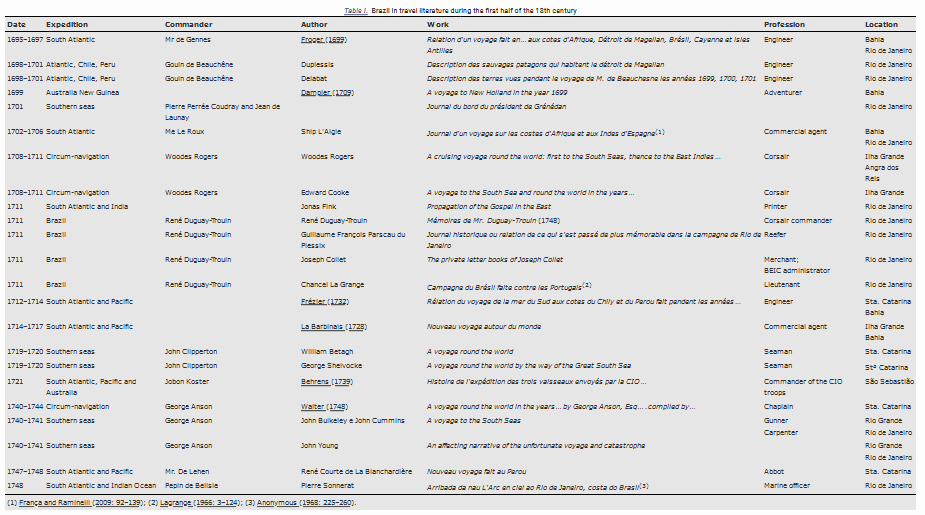
My proposition here is to look at how European travelers who crossed this ocean (table I) saw the Portuguese and Portuguese America and how the information they produced, in theory guided by preoccupation with objectivity, precision and scientism characteristic of the 18th century, was conditioned by the information -the “cultural matrix”- they already had of the Portuguese. And also, how the descriptions of this important peripheral part of the empire affected the image of the Portuguese nation the cultured Europeans of 18th century imperial centers had.
The Idea of a “European Community” as an Enlightenment Project? Empires, Kingdoms, and Identities

It is important to clarify that with this brief mention to the afore mentioned studies on the Atlantic world and Atlantic history I do not intend to dwell upon the discussion about methodological concepts and issues; these only serve to contextualize this article and to put the multiple meanings of the Atlantic in perspective. Here, the Atlantic is the stage where the different players carry out the actions I am studying. That is to say, the European travelers of the first half of the 18th century and the registers they made of colonial Luso-Brazilian society.
I think it is important to point out that the men of the 18th century did not have the notion of an Atlantic world as a unity established by the sea. They never used this concept, nor did they have a coherent view of the ocean as a unity[1]. The Atlantic world was not, and is not, a world united by one culture, but an intellectual abstraction created by the interaction and interlinking of many and diverse cultures and peoples, a space where people, products, goods, ideas circulated in a transnational space (Cañizares-Esguerra, 2007: 787–799).
For the Europeans of the 18th century the ocean was, first and foremost, a means of movement and communication. They knew the dominant winds and currents, islands and ports of call that determined the routes of ships; there were unpredictable storms and calms that made sea travel difficult and harmed ships and food; these travels were feared because of the diseases and unforeseen events that could arise at any moment during the navigation. It was a way to reach the African or American coasts, to get to other regions that seemed fascinating for many European countries on an economical, scientific and political level -like the southern seas and still unknown regions for dominion and colonization; or the East and the Chinese empire that had an interest for the exchange of goods, merchandise and scientific knowledge.
Besides the idea of the ocean as a transnational space where Europeans circulated, I want to stress that I set out from the following:
- Bo Strath categorically states that “The idea of Europe as a community belonged to the Enlightenment project” (Strath, 2010: 28), a community that stood out from other societies -like the African or Amerindian societies, that were considered to be intrinsically different, primitive and inferior. Europeans felt they had a mission to spread Catholicism and civilization, well-being and progress in those societies[2]. In this same line of thought, Juan Pimentel suggests that in this period, Europe had a common culture and feelings of belonging and identity that were intensified by encounters with other cultures outside of Europe; so these encounters implied both contact and distancing (Pimentel, 2003: 14). Despite these statements, I cannot defend the idea that 18th century Europe was considered to be a whole (Harvey, 2008: 75). Besides being constituted by different nations, kingdoms and empires, there was a Mediterranean Europe formed by Iberian peoples that was different from the rest of the continent. For some north Europeans, like Joseph Banks, the Portuguese and Spaniards were “far behind all the rest of Europe” on the scale of civilization, a scale drawn up by differences: of climate, race, religion, government and judicial systems and by the lack of interest in science and technique. Spaniards were defined as brutes, ignorant, savages, barbarians and the Portuguese were considered to be indolent, superstitious, prejudiced and ignorant (Domingues, 2011: 46).
- Of course, I acknowledge the importance of the interactions between monarchies in Europe, in terms of political, diplomatic, ideological, political-dynastic relations, for the understanding of discourses and imperial policies and for the framework of relations between the citizens of different empires around the world. The exercise of power in the colonies was deeply interlinked and related to the exercise of power in the centers of the empires. I subscribe to the idea of Eliga Gould that “that is often at the margins where imperial nations most fully enact their histories and identities” (Gould, 2007: 1416). It is in encounters in the colonies and at the colonial frontiers where one can most clearly see the interrelations between representatives of different powers of the empires; for example when travelers observe, compare and describe the colonial societies at the shores of the Atlantic and individual or group behaviors. Cultural differences were probably exaggerated by travelers and sailors when they encountered societies that were not their own and over which they wanted to show some kind of superiority or gain some profit (Reynolds, 2006: 161). Predictably, they developed feelings of recognition and affinity or incomprehension and wonder. This presupposes the existence of one single European cultural matrix and an European cosmopolitan sociability, as well as different identity principles according to the differences between nationalities. They show the rivalries and antagonisms that existed between nations, particularly in the case of rivals who competed to establish ultramarine imperial projects and in the navigation of the seas (Domingues, 2011).
- I obviously agree with Games (2006: 747) in that Atlantic history is not exclusively about geographical or thematic points of contact, both physical or thematic (for example, ports, merchants, migrations), but also about looking for a deeper explanation and contextualization, putting phenomena in a multifaceted and interrelated global context. I would also argue that many times, occasional contacts in ports or between individuals can have disproportionate and unexpected repercussions. I am thinking, for example, how a short stay in exotic and unknown places can influence and remain in the European imaginary and mentalities if it is amply spread by literary and visual registers -by travel literature- and for a long time influence the image cultured Europeans of the 18th century had of other worlds beyond their frontiers and at the other side of the sea. I also think that the information spread by travelers about these transitory, specific situations was generalized and amplified by cultured European readers to a richer and more diversified reality: to the whole colony and its society[3].
Given these issues, I intend to make a reinterpretation of the accounts of travels in the south Atlantic during the first half of the 18th century -accounts that are normally descriptive, emphasizing customs and the picturesque, the way in which travelers saw society, administration and economy in the Brazilian colony. Now I use these accounts to see how this literature contributed to explain and validate the cultural differences in Europe.
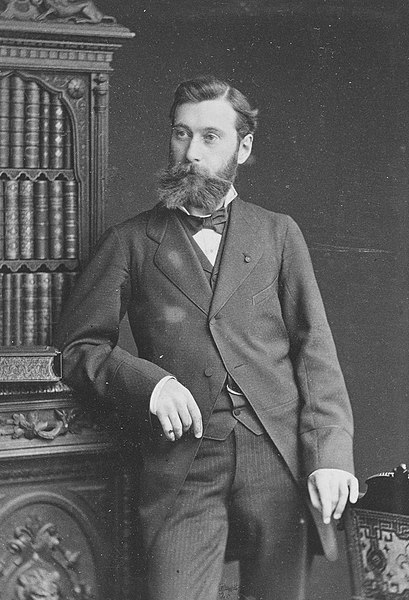
In its global mission, Europe was considered to be one – united by a blind belief in the superiority of its civilization, where reason, progress, science and technology was used in the search for well-being, happiness and the common good of subjects and humanity. But internally, Europe was not conceived as one entity. This is the line of thought of Zacharie de Pazzi de Boneville, Joseph de La Porte and Guillaume Thomas Francois Raynal. The travelers’ accounts ascribed specific characteristics to Portugal that made it similar to Spain and different from the rest of Europe -a Europe that, in this period, was determined by the reinforcement of national states and aggressive imperialistic external policies, particularly in the south Atlantic seas.
Providential Design and the Equilibrium of the Universe: Differences between the Two Europes
In 1725 the French editor François Flahault published an account of the first Frenchman who made a journey of circumnavigation. In his first passing in front of the Brazilian coastline, Guy Le Gentil de La Barbinais anchored off Ilha Grande because he was afraid to get to Rio de Janeiro[4]; in his journey back he anchored off Bahia and stayed there four months making a description of the city and its inhabitants.

Reflecting about Portugal and the Portuguese, Le Gentil de la Barbinais mentions a rather strange but interesting episode. According to the mercantilist logic of the time, in 1709 D. João V had met with his Conselho de Estado to discuss the advantages and disadvantages of extracting a significant amount of gold from Brazil to introduce in England, Holland and France in exchange of manufactures and luxury products. He wanted to know the opinion of his royal councilors about the advantages of manufacturing products for consumption in the kingdom, so as to control the circulation of gold, maintain wealth in Portugal and increase the power of the sovereign and the nation. Henri de Massue, second marquis of Ruvigny and first earl of Galway, Ambassador Extraordinary of the British court in Portugal, expressed his opinion in an astute and ingenious manner[5].
According to the ambassador, Providence had its own plans. France, England and the northern countries were poor and their lands only produced iron, lead and crude metals. On the other hand, Iberian monarchs were lords of a new world where the earth produced gold and silver and the lands food and commodities in abundance. That is why Providence had, out of need, made North Europeans into hard-working, resourceful owners of manufacturers, while the Portuguese and Spaniards were inevitably indolent, rich, but owners of gold and silver.
So, the Iberian inclination towards indolence was not a natural characteristic, but something inspired by Providence:
“ils ont été contrains de recourir à leurs voisins, gens pauvres, mais laborieux, & qui depuis longtemps leur fournissent les choses nécessaires à la vie. Cette coutume est devenue une nécessité: vous la regardez comme un joug que les étrangers vous ont imposé, croyez-moi, ne secouez point ce joug: si vous vous passez aisément des François, des Anglois &c., ces Peuples ne pourront se passer de vous & ils viendront à main armée vous arracher cet or qu’ils regardent comme un dépôt que la Providence a remis entre vos mains (…) il n’est pas juste que vous avez l’un & l’autre. Cette ambition seroit contraire aux décrets de la Providence qui veut qu’il y ait une espèce d’équilibre par tout l’Univers. Votre or est destiné à l’achat de nos marchandises, & nos Marchands ne travailleroient plus si vous vous mêliez aussi de travailler. Restez donc dans votre indolence, puisqu’elle est le lien de la société entre les peuples de l’Europe” (“They have had to turn to their neighbors, poor but hard-working people, who for a long time have provided them with the necessary things of life. This custom became a need: you see it as a yoke imposed by foreigners, believe me, do not take that yoke off: if you calmly do without the French, British, etc., these people will not be able to do without you and they will come armed to snatch away that which they consider to be a deposit Providence has put in your hands (…) It is not fair that you own both things. That ambition would be contrary to the decrees of Providence that wants there to be equilibrium in the Universe. Your gold is destined to buy our merchandise and our merchants will no longer work if you join their activities. So maintain your indolence because it is the union of society between the people of Europe”) (La Barbinais, 1728: 140–142).
The British ambassador Henri de Massue was a French born diplomat and soldier, renowned for courageous action in service of the British Crown during the Nine Year War and the Spanish War of Succession, and appointed commander in chief of the British armies in 1708 by Queen Anne. In his speech, he explained and legitimized a division between two “Europes” separated by the Pyrenees in the name of a metaphysical entity, Providence. This division defined the condition of Portuguese and Spaniards in their relationships with other Europeans. The speech also disclosed a threat from the person who used to be the supreme general of the British troops during the campaigns of the Spanish War of Succession.
So, the ambassador defended the idea that every nation had a role in the world and that this did not discredit the states, as it was part of a superior and legitimizing inevitability, of pure chance that benefitted some with favorable national conditions and stimulated others with the lack of natural resources. This natural order dictated by Providence must not be altered by human will and any initiative to change His plans would lead to an offensive by peoples defined as “more laborious and resourceful”. That is, the new European potencies that had financial, naval and military power. The gold that until then had been acquired peacefully by commercial trade would be snatched away by the use of force.
The death of Charles II of Spain and the crisis of monarchical succession of the biggest European kingdom affected the political equilibrium of Europe. In Portugal, D. Pedro II was a serious competitor for the Spanish throne and was allied with Austria, England and Holland in an attempt to ensure a better control of maritime commerce, despite the alliance treaty with France of 1701 and the initiatives of Ambassador Extraordinaire Rouillé (Teixeira, 1997: 71–88).
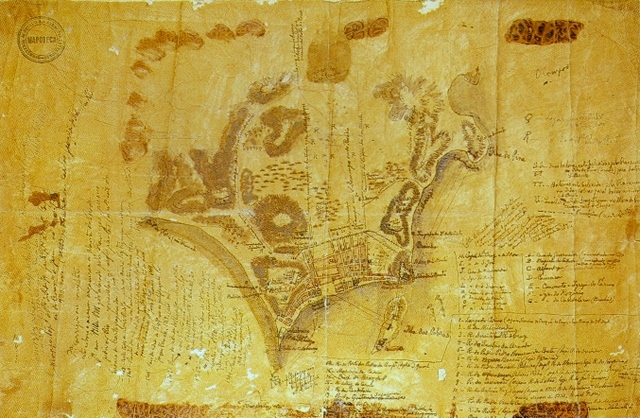
France and England participated alongside Spain and Portugal in the war campaigns and this war scenario had repercussions in overseas territories – the French burned down Benguela in 1705 and looted Principe in 1706, São Tomé in 1709 and Santiago de Cabo Verde in 1712, and attacked Rio de Janeiro in 1710 and 1711 (Bicalho, 1998: 7–36). So, the latent and open rivalries of the two northern European potencies could easily relocate to the seas and overseas imperial domains, involving other kingdoms and other colonies that were particularly interesting for their natural riches and productions. Overseas territories were decisive for the equilibrium of the European forces and had a growing importance in the political, economic and military relations of the great potencies. Brazil was to have a nuclear importance in an empire “more than ever predestined to an Atlantic fate” (Bicalho, 1998: 10; Souza, 2006: 105).
This representation of Iberian peoples, and in this case, the Portuguese as indolent and wealthy, is recurrently used by La Barbinais. Like Galway, this traveler is a fervent believer in Providence and Its plans, and following this logic he defended that the Portuguese were only diligent when need forced them to work. In America where nature was so fertile -with a climate of eternal spring; trees unknown in Europe, of amazing height and beauty; orange, lemon and fruit trees that grew spontaneously; fishing was abundant and of exceptional quality- there were not many incentives and challenges for the Portuguese-Brazilians, who were only “laborieux quand ils ne peuvent trouver d’autre ressource que dans leur travail” (“hard-working when they could not find any other resource than their work”) (La Barbinais, 1728: 15).
The kindness of nature was frequently contrasted to the lack of resources of the Luso-Brazilians to beautify or improve the tactical importance of a place through “arts” and technique: foreigners from the north, especially Dutch and Frenchmen, made the most relevant constructions, like fortresses, ports and other public works. According to La Barbinais, during the dominion of Maurice of Nassau, the Dutch had built fortifications and other works of such utility that if the Portuguese had taken the time to finish them, possession of the territory would have been certain: “& on peut dire qu’ils firent plus d’ouvrage en deux ou trois ans, que les Portugais n’en ont fait avant leur arrivée, & après leur retraite” (“and one can say that they worked harder in two or three years than the Portuguese did before they came and after they went away”) (La Barbinais, 1728: 128–129).
Likewise, when referring to his own period, he highlighted the work of a French military engineer he had met in Bahia and who was responsible for the construction and repair of several fortifications, especially on the carioca seashore. He was talking about Jean Massé, an exile who, just like Henri de Massue, looked for refuge in England after the revocation of the Edict of Nantes, serving first as a colonel and later as brigadier of Lord Galway in the War of Succession. This engineer then went to serve the Portuguese monarch and was sent to Brazil. In the colony, he was responsible for the drawing and building of architectural projects destined to improve the defenses of Rio de Janeiro, Santos and Bahia, and the reinforcement of Luso-Brazilian military presence in the main ports where gold from the Cataquases mines was shipped, a presence permanently needed due to the attacks of Duclerc and Duguay-Trouin (Bueno, 2009: 124–125; La Barbinais, 1728: 166-7).
As for the image La Barbinais draws of Luso-Brazilian colonial society, it is important to remember that his vision was determined by his contacts. These were the result of a brief stay in Ilha Grande and a four-month stay in Bahia. As is to be expected, his observations are mainly about the colonial society in Bahia and he transfers them to the rest of Brazil and the Portuguese born there and other residents.
According to him, Brazil was not more than a refuge for criminals and murderers, with no subordination or obedience whatsoever, who nonetheless pretend to be the most civilized people in the world: “rien n’est plus trompeur que leur physionomie, honnêtes & affables en apparence, ils ne font pas moins adroits que les Chinois a cacher la haine qu’ils ont pour notre Nation” (“nothing fools more than their physiognomy, honest and pleasant in appearance, they are no less skilled than the Chinese to hide the hate they have for our nation”) (La Barbinais, 1728: 144–5). This hate is explained by the wars initiated by the French at the shore and the occupation of Rio de Janeiro.
La Barbinais used the viceroy’s officials and the judges of the council of finance as paradigmatic reference: despite their scrupulous and grave air, their serious and composed manners, their civil and generous behavior with which they imitated “the French way” -with little gifts of fruit, sweets and wine they offered to travelers – he presented them to his European readers as refined, hypocritical, corrupt persons that made travel authorizations dependent on gifts. These were not just boxes of tea, lacquer and other Chinese trifles, but other, more important gifts: “en effet ce sont des Parasites affamez qui regardent les Etrangers comme des duppes que la fortune leur livre. Si l’Etranger tarde trop à témoigner sa reconnoissance pour ses services & les présents qu’il a recûs de leur part, ils changent de manières & deviennent ses ennemis” (“indeed, they are hungry parasites who look at foreigners as deceivers sent to them by fate. If the foreigner takes too long to give them recognition for their services and the presents he has received from them, they change their manners and become his enemies”) (La Barbinais, 1728: 144–145).
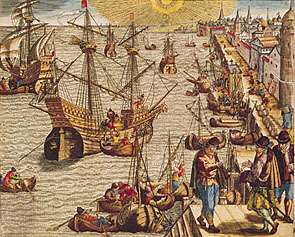
These courtesans and officials were the main culprit for the delays in repair and supply of ships, as well as the workmen in the docks, who never forgot to have a siesta after lunch. Everything was done with an incredibly slow pace and any activity related with travel (fairing, caulking, carpentry and provisioning of ships, disembarking and taking care of the sick) depended on formal authorizations, with indispensable and slow bureaucratic proceedings. Without the latter, workers would not perform their functions.
Besides corruption and inefficiency, another characteristic of this colonial population was licentiousness in all social classes and genders; men and women, secular and religious people, freemen and slaves. La Barbinais noticed that the Portuguese born in Brazil preferred black or mulatto women; the shamelessness with which the clergy publicly flaunted their relationships, taking on their lovers’ names; the way in which ladies shared the profits of the prostitution of their female slaves; the licentiousness and lack of rules men and women lived in. These excesses made the Portuguese of Brazil similar to the Spaniards of Peru: “le même esprit de débauche, d’irréligion, d’ignorance & de présomption est répandu par toute l’Amérique” (“the same spirit of corruption, of lack of religion, of ignorance and presumption is present in all America”) (La Barbinais, 1728: 148).
Commerce was the incentive of this society, mainly in luxury items and the traffic of slaves: “Le commerce est considérable au Brésil & le luxe de ses habitants le rend nécessaire” (“Commerce is considerable in Brazil and the luxury the inhabitants live in makes it necessary”) (La Barbinais, 1728: 133–135). The fleet from Lisbon carried silk from Genoa, cloth from England and Holland, textiles with gold and silver threads from Paris and Lyon, wine, oil, flour and salted meat, in exchange for sugar, tobacco, cotton, oil whale, leather and gold powder. The ships that traveled from Bahia to the African coast carried tobacco, hard textiles from England and some gold for lucrative commerce. They brought back slaves: for personal service or rental, destined for the cultivation of sugar, manioc and tobacco and also for mining. Both the poor of Ilha Grande and the rich merchants of Bahia depended on slaves.
“Bringing Riches and Happiness to the Kingdom of His Majesty”: Colony, Raw Materials, and African Slaves
The account by Le Gentil de La Barbinais has an exceptional impact, in my point of view not only because of the large amount of information he gives about the Brazilian shore where he lived longer than most other travelers did, but also because he transmits and applies the thoughts of Lord Galway, who had political and diplomatic importance. His ideas about the differences between the two “Europes” were shared by many, and were clearly to be seen in overseas domains. These “reflections”, based on a unique way of seeing and facing the world -of white, western, heterosexual males (Vázquez García, 2007: 20) – I explained and in a way legitimized the relations of dependence and domination, of inferiority and superiority between the different European countries. This is reflected in travel literature. “Travelers write about what they see, and their perceptions are shaped by the cultural context from which they come and by all that they have read and experienced in that culture” (Bassnett, 2003: xi).

The Enlightenment was a culture that valued above all the knowledge of nature -attempting to order plants and coastlines, men and seas under scientific logic- and as such produced accounts aimed at spreading unknown scientific information about exotic and distant worlds. It also spread observations that implicitly contained national preconceptions, with inevitable repercussions on a political, economic and scientific level (Valverde and Pimentel, 2004: 15; Broc, 1969: 143). The accounts had political implications of undeniable importance because besides scientific content -rigorously observed and never published before – and adventures and heroic acts by sailors, scientists and soldiers, they also expressed the conscience of its authors, as members of a nation and contributors for the construction of national memory and culture (Goulemot, 1990: 19).
After these statements, the question is: what image does this travel literature give about Portuguese America? How do these accounts -printed and spread with enormous speed- interact with the images and prejudices of Europeans, and how do they alter the European representations of Brazil and the Portuguese? How did they confirm or doubt the stereotype of the Portuguese as lazy, prejudiced, indolent, and incapable of using science and technique for an efficient exploitation of their American colonies? And how were these scientific principles used to legitimize this idea of incapacity and incompetence of the Portuguese with regard to their colonial domains? What are the consequences this literature and images had in Europe so as to justify imperial ambitions of annexing Brazil?
The travel literature of the first half of the 18th century is modeled on asymmetric relations of dominion and dependence, by feelings and prejudices in the main ports of the Brazilian colony, commercial and maritime squares of an unequivocal “Atlantic vocation” -like Rio de Janeiro, Bahía, Santa Catarina- places of contact and interaction, where different cultures clashed and intermingled. These cultural differences could be determinant for the relations between European vassals present in Brazil.
Far away from their country of origin, mathematicians and astronomers, doctors and naturalists, merchants and diplomats, sailors and missionaries saw themselves in the relations with subjects of other countries as proud and worthy representatives of their nations. This was particularly noticeable in the dynamics of powers in the most elementary gestures by travelers or hosts: for example in the protocol of greeting between foreigner ships and colonial fortresses- with the same number of artillery rounds (Froger, 1699: 70, 134); in visits of courtesy and with small presents for the governor (Froger, 1699: 135; França, 2012: 479); in testimonials about the behavior of others -evaluated as rough, pusillanimous or boastful (Froger, 1699: 67–68); and even in the tense atmosphere when ships from enemy nations crossed each other in Brazilian ports.
In a Luso-Brazilian universe -strange, exotic, uncivil, and apparently chaotic, sometimes of doubtful and subversive morality- travelers tried to identify potential interlocutors and allies. In those places, if the degree of civilization of the Portuguese could not be measured by infrastructure and technical-scientific constructions -as has seen the seventeenth-century Dutch were better-, it was evaluated by character, behavior and friendships, and by the proximity travelers established with prominent figures of the colonial society, like viceroys and governadores–generais. The willingness of these personalities could mean protection and sympathy, or be translated into alliances of strategic value that were determinant to attain goods, repairs and provisioning of ships and favorable commercial transactions.
These personalities were identified according to the pre-eminence of their position, competences and lineage; additionally, codes of behavior and conduct -understood as etiquette, the dominion of other languages- was considered to be an unequivocal sign of cosmopolitism and culture, and shared by the main figures that governed the colony[6]. Froger points out that D. João de Lencastre, governador–general of Brazil and one of the most prominent men of the kingdom, had given some amethysts and refreshments to the captains of the French squadron; while William Dampier emphasized the presumed English ascendancy of the governor because of his polite and civil behavior and because he considered the English subjects his compatriots (Froger, 1699: 135; Dampier, 1709: 52)[7]. Likewise, La Barbinais (1728: 117–118) highlighted the affable, upright and enlightened conduct of Pedro António de Meneses Noronha de Albuquerque, second count of Vila Verde, first marquis of Angeja, in his relations with the French[8]. The viceroy seemed to be an ally of French officials, particularly when he took their side in several audiences and reunions of the Conselho da Fazenda.
In the first half of the 18th century travel literature did not include any criticism about the absolutist, despotic and unpredictable (whimsical and unexplainable) behaviors of Portuguese governors, or any contempt for the crass ignorance and lack of interest in science (because of prevailing catholic dogma) as Joseph Banks and Louis-Antoine de Bougainville would do later on. Froger, La Barbinais, Rogers and John Young praised the polite, kind, loyal and upright conduct of viceroys and governors and the way in which this behavior contributed to maintain the controlled equilibrium of naval forces in South Atlantic seas when subjects of European nations at war crossed in Portuguese Brazilian ports.
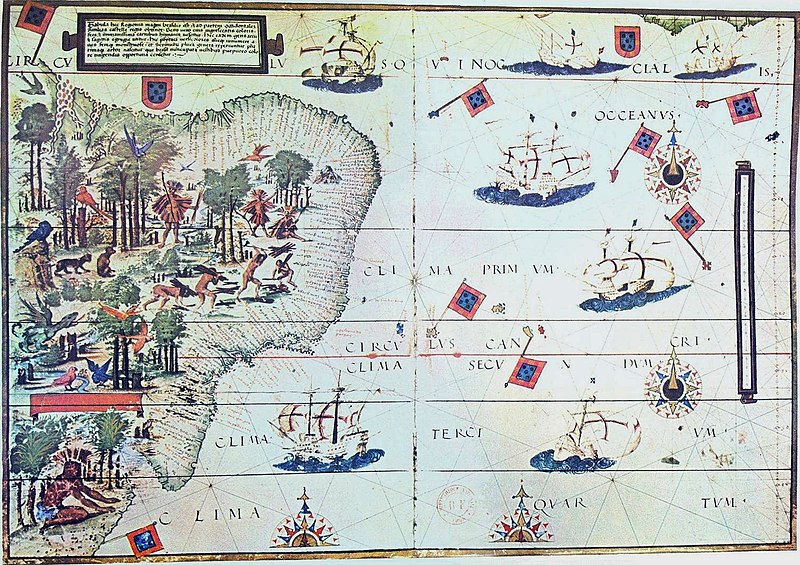
The travel registers were intended to pass on observations in foreign lands about navigation and the localization of ports and sandbanks, exact descriptions of animals, plants, fruits, metals, and reliable investigations about commerce, defense, government and the local customs. However, they were shaped by the prejudices of northern European societies, especially in what was concerned with the ideas about Luso-Brazilian society in the tropics, a multi-ethnic and multicultural society.
The reports, accounts, descriptions, letters to family, friends, diplomats and merchants; and the maps, illustrations and drawings that accompanied many of these registers contributed to the image of Portuguese America as a very rich and prosper colony, commercially desirable, with ports with hectic activity, easily capable to provision the fleet headed for Lisbon. Some of the provisions were essential for survival aboard, others were raw materials highly valued in European markets. Some of the latter were white refined sugar, plug tobacco and snuff, wood for naval establishments, construction of houses and furniture, plants for dyeing textiles in vermillion, indigo and ochre, cotton, rice, corn, leathers, fats, oil whale, fruits and vegetables, birds, fish, tortoises and shellfish. But this colony was also able to produce Indian ginger and pepper, Ceylon cinnamon; oils, barks and balms that healed wounds and placated fevers and syphilis, like ipecac and copaiba; antidotes to the most aggressive poisons and powerful diuretics, like parreira–brava; and other products of unknown qualities and uses that were investigated in European scientific academies like the Royal Society and the College de France, medical institutions, acclimatization gardens like Jardin du Roi and Kew Gardens, and industrial organisms (Domingues, 2006: 150–174). Finally, the colony was valued as a producer of gold that promised “wealth and happiness to the reign of Your Majesty” and was used as common currency in ports. Gold was extracted from the mines close to the seashore, in Rio de Janeiro and Bahia, in Santos, Parati and Angra dos Reis: “This is the land of piaster”[9].
This potentially bottomless natural wealth, praised in accounts of travelers, contrasts with the lack of information on manufacturing industries[10]. There are mentions to individuals who performed tasks related with urban life, especially in ports -blacksmiths, tailors, tanners, locksmiths, carpenters, canoeists, caulkers- but the modesty of these day-to-day activities seemed inadequate and disproportionate to conveniently take advantage of the natural resources[11].
These same sources stated that the African slaves were the engines of this society. Slavery was the predominant form of work in an economy characterized by the plantation system and mining destined for export. Prominent historians point out that this was specific of the way the Portuguese assimilated the Old Regime in the tropics (Souza, 2006: 68–9). A perverse recreation, fed by the traffic of slaves and slavery, by the work of African negroes, a constant and dominant presence in large cities and small villages, at the seashore and inland, in haciendas and sugar refineries. They performed every task, working as manufacturers, fishermen, carriers of merchandise and people, in agriculture for export and for own consumption, in the extraction of gold, in domestic service: “les dix-neuf vingtièmes des gens qu’on y voit, sont de Noirs & de Negresses tout nuds, à la réserve des parties que la pudeur oblige de couvrir, de sorte que cette ville paroît une nouvelle Guinée” (“nineteen of twenty people one sees are naked black men and women, only covered where modesty so requires, so this city seems like a new Guinea”) (Frézier, 1732: 275; Dampier, 1709: 61; Souza, 2009: 1–17).
In the streets of seaside cities there were clusters of black men and women, taken from the African coasts for the gain of some and because of the indolence of others. They were destined to serve the magnificence of the rich and contribute to the leisure of all. Likewise, the little information there was about mines was populated with black figures who exploited gold in seams; their subsistence depended on the amount of gold they provided.
The slave trade was done in small ships built in the dockyards of the colony. They circulated between the two sides of the Atlantic to put the three main Brazilian ports in contact with Angola, Gambia and Guinea. This intercontinental trade was dominated by merchants from Brazil and generated an important part of the wealth of the colony. Tobacco, beads and rough cotton textiles from England and Cape Verde were traded for ivory, gold, wax, rubber and slaves (Ferreira, 2001: 341–378).
Africans were exhibited naked and sold in stores. This was criticized as inhuman and contrary to the exaggerated ostentation of Catholicism of the slave owners, who assiduously frequented churches and processions. Just as with animals, slave owners had the power of life or death over the Africans they bought: “on peut les tuer presque impunément ou du moins les maltraiter si cruellement qu’on veut” (“one can kill them almost with impunity or at least mistreat them as cruelly as one wishes”). This practice did not change, even though after catechism and baptism, theoretically they were considered to be children of God just like their white brothers, according to the laws of God (Frézier, 1732: 176).
As for natives, Indians were greatly absent from these accounts. Apparently, their physical presence was not clear to these travelers, who recounted how whites -not only Portuguese or creoles, but also, in a smaller number English, French, Spaniards and Dutch- dominated the stage in the main cities of the coast, together with negroes and mulattos.
Nonetheless, I perceive that natives are indirectly present, particularly in the understanding of nature and exploitation of its resources, which were so valued by Europeans. For example, they knew the names of fruits, birds, animals and their proper use. This underlying native knowledge was acquired by colonists and learned by travelers later on. This knowledge, the denominations and proper use of natural produce, was highly valued in 18th century Europe.

Froger is the only one who mentions Indians, when he writes that -just like Negroes-they were used in sugar refineries of the carioca coast. He also mentions them in relation with the plundering by Sao Paulo pioneers (bandeirantes) in the de la Plata and Amazonas river basins. This author tells that in four to five months they took almost 300–400 Indian slaves who, like cattle, were brought to plantations or goldmines. Likewise, he points out that to escape colonial domination the “poor natives” of the Bahia area withdrew to the jungle from where they attacked the herds of colonists in order to eat. And they criticized the Portuguese for not acknowledging a freedom they were owed as natives of Brazil and because the innumerable missionaries from all religious orders in the colony did not take care of their evangelization and religious assistance: “ils se soucient peu de la conversion d’un nombre infini de pauvres Indiens qui ne demandent qu’a être instruits des lumières de l’Evangile; & il n’y a dans tout ce vaste pays que huit ou dix bons Pères Capucins François & quelques Jésuites, qui s’employent avec un zèle extraordinaire à ces saintes missions” (“they care little about the conversion of an infinite number of poor natives who do not ask for more than to be instructed in the lights of Gospel; and in this vast country there are no more than eight or ten good French Capuchin fathers and some Jesuits, who dedicate themselves with extraordinary zeal to their holy missions”) (Froger, 1699: 74–75; 145–146)[12].
At this point, it is important to note that in these texts about Brazil, European travelers mentioned and praised the strategic value of the colony as a port of call and support for ships that were headed for the Southern Seas, the Spanish Indies and the African and Asian colonies. A stopover at the Brazilian coast could be vital after a long Atlantic journey, during which drinking water and food went rotten, crewmembers and passengers got sick and died. But above everything else, these accounts valued the wealth of natural resources of the colony that the Portuguese failed to use conveniently and the frailty of a colonial society formed by Portuguese and Luso-Brazilians -considered to be prejudiced, lazy, libertines, corrupt and incompetent- and dependent on slavery and the forced labor of Africans.
Travelers linked this image with the taste of the wealthy Luso-Brazilians for luxury products, almost all made in northern European countries[13]. Portugal imported manufactured products and exported traditional (like wine, salt and oil) and tropical products, gold among others. Fleet came from the kingdom loaded with delicate linen and silk clothes from England; with refined textiles from Genoa and China, batiste from Holland, cloths warped with gold and silver threads from France; arms from Germany, spices and lacquers from the Far East. These wares were literally bought for their weight in gold in Brazilian markets[14].
The pacto colonial that gave the Portuguese and Luso-Brazilians exclusivity in commercial transactions with the colony -particularly with sugar, tobacco and gold for European markets- protected this commerce. This maintained a relationship of dependence and submission from the colony with regards to the crown, in which the first would constitute a factor of economic development of the metropolis in the process of accumulation of the mercantilist economy[15]. The maritime routes that crossed the Atlantic suited the monopolies in favor of the kingdom’s commercial interests and prohibited, at least in theory, direct commercial exchanges with foreigners.
Despite the colonial pact and the legal impediments to the presence and permanence of foreigners in the colony, some crowns used their political power to benefit their subjects in colonial commerce and attain direct access to South American colonial products. For this, the consuls in the ports of biggest commercial activity represented these subjects: Bahia, Rio and Pernambuco. Such was the case of the Briton Mr. Cock, mentioned by Dampier, and the Frenchman Jean Verdois (or Verdoy) mentioned by the author of Journal d’un voyage (França, 2012: 478–489). Both were participants of Luso-Brazilian commerce, despite the colonial monopoly. They were in charge of helping ships and people that benefited the colony and they represented the interests of their few compatriots before the authorities, and could send products from the colonies to Europe -the products that interested European monarchies and their sovereigns- provided they did it in ships of the Portuguese fleet[16].
So, one could say that in the South Atlantic the plans of the Providence were again presents in colonial commerce and on the role played by each community. The Atlantic was considered to be open to circulation and navigation, but the Portuguese and Luso-Brazilians had the function of intermediaries in transporting and positioning products that would be more and more indispensable in Europe for economic development, progress and the wellbeing of nations, industries and peoples.
Representations, Sentiments, and “Bonum Publicum”
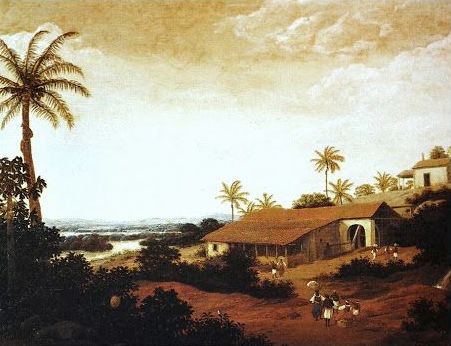
One point that deserves particular attention in this article is that, in this period, maritime expeditions were a catalyst of energies and resources of the political, intellectual and commercial elites of Europe. They were also a focus of public interest, a foundation of ideological and political discourses that determined a new vision of the world that gave Europeans a new way of relating to it. The travel accounts, written in a language of knowledge, science and commerce, were avidly read by a growing public that was increasingly more cosmopolitan. The public considered these works to be a common good (bonum publicum), property of the community of philosophers and learned people, rulers, merchants, sailors, scientists, missionaries and travelers, and constituted a “common pool of information” on navigation and travels.
Many of the descriptions here mentioned were accompanied by visual aids: maps, views, outlines of mainland, sketches made by those on board as a “memory help” but also as “additional tools” for the construction of images of other places and peoples, destined to describe these to Europeans. Doubtless, they were made for the use of travelers to illustrate their memoires and they were also directed to others so that they could navigate more safely and with less risk of error, thanks to more exact maps and visual references of ports and sandbanks; and also for those who in the comfort of their own homes, could visualize new worlds, lands and peoples more clearly.
This information created a conscience of a planetary Europe and was an unequivocal contribution for the construction of national memories and cultures. Many European governments considered these accounts to pose an authentic, powerful and useful contribution, especially when put at the service of the states and the control of imperial territories. But “if the metropolis tends to see itself as determining the periphery (for example, in the civilizing mission of the Enlightenment or in the source for economic development), it is usually blind to the way the periphery determines the metropolis -starting with its obsessive need to continually present and represent the periphery for itself and others” (Pratt, 1999: 31). The dialogue and interaction generated by travel literature inevitably influenced the conception and representation of how empires saw themselves, even while this included a distancing from others and denial.
Travelers fulfilled the function of national propaganda and as such developed a seductive discourse highlighted by the adventures, courage and risks inherent to great oceanic travels. These accounts exalted their own virtues -both individual and national- and served to compete with adversaries. So, these records considered the tastes and expectations of the readers, and were influenced by the prejudices, passions and sentiments of the authors, often part of their cultural heritage (González-Cruz, 2010: 121).
Even while travelers intended to accurately describe what they saw, they made implicit -and sometimes a bit naïve- comparisons about affinities, sympathies and affections and about differences, incomprehension and intolerance, increasingly under the excuse of rationality, logic and science. The use of these principles that were so dear to 18th century man served to fundament the image of Portuguese and Luso-Brazilians as indolent, superstitious, prejudiced, ignorant inhabitants of a part of the world particularly endowed with natural wealth. And, consequently, the differences between Europeans was legitimized in the name of Providence, civil-ethical or technical-scientific superiority.
The literature about sea travels contributed to the formulation and validated a specific image of Portugal and Portuguese America, of the Portuguese and the Luso-Brazilians that paradoxically conceded strength and weakness to the Portuguese monarchy. There were inevitable repercussions in the level of competition between states, implicit in the formulation of expansionist initiatives of domination. The position of Portugal in Europe was supported by the power inherent to the control of the colony and the crown exploited this power politically and diplomatically in its relations with other European countries. However, this colony -with its gold and natural riches- awoke interest in the other European potencies, an interest that made “the conservation of that state [Brazil] very doubtful and risky” in a world without faith and dominated by ambition, where the princes measured justice by the power they held. This was another point of view: the way in which the Portuguese, descendants of an old power and owners of a so huge an empire, looked to the rest of Europe to define their position in this continent. Frailty and decadence of the empire were acknowledged, while at the same time there was recognition of the wealth and importance of the colony. The Conselho Ultramarino feared this magnificence would lead to an attack from forces outside of Brazil; a part of the Empire difficult to defend because of its size, opulence and richness (Costa, 1845: 498–506).
No matter what the outcome in the different scenarios of confrontation and war during the 18th century, it was thought that establishing an area of imperial influence or dominion over Brazil could only be of benefit for the winning power. However, I think the arguments that served as foundation for these attempts was more refined from the first half of the 18th century onwards, because these considerations were also linked with religion (the dogmas of Catholicism prevailing in the Iberian countries), technique and science (the lack of a scientific culture among Portuguese and Spaniards) and government (absolutism and despotism of colonial Iberian rulers) in the writings of travelers on the Portuguese America. These differences contributed to increase the differences between the two Europes.
Appendix
Notes
- It is interesting to remember that this idea of the Atlantic ocean as a unity, as a Great Western Sea, appears for the first time in the East in 1701 when the Chinese published a guide about the Atlantic describing the inhabitants of Europe, America and Africa as “the people of the Great Western Sea” (Benjamin, 2009: xxiii).
- Anthony Molho points out that the terms civilization and Europe are frequently associated and combined. He ascribes the formulation of European civilization as a universal and teleological project to the philosophers of the Enlightenment. There have been debates among European intellectuals about these concepts and the cultural and ideological values and characteristics of Europe as least since the Renaissance. (Molho, 2007: 3–7).
- Susan Sleeper-Smith notices such a generalization in the application of the term indian by Columbus to the people of the Caribbean. This term was applied to all Amerindian natives later on, with no regard for cultural distinctions or specific characteristics (Sleeper-Smith, 2009: 1).
- According to La Barbinais, the Portuguese did not forget the attacks by Jean-François Duclerc and René Duguay-Trouin in 1710 and 1711.
- A French aristocrat, he served in the army of Turenne. He was sent by the French crown to negotiate with the British sovereign Charles II. He was exiled in France in 1690 after the revocation of the Edit of Nantes and went to serve William III as a general. After a successful career, he was sent to Portugal in 1704 to command the allied British-Portuguese-German forces in the Spanish Succession War. During his stay in the Peninsula and after been defeated in the battle of Almanza, he was named Ambassador Extraordinaire of Great-Britain in Portugal (Silva, 1802: 310–11).
- About the origin and recruitment of governors for the empire see Monteiro (2005): 93–115.
- Born in 1694 and died in 1707. Son of D. Rodrigo de Lencastre and D. Inês Maria Teresa de Noronha e Castro, he was nominated 29th General Governor of Brazil by Royal Charter of February 22nd, 1694. He stayed on this post until 1702. (http://www.fcsh.unl.pt/cham/eve/content.php?printconceito=169) [accessed 27/November/2012].
- Born in 1661 and died in 1731, son of D. António de Noronha and D. Maria de Meneses. He was superintendent of Finance, of the State and War Council, major butler of the Brazilian princess and viceroy of India between 1692 and 1699. Nominated general of cavalry in the province of Alentejo, he served in the campaigns of the Spanish Succession War. He became viceroy and capitão-general of sea and land with intendance and superiority over all the American captaincies in 1713. He stayed on this post until 1718. http://www.arqnet.pt/dicionario/angeja1m.html [accessed 27/November/2012].
- Anonymous, Journal d’un voyage, in França (2012: 482).
- D. María I enacted the document prohibiting to establish manufactures in Brazil on January 5th, 1785. Before that date, there were not any legal restrictions. See Alvará que proíbe as fábricas e manufacturas no Brasil, Lisboa, January 5th, 1785. http://www.historiacolonial.arquivonacional.gov.br/cgi/cgilua.exe/sys/start.htm?infoid=978&sid=107&tpl=printerview [accessed 27/November/2012].
- However, an exception was made for the construction of large ships and small boats and for the fabrication of rope with filaments from palm trees, amply noticed about by Dampier (1709: 58).
- The French Capuchins established themselves for the second time in Brazil in 1646, settling in Pernambuco, Bahia and Rio de Janeiro. They were widely accepted by the Luso-Brazilians because of their commitment in the war against the Dutch and their apostolic endeavor among the natives along the San Francisco River. They were again expelled from the colony by a decision of the State Council in 1699. This was in a scenario of conflicts caused by Spanish succession, when they had control over native populations in missionary territories. They left Brazil in 1703, at a moment when a political breakup between the two crowns seemed imminent (Teixeira, 1997: 79–81).
- Besides, this taste is confirmed by studies that have analyzed post mortem inventaries and testaments in detail (Maciel, 2012: 124–126; Pereira, 2010: 1–20).
- Anonymous, Journal d’un voyage, in França (2012: 480).
- On pacto colonial see v. Novais (1986: 58–62).
- About the functions of these consuls, see Teixeira (1997: 75); about the commerce by foreigners in Spanish colonial domains, see Bély (2010: 124).
References
| ○ | Anonymous (1968): “Uma arribada francesa ao tempo de Bobadela (1748)”. Revista do Instituto Histórico e Geográfico Brasileiro, 280: 225–260. |
| ○ | Bassnett, Susan (2003) “Introduction” Literature of travel and exploration: an Encyclopaedia, edited by Speaker, Jennifer Vol. I. Fitzroy Dearborn Publishers, New York. |
| ○ | Bély, Lucien (2010) “Comercio y diplomacia: la imagen de la América española en los asuntos internacionales a principios del siglo XVIII”. In Extranjeros y enemigos en Iberoamérica: la visión del otro. Del Imperio Español a la Guerra de la Independencia, edited by González-Cruz, David. Sílex Ed., Madrid. |
| ○ | Benjamin, Thomas (2009) The Atlantic world Europeans, Africans and Indians and their shared History, 1400–1900. Cambridge University Press, Cambridge. |
| ○ | Behrens, Karl Friedrich (1739) Histoire de l’Expédition de trois vaisseaux, enyoyés par la Compagnie des Indes occidentals des Provinces unies aux Terres Australes, en 1721. 2 vols. Compagnie des Indes Occidentales des Provinces-Unis, La Haye. http://goo.gl/8Jt6q and http://goo.gl/gevpo [accessed 29/November/2012]. |
| ○ | Bicalho, Maria Fernanda Baptista (1998) “A cidade do Rio de Janeiro e a articulação da região em torno do Atlântico Sul: séculos XVII e XVIII”. Revista de História Regional, 3 (2): 7–36. |
| ○ | Broc, Numa (1969) “Voyages et géographie au XVIIIe siècle”. Revue d’histoire des sciences et de leurs applications, 22 (2): 137–154. http://dx.doi.org/10.3406/rhs.1969.2585 |
| ○ | Bueno, Beatriz P.S. (2009) “Do borrão às aguadas: os engenheiros militares e a representação da capitania de São Paulo”. Anais do Museu Paulista, 17 (2), 111–153. http://dx.doi.org/10.1590/S0101-47142009000200008 |
| ○ | Cañizares-Esguerra, Jorge (2007) “AHR Forum. Entangled Histories: Borderland historiographies in new clothes?”. American Historical Review, 112 (3): 787–799. doi: http://dx.doi.org/10.1086/ahr.112.3.787 |
| ○ | Canny, Nicholas (2001) “Atlantic History: what and why?”. European Review, 9 (4): 399–411. http://dx.doi.org/10.1017/S1062798701000370 |
| ○ | Canny, Nicholas and Pagden, Anthony (editors), (1987) Colonial identity in the Atlantic World 1500–1800. Princeton University Press, Princeton. |
| ○ | Costa, Antônio Rodrigues da (1845) “Consulta do Conselho Ultramarino a SM no ano de 1732, feita pelo Conselheiro Antonio Rodrigues da Costa”. Revista do Instituto Histórico e Geográfico Brasileiro, 7: 498–506. |
| ○ | Dampier, William (1709) Voyage to New-Holland, &c., in the year 1699, Vol. III, 2nd edition. James Knapton, London. http://www.archive.org/details/cihm_34674 [accessed 28/November/2012]. |
| ○ | Domingues, Ângela (2006) “Noticias do Brasil colonial. A imprensa científica e política a serviço das elites (Portugal, Brasil e Inglaterra)”. Vária História, 22 (35): 150–174. |
| ○ | Domingues, Ângela (2011) “Desde Piso e Marcgrave que ninguém com curiosidade tolerável descreveu a natureza brasileira: os relatos de Cook, Banks e Parkinson e a construção de imagens do Brasil colonial”. Almanack Braziliense, 01: 35–51. http://www.almanack.unifesp.br/index.php/almanack/article/view/714 [accessed 18/July/2012]. |
| ○ | Ferreira, Roquinaldo (2001) “Dinâmica do comércio intracolonial: geribitas, panos asiáticos e guerra no tráfico angolano de escravos (século XVIII)”. In O Antigo Regime nos trópicos. A dinâmica imperial portuguesa (séculos XVI–XVIII), edited by Fragoso, João; Bicalho, Maria Fernanda and Gouvêa, Maria de Fátima. Civilização Brasileira, Rio de Janeiro. |
| ○ | França, Jean Marcel Carvalho (2012) A construção do Brasil na literatura de viagem dos séculos XVI, XVII e XVIII. Antologia de textos, 1591–1808. José Olympio Editora and Editora UNESP, Rio de Janeiro and São Paulo. |
| ○ | França, Jean Marcel Carvalho and Raminelli, Ronald (2009) Andanças pelo Brasil colonial. Catálogo comentado (1503–1808). Editora Unesp, São Paulo. |
| ○ | Frézier (1732) Relation du voyage de la Mer du Sud aux côtes du Chily et du Perou, fait pendant les années 1712, 1713 & 1714. Nyon, Didot & Quillau, Paris. |
| ○ | Froger, François (1699) Rélation d’un voyage fait en 1695,1696, &1697 aux cotes d’Afrique, Détroit de Magellan, Brésil, Cayenne et Isles Antilles. Antoine Schelte, Amsterdam. http://www.europeana.eu/portal/record/09407a/8065C29B5EFABBA2DB870D1958A61FD25A68CCCA.html [accessed 28/November/2012]. |
| ○ | Games, Alison (2006) “Atlantic History: definitions, challenges and opportunities”. American Historical Review, 111(3): 741–757. doi: http://dx.doi.org/10.1086/ahr.111.3.741 |
| ○ | Gould, Eliga H. (2007) “Entangled Atlantic Histories: a response from the Anglo-American periphery”. The American Historical Review, 112(5): 1415–1422. doi: http://dx.doi.org/10.1086/ahr.112.5.1415 |
| ○ | Goulemot, Jean-Marie (1990) “Literary history and national memory”. In Memory and History, edited by Bourguet, Marie Noelle; Valeski, Lucette and Wachtel, Nathan. Harwood Academic Publishers, London, Paris, New York and Victoria. |
| ○ | González-Cruz, David (2010) “La construcción de imágenes sobre los extranjeros en España y América durante la Guerra de Sucesión: ingleses, holandeses, portugueses y franceses”. In Extranjeros y enemigos en Iberoamérica: la visión del otro. Del Imperio Español a la Guerra de la Independencia, edited by González-Cruz, David. Sílex Ed., Madrid. |
| ○ | Harvey, David Allen (2008) “Living Antiquity: Lafitau’s Moeurs des sauvages amériquains and the religious roots of the Enlightenment science of man”. Proceedings of the Western Society for French History, 36: 75–92. http://hdl.handle.net/2027/spo.0642292.0036.007 [accessed 28/November/2012]. |
| ○ | La Barbinais, Guy Le Gentil De (1728) Nouveau voyage au tour du monde, tomo I & III. Pierre Mortier, Amsterdam. http://gallica.bnf.fr/ark:/12148/bpt6k74613c; http://gallica.bnf.fr/ark:/12148/bpt6k74614q and http://gallica.bnf.fr/ark:/12148/bpt6k83935g [accessed 28/November/2012]. |
| ○ | Lagrange, Chancel de (1966) “A tomada do Rio de Janeiro em 1711 por Dugauy-Trouin segundo a narrativa de Chancel de Lagrange”. Translation and notes by França, M.F. Revista do Instituto Histórico e Geográfico Brasileiro, 270: 3–124. |
| ○ | Maciel, Rodrigo A. (2012) Brasil indo-lusitano: as influencias culturais das Índias Orientais no Brasil colonial (1672–1712), Unpublished Master’s degree dissertation. Pontificia Universidade Católica do Rio Grande do Sul, Porto Alegre. http://tede.pucrs.br/tde_busca/arquivo.php?codArquivo=4037 [accessed 28/November/2012]. |
| ○ | Molho, Anthony (2007) “A Harlequin’s dress. Reflections on Europe’s public discourse”. In Finding Europe: discourses on margins, images and communities, edited by Molho, Anthony and Ramada Curto, Diogo. Berghahn Books, New York. |
| ○ | Monteiro, Nuno Gonçalo (2005) “Governadores e capitães-mores do Império Atlântico português do século XVIII”. In Modos de governar. Ideias e práticas políticas no Império Português (séculos XVI a XIX), edited by Bacalho, Maria Fernanda and Ferlini, Vera Lúcia do Amaral. Editorial Alameda, São Paulo. |
| ○ | Morgan, Philip D., and Green, Jack P. (2009) “Introduction: the present state of Atlantic History”. In Atlantic History. A critical appraisal, edited by Morgan, Philip D. and Green, Jack P. Oxford University Press, New York. |
| ○ | Novais, Fernando A. (1986) Portugal e o Brasil na crise do Antigo sistema Colonial (1777–1808). 4th edition. Editora HUCITEC, São Paulo. |
| ○ | Pereira, Ana Luiza de Castro (2010) “Viver nos trópicos com bens do Império: a circulação de pessoas e objectos no Império Português”. Anais do XIV Seminário sobre a economia mineira: 1–20. http://www.cedeplar.ufmg.br/seminarios/seminario_diamantina/2010/D10A112.pdf [accessed 20/August/2012]. |
| ○ | Pimentel, Juan (2003) Testigos del mundo. Ciencia, literatura y viajes en la Ilustración. Marcial Pons Historia Estudios, Madrid. |
| ○ | Pratt, Mary Louise (1999) Os olhos do império. Relatos de viagens e transculturação. EDUSC, Bauru. |
| ○ | Reynolds, Susan (2006) “Empires: a problem of comparative history”. Historical Research, 79: 151–165. doi: http://dx.doi.org/10.1111/j.1468-2281.2006.00373.x |
| ○ | Silva, Antonio de Moraes (translator) (1802) História de Portugal composta em inglez por huma sociedade de litteratos, tomo III. Typographia da Academia Real das Sciencias de Lisboa, Lisboa. |
| ○ | Sleeper-Smith, Susan (editor), (2009) Contesting knowledge. Museums and indigenous perspectives. University of Nebraska Press, Lincoln. |
| ○ | Souza, Daniele Santos de (2009) “Bahia de todos os Santos e africanos: trabalho escravo em alvador na primeira metade do século XVIII”. In IV Encontro Escravidão e Liberdade no Brasil Meridional. Universidade Federal do Paraná, Curitiba. http://www.escravidaoeliberdade.com.br/site/images/Textos4/danielesantossouza.pdf [accessed 21/August/2012]. |
| ○ | Souza, Laura de Mello (2006) O sol e a sombra. Política e administração na América portuguesa do século XVIII. Companhia das Letras, São Paulo. |
| ○ | Strath, Bo (2010) “Introduction. Europe as a discourse”. In Europe and the other and Europe as the other, edited by Strath, Bo. 4th edition. Bruxelles, Peter Lang. PMid:20440028 PMCid:3292194 |
| ○ | Teixeira, Licínio José (1997) “Le Brésil et la succession d’Espagne”. Cahiers du Brésil Contemporain, 32: 71–88. http://www.revues.msh-paris.fr/vernumpub/07-Teixeira.pdf [accessed 21/August/2012]. |
| ○ | Valverde, Nuria and Pimentel, Juan (2004) “Ciencia sobre la tierra. Viajes, naturaleza e império en el Siglo de las Luces”. In La Botánica ilustrada. António José Cavanilles (1745–1804), jardines botánicos y expediciones científicas, edited by Muñoz Garmendia, Félix. Consejo Superior de Investigaciones Cientificas and Lunwerg, Barcelona. |
| ○ | Vázquez García, Francisco (2007) “Claroscuros de la razón ilustrada”. Ilustración y libertades. Revista de Pensamiento e Historia de las Ideas, 1: 19–32. |
| ○ | Walter, Richard (1748) A voyage round the world in the years MDCCXL, I, II, III, IV. John and Paul Knapton, London. http://www.archive.org/details/cihm_27900 [accessed 28/November/2012]. |
| ○ | Williams, Caroline A. (2009) “Introduction: Bridging the Early Modern Atlantic World”. In Bridging the Early Modern Atlantic World. People, Products and Practices on the Move, edited by Williams, Caroline A. Ashgate, Farnham. |
Originally published by Culture and History Digital Journal 1:2 (2012) under the terms of a Creative Commons Attribution 4.0 International license.
About the Author