Whether you’re for or against it, gambling has long fascinated humans. After all, it’s a pastime or hobby that blends chance and desire.
In early modern Europe, which many define as roughly the mid-15th to 18th centuries, the act of gambling was viewed in a different light. It was just as common as it is today, if not more so, and also the epicenter of social and moral conversations. From the emergence of the first few playing cards to the rise of opulent Venetian gambling houses, Europeans liked to wager. But they also grappled with the allure of risk and the anxieties it provoked, and we’ll explore these in greater detail below.
Gambling’s Early Roots in Europe (and Beyond)
When discussing the history of gambling, it’s always helpful to take a broader view — this then helps you understand its prominence in early modern Europe.
Unsurprisingly, gambling itself has deep historical roots. For example, Ancient Greeks and Romans rolled dice with bravery, as they sometimes risked severe penalties for transgressing prohibitions.
Fast-forward a little, and by the late Middle Ages, playing cards, imported from China via newly established trade routes, had become popular across Europe. These tools of possibility entertained the masses for hours, and even gave a way to negotiate for some.
And of course, it all involved a little luck! Back in those days, there was no 200% deposit bonus casino package to start you off with lower risk. You had to go all-in and be ready to face chance itself.
The Rise of Gambling in Early Modern Europe
Right, we’ve set the global scene, but now let’s focus on early modern Europe.
The mid-15th and 17th centuries saw gambling become a common pastime for the average person and in noble courts alike. Particularly, card games, dice, and lottery games became common leisure activities among nobility and merchants.
Lotteries were a particular favourite here, as they were often sanctioned by municipal authorities, and the profits could even fund public works. This closely mirrors how national lotteries work today. They offer a mix of fun and gambling risk with civic purpose for the better good.
The first lottery in Italian history was held on the 9th of January 1449 in Milan, right at the start of the early modern period. It was used to fund the war against the Republic of Venice. While this was the first, the lotto really became a staple in Genoa.
The physical and social presence of these games transformed gambling from private amusement into a public, communal practice.
Isobel Coughlan, iGaming Expert at Mr. Gamble explained that “It’s interesting to see how early lotteries worked on the same basis as the ones still offered via online casinos and lotto apps today. Like their predecessors, modern lotteries involve buying tickets and waiting for a draw, with some of the money raised going to public initiatives.”
Risk and Reward: The Allure of Chance
So, why did so many Europeans embrace games of chance despite moral and financial risks? It’s not like people didn’t know that you could potentially lose money…
Philosophers and writers of the early modern period suggest it was more than greed or a desire to win. In their eyes, gambling offered a controlled encounter with uncertainty, a way to test their courage and potentially end up with a big fortune.
Similarly, literary works of the time, from pamphlets to plays, frequently explored the fascination with gambling, portraying the gambler as both a symbol of human ambition and a cautionary figure. This helped the public educate themselves on the matter.
Moral Anxiety and Religious Debate
As mentioned above, gambling in the early modern period wasn’t looked upon with pure awe. It also provoked intense moral scrutiny, especially from the church.
Both Catholic and Protestant authorities often condemned games of chance as temptations toward vice and sin. There were sermons that debated whether participating in gambling endangered the soul or corrupted social order.
The tension between human desire and ethical restraint became a defining cultural conversation, reflecting broader anxieties about wealth and morality.
Think of it this way, people back then did not simply swipe up via a pocket smartphone and gamble using a pay by sms casino. They had to seek out card games or physically get up and go to dice games. Getting involved had more barriers, and therefore, it attracted more determined individuals.
Gambling Houses and Social Spaces
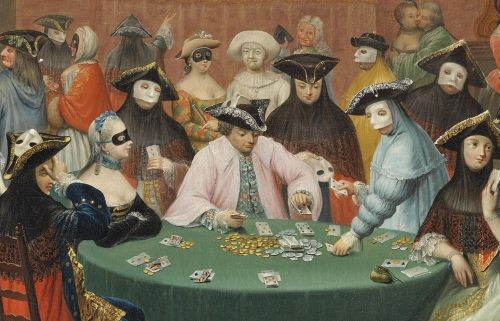
Speaking of getting up and physically visiting a gambling space, by 1638, Venice saw the opening of some of Europe’s first organized gambling houses.
These early modern casino spaces offered structured gaming environments and attracted a mix of social classes, from aristocrats to affluent merchants. The general public did visit, but not as often as the wealthy elite.
Naturally, these areas became arenas for social networking, political maneuvering, and subtle displays of wealth and status. You go to see and be seen! Again, this shows gambling worked in early modern European society in complex ways.
What We Can Learn From Early Modern Europe
Gambling in early modern Europe reveals a society exploring the boundaries between desire, morality, and social order. Through the rise of lotteries and gambling houses, we see a culture fascinated by chance yet deeply aware of its dangers, much like the discussion around gambling in the present moment. Ultimately, these practices offer a window into the values and fears that shaped early modern European society, letting us understand the time period (and our own!) with greater depth. Now, anyone for dice?
About the Author