
By Dr. Timothy Lang
Former Adjunct Professor of History
University of Massachusetts Amherst
But what are nations? What are these groups which are so familiar to us, and yet, if we stop to think, so strange…?
Walter Bagehot, Physics and Politics (1872)
The nation-state, especially as it took shape in Europe during the nineteenth century, was perhaps the most paradoxical political institution of its age. Its impact on the modern world has been tremendous. Nation-states are basic constituents of modernity, providing the frame-work in which most of us lead our lives, and nationality is one of the fundamental conditions shaping our personal identity. We live in a system of territorial nation-states and see ourselves as belonging to one or more of them.[1] And yet, how problematic the institution seems when 1expectations are weighed against outcomes.
Nineteenth-century liberals endorsed the nation-state as a means to progress. It would promote peace and stability, they said, by bringing political and national boundaries into alignment. It would set the groundwork for prosperity by transforming small states into large markets and for popular government by establishing liberal institutions responsive to the national will. The nation-state would encourage the liberty of individuals and peoples, the free development of the human spirit through meaningful communion with like-minded citizens. In some places and at some times it did all of these. Walter Bagehot saw nation-building as a necessary step toward progress; John Stuart Mill suggested that nation-states were a precondition for democracy; Johann Gottlieb Fichte taught that only by living in a nation could an individual gain access to the “eternal and the divine.” But no one was as optimistic as Giuseppe Mazzini, for whom nations were God’s chosen way for men and women to work for the well-being of all humanity. Some-day, he prophesied, Europe would conform to God’s plan: nations and states would become coterminous and then “harmony and fraternity” would prevail.[2]
And yet, the nation-state was an institution born of conflict. The wars of Italian and German unification, which disturbed the long nineteenth-century peace, and the Balkan wars of the early twentieth century, which led to the horrors of World War I, make this abundantly clear. Despite what its champions might have thought, the nation-state was an abstraction confronting an intransigent reality. It could never have coalesced in its pure form because nationalities with unambiguous identities and borders simply did not exist in Europe, and attempts to create it encountered insurmountable obstacles. Under these conditions, nationalism became strident and exclusive. Its politics became authoritarian, as aspiring nation-states discriminated against minorities, waged war on their neighbors, and demanded sacrifices from their citizens that might reasonably be construed as antithetical to freedom. An institution that many liberals hoped would bring peace, prosperity and freedom to Europe had just as often yielded contrary results.
This essay contends that a reading of Rousseau’s Social Contract, set against the eighteenth-century state system, reveals one way in which political thinking at the end of the Enlightenment anticipated this paradox. Neither nationalism nor the nation-state were fully developed concepts at the time Rousseau was writing, though glimpses of them appear in his works, suggesting in hindsight just how problematic the emerging nation-state might be. Rousseau’s Social Contract is a complex work of political philosophy, and no one who has read it carefully can deny that it contains any number of ambiguities. Its purpose was to delineate the perfect republic, to indicate how people should organize themselves politically to bring about the maximum degree of human freedom. But the matter was not that simple. Rousseau did not confine his republic to an idealized setting. He placed it within an international order, one state among many, and knew that it would need to defend itself. He may have designed the republic for liberty and self-government, but he equipped it for war. In the process, he endorsed a model of human association that, while possibly suitable for defense, insisted on uniformity and was not afraid to use coercion in order to achieve it. Rousseau’s Social Contract was a work of philosophy discussing ideas, not lived experience. But to the extent that ideas reflect behavior, it provides insights into why the emerging nation-state was often accompanied by war, an emphasis on social conformity, and a tendency to-ward authoritarian politics.
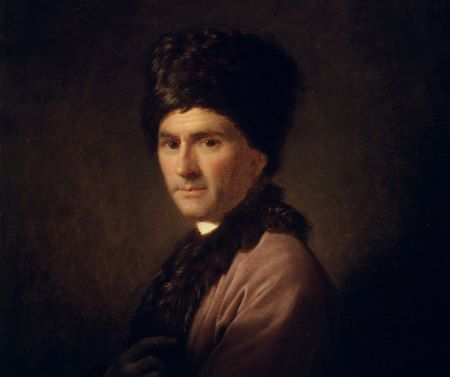
Rousseau—if we believe his Confessions—began thinking about political institutions in 1743 or 1744, while serving in Venice as private secretary to the French ambassador.[3] He worked hard at his job and studied the art of diplomacy, a profession he hoped to make his own. This preoccupation with foreign affairs suggests that war and international relations were never far from his mind as he began the train of thought that would lead eventually to the Social Contract of 1762. He began these speculations during the War of the Austrian Succession and finished them as the Seven Years War was coming to an end. To read Rousseau’s political thought, then, against the eighteenth-century state system is not out of place. For in the Social Contract, Rousseau described the self-governing association, or republic, and asked how it might survive in a world of predatory states. An answer to that very practical question formed part of the book’s original design.
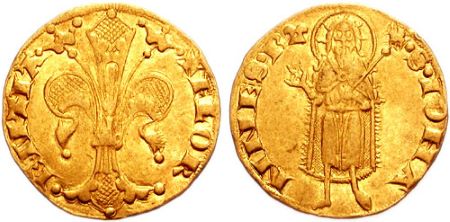
This question was not new. Republican theorists, from the early Renaissance onward, had pondered the rise and fall of republics, paying particular attention to how the republic should defend itself in a hostile international system. Florentine civic humanism had made the republic’s survival depend on the ability of its citizens to fulfill their responsibilities and bear arms in its defense. Fifteenth-century Italy was a land of independent regional states, all potentially in competition with one another. By the end of the century, Europe’s great territorial monarchies had started to intervene on the peninsula as well. The struggle between Milan and Florence was paramount at the beginning of the fifteenth century; the involvement of France, Spain and the Empire in Italian affairs was crucial at its end. Confronted by rivals, the Florentines articulated a civic humanism that called on citizens to lead virtuous public lives, to meet their civic responsibilities, to sacrifice private ambition for the common good, and to bear arms in defense of the republic. Machiavelli in particular understood the problem as a contest between virtù and fortuna, between the spirit of the republic’s citizens and the blind forces of chance. Service in the militia became for Machiavelli the high-est expression of republican virtue, as the citizen-soldier renounced private interests in order to defend the republic and impose order on recalcitrant fortune.[4]
Rousseau’s Europe was as subject to fortune as Machiavelli’s Italy. The state system as it developed from the War of the Austrian Succession to the Seven Years War was essentially anarchic. There were no institutions capable of enforcing a lawful international order: the Empire and Papacy had lost whatever influence they might have once possessed, while the concert of Europe had not yet come into being. Contemporaries might have thought a balance of power regulated the system just as naturally as the law of supply and demand regulated the marketplace. But the balance of power, as the eighteenth century understood it, did not guarantee peace. War played an integral part in maintaining the balance because states had to make good on the threat of war in order to prevent hegemony. In practice, the period saw conflict as dynastic states competed for advantage and as statesmen employed war as normal policy, seeking to expand and acquire territory in compensation for gains made by rival states.[5] Bellicose as it was, this reality would enable Rousseau to argue, without fear of contradiction, that the social state, as opposed to the state of nature, was distinguished by war.
Dynastic ambition characterized the War of the Austrian Succession (1740–1748) from beginning to end. Frederick the Great desired to enhance Prussia’s power and prestige by seizing Silesia. Charles Albert of Bavaria hoped to capture Bohemia and the title of Holy Roman Emperor. Maria Theresa needed to defend her territorial inheritance and claim the imperial title for her husband, Francis Stephen of Lorraine. The Spanish monarchs, Philip V and Elizabeth Farnese, sought a suitable principality in Italy for Elizabeth’s youngest son, while Charles Emmanuel III desired to expand Piedmont-Sardinia’s power in Italy at the expense of Spain and Austria. These were the rivalries and ambitions plaguing Europe as Rousseau arrived in Venice in 1743.[6] Behind them lurked the great struggle between Habsburg and Bourbon for dominance in Europe, and between England and France for control of the seas. When Rousseau complained that kings had only two functions, “extending their domination abroad and rendering it more absolute at home,” he knew what he was talking about.[7]
These rivalries persisted into the next decade, laying the ground-work for the Seven Years War (1756–1763). Anglo-French competition led to war in the colonies, especially North America, while Austro-Prussian enmity—Frederick’s desire to hold on to Silesia, Maria Theresa’s determination to win it back—brought war to the continent. The intervention of Russia and the failure of the European states to defeat Prussia led to the consolidation of the great power system in which Britain, France, Austria, Russia and Prussia dominated continental affairs while the lesser powers played a subservient role.[8] No wonder, then, that Rousseau, who wrote the Social Contract just that Rousseau, who wrote the Social Contract just as this system was coming into existence, asked of the ideal republic, “but if it is very small, will it be subjugated?”[9] The question of the republic’s survival in an international order dominated by hostile powers was not simply one he inherited from the classic age of Florentine republican thinking; it was equally the question posed by the age of Frederick the Great.
Rousseau analyzed the European state system in a number of works that he wrote between 1743, when he arrived in Venice, and 1762, when he published the Social Contract.[10] Some, like the Discourse on the Origins of Inequality and the article on “Political Economy” that he wrote for Diderot’s Encyclopedia, touched on the subject tangentially. Others, like his synopsis and criticism of Abbé de St Pierre’s Plan for Perpetual Peace, dealt with it directly, but are usually considered minor works. A number of fragments on war and peace make up yet a third category. All of these writings date to the years between 1754 and 1756, just before the Seven Years War, and all regard warfare as the natural condition of civilization, the inevitable consequence of man’s departure from the state of nature and his entrance into civil society. War, for Rousseau, was endemic to the eighteenth century and a structural component of its state system.
In the Discourse on the Origins of Inequality, Rousseau made his case. Men and women in the state of nature were as a rule peaceful be-cause a profound sympathy for all living creatures—what he called “pity”—tempered their propensity for self-preservation. The selfish passions that so often provoked conflict, he argued, famously controverting Hobbes, were simply not found there.[11] But no matter how idyllic this natural state may have been, the human capacity for perfection eventually induced men and women to leave it behind and gather in society. This transition was crucial for Rousseau’s thinking about war. Now that a social state had coalesced in which individuals judged themselves against others, those Hobbesian passions emerged. Pride in particular turned voluntary wrongs into outrages which the injured party had to avenge in deeds that were as cruel and bloodthirsty as the outrage was humiliating. Property similarly divided people, unleashing ambition and driving them to compete with each other to see who could accumulate the most, not out of need, but simply out of a desire to raise themselves above others.[12] Pride and property: here were two conditions that made war integral to human society as Rousseau understood it in the eighteenth century, when princes fought over parcels of territory in order to assuage slights to their prestige. “Nascent Society,” he concluded, “gave way to the most horrible state of war….”[13]
This progression to the social state was soon replicated everywhere. Men and women formed associations for self-preservation and the protection of property. They renounced their natural freedom, departed from the state of nature, and subjected themselves to the laws of civil society. One such association inevitably gave rise to others, ensuring that the earth became populated with competing nations. With only “tacit conventions” to regulate their conduct—what Rousseau called the right of nations—they engaged in mutual slaughter. “Hence arose National Wars, Battles, murders, and reprisals which make Nature tremble and shock reason…,” Rousseau wrote in a passage conveying his disgust at what civilization often entailed.
“The most decent men learned to consider it one of their duties to murder their fellows; at length men were seen to massacre each other by the thousands without knowing why; more murders were committed on a single day of fighting and more horrors in the capture of a single city than were committed in the state of Nature during whole centuries over the entire face of the earth.”[14]
The character of the state, Rousseau continued, now approaching the subject from a different angle, also contributed to this condition of chronic warfare. In his article on “Political Economy,” he assigned the state a will, which he defined as an expression of sovereignty. In a re-public, where the people were sovereign, the will was general. In a monarchy, where a prince was sovereign, the will was personal. In either case, the state was an active agent, exerting itself in the world, seeking to fulfill either the general will of the people or the personal will of the prince.[15] Eighteenth-century Europe, where all the emerging great powers were monarchies, was thus a system of willing, active states, all in competition with each other, as their sovereign princes sought to protect their prestige and augment their territory. What is more, the state was an artificial body without natural limits. Its potential for expansion was practically endless. Rousseau pointed out in one of his fragments on war that states constantly tried to overcome their vulnerabilities by expanding at the expense of their neighbors. Any state system, he concluded, was therefore inherently unstable: as member states sought security through expansion, they inevitably threatened their neighbors, prompting retaliatory expansion in return.[16]
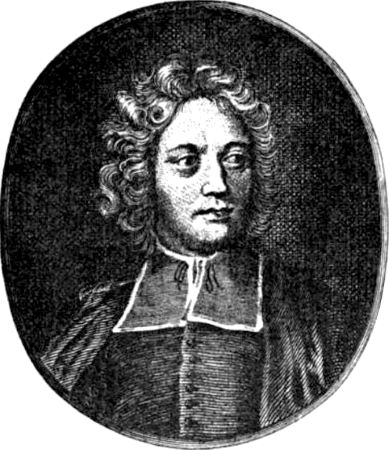
Rousseau’s conception of the prince as a willful actor on the international stage informed his criticism of the Abbé de St Pierre’s plan for perpetual peace. The Abbé de St Pierre had suggested that Europe existed in a balance of power, a natural equilibrium that included a chronic state of war as one of its elements. This balance may have been natural and achieved without human effort, but it was flawed because it required war as the means of maintaining itself. The Abbé de St Pierre proposed to perfect this arrangement and achieve “a perpetual and universal peace” by organizing the states of Europe into a federation based on everything they held in common: religion, morals, customs, literature, institutions, laws, geography, commerce. The federation’s governing congress would guarantee peace by arbitrating disputes, enforcing treaties and making decisions with the authority of law and backed by armed force.[17] Rousseau’s principal objection to this plan was that Europe’s princes would never consent to it because they were too independent and irrational to be bound by anything. As willing sovereigns, princes rarely pursued their real interests, which might be fulfilled by peace, but rather pursued their apparent interests, which were more often fulfilled by war. Princes would never renounce the opportunity to extend their boundaries and increase their prestige. They would never subordinate themselves to the decisions of a tribunal since doing so would diminish that prestige by admitting weakness. What does a prince who goes to war risk except the lives of his subjects, Rousseau asked rhetorically? If he risked little, he chanced to gain much, since princely reputations were based largely on the ability to wage war.[18]
The fragments on war confirm this picture. There we find Rousseau’s well-known description of civilized Europe as a field of carnage:
“I raise my eyes and look into the distance. I perceive fires and flames, deserted countryside, pillaged cities. Fierce men, where are you dragging those wretched people? I hear a frightful noise; what tumult! what cries! I draw near; I see a theater of murders, ten thousand slaughtered men, the dead piled up in heaps, the dying crushed under the hooves of horses, everywhere the image of death and agony. This, then, is the fruit of these peaceful institutions! Pity, indignation raise them-selves at the bottom of my heart. Ah barbarous philosopher! Come read us your book on a battlefield.”[19]
So Rousseau rejected the Hobbesian notion that warfare defined the state of nature. Instead, war arose later, once men and women had entered the civil state and nations populated the world. These nations, however, existed in a condition of anarchy with little to restrain them: natural law, which had earlier tempered human behavior, spoke only to individuals, not to nations; and international law was meaningless because it had no sanction. In coming together as nations, then, humankind created conditions that made war all but inevitable.[20]
Rousseau prefaced his Discourse on the Origins of Inequality with a dedication to the Republic of Geneva in which he expressed his wish to live in a country whose government was based on popular sovereignty. But he knew that such a republic would always be precarious in a world of predatory states. It would have to be so small, he warned, that it would not feel the temptation to conquer and so fortunately situated as to have friendly neighbors.[21] Only in such favorable circumstances could a self-governing body of citizens hope to survive, and the likelihood of finding such circumstances in the Europe of Frederick the Great was all but impossible. Like Machiavelli, then, Rousseau realized the precariousness of the republic, and like Machiavelli, he would call on its citizens to bear arms in its defense.
In the Social Contract, Rousseau presented his conception of the ideal republic. His argument was notoriously complex—even ambiguous—and these qualities have ensured that it has given rise to any number of competing interpretations. Without attempting to resolve these controversies, I simply want to point out a correlation between Rousseau’s awareness of the republic’s international precariousness and his understanding of its essential character: for the republic was admirably suited for the task of defense. The model that Rousseau had in mind as he wrote the Social Contract was the classic republic with its emphasis on civic virtue.[22] No wonder: previously, in his Discourse on the Sciences and Arts, he had revealed a strong preference for the martial values associated with ancient republics: warlike Sparta, he proclaimed, was a “Republic of demi-Gods rather than men, so superior did their virtues seem to humanity.”[23]
According to Rousseau, the republic originated in a voluntary act of incorporation whereby a number of people freely chose to submerge their individual wills beneath a general will. Here is how he first described the process:
If, then, we set aside from the social pact everything that is not essential to it, we will find that it can be reduced to the following terms: Each of us puts his person and all his power in common under the supreme direction of the general will; and as a body we receive every member as an indivisible part of the whole. Instantly, in place of the private person of each contracting party, this act of association creates a moral and collective body, composed of as many members as there are voices in the assembly, which receives from this same act its unity, its common self, its life, and its will. This public person, formed by the union of all the other persons, formerly took the name City, and now takes that of Republic….[24]
In his account of the republic’s origin, Rousseau borrowed from Roman law the concept of incorporation, which he found in Hobbes and which established how a number of individuals come together to form a single public person. Rousseau then made several claims regarding this act of incorporation. To begin with, it created an association that was more than a simple aggregation of people held together by force. It was an association with a common good, with a genuine source of internal unity, with the kind of cohesion that animated a living organism. Because the republic was a single person, it had a single will, which Rousseau called the general will.
This act of incorporation also produced an association that respect-ed the freedom of each individual member. Since all citizens participated in the deliberations of the assembly, the general will came to represent their own best interests, and this responsiveness to the voice of every citizen was what Rousseau meant by popular sovereignty. In order to preserve the generality of the will, the decisions of the assembly had to be binding on all its members, regardless of whether they were of the majority or not. Regarding those cases where private interests deviated from the general will, Rousseau’s judgment was chilling:
“whoever refuses to obey the general will shall be constrained to do so by the entire body; which means only that he will be forced to be free….”[25]
Only within an association of this sort, Rousseau continued, did people ac-quire a moral sensibility. As they departed the state of nature and entered the republic’s civil society, they became rational agents, acting ac-cording to their sense of public duty rather than listening to their instincts, impulses or desires.[26] The ideal republic was thus an association of free and equal citizens, responding to a common will and working for a common good.

But in the real world, Rousseau acknowledged, the republic was vulnerable. Threatened by internal corruption and external conquest, it depended for its survival on the virtue of its citizens. Following the lead of his republican predecessors, Rousseau defined virtue as the propensity to place the public good above private interests: “Nothing,” he wrote in the Social Contract, “is more dangerous than the influence of private interests on public affairs…,” because whenever they dominate, the state is corrupted in its very essence.[27] As the main source of corruption, Rousseau pointed to luxury, a condition all healthy republics should avoid. Luxury divided citizens into social classes, thereby undermining the republic’s cohesion, and bred indolence, enticing citizens to neglect their social responsibilities. As soon as they “serve with their pocketbooks rather than with their persons,” Rousseau warned in true republican fashion,
“the State is already close to its ruin. Is it necessary to march to battle? They pay troops and stay home. Is it necessary to attend the Council? They name deputies and stay home. By dint of laziness and money, they finally have soldiers to enslave the country and representatives to sell it.”[28]
Only virtuous citizens, then, had the ability to preserve the republic. They valued the public good above all else and participated directly in civic life so as to secure it, attending the assembly and bearing arms in the republic’s defense. Their manners and morals were simple; they were immune to the enticements of luxury, seeking neither comfort nor profit; they were forever vigilant, keeping watch on their governors and neighbors. They were free, equal and independent: “no citizen shall be so opulent that he can buy another,” Rousseau stipulated, “and none so poor that he is constrained to sell himself.”[29] Here were unmistakeable echoes of the republican ideal as found in the works of Machiavelli and the other Florentines. Rousseau’s republic may have been small—and a small republic was preferable because it was uniform, cohesive and easy to administer—but no matter how small, it could defend itself by mustering the collective strength of its members, and since it had the coherence of a single person, it could direct this strength with a single will in order to achieve a single aim.
Rousseau’s speculations were not all theoretical, and on at least two occasions he turned his attention to practical matters. In 1764, Matteo Buttafuoco, a Corsican soldier serving in the French army, invited Rousseau, now famous for the Social Contract, to design a political system that would preserve Corsica’s freedom and independence. Several years later, around 1771, a convention of patriotic Polish aristocrats seeking their country’s independence from Russian interference, invited Rousseau to frame the best constitution possible for Poland. Both invitations provided him with an opportunity to comment on real-world situations. His Considerations on the Government of Poland in particular addressed explicitly the problem of how the small republic should de-fend itself in a world of hostile states. At times Rousseau pointed to federalism as a possible solution: republics could keep their more powerful neighbors at bay by uniting in a federation as the Swiss had done to protect themselves from Habsburg aggression. He recommended, for example, that the Poles divide their country into numerous small republics and then unite them in a federation for defense.[30] Unfortunately, we know little more than this. Rousseau either destroyed, lost, or never wrote those sections of the Social Contract dealing with federalism. Alternatively, republics could establish defensive alliances with more powerful neighbors. But Rousseau advised against this policy, noting that treaties rarely worked to the advantage of small states. “Alliances, treaties, the faith of men, all these can bind the weak to the strong and never bind the strong to the weak,” he warned the Corsicans: “Thus leave negotiations to the powers and do not count on any-thing but yourself.”[31]
This last phrase—“do not count on anything but yourself ”—epitomized the republican ideal: instead of relying on others, the republic should call on the virtue of its citizens. It should foster their patriotism, encouraging them to put country before self, and organize them in a people’s militia for defense. This was his explicit advice to the Poles, and he pointed to the Social Contract for its theoretical justification. Poland was in a precarious position, surrounded by powerful and aggressive neighbors, all of whom had large armies at their command. Instead of trying to match these armies, which would only bankrupt the state, Poland should model itself on the Roman and Swiss republics and create a citizen’s militia:
“This militia will cost the Republic little, will al-ways be ready to serve it, and will serve it well, because in the end one always defends one’s own possessions better than someone else’s.”[32]
In true republican fashion, Rousseau pointed out that a people’s militia, unlike a standing army, would pose no threat to liberty.[33] The militia’s strength would reside in patriotism, in its
“love of the fatherland and of freedom…. As long as this love burns in hearts it will perhaps not protect you against a temporary yoke; but sooner or later it will explode, shake off the yoke and set you free. Work then without relaxation, ceaselessly, to carry patriotism to the highest degree in all Polish hearts.”[34]
Rousseau finally indicated how to foster this patriotism through proper education:
“Upon opening its eyes a child ought to see the fatherland and until death ought to see nothing but it. Every true republican imbibes the love of the fatherland, that is to say, of the laws and of freedom along with his mother’s milk. This love makes up his whole existence; he sees only the fatherland, he lives only for it; as soon as he is alone, he is nothing: as soon as he has no more fatherland, he no longer is, and if he is not dead, he is worse than dead.”[35]
Here we see the importance of patriotism for Rousseau’s thinking. The virtuous citizen must be a patriot, and the need to cultivate this patriotism placed certain conditions on the republic. In the first place, it required homogeneity. The republic emerged from an act of association in which all citizens surrendered their individuality to the general will. If the republic was a collective person with a single will, then there could be no factions within it. There could be no self-governing associations within the republic, for that would divide the general will, would divide sovereignty, and would deprive patriotism of its object. The republic must be uniform—on this he was adamant: “For the same reason that sovereignty is inalienable,” he wrote in the Social Contract, “it is indivisible. Because either the will is general or it is not. It is the will of the people as a body, or of only a part.”[36] For Rousseau, a divided will meant a fragmented republic:
…when factions, partial associations at the expense of the large one, are formed, the will of each of these associations becomes general with reference to its members and particular with reference to the State…. When one of these associations is so big that it prevails over all the others,… then there is no longer a general will…. In order for the general will to be well expressed, it is therefore important that there be no partial society in the State….[37]
Uniformity, then, was the precondition for patriotism: citizens must be loyal to the republic, not to particular sections within it. The republic required that all other loyalties be erased. Patriotism, like sovereignty, could not be divided.
This need for homogeneity also explained in part Rousseau’s preference for small states. He objected to the regional divisions that inevitably developed in large republics and that detracted from their unity. Different regions, he noted, each with their own environments and customs, created different kinds of people with different characteristics.
“The same laws cannot be suited to such a variety of provinces, which have different morals, live in contrasting climates, and cannot tolerate the same form of government.”
Thus large states would require several different legal systems. But
“different laws only produce discord and confusion among peoples who, living under the same leaders and in continuous communication, move and get married in each other’s areas, and, being subjected to other customs, never know whether their patrimony is really theirs.”[38]
No one, we might add, would feel patriotic toward a patrimony that was not one’s own. Instead, it was small groups of people, those who were “already bound by some union of origin, interest or convention,” that provided the most suitable material for a republic.[39]
But most important, the people must be malleable, for Rousseau knew that nations had to be made. When individuals joined the republic, they acquired the positive freedom to become part of the social whole, to merge into that single corporate entity we call the nation. It was the operation of the republic’s institutions and laws that carried out this transformation. Education, Rousseau had advised the Poles, provided one way to shape a pliable citizenry into a nation, and the operation of the laws provided another. The process of ascertaining the general will brought into focus the common interests that united the people and pushed to the margins those that did not. Finally, Rousseau envisioned a civil religion animating the entire republic and generating the highest form of patriotism. Each republic, he wrote in the Social Contract, should have its own religion, with its own gods, dogmas and rituals defined by law. This religion,
“by making the fatherland the object of the Citizens’ adoration,… teaches them that to serve the State is to serve the tutelary God. It is a kind of Theocracy in which there ought to be no other pontiff than the Prince, nor other priests than the magistrates. Then to die for one’s country is to be martyred, to violate the laws is to be impious….”[40]
This patriotism, as Rousseau conceived it, was distinct from nationalism. Whereas patriotism involved loyalty to the republic founded on citizenship and participation in the general will, nationalism entailed loyalty to a nation, often defined by a common language, ethnicity, culture, history and so on. Whereas patriotism demanded loyalty to a small republic, nationalism called for a large nation-state coterminous with the entire nation. These distinctions are important, as neither the concept of nationality nor the idea of a nation-state were prevalent at the time Rousseau was writing. But Rousseau was clearly heading in their direction: when he advised the Poles to organize their country as a federation of small republics, he was adapting his political theory to the emerging world of nationalism. For Rousseau, the general will expressed what was common to all members of the republic, it represented the will of the whole. To move from this notion of popular sovereignty to nationalism required only a small step. Once the nation was equated with the people, the general will expressed the national will. It followed that the nation must be as unified as the republic, without sections or divided loyalties. It, too, must be a public person with a single will.
If Rousseau brought western political thinking to the verge of the nation-state, Fichte crossed the line. His Addresses to the German Nation ranks as one of the classic texts of European nationalism. Much of Fichte’s political thinking, by way of Rousseau, came out of the republican tradition and established a unique political language for discussing the nation-state. Although Fichte largely abandoned the vocabulary of civic humanism, overlaying it with notions of soil, race and language, he retained enough of the earlier tradition for the republican contours of his thought to remain visible. He envisioned the nation, much as Rousseau had envisioned the republic, as a uniform body animated by a single will in which private interests yielded to the common good. Also like Rousseau, he recognized that the nation would be vulnerable because it was part of the international system, and that its best defense would be to call on the patriotism of individual citizens. The reason for drawing these parallels is not to reduce Fichte’s Addresses to a replica of Rousseau’s Social Contract—the Addresses are far too original and complex for that—but rather to demonstrate the suitability of republican discourse for articulating the aspirations of the emerging nation-state.
Johann Gottlieb Fichte delivered his fourteen Addresses to the German Nation in Berlin, between December 1807 and March 1808, as Prussia suffered under Napoleonic occupation. The state system in the early nineteenth century, just like its eighteenth-century predecessor, was subject to aggression, and Napoleon was every bit as intent on con-quest as Frederick the Great had been. Control of the German states played a crucial role in Napoleon’s foreign policy. Revolutionary armies had already extended French domination as far as the Rhine, and Napoleon continued the process, defeating Prussia decisively in the battles of Jena and Auerstedt (October 1806). For Germans like Fichte, Prussia’s humiliation was palpable: Frederick William III had taken flight to East Prussia as French armies entered Berlin and the Prussian kingdom and its army were reduced to shadows of their former selves.[41] Fichte, who had escaped eastward with the king, later returned to occupied Berlin in order to deliver what he knew would be a set of subversive lectures. His Addresses, then, can be read as a response to the Napoleonic conquest. The question they posed and the answer they gave both echoed Rousseau: how could the German people defend themselves in a world of predatory empires? Fichte’s answer: they must become a nation.
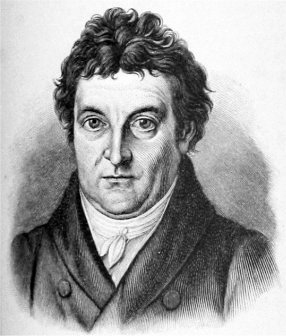
Germans at the time, especially younger intellectuals, were fascinated by Rousseau as a philosopher of alienation, and Fichte was no exception. His origins were modest: his father made a living by weaving and farming. He owed his education to an act of upper-class charity, when a passing nobleman noticed his talent and took charge of his schooling. As a young tutor, with little chance of meaningful employment, Fichte felt estranged from the bourgeois and aristocratic society of his patrons. This sense of marginality, of being an outsider in Germany’s society of orders, drew Fichte to Rousseau, especially to his indictment of the corruption blighting modern society.[42] When the French Revolution broke out, Fichte became a supporter and published in its defense a Contribution toward Rectifying the Judgment of the Public on the French Revolution (1793), a work that drew inspiration from Rousseau’s Social Contract. Whereas German opponents of the Revolution had routinely vilified Rousseau, Fichte set out to vindicate him, declaring that he had already “awakened” the “human spirit” and suggesting that Kant’s philosophy had completed the work that he had begun.[43] From that moment on, Rousseau’s Social Contract became a point of departure for much of Fichte’s political thinking.
The French Revolution set the groundwork for Fichte’s proposed revitalization of the German nation. Before the Revolution, Germany had been a congeries of some three hundred independent states, some large, some small. Germany’s fatal weakness, Fichte told his audience, lay in this political and moral fragmentation. Individualism and self-interest, what he called “material self-seeking,” had characterized the old order, as princes cared only about their own states, not the whole of Germany, and as citizens turned their backs on their neighbors. But this entire edifice had now collapsed before the French—“self-seeking” had been “destroyed by its own complete development”—and on its ruins Germans would create a new nation. The Revolution, in defeating the old Germany, had in effect cleared the ground for Germany’s recovery.[44] Fichte aimed his Addresses at all Germans, despite their apparent divisions, and he declared in true republican fashion that they must not look to outsiders for help, but must learn to help themselves. The means he proposed for doing this entailed the “fashioning of an entirely new self.” He wanted “to mold the Germans into a corporate body, which shall be stimulated and animated in all its individual members by a common interest.”[45] So, in response to the French invasion, Fichte called on the German speaking peoples to come together as a single nation through a process of incorporation that would subsume individual self-interest in the general will and give meaning to all its members by directing their efforts toward something larger than themselves. Here was Rousseau’s idea of the social contract applied to the nation.
Fichte insisted on the same degree of uniformity for the nation as Rousseau had demanded for the republic. A German essence, he said, rooted in race and language, had endured despite the calamities be-falling the German people and would provide the source of this uniformity. Germans were a Teutonic people, a “branch of the Teutonic race.” They were distinct from other Teutons because they had remained in their ancestral “dwelling places,” and because they had “retained and developed the original language of the ancestral stock.”[46] The role of language was absolutely crucial here, for it provided the instrument that created and sustained nations. “Men are formed by language,” Fichte said, “far more than language is formed by men.”[47] Languages, according to Fichte, existed independently of the people who spoke them, and the ideas they contained deep within their fabric made their speakers the people they were. Ancestral languages, developing continuously and without foreign accretions, had the power therefore to perpetuate nations. An idea of German nationality—what Fichte described as the “sum total of the sensuous and mental life of the nation”—had been “deposited” in the German language, transforming all who spoke it into Germans and guaranteeing the uniformity that would allow the nation to form a single corporate body with a single will.[48]
Much like Rousseau, Fichte emphasized the importance of education for refashioning the German self. The process of molding the German people into a nation would require “a total change of the existing system of education.” Whereas the old system had been suitable for an age of material self-seeking, the new system would transform this self-seeking into an quest for the common good. It would teach its students that freedom did not consist in doing as they pleased, but rather in pursuing the interests of the nation as a whole. Education, in other words, would compel them to be free, now that freedom was properly understood as conforming to the national will.[49] Whereas Rousseau had simply stated that citizens of the republic who refused to obey the general will would be “constrained to do so,” Fichte specified the means for ensuring obedience:
“The education proposed by me, therefore, is to be a reliable and deliberate art for fashioning in man a stable and infallible good will.”[50]
We can read Fichte’s Addresses as an expression of what Isaiah Berlin has termed positive liberty: the freedom to live a meaningful life by developing one’s best self according to the standards of the community to which one belongs.[51] Though he did not use the term, Fichte articulated the concept in his discussion of the need to educate the will. For Fichte, doing as one pleased was not exercising freedom, but rather responding to earthly appetites. True freedom, on the contrary, meant living according to one’s essence; and in the context of the Addresses,this meant living as a German. So, when Fichte proposed his new system of education and called on the rising generation of Germans to discipline their collective will, he was asking them to exercise their freedom in a positive sense by awakening their German essence.[52] In the process, they would give their lives meaning. Outside the national community, they would remain isolated as individuals; but within it, they would become one with the ever-flowing stream of national life. At times, Fichte gave this thought a mystical rendering. The German nation, he said, existed eternally as a transcendent idea that became real as each generation disciplined its will and directed it toward the common good. This process of bringing the German nation to life was never ending, as each new generation picked up where the previous had left off, and it provided access to the divine. For Fichte, nations were earthly reflections of the divine order, they were a “totality of men” arising “out of the divine” and embodying it in their “national character.” As Germans labored to create their nation, they exercised their freedom by bringing the divine to bear on earth.[53]
Fichte’s understanding of the nation as the embodiment of the divine order might appear far removed from the more worldly republican traditions with which we began this essay. And yet, Fichte was convinced that the German nation would express itself politically in republican institutions. Germans would succeed, he predicted, where the French revolutionaries had failed: they would create the perfect state. Whereas the French were mired in the age of self-seeking, the Germans would undergo Fichte’s rigorous system of education and readily em-brace republican institutions. “Only the nation which has first solved in actual practice the problem of educating perfect men will then solve also the problem of the perfect state,” he told his audience.[54] History had demonstrated that republican institutions, though alien to the French, were natural to the Germans, whose past abounded with republics. The imperial cities of the Hanseatic League had developed “civic constitutions and organizations which, though but on a small scale, were nonetheless of high excellence….” The German burghers had been true republicans, exercising civic virtue, sacrificing self-interest for the common weal. The Germans, Fichte concluded, were the only modern European nation “that has shown in practice, by the example of its burgher class for centuries, that it is capable of enduring a republican constitution.”[55] For Fichte, then, the nation and the republic were opposite sides of the same coin. The nation became synonymous with the republic, an association in which individuals put self-interest aside, submerged themselves in the general will, and worked for the common good.

Now that he had embraced republican institutions, Fichte faced the same question as Rousseau: how was the republic to defend itself? For Fichte, the international order was just as predatory as it had been for Rousseau. It was an aggressive system in which Germany had historically served as the chief battleground and German unity had been the chief victim. Just think of the Thirty Years War or the wars of Frederick the Great, in which the European powers had used the German states as pawns in their quests for supremacy.[56] So, how was the German nation, organized as a republic, to defeat its enemies? His answer: patriotism, or what he called love of fatherland.
“…He to whom a fatherland has been handed down … fights to the last drop of his blood to hand on the precious possession unimpaired to his posterity. So it always has been.”
This was especially true when the fatherland was understood as an emanation of the divine order and its survival as the citizen’s best guarantee of eternity on earth. The ancient Romans, the original Teutons, and the German Protestants at the Reformation had all fought for that sense of eternity.[57] As before, Fichte’s language often crossed into the mystical, but his conception of patriotism fell right into line with classical thinking. Like Machiavelli and Rousseau, he called on the republic’s citizens to abandon their selfish impulses and provide for its defense. An armed people would accomplish what no standing army had. Fichte may have started his lectures with the observation that individual self-seeking had allowed Napoleon to conquer, but he ended them with the prediction that a love of fatherland, aroused by his new system of education, would enable Germany finally to achieve its independence.[58]
This discussion of Fichte’s Addresses has demonstrated just how easily Rousseau’s republican discourse could be adapted to the new nationalism. Whereas Rousseau had conceptualized the republic, Fichte applied this conceptualization to the nation, an institution that would shape so much of the nineteenth and twentieth centuries. The parallels between the two were quite profound. Both Rousseau and Fichte envisioned a political community based on an act of incorporation in which private citizens merged their individual wills into a general will, creating a single public person. This act of incorporation was preserved through education, through shaping the individual will, through coercion even, since neither Rousseau nor Fichte allowed deviance from the general will. It ensured that the community achieved unity and pursued a common goal. What individuals lost in terms of personal freedom—the ability to do as they pleased—they gained in terms of moral sensibility. Citizens, now partaking in the general will, became moral agents, leading meaningful lives, an integral part of their community. This insistence on uniformity played an even greater role when the republic or nation was contemplated not abstractly, but as part of the international system, which both theorists recognized as predatory. Both Rousseau and Fichte appreciated the republic’s precariousness, and drawing on a long tradition of republican thinking, called on the patriotism of citizens—patriotism inculcated and strengthened through civic education—to defend the republic.
Right at the center of their thinking, however, lay a disturbing paradox: Rousseau and Fichte both argued that individuals, in placing themselves under the general will, suffered no loss of freedom. For Rousseau, the citizen gave himself to no one when he gave himself to everyone. For Fichte, the German did nothing more than renounce his lower self when he submitted to the demands of the nation. This surrender of the individual will was crucial for both because it created the unity that the republic or nation required if it were to survive as a community capable of providing its members with purposeful lives. And yet, it is not at all clear what they meant when they claimed that the individual suffered no loss of freedom. This lack of clarity did not escape contemporaries. Benjamin Constant, writing in 1810, just a few years after Fichte delivered his Addresses, considered Rousseau’s theory a rhetorical sleight of hand.[59] He was absolutely certain that it assigned tremendous power to the agents who implemented the general will: “…in handing yourself over to everyone else, it is certainly not true that you are giving yourself to no one,” he wrote in his Principles of Politics.
“On the contrary, it is to surrender yourself to those who act in the name of all. It follows that in handing yourself over entirely, you do not enter a universally equal condition, since some people profit exclusively from the sacrifice of the rest.”[60]
If Rousseau conceived of the republic as a public person, then Constant warned that this public person had the power to oppress those who stood in its way; and as an illustration of how this power could be abused, he demonstrated just how easy it would be for such a government to persecute an unwanted minority.[61]
Constant also questioned the relevance of Rousseau’s Social Contract to the emerging nineteenth century. Rather than speak to the modern world, it appeared to share far more with the ancient Greek and Roman republics, which were small, culturally uniform, and outfitted for war. “Our world is precisely the opposite of the ancient one,” Constant observed in his Principles.
“Everything in antiquity related to war. Today everything is reckoned in terms of peace. In former times each people was an isolated family, born hostile to other families. Now a mass of people lives under different names and diverse modes of social organization….”[62]
The state system whose beginnings Rousseau had sketched in his Discourse on the Origins of Inequality resembled closely the age of Frederick the Great, when princes went to war to conquer territory and defend their reputations. Within this context, a warlike republic that was compact, uniform, and animated by a single will might have made sense. But if applied to the new nationalism—and we have just followed its traces through Fichte’s Addresses to the German Nation—then it might easily have conduced to politics that were belligerent, exclusive, and authoritarian.
Endnotes
- Ernest Gellner, Nations and Nationalism (Ithaca: Cornell University Press, 1983). Leah Greenfield, Nationalism: Five Roads to Modernity (Cambridge: Harvard University Press, 1992), 1–26. Alexander B. Murphy, “The Sovereign State System as Political-Territorial Ideal: Historical and Contemporary Considerations,” State Sovereignty as Social Construct, edited by Thomas J. Biersteker and Cynthia Weber (Cambridge: Cambridge University Press, 1996), 81–120.
- E. J. Hobsbawm, Nations and Nationalism since 1780: Programme, Myth, Reality, second edition (Cambridge: Cambridge University Press, 1992). The Collected Works of Walter Bagehot, edited by Norman St John-Stevas (London: The Economist, 1965–1986), 7: 138–139. The Collected Works of John Stuart Mill, edited by J. M. Robson (Toronto: University of Toronto Press, 1963–1991), 19: 546–552. Johann Gottlieb Fichte, Addresses to the German Nation, edited by George Armstrong Kelly (New York: Harper and Row, 1968), 111–118. Joseph Mazzini, The Duties of Man (London: Chapman and Hall, 1862), 86–88.
- The Collected Writings of Rousseau, edited by Roger D. Masters and Christopher Kelly (Hanover: University Press of New England, 1990–2009), 5: 339–340.
- Hans Baron, The Crisis of the Early Italian Renaissance: Civic Humanism and Republican Liberty in an Age of Classicism and Tyranny (Princeton: Princeton University Press, 1966). Felix Gilbert, Machiavelli and Guicciardini: Politics and History in Sixteenth-Century Florence (Princeton: Princeton University Press, 1965). J. G. A. Pocock, The Machiavellian Moment: Florentine Political Thought and the Atlantic Republican Tradition (Princeton: Princeton University Press, 1975). Quentin Skinner, The Foundations of Modern Political Thought (Cambridge: Cambridge University Press, 1978).
- Paul W. Schroeder, The Transformation of European Politics, 1763–1848 (Oxford: Clarendon Press, 1996). H. M. Scott, The Birth of a Great Power System, 1740–1815 (Harlow: Longman, 2006). M. S. Anderson, The Rise of Modern Diplomacy, 1450–1919 (London: Longman, 1993).
- M. S. Anderson, The War of the Austrian Succession, 1740–1748 (London: Longman, 1995). Reed Browning, The War of the Austrian Succession (New York: St. Martin’s Press, 1993).
- Collected Writings,11: 54.
- Scott, Great Power System. Dennis Showalter, The Wars of Frederick the Great (London: Longman, 1996).
- Collected Writings, 4: 194.
- Kenneth N. Waltz, Man, the State and War: A Theoretical Analysis (New York: Columbia University Press, 1954), 165–186. F. H. Hinsley, Power and the Pursuit of Peace: Theory and Practice in the History of Relations between States (Cambridge: Cambridge University Press, 1963), 46–61. Stanley Hoffmann, “Rousseau on War and Peace,” Janus and Minerva: Essays in the Theory and Practice of International Politics (Boulder: Westview Press, 1987), 25–51. Grace G. Roosevelt, Reading Rousseau in the Nuclear Age (Philadelphia: Temple University Press, 1990). Stanley Hoffmann and David P. Fidler, Rousseau on International Relations (Oxford: Clarendon Press, 1991). Pierre Hassner, “Rousseau and the Theory and Practice of International Relations,” The Legacy of Rousseau, edited by Clifford Orwin and Nathan Tarcov (Chicago: University of Chicago Press, 1997), 200–219.
- Collected Writings, 3: 15, 34–38.
- Collected Writings, 3: 26, 43, 47–48, 51–52.
- Collected Writings, 3: 53.
- Collected Writings, 3: 54–55.
- Collected Writings, 3: 143.
- Collected Writings, 11: 67–68.
- Collected Writings, 11: 27–29, 31, 33–38.
- Collected Writings, 11: 53–56.
- Collected Writings, 11: 61.
- Collected Writings, 11: 62–68.
- Collected Writings, 3: 5.
- Maurizio Viroli, Jean-Jacques Rousseau and the “Well-Ordered Society,” translated by Derek Hanson (Cambridge: Cambridge Univer-sity Press, 1988), 11–14, 168–178. Maurizio Viroli, “Republic and Politics in Machiavelli and Rousseau,” History of Political Thought, 10 (Autumn 1989): 405–420.
- Collected Writings, 2: 9.
- Collected Writings, 4: 139. I have amended the translation.
- Collected Writings, 4: 141.
- Collected Writings, 4: 141–142.
- Collected Writings, 4: 173.
- Collected Writings, 4: 174, 191–192.
- Collected Writings, 4: 162.
- Collected Writings, 11: 184.
- Collected Writings, 11: 124.
- Collected Writings, 11: 217–218.
- Collected Writings, 11: 220.
- Collected Writings, 11: 222.
- Collected Writings, 11: 179.
- Collected Writings, 4: 145.
- Collected Writings, 4: 147.
- Collected Writings, 4: 159.
- Collected Writings, 4: 162.
- Collected Writings, 4219–220.
- Scott, Great Power System, 280–281, 302–303, 305, 311, 316–319, 326–328. Schroeder, Transformation of European Politics, 291–294, 302–306. Christopher Clark, Iron Kingdom: The Rise and Downfall of Prussia, 1600–1947 (Cambridge: Harvard University Press, 2006), 296–311.
- Anthony J. La Vopa, Fichte: The Self and the Calling of Philosophy, 1762–1799 (Cambridge: Cambridge University Press, 2001), 23–29, 61, 103–104, 225–229.
- Johann Gottlieb Fichte, Considérations destinées a rectifier les jugements du public sur la révolution française, translated by Jules Barni (Paris: Payot, 1974), 103, 109, 111–112. La Vopa, Fichte, 83–85, 94, 100–104.
- Johann Gottlieb Fichte, Addresses to the German Nation, edited by George Armstrong Kelly (New York: Harper and Row, 1968), 1, 6–9.
- Addresses to the German Nation, 2–3, 4, 10–13.
- Addresses to the German Nation, 45–47.
- Addresses to the German Nation, 48.
- Addresses to the German Nation, 49–60.
- Addresses to the German Nation, 10–13, 17–19, 31, 96–99.
- Addresses to the German Nation, 18–19.
- Isaiah Berlin, “Two Concepts of Liberty,” Four Essays on Liberty (Oxford: Oxford University Press, 1969), 131–134. Isaiah Berlin, “Fichte,” Freedom and Its Betrayal: Six Enemies of Human Liberty, edited by Henry Hardy(London: Pimlico, 2003), 50–73.
- Addresses to the German Nation, 102–108.
- Addresses to the German Nation, 32–34, 38–40, 111–117.
- Addresses to the German Nation, 87.
- Addresses to the German Nation, 88–90.
- Addresses to the German Nation, 191–196.
- Addresses to the German Nation, 117–125.
- Addresses to the German Nation, 132–134, 163.
- Benjamin Constant, Principles of Politics Applicable to All Governments, translated by Dennis O’Keeffe, edited by Etienne Hofmann (Indianapolis: Liberty Fund, 2003), 8.
- Principles of Politics, 16.
- Principles of Politics, 18.
- Principles of Politics, 351–355.
Originally published by History Open Access Publications 2 (2018), free and open access under the Digital Commons Network, republished for educational, non-commercial purposes.
About the Author