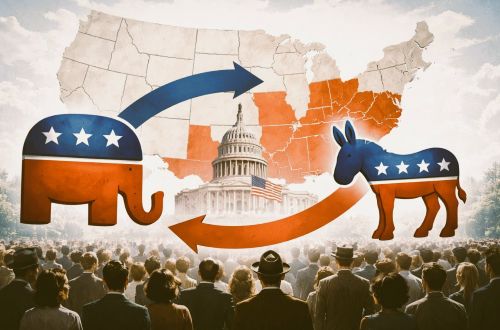
The Southern Strategy reshaped American politics by realigning party loyalty, as leadership shifts on civil rights led voters to redefine identity and political allegiance.

By Matthew A. McIntosh
Public Historian
Brewminate
Introduction: Realignment and the Politics of Leadership
Political parties are often treated as stable containers of ideology, reflecting the convictions of their voters. Yet historical experience demonstrates that party identity is neither fixed nor purely reactive. Instead, parties function as active agents that shape political meaning, redefine ideological boundaries, and reorganize the loyalties of their supporters. They construct narratives about national identity and signal to voters which issues matter and how they should be understood. Moments of realignment expose this dynamic most clearly. They show that political identities, even those rooted in generations of habit and memory, can be restructured when leadership recalibrates the relationship between policy, culture, and power. Voters are not simply expressing long-held beliefs but are responding to a changing political framework that alters how those beliefs are organized and expressed. The transformation of American party alignment in the mid-twentieth century stands as one of the most consequential examples of this process.
Following the Civil War, the Republican and Democratic parties developed sharply contrasting identities tied to the legacies of Reconstruction and white Southern resistance. For decades, these alignments proved remarkably durable, sustained by regional loyalty and shared historical narratives. Political affiliation in the South operated less as a reflection of shifting policy preferences than as an expression of cultural identity and inherited allegiance. This stability masked underlying tensions within both parties, especially as national political priorities began to diverge from entrenched regional expectations. The eventual disruption of this system did not arise spontaneously from the electorate but was driven by decisions made within party elites at the national level.
The emergence of civil rights as a central political issue in the 1940s through the 1960s forced a redefinition of party identity that neither party could avoid. Democratic leaders, most notably President Harry S. Truman and President Lyndon B. Johnson, embraced federal civil rights initiatives that directly challenged the racial order of the South. These decisions transformed the ideological orientation of the Democratic Party into a coalition increasingly committed to racial equality and national reform. They also signaled to voters that the party’s priorities were shifting away from regional accommodation toward a broader national vision of citizenship and rights. In doing so, party strategists disrupted longstanding patterns of loyalty among white Southern voters, who had long viewed the Democratic Party as a protector of local social structures. Republican strategists recognized the political opportunity created by this shift and began to reposition their party in ways that could attract disaffected voters without overtly abandoning national electoral viability. Through rhetoric emphasizing states’ rights, law and order, and skepticism toward federal intervention, Republican leaders crafted a framework that allowed Southern voters to reinterpret their political identity without abandoning their broader sense of ideological continuity.
The Southern Strategy refers to a set of Republican political tactics that appealed to white Southern voters by emphasizing states’ rights, law and order, and resistance to federal civil rights intervention. The partisan restructuring associated with the Southern Strategy illustrates a broader principle: leaders often move first, and voters follow. Rather than initiating change independently, large segments of the electorate adapt to new political frameworks established by party elites, particularly when those frameworks resonate with existing cultural or social concerns. The resulting transformation of party loyalty in the United States was not a sudden rupture but a gradual process in which messaging and identity interacted. By examining this episode, what follows situates the Southern Strategy within a wider pattern of political behavior in which allegiance is reshaped through the interplay of ideology, strategy, and leadership.
The Post–Civil War Order: Parties, Race, and Regional Identity
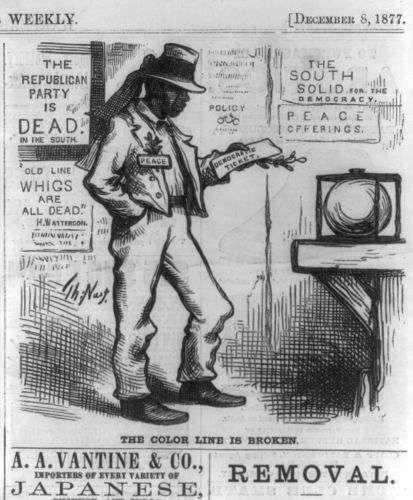
The political order that emerged in the United States after the Civil War was shaped by the profound upheaval of emancipation, Reconstruction, and the redefinition of citizenship. The Republican Party, having led the Union war effort and overseen the abolition of slavery, became closely associated with federal authority, Black enfranchisement, and the project of rebuilding the South along new political and social lines. During Reconstruction, Republican governments in Southern states depended in part on the participation of newly enfranchised Black voters, as well as on white Southern Unionists and Northern migrants. This alignment gave the party a distinct identity as the defender of a transformed constitutional order rooted in civil rights and national supremacy.
In contrast, the Democratic Party in the postwar South became the vehicle for white resistance to Reconstruction. Democratic leaders, often referred to as “Redeemers,” sought to restore what they described as local self-government, which in practice meant the reestablishment of white political control. Through a combination of political mobilization, legal restructuring, and extralegal violence, Democrats dismantled Reconstruction governments and reasserted dominance across the region. The withdrawal of federal troops in 1877 marked a decisive turning point, allowing Southern Democrats to consolidate power and construct a system of governance that excluded Black citizens from meaningful political participation.
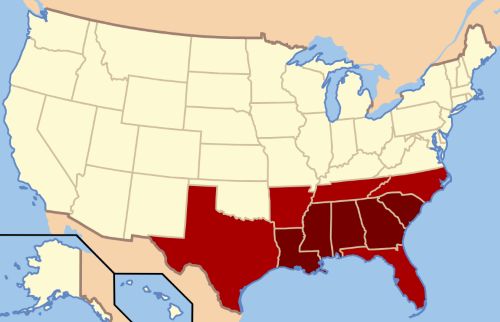
The resulting political landscape gave rise to what historians have termed the “Solid South,” a region in which Democratic dominance became nearly absolute. Elections in Southern states were often decided within the Democratic Party itself, as general elections offered little genuine competition. This one-party system was sustained not only by institutional mechanisms such as poll taxes and literacy tests, but also by a deeply ingrained political culture that linked Democratic affiliation with regional identity and historical memory. White primaries, effectively excluding Black voters from the decisive stage of elections, further entrenched Democratic control and limited the possibility of political dissent within the system. For many white Southerners, loyalty to the Democratic Party became intertwined with a sense of continuity with the antebellum past and with resistance to perceived external interference. Political allegiance functioned not merely as a choice among policy alternatives but as a marker of belonging within a social order that defined itself in opposition to Reconstruction and its legacy.
The Republican Party retained its strength in the North and West, where it was associated with economic modernization, industrial growth, and national development. Republican policies often emphasized protective tariffs, infrastructure expansion, and support for business interests, reinforcing its identity as a party aligned with the emerging industrial economy. While the party continued to claim the legacy of Lincoln and Reconstruction, its direct engagement with Southern racial politics diminished as national priorities shifted. This geographic and ideological division between a Republican North and a Democratic South became a defining feature of the American political system in the late nineteenth and early twentieth centuries.
Political affiliation during this period operated less as a reflection of individual policy preferences than as an expression of collective identity. In the South, Democratic loyalty was reinforced through social institutions, community networks, and shared narratives about the Civil War and its aftermath. Churches, schools, local political organizations, and informal social structures all contributed to the reproduction of this political culture across generations. In the North, Republican identification was similarly sustained by memories of Union victory and by alignment with economic and political modernization. These patterns of allegiance were remarkably stable, persisting across generations and shaping voting behavior in ways that resisted short-term political fluctuations. The durability of this system created the appearance of a fixed political order, even as underlying social and economic changes, including industrial labor conflict and internal migration, began to introduce new tensions that would gradually erode the rigidity of regional political identities.
By the early twentieth century, the foundations of this alignment were beginning to show signs of strain. Industrialization, urbanization, and migration were gradually redefining the social composition of both parties, while new political issues such as labor rights, economic regulation, and eventually civil rights began to challenge existing coalitions. The Democratic Party faced the growing difficulty of reconciling its Southern base with its emerging support among urban, immigrant, and working-class voters in the North. These competing constituencies often held divergent priorities, forcing party leaders to navigate an increasingly complex political landscape. Although the Solid South remained intact, the conditions that had sustained it were no longer entirely secure, as demographic change and economic transformation slowly altered the context in which political loyalty was formed. These evolving pressures did not immediately produce realignment, but they created the structural tensions that would later make such a transformation possible, setting the stage for the mid-twentieth-century shifts that would redefine the relationship between party, race, and regional identity in American politics.
Civil Rights and the Fracturing of the Democratic Coalition (1940s–1960s)
The mid-twentieth century marked a turning point in the political history of the United States as civil rights became a central national issue. The Democratic Party, long anchored by a coalition that included white Southern voters, Northern urban machines, labor unions, and immigrant communities, faced mounting pressure to address racial inequality. This pressure developed through decades of activism by Black Americans, legal challenges to segregation, and shifting public attitudes shaped in part by the global context of World War II and the early Cold War. Black veterans returning from the war, having fought for democratic ideals abroad, increasingly demanded the realization of those same principles at home, strengthening the moral force of civil rights claims. International scrutiny of American racial practices, particularly from newly decolonizing nations, heightened the political urgency of reform. As the United States positioned itself as a defender of democracy abroad, the contradiction between its international rhetoric and its domestic racial order became increasingly difficult to ignore. Civil rights moved from a regional concern to a national political issue, forcing party leaders to confront questions that could no longer be contained within existing coalition structures.
President Truman’s administration marked an early and significant step in this transformation. In 1948, Truman issued Executive Order 9981, mandating the desegregation of the armed forces, and endorsed a civil rights platform that called for federal action against lynching and discrimination. These measures represented a departure from the Democratic Party’s longstanding reluctance to confront Southern racial practices directly. The response was immediate. A faction of Southern Democrats, known as the Dixiecrats, broke from the party and nominated Strom Thurmond for president in 1948, signaling the first major fracture in the Democratic coalition along sectional lines. Although Truman ultimately won reelection, the episode exposed the growing tension between national party leadership and its Southern base.
The civil rights movement of the 1950s and early 1960s intensified these pressures and further destabilized the Democratic coalition. Landmark events such as the Supreme Court’s decision in Brown v. Board of Education (1954), the Montgomery Bus Boycott, and the Birmingham campaign brought national attention to the realities of segregation and racial violence. Grassroots activism, combined with media coverage that broadcast images of repression to a national audience, increased public support for federal intervention. Televised scenes of police brutality, attacks on peaceful demonstrators, and resistance to desegregation forced many Americans to confront the realities of racial inequality in ways that written reports alone had not achieved. Democratic leaders found themselves navigating a political landscape in which moral urgency and political calculation were increasingly intertwined. While some sought gradual reform, others recognized that incrementalism could no longer contain the demands for systemic change. The movement’s ability to mobilize public opinion and frame civil rights as a question of national morality further eroded the viability of maintaining a coalition that depended on accommodating segregationist interests.
President Johnson’s administration ultimately forced a decisive break with the past. The passage of the Civil Rights Act of 1964 and the Voting Rights Act of 1965 represented the most comprehensive federal intervention in racial inequality since Reconstruction. These laws dismantled legal segregation and sought to protect Black voting rights in the South, fundamentally altering the relationship between the federal government and the states. Johnson was acutely aware of the political consequences of these actions, reportedly acknowledging that the Democratic Party would lose the South for a generation. His administration’s commitment to civil rights reflected a broader redefinition of the party as a national coalition oriented toward social reform and equality rather than regional accommodation. The legislative victories of this period were achieved through intense political negotiation, coalition-building, and the strategic use of presidential authority, demonstrating the extent to which a party could reconfigure both policy and party identity. By aligning the Democratic Party with the enforcement of civil rights, Johnson helped solidify a new ideological direction that would have lasting consequences for American political alignments.
The impact of these changes on Southern white voters was gradual but profound. Many did not immediately abandon the Democratic Party, and in some cases continued to support local Democratic candidates even as they began to vote Republican in national elections. This period of transition was marked by split-ticket voting, shifting political rhetoric, and the slow erosion of inherited party loyalty. Cultural and social concerns, particularly those related to race, federal authority, and social order, became increasingly central to ideological self-conception. As Democratic political actors embraced civil rights, segments of its traditional base began to perceive the party as no longer aligned with their interests or values.
By the late 1960s, the Democratic coalition that had dominated American politics since the New Deal was visibly fractured. The party retained strong support among Black voters, urban populations, and liberal constituencies, but its hold on the South was weakening. The shift was not the result of a single election or policy but of a sustained process in which leadership decisions reframed the party’s ideological identity. Civil rights legislation did not simply respond to changing public opinion; it helped to create new political alignments by redefining the meaning of party affiliation. In doing so, it set the stage for the strategic adaptations that would follow, as Republicans sought to capitalize on the disaffection of Southern white voters and construct a new electoral coalition.
The Republican Response: Strategy, Messaging, and the Southern Appeal

The fracturing of the Democratic coalition in the wake of civil rights legislation created a political opening that Republican leaders were quick to recognize. While the Democratic Party redefined itself around a national commitment to civil rights, Republicans faced the challenge of expanding their electoral base beyond their traditional strongholds in the North and West. This moment did not produce an immediate or uniform response, but it did encourage a gradual reassessment of party strategy. Republican leaders began to explore ways of appealing to white Southern voters who felt alienated by the Democratic Party’s new direction, seeking to translate regional disaffection into long-term partisan reconfiguration.
The 1964 presidential campaign of Barry Goldwater marked an early and highly visible expression of this shift. Goldwater opposed the Civil Rights Act of 1964 on constitutional grounds, arguing that certain provisions represented an overreach of federal authority into state and local affairs. Although his position was framed in terms of limited government, it resonated strongly with many white Southern voters who opposed federal intervention in racial matters. His campaign also emphasized themes of individual liberty, anti-communism, and resistance to centralized power, which further aligned with broader conservative sentiments in the region. Goldwater’s electoral performance reflected this dynamic. While he suffered a decisive defeat nationally, he carried several Deep South states that had not supported a Republican presidential candidate since Reconstruction. This outcome suggested that the Republican Party could make inroads into the South by aligning itself, whether explicitly or implicitly, with opposition to federal civil rights enforcement. It also demonstrated that regional political loyalties, though long-standing, were not immutable when voters perceived a party as better representing their ideological and cultural concerns.
Building on these developments, Richard Nixon’s campaigns in 1968 and 1972 helped consolidate what would later be described as the Southern Strategy. Nixon’s approach differed from Goldwater’s in tone and emphasis. Rather than directly challenging civil rights legislation, he employed language that appealed to concerns about social order, crime, and federal authority. Phrases such as “law and order” and appeals to “states’ rights” functioned as signals that resonated with voters unsettled by the rapid social changes of the 1960s. This strategy allowed Republican leaders to attract Southern voters without overtly abandoning a national commitment to civil rights, maintaining a degree of political flexibility that proved electorally advantageous.
Central to this strategy was the use of coded political language, often referred to as “dog whistle” rhetoric, that conveyed meaning to specific audiences without explicit articulation. By framing political issues in terms of crime, disorder, and local control, Republican leaders could address anxieties related to race and social change while avoiding direct references that might alienate other segments of the electorate. This rhetorical approach allowed candidates to balance appeals to Southern voters with broader national support. It also reflected a growing sophistication in political communication, as campaigns increasingly relied on language that could carry layered meanings depending on the audience. The effectiveness of such rhetoric lay in its ambiguity, allowing different groups of voters to interpret the same language in ways that aligned with their own concerns. This style of messaging became a defining feature of modern political campaigns, shaping not only electoral outcomes but also the broader discourse surrounding race, identity, and public policy.
The role of political strategists and consultants also became increasingly significant during this period. The electoral logic behind targeting the South was that demographic and political changes made the region ripe for Republican gains. Campaigns became more data-driven and strategic, focusing on regional patterns, voter behavior, and message discipline. The Southern Strategy was not a single policy or statement but a broader framework that guided how Republican candidates approached elections, particularly at the national level. This approach contributed to the gradual erosion of Democratic dominance in the South and the corresponding rise of Republican influence.
The Republican response to Democratic civil rights policies did not produce an immediate realignment but initiated a process that unfolded over several decades. Southern voters did not uniformly or instantly shift their allegiance, and local political dynamics often remained complex and varied. In many areas, Democratic dominance persisted at the state and local level even as Republican candidates gained ground in presidential elections, illustrating the uneven nature of political transformation. Generational change also played a role, as younger voters came of age in a political environment shaped by new party identities and messaging strategies. Nevertheless, the strategic decisions made by Republican leaders helped create the conditions under which such a shift could occur. By offering an alternative political affiliation that resonated with the concerns of disaffected voters, the Republican Party positioned itself to benefit from the long-term transformation of the American political landscape. In doing so, it demonstrated how messaging and strategy could restructure patterns of political loyalty that had once appeared deeply entrenched.
Voter Realignment: Following the Party or Following Identity?
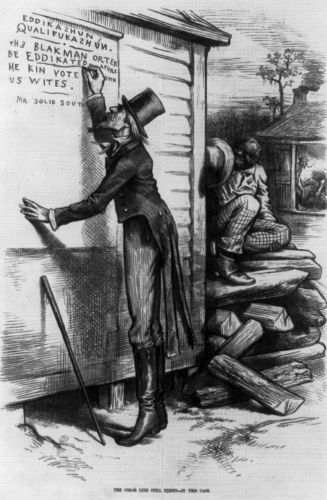
The transformation of party alignment in the United States during the latter half of the twentieth century raises a central question in political history: do voters lead political change, or do they follow it? The evidence from the Southern adjustment suggests that voters did not independently initiate a wholesale shift in party allegiance. Instead, they responded to changes in party signaling, priorities, and ideological framing. Realignment was a gradual process in which existing identities were reinterpreted within a new political context. The shift from Democratic to Republican affiliation among many white Southern voters reflected not a rejection of long-held beliefs, but an adaptation of those beliefs to a changing party landscape. Rather than changing beliefs, many voters changed the party through which those beliefs were expressed.
One of the defining features of this transition was the persistence of split-ticket voting. For many years, Southern voters continued to support Democratic candidates in state and local elections while increasingly voting Republican in presidential contests. This pattern suggests that partisan identity did not change all at once but evolved unevenly across different levels of government. Local Democratic officials, often deeply embedded in community networks, retained personal loyalty even as national party identities shifted. Republican presidential candidates were able to capitalize on broader cultural and ideological concerns that resonated with voters who felt alienated by the national Democratic platform. The coexistence of these voting behaviors underscores the complexity of a transition as a layered and incremental process. It also highlights the importance of distinguishing between institutional party change and voter behavior, as individuals often adjusted their choices gradually rather than making abrupt, comprehensive shifts. These patterns began to align more closely, as repeated exposure to new party messaging and electoral outcomes reinforced emerging partisan identities.
Cultural identity played a central role in shaping how voters interpreted these changes. For many white Southern voters, political affiliation was closely tied to social norms, regional identity, and perceptions of federal authority. As the Democratic Party increasingly associated itself with civil rights and federal intervention, these voters began to perceive a growing distance between their own values and the party’s direction. Republican messaging, which emphasized themes such as law and order, states’ rights, and skepticism toward centralized power, provided a framework through which voters could reinterpret their political identity without abandoning their broader ideological commitments. Realignment was less about adopting entirely new beliefs than about relocating existing ones within a different partisan structure.
The role of social institutions and communication networks further reinforced this gradual shift. Churches, local media, political organizations, and informal community ties all contributed to the diffusion of new political messages and the normalization of changing partisan identities. As Republican gains became more visible, particularly in national elections, they helped legitimize the party as a viable alternative in regions where it had long been marginalized. These changes altered the expectations of voters, making Republican affiliation increasingly consistent with prevailing cultural and political norms. The process was self-reinforcing, as each electoral success strengthened the perception that the party better represented the interests and values of Southern voters.
By the late twentieth century, the cumulative effect of these developments had produced a substantial electoral shift in American politics. The South, once the core of Democratic strength, had become a central pillar of Republican electoral success. This transformation was not the result of a single moment of decision but of a prolonged interaction between leadership strategy and voter adaptation. It unfolded across decades, shaped by repeated elections, generational turnover, and the gradual consolidation of new political identities. Voters who had once split their tickets increasingly aligned their choices across levels of government, reflecting a deeper internalization of partisan change. The Southern case demonstrates that civic alignment is not fixed but can be rearticulated through sustained shifts in messaging, institutional support, and perceived alignment with cultural values. In this process, voters did not simply change their minds; they adjusted their partisan loyalties in response to a political environment that redefined what those loyalties meant.
Long-Term Consequences: Polarization and the Modern Party System
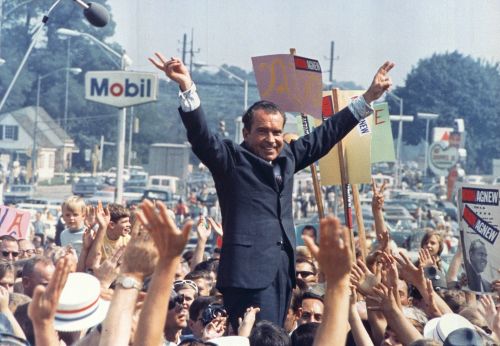
The realignment that unfolded in the latter half of the twentieth century produced consequences that extended far beyond the immediate shift in party loyalties. The slow movement of white Southern voters into the Republican Party and the consolidation of Democratic support among Black voters, urban populations, and liberal constituencies contributed to a more sharply defined partisan divide. What had once been parties with overlapping ideological coalitions increasingly became more internally consistent and externally distinct. This transformation altered not only electoral outcomes but also the structure of political competition, laying the foundation for the polarized party system that characterizes contemporary American politics.
One of the most significant outcomes of this process was the geographic sorting of political affiliation. The South, which had been a Democratic stronghold for decades after the Civil War, became a central pillar of Republican electoral strength. Democratic support became more concentrated in urban areas, coastal regions, and among minority populations. This geographic polarization reinforced partisan divisions by aligning political affiliation with regional identity, making electoral competition less about persuading undecided voters and more about mobilizing existing bases. As political identities became increasingly tied to place, regional culture and economic structure further deepened partisan distinctions, with rural and suburban areas tending toward Republican affiliation and urban centers leaning more strongly Democratic. These patterns were reinforced over successive election cycles, as migration, economic change, and social networks contributed to the clustering of like-minded voters within particular regions. National elections increasingly reflected the aggregation of regional blocs rather than a fluid contest of ideas across a shared political landscape, reducing opportunities for cross-regional political consensus.
The ideological consequences of the shift were equally profound. As conservative Southern voters entered the Republican Party, they contributed to a shift in its internal composition, reinforcing its commitment to limited government, traditional social values, and skepticism toward federal intervention. Meanwhile, the Democratic Party’s embrace of civil rights and social reform solidified its position as the party more closely associated with progressive policy agendas. The reduction of ideological overlap between the parties marked a departure from earlier periods in which conservative Democrats and liberal Republicans had played significant roles within their respective coalitions. By the late twentieth century, party affiliation had become a more reliable indicator of ideological orientation, intensifying partisan distinctions in both policy debates and political leaning.
This process also contributed to the rise of identity-based partisanship, in which political affiliation became intertwined with broader social and cultural identities. Voters increasingly aligned themselves with parties not only on the basis of policy preferences but also as expressions of cultural belonging and group identity. Race, religion, geography, and attitudes toward social change became key markers of partisan affiliation, reinforcing divisions that extended beyond the political sphere. As these identities became more tightly linked to party membership, political disagreement took on a more personal and emotionally charged character, making compromise more difficult and increasing the stakes of electoral competition.
The institutional consequences of polarization further reshaped the functioning of American government. As parties became more ideologically cohesive, legislative compromise became more difficult to achieve, contributing to increased gridlock and partisan conflict in Congress. Electoral strategies shifted toward base mobilization, reducing incentives for cross-party appeal and encouraging more confrontational forms of political rhetoric. Media environments, increasingly segmented along ideological lines, reinforced these trends by providing audiences with information that aligned with their existing beliefs. The cumulative effect was a political system in which division became self-reinforcing, as structural incentives and cultural dynamics both worked to deepen partisan divides.
In the long term, the realignment associated with the Southern Strategy contributed to a transformation in how Americans understand partisan identity and participation. The alignment of race, region, and ideology with party affiliation created a more predictable but also more rigid political landscape. While this clarity has made electoral outcomes more consistent, it has also narrowed the space for ideological diversity within parties and reduced the potential for cross-cutting political alliances. The legacy of this transformation continues to shape contemporary politics, influencing not only how parties compete but also how citizens interpret their place within the political system. The shift that began in the mid-twentieth century represents not simply a change in party loyalty, but a reconfiguration of the fundamental relationship between identity, ideology, and political power in the United States.
Conclusion: Leadership, Loyalty, and the Fluidity of Political Identity
The transformation of American party alignment in the twentieth century demonstrates that political loyalty is neither fixed nor purely ideological. The realignment associated with the Southern Strategy did not occur because voters suddenly abandoned their beliefs, but because the meaning of party affiliation itself changed. As Democratic leaders embraced civil rights and redefined the party’s national priorities, they disrupted a long-standing regional coalition that had been sustained as much by identity and memory as by policy. Republican leaders, recognizing the opportunity created by this shift, developed strategies that allowed disaffected voters to reinterpret their political allegiance without abandoning their broader cultural and ideological commitments. The result was not simply a change in voting behavior but a reconfiguration of how political ideology was understood and expressed.
This process highlights the central role of national figures in shaping the direction of political change. Party elites do not operate in isolation, but they possess the capacity to define issues, frame debates, and signal to voters how competing priorities should be interpreted. In moments of reconfiguration, these signals become especially influential, providing a framework through which individuals reassess their political affiliations. The Southern case illustrates that voters often respond to these cues gradually, adjusting their behavior as new patterns of alignment become normalized. Leadership decisions, particularly those that redefine the relationship between policy and identity, can initiate transformations that extend far beyond the immediate political context in which they are made.
The persistence of cultural and social identity underscores that political change is rarely a simple matter of persuasion. Voters do not adopt entirely new worldviews; instead, they reinterpret existing beliefs within a shifting political landscape. The movement of white Southern voters into the Republican Party was not driven by a sudden embrace of unfamiliar principles, but by the perception that the party had come to better reflect their values and concerns. This dynamic reveals the adaptability of political identity, as individuals seek continuity even in the midst of change. Realignment is not a rupture but a process of translation, in which established identities are relocated within new partisan frameworks.
The implication of this transformation is that civic identity remains fluid, even when it appears deeply entrenched. The alignment of parties, regions, and social groups at any given moment reflects the cumulative effects of strategy and historical circumstance rather than any permanent or inevitable configuration. The history of the Southern Strategy demonstrates that shifts in party identity can produce far-reaching consequences, reshaping not only electoral outcomes but also the structure of political competition and the nature of public debate. By recognizing the contingent and constructed nature of political loyalty, it becomes possible to better understand both the stability and the volatility of democratic systems, in which allegiance is continually renegotiated in response to changing conditions. Party realignment does not begin with voters abandoning ideology, but with parties redefining what their ideology represents.
Bibliography
- Abramowitz, Alan I. The Great Alignment: Race, Party Transformation, and the Rise of Donald Trump. New Haven: Yale University Press, 2018.
- Black, Earl, and Merle Black. The Rise of Southern Republicans. Cambridge: Harvard University Press, 2002.
- Carmines, Edward G., and James A. Stimson. Issue Evolution: Race and the Transformation of American Politics. Princeton: Princeton University Press, 1989.
- Caro, Robert A. Master of the Senate: The Years of Lyndon Johnson. New York: Knopf, 2002.
- Carter, Dan T. From George Wallace to Newt Gingrich: Race in the Conservative Counterrevolution, 1963–1994. Baton Rouge: Louisiana State University Press, 1996.
- Foner, Eric. Reconstruction: America’s Unfinished Revolution, 1863–1877. New York: Harper & Row, 1988.
- Hetherington, Marc J., and Jonathan D. Weiler. Prius or Pickup? How the Answers to Four Simple Questions Explain America’s Great Divide. Boston: Houghton Mifflin Harcourt, 2018.
- Key, V. O., Jr. Southern Politics in State and Nation. New York: Knopf, 1949.
- Klarman, Michael J. From Jim Crow to Civil Rights: The Supreme Court and the Struggle for Racial Equality. New York: Oxford University Press, 2004.
- Kotlowski, Dean J. “Nixon’s Southern Strategy Revisited.” Journal of Policy History 10:2 (1998), 207-238.
- Lassiter, Matthew D. The Silent Majority: Suburban Politics in the Sunbelt South. Princeton: Princeton University Press, 2006.
- Lawson, Steven F. Running for Freedom: Civil Rights and Black Politics in America Since 1941. New York: McGraw-Hill, 1991.
- Mason, Lilliana. Uncivil Agreement: How Politics Became Our Identity. Chicago: University of Chicago Press, 2018.
- Maxwell, Angie and Todd Shields. The Long Southern Strategy: How Chasing White Voters in the South Changed American Politics. Oxford: Oxford University Press, 2019.
- McCarty, Nolan, Keith T. Poole, and Howard Rosenthal. Polarized America: The Dance of Ideology and Unequal Riches. Cambridge: MIT Press, 2006.
- Perlstein, Rick. Nixonland: The Rise of a President and the Fracturing of America. New York: Scribner, 2008.
- Perman, Michael. The Southern Political Tradition. Baton Rouge: Louisiana State University Press, 2012.
- Phillips, Kevin P. The Emerging Republican Majority. New York: Arlington House, 1969.
- Schickler, Eric. Racial Realignment: The Transformation of American Liberalism, 1932–1965. Princeton: Princeton University Press, 2016.
- Shafer, Byron E., and Richard Johnston. The End of Southern Exceptionalism: Class, Race, and Partisan Change in the Postwar South. Cambridge: Harvard University Press, 2006.
- Stuckey, Mary E. “Complicit Civility and the Politics of Exclusion: Nixon’s Southern Strategy and Rockefeller’s Response.” Western Journal of Communication 86:2 (2022), 155-173.
- Sundquist, James L. Dynamics of the Party System: Alignment and Realignment of Political Parties in the United States. Washington, DC: Brookings Institution Press, 1973.
- Tindall, George B. “Southern Strategy: A Historical Perspective.” The North Carolina Historical Review 48:2 (1971), 126-141.
- Truman, Harry S. Executive Order 9981, “Establishing the President’s Committee on Equality of Treatment and Opportunity in the Armed Services,” July 26, 1948.
- —-. “To Secure These Rights: The Report of the President’s Committee on Civil Rights.” Washington, DC: U.S. Government Printing Office, 1947.
- Woodward, C. Vann. The Strange Career of Jim Crow. New York: Oxford University Press, 1955.
Originally published by Brewminate, 03.23.2026, under the terms of a Creative Commons Attribution-NonCommercial-NoDerivatives 4.0 International license.
About the Author