When institutional channels stalled, suffragette militancy transformed lawbreaking into a calculated strategy for political voice in early twentieth-century Britain.

By Matthew A. McIntosh
Public Historian
Brewminate
Introduction: Petitioning, Frustration, and Escalation
By the early twentieth century, women’s suffrage in Britain had already been debated for decades within constitutional channels. Petitions had been drafted, meetings organized, and bills introduced in Parliament with persistent regularity. Yet progress remained halting and often illusory. Reform proposals were delayed, diluted, or defeated. Activists who had devoted years to persuasion and parliamentary lobbying confronted a political system that acknowledged their arguments but withheld decisive action. The failure was not silence. It was deferral.
The constitutional suffrage movement, represented most prominently by the National Union of Women’s Suffrage Societies (NUWSS), embraced lawful advocacy and respectability. Leaders such as Millicent Garrett Fawcett believed gradual reform could be achieved through rational argument and disciplined organization. This strategy reflected deep confidence in liberal political norms. Yet repeated parliamentary obstruction undermined that confidence. Private members’ bills stalled. Governments treated suffrage as expendable when faced with other legislative priorities. The slow pace of reform generated impatience among activists who viewed continued exclusion from the electorate as structural injustice rather than procedural delay.
In 1903, Emmeline Pankhurst and her daughters founded the Women’s Social and Political Union (WSPU) in Manchester. The organization’s motto, “Deeds not words,” signaled a break with purely constitutional methods. This turn to militancy was neither impulsive nor irrational. It emerged from calculated frustration with institutional inertia. WSPU members concluded that disruption would achieve what petitions had not: visibility, urgency, and political cost. Their strategy reflected the belief that political systems respond not merely to argument but to pressure. Escalation was therefore framed as necessary intervention within a resistant democracy.
The shift from petitioning to lawbreaking marked a transformation in the suffrage campaign’s public character. Activists moved from the margins of parliamentary debate to the center of national controversy. Their actions would divide public opinion and provoke harsh state responses. Yet militancy did not aim to overthrow constitutional government. It sought inclusion within it. The escalation of tactics illustrates a broader pattern in civil disobedience: when institutional channels appear blocked, protest intensifies. Suffragette militancy grew not from rejection of democracy, but from exclusion within it.
Constitutional Suffrage and Its Limits
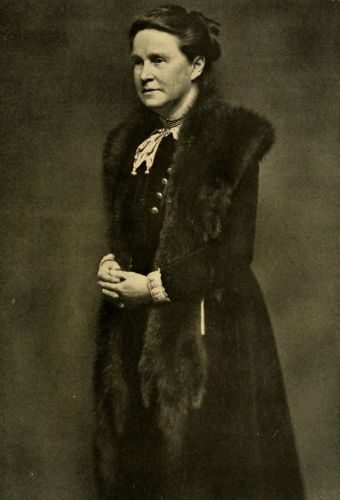
Before the rise of militancy, the British women’s suffrage movement was firmly rooted in constitutional methods. Organizations such as the NUWSS, led by Millicent Garrett Fawcett, pursued reform through petitions, public lectures, pamphleteering, and carefully cultivated parliamentary alliances. Their strategy reflected confidence in liberal political culture and belief in gradual extension of the franchise. Activists emphasized rational argument, moral respectability, and cross-party persuasion. Suffrage, they insisted, was consistent with constitutional evolution rather than revolutionary rupture.
Yet parliamentary realities repeatedly frustrated these efforts. From the 1870s onward, suffrage bills were introduced with regularity, and in some instances they attracted measurable support across party lines. However, few advanced beyond preliminary stages. Even when debates were sympathetic, procedural obstruction, limited parliamentary time, and lack of firm government sponsorship stalled progress. Party leaders frequently treated women’s suffrage as a secondary or negotiable issue, subordinate to Irish Home Rule, tariff reform, labor legislation, or imperial policy. Successive governments hesitated to commit fully, wary of alienating segments of their own parties and uncertain about the electoral consequences of enfranchising women. Reform could be acknowledged in principle yet deferred in practice. This pattern of rhetorical approval paired with legislative inertia created the impression that suffrage was perpetually postponed rather than decisively rejected, a condition that proved uniquely frustrating for activists invested in lawful engagement.
Gendered assumptions compounded institutional delay and subtly shaped the terms of debate. Opponents frequently argued that women’s political participation would disrupt domestic stability, undermine family hierarchy, or violate presumed natural roles. Even among sympathizers, support was often framed in protective or moral terms rather than as recognition of equal citizenship. Arguments for enfranchisement frequently emphasized women’s supposed capacity to elevate politics through moral influence rather than their inherent right to political representation. This framing reinforced the perception that suffrage was an extension of feminine virtue rather than a democratic entitlement. Such discourse placed women in a paradoxical position. They were praised as guardians of morality yet denied authority within formal governance. Activists who spent years crafting careful constitutional arguments encountered resistance grounded not only in procedural obstruction but in deeply embedded cultural norms. The effect was cumulative. Each stalled bill and each patronizing defense intensified the sense that lawful persuasion alone could not overcome structural bias.
By the early twentieth century, many within the movement concluded that constitutional suffrage had reached its practical limits. Lawful advocacy had secured public visibility but not decisive reform. The gap between debate and action widened frustration. For some activists, continued patience risked perpetual postponement. The turn toward militancy did not arise in a vacuum. It emerged from sustained experience of procedural obstruction and political evasion. Constitutionalism had defined the movement’s first phase. Its perceived inadequacy defined the conditions for escalation.
The Women’s Social and Political Union and the Turn to Militancy
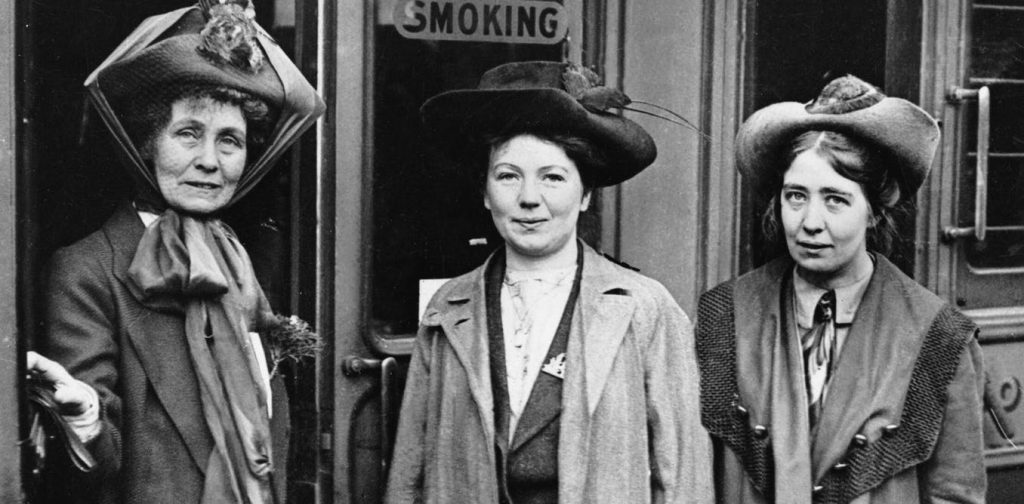
The founding of the WSPU in 1903 marked a decisive shift in the suffrage movement’s tone and tactics. Established in Manchester by Emmeline Pankhurst and her daughters Christabel and Sylvia, the organization emerged from frustration with incremental constitutionalism. Unlike the broader and more decentralized NUWSS, the WSPU adopted a centralized leadership structure and embraced disciplined coordination. Its motto, “Deeds not words,” announced dissatisfaction with decades of polite advocacy. The phrase captured both impatience and strategy. The WSPU intended to act in ways that would compel attention rather than await legislative goodwill.
From the outset, the WSPU’s leadership recognized the power of visibility. Disrupting political meetings became one of its earliest tactics. Members interrupted speeches, challenged ministers publicly, and refused to leave venues quietly when denied the floor. Arrests followed. Rather than avoiding imprisonment, activists used it to dramatize exclusion from citizenship. These early confrontations were carefully calculated. They were designed to transform suffrage from a marginal issue into a national controversy. Public disruption forced politicians to respond, even if only to condemn.
Organizational discipline distinguished the WSPU from other activist groups and shaped the character of its militancy. Decision-making authority concentrated in the Pankhurst family and a small executive circle, creating a hierarchical structure that contrasted sharply with the more federated model of the NUWSS. This centralization enabled rapid tactical shifts, coordinated campaigns across regions, and strict control over messaging. Such concentration of authority allowed the WSPU to escalate in a unified manner, minimizing internal dissent that might weaken public impact. Yet this structure also generated controversy. Some members criticized the lack of internal democracy and the expulsion of those who questioned leadership decisions. Sylvia Pankhurst’s eventual break with the organization reflected deeper tensions over class politics and strategy. Still, the leadership maintained that unity and decisiveness were essential. Militancy, in their view, required disciplined execution rather than diffuse deliberation. The WSPU functioned less as a debating society and more as a tightly organized campaign apparatus designed to sustain pressure.
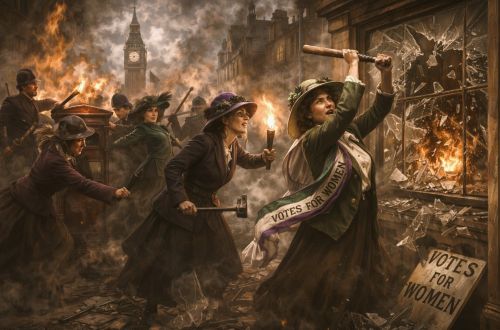
By 1908 and 1909, tactics intensified. Window-smashing campaigns targeted government buildings and commercial districts associated with political authority. Protesters selected locations symbolically linked to exclusion from the franchise. Property damage replaced mere disruption. The escalation was deliberate. Leaders calculated that acts against property would generate headlines without directly endangering lives. The objective was not random destruction but spectacle calibrated to provoke debate. These acts intersected with media culture, producing striking visual narratives that amplified the campaign’s reach.
The turn to militancy also reflected strategic adaptation to state response and the logic of escalation. Arrests, fines, and imprisonment became routine as authorities sought to deter disruptive activism. Rather than retreat, the WSPU treated repression as opportunity. Each prosecution underscored the contradiction between Britain’s self-image as a liberal democracy and its denial of political voice to women. Imprisonment, in particular, became a site of contestation, setting the stage for hunger strikes and force-feeding controversies that would follow. Militancy evolved in dialogue with state action. The harsher the response, the more activists framed their treatment as evidence of injustice. This dynamic intensified public scrutiny and sharpened the moral framing of the campaign. Lawbreaking was not conceived as an end in itself but as a catalyst designed to expose systemic exclusion and compel political reckoning.
The WSPU’s embrace of lawbreaking divided the suffrage movement and the public at large. Constitutionalists feared backlash and reputational damage. Opponents labeled militants as hysterical or criminal. Yet the organization persisted, convinced that shock was required to overcome indifference. The shift from petition to confrontation did not abandon democratic aspiration. It intensified the means by which that aspiration was pursued. Militancy emerged as calculated escalation in response to institutional stagnation, redefining suffrage as an urgent crisis rather than a deferred reform.
Spectacle and Strategy: Disruption and Property Damage
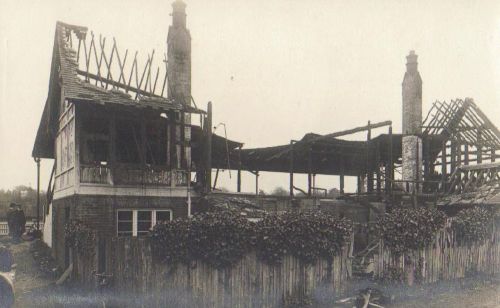
Suffragette militancy was not only confrontational. It was theatrical. The WSPU understood that modern politics operated within an expanding media culture shaped by mass-circulation newspapers, illustrated weeklies, and a growing appetite for dramatic public events. Militants crafted actions with visual impact in mind, recognizing that publicity could transform localized protest into national controversy. Disruption was staged not merely to interrupt proceedings but to generate images that would circulate widely and compel commentary. Suffrage leaders understood that parliamentary speeches rarely commanded front-page attention, but shattered windows and courtroom defiance did. The suffrage campaign entered the realm of political spectacle, where symbolism, choreography, and media amplification became central instruments of pressure. Lawbreaking was inseparable from visibility.
Early disruptions targeted political meetings and parliamentary speeches. Activists interrupted cabinet ministers, demanded answers to suffrage questions, and refused to accept procedural dismissal. Removal by police was anticipated and often welcomed. Arrest provided another stage. Courtrooms became platforms for speeches condemning disenfranchisement. The act of being forcibly removed dramatized exclusion from civic participation. Rather than diminishing the cause, arrest extended its reach. The spectacle lay not only in disruption but in the visible contrast between female protestors and the machinery of state authority.
Property damage escalated the visual language of protest. Beginning in 1908 and intensifying after 1911, suffragettes smashed windows in government offices, post offices, and prominent commercial districts. Targets were carefully selected for symbolic resonance rather than private revenge. Government buildings represented political exclusion. Commercial establishments linked to political elites signaled complicity. The WSPU leadership sought to avoid bodily harm while maximizing attention. Glass shattered. Headlines followed. The destruction of property became a communicative act, a deliberate violation of law intended to spotlight the greater violation of political exclusion.
Arson campaigns further heightened controversy and intensified the strategic gamble of militancy. Empty buildings, post boxes, railway property, and occasionally country houses associated with prominent opponents became targets. Leaders calculated that attacks on unoccupied structures would preserve the claim that the campaign opposed systems, not lives. Even so, public alarm grew as fires spread and damage mounted. Critics argued that the line between symbolic protest and reckless endangerment had been crossed. Newspapers increasingly framed militants as threats to public safety rather than champions of justice. Supporters countered that property damage was a lesser harm compared to systemic disenfranchisement that denied millions of women political voice. WSPU leaders justified escalation as proportional response to persistent exclusion. They insisted that urgency required dramatic action. Nonetheless, the risk of backlash expanded as tactics grew more destructive, testing the limits of sympathy among previously neutral observers.
Media coverage magnified both support and condemnation in equal measure. Illustrated newspapers featured images of broken windows, smoldering buildings, and defiant women escorted by police. Headlines oscillated between fascination and outrage. Suffragettes consciously shaped their appearance in these moments, presenting themselves as disciplined, resolute, and morally serious. Carefully staged photographs countered caricatures of hysteria and instability. At the same time, government responses such as forceful arrests and harsh sentencing generated their own imagery, sometimes provoking sympathy among readers unsettled by the spectacle of women treated as hardened criminals. The press became an arena of struggle in which each act of militancy was reframed, debated, and interpreted. Spectacle functioned as a multiplier, amplifying both criticism and support.
The strategic use of disruption and property damage reveals suffragette militancy as calculated communication. These were not spontaneous riots but orchestrated interventions within a political system resistant to reform. Lawbreaking served as a lever to shift public discourse. By transforming suffrage into a crisis visible in streets and headlines, militants forced engagement from politicians and citizens alike. Spectacle became a method of democratic confrontation, testing the limits of acceptable dissent in pursuit of political voice.
Hunger Strikes and the Politics of the Body
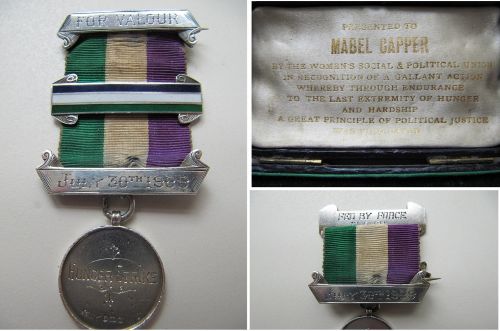
Imprisonment transformed suffragette militancy from public spectacle into bodily confrontation. Beginning in 1909, WSPU prisoners adopted hunger strikes to protest their treatment as common criminals rather than political offenders. The demand was clear. They sought recognition as political prisoners, entitled to different conditions of confinement and symbolic acknowledgment that their actions were politically motivated. Refusal to eat shifted protest inward, turning the body itself into a site of resistance. Deprived of platforms and public gatherings, imprisoned activists redirected confrontation toward the most intimate terrain available: their own physical endurance. The tactic introduced a new moral dimension to the campaign. Where smashed windows challenged property, hunger strikes challenged authority over the body. In withholding food, suffragettes asserted autonomy in the face of institutional control, reframing incarceration as an arena of contest rather than passive punishment.
The government responded with force-feeding, a practice that quickly became controversial. Medical officials inserted tubes through the nose or mouth to administer liquid nourishment against the prisoner’s will. Accounts from suffragettes described the procedure as painful and humiliating. Reports of force-feeding circulated widely, provoking public unease. What the state framed as preservation of life appeared to many observers as coercive violence. The struggle moved from broken glass to contested bodies. The spectacle of bodily restraint proved more unsettling than earlier property damage.
Hunger strikes inverted traditional assumptions about militancy and political violence. Rather than inflicting damage outward, activists imposed suffering upon themselves. This shift altered public perception in complex ways. Self-starvation signaled commitment, discipline, and moral seriousness. It evoked associations with sacrifice and martyrdom, aligning the suffragette cause with broader traditions of principled resistance. The spectacle of physical decline under confinement exposed the imbalance between disenfranchised women and a government determined to maintain authority through invasive intervention. The image of a woman weakened by hunger yet resolute in protest challenged portrayals of militants as irrational or destructive. Instead of chaos, hunger strikes conveyed resolve. Instead of aggression, they conveyed endurance. The body became both instrument and message, communicating the depth of political exclusion through visible vulnerability.
In 1913, Parliament passed the Prisoners (Temporary Discharge for Ill Health) Act, widely known as the “Cat and Mouse Act.” The law permitted temporary release of hunger-striking prisoners once their health declined, followed by rearrest upon recovery. This strategy aimed to avoid the creation of martyrs while maintaining punitive authority. The cycle of release and rearrest intensified the confrontation. Activists evaded capture when possible, staging public appearances to dramatize pursuit. The state sought to balance deterrence and avoidance of death. The result was an ongoing contest over control of the body and legitimacy of enforcement.
Hunger strikes expanded suffragette militancy into a profound moral struggle. By placing their own health at risk, activists reframed lawbreaking as sacrificial resistance. The tactic underscored the central contradiction of the suffrage campaign. Women were deemed incapable of political judgment yet subjected to invasive state control. The politics of the body revealed that the question at stake was not merely voting rights, but recognition of full civic personhood. Through hunger strikes, suffragettes transformed imprisonment into a theater of conscience, compelling the public to confront the costs of exclusion.
Public Opinion and the Criminality Debate
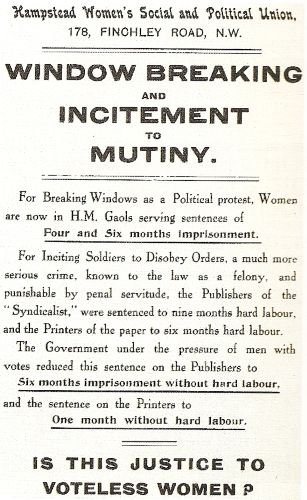
Suffragette militancy provoked a profound debate within British society over the boundary between political protest and criminal behavior. Newspapers, parliamentary speeches, and private correspondence reveal a sharply divided public. Critics characterized window-smashing and arson as lawless extremism that discredited the broader cause of women’s suffrage. Militants were portrayed in hostile caricatures as unstable, hysterical, or dangerous. The language of criminality dominated much of the press coverage, framing suffragettes as threats to order rather than advocates for democratic reform.
Supporters of the WSPU rejected this framing and worked actively to contest it. They argued that militancy must be understood within the context of prolonged political exclusion and repeated legislative obstruction. When lawful petitioning yielded minimal reform, escalation became, in their view, a strategic necessity rather than a reckless impulse. Suffragettes consciously reframed their actions as political intervention rather than common crime. They insisted that their offenses were acts of civil resistance intended to compel attention from a government that had consistently deferred reform. Speeches delivered in courtrooms and statements issued to the press reiterated this distinction. Militants refused to pay fines, choosing imprisonment to dramatize their claim to political status. By demanding recognition as political prisoners, they sought to redefine the legal narrative itself. The debate shifted from whether laws had been broken to whether those laws reflected justice. The suffragettes’ insistence on moral legitimacy forced the public to consider whether legality and righteousness always coincided.
The government’s response further shaped public perception. Arrests, harsh sentencing, and force-feeding amplified the stakes of the debate. For some observers, state repression confirmed that militants threatened stability and required firm control. For others, it underscored the rigidity of a system unwilling to accommodate peaceful reform. Visual representations of suffragettes under arrest or in court complicated the criminal narrative. Images of composed women facing punishment invited sympathy and blurred the line between offender and victim. Public opinion oscillated between condemnation and admiration.
The criminality debate exposed deeper tensions within British political culture about authority, obedience, and the boundaries of democratic participation. Suffragette militancy forced society to confront whether the legitimacy of law depends solely on enforcement or also on fairness and representation. If disenfranchisement constituted structural inequality embedded within the political system, could violation of certain statutes be morally defensible? The question resonated beyond suffrage. It touched upon broader anxieties about social order, gender roles, and the pace of reform in an industrial democracy. The controversy did not produce immediate consensus, but it reshaped discourse. Women’s suffrage ceased to be a peripheral issue debated quietly in committee rooms. It became a national argument over the nature of lawful dissent and the responsibilities of government toward excluded citizens. Militancy transformed public opinion from passive awareness to active engagement, compelling a reckoning with the tension between stability and justice.
Strategic Lawbreaking and Democratic Expansion
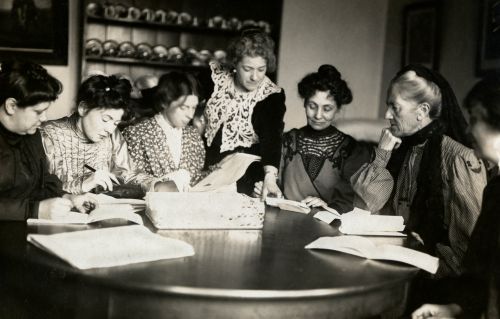
Suffragette militancy did not seek to overthrow the British constitutional system. Its objective was inclusion within it. This distinction is critical to understanding the nature of the campaign. The WSPU challenged specific exclusions embedded within parliamentary democracy rather than the legitimacy of representative government as such. Activists demanded access to the franchise, not abolition of elections, monarchy, or Parliament. Their lawbreaking was therefore instrumental and directional. It was designed to pressure a system perceived as resistant to reform, not to dismantle its foundational structures. Militancy operated within a framework of democratic aspiration, even as it violated statutes that regulated public order and property. The tension lay not between democracy and anti-democracy, but between proclaimed democratic ideals and the denial of political participation to half the adult population.
The calculated nature of suffragette tactics underscores this point. Window-smashing campaigns and arson attacks targeted symbols of political authority rather than indiscriminate civilian populations. Hunger strikes sought recognition of political status, not destruction of state institutions. The WSPU leadership framed escalation as a response to legislative inertia. By increasing the cost of inaction, they aimed to force suffrage onto the national agenda. Strategic lawbreaking functioned as a lever. It created urgency in a political culture accustomed to postponement.
The outbreak of the First World War in 1914 altered the context of militancy in profound ways. The WSPU suspended most disruptive activities and redirected energy toward national mobilization, encouraging women to support war production and recruitment efforts. This pivot was not an abandonment of suffrage but a recalibration of strategy in light of geopolitical crisis. The movement’s willingness to cooperate with the government underscored its constitutional orientation. Militants did not reject the state wholesale. They sought recognition within it. Participation in wartime labor and public service reinforced claims that women contributed substantively to national survival and therefore merited political recognition. The war also transformed public perception of women’s civic capacity. Industrial, medical, and administrative roles once considered unsuitable became normalized. This shift altered the rhetorical terrain on which suffrage arguments rested, linking enfranchisement to demonstrated national service.
The Representation of the People Act of 1918 granted voting rights to women over thirty who met certain property qualifications, enfranchising millions but not achieving full parity with men. Historians continue to debate the extent to which militancy directly produced this reform. There were broader structural factors, including wartime sacrifice, political realignment, and elite calculations about stability in the postwar period. Cumulative pressure generated by sustained activism, including years of militant disruption that kept suffrage at the forefront of public consciousness. The legislative change cannot be reduced to a single cause. Yet it is evident that women’s enfranchisement had moved from marginal proposal to unavoidable political reality. The agitation of previous years had rendered exclusion increasingly untenable. The Act did not represent revolutionary transformation, but it marked decisive expansion of the electorate and formal acknowledgment of women as political actors.
Strategic lawbreaking illustrates how democratic systems can be reshaped through pressure rather than revolution. Suffragettes tested the boundaries of lawful protest, forcing society to confront contradictions between liberal ideals and gender exclusion. Their actions did not abolish constitutional procedures. They intensified scrutiny of them. By dramatizing disenfranchisement, militants made political exclusion visible and morally urgent. The expansion of the electorate, though incomplete in 1918, marked significant structural change.
The suffragette campaign demonstrates that civil disobedience can function as internal corrective within democratic orders. When institutional channels stall and procedural delay masks substantive inequality, escalation may emerge as calculated intervention. Militancy exposed the fragility of democratic legitimacy when participation is denied. The eventual extension of the vote suggests that strategic lawbreaking, though divisive and controversial, can alter political trajectories. In pursuing inclusion rather than insurrection, suffragettes reframed dissent as a catalyst for democratic expansion.
Conclusion: When the Law Excludes
Suffragette militancy reveals a distinctive form of civil disobedience born within a constitutional democracy that denied full participation to a substantial portion of its population. The activists of the WSPU did not reject representative government in principle. They challenged its selective application. When lawful petitioning and procedural advocacy failed to secure enfranchisement, they escalated tactics in order to force recognition. Lawbreaking emerged not from contempt for democracy, but from exclusion within it.
The campaign underscores a critical tension between legality and legitimacy that lies at the heart of modern democratic systems. British law criminalized property damage, public disruption, and refusal to comply with prison discipline, presenting itself as neutral guardian of order. Yet the same legal framework denied women the vote and excluded them from formal political decision-making. Militants seized upon this contradiction. By accepting arrest rather than paying fines, staging hunger strikes rather than submitting quietly to imprisonment, and enduring force-feeding rather than conceding political criminality, they dramatized the distance between Britain’s democratic rhetoric and its gendered limitations. Their actions forced the public to confront an uncomfortable question: does obedience to law remain morally binding when the law itself institutionalizes inequality? The suffragettes did not claim that all law lacked authority. They argued that a system excluding women from representation could not claim complete legitimacy. In doing so, they reframed criminal prosecution as evidence of democratic deficiency rather than simple violation.
Unlike spontaneous riots or purely survival-driven protest, suffragette militancy was organized, calculated, and communicative. It used spectacle to generate urgency and bodily resistance to evoke moral seriousness. The strategy divided opinion and carried risks of backlash. Yet it also transformed suffrage from a peripheral reform into a national debate about representation. The eventual extension of voting rights in 1918, and full parity in 1928, did not erase controversy, but it demonstrated that democratic systems can change under sustained pressure.
The suffrage struggle therefore offers a broader insight into civil disobedience within democratic societies. When institutional channels appear blocked and legal mechanisms perpetuate exclusion, escalation may function as internal correction rather than external rebellion. The law can stabilize order while simultaneously entrenching structural inequities. Suffragette militancy illustrates how targeted violation of statute can expose these tensions without seeking systemic collapse. By dramatizing the costs of exclusion, activists compelled political leaders to confront the inconsistency between democratic ideals and restricted franchise. When the law excludes, dissent may test its boundaries not to destroy the system but to expand it. The suffrage campaign demonstrates that democratic reform sometimes emerges not from quiet persuasion alone, but from visible confrontation that redefines the meaning of justice within the law.
Bibliography
- Atkinson, Diane. Rise Up, Women!: The Remarkable Lives of the Suffragettes. London: Bloomsbury, 2018.
- Bearman, C. J. “An Army without Discipline? Suffragette Militancy and the Budget Crisis of 1909.” The Historical Journal 50:4 (2007), 861-889.
- Holton, Sandra Stanley. Feminism and Democracy: Women’s Suffrage and Reform Politics in Britain, 1900–1918. Cambridge: Cambridge University Press, 1986.
- Mayhall, Laura E. Nym. “Defining Militancy: Radical Protest, the Constitutional Idiom, and Women’s Suffrage in Britain, 1908-1909.” Journal of British Studies 39:3 (2000), 340-371.
- —-. The Militant Suffrage Movement: Citizenship and Resistance in Britain, 1860–1930. Oxford: Oxford University Press, 2003.
- Monaghan, Rachel. “’Votes for Women’: An Analysis of the Militant Campaign.” Terrorism and Political Violence 9:2 (1997), 65-78.
- Pugh, Martin. The March of the Women: A Revisionist Analysis of the Campaign for Women’s Suffrage, 1866–1914. Oxford: Oxford University Press, 2000.
- Purvis, June. Emmeline Pankhurst: A Biography. London: Routledge, 2002.
- Rosen, Andrew. Rise Up, Women!: The Militant Campaign of the Women’s Social and Political Union, 1903–1914. London: Routledge & Kegan Paul, 1974.
- Smith, Harold L. The British Women’s Suffrage Campaign, 1866–1928. London: Longman, 1998.
- Stanley, Liz, and Ann Morley. The Life and Death of Emily Wilding Davison. London: Women’s Press, 1988.
- Tickner, Lisa. The Spectacle of Women: Imagery of the Suffrage Campaign, 1907–1914. Chicago: University of Chicago Press, 1987.
Originally published by Brewminate, 03.04.2026, under the terms of a Creative Commons Attribution-NonCommercial-NoDerivatives 4.0 International license.
About the Author