The Swing Riots reveal how economic desperation, technological displacement, and legal indifference turned lawbreaking into a language of survival.

By Matthew A. McIntosh
Public Historian
Brewminate
Introduction: Law, Labor, and Technological Displacement
In the autumn of 1830, rural England erupted in a wave of machine-breaking, arson, and threatening letters signed with the name “Captain Swing.” These disturbances did not arise from abstract political ideology or revolutionary doctrine. They emerged from acute economic distress. Agricultural laborers in southern and eastern counties faced falling wages, declining parish relief, and the accelerating introduction of threshing machines that threatened winter employment. Protest took the form not of parliamentary petition but of direct destruction. The riots exposed a widening gulf between legal structures designed to protect property and laborers struggling to preserve subsistence.
The agricultural economy had already been destabilized by decades of enclosure, demographic growth, and fluctuating grain prices. The consolidation of land reduced customary rights of access, narrowing opportunities for supplemental income such as gleaning or common grazing. Population growth increased competition for scarce employment, while postwar depression after 1815 depressed agricultural prices and employer willingness to maintain traditional wage levels. Seasonal employment patterns left many workers dependent on winter threshing for survival, a labor-intensive task that provided critical income during months when fieldwork was minimal. The arrival of mechanized threshing disrupted that fragile equilibrium. Machines symbolized more than efficiency. They represented the displacement of human labor at a moment when alternative employment was scarce and parish relief increasingly stigmatized. The laborers’ response was not an abstract rejection of industrialization or technological innovation as such. It was an attempt to defend customary access to work within a system increasingly governed by market discipline and cost reduction.
Law operated as a guarantor of property rights rather than subsistence security. There was a tension between customary expectations of fairness and emerging capitalist norms. Rural workers believed wages and employment practices should conform to longstanding understandings of communal obligation. When landowners introduced machinery that eliminated winter labor, they violated those expectations. Legal frameworks offered little remedy. The Poor Law provided minimal relief, and magistrates were often landowners themselves. For laborers confronting hunger, law appeared aligned with capital.
The Swing Riots illuminate a structural problem rather than a transient disturbance. Technological innovation promised increased productivity and profit for farmers. It threatened survival for those dependent on manual threshing. When negotiation failed and parish relief proved inadequate, destruction became a language of protest. The name “Captain Swing” functioned as both symbol and shield, expressing collective grievance while diffusing individual culpability. The events of 1830 reveal how economic marginalization can convert lawbreaking into a strategy of survival. In moments when legal systems seem indifferent to subsistence, protest may emerge not from theory but from necessity.
Rural Poverty and the Agricultural Crisis of the 1820s–1830s
The Swing disturbances cannot be understood apart from the broader agricultural crisis that preceded them. The end of the Napoleonic Wars in 1815 initiated a prolonged period of instability in rural England. Wartime demand had sustained high grain prices and encouraged expansion. Peace brought contraction. Grain imports resumed, prices fell, and farmers faced tightening margins. Employers responded by reducing wages and limiting hiring. Agricultural laborers bore the brunt of adjustment, as employment became irregular and earnings insufficient to meet basic subsistence needs.
Enclosure had already reshaped the countryside in ways that magnified vulnerability. While enclosure increased efficiency for landowners, it eroded customary rights that had supplemented laborers’ incomes. Access to common land for grazing animals, collecting fuel, or gleaning after harvest diminished significantly. The loss of such rights transformed rural households from semi-autonomous producers into wage-dependent laborers. Without access to commons, survival hinged almost entirely on securing paid employment. When wages declined or work disappeared, alternative sources of sustenance were limited.
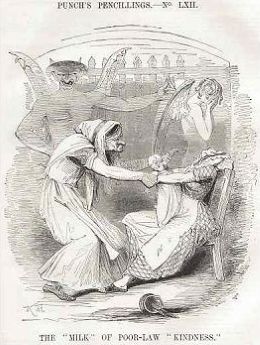
The Poor Law system provided nominal relief, yet it operated under mounting strain. Parish-based assistance often supplemented wages through the so-called Speenhamland system, tying relief to bread prices and family size. This arrangement aimed to stabilize subsistence by ensuring that earnings rose with food costs, but it also blurred the line between wages and welfare. Critics argued that the system depressed wages by allowing employers to pay less, knowing that parishes would compensate the difference. Scholars have debated the economic effects of Speenhamland, questioning whether it systematically undermined labor incentives or merely reflected existing distress. What is clear is that by the late 1820s the system was widely criticized by political reformers and local elites who viewed it as fiscally unsustainable and morally degrading. Relief was stigmatized and unevenly administered, often subject to the discretion of parish overseers who were themselves members of the local propertied class. Laborers who sought assistance encountered suspicion, intrusive investigation, and uncertainty. For many, parish relief provided insufficient stability to offset declining wages and seasonal unemployment.
Demographic growth intensified these pressures. Population expansion in rural counties increased competition for limited employment. Younger workers found it difficult to establish independent households. Seasonal migration in search of work became common. Southern counties such as Kent, Sussex, and Hampshire experienced acute underemployment during winter months. In this environment, even modest technological changes carried disproportionate consequences. The margin between subsistence and destitution was thin.
Wage levels in many counties fell to subsistence or below. Parish records and contemporary testimony reveal widespread complaint about declining earnings relative to the cost of bread. Agricultural laborers often depended on irregular hiring practices, day wages, or short-term contracts that provided little security. When harvest ended and winter approached, opportunities narrowed sharply. Employers seeking to reduce expenses during periods of low grain prices frequently cut wages or replaced manual threshers with machines capable of performing the work more efficiently. Laborers petitioned for higher wages and resisted reductions, but bargaining power was weak. Combination laws and prevailing legal doctrines limited collective organization, leaving workers largely dependent on informal protest or appeals to customary fairness. When wages were cut and winter employment curtailed, households confronted immediate hardship. Debt accumulated quickly. Food consumption contracted. Hunger was not a rhetorical device. It shaped decisions and fueled resentment. The erosion of economic stability generated an atmosphere in which destruction of machinery appeared less as criminal excess than as desperate intervention.
By 1830, the countryside had become a landscape of structural fragility. Economic contraction, enclosure’s legacy, strained poor relief, and demographic pressure combined to create volatility. The threshing machine did not cause rural poverty. It entered a world already destabilized. Yet because it symbolized permanent reduction of labor demand, it crystallized grievances accumulated over decades. The agricultural crisis of the 1820s and 1830s provided the combustible material. Machine-breaking supplied the spark.
Threshing Machines and the Threat of Mechanization
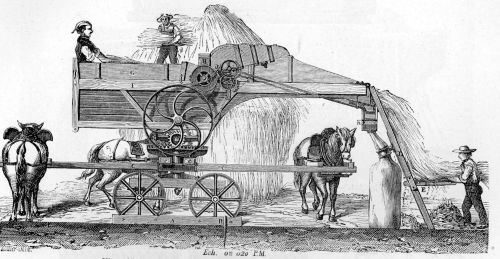
Threshing machines occupied a central place in the grievances that animated the Swing Riots. Although mechanical threshers had existed in experimental forms since the late eighteenth century, their adoption expanded significantly in the early nineteenth century as farmers sought to reduce labor costs and increase efficiency. Threshing separated grain from straw, a labor-intensive task traditionally performed during winter months when fieldwork was minimal. For agricultural laborers, winter threshing provided crucial employment that bridged the seasonal gap between harvests. The machine threatened not merely a task but a rhythm of survival embedded in the agricultural year.
The introduction of mechanized threshing altered the balance of power between farmer and laborer in ways that were immediately perceptible at the local level. Where manual threshing required multiple workers over extended periods, often stretching across the winter season, a machine operated by a small crew could process large quantities of grain in a fraction of the time. Such machinery reduced the bargaining leverage of laborers who had previously relied on sustained winter demand for their labor to negotiate wages. Employers gained flexibility, able to thresh quickly, store grain, and bring it to market strategically when prices were favorable. This temporal control translated into economic advantage. For workers, however, the change meant not merely efficiency but contraction of opportunity. Weeks of employment disappeared. Household income shrank. In counties already marked by chronic underemployment and low wage levels, the machine symbolized a structural shift toward redundancy. Mechanization amplified existing insecurity rather than introducing entirely new conditions.
Importantly, opposition to threshing machines did not reflect ignorance of technology’s function. Laborers understood precisely what the machines did. They recognized their efficiency and the savings they offered landowners. The objection lay not in technological novelty but in distributive consequence. Destruction often targeted equipment that directly threatened established patterns of employment. The threshing machine represented a visible embodiment of economic displacement. Its destruction was both practical and symbolic.
The machine also concentrated resentment because it was tangible. Economic forces such as falling grain prices or demographic growth were diffuse and abstract. A threshing machine stood in a barnyard as a concrete object that could be smashed. Its presence made structural transformation visible. Destroying it provided immediate, if temporary, relief by restoring demand for manual labor. Machine-breaking functioned as direct intervention in local labor markets. It was not random vandalism. It was strategic removal of perceived threat.
Regional variation shaped the intensity of protest and reveals how closely mechanization intersected with existing patterns of rural distress. The southern and eastern counties, where large farms and commercial agriculture predominated, experienced greater adoption of threshing machines and correspondingly higher levels of unrest. Areas with acute winter unemployment and dense concentrations of landless laborers saw more frequent and coordinated acts of machine destruction. In such regions, the loss of threshing work could mean the difference between marginal subsistence and destitution. By contrast, areas with diversified rural economies or smaller-scale farming experienced fewer disturbances. The geographic spread of the riots across county boundaries suggests that the grievance was not isolated to a handful of farms but rooted in shared structural pressures. The threshing machine became a focal point precisely because it crystallized these pressures in visible form. It stood at the intersection of technological change, market discipline, and labor insecurity.
Threshing machines became the lightning rod of a broader conflict between technological progress and labor security. They did not create poverty, but they accelerated its effects in communities already strained by structural change. For landowners, mechanization promised efficiency and competitiveness. For laborers, it threatened subsistence. The destruction of machines signaled a refusal to accept displacement without negotiation. In attacking technology, protesters attacked the economic logic that prioritized productivity over survival.
“Captain Swing”: Organization, Letters, and Collective Action
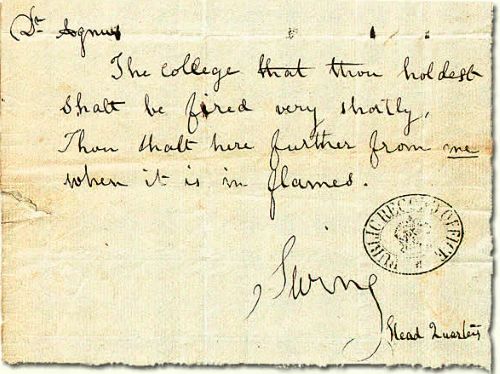
The disturbances of 1830 were not spontaneous explosions of isolated anger. They unfolded through recognizable patterns of communication, coordination, and escalation. Central to this process was the pseudonymous figure “Captain Swing,” whose name appeared on hundreds of threatening letters sent to farmers, magistrates, clergy, and tithe collectors. The persona created a unifying symbol for dispersed grievances. It suggested leadership without identifying a leader. Through this fiction, protest acquired coherence while protecting individual participants from immediate identification.
The threatening letters reveal calculated intent rather than indiscriminate rage. Many demanded specific wage increases, reduction of rents, destruction of threshing machines, or abolition of tithes. They often warned of arson if demands were ignored. These letters circulated widely and frequently preceded acts of violence. The pattern suggests strategic signaling. Protesters offered compliance in exchange for concessions. When farmers refused, barns burned or machines were destroyed. Violence functioned as enforcement of prior warning rather than random outbreak.
The pseudonym “Captain Swing” served multiple purposes. It evoked authority and command, transforming anonymous laborers into agents of collective will. It also obscured individual identities, diffusing responsibility across communities and complicating legal investigation. This anonymity fostered solidarity among participants who might otherwise have hesitated to act. By signing letters with a common name, laborers created the impression of an organized movement with leadership and reach. Analysis of hidden transcripts and symbolic resistance, though developed in other contexts, helps illuminate how subordinate groups construct symbolic leadership to articulate grievances while limiting personal exposure. “Captain Swing” was less a person than a rhetorical device that transformed scattered discontent into a shared narrative of resistance. The name traveled across counties, linking isolated villages into an imagined community of protest. It allowed individuals to speak in the voice of collective authority without formal organization.
Collective action extended beyond letter writing. Crowds gathered to confront farmers, demand wage adjustments, and oversee the destruction of machinery. In many cases, violence was controlled and targeted. Protesters focused on specific machines or property associated with perceived injustice. These gatherings often involved negotiation. Laborers did not simply attack. They presented demands and awaited response. The crowd became a forum of pressure, combining numbers with performative force. The destruction that followed signaled the breakdown of bargaining.
Communication networks enabled rapid diffusion of tactics and expectations. News of disturbances traveled quickly through neighboring villages, carried by word of mouth, kinship ties, and the mobility of seasonal laborers. Markets, hiring fairs, and parish gatherings served as points of exchange where grievances were discussed and strategies shared. The repetition of letter forms and demands across counties indicates shared templates, suggesting imitation informed by observation rather than coincidence. This pattern undermines interpretations that depict the riots as uncoordinated rural panic. Instead, the protests exhibited a recognizable repertoire of contention, adapted to local conditions but unified by common grievance. The capacity to replicate tactics across dispersed communities demonstrates that rural laborers possessed social networks capable of sustaining organized protest despite the absence of formal associations.
The figure of “Captain Swing” functioned as both myth and mechanism. It unified dispersed economic discontent into a collective identity while shielding participants from immediate reprisal. It allowed rural laborers to transform personal desperation into shared protest that carried the appearance of command structure without centralized leadership. Organization did not take the form of unions or political parties, which were either legally constrained or socially impractical. It emerged instead through symbolic authority, communicative threats, coordinated gatherings, and selective violence. The riots reveal how marginalized communities can construct durable networks of resistance through shared language and repeated practice. Lawbreaking became organized negotiation conducted outside official channels, reflecting both structural exclusion from formal power and creative adaptation to its constraints.
Machine-Breaking as Economic Protest
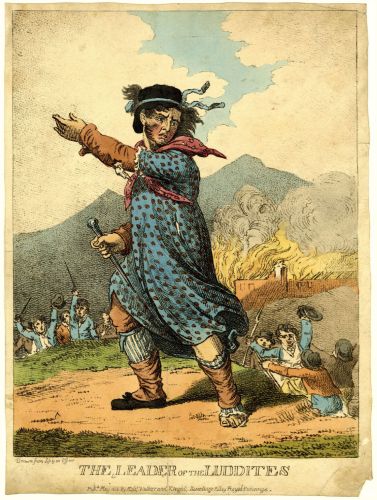
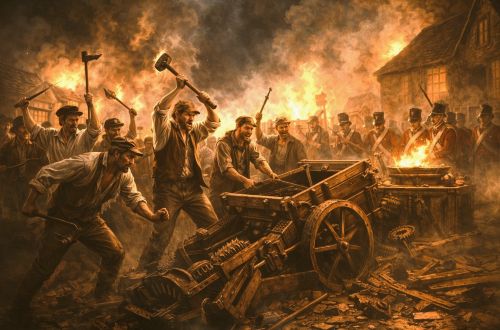
Machine-breaking during the Swing Riots was neither chaotic vandalism nor blind hostility toward innovation. It was a calculated response to perceived economic injury rooted in material necessity. Protesters targeted threshing machines with precision, often after issuing warnings or presenting explicit wage demands. Letters signed “Captain Swing” frequently preceded destruction, signaling that violence would follow refusal. The elimination of machinery functioned as leverage within a constrained labor market. By destroying equipment, laborers temporarily restored the demand for manual threshing and forced farmers to reconsider wage levels or employment practices. The act was both punitive and pragmatic. It punished employers who refused negotiation and reinstated work opportunities, even if only for a limited season. In communities where winter income determined whether households could survive until spring, this intervention carried immediate economic significance. Machine-breaking operated not as symbolic rage alone but as direct alteration of production conditions.
This pattern aligns with a broader tradition of industrial protest in Britain. Earlier episodes, including Luddite actions in textile regions, similarly involved the selective destruction of machinery associated with wage reduction or displacement. Such acts represented a “collective bargaining by riot,” a form of negotiation available to workers excluded from formal labor organization. The Swing disturbances fit this model. Agricultural laborers lacked unions and faced legal restrictions on combination. Without institutional channels, they employed destruction as a bargaining tool. Violence operated within an economic logic rather than ideological crusade.
Laborers believed that employers bore obligations rooted in custom, communal stability, and the implicit social contract governing rural life. Wages should sustain families at minimally acceptable standards. Employment patterns should reflect established seasonal rhythms. Parish and employer alike were expected to ensure that laborers did not fall into destitution during predictable downturns. When farmers introduced machines that disrupted winter labor without providing compensation or alternative employment, they violated these expectations. The grievance was not solely about income. It concerned fairness, reciprocity, and the maintenance of community equilibrium. Machine-breaking was not merely defensive reaction to lost wages. It asserted a normative claim about justice within a changing economic order. Destruction became a means of enforcing customary standards against the impersonal logic of market rationalization and cost minimization. In smashing machinery, protesters symbolically rejected the prioritization of profit over subsistence.
Importantly, machine-breaking was often disciplined rather than indiscriminate. Protesters rarely attacked unrelated property or engaged in widespread looting. The focus remained on threshing machines and, in some cases, tithe barns or symbols of economic grievance. This selectivity suggests strategic intent. Rural crowds frequently avoided unnecessary bloodshed, even while engaging in arson or destruction. The restraint underscores the argument that the riots were directed at structural conditions rather than expressions of uncontrolled fury.
Machine-breaking functioned as economic protest born from material desperation. It translated grievances about wages, employment, and technological displacement into visible action. The destruction of machinery did not aim to halt progress in the abstract. It sought to renegotiate the terms under which progress occurred. When legal avenues offered no effective remedy and employers resisted demands, laborers intervened directly in the material infrastructure of agricultural production. In doing so, they converted lawbreaking into a language of survival.
State Response: Repression, Trials, and Transportation
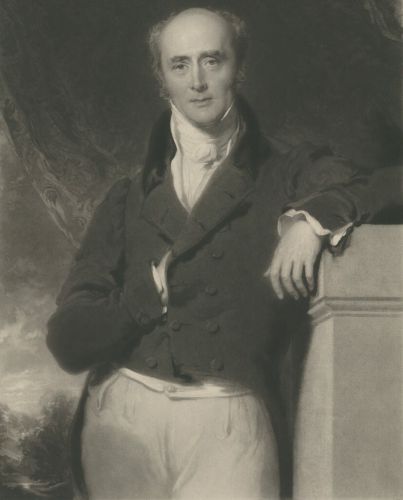
The British state responded to the Swing Riots with swift and visible repression. What local magistrates initially confronted as scattered acts of machine-breaking soon appeared, from London’s perspective, as coordinated rural disorder threatening property, agricultural stability, and the social hierarchy upon which rural governance depended. Reports circulated through the Home Office describing widespread arson, threatening letters, and crowd mobilization across multiple counties. The scale and speed of the disturbances generated anxiety about contagion. Officials feared that unrest might spread further or inspire urban agitation. Troops were deployed to troubled counties, and the government authorized the establishment of Special Commissions to expedite trials. Cavalry patrols moved through villages, and military presence became a daily reminder of state authority. The issue was framed not as negotiation over wages or relief but as criminal insurrection requiring decisive suppression.
The judicial response aimed at deterrence through severity and spectacle. Special Commissions traveled through affected regions, trying large numbers of defendants in compressed proceedings designed to process cases rapidly and signal firmness. Between 1830 and 1831, hundreds of individuals were convicted. Sentences varied, but many were harsh by contemporary standards. Executions were carried out in several counties, and transportation to Australia became a common punishment. Nearly 500 individuals were sentenced to transportation, while dozens received death sentences, some of which were later commuted. The sheer volume of prosecutions conveyed a clear message: collective protest would be met with overwhelming legal force. The emphasis on punishment over conciliation reflected the state’s prioritization of property protection and rural order. Authorities did not interpret economic desperation as mitigating circumstance. Instead, they sought to establish a precedent that destruction of machinery and arson would carry grave consequences.
Public trials served symbolic as well as punitive purposes. They demonstrated the reach of the law into rural communities and reinforced the state’s commitment to protecting property. Proceedings were often conducted with an eye toward spectacle. Large crowds gathered to witness sentences. The legal process became a ritual reaffirming hierarchy. Farmers and magistrates testified against laborers, reinforcing class divisions in open court. The state did not concede economic grievance as justification. It defined the riots as unlawful violence against property and order.
Transportation, in particular, functioned as both punishment and removal. Convicted laborers were sent to penal colonies in Australia, permanently separating them from families and communities. The sentence often meant lifelong exile, with little prospect of return. This sanction disrupted local networks that had enabled collective action and weakened communal solidarity by extracting key participants. It also imposed profound emotional and economic costs on families left behind, who lost wage earners and faced intensified hardship. The severity of sentences varied by county, reflecting differences in local magistrates’ attitudes and assessments of threat. Nonetheless, the aggregate response was harsh. Transportation signaled that the state was willing to uproot individuals entirely in defense of property rights and social stability. The punishment extended beyond immediate deterrence to structural reconfiguration of communities perceived as prone to unrest.
Repression had immediate effects. The visible presence of troops and the fear of prosecution contributed to the rapid decline of overt disturbances by 1831. Yet the underlying economic conditions remained unresolved. The state’s intervention addressed symptoms rather than causes. By criminalizing protest, authorities reinforced the perception among laborers that law operated primarily to defend property interests. The trials closed avenues of overt resistance without offering structural reform.
The state response to the Swing Riots illuminates the limits of legal sympathy in moments of economic upheaval. Rather than reinterpret machine-breaking as negotiation born of distress, the government treated it as criminal conspiracy. Repression restored order in the short term but deepened the divide between rural laborers and legal authority. The episode demonstrates how governments confronted with survival-driven protest may choose coercion over reform, prioritizing stability and property over subsistence security.
Technology, Survival, and the Limits of Law
The Swing Riots expose a fundamental tension between technological advancement and subsistence security. Threshing machines were not inherently instruments of oppression. They represented efficiency, innovation, and agricultural modernization. Yet their introduction occurred within a social structure ill-equipped to absorb displaced labor. Technology did not operate in isolation. It interacted with wage systems, poor relief policies, and property law. When innovation accelerated productivity without safeguarding livelihoods, it destabilized communities already living at the edge of survival.
Legal frameworks reinforced this imbalance in decisive ways. British law robustly protected property rights, contract enforcement, and the prerogatives of landowners, but it offered no comparable guarantee of employment or subsistence for laborers. Farmers who adopted machinery acted within their legal rights and, indeed, within a cultural climate that increasingly celebrated efficiency and improvement. Agricultural reform literature and landlord discourse framed mechanization as rational advancement. Laborers who destroyed those machines, by contrast, violated criminal statutes governing arson, riot, and property destruction. The asymmetry was stark. One side operated with the backing of law, capital, and administrative authority. The other confronted hunger with limited institutional recourse and no formal political representation. Courts treated machine-breaking as criminal conspiracy rather than economic negotiation. The result was a collision between legality and necessity. For laborers facing winter destitution, adherence to law appeared secondary to immediate survival, particularly when that law seemed structurally aligned against their material interests.
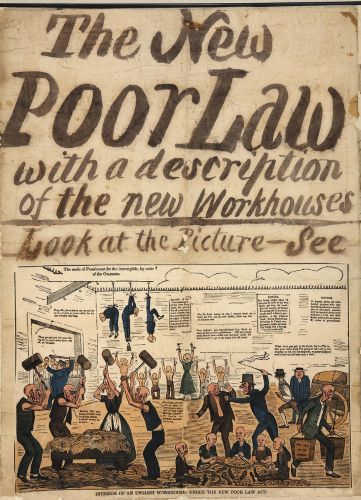
The riots illuminate the limits of law when economic structures shift rapidly. Legal systems tend to codify property relations more readily than they adjust to protect displaced labor. The Poor Law provided minimal relief but did not compensate for lost employment on a structural scale. Reform would come later with the New Poor Law of 1834, itself controversial and restrictive. In 1830, however, rural workers perceived few viable channels for redress. Machine-breaking became an attempt to recalibrate local economies directly, bypassing institutions that seemed indifferent to their plight.
This dynamic complicates narratives of progress. Technological change is often presented as linear improvement benefiting society at large. The Swing Riots reveal the uneven distribution of its gains and costs in stark terms. Farmers could increase output, reduce labor expenses, and respond more flexibly to market fluctuations. Laborers, whose livelihoods depended on seasonal manual work, bore the immediate losses. There was no structured transition, retraining program, or compensatory mechanism to cushion the displacement. In the absence of protective policies or negotiated adaptation, resistance emerged as a form of self-defense. The destruction of machinery signaled that modernization without social accommodation can provoke defensive reaction. Innovation, when detached from distributive consideration and embedded within rigid property law, risks becoming a catalyst for unrest rather than a source of shared prosperity.
The events of 1830 raise enduring questions about the relationship between law, technology, and survival. When legal systems prioritize property protection over subsistence security, marginalized groups may interpret law as adversarial rather than protective. Protest, including illegal action, can follow. The Swing Riots demonstrate that economic desperation can transform technological progress into perceived threat. They remind us that modernization is not merely technical. It is social and political, shaped by choices about who bears its burdens and who benefits from its efficiencies.
Conclusion: When Survival Confronts the Law
The Swing Riots illuminate a form of civil disobedience rooted not in philosophical abstraction but in material necessity. Agricultural laborers did not articulate constitutional doctrines or revolutionary blueprints. They confronted immediate deprivation. Falling wages, seasonal unemployment, and mechanization converged to threaten household survival. Lawbreaking emerged as a defensive response. The destruction of threshing machines and the issuance of threatening letters represented an attempt to renegotiate economic conditions from a position of exclusion.
Unlike principled religious refusal, which rejected specific ritual obligations on theological grounds, the Swing protest arose from economic marginalization. The laborers’ actions were pragmatic. They targeted machinery that reduced employment and demanded wage adjustments rather than regime change. Their protest was limited in scope but profound in implication. It exposed the gap between legal order and subsistence security. When institutions appeared indifferent to survival, defiance became a language of necessity.
The state’s response reaffirmed the primacy of property over poverty. Trials, executions, and transportation reasserted authority but did not address structural vulnerability. The repression succeeded in restoring visible order. It did not eliminate the tensions between technological innovation and labor displacement. The episode reveals how law, when aligned closely with property interests, can lose legitimacy among those whose survival depends on economic stability rather than ownership.
The Swing Riots stand as a reminder that modernization carries distributive consequences. Technological progress can deepen insecurity when introduced without mechanisms of adjustment. When survival confronts the law, compliance cannot be assumed. Protest may take illegal form not because participants reject order in principle, but because they perceive no lawful avenue capable of preserving livelihood. The riots of 1830 demonstrate that economic desperation can transform lawbreaking into collective appeal, raising enduring questions about justice, property, and the social responsibilities accompanying technological change.
Bibliography
- Aidt, Toke, Gabriel Leon-Alban, and Max Satchell. “The Social Dynamics of Collective Action: Evidence from the Diffusion of the Swing Riots, 1830–1831.” The Journal of Politics 84:1 (2022), 209-225.
- Archer, John E. Social Unrest and Popular Protest in England, 1780–1840. Cambridge: Cambridge University Press, 2000.
- Blaug, Mark. “The Myth of the Old Poor Law and the Making of the New.” Journal of Economic History 23, no. 2 (1963): 151–184.
- Hobsbawm, Eric J. “The Machine Breakers.” Past & Present 1 (1952): 57–70.
- Hobsbawm, Eric J., and George Rudé. Captain Swing. London: Lawrence & Wishart, 1969.
- Randall, Adrian. Before the Luddites: Custom, Community and Machinery in the English Woollen Industry, 1776–1809. Cambridge: Cambridge University Press, 1991.
- Scott, James C. Domination and the Arts of Resistance: Hidden Transcripts. New Haven: Yale University Press, 1990.
- Snell, K. D. M. Annals of the Labouring Poor: Social Change and Agrarian England, 1660–1900. Cambridge: Cambridge University Press, 1985.
- Thompson, E. P. The Making of the English Working Class. New York: Vintage Books, 1963.
- —-. “The Moral Economy of the English Crowd in the Eighteenth Century.” Past & Present 50 (1971): 76–136.
Originally published by Brewminate, 03.04.2026, under the terms of a Creative Commons Attribution-NonCommercial-NoDerivatives 4.0 International license.
About the Author