New evidence pushes back the earliest organized use of this fossil fuel by 1000 years.

By Celina Zhao
Diverse Voices in Science Journalism Intern
Science
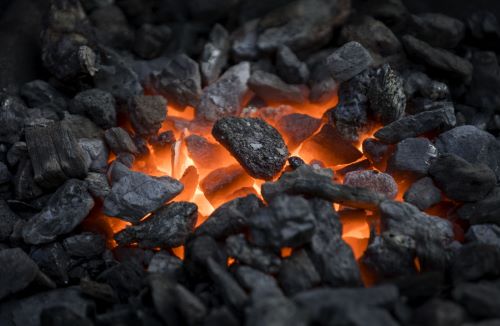
Long before coal fueled the Industrial Revolution, ancient societies around the world were already exploiting its power to smelt metal or heat water for toasty baths.
Now, excavations at a Bronze Age site in northwestern China show people were burning coal on a large scale up to 3600 years ago, 1 millennium earlier than previously thought. The research, reported today in Science Advances, also traces where the coal came from and how a shortage of other fuel may have encouraged ancient people to turn to this new energy source.
In the past, knowledge of ancient coal usage was “based on who actually writes things down,” says Shellen Wu, a historian at Lehigh University who was not involved in the research. It’s “very exciting” to be able to use archaeology to peer back into humankind’s fossil fuel usage, she says.
Long before coal fueled the Industrial Revolution, ancient societies around the world were already exploiting its power to smelt metal or heat water for toasty baths.
Now, excavations at a Bronze Age site in northwestern China show people were burning coal on a large scale up to 3600 years ago, 1 millennium earlier than previously thought. The research, reported today in Science Advances, also traces where the coal came from and how a shortage of other fuel may have encouraged ancient people to turn to this new energy source.
In the past, knowledge of ancient coal usage was “based on who actually writes things down,” says Shellen Wu, a historian at Lehigh University who was not involved in the research. It’s “very exciting” to be able to use archaeology to peer back into humankind’s fossil fuel usage, she says.
Together, the results suggest these people weren’t simply sporadically burning coal. Rather, they appeared to have built the earliest known system for large-scale consumption. “[The findings] certainly demonstrate that coal was used quite frequently at the site,” says Jade Guedes, an environmental archaeologist at the University of California, San Diego.

Within about 5 kilometers of the settlement, the researchers identified six potential sources for all the coal. In these spots, the exposed seams of coal “crumble off easily” from the cliffs, Qiu says. “You can just pick pieces off with your hands or by using simple metal tools.”
Using spectrometry techniques to identify the unique chemical signatures of the coal from each site, the scientists matched the lumps found at Jirentaigoukou to three of the sites. Compared with the other three locations, the matching sites boasted higher quality, more carbon-rich coal that would have burned hotter and more cleanly.
“I imagine they must have tried burning the coal from all these sites, and then discovered some had better quality than others,” Dong says.
An earlier occupation of Jirentaigoukou, 4600 to 4300 years ago, left no signs of coal burning. Archaeologists found only charcoal—made from partially burned wood—within these earliest layers. “People typically use the easiest and closest means available for energy,” Wu says. “This usually means burning woods and twigs that are easily accessible until they exhaust nearby forests,” Wu adds.
The shift to coal may mark a time when people at Jirentaigoukou looked at their dwindling timber resources and wondered whether there were other options, Guedes says. “There’s probably a tension of ‘Do I really want to cut down this tree that I could use for house construction, or should I find an alternate source for fuel?’”
Once people here recognized the need for alternative fuel sources, nature may have given them a clue about coal’s potential, Dong says. “On sunny days, the exposed coal naturally burns and releases white smoke.” From there, he notes, they could have put two and two together and started using this new source of energy.
Originally published by Science, 07.26.2023, republished with permission for educational, non-commercial purposes.
About the Author