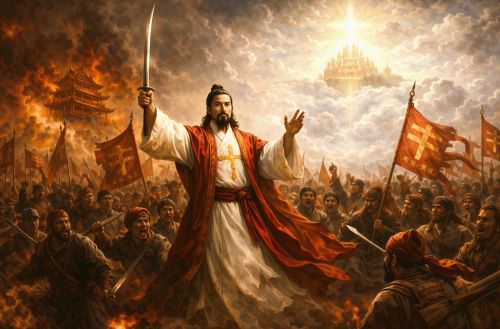
Hong Xiuquan’s visions transformed religious revelation into revolutionary authority, inspiring millions to build the Taiping Heavenly Kingdom and challenge Qing imperial rule.

By Matthew A. McIntosh
Public Historian
Brewminate
Introduction: Vision, Authority, and Revolutionary Faith
In the middle decades of the nineteenth century, China witnessed one of the most extraordinary and devastating upheavals in its history. The Taiping Rebellion (1850–1864) began as a religious movement inspired by the visions of a failed examination candidate named Hong Xiuquan but quickly evolved into a vast revolutionary state that challenged the authority of the Qing dynasty. At its height, the Taiping Heavenly Kingdom controlled large regions of southern and central China, commanded massive armies, and attracted millions of followers who believed they were participating in a divinely sanctioned transformation of the world. The rebellion ultimately caused tens of millions of deaths and profoundly reshaped the political landscape of late imperial China.
Central to this movement was Hong’s extraordinary claim that he had received divine revelations identifying him as the younger brother of Jesus Christ. After encountering Christian missionary literature and reinterpreting earlier visionary experiences, Hong came to believe that God had chosen him to purify China of demonic corruption and to establish a new heavenly order on earth. The origins of these claims can be traced to a series of visions Hong experienced following his repeated failures in the imperial civil service examinations, a system that had long functioned as the principal avenue of social advancement within Qing society. During a prolonged illness, Hong reported seeing a heavenly court in which a divine father figure commanded him to destroy demons that had corrupted the world. Years later, after reading Christian tracts distributed by Protestant missionaries, Hong reinterpreted these earlier visions through a biblical framework and concluded that the divine figures he had encountered were the Christian God and Jesus. Within the Taiping movement these revelations became the foundation of Hong’s authority, transforming him from a marginal and frustrated scholar into a prophetic leader whose words carried the force of divine command. His followers did not simply view him as a religious teacher but as a divinely appointed ruler whose mission was to establish a sacred kingdom that would restore moral order to the world.
The extraordinary growth of the Taiping movement illustrates the powerful role that charismatic authority can play during periods of social crisis. Mid-nineteenth-century China faced mounting economic pressure, rapid population growth, regional unrest, and declining confidence in the Qing state. Hong’s message of divine justice, moral purification, and cosmic transformation resonated deeply with populations already disillusioned by existing institutions. The movement combined apocalyptic belief with disciplined organization, creating a revolutionary community whose members viewed obedience to the Heavenly King as both a religious duty and a political necessity.
The Taiping Kingdom presents a striking historical example of how religious revelation, charismatic leadership, and political revolution can converge within a single movement. What began as a visionary reinterpretation of Christian ideas became the ideological foundation of a state that sought to remake society according to divine command. Understanding how Hong’s authority emerged, how it mobilized millions of followers, and how it shaped the structure of the Taiping state offers valuable insight into the broader relationship between faith, power, and revolutionary transformation in modern history.
China in Crisis: Social and Political Conditions before the Taiping Rebellion
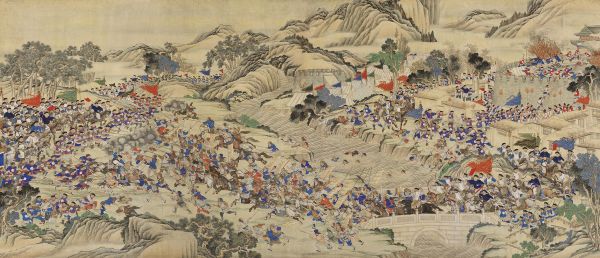
By the middle of the nineteenth century, the Qing dynasty governed one of the largest and most populous empires in the world, yet its political authority was increasingly strained by structural pressures that had been building for decades. Population growth had accelerated dramatically during the eighteenth century, rising far faster than the expansion of agricultural land. By the early nineteenth century, millions of people in southern China faced shrinking access to farmland, rising rents, and growing economic insecurity. Rural families that had once relied on stable agricultural livelihoods increasingly found themselves struggling to survive within an overcrowded and competitive environment. These pressures contributed to widespread social instability and heightened tensions in many parts of the Qing Empire.
Economic hardship was accompanied by administrative difficulties within the imperial government itself. The Qing state had long relied on a relatively small bureaucratic apparatus to govern a vast territory, and by the nineteenth century this administrative system was struggling to manage the demands of a rapidly growing population. Local officials often lacked the resources necessary to address disputes, enforce regulations, or respond effectively to economic crises. Corruption within the bureaucracy further weakened public confidence in the imperial administration. In many regions, ordinary people perceived local authorities as distant, ineffective, or exploitative rather than as reliable representatives of the state.
Southern China, particularly the provinces of Guangdong and Guangxi, experienced some of the most acute social tensions during this period. These regions were characterized by dense populations, frequent migration, and complex ethnic and clan rivalries. Competition for limited land and economic opportunities intensified conflicts between local groups, sometimes erupting into violent disputes. One particularly important dimension of these tensions involved the rivalry between established local populations and migrant communities such as the Hakka, many of whom had moved into the region during earlier periods of demographic expansion. Competition for land and resources between Hakka migrants and long-settled groups sometimes produced prolonged cycles of violence that destabilized entire districts. Local loyalties often outweighed allegiance to distant imperial authorities. Secret societies and local militias flourished in this environment, providing both protection and avenues for collective organization among communities that felt marginalized or threatened. Such organizations could serve practical purposes, but they also created networks through which new ideological or religious movements could spread rapidly. These conditions meant that when a charismatic leader emerged with a message promising divine justice and social transformation, the infrastructure for mobilizing large numbers of followers already existed within the social landscape of southern China.
The legitimacy of the Qing dynasty also faced challenges from broader political and military developments. Foreign conflicts and internal rebellions exposed weaknesses in the state’s ability to maintain stability across the empire. The First Opium War (1839–1844), in particular, had a profound impact on public perceptions of Qing power. The military defeat of the empire by a European power revealed vulnerabilities that many observers had previously found difficult to imagine. The resulting treaties opened Chinese ports to foreign trade and imposed new economic burdens on the Qing government, further undermining confidence in imperial leadership.
These crises contributed to an atmosphere in which many people began to question the effectiveness of the existing political order. In regions already suffering from economic hardship and social fragmentation, the failure of the Qing government to provide stability or relief encouraged the spread of alternative visions of authority and justice. Religious movements, secret societies, and local militias increasingly offered frameworks through which communities could interpret their hardships and imagine new forms of social organization. Millenarian beliefs that predicted the overthrow of corrupt regimes and the arrival of a renewed moral order gained particular appeal during this period of uncertainty. Such expectations were not new in Chinese history, where earlier rebellions had often been framed in terms of cosmic renewal and the restoration of moral balance. In the nineteenth century, however, these traditions intersected with new influences, including exposure to foreign ideas and growing awareness of the Qing state’s inability to maintain order in the face of internal and external pressures. Movements that promised divine intervention and radical social transformation could acquire extraordinary appeal among communities searching for meaning and hope in the midst of widespread instability.
It was within this construct of social tension, economic insecurity, and declining political confidence that the Taiping movement emerged. Hong’s message did not appear in isolation but within a landscape already shaped by widespread dissatisfaction with existing institutions. His claims of divine revelation and his promise of moral purification resonated with populations searching for explanations for their suffering and for alternatives to a political system that seemed increasingly unable to address their needs. The rebellion grew not only from the visionary authority of its leader but also from the profound structural crises that had weakened the foundations of Qing rule.
Hong Xiuquan’s Visions and the Birth of a New Revelation
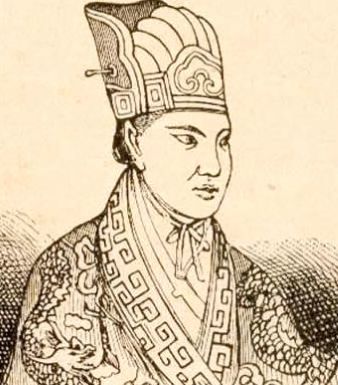
Hong’s path to religious leadership began not with political ambition but with personal frustration within the highly competitive educational culture of late imperial China. Born in 1814 in Guangdong province to a Hakka family of modest means, Hong pursued the traditional route of social advancement through the imperial civil service examination system. Success in these examinations offered one of the few opportunities for individuals of limited wealth to enter the bureaucratic elite of the Qing state. Like many young men of his generation, Hong devoted years to mastering the classical Confucian curriculum required for success. Yet despite repeated attempts, he failed the examinations several times, a setback that carried not only economic consequences but also profound social humiliation within a culture that valued scholarly achievement as a measure of moral worth and intellectual ability.
Following one particularly devastating examination failure in 1837, Hong experienced a prolonged illness during which he reported a series of vivid visions. According to later accounts recorded by his followers, Hong described being transported to a heavenly realm where he encountered a majestic father figure who entrusted him with the mission of destroying demons that had corrupted the world. The visions also included encounters with other heavenly figures who instructed him in the restoration of divine order. At the time, Hong did not fully understand the meaning of these experiences. They remained enigmatic personal revelations that he struggled to interpret within the framework of the Confucian worldview that had shaped his education.
The significance of these visions became clearer to Hong several years later when he encountered Christian missionary pamphlets distributed in southern China by Protestant evangelists. These tracts, particularly those written by the Chinese Christian Liang Afa, introduced Hong to elements of biblical teaching and Christian theology. As he revisited the memory of his earlier visions, Hong began to reinterpret them through this newly encountered religious vocabulary. He came to believe that the heavenly father he had seen was the Christian God and that another figure in the visions represented Jesus Christ. Within this reinterpretation, Hong concluded that he himself had been chosen as Jesus’ younger brother, entrusted with the mission of cleansing China of demonic influences and restoring the worship of the true God.
This reinterpretation of personal visions into a broader religious revelation marked the beginning of what would become the Taiping movement. Hong began preaching a message that combined elements of Christian teaching with his own visionary authority, urging followers to reject traditional religious practices that he condemned as idolatrous and to join in the creation of a purified society devoted to divine principles. The authority of this message rested not on institutional credentials or scholarly achievement but on Hong’s claim to direct communication with the divine. For many early followers, this claim of heavenly mandate transformed Hong from a failed examination candidate into a prophetic figure whose mission carried cosmic significance. The movement that grew from these revelations would soon evolve from a small religious fellowship into a revolutionary force capable of challenging the authority of the Qing dynasty.
Constructing a Heavenly Kingdom: Theology and Ideology
The religious ideas that sustained the Taiping movement were not simply borrowed from Christianity but reshaped through Hong’s own visionary interpretations and the cultural environment of nineteenth-century China. After concluding that he had been chosen as the younger brother of Jesus Christ, Hong began constructing a theological framework that presented his mission as part of a divine plan to purify the world. This belief system drew selectively from Christian texts and missionary writings while reinterpreting them through concepts that were intelligible to Chinese audiences familiar with traditions of cosmic order, moral rectification, and heavenly mandate. The resulting doctrine was neither conventional Christianity nor a continuation of established Chinese religious traditions but a hybrid system that combined elements of both.
Central to this ideology was the belief that China had been corrupted by demonic forces that had led people away from the worship of the true God. Hong and his followers condemned traditional religious practices, including the veneration of ancestral spirits, Buddhist rituals, and Daoist ceremonies, as manifestations of idolatry. The Taiping leadership taught that these practices had allowed evil influences to flourish within society and had contributed to the moral decay of the Qing dynasty. By rejecting these traditions and embracing the worship of the Heavenly Father, the Taiping movement presented itself as a divinely authorized campaign to restore spiritual purity and moral order.
The theological vision of the Taiping movement was closely connected to its political ambitions. Hong proclaimed the establishment of the Taiping Kingdom as the earthly manifestation of divine authority, a sacred state governed according to the principles revealed through his visions. Within this framework, political obedience became inseparable from religious devotion. The authority of the Heavenly King was understood not merely as the leadership of a revolutionary figure but as the expression of God’s will on earth. This interpretation elevated Hong’s personal revelations into the foundation of a new political order in which governance and theology reinforced one another. The Taiping state presented itself as more than a rebellion against Qing authority. It claimed to be the legitimate divine government destined to replace a corrupt dynasty that had lost its moral right to rule. Administrative structures, military organization, and legal codes were framed within this sacred vision, encouraging followers to view participation in the movement as part of a cosmic struggle between divine righteousness and demonic corruption. In this way, the ideology of the Heavenly Kingdom transformed political rebellion into a sacred mission that demanded absolute loyalty from its participants.
Taiping ideology also emphasized moral discipline and social transformation as essential components of the new heavenly order. Followers were expected to adhere to strict codes of behavior that regulated daily life, including prohibitions on opium, alcohol, gambling, and various forms of social vice. Men and women were often organized into separate communal structures designed to promote moral purity and collective discipline. Through these practices, the Taiping leadership attempted to construct a society that reflected what they understood to be divine principles of justice and righteousness. The movement’s theology functioned not only as a system of belief but also as a blueprint for a radically transformed social and political order.
Charismatic Authority and the Cult of the Heavenly King
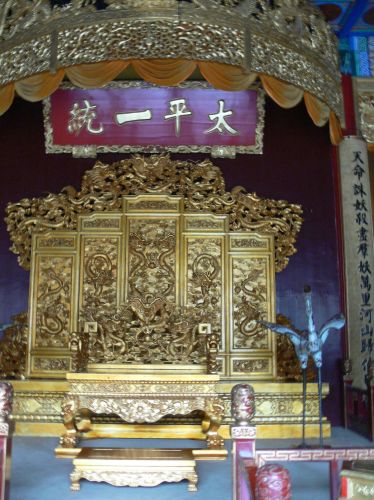
The authority of Hong Xiuquan within the Taiping movement rested fundamentally on charisma grounded in religious revelation. Unlike traditional Chinese rulers, whose legitimacy derived from dynastic succession and the Confucian concept of the Mandate of Heaven, Hong claimed direct divine kinship and communication with the Heavenly Father. This claim distinguished him from ordinary political leaders and elevated his authority beyond conventional structures of governance. For followers of the Taiping movement, Hong was not simply the founder of a rebellion but the divinely appointed Heavenly King whose mission carried cosmic significance. His leadership operated within a framework in which obedience to his commands was understood as obedience to the will of God.
This charismatic authority was reinforced through ritual language, proclamations, and the symbolic structure of the Taiping state. Hong’s decrees were often framed as divine instructions, and his role was surrounded by elaborate ceremonial practices that emphasized his sacred status. Titles used within the movement reflected this theological hierarchy, placing Hong at the center of a divine family that linked heaven and earth. The movement’s administrative and military leadership structures were organized around this symbolic order, with subordinate leaders acting as agents of the Heavenly King’s authority. Through these practices, the Taiping state translated spiritual claims into tangible political power.
The reverence surrounding Hong also contributed to the formation of what scholars often describe as a cult of personality centered on the Heavenly King. Followers viewed his revelations as the definitive interpretation of divine will, and dissent from his authority was frequently treated as a form of religious betrayal. This atmosphere of devotion encouraged intense loyalty among believers who regarded participation in the Taiping movement as part of a sacred mission. The charismatic authority that sustained the movement in its early expansion depended heavily on the perception that Hong possessed unique access to divine truth.
The concentration of authority in the person of the Heavenly King created tensions within the leadership of the Taiping state. As the movement grew and territorial control expanded, other leaders acquired military and administrative power that sometimes rivaled Hong’s symbolic authority. Prominent figures within the Taiping hierarchy, including leading generals and regional commanders, commanded large armies and governed extensive territories, which inevitably generated competition for influence within the movement. Rivalries among senior figures in the Taiping leadership eventually erupted into violent internal struggles, most dramatically during the Tianjing Incident of 1856, when conflicts between leading Taiping officials resulted in widespread purges and bloodshed within the movement’s own capital. These events exposed the fragility of a political system that depended heavily on personal authority and prophetic legitimacy rather than stable institutional procedures. While Hong remained the central religious figure of the movement, the practical administration of the Taiping state increasingly required coordination among powerful subordinates whose ambitions and interpretations of the movement’s mission did not always align. The resulting tensions revealed how charismatic authority, while extraordinarily effective in mobilizing followers, could become difficult to manage once a revolutionary movement evolved into a governing regime responsible for administering vast territories and large populations.
The cult of authority surrounding Hong played a decisive role in both the rise and the internal dynamics of the Taiping Kingdom. His claim to divine kinship mobilized followers on an extraordinary scale and provided the ideological foundation for a revolutionary state that challenged the Qing dynasty. Yet the same concentration of authority also created structural vulnerabilities as the movement attempted to govern large territories and maintain unity among competing leaders. The history of the Taiping movement illustrates both the mobilizing power and the inherent fragility of charismatic leadership in revolutionary religious movements.
Building the Taiping State: Governance, Discipline, and Social Reform
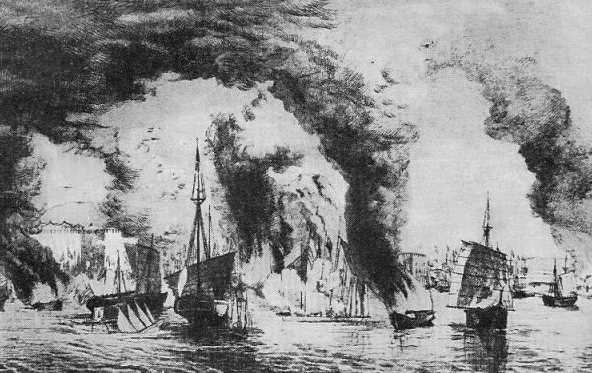
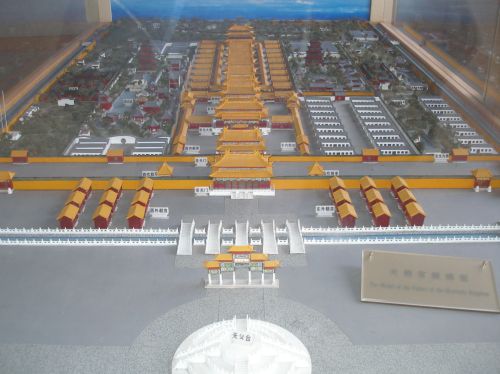
As the Taiping movement expanded from a religious fellowship into a territorial power, its leadership faced the challenge of transforming revolutionary enthusiasm into an organized state. The capture of Nanjing in 1853, which the Taiping renamed Tianjing, or “Heavenly Capital,” marked a decisive turning point in this process. From this new center of authority, Hong and his followers attempted to construct a government that reflected the divine principles they believed had been revealed through his visions. Administrative institutions, military structures, and legal regulations were gradually organized to support the functioning of a state that presented itself not simply as a rebellion but as a legitimate heavenly kingdom destined to replace the Qing dynasty.
The political structure of the Taiping state combined elements of military organization with a hierarchy that reflected its theological worldview. Authority ultimately rested with Hong as the Heavenly King, but administrative responsibilities were distributed among senior leaders who governed both civil and military affairs. Early in the movement’s development, several prominent figures held titles associated with the cardinal directions, symbolizing a cosmic order that placed Hong at the center of a divinely sanctioned government. These titles included the East King, West King, South King, and North King, offices that blended religious symbolism with practical authority over armies and territories. The holders of these positions commanded large forces, administered conquered regions, and helped enforce the policies of the Heavenly Kingdom among its rapidly growing population of followers. Through this arrangement, the Taiping leadership attempted to maintain a coherent structure of governance that reflected both divine hierarchy and practical military command. The symbolic language surrounding these offices reinforced the idea that the Taiping state represented a sacred political order rather than merely a temporary insurgency against Qing authority.
Social reform formed a central component of the Taiping vision of governance. The leadership promoted policies intended to reshape Chinese society according to what they regarded as divine principles of justice and equality. Among the most notable proposals was a system of land redistribution known as the “Land System of the Heavenly Dynasty,” which sought to allocate farmland more evenly among families. In theory, this policy aimed to eliminate the extreme inequalities that had developed within rural society and to ensure that all members of the community possessed the means necessary for subsistence. Although the practical implementation of these reforms varied widely across regions, the program reflected the Taiping leadership’s ambition to construct a radically transformed social order.
Moral discipline was another defining feature of Taiping governance. The leadership enforced strict behavioral codes intended to purify society and eliminate practices they regarded as corrupting influences. Prohibitions were imposed on opium consumption, alcohol use, gambling, prostitution, and various forms of traditional religious practice. Men and women were often separated within communal living arrangements, and daily life was regulated through rules designed to encourage moral conformity. These measures reflected the movement’s conviction that the creation of a heavenly kingdom required not only political transformation but also the moral regeneration of society.
The Taiping state also maintained a highly structured military system that supported both its territorial expansion and internal order. Armies were organized into disciplined units governed by strict codes of conduct, and soldiers were expected to observe the same moral regulations that applied to civilian followers. Recruitment drew heavily from communities already committed to the religious mission of the movement, creating forces bound together by both ideological conviction and organizational discipline. Commanders were expected to enforce moral rules within their ranks, reinforcing the idea that the Taiping army represented not merely a fighting force but a community devoted to divine purposes. Military campaigns were framed as sacred struggles against the forces of corruption and demonic influence associated with the Qing dynasty. This religious framing strengthened cohesion within the ranks while helping justify the extraordinary sacrifices required by prolonged warfare across large areas of southern and central China.
Despite these ambitious reforms, the Taiping state faced significant difficulties in translating ideological vision into stable governance. Rapid territorial expansion, constant military pressure from Qing forces, and internal divisions among Taiping leaders complicated the administration of the territories under their control. In many regions, local conditions forced compromises between ideological goals and practical necessities. Nevertheless, the Taiping attempt to construct a new political and social order remains one of the most remarkable experiments in revolutionary state-building in nineteenth-century China, demonstrating how religious belief and political ambition could combine to produce a radical alternative to existing imperial institutions.
Devotion, Control, and Internal Struggles
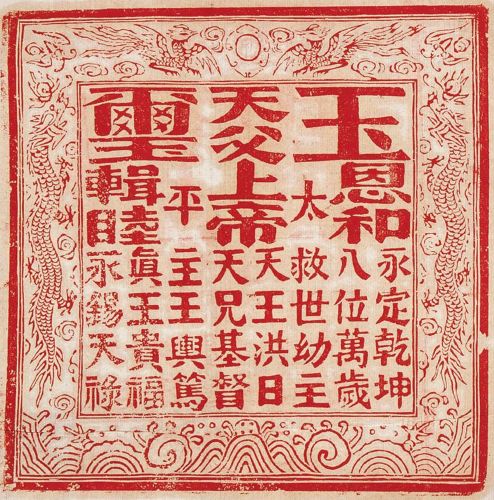
The Taiping movement depended not only on military success and administrative organization but also on the intense devotion of its followers. Many who joined the movement believed that they were participating in a sacred struggle destined to transform the world. Hong’s claims of divine kinship and prophetic authority inspired followers who viewed the Taiping cause as part of a cosmic conflict between righteousness and demonic corruption. This sense of spiritual mission strengthened commitment among believers and helped sustain the movement during the early phases of its rapid expansion across southern China.
The leadership of the Taiping Kingdom worked deliberately to cultivate this devotion through ideological instruction and ritual practice. Religious teachings circulated among followers emphasized the unique role of the Heavenly King as the chosen agent of divine authority. Hymns, proclamations, and sermons reinforced the belief that participation in the Taiping movement represented obedience to the will of the Heavenly Father. These materials often blended biblical language with the movement’s own distinctive theological vocabulary, producing a body of teachings that presented the Taiping struggle as part of a divine plan unfolding within history. Instructional texts and religious proclamations were distributed among soldiers and civilian followers alike, encouraging them to internalize the movement’s beliefs and moral expectations. Through these practices, the leadership attempted to ensure that ideological commitment remained strong even as the movement expanded across vast territories and incorporated diverse populations with different local traditions and social backgrounds.
The Taiping leadership relied on systems of discipline and surveillance to maintain internal order. Strict moral regulations governed daily life, and violations of the movement’s codes of conduct could be punished severely. Leaders were tasked with enforcing both religious orthodoxy and behavioral conformity among the populations under Taiping control. This emphasis on discipline reflected the leadership’s concern that moral corruption or ideological dissent could weaken the movement from within. Maintaining unity among millions of followers required not only devotion but also mechanisms of control capable of suppressing disagreement.
Despite these efforts to maintain unity, the Taiping state experienced serious internal conflicts as rivalries developed among its senior leaders. Differences in authority, interpretation of divine commands, and competition for influence produced tensions within the upper ranks of the movement. As the Taiping state expanded and consolidated control over large territories, prominent leaders gained access to significant military resources and administrative authority. This concentration of power created an environment in which personal rivalries could quickly escalate into political crises. The most dramatic manifestation of these tensions occurred during the Tianjing Incident, when violent struggles among leading Taiping officials led to purges and mass killings within the capital. These events devastated the movement’s leadership structure and shattered the fragile balance that had previously held the governing elite together. The incident revealed how deeply internal divisions had developed within the Taiping state and how vulnerable the movement had become to conflict among its own leaders.
The internal struggles of the Taiping Kingdom ultimately weakened the movement at a critical moment in its confrontation with Qing forces. Although the rebellion continued for several years after these conflicts, the divisions among its leadership undermined the unity that had previously sustained its expansion. The history of the Taiping movement illustrates how intense ideological devotion can both mobilize large numbers of followers and generate tensions when authority becomes concentrated in competing charismatic figures. The combination of spiritual zeal, rigid discipline, and internal rivalry shaped the trajectory of the rebellion and contributed to the challenges that eventually led to its defeat.
War and Collapse: The End of the Heavenly Kingdom
By the late 1850s the Taiping Kingdom faced mounting military and political pressures that threatened its survival. Although the movement had once controlled vast territories across central China and commanded armies numbering in the hundreds of thousands, the internal conflicts that followed the Tianjing Incident weakened the cohesion of the Taiping leadership. The Qing dynasty began to reorganize its military response to the rebellion. Provincial officials and local elites raised new regional armies that operated outside the traditional banner system, creating more flexible and effective forces capable of confronting the Taiping state on multiple fronts.
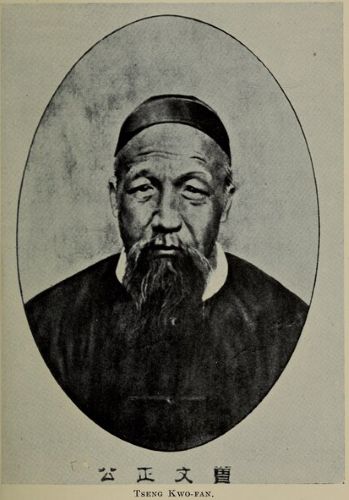
Among the most important of these forces was the Xiang Army organized by the Qing official Zeng Guofan. Unlike earlier imperial forces that had struggled to contain the rebellion, Zeng’s army relied on networks of local gentry support, disciplined recruitment, and strong regional loyalty among its troops. These characteristics allowed Qing commanders to build military organizations capable of sustained campaigns against Taiping-controlled territories. Zeng Guofan’s strategy emphasized gradual encirclement rather than dramatic battlefield confrontations. By securing key river systems, rebuilding supply lines, and coordinating operations with other regional commanders, Qing forces began to recover territory that had previously fallen under Taiping control. The creation of similar regional armies, such as the Huai Army under Li Hongzhang, further strengthened the Qing war effort. Together these forces represented a transformation in the military structure of the Qing state, shifting power away from traditional imperial institutions toward provincially organized armies capable of responding more effectively to large-scale rebellions.
While Qing forces strengthened their position, the Taiping leadership struggled to maintain effective coordination across its territories. Continued rivalries among commanders weakened strategic planning, and the loss of experienced leaders during earlier purges left the movement increasingly dependent on fragmented regional authority. The Heavenly King himself withdrew further from direct political leadership during the later years of the rebellion, focusing on religious writings and spiritual guidance rather than administrative oversight. This withdrawal created additional uncertainty within the Taiping government at a moment when centralized direction was crucial for military survival.
Foreign involvement also shaped the final phase of the conflict. Western observers initially regarded the Taiping movement with curiosity and occasional sympathy because of its apparent connection to Christian ideas. However, as the rebellion continued and its doctrines diverged from missionary theology, most Western governments and missionaries concluded that the Taiping leadership represented an unstable and potentially dangerous regime. European powers increasingly supported the Qing dynasty through diplomatic recognition and indirect military assistance. Western merchants and officials feared that prolonged instability in central China could threaten trade and treaty port arrangements that had been established following the Opium Wars. As a result, foreign advisers, military instructors, and weapons began to support Qing forces more directly. The most visible expression of this assistance was the Ever Victorious Army, a unit composed largely of Chinese soldiers but trained and commanded by Western officers such as Frederick Townsend Ward and later Charles George Gordon. Operating in the lower Yangtze region, this force played a significant role in recapturing key cities and strengthening Qing efforts to isolate the Taiping capital.
By the early 1860s the Taiping Kingdom was largely confined to the territory surrounding its capital. Qing armies gradually tightened their siege of Tianjing while reclaiming surrounding cities and supply routes. The prolonged conflict had devastated large areas of central China, producing famine, displacement, and widespread destruction. In 1864 Qing forces finally breached the defenses of the Taiping capital. Shortly before the city fell, Hong died within Tianjing, leaving the leadership of the movement to younger and less experienced successors. The capture of the city effectively ended the Taiping state, and surviving rebels were pursued across the countryside by Qing troops determined to eliminate the remnants of the rebellion.
The collapse of the Taiping Kingdom marked the end of one of the most destructive conflicts in nineteenth-century history. Estimates of the death toll range from twenty to thirty million people, making the Rebellion one of the deadliest civil wars ever recorded. Although the Qing dynasty ultimately survived the crisis, the rebellion profoundly weakened imperial authority and exposed the structural vulnerabilities of the late imperial state. The war reshaped the political landscape of China by strengthening regional military leaders and transforming the relationship between the central government and provincial elites. The defeat of the Taiping movement ended the Heavenly Kingdom but left lasting consequences that continued to shape Chinese political development in the decades that followed.
Historical Interpretation: Millenarian Revolution or Charismatic Cult?
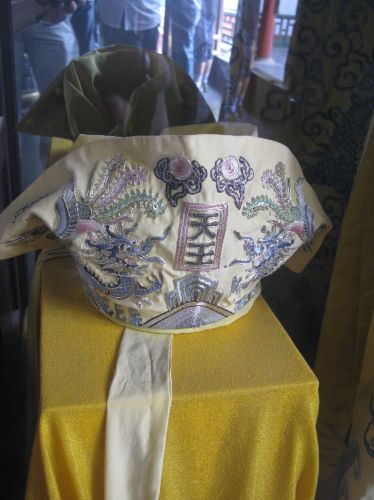
Historians have long debated how the Taiping movement should be interpreted within the broader framework of Chinese and global history. Some scholars emphasize its revolutionary social program and view the rebellion as an early expression of popular resistance to economic inequality, corruption, and imperial decline in nineteenth-century China. From this perspective, the Taiping movement represented more than a religious uprising. It embodied deep structural tensions within Qing society, including rural hardship, ethnic divisions, and dissatisfaction with an imperial state that many people believed had failed to protect the welfare of its subjects. The movement’s calls for land redistribution and moral reform have been interpreted by some historians as evidence of a radical social vision that anticipated later revolutionary movements in China.
Other historians have placed greater emphasis on the religious character of the Taiping movement, interpreting it primarily as a millenarian uprising driven by apocalyptic belief and charismatic leadership. In this interpretation, Hong’s visions and prophetic authority stand at the center of the movement’s origins and development. The belief that Hong was the younger brother of Jesus Christ and the divinely appointed ruler of a heavenly kingdom provided the ideological framework that mobilized followers and sustained the rebellion’s expansion. The movement’s rituals, doctrines, and moral regulations reinforced the perception that the Taiping cause represented a sacred mission rather than a conventional political revolution. From this perspective, the rebellion belongs to a broader historical pattern of millenarian movements in which religious expectation and charismatic authority generate large-scale political upheaval.
A third line of interpretation seeks to reconcile these perspectives by examining how religious belief and social grievance interacted within the Taiping movement. Rather than viewing the rebellion as either purely revolutionary or purely religious, many modern historians argue that its extraordinary scale resulted from the fusion of these elements. Hong’s prophetic message resonated with populations experiencing economic insecurity, local conflict, and declining confidence in the Qing dynasty. The promise of divine justice and moral renewal provided both spiritual meaning and a framework for political resistance. The Taiping movement can be understood as a hybrid phenomenon in which millenarian faith and social transformation became mutually reinforcing forces.
The continuing scholarly debate over the nature of the Taiping movement reflects the complexity of the rebellion itself. It was at once a religious revival, a revolutionary experiment in social reform, and a charismatic political movement centered on the authority of a prophetic leader. Each of these dimensions shaped the movement’s rise, expansion, and eventual collapse. The Taiping Kingdom occupies a distinctive place in global history as an example of how visionary belief, political ambition, and social crisis can converge to produce one of the largest and most transformative rebellions of the nineteenth century.
Conclusion: Faith, Power, and the Politics of Revelation
The Taiping Heavenly Kingdom stands as one of the most extraordinary and destructive revolutionary movements of the nineteenth century. Emerging from the visions of Hong and the spiritual anxieties of a society in crisis, the movement combined religious revelation with political ambition on a vast scale. What began as a small circle of believers in southern China evolved into a revolutionary state that challenged the authority of the Qing dynasty and governed millions of people across large portions of central China. The rebellion demonstrated how deeply spiritual belief could become intertwined with political transformation when charismatic authority offered followers a compelling explanation for social disorder and a promise of divine renewal.
Hong’s leadership illustrates the powerful role that prophetic authority can play in mobilizing large populations. His claim to divine kinship created a new framework of legitimacy that bypassed traditional institutions and offered an alternative vision of moral order. Within the Taiping movement, obedience to the Heavenly King was not simply a political obligation but a religious duty grounded in the belief that God’s will was being enacted on earth. This fusion of spiritual authority and political leadership allowed the movement to generate intense devotion among its followers while simultaneously constructing a state that sought to reorganize society according to its theological principles.
The history of the Taiping rebellion reveals the limitations and dangers inherent in systems of authority built primarily on charismatic revelation. The same concentration of power that enabled rapid mobilization also created structural vulnerabilities within the Taiping state. Rivalries among leaders, ideological rigidity, and the absence of stable institutional mechanisms for resolving disputes contributed to internal crises that weakened the movement at critical moments. As the rebellion progressed, these internal tensions combined with mounting external pressure from Qing forces to erode the stability of the Heavenly Kingdom.
The legacy of the Taiping movement extends beyond the immediate devastation of the rebellion itself. It offers a powerful historical example of how religious visions can reshape political landscapes and inspire movements capable of mobilizing millions. It illustrates the complex relationship between faith, authority, and governance in revolutionary contexts. The rise and fall of the Taiping Kingdom reminds historians that prophetic movements are not merely episodes of religious enthusiasm but forces that can alter the course of political history when belief, leadership, and social crisis converge.
Bibliography
- Bays, Daniel H. A New History of Christianity in China. Malden, MA: Wiley-Blackwell, 2011.
- Fairbank, John King, and Merle Goldman. China: A New History. 2nd ed. Cambridge, MA: Belknap Press of Harvard University Press, 2006.
- Kilcourse, Carl S. “Instructing the Heavenly King: Joseph Edkins’s Mission to Correct the Theology of Hong Xiuquan.” The Journal of Ecclesiastical History 71:1 (2020), 116-134.
- —-. “Son of God, Brother of Jesus: Interpreting the Theological Claims of the Chinese Revolutionary Hong Xiuquan.” Studies in World Christianity 20:2 (2014), 124-144.
- Kitinov, B. U. and E. A. Kodunova. “Hong Xiuquan and Religious Ideology of the Taiping Rebellion in 1850-1864.” Rudn Journal of World History 16:2 (2024), 152-164.
- Kuhn, Philip A. Rebellion and Its Enemies in Late Imperial China: Militarization and Social Structure, 1796–1864. Cambridge, MA: Harvard University Press, 1970.
- Ning, Dong and Pu Jingxin. “Origin, Transformation and Application: Hong Xiuquan’s Mysticism in the Taiping Heavenly Kingdom.” Journal of Chinese Theology 9:2 (2024), 87-108.
- Platt, Stephen R. Autumn in the Heavenly Kingdom: China, the West, and the Epic Story of the Taiping Civil War. New York: Alfred A. Knopf, 2012.
- Reilly, Thomas H. The Taiping Heavenly Kingdom: Rebellion and the Blasphemy of Empire. Seattle: University of Washington Press, 2004.
- Spence, Jonathan D. God’s Chinese Son: The Taiping Heavenly Kingdom of Hong Xiuquan. New York: W. W. Norton & Company, 1996.
- —-. The Search for Modern China. New York: W. W. Norton, 1990.
- Wagner, Rudolf G. Reenacting the Heavenly Vision: The Role of Religion in the Taiping Rebellion. Berkeley: University of California Press, 1984.
Originally published by Brewminate, 03.13.2026, under the terms of a Creative Commons Attribution-NonCommercial-NoDerivatives 4.0 International license.
About the Author