French tyranny received an answer.

By Eli Wizevich
History Correspondent
Smithsonian Magazine
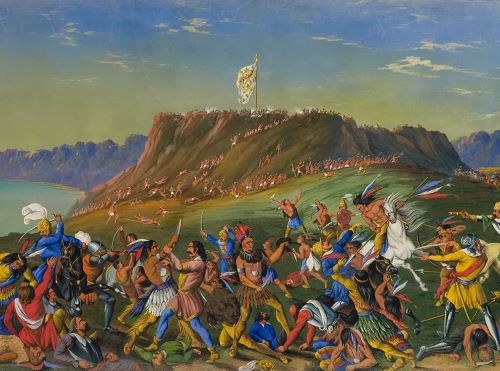
Natchez warriors arrived at Fort Rosalie on the Mississippi River on the morning of November 29, 1729, with a false peace offering of barrels of corn and a calumet pipe—and the hidden, premeditated intention to commit a massacre that would either wipe out the French colonists in the region altogether or scare them away from ancestral Natchez lands for good.
Before the Natchez Revolt, as the event would become known, around 450 French and 280 enslaved Africans lived in the area. By the end of that November day, the Natchez would kill some 230 settlers.
French colonists established Fort Rosalie near present-day Natchez, Mississippi, in 1716 as a trading post and seat of government. For a while, relations with the Natchez were relatively calm, but skirmishes increased as the settler population grew and turned to agriculture, a more land- and labor-intensive system.
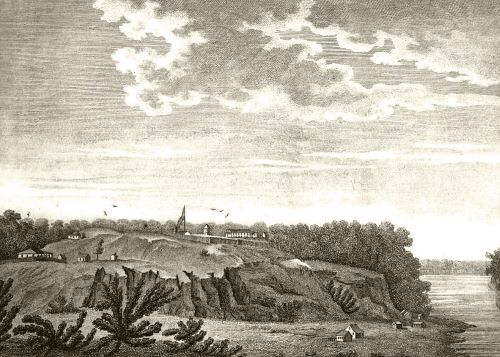
Relations deteriorated even further by 1729 after Etienne de Périer, the governor of French Louisiana, appointed a man known as Commandant de Chépart to lead Fort Rosalie.
Chépart “was naturally of a haughty and tyrannical disposition,” Horatio Bardwell Cushman wrote in his 1899 History of the Choctaw, Chickasaw and Natchez Indians. He even rubbed his own subjects the wrong way, prompting complaints to the French governor in New Orleans. Chépart would have been removed from his post and punished “but for the interference of influential friends,” Cushman later argued.
“The pardoned tyrant returned, of course, to his colony,” Cushman continued, and went on to “oppress and abuse the Indians who had no higher power to which they could appeal.”
With little notice, Chépart demanded that the Natchez depart from White Apple, a village that hosted their high temple and the bones of their ancestors, to make room for a French plantation.
In a meeting with the Great Sun, as the Natchez chief was known, Chépart denigrated the Natchez, reportedly calling their leader an “insolent barbarian” whom he would soon force off the land.
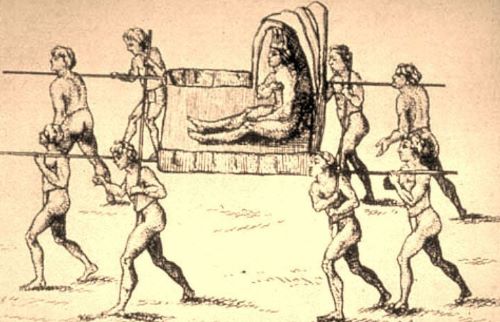
For the Natchez, Chépart’s aggressions, demands and insults, to say nothing of years of French encroachment, justified resistance. The Great Sun gathered other Natchez leaders and contiguous tribes to construct a plan for revenge. other Natchez leaders and contiguous tribes to construct a plan for revenge.
On the morning of the revolt, a young French soldier ran into a Natchez woman who tipped him off about the impending attack. The soldier went hastily to Chépart, but the commandant was recovering from a night of drunken debauchery and dismissed the warnings.
As the Great Sun and a contingent of warriors approached the fort, bearing false gifts to signal acquiescence to the commandant’s demand to take over White Apple, they fired a round of rifle shots as a signal for the revolt to begin.
The details of the attack itself are murky. Few who made it out alive were willing to discuss scenes that were “too horrific” to recount in detail, according to Antoine-Simon Le Page du Pratz, a former resident of Fort Rosalie who spoke to survivors in New Orleans.
By Cushman’s account, however, Chépart was “the last to receive his just reward.” Though he fled to his garden, “he was found, dragged forth and handed over to the lowest class of the Natchez warriors, who beat him to death with their war clubs.” The highest class of Natchez would not deign to touch “the blood of so contemptible a wretch.”
As news and rumors of the brutal attack spread, French Louisiana was beset by fear and loathing. Colonists abandoned once promising agricultural settlements, and, in an act of cruel, retaliatory bloodletting, Périer ordered the massacre of the Chaouacha, an innocent tribe uninvolved in the revolt. The massacre was neither the start nor the end of a protracted power struggle between white colonists and Indigenous people.
Originally published by Smithsonian Magazine, 11.29.2024, reprinted with permission under a Creative Commons license for educational, non-commercial purposes.
About the Author