Examining the public health impact of an under-regulated industry.

By Danielle Renwick
Editor
Nexus Media News
On recent spring afternoon, journalist Adlen Wicker was examining a neon orange purse at H&M. The price tag read $14.99, but instead of listing materials, it simply said “vegan.” She raised an eyebrow. At Wicker’s request, a store clerk looked up the materials: polyurethane and polyester. Plastics.
For the last decade, Wicker has been covering the dirty side of fast fashion — from its contribution to the climate crisis and greenwashing to multi-level marketing schemes. She founded the popular blog EcoCult in 2013 and has become an authority on sustainable fashion.
Wicker’s new book, To Dye For: How Toxic Fashion Is Making Us Sick, examines the public health impacts of chemically-treated fabrics and synthetic fibers. She spent two years interviewing
She found that fashion is rife with toxic chemicals, like formaldehyde and chromium, which are both carcinogenic and endocrine-disrupting polyfluoroalkyl substances (also known as PFAS, or “forever chemicals”), linked to infertility and other health issues. And despite the potential harm, she discovered that the U.S. has done little to protect consumers from the clothes they wear.
“We’re allowing chemicals to be poured indiscriminately into the environment, but we’re also bringing them into our homes,” Wicker said. The effects of these chemicals on textile workers and their communities were well documented, but Wicker worried that the issue remained abstract to U.S. consumers. “This isn’t an ‘over-there’ problem,” she said.
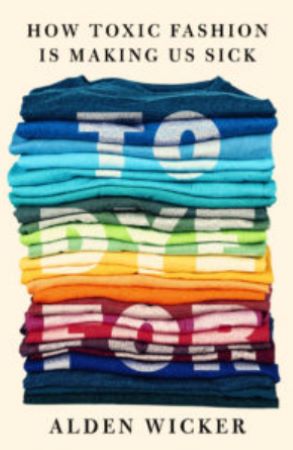
Wicker got the idea for the book in 2019 when a radio producer called to ask if she could comment on a lawsuit filed by Delta employees against the clothing company Land’s End, alleging that its uniforms were making them sick.
“I’d heard nothing about fashion or textiles being toxic enough to affect people’s health,” she said. In fact, flight attendants at several major airlines were complaining of rashes, hair loss, fatigue, brain fog, heart palpitations and trouble breathing. “Their bodies would start shutting down. They couldn’t work, and in some cases, that completely ruined their lives,” Wicker said.
Researchers at Harvard University attributed the attendants’ reactions to long exposures to a combination of chemicals like anti-wrinkle and anti-stain resins and disperse dyes, which can leach into the skin through sweat. (Flight attendants sometimes wear their uniforms for up to 24 hours at a time.)
The flight attendants are just an extreme case of clothes making people sick, Wicker said. In the course of her reporting, she dug up suits against the children’s-clothing brand Carter’s and Victoria’s Secret, in which consumers said their clothes gave them severe rashes. It’s exceedingly difficult to prove the toxicity of a piece of clothing because a single shirt may have passed through several factories and can comprise an untold number of chemicals, she said.
“There’s no ingredient list in fashion,” Wicker said. “If you’re allergic to nickel, or disperse dyes, or formaldehyde, you can avoid it in beauty products, cleaning products, food products — but not in fashion.” In the book, she speaks with researchers who connect declining fertility rates and the rise of autoimmune diagnoses in the U.S. with chemicals found in our clothes.
The book is a series of vignettes about people whose lives were altered by illnesses they believe came from the chemicals in their clothes: The widower of an Alaska Airlines flight attendant who developed a litany of health problems, including trouble breathing and blistering on his arms, right after he received a new uniform. A textile worker in Tirupur, in southern India, whose arms and legs were covered in blisters that only started to disappear after she quit her job. A California marketing executive whose dye allergies had caused her to scratch herself until she bled in her sleep.
“You can draw a straight line from Leelavathi in India to this woman in California and their skin issues,” Wicker said. “The woman in California has more resources than the garment worker, and they live very different lives, but living in America doesn’t shield you from this.”
The European Union, and even the state of California, have passed regulations on so-called “forever chemicals” in fashion, and Wicker wants to see the federal government follow suit. (Last week, chemical manufacturer 3M reached a $10 billion settlement over the contamination of many U.S. public drinking water systems with PFAS, some of the same substances found in clothes.)
In the book, she calls for more regulation and research into the chemicals that go into making our clothes, empowering regulators to test and recall toxic items, requiring ingredient lists on fashion products and a crackdown on greenwashing.
“Wouldn’t it be great if we switched to a precautionary principle where, when it comes to chemicals, it’s not innocent until proven guilty?” she mused. “Let’s make sure they’re safe before we use them.”
Wicker is wary of conscious consumerism — even if this book is an appeal for consumer safety. “I don’t want this to become a ‘shop your way out of it’ thing,” she said. She seized on a piece of advice from one of her interviewees, a researcher at Duke University who found high concentrations of potentially carcinogenic, synthetic Azo dyes in children’s clothing.
“I asked how she changed her shopping habits. She said: ‘Just shop less’.”
Originally published by Nexus Media, 06.27.2023, under the terms of a Creative Commons Attribution-NoDerivs 3.0 Unported license.
About the Author