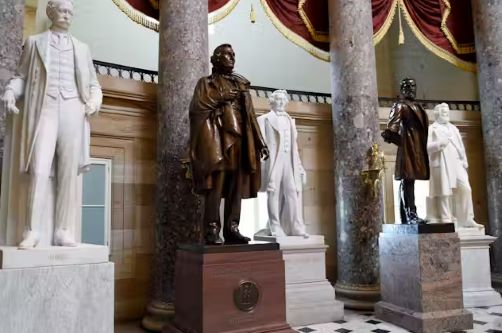
Lawmakers whose Southern ancestors owned slaves before abolition have a higher net worth today.

By Neil Sehgal
PhD Student in Computer & Information Science
University of Pennsylvania

By Dr. Ashwini Sehgal
Professor, Department of Medicine, School of Medicine
Case Western Reserve University
Introduction
The legacy of slavery in America remains a divisive issue, with sharp political divides.
Some argue that slavery still contributes to modern economic inequalities. Others believe its effects have largely faded.
One way to measure the legacy of slavery is to determine whether the disproportionate riches of slaveholders have been passed down to their present-day descendants.
Connecting the wealth of a slaveholder in the 1860s to today’s economic conditions is not easy. Doing so requires unearthing data for a large number of people on slaveholder ancestry, current wealth and other factors such as age and education.
But in a new study, we tackled this challenge by focusing on one of the few groups of Americans for whom such information exists: members of Congress. We found that legislators who are descendants of slaveholders are significantly wealthier than members of Congress without slaveholder ancestry.
How Slavery Made the South Rich

In 1860, one year before the Civil War, the market value of U.S. slaves was larger than that of all American railroads and factories.
At the time of emancipation in 1863, the estimated value of all enslaved people was roughly US$13 trillion in today’s dollars. The lower Mississippi Valley had more millionaires, all of them slaveholders, than anywhere else in the country.
Some post-Civil War historians have argued that emancipation permanently devastated slave-owning families.
More recently, however, historians discovered that, while the South fell behind the North economically immediately following emancipation, many elite slaveholders recovered financially within one or two generations.
They accomplished this by replacing slavery with sharecropping – a kind of indentured servitude that trapped Black farm workers in debt to white landowners – and enacting discriminatory Jim Crow laws that enforced racial segregation.
100 Descendants of Slaveholders
Using genealogist-verified historical data and financial data from annual congressional disclosures, we examined members of the 117th Congress, which was in session from January 2021 to January 2023.
Of its 535 members, 100 were descendants of slaveholders, including Democratic Sen. Elizabeth Warren and Republican Sen. Mitch McConnell.
Legislators whose ancestors were large slaveholders – defined in our study as owning 16 or more slaves– have a current median net worth five times larger than their peers whose ancestors were not slaveholders: $5.6 million vs. $1.1 million. These results remained largely the same after accounting for age, race and education.
Wealth creates many privileges – the means to start a business or pursue higher education. And intergenerational wealth transfers can allow these advantages to persist across generations.
Because members of Congress are a highly select group, our results may not apply to all Americans. However, the findings align with other studies on the transfers of wealth and privilege across generations in the U.S. and Europe.
Wealth, these studies find, often stays within rich families across multiple generations. Mechanisms for holding onto wealth include low estate taxes and access to elite social networks and schools. Easy entry into powerful jobs and political influence also play a part.
Privilege with Power
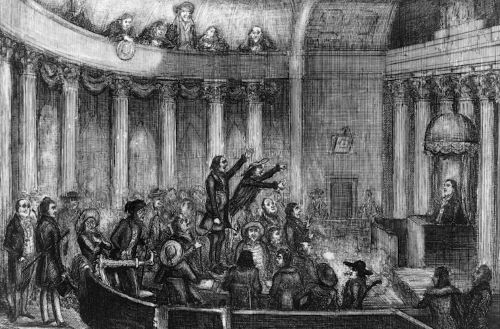
But members of Congress do not just inherit wealth and advantages.
They shape the lives of all Americans. They decide how to allocate federal funds, set tax rates and create regulations.
This power is significant. And for those whose families benefited from slavery, it can perpetuate economic policies that maintain wealth inequality.
Beyond inherited wealth, the legacy of slavery endures in policies enacted by those in power – by legislators who may be less likely to prioritize reforms that challenge the status quo.
COVID-19 relief legislation, for example, helped reduce child poverty by more than 70% while bringing racial inequalities in child poverty to historic lows. Congress failed to renew the program in 2022, plunging 5 million more children into poverty, most of them Black and Latino.
The economic deprivation still experienced by Black Americans is the flip side of the privilege enjoyed by slaveowners’ descendants. The median household wealth of white Americans today is six times higher than that of Black Americans – $285,000 versus $45,000.
Meanwhile, federal agencies that enforce antidiscrimination laws remain underfunded. This limits their ability to address racial disparities.
The Path Forward
As the enduring economic disparities rooted in slavery become clearer, a growing number of states and municipalities are weighing some form of practical and financial compensation for the descendants of enslaved people.
Yet surveys show that most Americans oppose such reparations for slavery. Similarly, Congress has debated slavery reparations many times but never passed a bill.
There are, however, other ways to improve opportunities for historically disadvantaged populations that could gain bipartisan backing.
A majority of Americans, both conservatives and liberal, support increased funding for environmental hazard screening, which assesses the potential impact of a proposed project. They also favor limits on rent increases, better public school funding and raising taxes on the wealthy.
These measures would help dismantle the structural barriers that perpetuate economic disparities. And the role of Congress here is central.
Members of Congress do not bear personal responsibility for their ancestors’ actions. But they have an opportunity to address both the legacies of past injustices and today’s inequalities.
By doing so, they can help create a future where ancestral history does not determine economic destiny.
Originally published by The Conversation, 10.23.2024, under the terms of a Creative Commons Attribution/No derivatives license.
About the Author