The attack was a resounding failure.

By Eli Wizevich
History Correspondent
Smithsonian Magazine
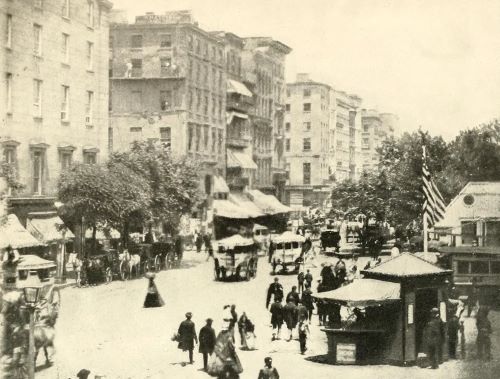
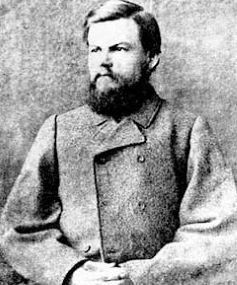
Two months before the Civil War ended, a Confederate soldier was tried in a New York City courtroom for espionage—and for trying to burn down the largest city in the Union.
According to the New York Times, the prosecution against Confederate officer Robert Cobb Kennedy alleged that “on the night of the 24th of November last he attempted to set fire to the City of New York, to the manifest detriment of life and property, and against every article or provision of honorable warfare.”
The incendiary plot began when Kennedy, who had been captured by Union troops back in 1863, escaped from a military prison on Lake Erie and fled north into Canada. Kennedy, a Louisiana planter’s son, was furious about Union General William Tecumseh Sherman’s scorched-earth tactics in the South. In Toronto, he met up with other disgruntled Southerners in exile, and planned to infiltrate Northern cities to turn the tide of the war.
The first plan they hatched was to interfere in the 1864 presidential election on November 8. The rebels would storm federal buildings in New York, fly a Confederate flag over City Hall and try to rouse support from New Yorkers, who had close ties with the Southern cotton industry. But the plan never came to fruition thanks to incumbent President Abraham Lincoln, who sent federal troops to quell discontent in major cities during the election.
Instead, Kennedy—carrying false papers that identified him as Mr. Stanton of Toronto—and seven other Confederates plotted to simultaneously ignite a large number of firebombs in businesses and hotels across New York, destroying the Northern economy and boosting Southern morale.
As it happened, only six of the eight men showed up to begin the ambitious attack on November 25. Each took ten incendiary devices filled with Greek fire, a mixture of chemicals that the attackers believed only required brief exposure to air to ignite. Kennedy planted firebombs in three hotels and—on a drunken whim after stopping at a bar—tossed one into P.T. Barnum’s American Museum.
The attack was a resounding failure. Some bombs failed to ignite, and the ones that did only created small, scattered fires easily handled by the fire department. The North was certainly not destroyed.
Back in the South, reactions to the attempted attack were mixed. New York was the wrong place to attack, the Richmond Whig complained. Really, it was the only place in the North “that ought to be spared,” because of its ties to the Southern economy and its apparent hostility to Lincoln.
“We hope, therefore, that the gentleman … will resolve to let New York alone, and turn his attention to cities more eminently deserving of it—Boston, for instance, or Philadelphia,” the Whig wrote. “The destruction of places like these would be something like an approximate equivalent for the atrocities that Yankee armies have committed in the South.” . “The destruction of places like these would be something like an approximate equivalent for the atrocities that Yankee armies have committed in the South.”
In the meantime, the six would-be bombers fled back to Canada to wait out the war in neutral territory. Only Kennedy tried to re-enter the U.S., where he was promptly apprehended in Michigan.
Kennedy barely stood a chance against the military trial that followed—proceedings packed with testimony and evidence against him.
He was villainized by the Northern press as the poster child of the rebellious South. The Times called him “a keen-witted, desperate man [who] combines the cunning and the enthusiasm of a fanatic, with the lack of moral principle characteristic of many of the Southern Hotspurs,” pointing out his education at West Point (“at the expense of the United States”) and a family connection to a founding father of the Confederacy, Howell Cobb.
Kennedy was found guilty and sentenced to hang. His last-minute appeal to Lincoln, seeking life imprisonment instead of the death penalty, went nowhere. The U.S. executed Kennedy at Fort Lafayette, a prison island off of Brooklyn. His was the last execution of the Civil War, which ended just two weeks later.
Originally published by Smithsonian Magazine, 11.25.2024, reprinted with permission under a Creative Commons license for educational, non-commercial purposes.
About the Author